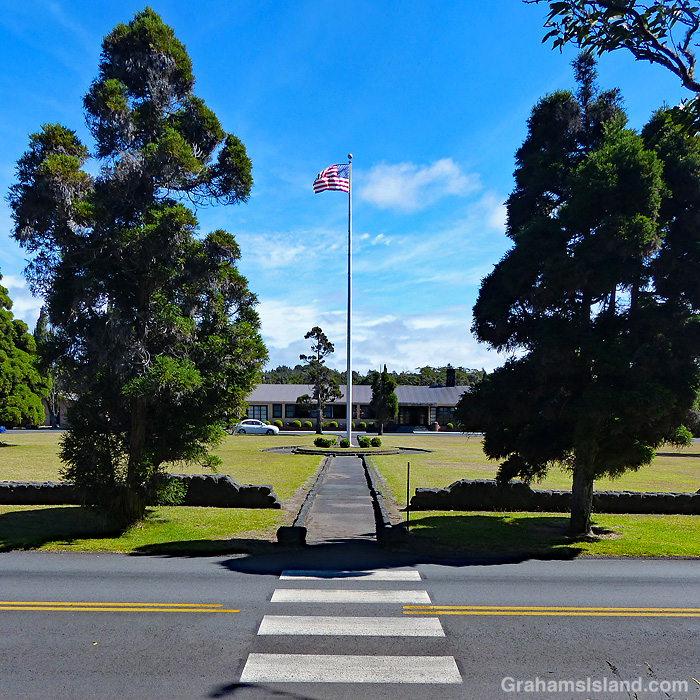
This is a view across Chain of Craters Road, in Hawaii Volcanoes National Park, toward the flagpole and entrance of Kilauea Military Camp. The camp was founded in 1916, the same year as the park, as a rest and relaxation facility for military personnel. Today, it continues to fill that same function though the facilities are somewhat nicer than they were back then. There’s an array of cottages, a store, theater, sports facilities, gas station, laundromat, even a bowling alley.
While it’s been an R&R post for most of its existence, during WWII it was used as a prisoner of war camp and as a Japanese internment camp.
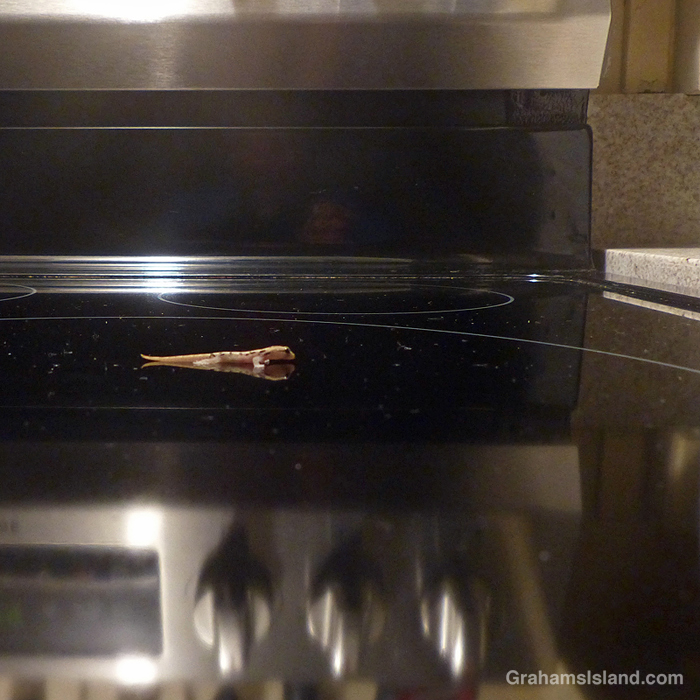
I spotted this baby mourning gecko one evening, just sitting on the stovetop. This is what I call ‘making an unwise decision.’ Fortunately for the gecko, the day’s cooking was done, otherwise it risked getting fried or flattened by a pan.
Baby geckos have a fairly high mortality rate from accidents and predation by larger geckos, but at the same time, there seems to be no shortage of them. I guess some kind of balance has been achieved.
Posted in response to Becky’s July Squares challenge theme of ‘Perspective.’ See more responses here.
Becky’s July Squares challenge theme is ‘Perspective.’ See more responses here.
This photo is a perfect example of the ‘perspective’ theme. See how much bigger the plane looks than the moon. That’s because it’s a lot closer. But if the plane was up there, close to the moon, it would look a lot smaller than the moon, because the moon is actually way bigger than the plane. Also, the pilot would be in a world of trouble, or in out-of-this-world trouble, depending on your perspective.
This week’s Sunday Stills challenge theme is ‘Yellow.’ See more offering’s here.
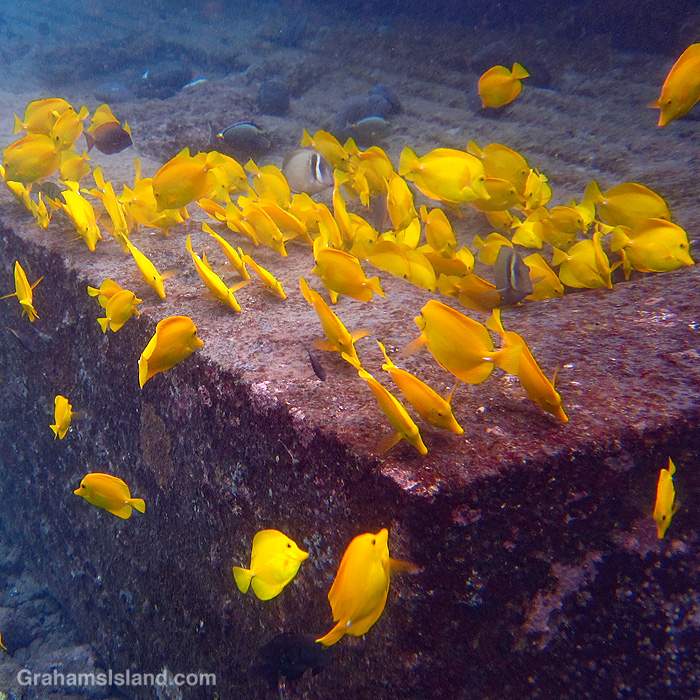
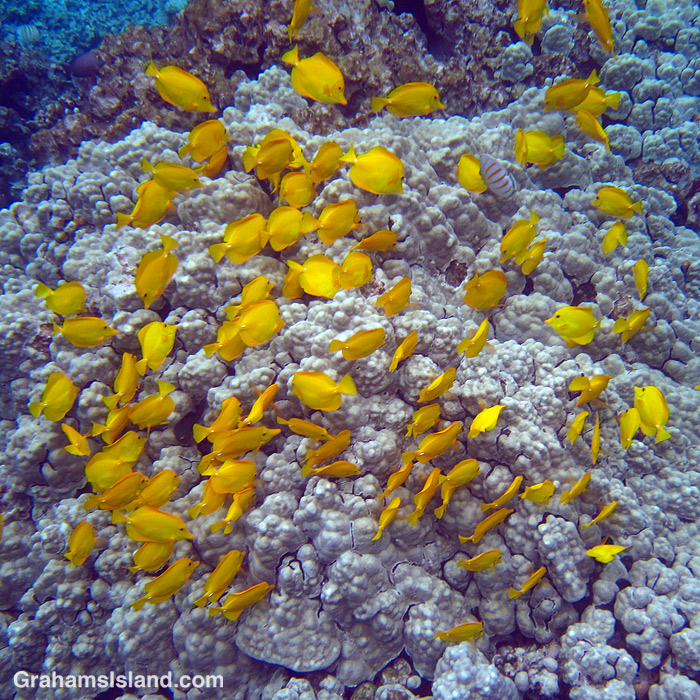
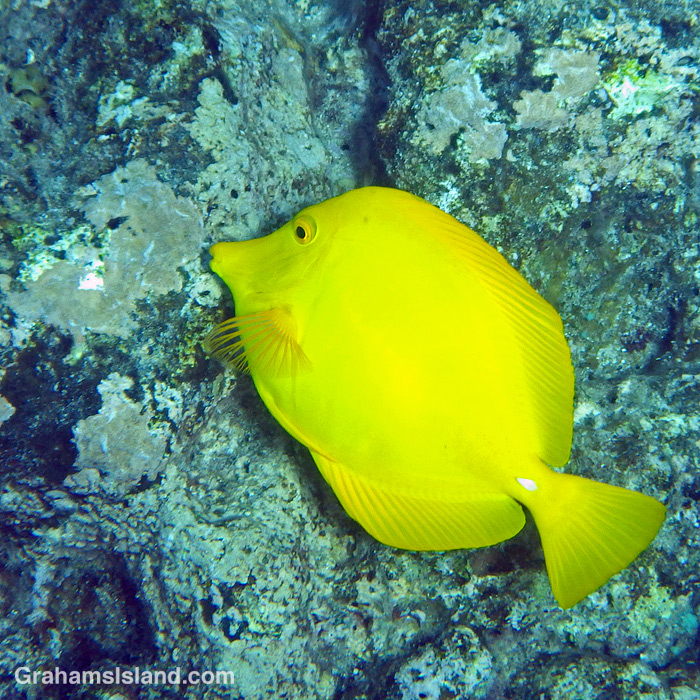
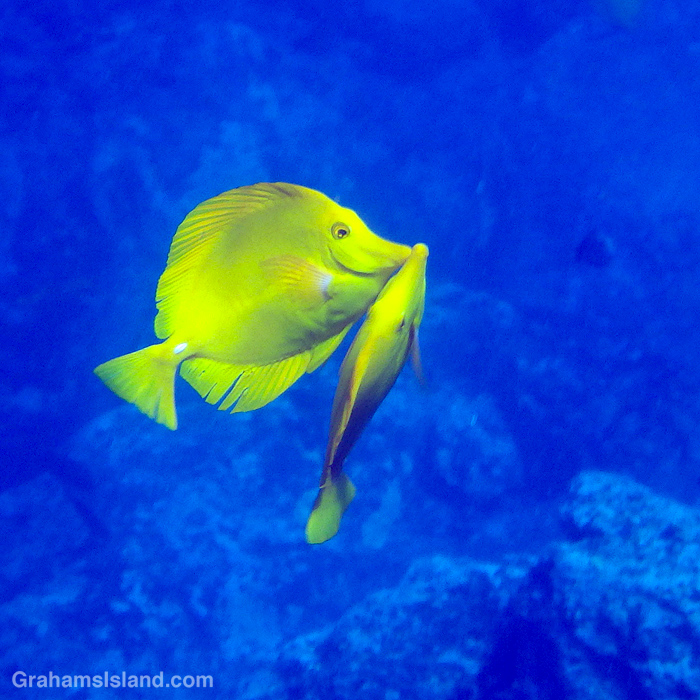
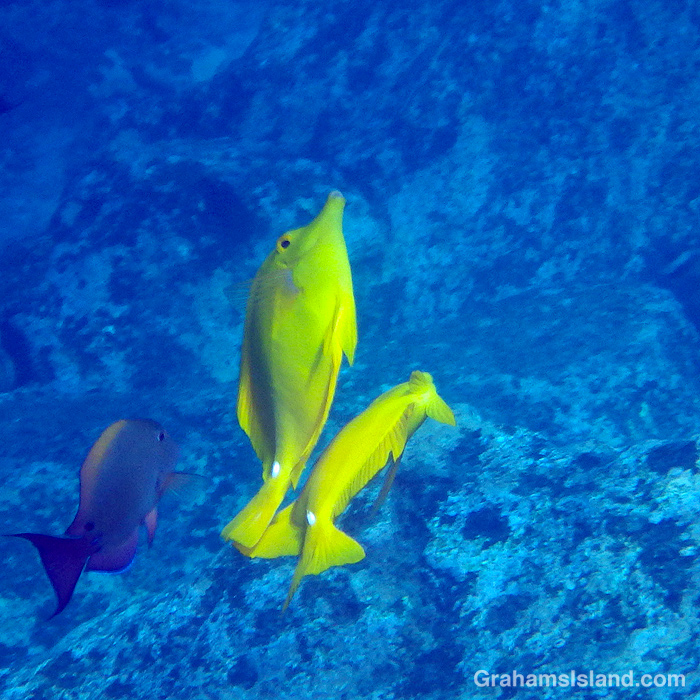
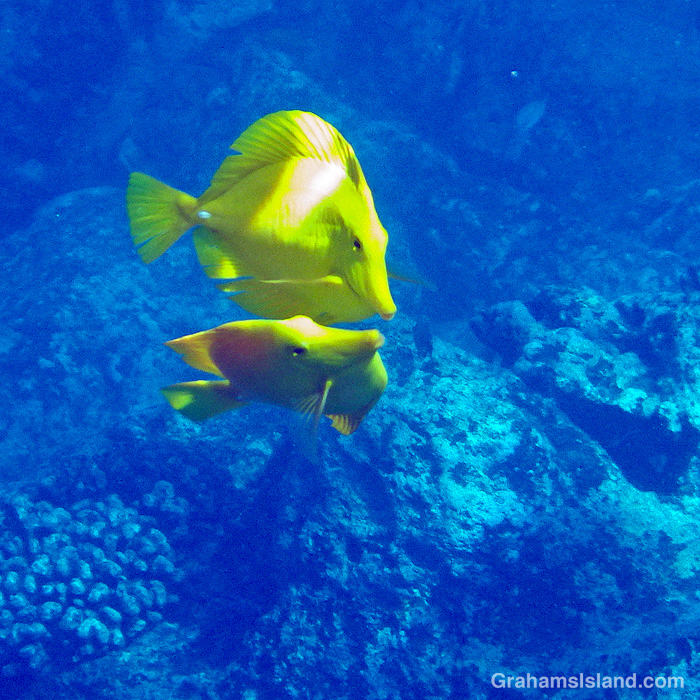
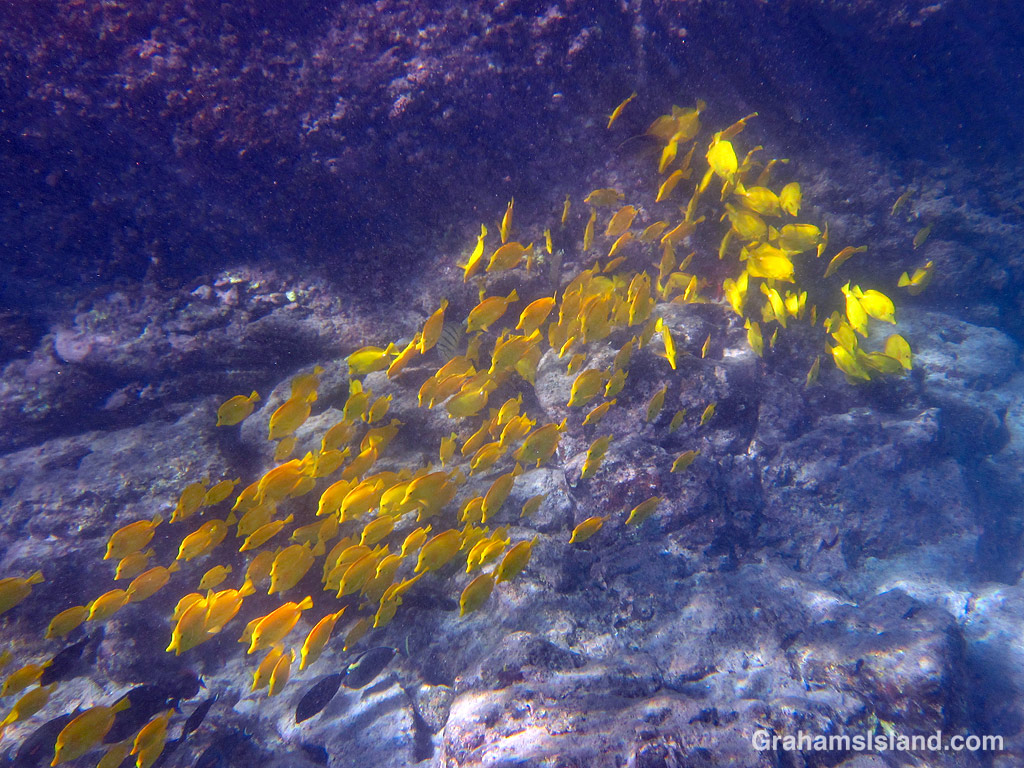
I thought I’d try the WordPress gallery feature for this post, which features yellow tangs, the first fish everyone notices in Hawaii. These bright yellow fish putter about in fairly shallow water, sometimes singly or in pairs, but often in large groups. They feed on algae, and occasionally can be seen cleaning turtles for this purpose. Unlike some fish, juveniles look the same as mature yellow tangs so shoals often contain a variety of sizes. The lower three photos show a pair of yellow tangs engaged in what I think is some kind of mating ritual.
Yellow tang are long-lived fish. They can live to be 20 or 30 years old. They’re also fish that are very popular in the aquarium trade but, since they don’t breed in captivity, all aquarium fish are collected from the wild. Currently, there’s a moratorium on the aquarium fish collection trade here, because of concerns about fish stocks and the sustainability of the practice.
Also posted in response to Becky’s July Squares challenge theme of ‘Perspective.’ See more responses here.
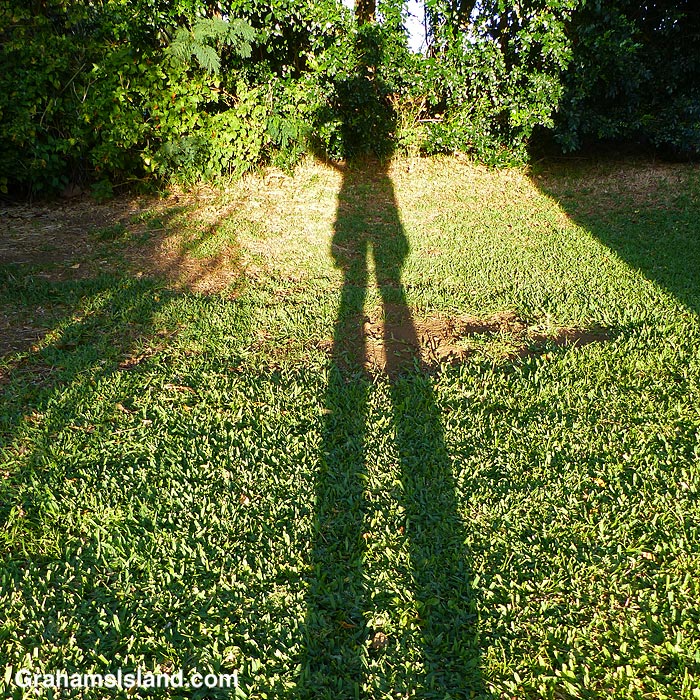
This week’s Friendly Friday challenge theme is ‘Shadows.’ See more responses here.
I almost never take selfies. I know what I look like, and why ruin a perfectly good photo by shoving my face in the foreground. Here, though, I made an exception. And yes, my legs are that long.
Also posted in response to Becky’s July Squares challenge theme of ‘Perspective.’ See more responses here.
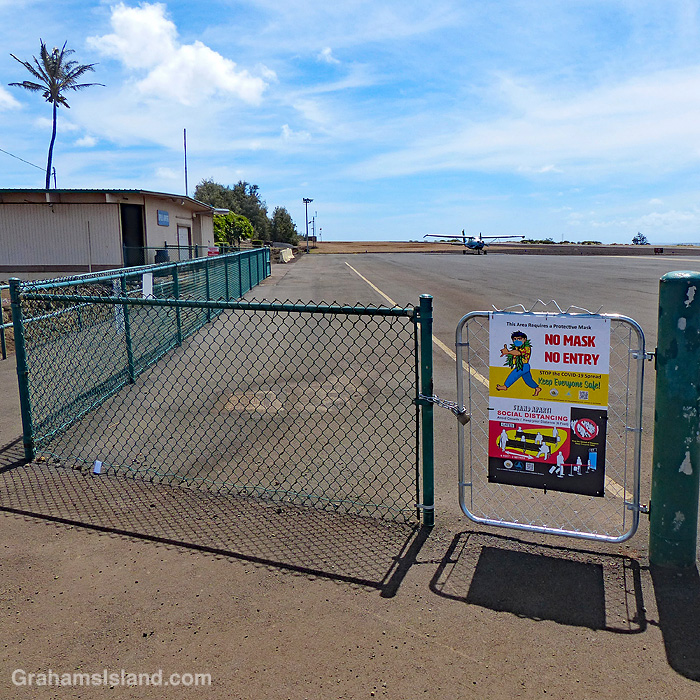
Three of these signs appeared at Upolu Airport recently. I think we can all agree that in these troubling times it’s important for people to stay safe by following such protocols.
The plane in the photo is owned by the skydiving company that used to fly out of the airport back in pre-pandemic days. It’s fairly safe to say that they’ll be one of the last businesses allowed to reopen. It’s hard to maintain social distancing on a plane that size, especially when most clients are going to be strapped to someone who knows how to operate a parachute.
In the meantime, in the last four months, the number of times I’ve seen more than one person inside the fence is exactly equal to the number of times I’ve seen that one person wearing a mask. I won’t say how many times that is, but it’s a very round number.
Posted in response to Becky’s July Squares challenge theme of ‘Perspective.’ See more responses here.
Photographers are encouraged to take advantage of the golden hour shortly after sunrise or shortly before sunset, when the light is soft and golden. Photos taken here during the golden hour showcase the wonders of Hawaii’s beaches, volcanoes, and wildlife.
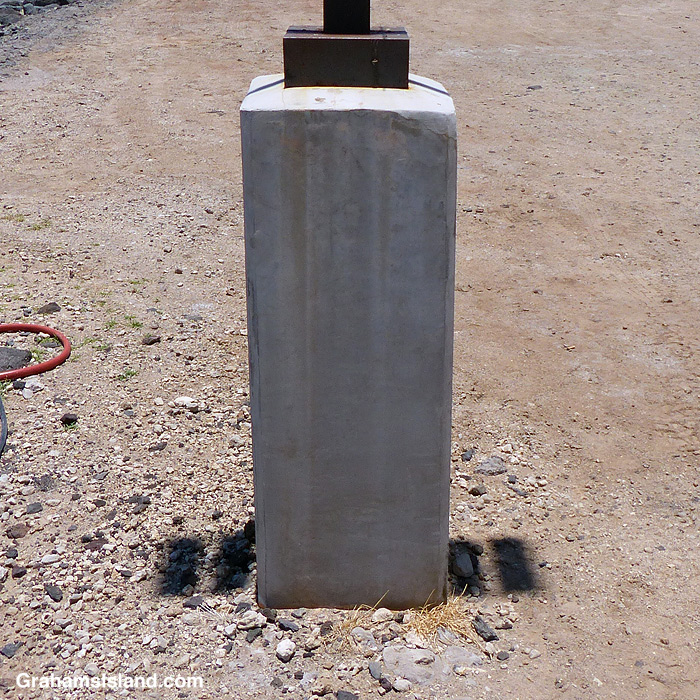
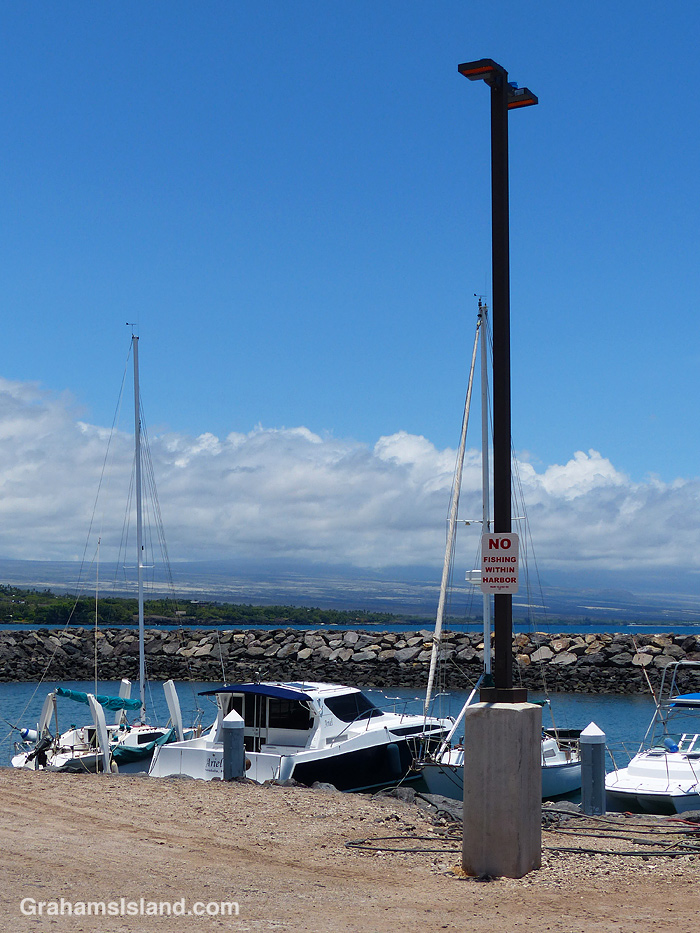
Taking that as my cue, I feature one of the wonders of Hawaii in these photos. No, it’s not concrete lamp bases, which can be found in most, if not all, states. Nor is it the golden hour. But only in Hawaii can you find a concrete lamp base like this one. It’s a sunny day. Those rectangular shadows are from the lights at the top of the lamp pole. But where’s the shadow of the concrete base? There isn’t one, because these photos were taken at Lāhainā Noon.
Lāhainā Noon, a name thought up by the good folks at the Bishop Museum, occurs when the sun is directly overhead on its apparent passage north and then south again, before and after the summer solstice. This phenomenon occurs in places located between the Tropic of Cancer and Tropic of Capricorn. Hawaii is the only U.S. state in tropics and so is the only place in the country to see this.
The timing of Lāhainā Noon varies from place to place, depending on latitude. It occurs twice a year, the first time in May as the sun appears to head north, and then again in July as it dips south again. These photos were taken yesterday in Kawaihae, but where I live in Hawi, Lāhainā Noon occurred two days ago. The last place on the island to experience it will be South Point, the most southerly point in the U.S.A, on July 27.
The bottom photo shows the Sky Gate sculpture in Honolulu. This sculpture, designed by Isamu Noguchi, casts a wavy shadow most of the time, but twice a year, at Lāhainā Noon, the shadow is perfectly round. The sculpture wasn’t particularly well-received initially, but now people visit from all over the world (when that’s possible) to see it do its thing.