
This cone-headed katydid is another introduced species, though Hawaii does have a native banza conehead, which I have yet to see. These coneheads are a big contributor to the nighttime insect buzz.


This cone-headed katydid is another introduced species, though Hawaii does have a native banza conehead, which I have yet to see. These coneheads are a big contributor to the nighttime insect buzz.
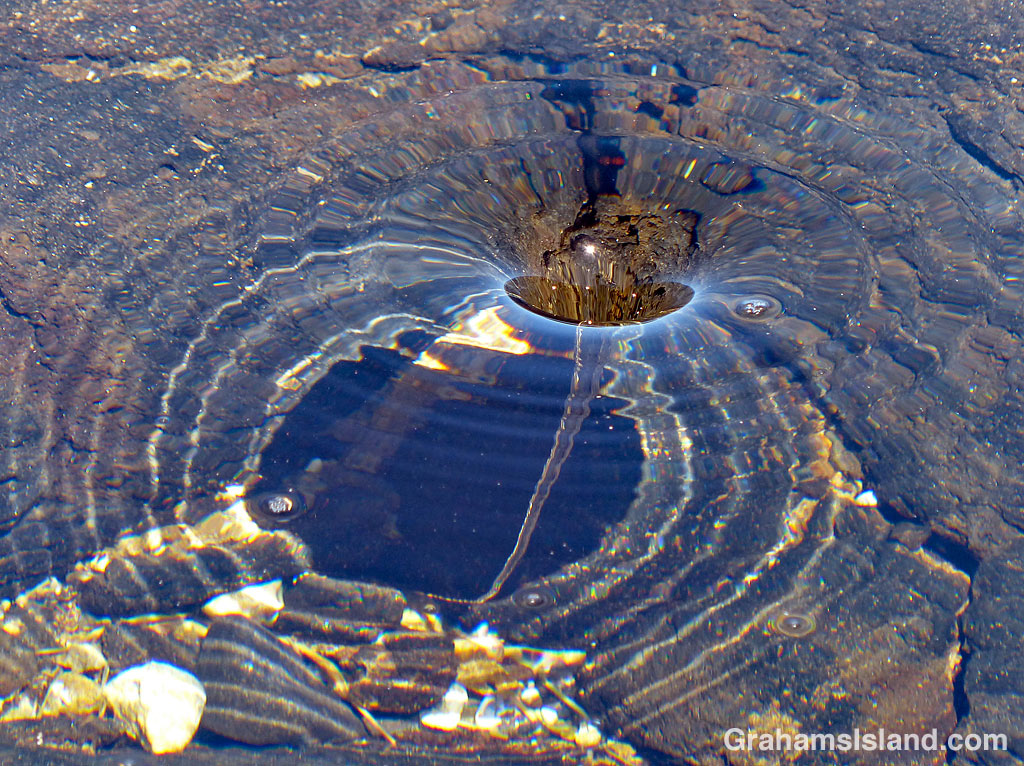
I watched this little whirlpool come and go in a tide pool, its state varying with the influx of water from the ocean. Sometimes it disappeared altogether, but usually returned.
What first drew my attention was not the whirlpool itself, but the shadow on the floor of the tide pool, which varied from fairly circular to heart-shaped.

Back in the fall of 2014, Hawaiian waters experienced temperatures up to 86°F. This very warm water resulted in a major coral bleaching event statewide. Since that time, water temperatures have been in a more normal range and the coral has stabilized and even shown signs of recovery in places.
In August of this year, the National Oceanic and Atmospheric Administration (NOAA) issued a warning that another major bleaching event was likely to happen this fall. Last month, NOAA reported that bleaching was already occurring. And I’ve noticed that the water does seem warmer, sometimes disturbingly so.
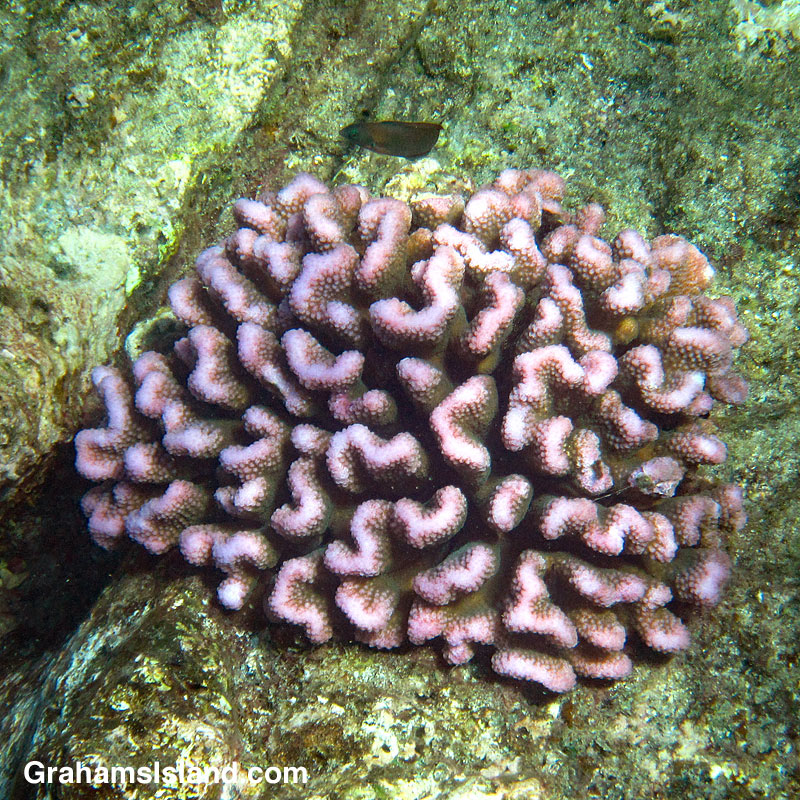
Because of the bleaching threat, I’ve been looking at the coral when I go snorkeling. There are a few very white patches, but by and large it doesn’t look too bad. This patch of purple coral still looked quite healthy and was host to a saddle wrasse (lower photo) and three unidentified fish (above).
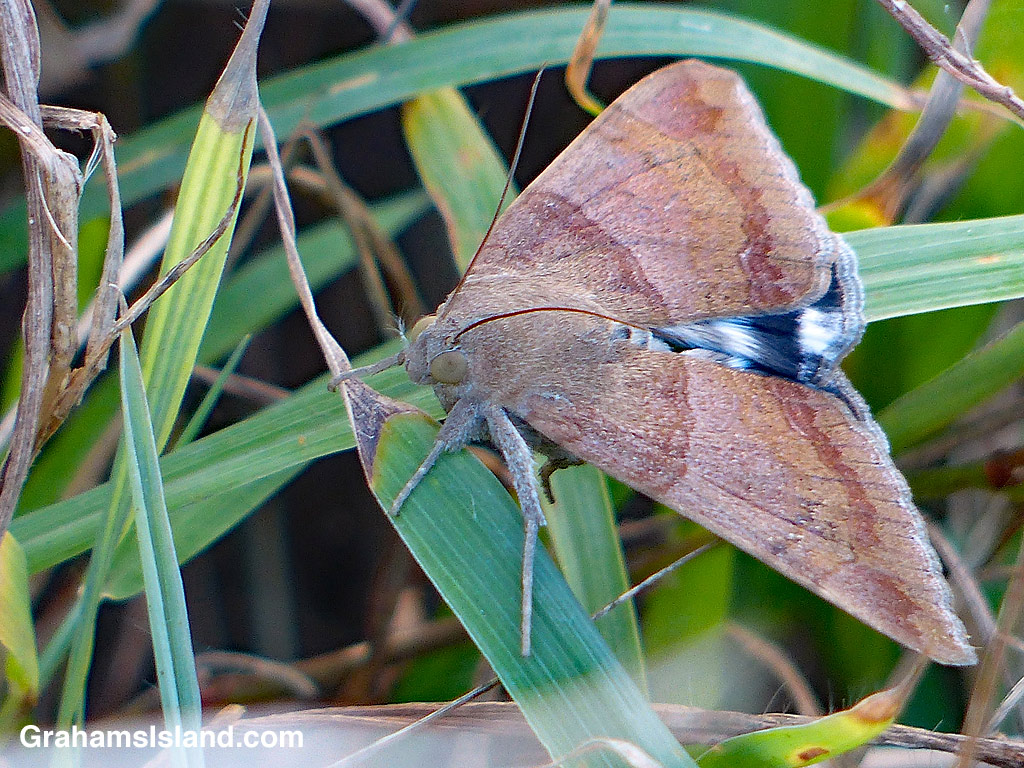

Also known as the castor-oil moth, castor-oil looper, and croton caterpillar, the achaea janata moth is most easily distinguished by the bold black and white markings on its hind wings.
The caterpillars feed on castor-oil plants and on crotons as well as the leaves of bananas, capsicum, and citrus. This moth was in an area with a fair number of castor-oil plants growing wild.

This week’s Sunday Stills challenge theme is ‘Lines and Squares.’ See more offerings here.
This is one of the roads in Isaac Hale Beach Park at Pohoiki. This park is where last year’s lava activity came to a halt leaving a wall of lava making a border to the public area of the park. Walking beyond the ‘No Trespassing’ sign won’t result in your immediate arrest, but the powers that be don’t want people walking on the flow itself.
But this is a road after all and the sign makes it seem likely that someone driving here might continue on and run into the flow. Actually, this is entirely possible, given how some people drive around here.
Regardless of the intent, I like how the lines on the road disappear into the lava and the red squares are warning signs.
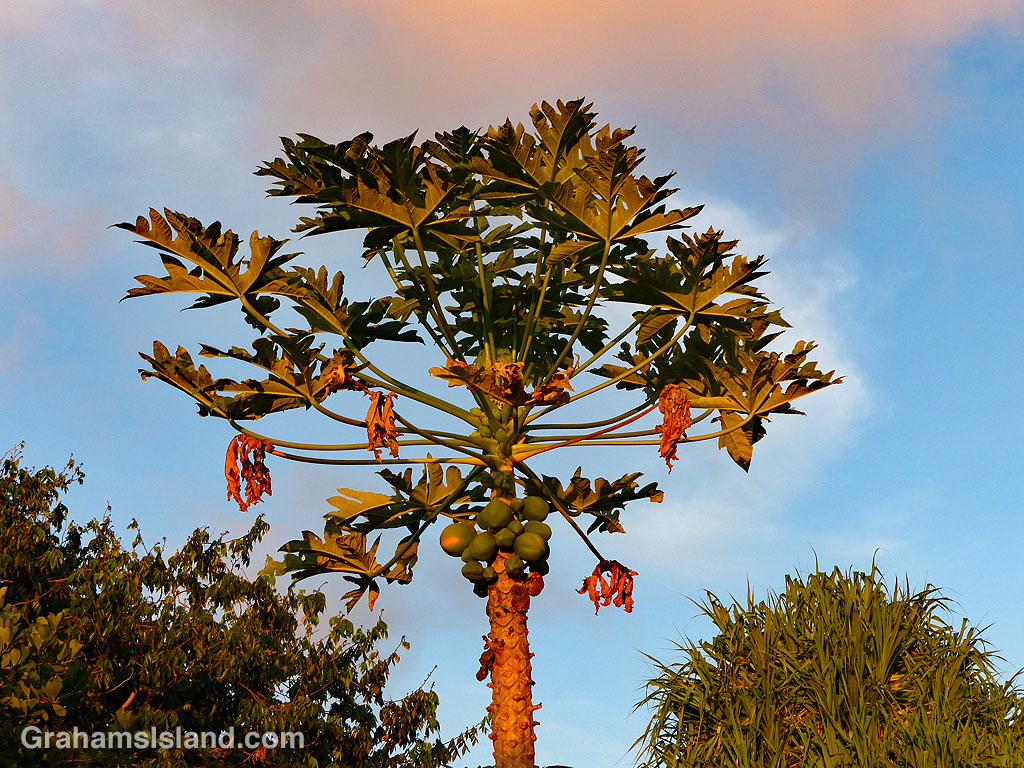

Papayas are a curious plant. The leaves cluster at the top of a single slender trunk. The fruit grows directly from that trunk. The scars on the trunk mark where earlier fruits and leaves appeared. The plants grow quickly and fall over readily. And, of course, they produce generous quantities of papayas.
Having said that, what I liked about this particular papaya tree was the light illuminating it.
This week’s Friendly Friday challenge theme is ‘Alternative Version.’ See more responses here.
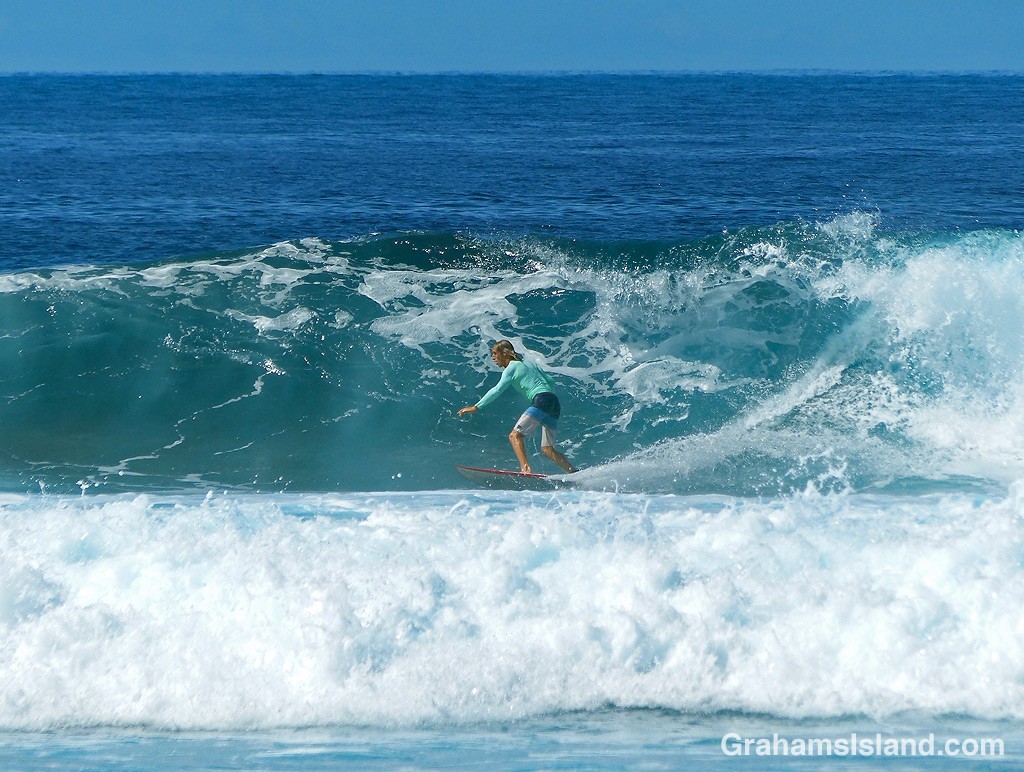
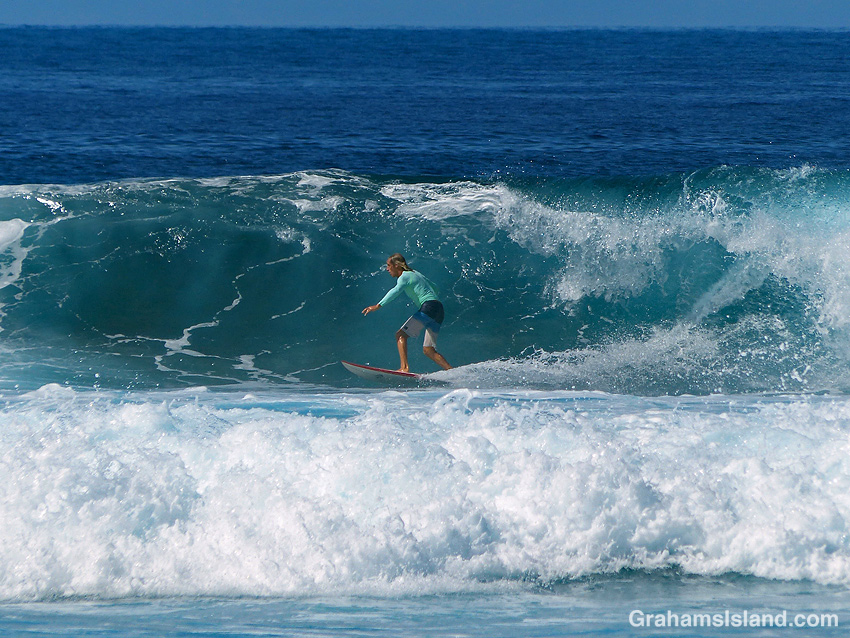
Surfing originated in Hawaii and is a quintessential Hawaiian activity. When the surf’s up, so is absenteeism at the workplace. For last week’s challenge, I posted a photo of surfers waiting for a wave.
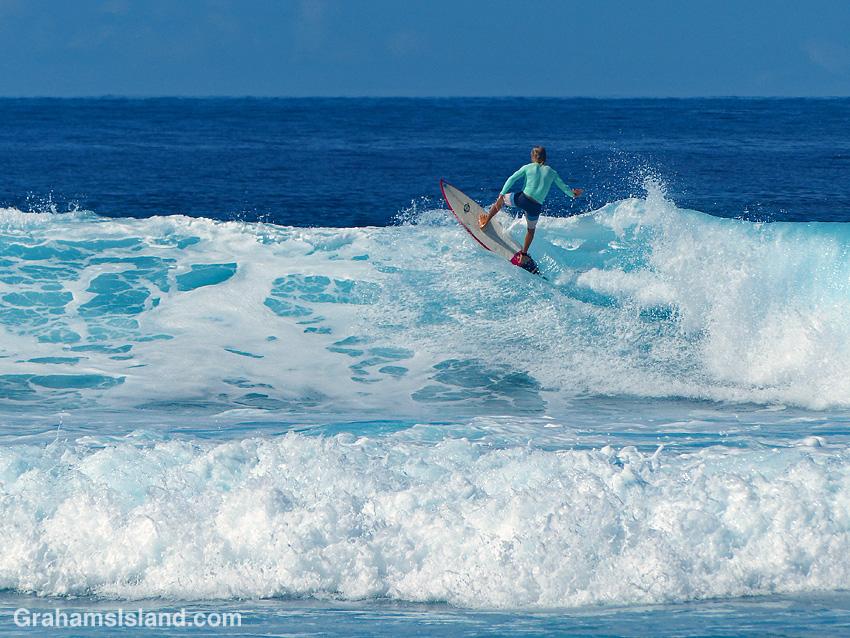
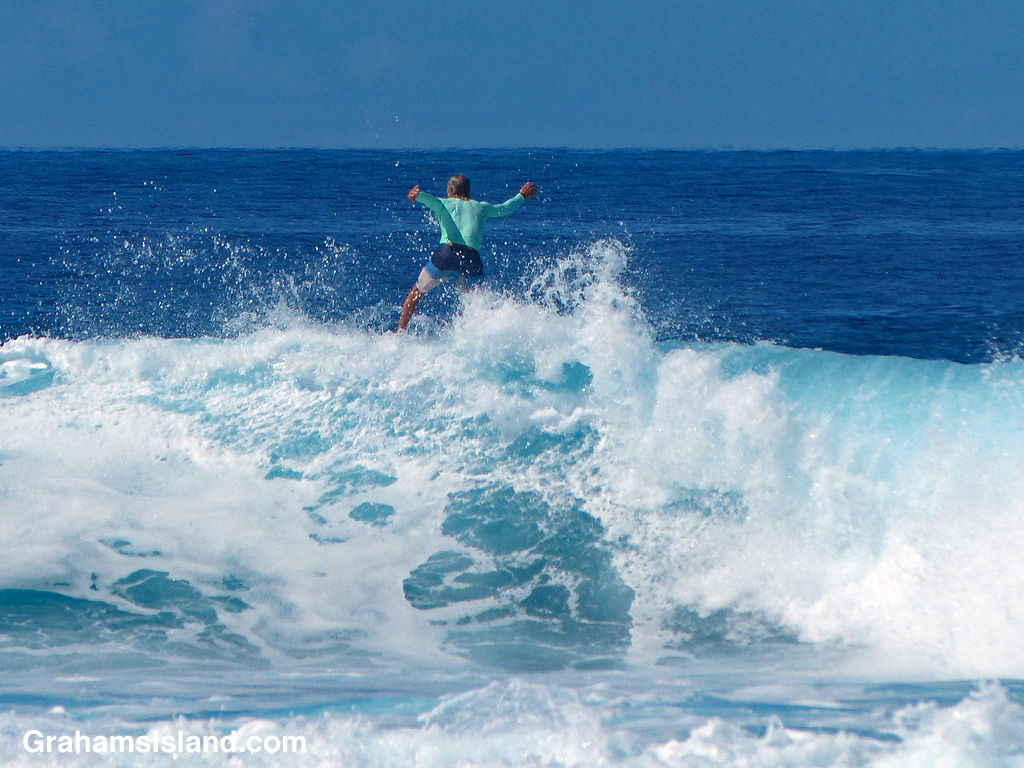
This week, I’m posting photos of one of those surfers catching a wave. In the photos, the surfer cuts a curve down the face of a wave, zips along its base, and then climbs up the face again. At the top, he jumps off, no doubt to wait for the next wave he can catch.
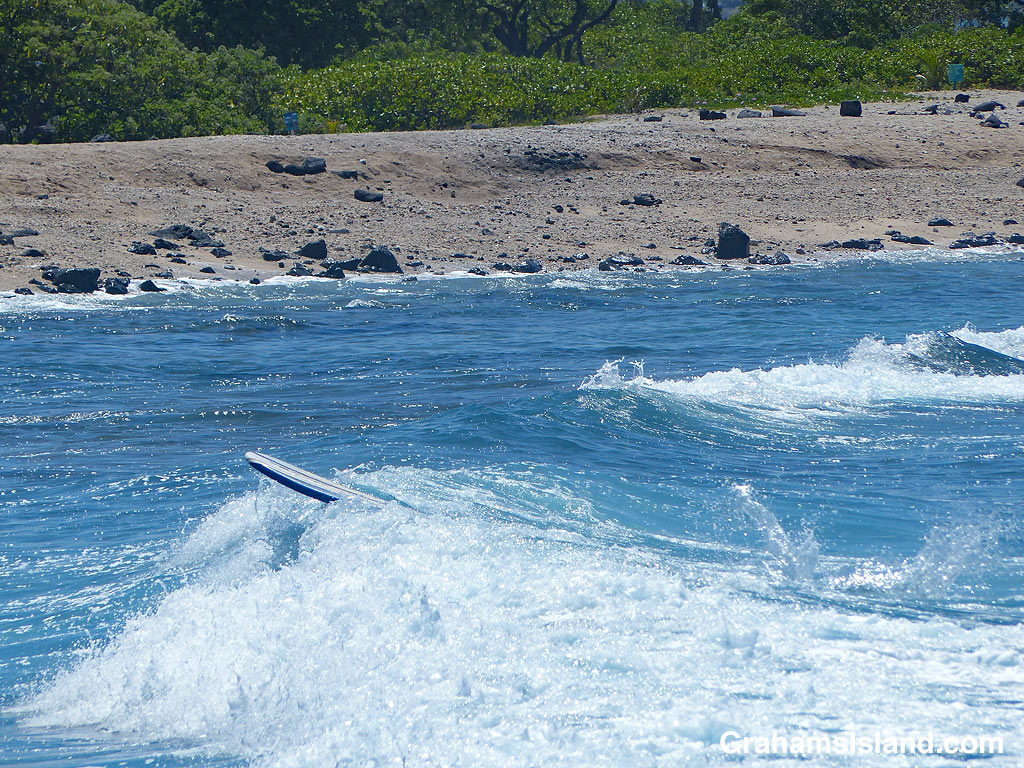
And the alternative version? Wipeout! In the bottom photo an unoccupied surfboard heads to shore, still tethered to the ankle of the out-of-sight surfer who wiped out moments before.
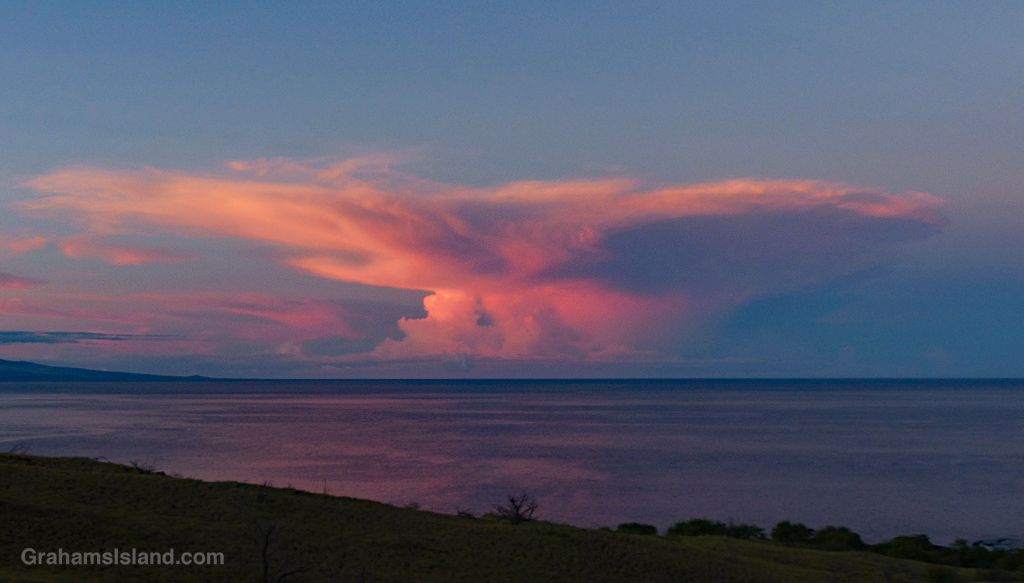
A few days ago, on my way to work, I rounded a corner and saw a bolt of lightening. It was the first of several, none of which I was able to capture on camera. But as the sky lightened, I got a better view of the thunder cloud producing the fireworks.
I was happy to see the cloud catch the early morning light and take on some vivid coloring, which I was able to photograph.
 Graham's Island