
A recent sunset in North Kohala.

A recent sunset in North Kohala.

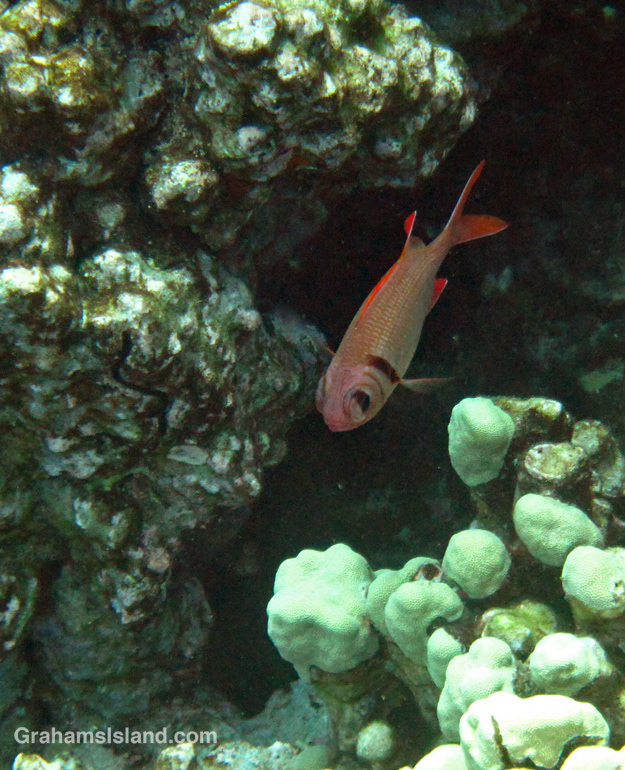 Soldierfishes are nighttime plankton feeders. By day, most rest in sheltered spots such as under ledges, in caves, or in deep holes in the rocks. Pearly soldierfishes area little different in that, during the day, they rest in the open just above the reef.
Like all soldierfish, the pearly soldierfish is notable for its large eyes and reddish coloration, though usually with the pearly sheen that gives it its name.

This old tractor now graces a small park area in a gated development in North Kohala.
Posted in response to this week’s Sunday Stills challenge on the theme of ‘Vintage.’ See more responses here.

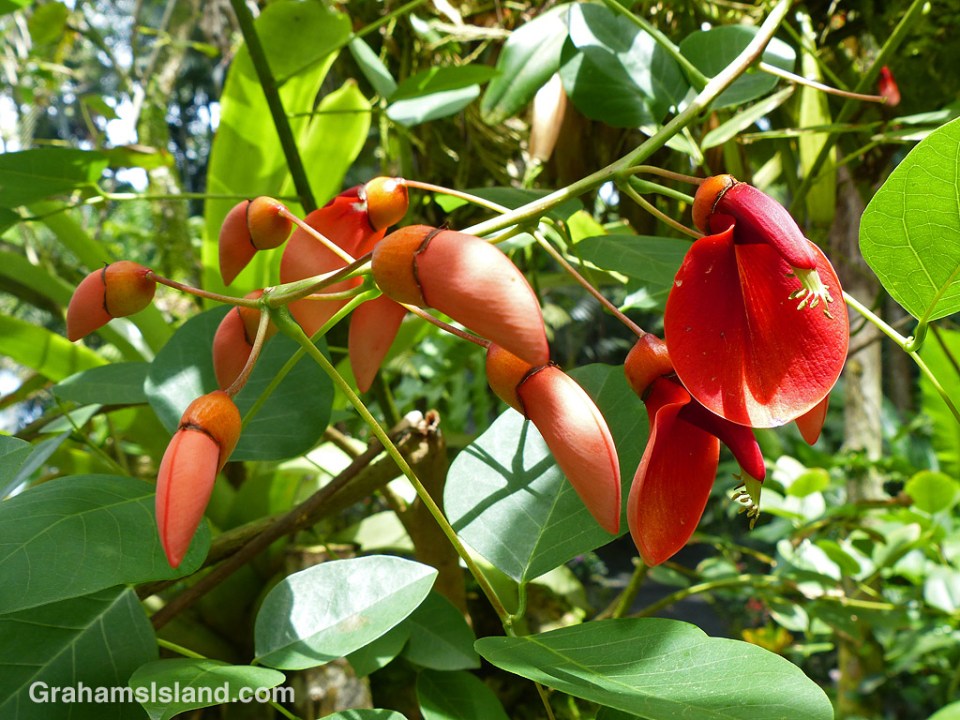
Erythrina crista-galli is also known as the coral tree or cockspur coral tree. It hails from southern South America and is the national tree of Argentina and Uruguay. A member of the pea family, it grows 15 to 20 feet high. The unopened flowers make me think of toucans.

Kekaha Kai State Park, north of Kailua Kona, is a pretty park with some excellent beaches. It’s also right under the flight path for aircraft heading to Kona International Airport (officially known as Ellison Onizuka Kona International Airport at Keahole).
What this means is that a steady stream of jets, on final approach to the airport, pass overhead, and not that far overhead either. It’s not the quietest park in the state.
While most of the aircraft are operated by the usual airlines, a few military planes pepper the skies. This one is a C-17 Globemaster, a military transport plane. It was arriving from Oahu, delivering firefighting equipment for the military’s Pohakuloa Training Area.

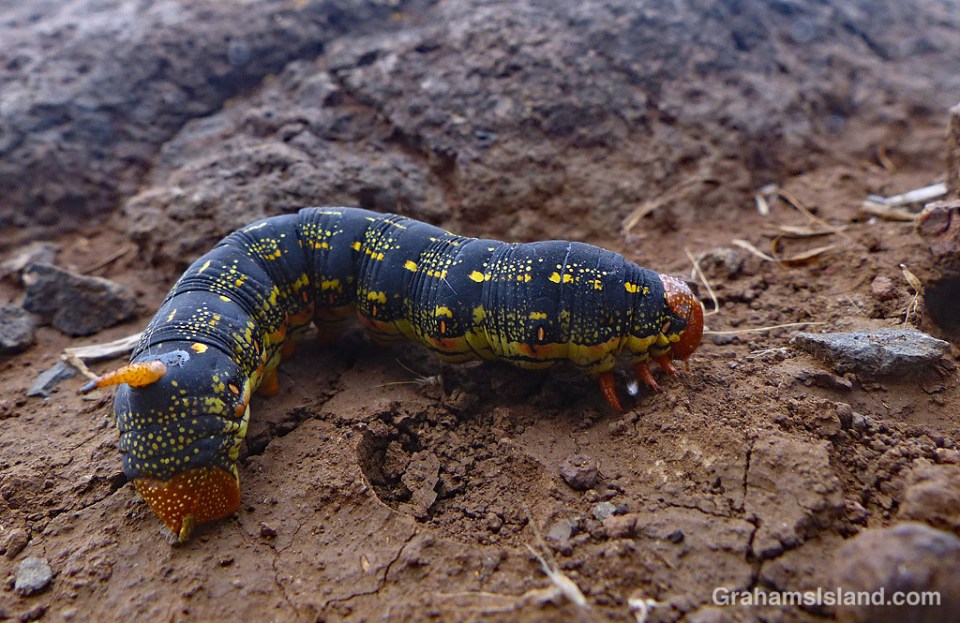
This handsome fellow is the caterpillar of a white-lined sphinx moth (Hyles lineata). This caterpillar’s color can vary quite a bit. The markings on this predominantly black caterpillar can be green or orange, but the main color can be bright green or yellowish with black markings or red dots.
One consistent feature of these caterpillars is the orange horn on their back ends. This is also a good way to distinguish front and back. The horn looks like it could sting, but it can’t. It’s probably more of a visual deterrent to would-be predators.
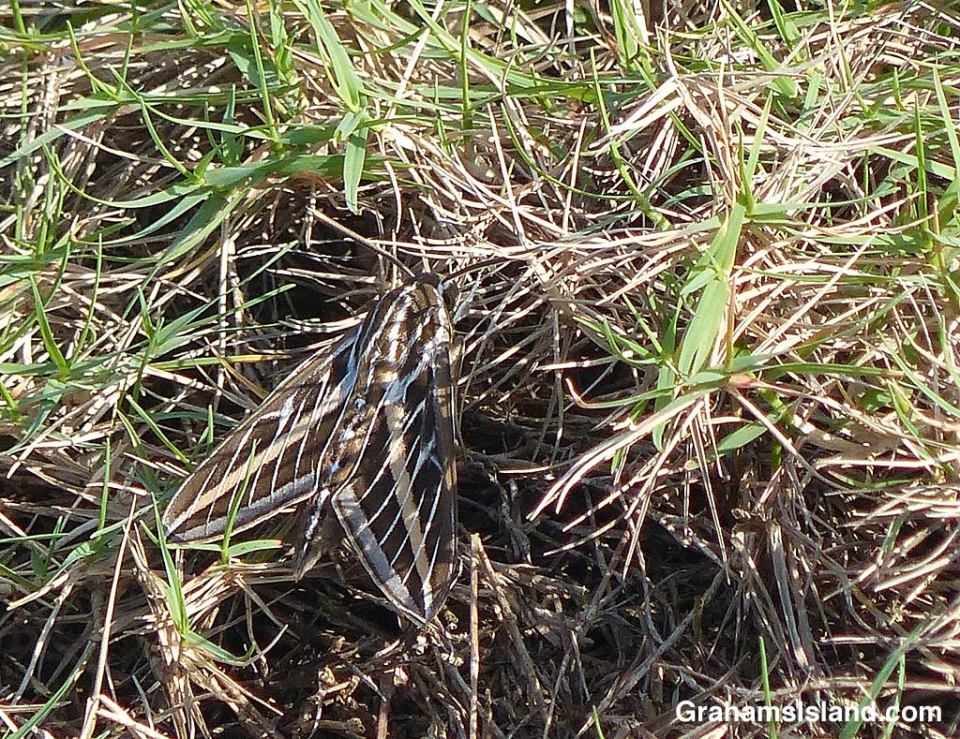
The adult moth (below) has more uniform coloration. These moths and caterpillars are quite common but I rarely see then. This isn’t surprising considering how the adult moth blends in, but the caterpillar is quite striking and I’m surprised I haven’t seen more of them.

Stick insects rely on camouflage for protection, sitting stationary on a branch or stem and looking indistinguishable from their perch. This stick insect was hanging out on this uniformly blue fabric, which is just about the polar opposite of its preferred strategy.
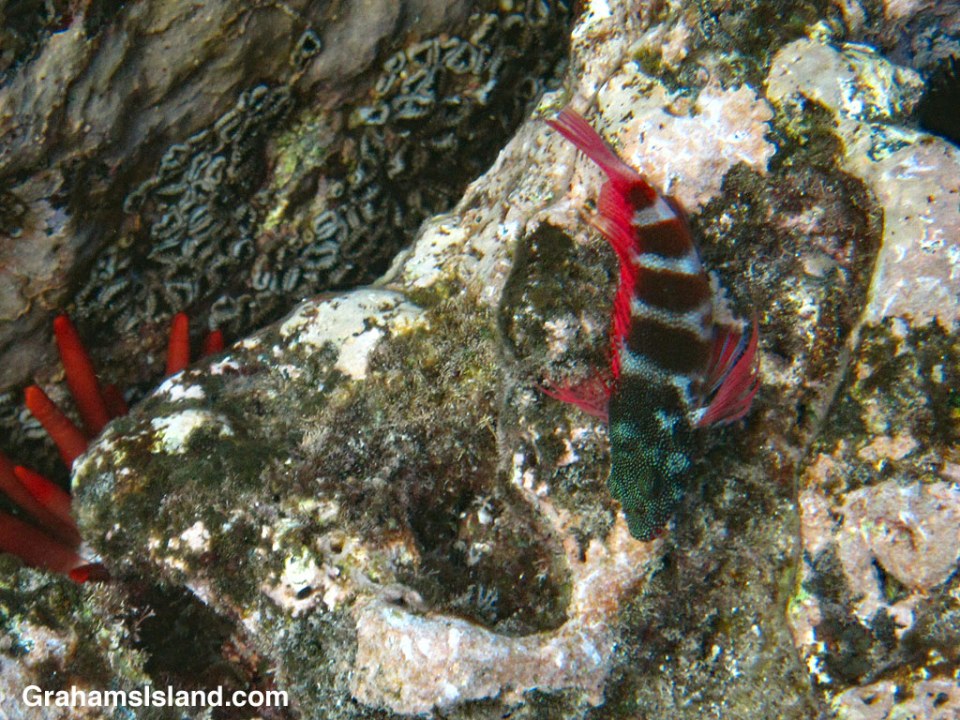
Redbarred hawkfish, like other hawkfish, spend most of their time perched motionless on a rock or coral head, waiting to dart out at passing prey, usually little fish or small crustaceans. On some fish, the bars are more of a brick red, similar to the color of the red pencil urchin on the left of the photo.

