
I enjoyed seeing this sign at Kaloko-Honokohau National Historical Park. I guess the storm was severe enough to knock the sign over.
For more information about Kaloko-Honokohau National Historical Park, go to nps.gov/kaho/index.htm.

I enjoyed seeing this sign at Kaloko-Honokohau National Historical Park. I guess the storm was severe enough to knock the sign over.
For more information about Kaloko-Honokohau National Historical Park, go to nps.gov/kaho/index.htm.
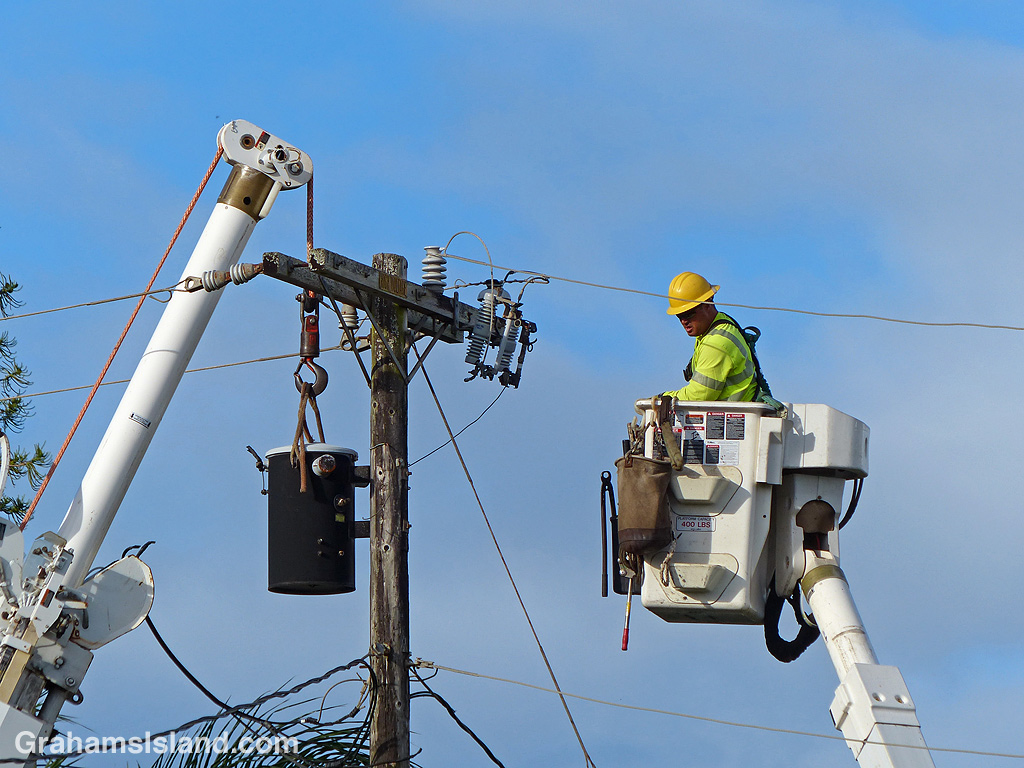

A week or so ago, I posted (here) about a temporary electrical substation that sprang up on the edge of Hawi to facilitate a change in the local distribution network. A few days ago, the specifics of that change made itself felt here when the house was without power for four hours or so. This outage was planned and communicated so it wasn’t a surprise.
What was a surprise was that I hadn’t anticipated the road to the house being blocked by electic company trucks for a couple of hours. What that meant was that the plan to be away for most of the power outage got off to a rocky start.
The work they were doing was replacing the small transformers on local poles with ones that operate on a new voltage, a transformer transformation if you will. At least that’s my understanding of what I was told. When it comes to electicity, I push a plug into a socket and the light goes on. If it doesn’t, I whack the lamp a couple of times and that often helps.


It’s hard to believe that the spiky, menacing-looking caterpillar above transforms into the beautiful passion vine butterfly, seen foraging on lantana flowers.

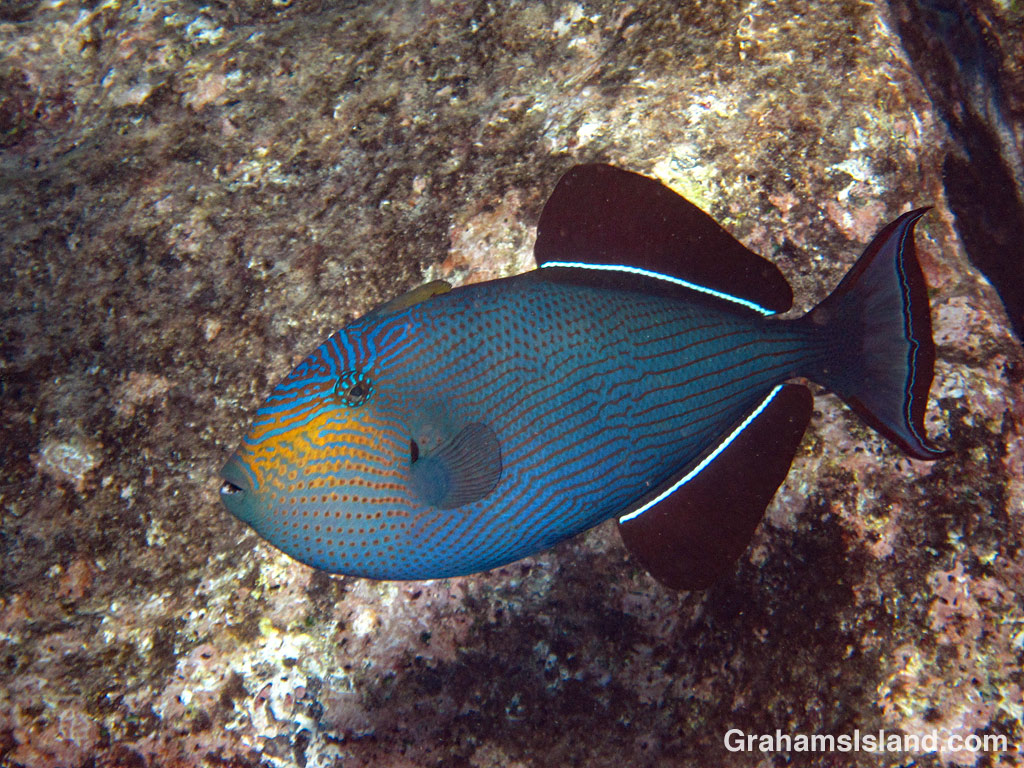
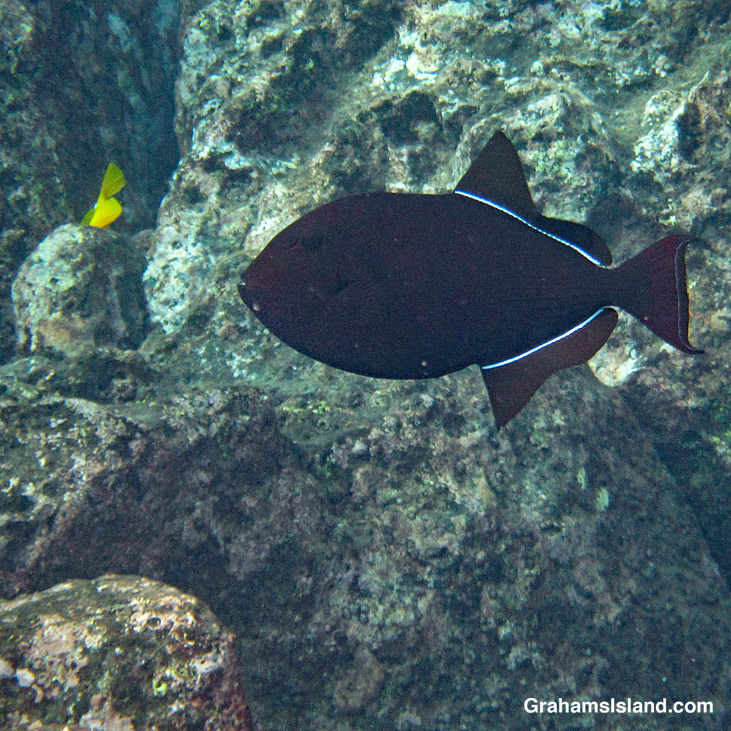
Most of the time, black triggerfish look like the lower photo, a fairly uniform black, apart from two bright pale blue lines at the base of the dorsal and anal fins. However, when they become aroused or agitated, their colors can change, and this color transformation can happen very quickly. Sometimes it’s just the brilliant blue lines radiating from the eyes, sometimes the flush of yellow or orange on the sides, sometimes the blue-green lines along the side.
This black triggerfish gave me the full display, and rather than swimming off, it hung around and presented a broadside view. It’s possible it was defending its territory or perhaps some eggs.
I took the photo and swam on, not wanting to bother the fish more than I apparently already had.

Waimanu is a monk seal who spends most of her time around the Big Island, one of the few to do so. She has given birth three times here, and recently gave birth to her fouth pup. She won’t leave her pup to feed until it’s ready to fend for itself, usually around six weeks. Because of this, she feeds up, ahead of giving birth, and attains enormous size.
The top photo shows the contrast between the huge mother seal and her small pup. Over the next six weeks, if all goes well, she’ll steadily lose weight while the pup will grow quite quickly. Eventually, the pup will lose it’s black coloration and look similar to its mother, the transformation complete.

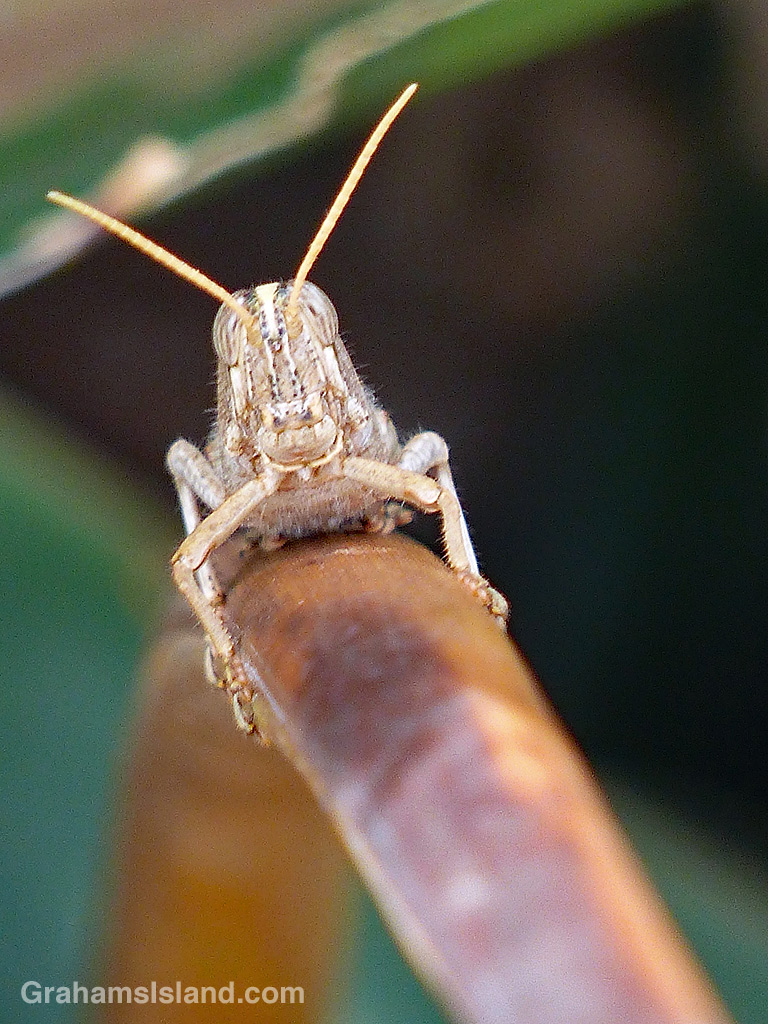
I had a stare down with this grasshopper as it rested on a curved stem. At least I think I did. The grasshopper could have been looking elsewhere, or maybe it was asleep.

This Phalaenopsis Minho Princess orchid was one of many varieties of orchid that can be found at the Hawaii Tropical Botanical Garden north of Hilo on the east side of the Big Island. For more information about Hawaii Tropical Botanical Garden, go to htbg.com.
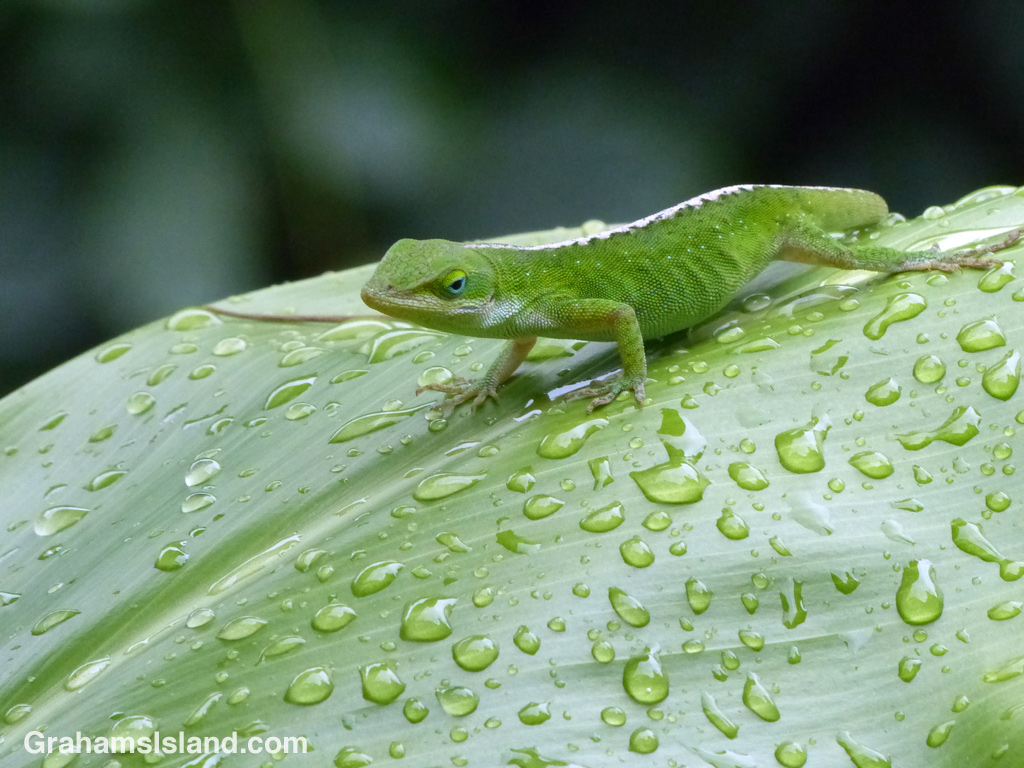 A green anole surveys the scene from a raindrop covered ti leaf.

