

 The recent lunar eclipse occurred last Sunday evening here in Hawaii. When the moon rose at 6:02 p.m. (five minutes before sunset) the eclipse was already well underway. Where I was watching, the sky was hazy so the moon wasn’t very clear. It then disappeared into a bank of clouds and I considered heading for home. But the cloud bank wasn’t huge and was drifting away from the area I was watching.
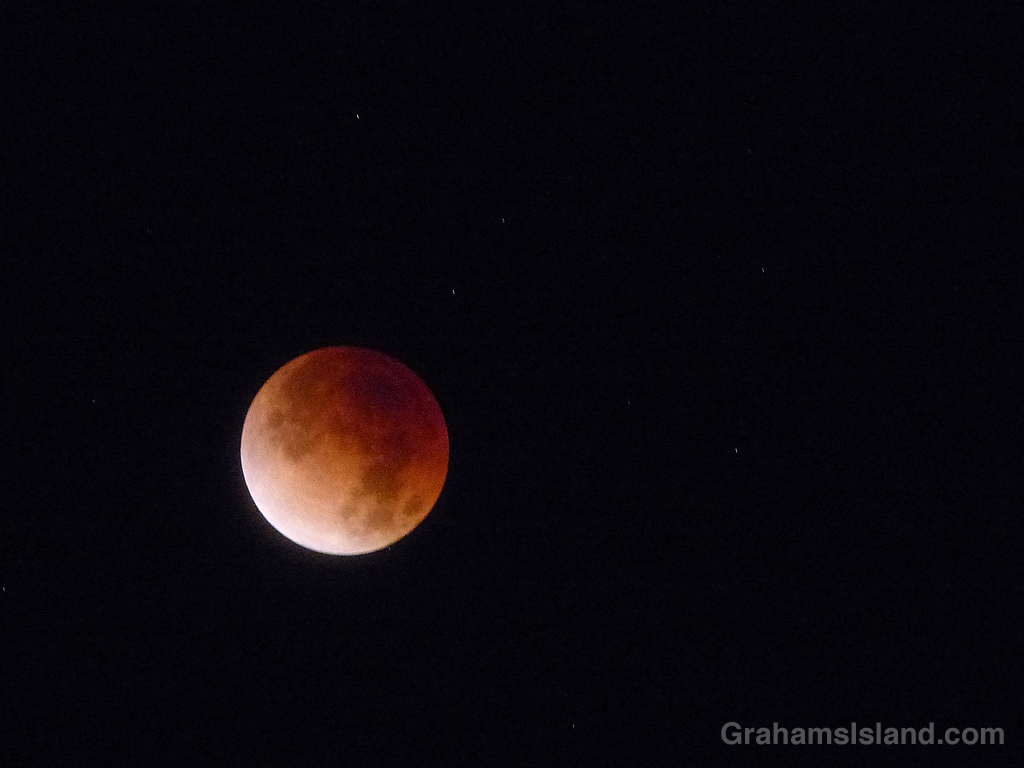
Sure enough, a little before 7 p.m., the now fully-eclipsed moon slid above the clouds into a beautiful starlit night. I took some photos where I’d set up, down by the coast, and then headed into Hawi to see what it looked like there.
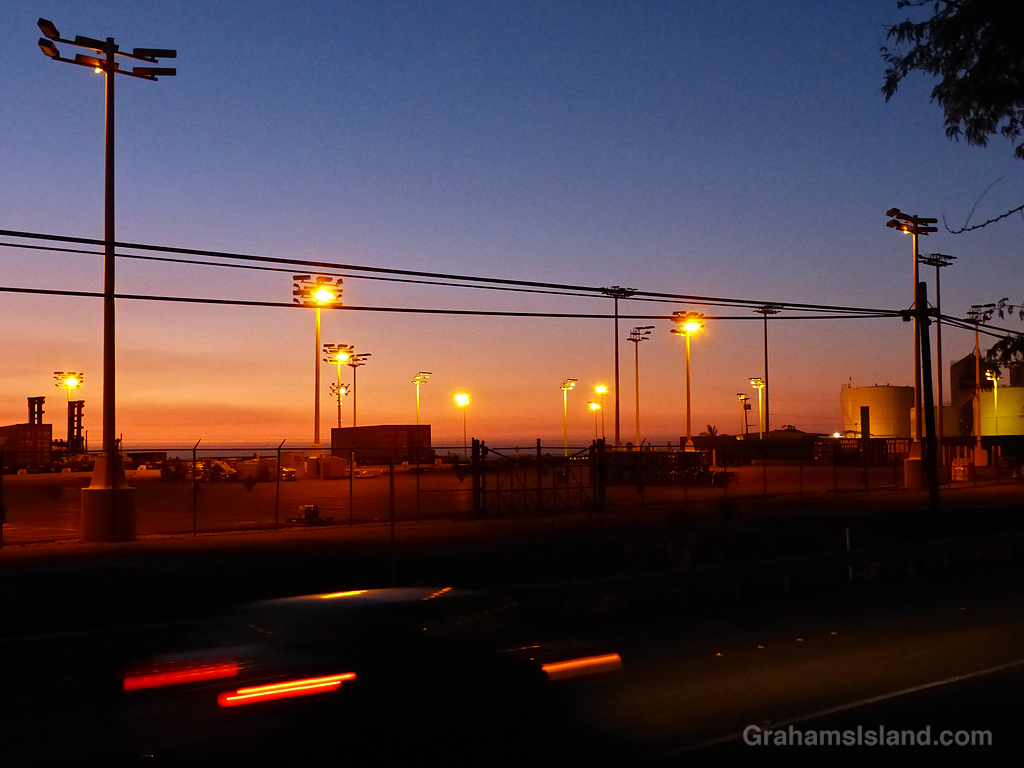
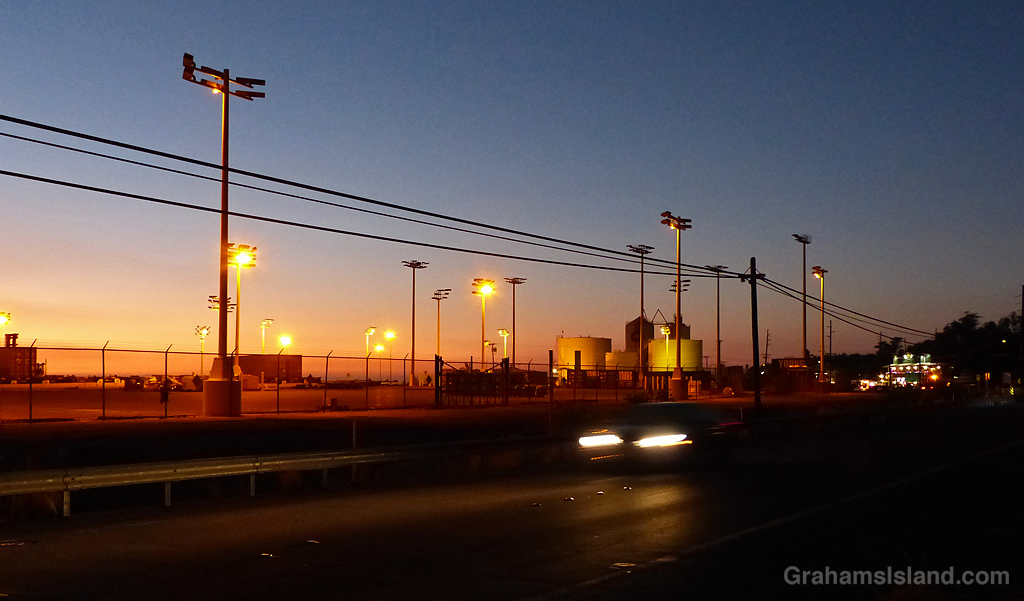
Above is a view from downtown Hawi (not exactly hopping at 7:20 on Sunday night). The second photo is the moon soon after it rose above the clouds before the sky was fully dark. Below is the night sky with the moon in the bottom left and Orion at the top right.
Why the grand name for this eclipse? The moon was closer to the Earth than normal so it seemed bigger and brighter than usual, which is known as a supermoon. Because this was a total eclipse it gave the moon a red tint, which is known as a blood moon. And January’s full moon is sometimes called a wolf moon. Voila – a super blood wolf moon.
Posted in response to this week’s Sunday Stills challenge on the theme of ‘Night,’ (See more responses here.) and this week’s Friendly Friday challenge on the theme of ‘Coral-ish colors.’ (See more responses here.)





 Graham's Island