
A tugboat enters Kawaihae Harbor in the early morning. The crewman, bathed in sun and casting a long shadow, waits to begin the process of maneuvering the tug’s barge alongside the jetty.
In response to WPC ‘A face in the crowd.’

A tugboat enters Kawaihae Harbor in the early morning. The crewman, bathed in sun and casting a long shadow, waits to begin the process of maneuvering the tug’s barge alongside the jetty.
In response to WPC ‘A face in the crowd.’
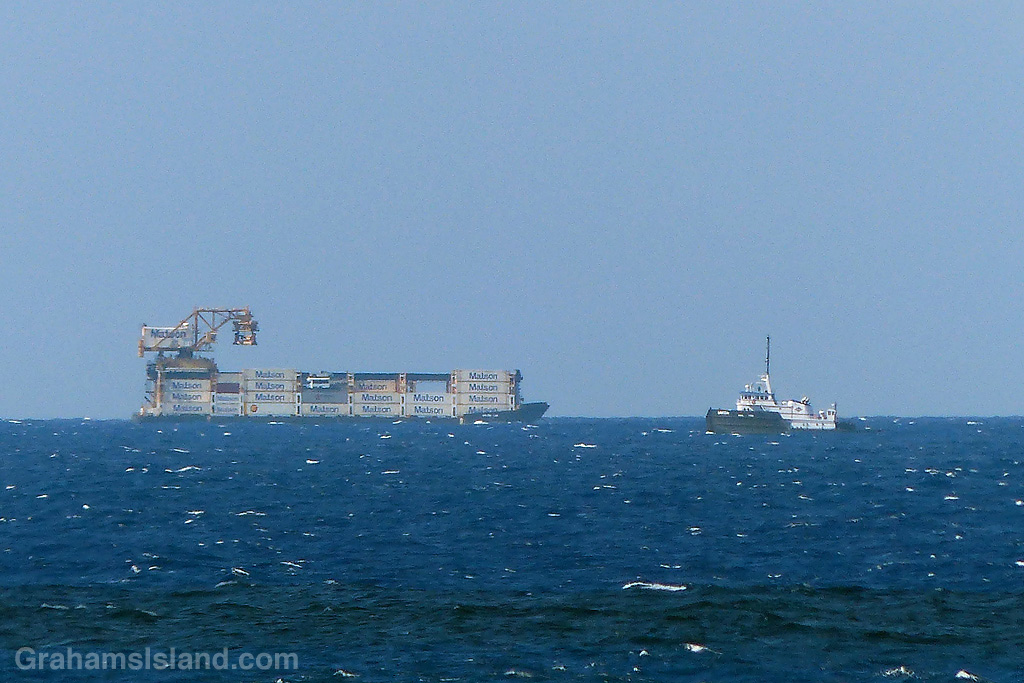
The photo above poses the question as to whether this barge captain is entirely clear on the concept. The photo below reveals that, yes, he or she is. These are two of the inter-island barges passing in the Alenuihaha Channel.

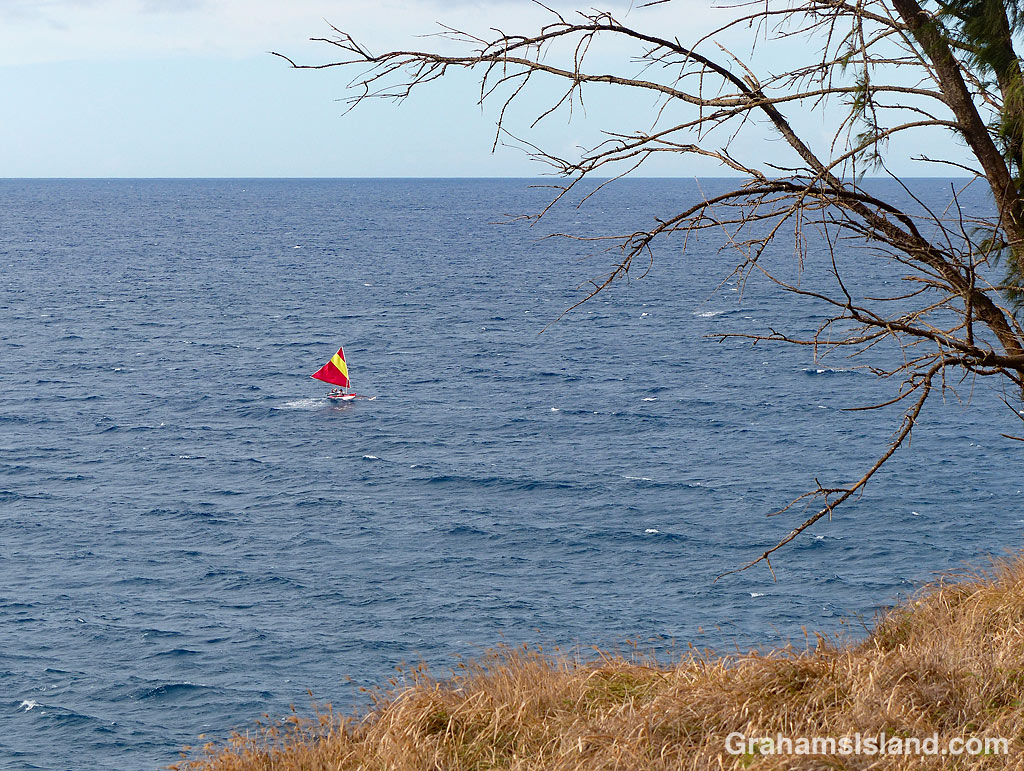
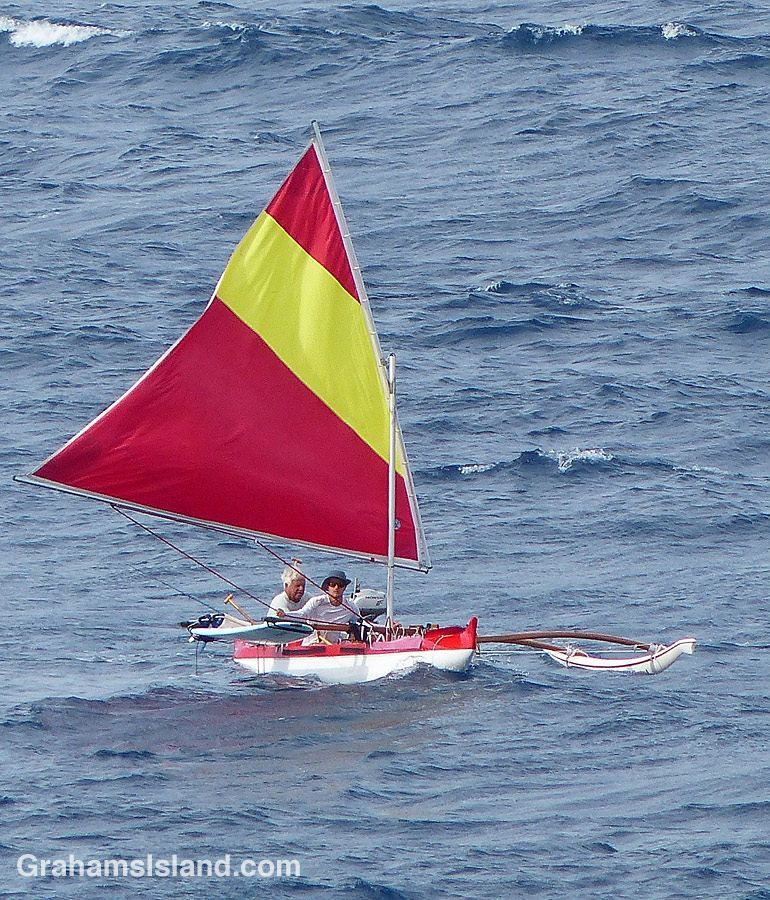
I saw this little outrigger sailing canoe off the North Kohala coast. The two men had obviously been fishing, possibly still were, but though the canoe wasn’t too far out, I couldn’t figure out which way they were headed. I guess they must have made it safely to shore since I didn’t see anything in the news about missing mariners.

Honokohau harbor, at the north end of Kailua-Kona, is the main small boat harbor on the west side of the Big Island. Here, under an ominous sky, a man does some work near the top of the mast of one boat.
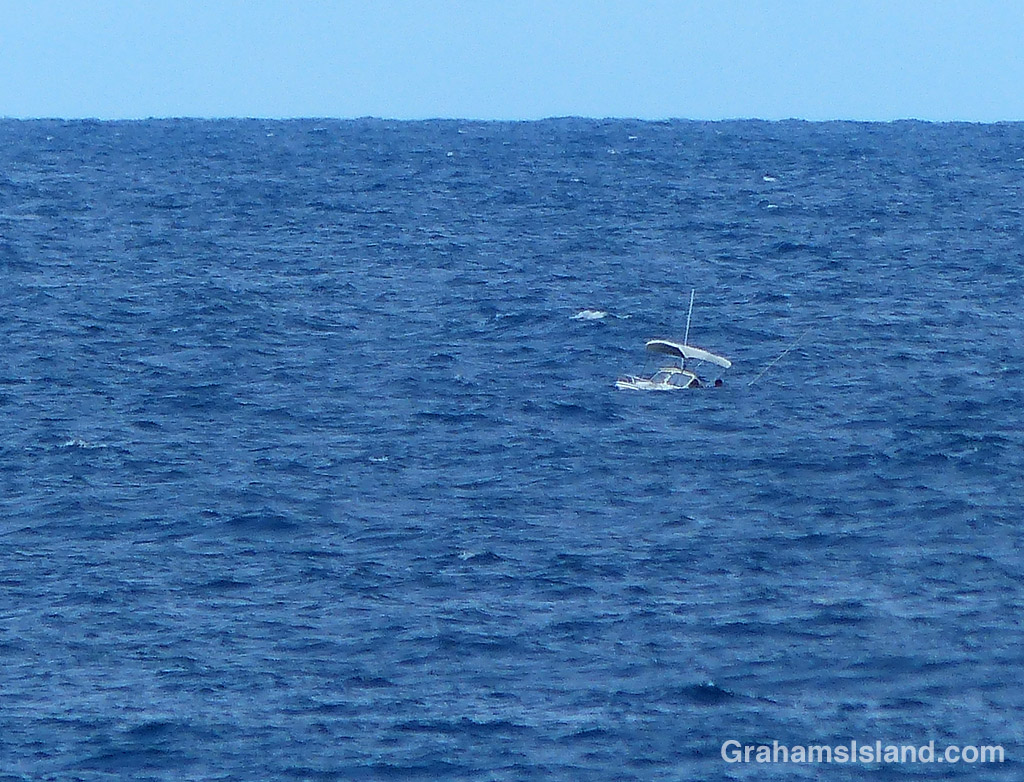 This small boat, chugging along the North Kohala coast, kept disappearing, then popping up again. As a marker of the action of waves and swell, it always catches my attention, possibly because I’ve been in that situation many times myself.
This week’s posts are in response to the WordPress photo challenge on the theme of ‘transient.’
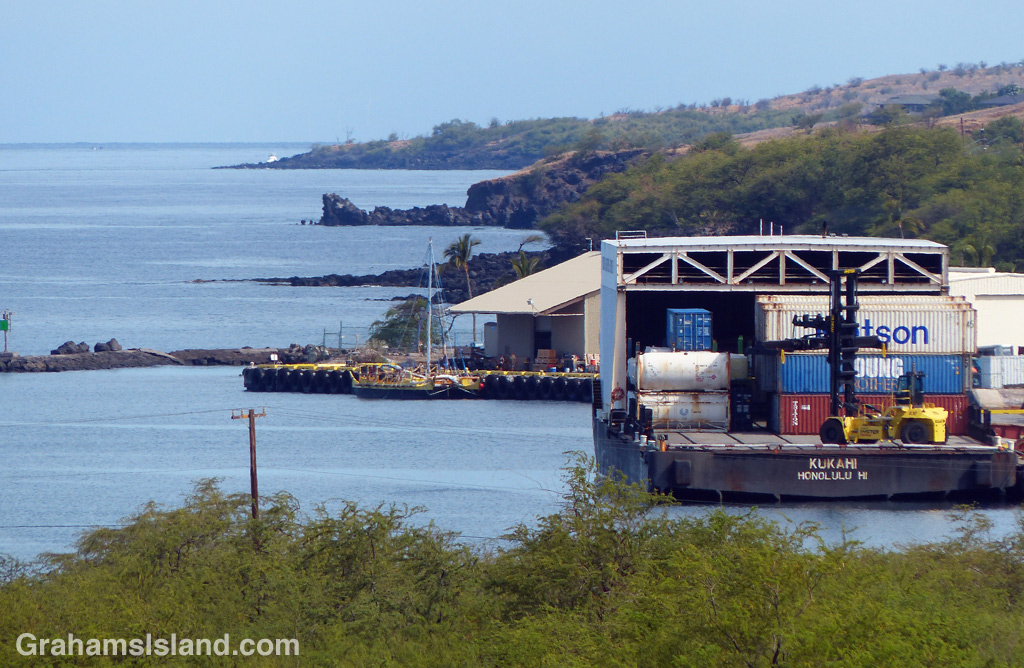
There are two commercial ports on the Big Island, Hilo on the east side, and Kawaihae on the west. This is a view of Kawaihae harbor with the inter-island barge unloading at the dockside. In Hawaii, many goods are shipped to Oahu and then distributed to the other islands on barges.
Also at the dock, beyond the barge, is the Hawaiian voyaging canoe, Makali’i. This boat had just returned to the water after a long refit on the island. The following day, it set off to join other boats in Oahu, welcoming home the Hawaiian voyaging canoe, Hokuleʻa, from its 3-year Mālama Honua Worldwide Voyage.
Two wildly different vessels, but both engaged in the very transient business of crossing open waters.
For more information about Hokuleʻa and the Polynesian Voyaging Society, go to www.hokulea.com.
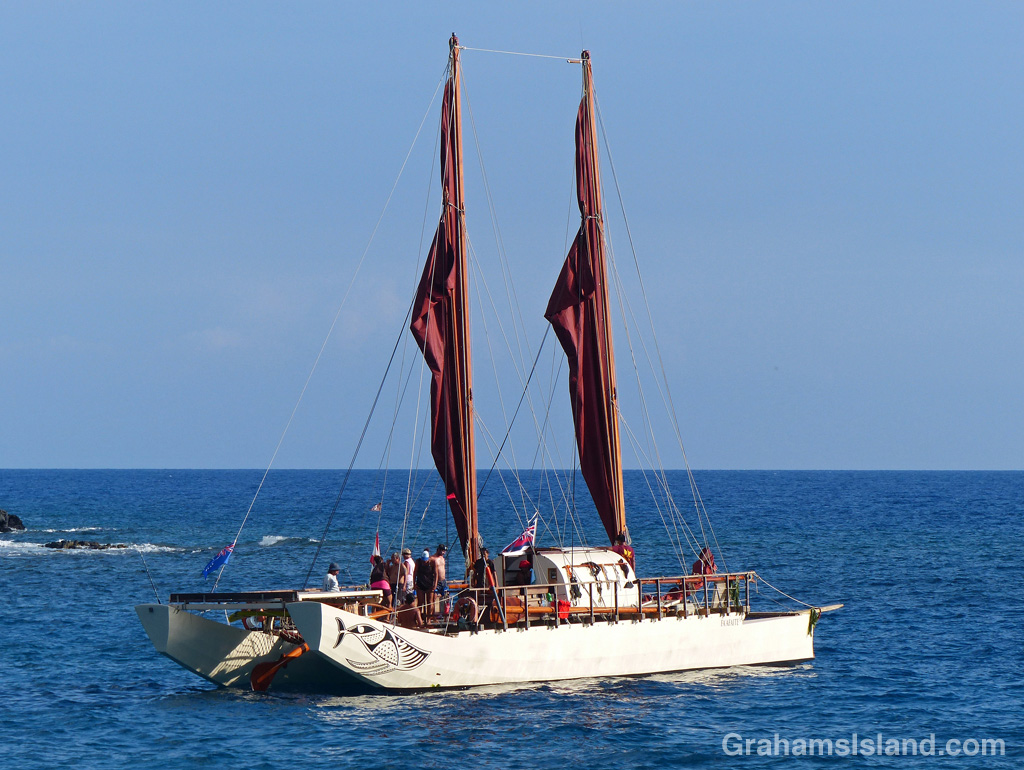

Yesterday saw the return of the Hawaiian voyaging canoe, Hokuleʻa, from its 3-year Mālama Honua Worldwide Voyage. There was a ceremony on Oahu to mark the return featuring Hokuleʻa’s sister canoe, Hikianalia, and several other Polynesian voyaging canoes.
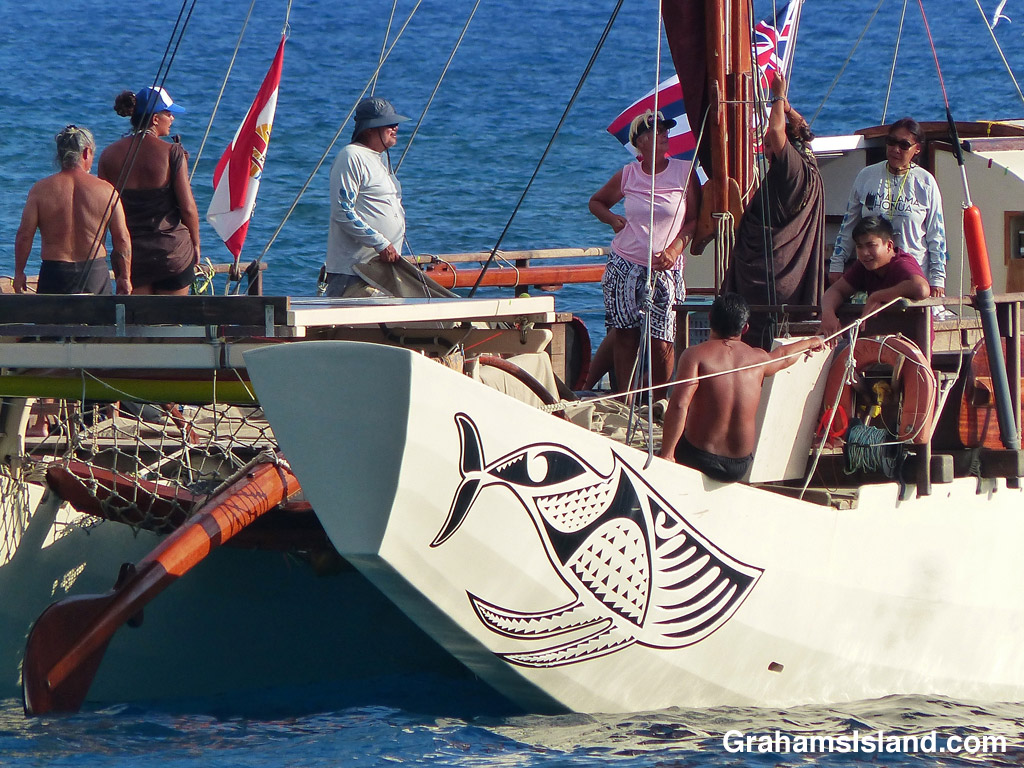
Earlier in the week, one of the canoes, Fa‘afaite, from Tahiti, was waiting for its sister canoe, Okeanos, off the Kohala coast, before carrying on to Oahu. These voyaging canoes use traditional instrument-free navigation on their travels.
For more information about Hokuleʻa and the Polynesian Voyaging Society, go to www.hokulea.com.
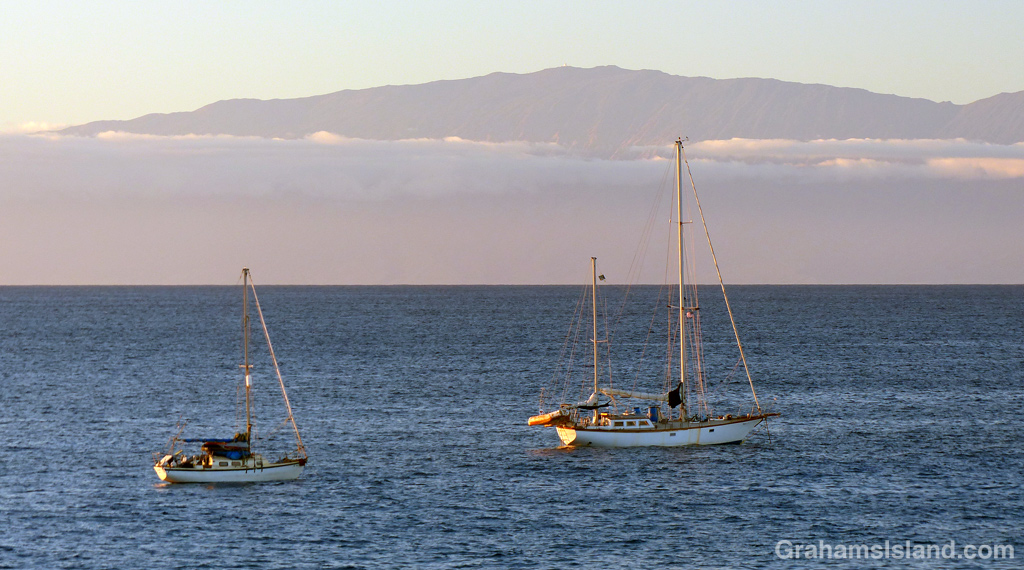
A pair of sailboats at anchor off the Big Island with Maui in the background.

