Tag Archives: Friendly Friday

Surfing

This week’s Friendly Friday challenge theme is ‘Alternative Version.’ See more responses here.

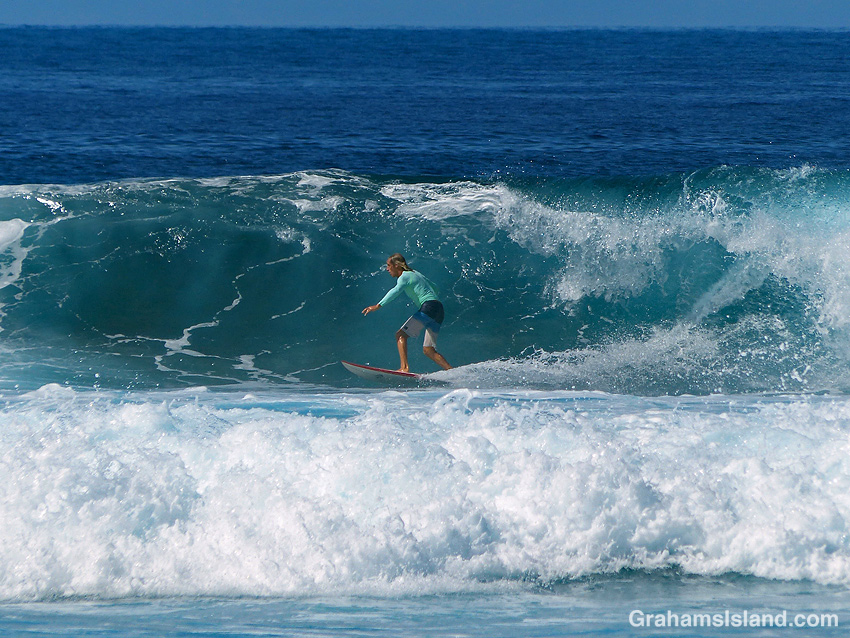
Surfing originated in Hawaii and is a quintessential Hawaiian activity. When the surf’s up, so is absenteeism at the workplace. For last week’s challenge, I posted a photo of surfers waiting for a wave.

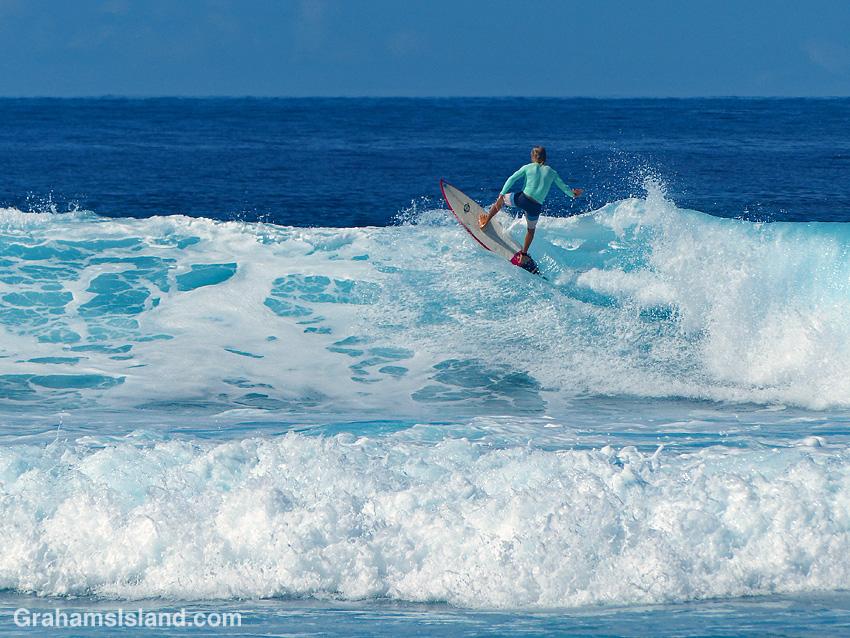
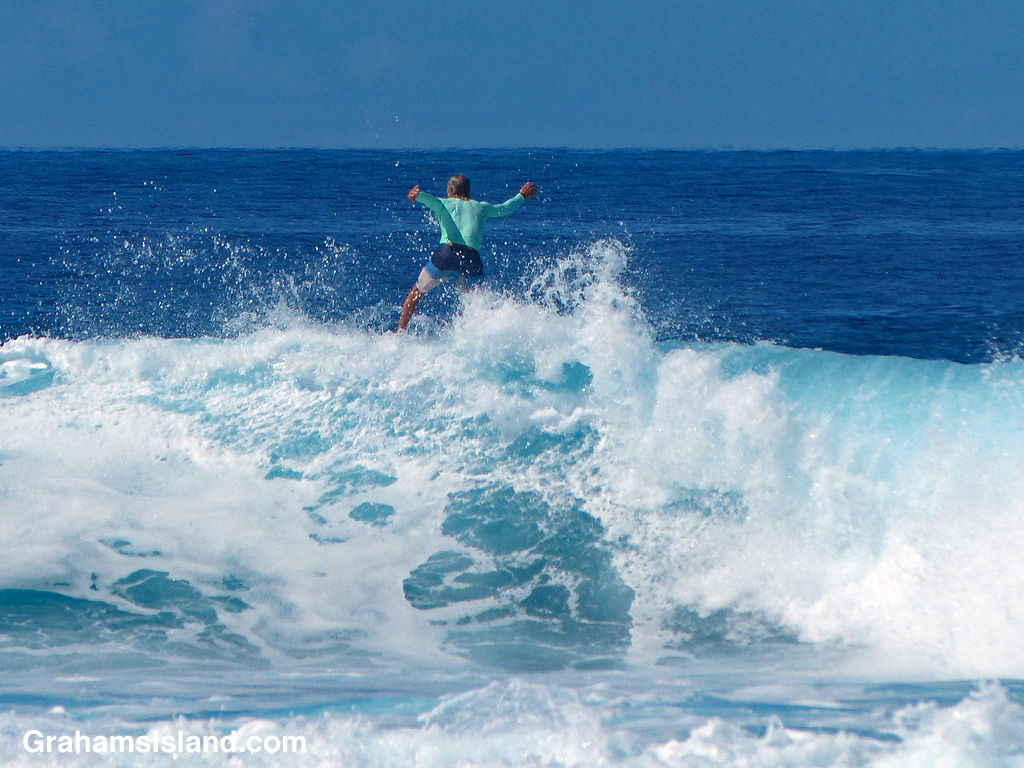
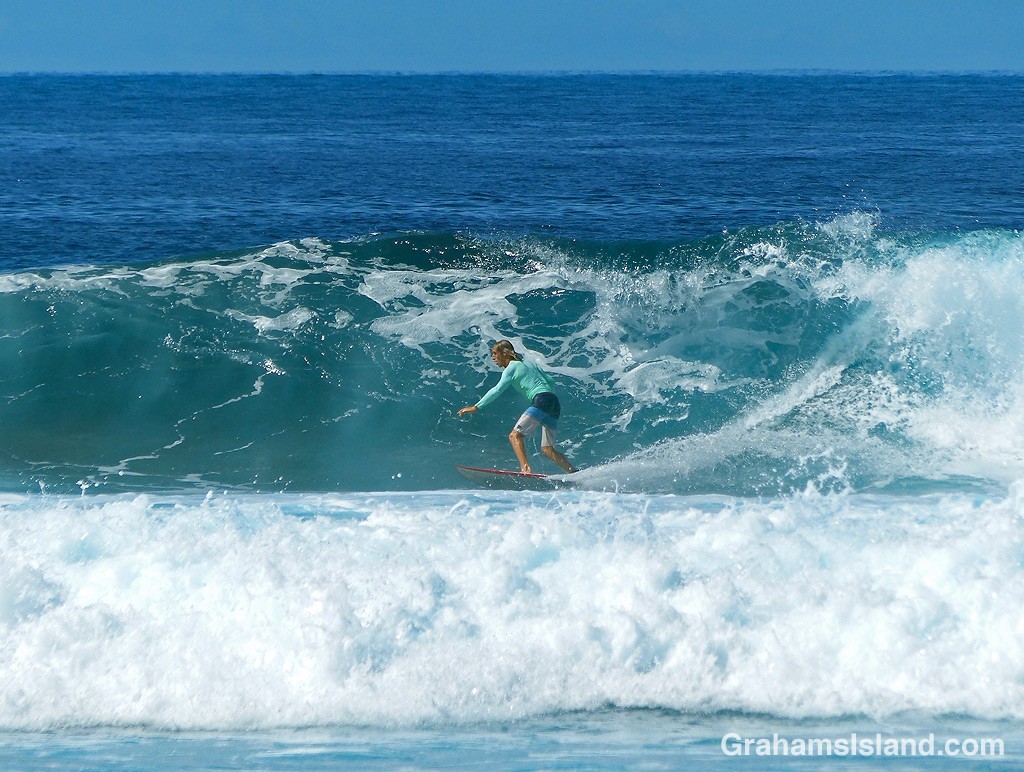
This week, I’m posting photos of one of those surfers catching a wave. In the photos, the surfer cuts a curve down the face of a wave, zips along its base, and then climbs up the face again. At the top, he jumps off, no doubt to wait for the next wave he can catch.

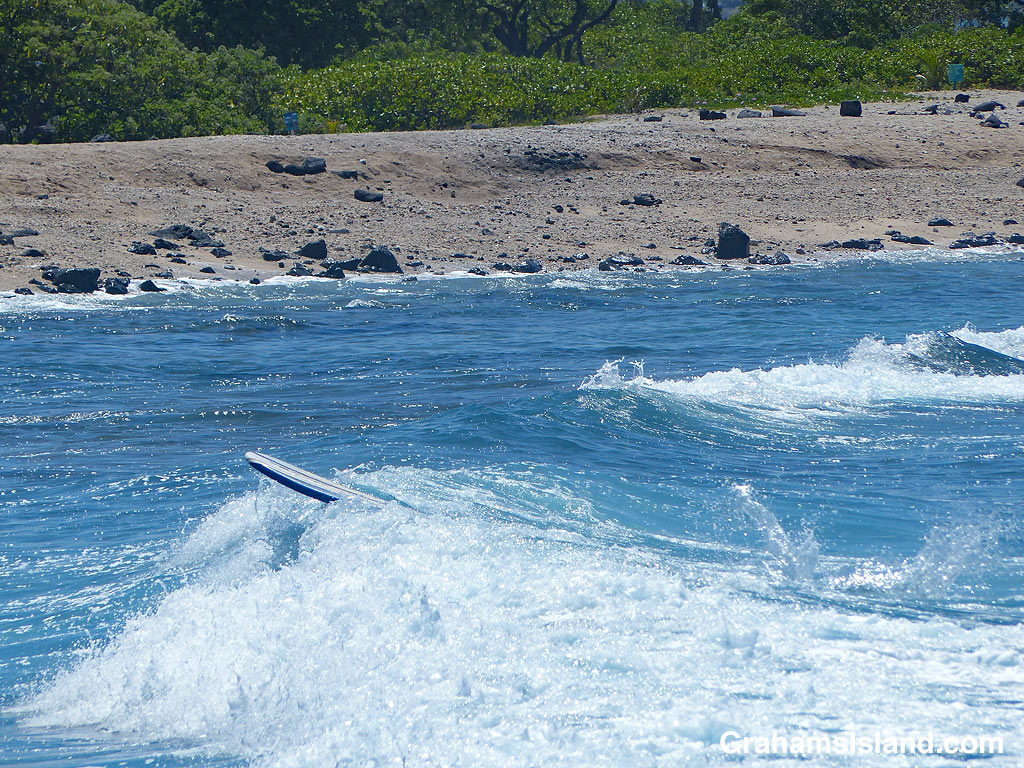
And the alternative version? Wipeout! In the bottom photo an unoccupied surfboard heads to shore, still tethered to the ankle of the out-of-sight surfer who wiped out moments before.

Powerboat and surfers

This week’s Friendly Friday challenge theme is ‘Balconies.’ See more responses here.

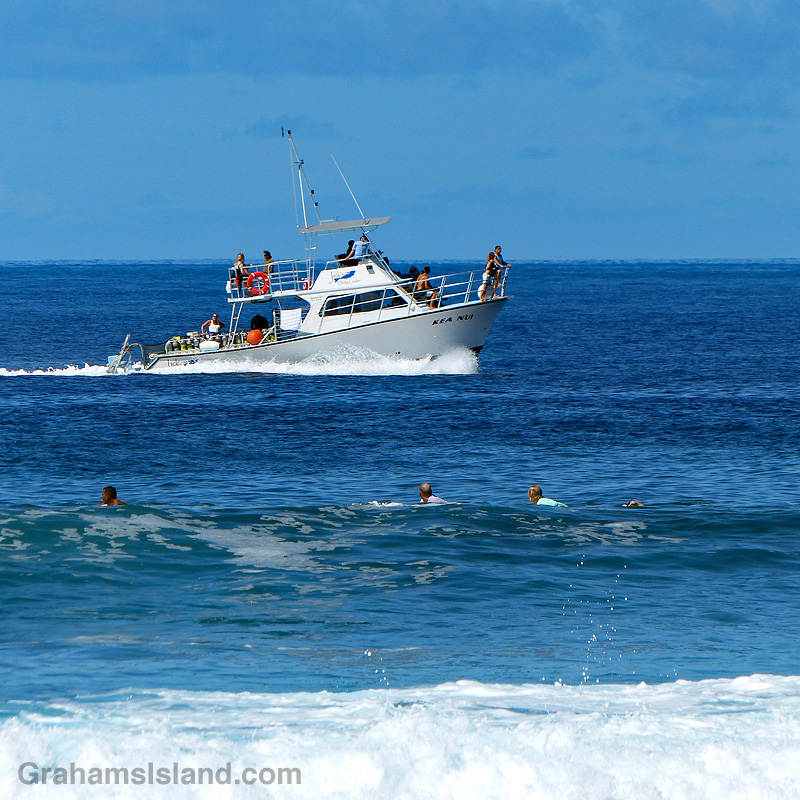
Not having any photos of balconies in the traditional sense, I thought I’d pop for a photo taken yesterday when I was down in Kailua Kona. Here, a powerboat heading north passes some surfers waiting for a wave.

The boat is taking people out to a dive, and like many of these kinds of boats this one has a couple of balconies (though they’re not called that in nautical language) where passengers can relax en route to the dive site.

Electric

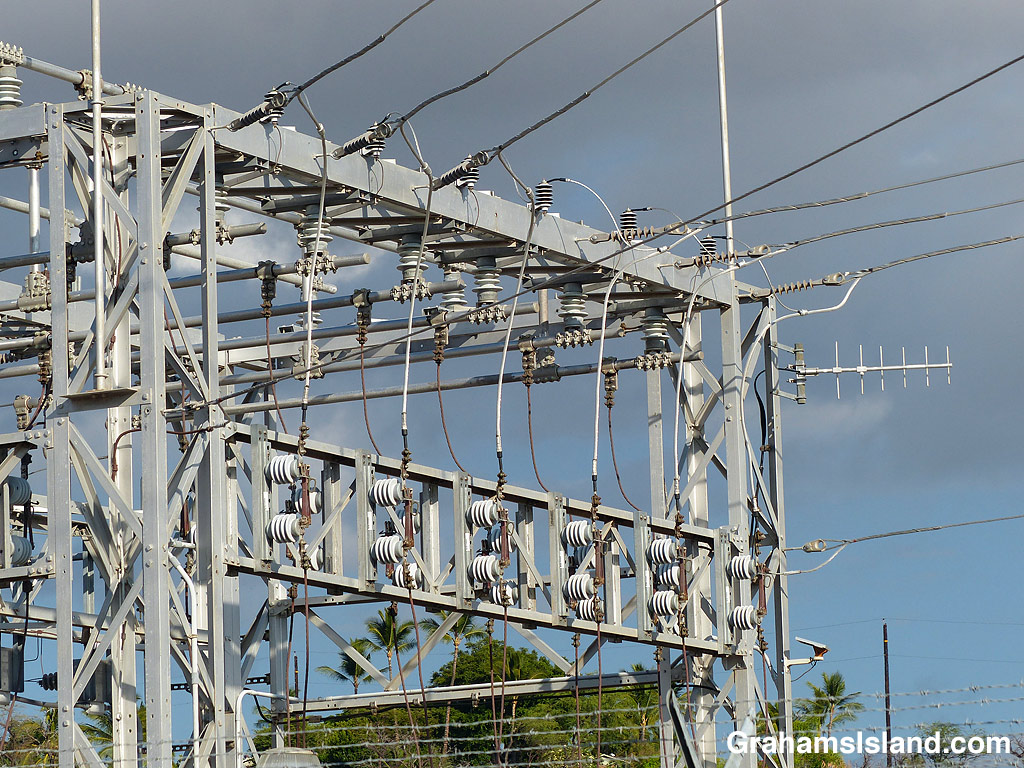
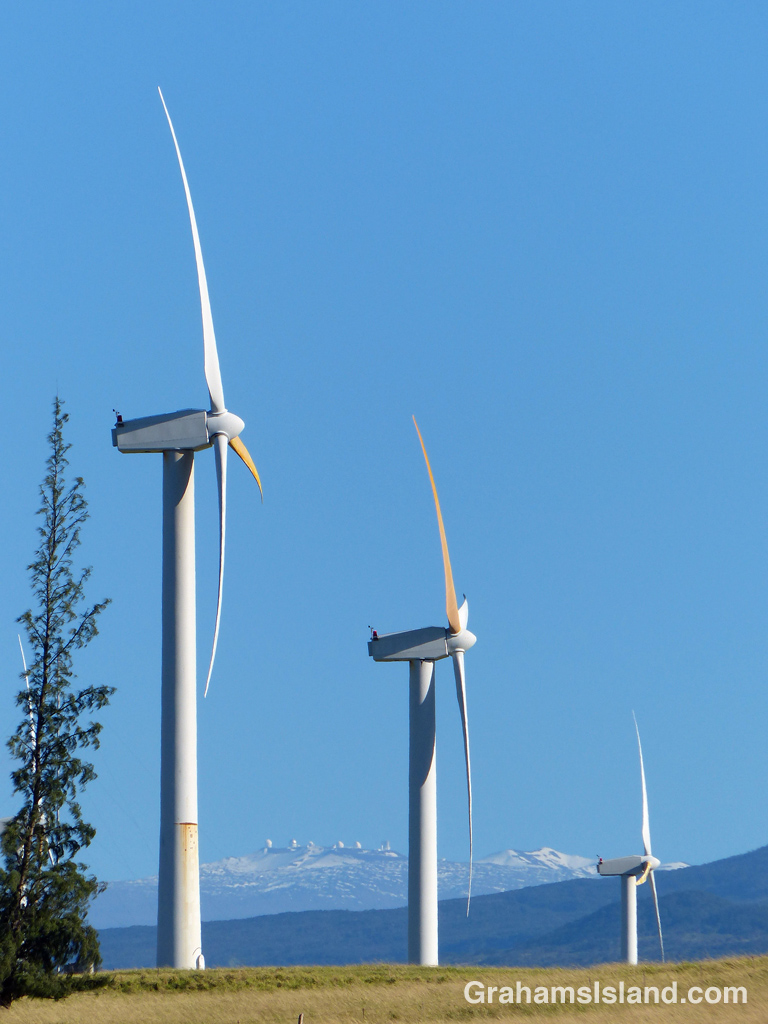
This week’s Friendly Friday challenge theme is ‘Electric.’ See more responses here. These three photos are quite different, but linked by this theme.

The top photo shows a view of an electric substation. I like the lines and shapes such facilities offer. But where does this power come from? A good deal is from oil fired plants, but Hawaii is working to get more of its electricity from locally sustainable sources.

In the middle is a view of Hawi wind farm, with Mauna Kea in the background. There are several wind farms of varying sizes in Hawaii including a few on the Big Island. Their contribution to the power grid is small, but growing. Solar power is also a big contributor, on an individual house basis or for whole communities (here).

One source that provided around 25% of the Big Island’s electricity was the Puna Geothermal Venture (PGV). Last year’s eruption shut them down, though, as the bottom photo shows, the flows mostly missed the plant itself. I think a couple of their wells were covered by lava, but most were spared. Currently, they’re in the process of restarting power production. Not everyone here is a fan of this power source. The same can be said about the Honua Ola bioenergy plant, which will generate electricity from burning eucalyptus chips, but which is still to become operational.

Fishing

This week’s Friendly Friday challenge theme is ‘blue.’ See more responses here.

Here in Hawaii, blue sky and blue water dominate, especially along the coast. Fishermen are at the forefront of those who get to see these things the most, or they would be if they were around. This scene is typical: blue sky, blue water, a fishing pole, but no fisherman. No doubt resting somewhere in the scant shade provided by the trees.

Signs: Just ignore them

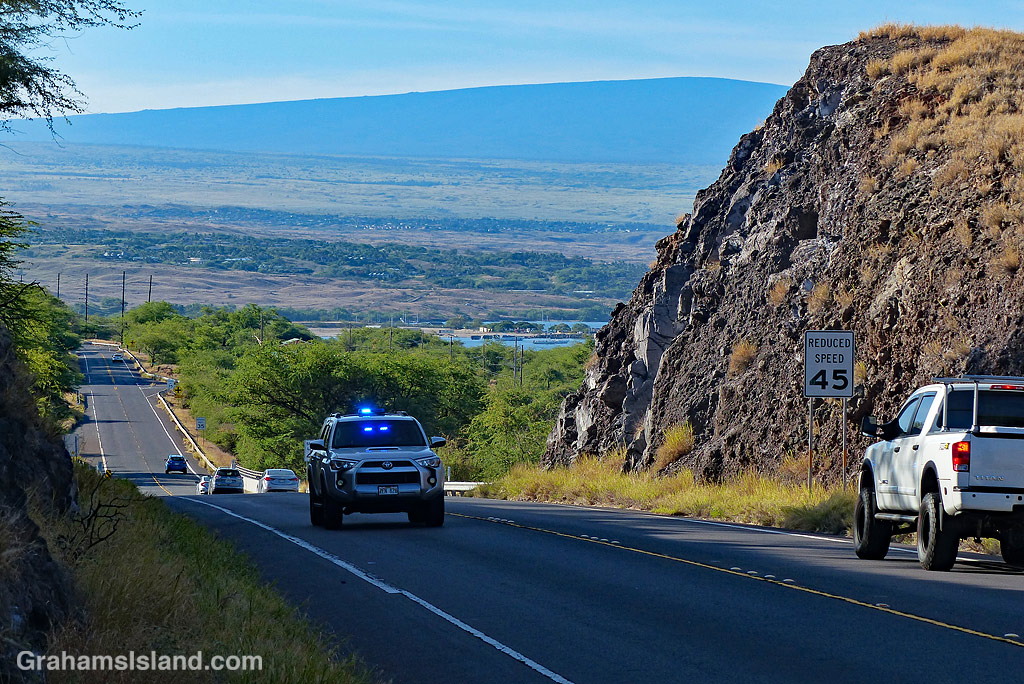
This week’s Friendly Friday challenge theme is ‘Ignored.’ (See more responses here.) Mulling this over on my drive to work, I thought about speed limits. Like all of you (I’m sure!), I drive at or below the speed limit, but there are lots of people out there who don’t, who just ignore the signs.

For example, in these photos, in the space of a couple of hundred yards, the speed limit drops from 55 mph, at the top of the little hill, to 45 mph, and then 35 mph at the bottom of the hill. There are people who actually slow to 35 mph by that point, and they run the very real risk of being plowed under by all the other drivers who routinely go 45 mph all the way into Kawaihae, and out again on the other side.

The truth is, driving 5 mph over the speed limit is generally considered acceptable here and won’t get you pulled over. Exceed that leeway and you’re taking a chance. And in Hawaii, the police are hard to spot. Most police officers drive their own cars with no markings and only a little blue light on top. When the police car in the bottom photo sped into view there was a blaze of brake lights from the vehicles heading down the hill. But it was on the way to some other, more important situation.

After I took the photos, I got back into my truck and somehow, and I can’t explain it, by the time I got to the bottom of the hill I was going 45 mph. First time for everything I guess.

Abstracts: Rain

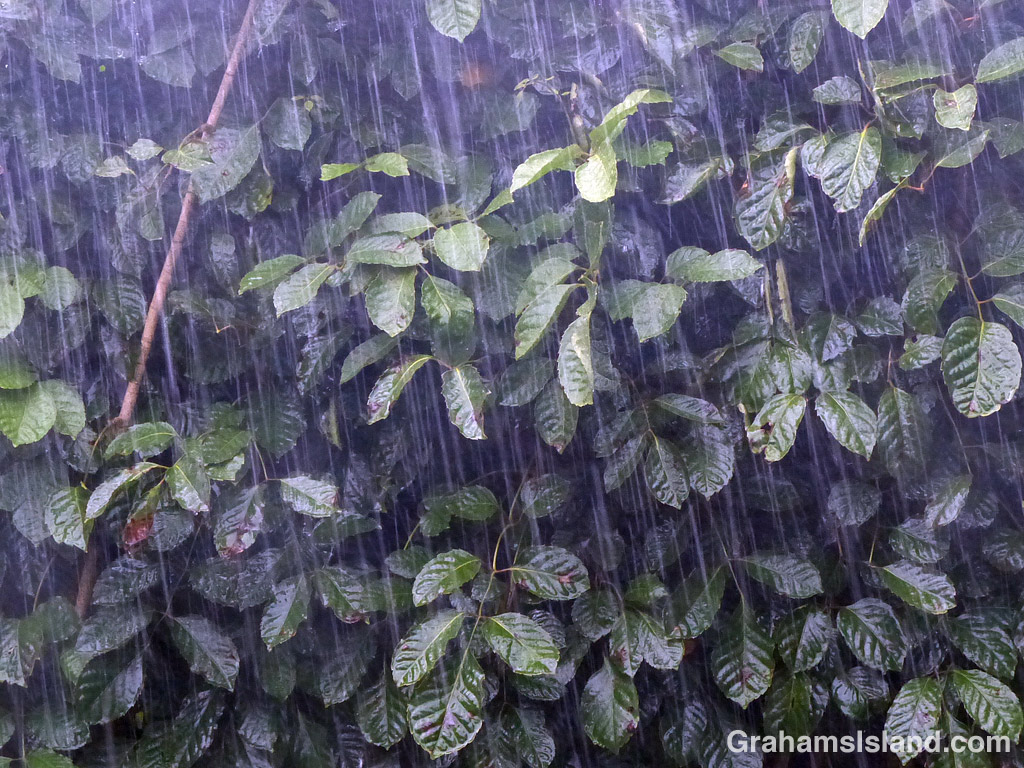
This photo is for those who believe the sun always shines in Hawaii. Not the case, and when it does rain, this being the tropics, it can be torrential. Here, rain sheets down in front of a panax hedge. Panax is widely used here for hedges, growing into a thick, dense barrier. It’s easy to grow, too. One just has to cut off a stick, push it into the ground, and a new plant will soon start growing.

Posted in response to this week’s Friendly Friday challenge on the theme of ‘Leaves.’ See more responses here.

The cruise ship is in

This week’s Friendly Friday challenge theme is ‘Tourism.’ (See more responses here.)

Tourism is Hawaii’s largest industry drawing between 850,000 to 1,180,000 visitors a month. The Big Island is the state’s largest geographically, bigger than all the other islands combined, but it ranks third, behind Oahu and Maui in the number of visitors. It logs 100,000-175,000 arrivals each month. Consider though that the island’s population is currently somewhere between 180,000 and 190,000. So at any given time tourists probably comprise a third to nearly a half of the people on the island.

So how do people here feel about tourism? Well, as you might expect, opinions vary. Those impacted negatively by tourism – crowded streets, no parking, noise, inconsiderate partiers – might favor curbs on the industry. Those who do well from it – restaurants, tour companies, hotels, car rentals – would like to see more done to boost the number of visitors.

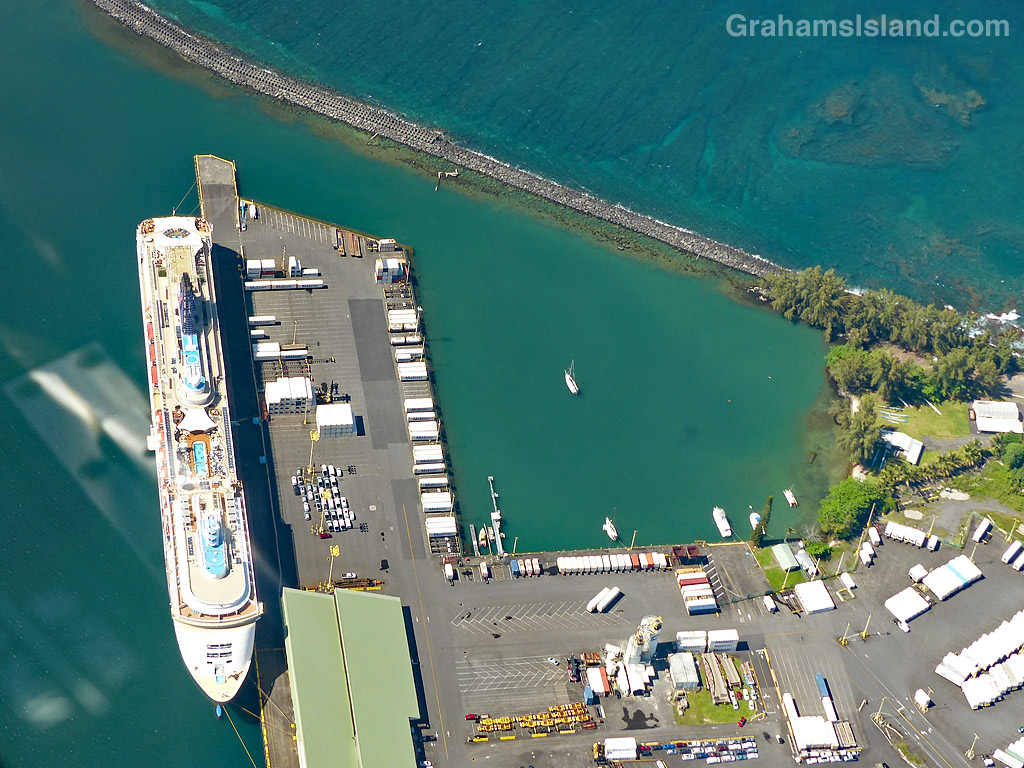
I chose this photo for two reasons. The first is the subject of the photo, a cruise ship docked at Hilo. This ship visits Hilo every Tuesday, then continues on to Kailua Kona on Wednesday. It brings an influx of tourists on those two days, who fan out across the island, taking tours to various sights island-wide. It also considerably boosts the population of those two towns on those two days, such that I generally choose not to go there if I remember the cruise ship is in.

The second reason is that I work for a helicopter tour company on the island. (There are several here.) We take passengers over about half the island, primarily visiting Kilauea Volcano and the valleys and waterfalls of Kohala Mountains. It’s not cheap, it’s not a carbon-friendly activity and helicopters are loud. There are rules in place regarding the elevation of the flights and places that can be visited or should be avoided. Despite this there are people, particularly those close to or under the flight path, who would prefer there were no tour flights at all.

But I will say that a healthy proportion of those who take the tours return saying it’s the best thing they’ve done on the island, and often that it’s the best tour they’ve ever taken. It is a great way to see the island, and to see some amazing places that otherwise cannot be seen.

So do I think the sky above the Big Island should be thick with helicopters, or that cruise ships should be lining up to dock, or that the relatively small airports here should challenge O’Hare for landings and takeoffs? No. As with most things, finding a balance is the key. If you overload with tourists, the quality of their experience suffers along with the experience of people who live on the island. But put excessive barriers in the way and people stop coming, businesses close, people get laid off, the economy shrinks. It’s a fine balancing act, one that rarely pleases everyone. But at least here, if a person is feeling a bit out of sorts about these kinds of thing, it’s possible to take a cooler to the beach, chill out, and watch the sun slide into the ocean, putting on a show for tourists and locals alike.

Mauna Kea telescopes at sunset

This week’s Friendly Friday challenge theme is ‘Remote.’ (See more responses here.)

I’m going for this photo for three reasons. First, Hawaii itself is remote at more than 2,200 miles from the nearest major landmass. The closest U.S. state is actually Alaska, though California is the closest state to the Big Island.

Secondly, Mauna Kea is one of the more remote spots on the island, particularly these days. Protests over building a new telescope on Mauna Kea have resulted in the road up the volcano being closed for some weeks now with no end to the dispute in sight. So if a person wants to go to the top, a long and arduous hike is the only way.

Thirdly, the telescopes on the summit are there to explore the farthest reaches of the universe, and you can’t get more remote than that.