In May of 1969, a series of earthquakes opened a large fissure alongside Chain of Craters Road in Hawaii Volcanoes National Park. This was the beginning of what is known as the Mauna Ulu eruption. For five years, lava poured forth in a series of eruptions. Chain of Craters Road, completed only a few years earlier, was buried for several miles. Landmarks along the road were destroyed or irrevocably altered. A swathe of forest disappeared in flame.
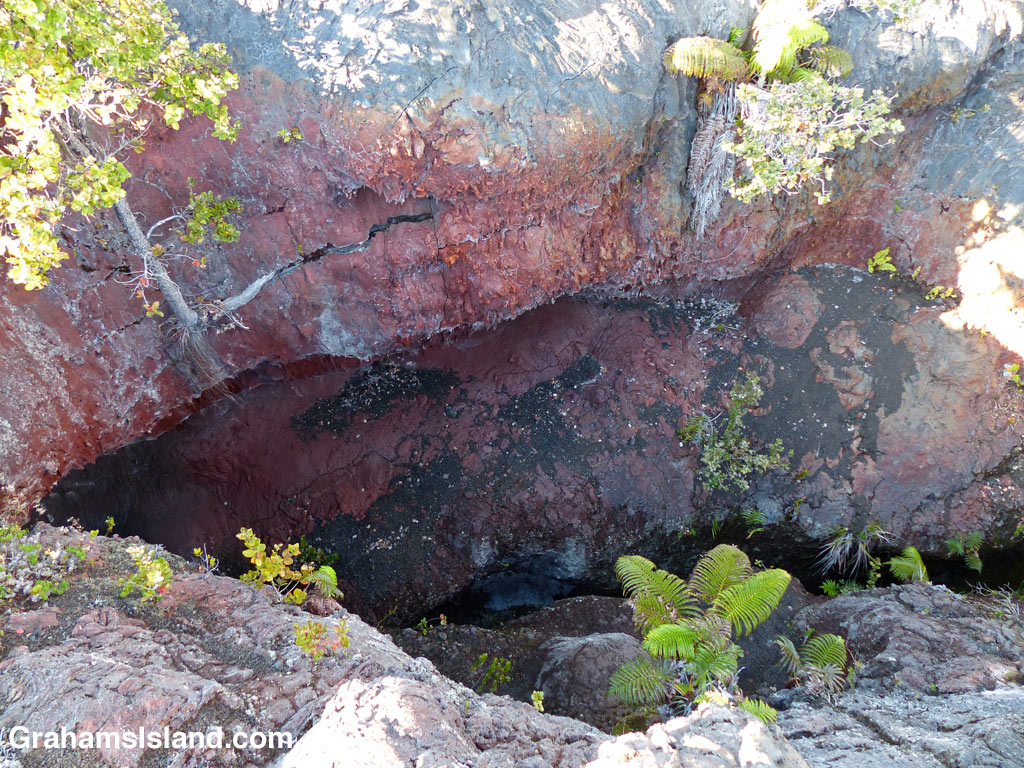
When the eruptions finally ceased, life soon began to reappear on the barren lava landscape. In this photo, vegetation has reclaimed a section of the original 1969 fissure. Roots are anchored in cool, moist cracks in the lava. The tree on the left is particularly striking. Having started out in a crack on a vertical face, it has reached up to the light and is going strong. I like to think it shows how resilient nature can be.
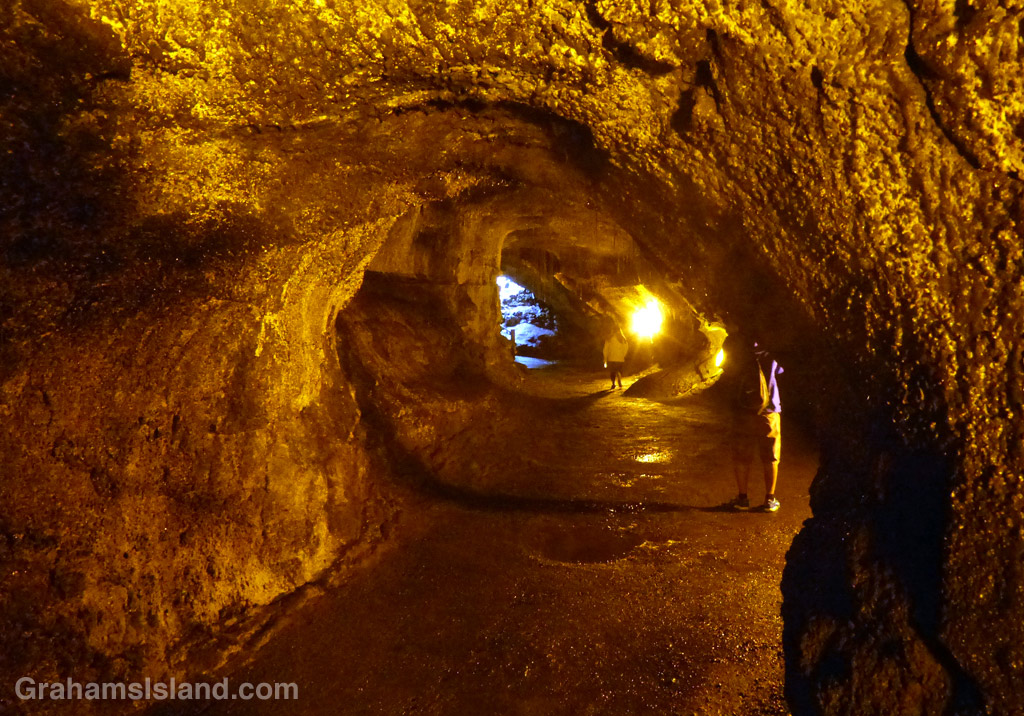
Thurston Lava Tube is one of the more visited spots in Hawaii Volcanoes National Park. It might not be as compelling as Puapoo Lava Tube, but it’s not far from the road and easily accessed. I tend to visit it whenever I’m in the park.
One thing I like about Thurston is the path to and through the tube. It starts with a drop into dense tropical forest, features a bridge leading to the maw of the tube, and then wiggles through the damp and the eerily lit interior until reaching the light at the other end.
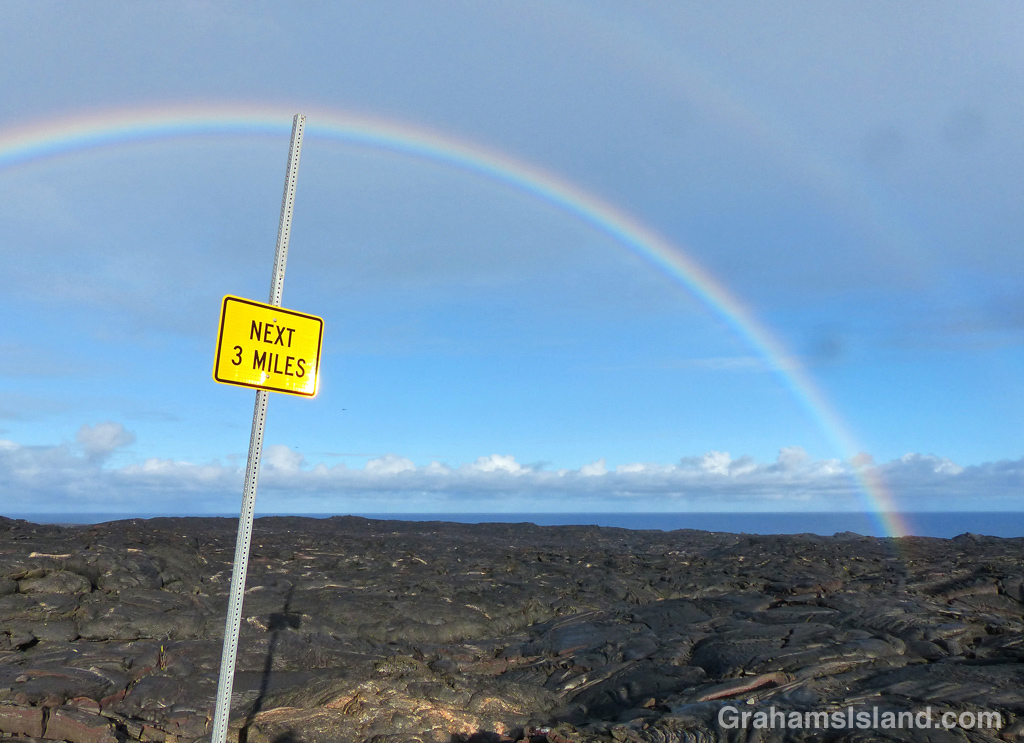
I saw this sign when I was hiking out to see the current lava flow from Pu’u O’o to the ocean. Sure, the sign was a little vague, but I figured it must refer to the rainbow which it appeared to point to.
By golly, the sign was right. There were rainbows for the next 3 miles.
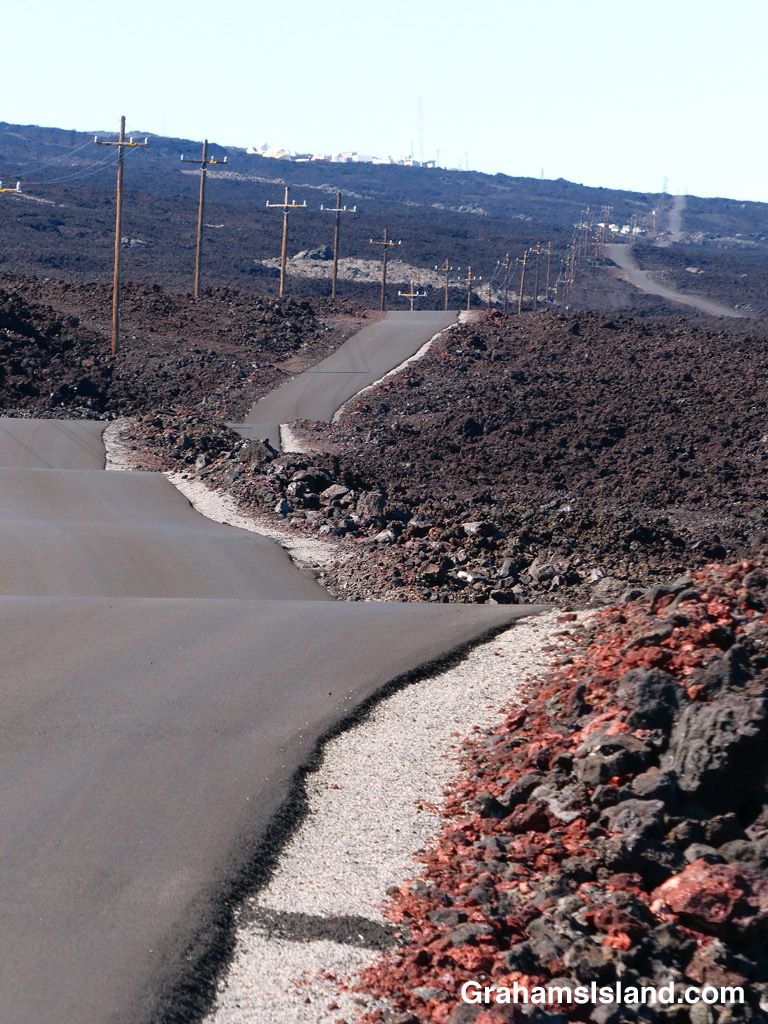
The road to the Mauna Loa Observatory is a one-lane highway, currently in good condition, and chock full of ups and downs and bends. It’s a fun drive with wonderful views, but it’s one that demands attention lest one drifts onto the unforgiving lava on either side or plows into an oncoming vehicle.
Ohia trees on the surface send roots down into lava tubes. These roots take in water from the tube’s cool, moist air. In return they offer one of the few sources of organic material and are home to a kind of cricket.
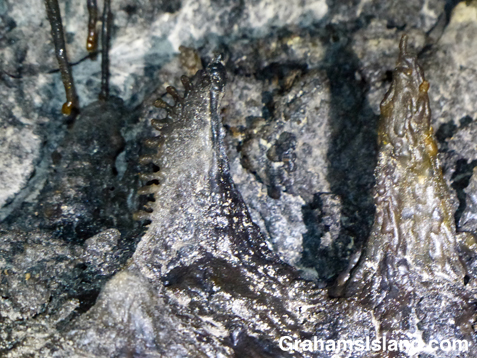
A puapo’o (literally ‘flower head’) lava formation. There’s still uncertainty about how these are formed. To the left are lava-sicles, the lava tube equivalent of stalactites.
Mind your head. There’s a 25-foot-long low section.
As part of the National Park Service centennial celebration, Hawaii Volcanoes National Park has been offering a guided tour of Puapo’o lava tube. This tour has been offered in the past, but not for several years.
Puapo’o is a pristine lava tube meaning that its rock formations are intact and life in the tube is largely undisturbed. Contrast this with the park’s popular Thurston lava tube, where all the finer lava details have long since been broken off by visitors.
There’s a hike to the tube, which is deep within a forest rich in tree ferns.
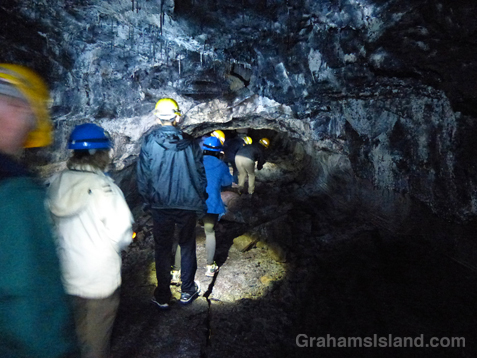
The tube entrance is accessed by a ladder and then it’s on into the dark. Whereas Thurston lava tube is well lit and has a mostly flat floor for easy walking, Puapo’o, which is about a mile long, was lit only by our headlamps and rocks littered the tube floor. It’s not a tour for the claustrophobic or nervous.
The way out. Heading for the light.
Those rocks on the floor match recesses in the tube ceiling show where rock falls have happened. A month before, one of our rangers had been leading a tour when there was an earthquake, a common occurrence in the park. The group left the tube, but the next visit found a new rock fall.
We scrambled over rocks, and sat in the dark in a large, amphitheater-like part of the tube. As we progressed, the rangers pointed out different lava formations from lava-sicles to bathtub rings to puapo’os for which the tube is named. And even in this pitch dark place, there is life – moths, crickets, and spiders, one a huntsman and the other a tiny, near invisible thing that builds gossamer webs. Also, living on the tube walls, are unique microbial colonies, which are being studied for medical uses.
Eventually, we scrambled up a rocky slope and out through a narrow opening, back into the forest.
Lava flows make for a stark landscape, but I always find it fascinating to see how, even in such barren ground, nature regains a foothold. Here, a small shrub has taken hold in a crack in the lava. Just below and to the left of it, a fern grows under a ledge.
If there’s enough rainfall, as there is in this spot of the southeast coast of the Big Island, vegetation will begin to take hold in a fairly short while. That’s assuming that a new flow doesn’t happen along and put paid to the process.