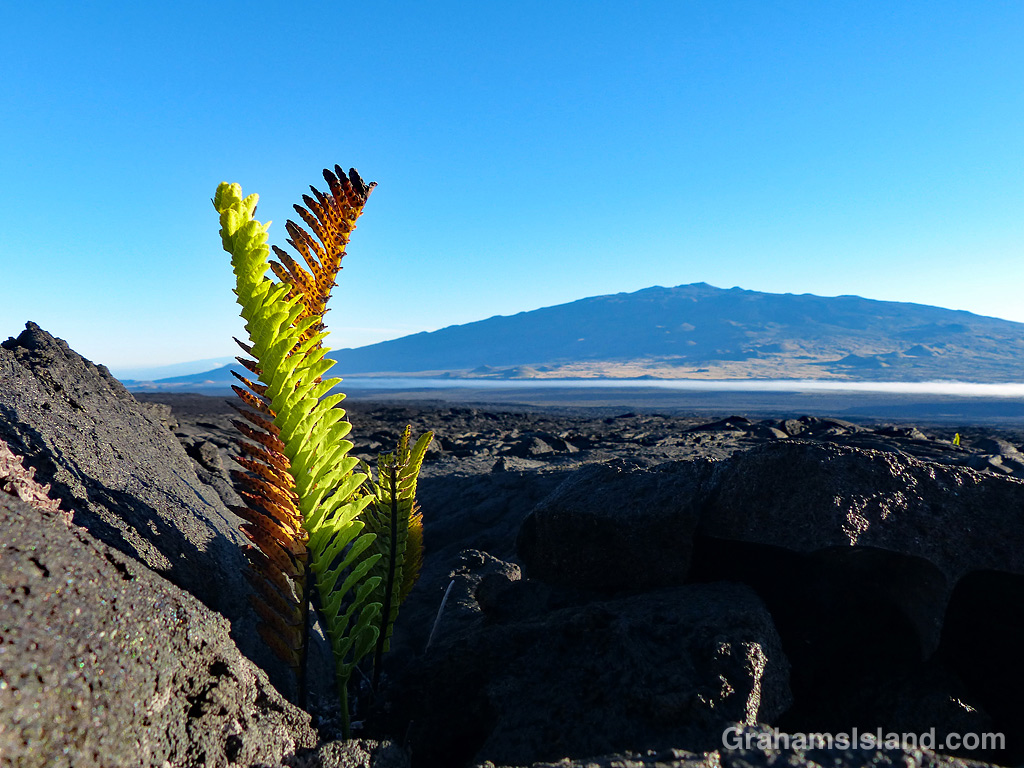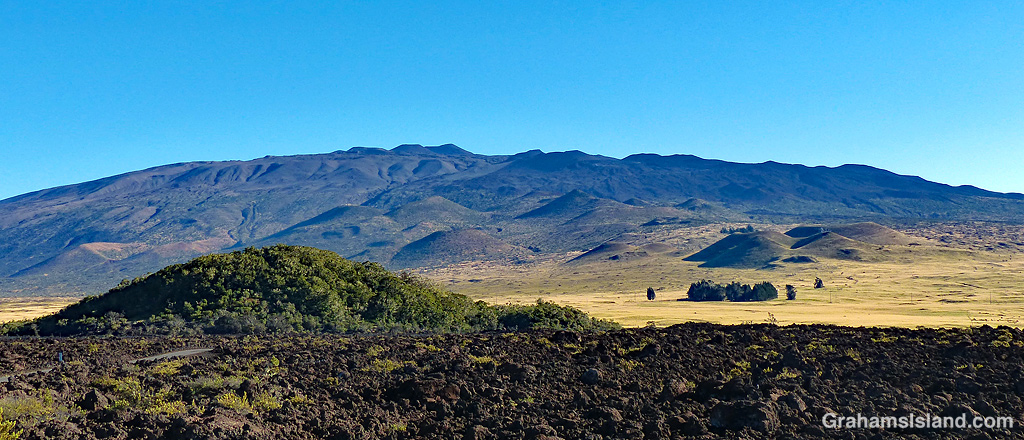
Ferns are one of the first plants to establish a foothold in lava flows. These ferns are on the northeast slope of Mauna Loa with Mauna Kea in the background.
Tag Archives: Mauna Loa
Three volcanoes at dawn

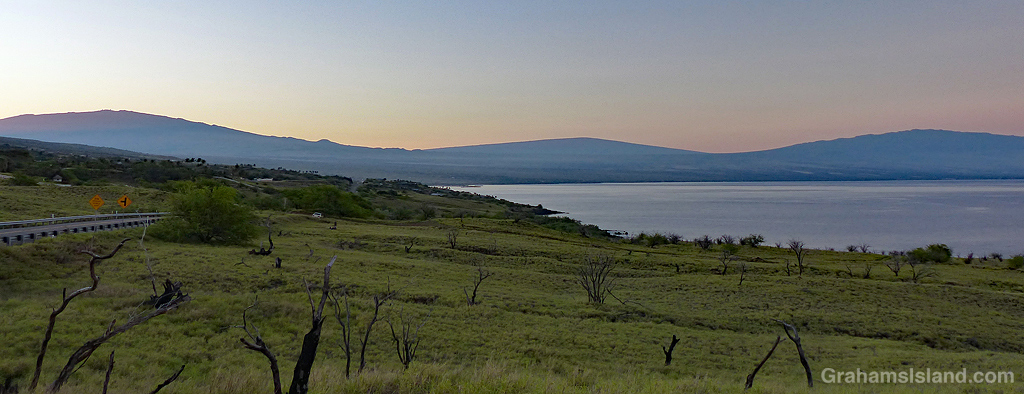
Three of the Big Island’s volcanoes – from left, Mauna Kea, Mauna Loa, and Hualalai – seen as daylight suffuses the sky.
Posted in response to this week’s Sunday Stills challenge on the theme of ‘Daylight.’ See more offerings here.
Hualalai and clouds

I’ve spent a fair amount of time in my life looking up at clouds, often as they poured water in my direction, so it’s nice to look down on them once in a while. Airplanes are probably the most common place to enjoy this view, but here on the Big Island, the upper reaches of Mauna Kea and Mauna Loa also offer this perspective.
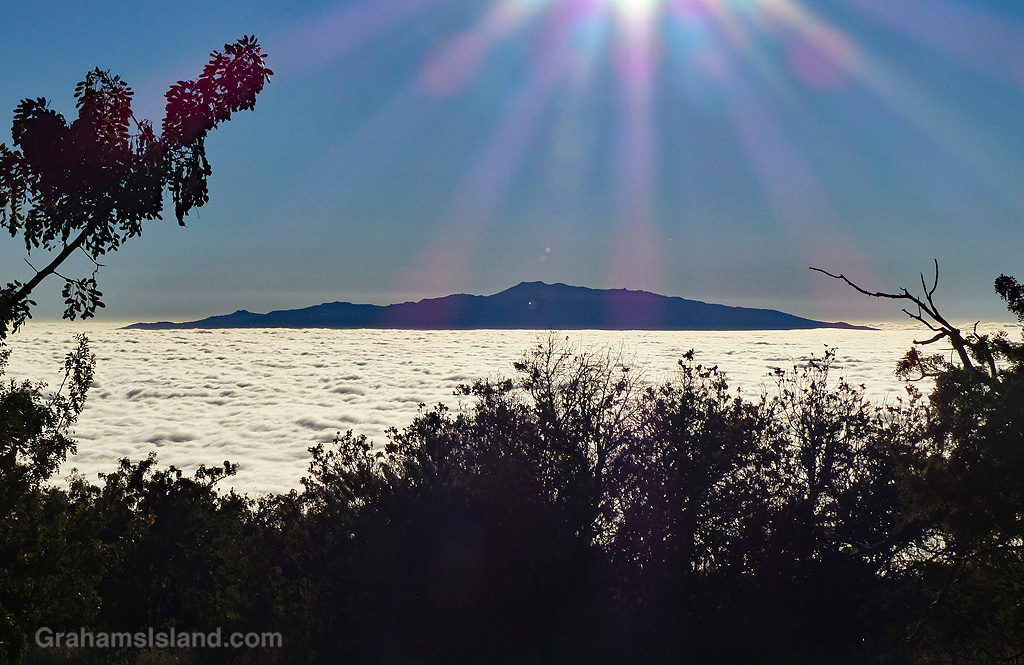
In this case, the clouds were low enough that, when I was visiting the Palila Forest Discovery Trail at around 7,000 feet, the clouds blanketed the landscape below. Here, Hualalai pokes through the cloud layer in the late afternoon.
For more information about Palila Forest Discovery Trail, go to dlnr.hawaii.gov/restoremaunakea/palila-forest-discovery-trail/.
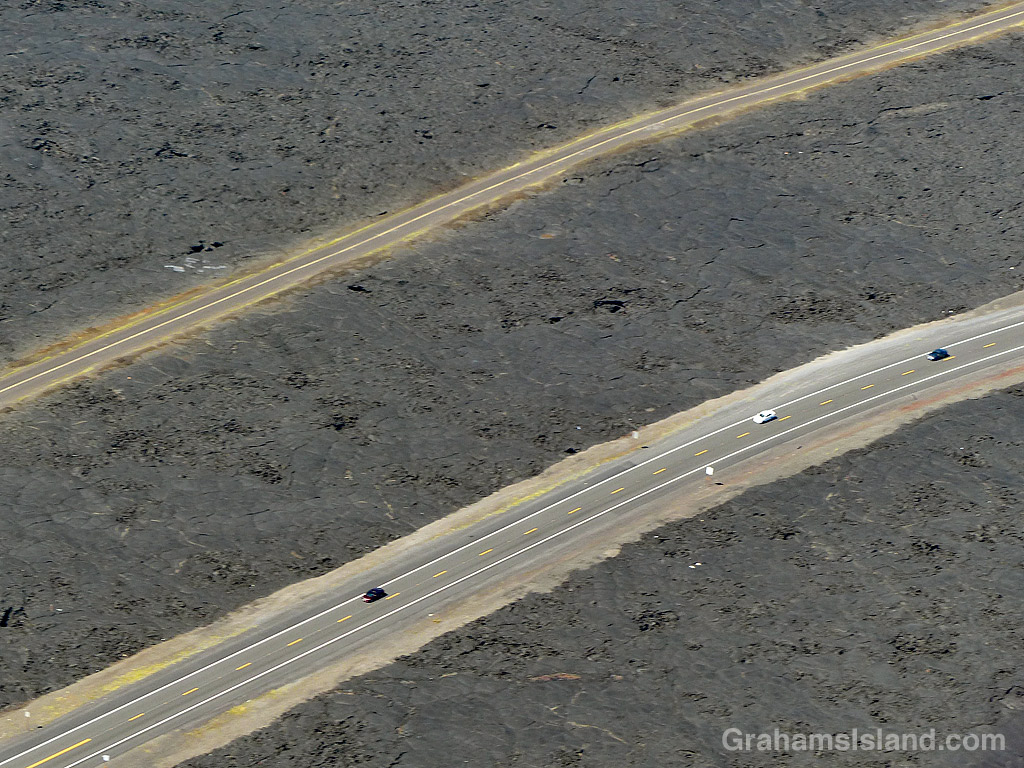
Abstracts: Roads and lava

Cutting through the lava between Mauna Kea and Mauna Loa are these two roads. The lower one is Saddle Road, the upper one a road leading to the military base at Pōhakuloa Training Area.
Pu’us

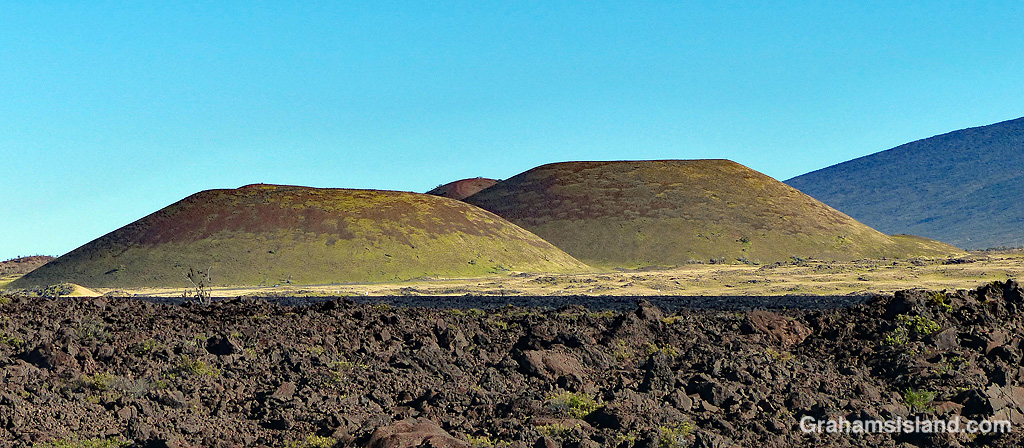
In Hawaii, one meaning of the word ‘pu’u’ is ‘a protuberance of some kind.’ This can be anything from a pimple to a hill, but ‘hill’ is the most common usage I encounter, as a general reference or in place names.
Pu’u O’o is the cinder cone that is home to the vent on Kilauea Volcano that was active from 1983 until earlier this year. Pu’u Wa’awa’a is an old cinder cone that is now managed by the Division of Forestry & Wildlife. A common thread is that, in Hawaii, a hill is a cinder cone because all of Hawaii is volcanic and the landscape is liberally dotted with cinder cones.
The top photo shows Mauna Kea and the large array of pu’us on its southern slopes. In the foreground is Pu’u Huluhulu, which means hairy hill. There’s a trail to the top of this pu’u which offers good views of Mauna Kea and Mauna Loa.
The bottom photo shows grassed over pu’us in Pōhakuloa Training Area, which is a military base located in the region between Mauna Loa, Mauna Kea and Hualālai volcanoes.
On the Big Island, several pu’us are accessible to hikers, usually with a trail curving up to the top and then around the rim of the pu’u. Even if the pu’u isn’t that high, it invariably stands out from its surroundings and offers good views.

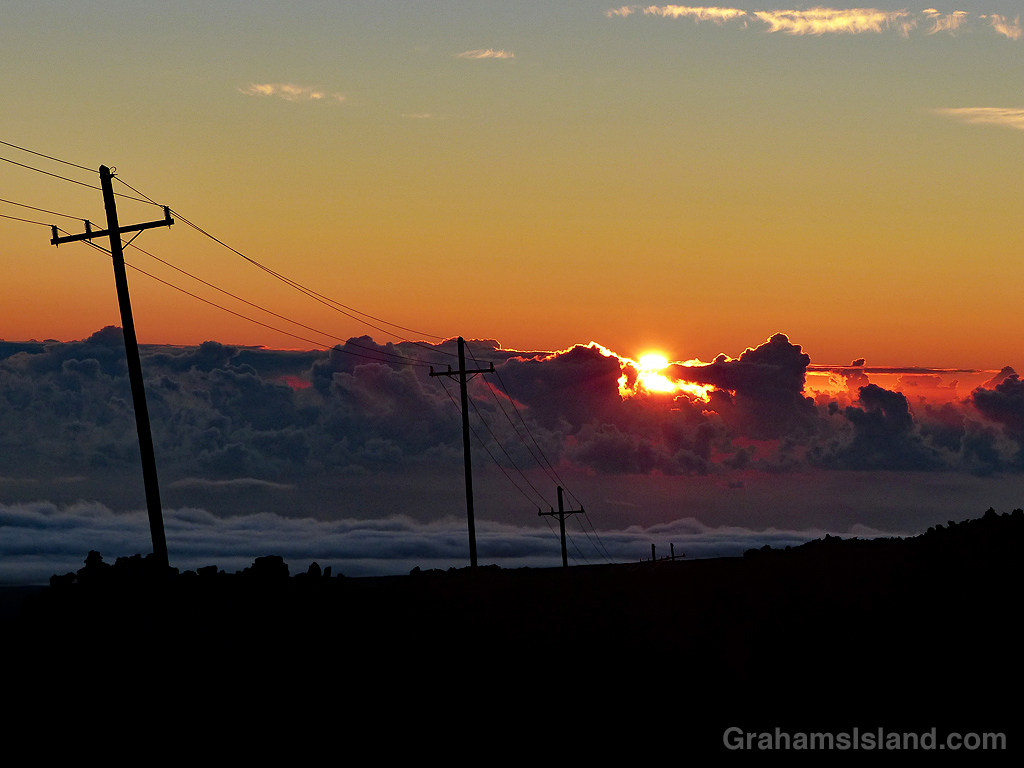
Sunrise from Mauna Loa

The sun peeks above a heavy cloud layer, as seen from the slopes of Mauna Loa.
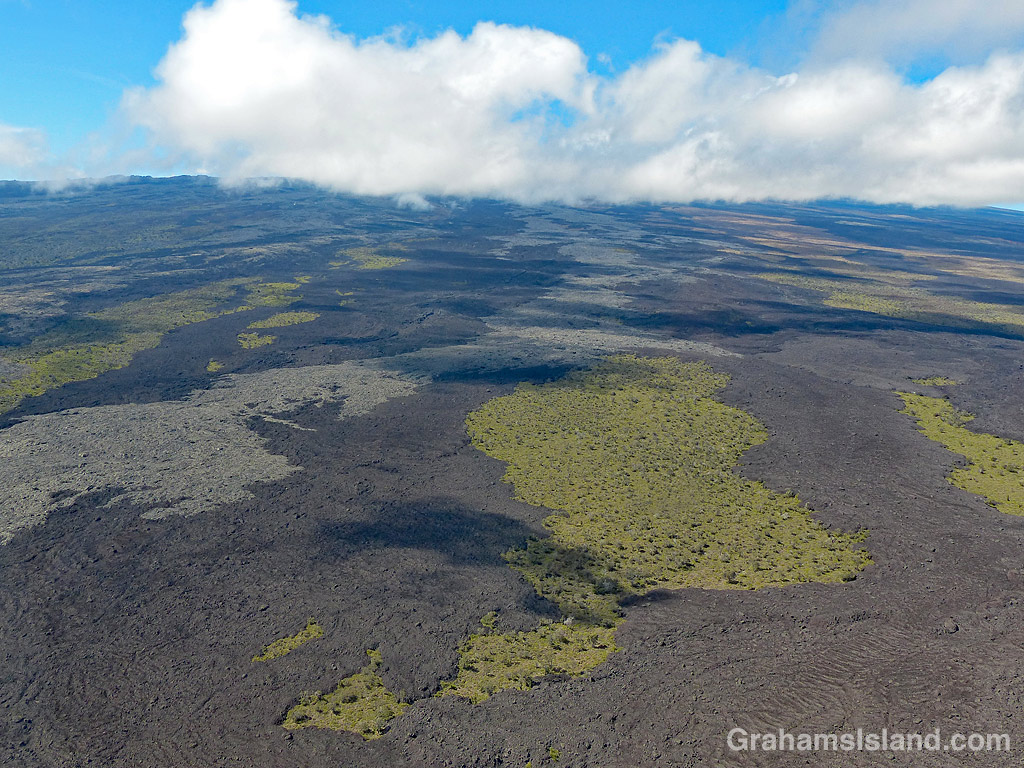
Abstracts: Mauna Loa lava flows

These lava flows, on the northeast slopes of Mauna Loa, show some of the colors lava takes. Together with the untouched islands of vegetation and cloud shadows, I think they make an interesting patterned landscape.
Going to the Moon or Mars?

Sitting at around 8,200 feet on the northern slope of Mauna Loa, is the HI-SEAS (Hawai’i Space Exploration Analog and Simulation) site. The dome is where a crew of volunteers stays, simulating what could face a similar crew living on Mars. The terrain has similarities to Mars, the crew can only go outside in space suits, and communications are delayed by 20 minutes as they would be in real transmissions between Earth and Mars.
Currently, I believe the dome is empty. The last mission, scheduled to run for eight months from February 15, 2018 through October 15, 2018, was canceled after a few days because of some kind of accident, the details of which were never released.
The second photo shows the approach road to the HI-SEAS site with a near full moon above. Public access to the site is not allowed for obvious reasons, but I do think it would be great fun to dress the kids up as little green Martians and take them trick or treating there. Imagine being inside the dome when there’s a knock on the door.
For more information about HI-SEAS, go to hi-seas.org/.