Tag Archives: Nene

Nenes

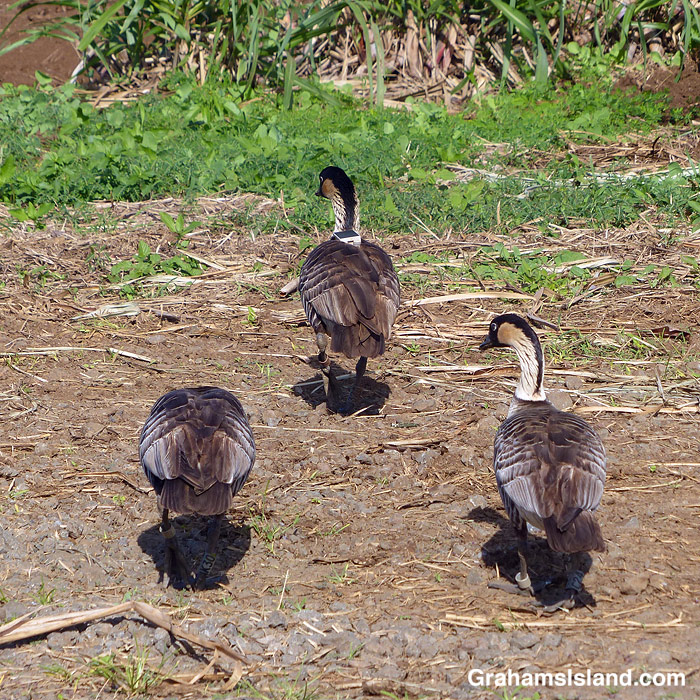
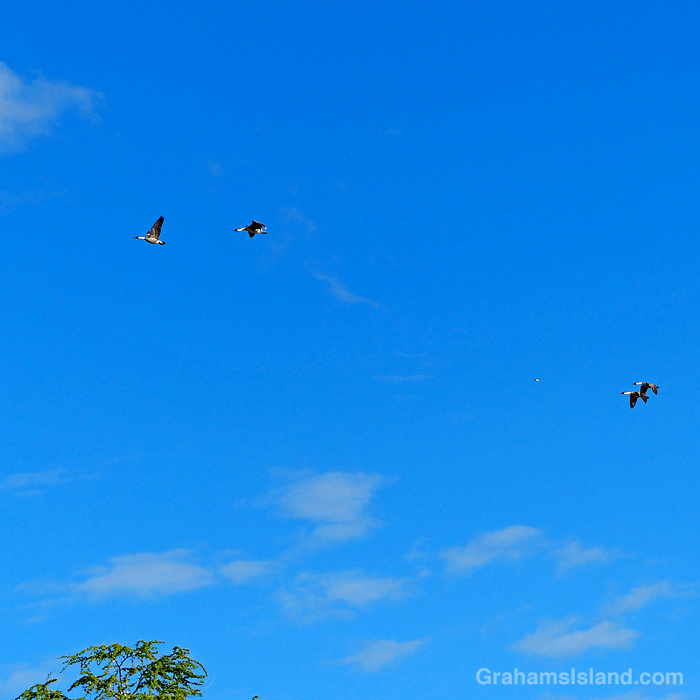
A pair of Hawaiian geese or nenes.

The Nene (Branta sandvicensis) is native to Hawaii and is the state bird. It’s believed to be a distant relative of the Canada Goose but is much smaller. Nenes spend most of their time on land rather than in the water. Because of this they have evolved different characteristics than other geese. Their feet feature less webbing than other geese and they have claws suited to providing grip in rocky areas where they are often found. However, like most geese they can often be found on golf courses!

When they fly, they will typically make loud honking noises, but walking on land as these two were, they make a variety of very pleasing burbling noises as they move along. Nenes are herbivores and feed on a variety of grasses as well as berries and fruit. They’re also one of those birds that mate for life.

Nenes are considered the world’s rarest goose, with a current population of less than 5,000. But this is a vast improvement from the 1950s when it is believed that there were only 30 or so birds here on the Big Island. Recovery has been aided by official protections and breeding in private reserves. Kauai was the center of this recovery, mainly because there are no mongooses there.

Nenes have been on the Endangered Species list since 1967, but their recovery has been such that they are now listed as ‘Near Threatened,’ which means they are no longer considered to be near extinction, but could quickly return there if the situation does not continue to improve.

One thing of note about these two birds is that neither of them have bands on their legs. Many birds have identifying bands that allow those monitoring the population to know where they come from and where they’ve been.

Posted for Bird of the Week LIV. See more responses here.

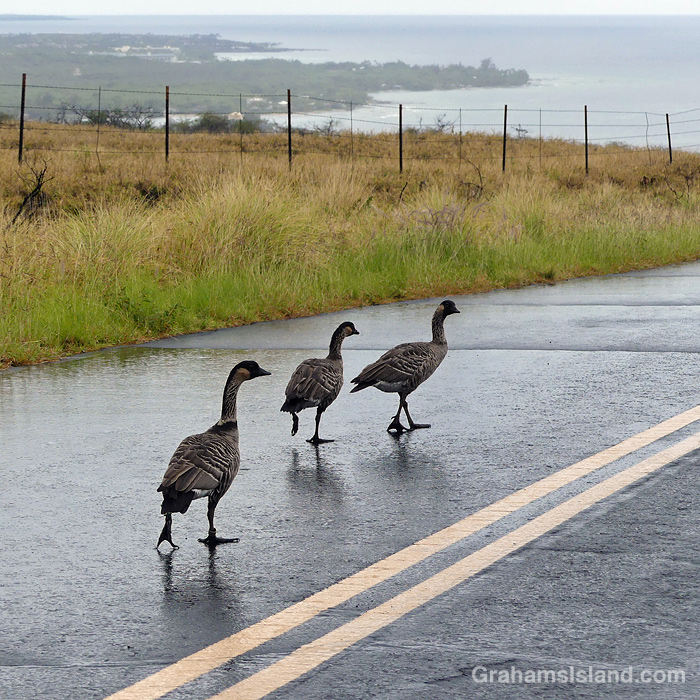
Nenes in the rain

Four nenes on a rainy road in Hawaii
Three nenes on a rainy road in Hawaii

I was driving home from work recently, in a downpour of rain, when I came across this column of four nenes wandering down the road. They crossed in front of me, padded down the other lane, then crossed back to the side I was on. I ended up passing them by driving in the wrong lane, since there was no oncoming traffic.

There are quite a few nenes in that area in part because, like most geese, they’re big fans of golf courses!

Three nenes on a rainy road in Hawaii

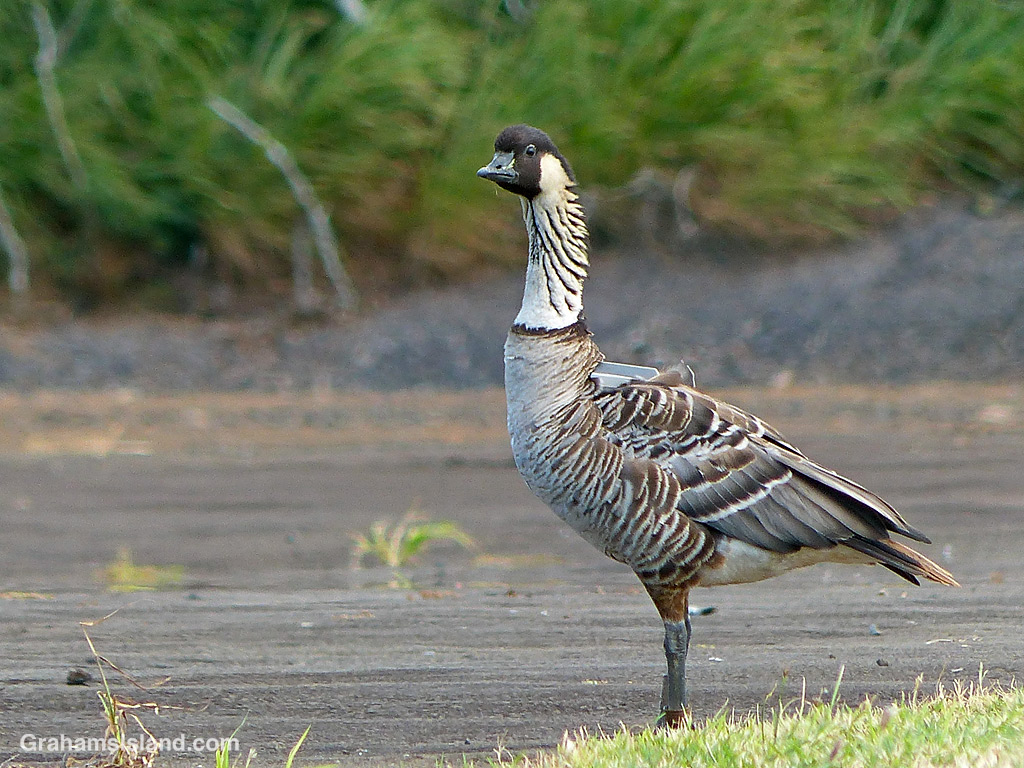
Nene with tracker

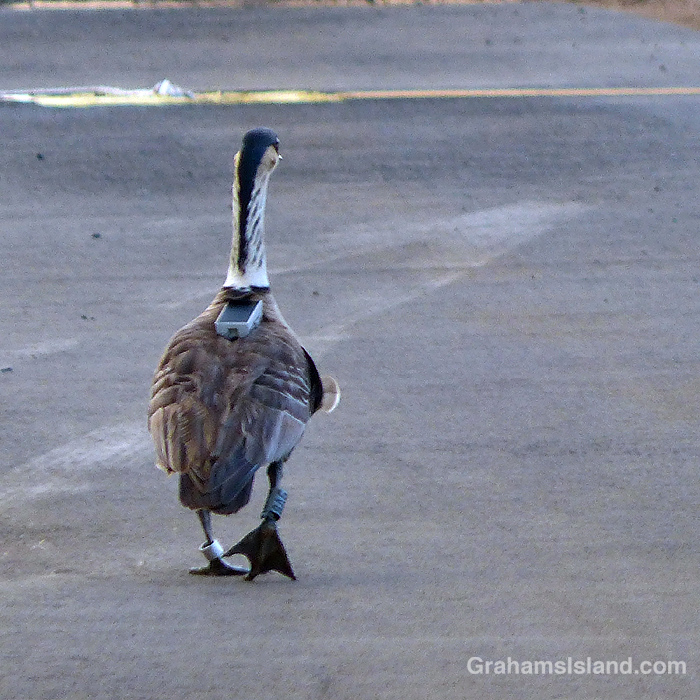
A nene goose with a tracking device on its back in Hawaiii

In last week’s Sunday Stills, Terri included a photo of a bald eagle with a transmitter on its back. In the comments, I mentioned that those trackers don’t stay on that long. Cue a few days ago when I saw this nene at Upolu. When I see nenes at Upolu, I report them to a contact at the Department of Land and Natural Resources (DNLR). The DNLR uses sighting information to build a picture of where the nenes are and where they go.

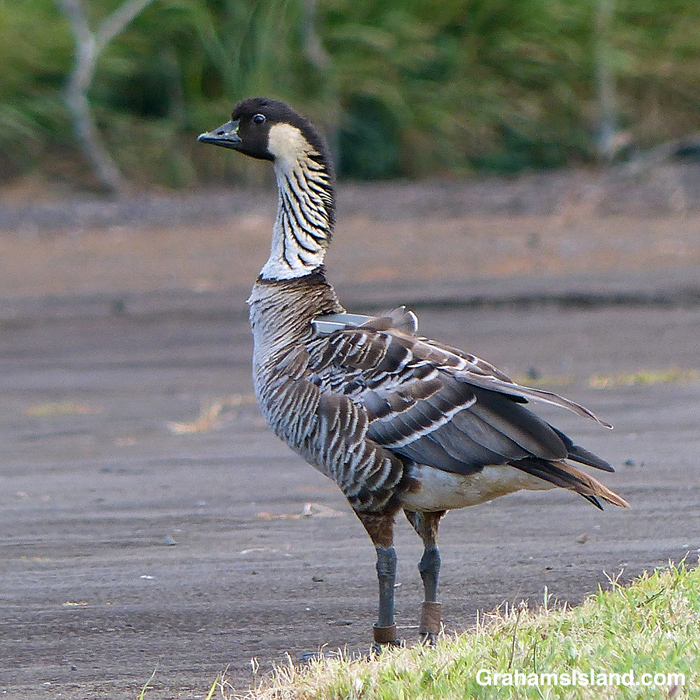
This is 32A, a bird I first saw in January of 2020. Back then, he didn’t have a tracker, but shortly after I saw him, one was attached. The DNLR thought the bird might be flying to and from Maui, but it turns out he wasn’t. Instead, the tracker has shown he mostly flies between Upolu, Hakalau, and Mauna Kea, all on the Big Island. However, the tracker is still on and still working, and I learned that they generally work for 3 to 5 years.

The reason I know this bird is 32A, besides the tracker, is that many nenes have bands on their legs to help with identification. In the second photo, the bands can be seen at grass level. The smaller band, on the left leg, is a US Fish and Wildlife tag. I’ve never been able to see any information on this smaller tag on any of the birds I’ve seen. The tag on the right leg is actually gray and shows the bird is one of almost 600 birds that were moved to the Big Island from a golf course near Kaua’i airport, between 2011 and 2016. These birds more than doubled the population of Big Island birds at that time. The fact that the tag is on the right leg means the bird is a male. The fact that the tag is brown and barely readable shows this bird has been wading through some very muddy conditions!

A walk from Spencer Beach Park to Hapuna

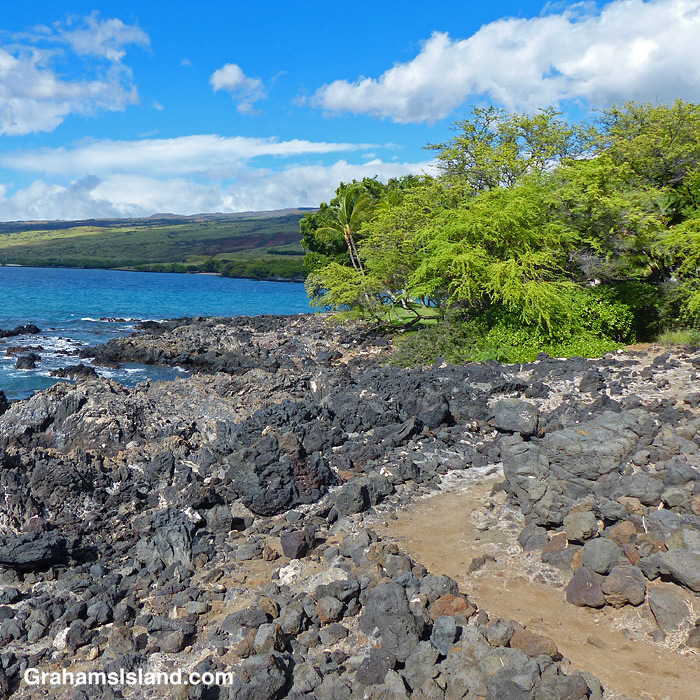
On the Ala Kahakai Trail between Spencer Beach Park and Hapuna
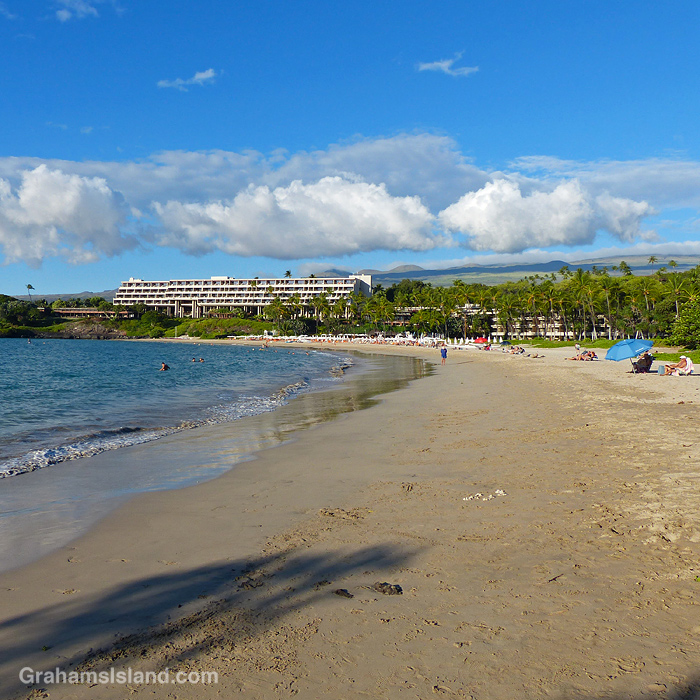
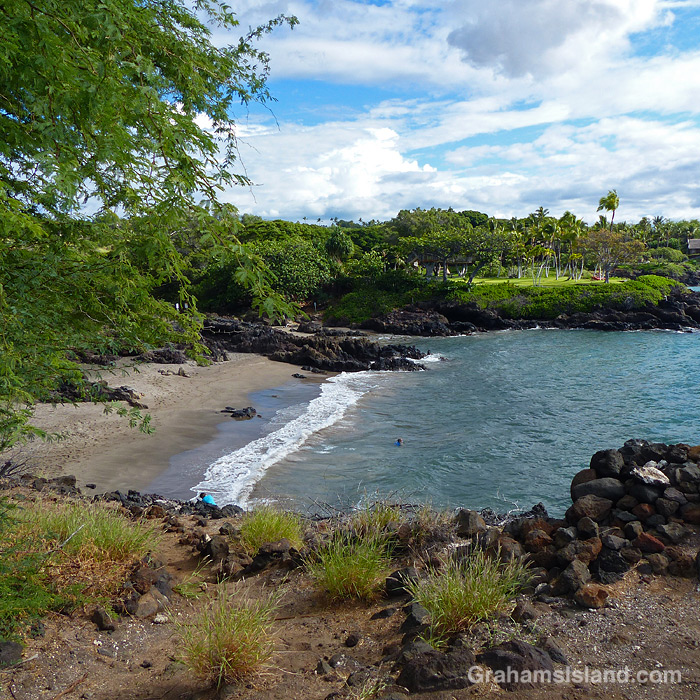
The beach at Mauna Kea Resort.

A few days ago, I posted here an image from a recent walk along the coast to Hapuna beach. I thought I’d post more photos from that walk for this week’s Sunday Stills challenge theme of ‘Paths and Trails’ (more responses here), and for Becky’s Squares theme of “Walking” (more responses here).

The trail crosses beaches large and small.

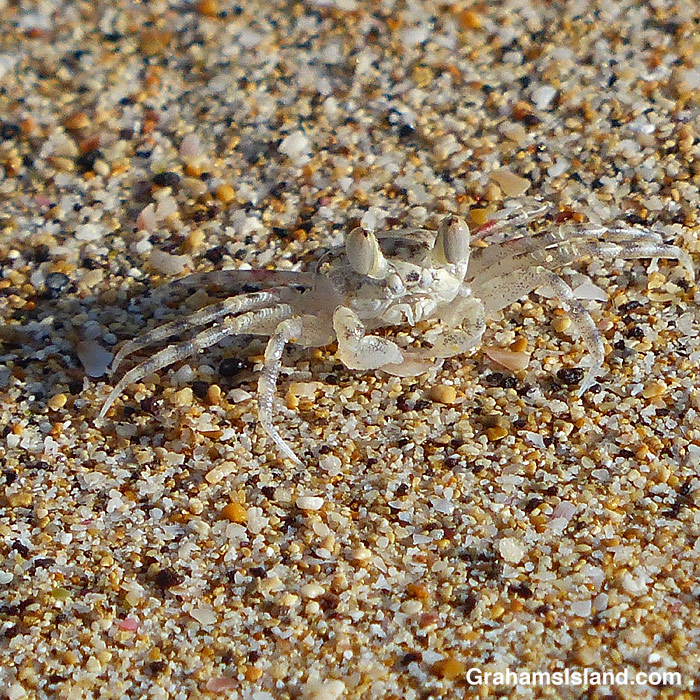
Of course, besides the views I was on the alert for anything moving on the beach or in the air.

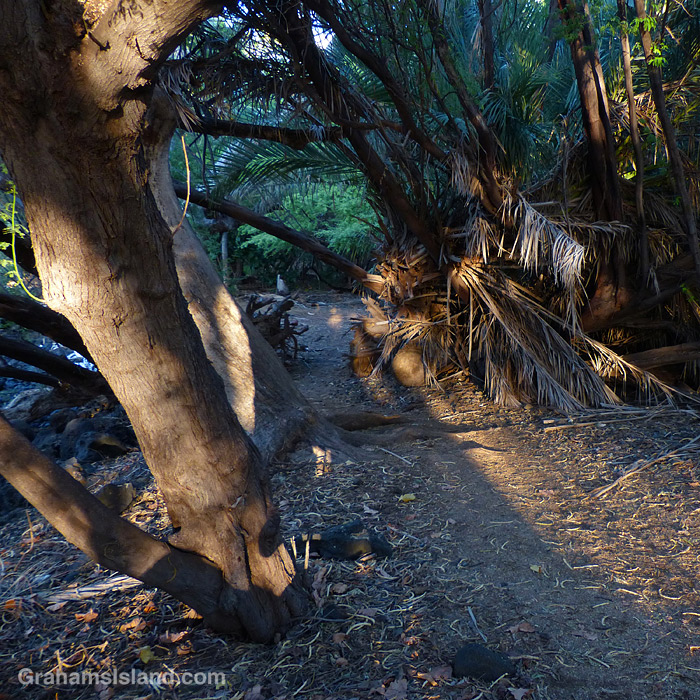
Other parts pass through trees and other vegetation.

Three Nenes

Three nenes in Hawaii

I saw these nenes in the sugar cane field above Upolu Airport. Not only are there an odd number of them, which is odd in itself since I usually see them in pairs, but the one at the front is sporting a tracking box in his back. I’ve seen two nenes in this area with these boxes, though there are undoubtedly more around. It’s been nearly two years since I saw this bird with the tracker and more than a year since I saw the other two.

Posted in response to this month’s Becky’s Squares challenge theme of ‘Odd.’ See more responses here.
Radio-controlled nene?

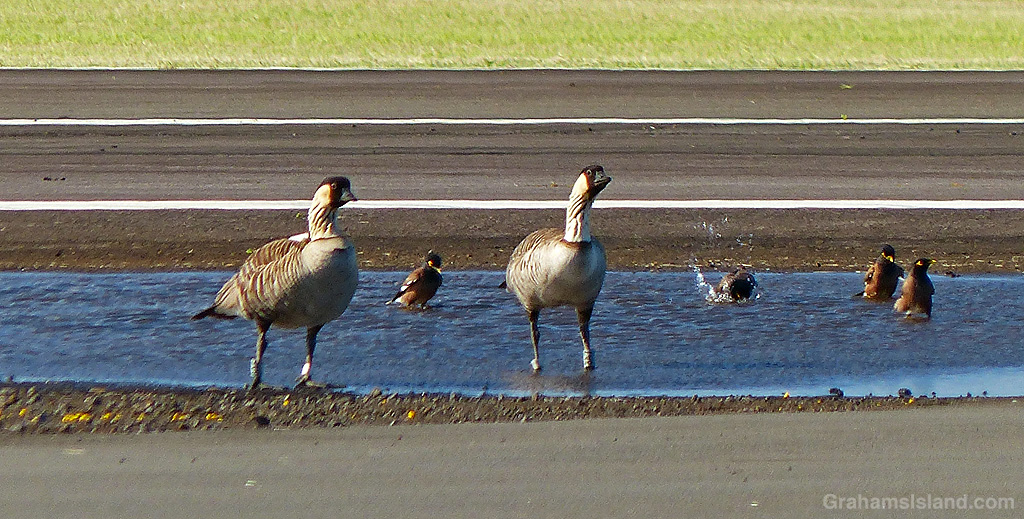
Two nenes stand in a puddle with some myna birds
Two nenes with identifying tags
A nene with a tracking device on its back

I saw these two nenes sharing a puddle with some myna birds alongside the runway at Upolu Airport. A closer view (second photo) shows the identifying tags on the birds’ legs. These are the same two birds that had a gosling in this location last year, which I posted about here.

The third photo reveals a box on the back of the male of this couple. This is a tracking device that was placed on the bird by the East Hawai’i Division of Forestry and Wildlife. They track the birds to help them understand their behaviors and movements. I thought it looked a bit big, but the bird didn’t seem bothered by it.

I had written here, ‘In due course, and probably after not too long a time, the box will fall off and the bird will be unencumbered again.’ but then I saw this pair again yesterday and the box was still there. On the plus side, both birds continued to look in great condition.

Gray days

A helicopter emerges from the clouds off the Big Island, Hawaii
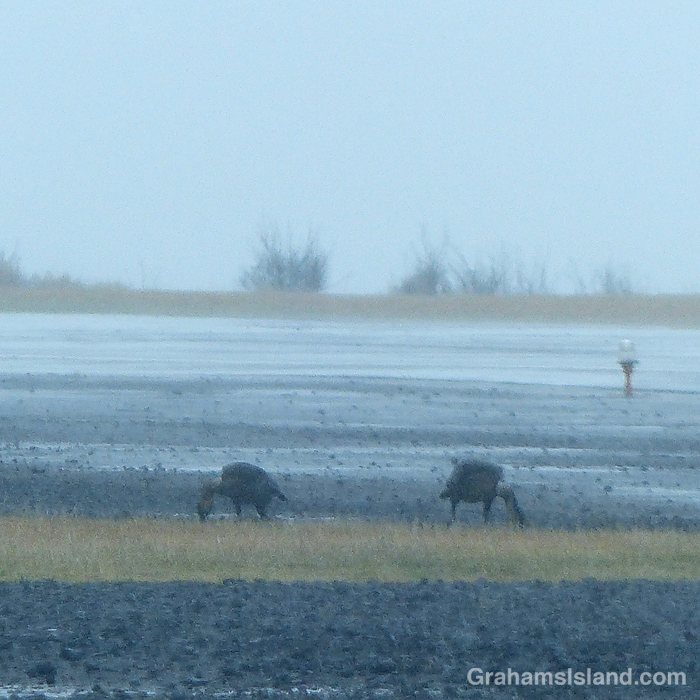
Two nene feed on a rainy day

This week’s Sunday Stills challenge theme is ‘Gray.’ See more responses here.

The top photo is finally getting scheduled after being lined up for a previous Sunday Stills challenge with the theme of ’emerging.’ I was walking along the coast on a damp, gray day, when I heard a noise out over the water. I couldn’t see anything, but the noise got louder. Finally, this helicopter emerged out of the clouds. It looked like a military helicopter, which would have been the most likely thing flying in those conditions, and which tend to be louder than the average helicopter.

In the second photo, a pair of nene chow down on a strip of grass beside Upolu airstrip’s gray tarmac under an equally gray sky.

Upolu landscape

This week’s Sunday Stills challenge theme is ‘Your Favorite Landscape.’ See more responses here.
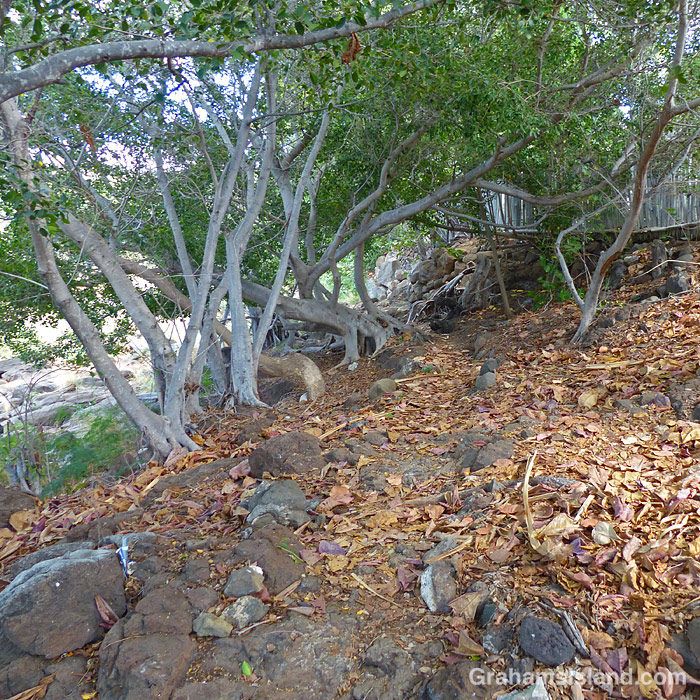
When I think of the landscape at Upolu, it includes both the ocean that borders it and the skies above. They are, in my mind, integral to the place. But here, I’ve focussed on the land, a relatively small area of a few square miles where I walk most days. It’s rural, agricultural, and coastal. It’s historic and modern. It’s also a place I never return from feeling disappointed. There’s always something of note that I see or that happens when I’m there.

Also posted in response to Becky’s January Squares challenge theme of ‘Up.’ See more responses here.