This week’s Sunday Stills challenge theme is ‘Things that are white.’ See more responses here.
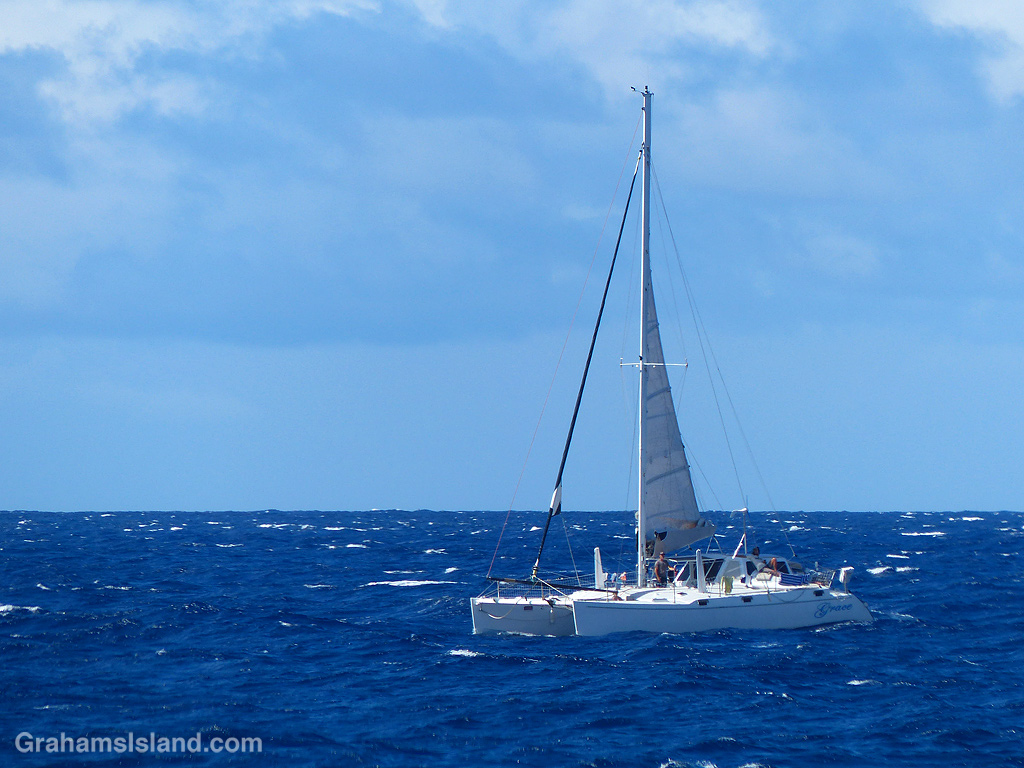
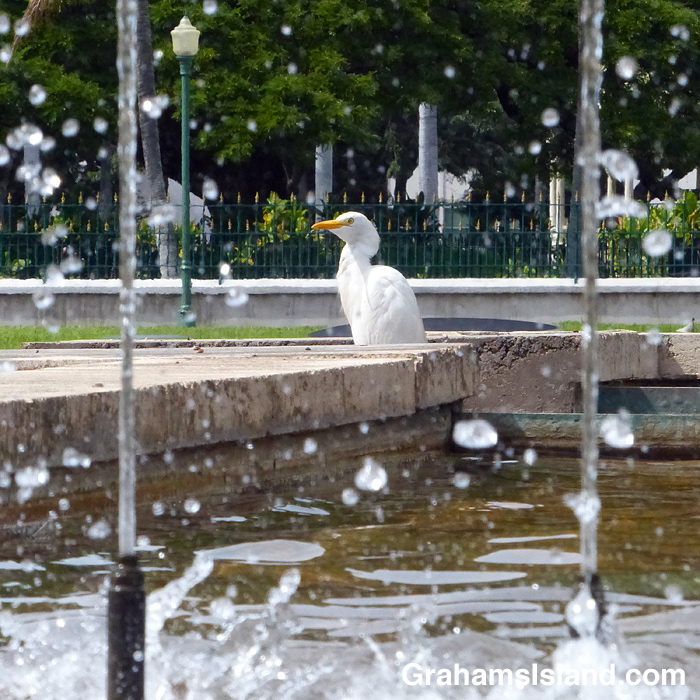
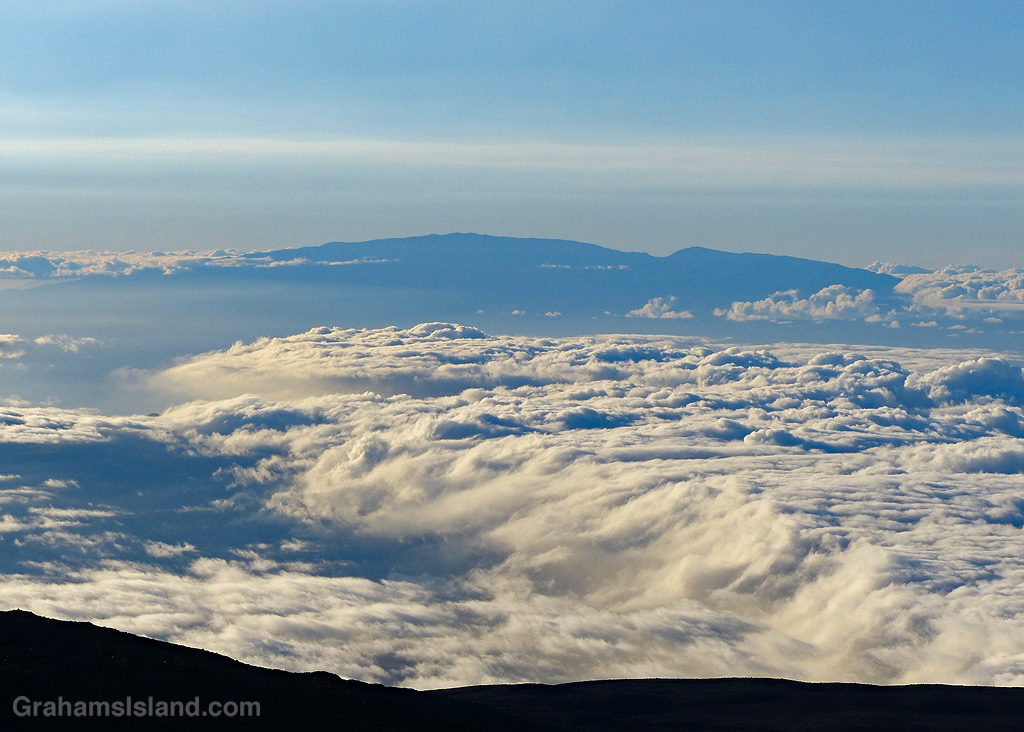
The top photo features a white catamaran with white sails, cruising on a white-capped ocean. The second photo is a cattle egret in a water fountain. The third photo shows a thick layer of white clouds between the Big Island and Maui, as seen from Mauna Kea.
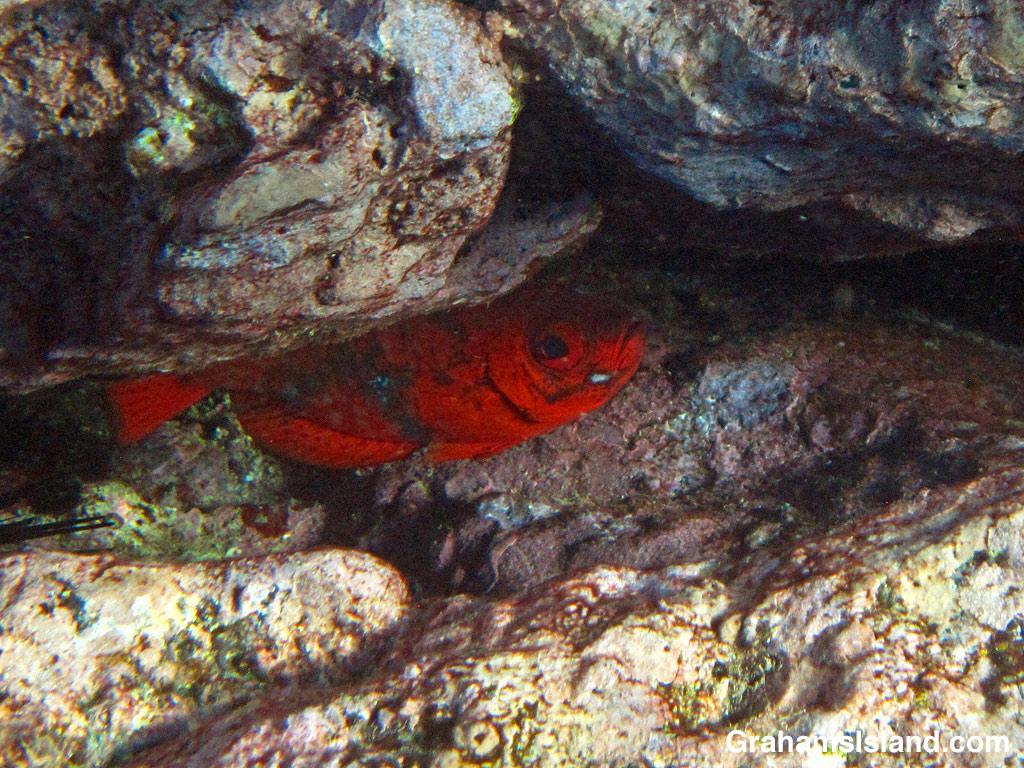
When I see very red fish hanging around in deep recesses in the rocks, I assume they’re soldierfishes. That’s what I thought this was, so I was a bit puzzled when I couldn’t identify what kind of soldierfish it was.
It was much later that I was thumbing through my fish identification book, looking for something else, and happened on the pages for bigeyes. I’d never heard of them before. There were only two listed and this one is the common bigeye. It’s most easily distinguished by its slightly convex tail, as opposed to the slightly concave tail of the other one, the Hawaiian bigeye.
I spotted this grasshopper on the fence surrounding Upolu Airport. When I got my camera out, the grasshopper edged to one side to keep the wire fence between us. I moved that way, the grasshopper moved back. We did this a few times, during which I was able to get these photos, before I left him in peace.
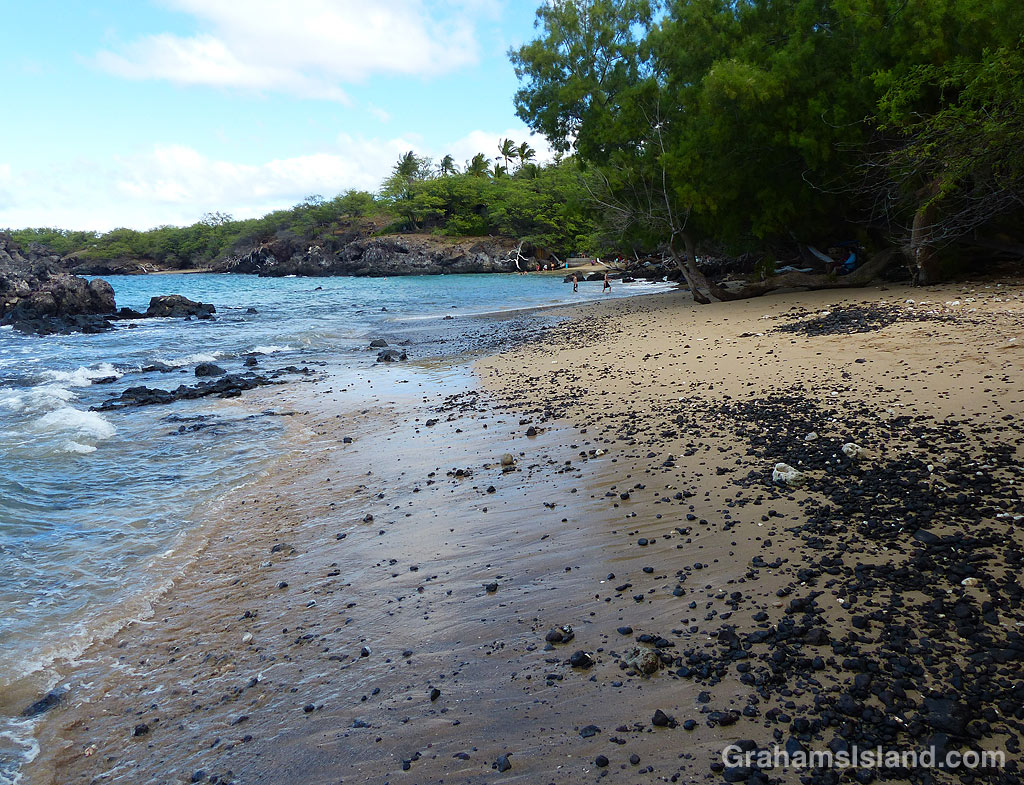
Waialea is also known as Beach 69, which is the number of a utility pole at the entrance to this county park. The beach in this photo is one of several there. Unlike many other beaches in this area, Waialea is backed by lots of trees, so there are many shady places.
It used to be a favorite place of mine to snorkel, but the bleaching events of 2014 and 2015 wreaked major damage on the coral. The last couple of times I’ve been snorkeling there I’ve found it a bit depressing, though there are still a fair number of fish and often turtles to be seen. But if you like lounging on beaches interspersed with the occasional dip in the water then this might be the place for you.
This is the sign at the landward end of the breakwater that protects Kawaihae harbor. The breakwater is just over half a mile long and, as you’d expect, people rigorously respect the warning to stay off this dangerous structure. Just kidding. We’re talking people here. They fish from the structure on a regular basis and, as far as I can tell, nobody seems too bothered about that. This is an early morning view.
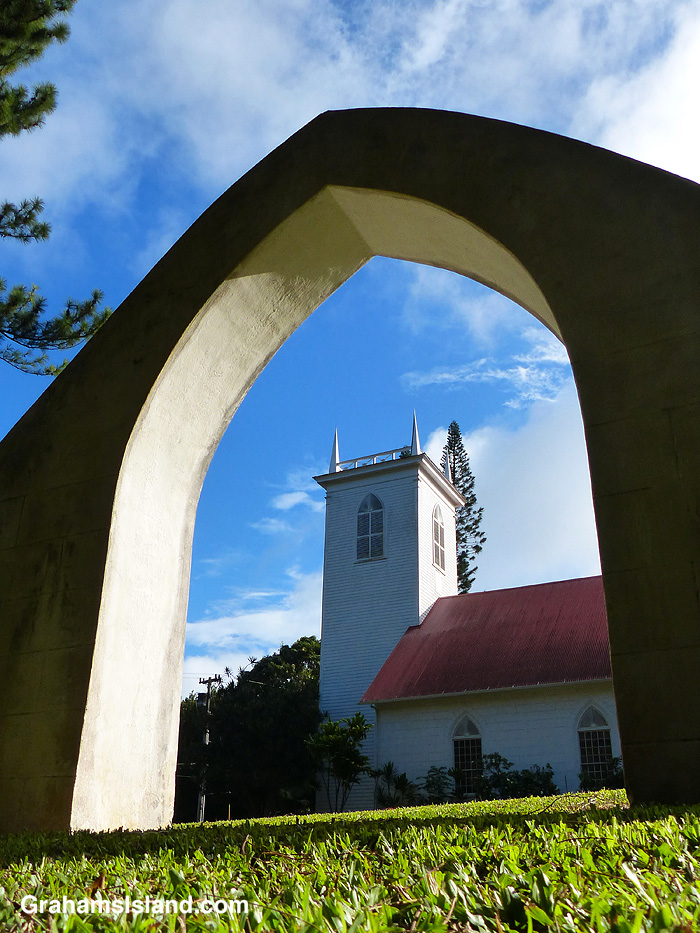
Kalāhikiola Congregational Church dates back to 1855 though the congregation had met in various structures in the area since 1837. The 1855 church was the first to be built of stone and, despite a few mishaps, it survived largely without problems until October of 2006, when a 6.7 magnitude earthquake caused extensive damage. It was rebuilt in the winter of 2009/2010.
This week’s Sunday Stills challenge theme is ‘Feed the Birds.’ See more responses here.
In the top photo, this ambitious juvenile black-crowned night heron snaffled a tilapia from a large backyard pond. However, that was the easy part. I watched it for quite a while, trying to swallow the fish. It flew from the pond into a tree, then on to another one, before returning to the ground beyond some rocks. The fish was still in its beak, but no closer to reaching its stomach.
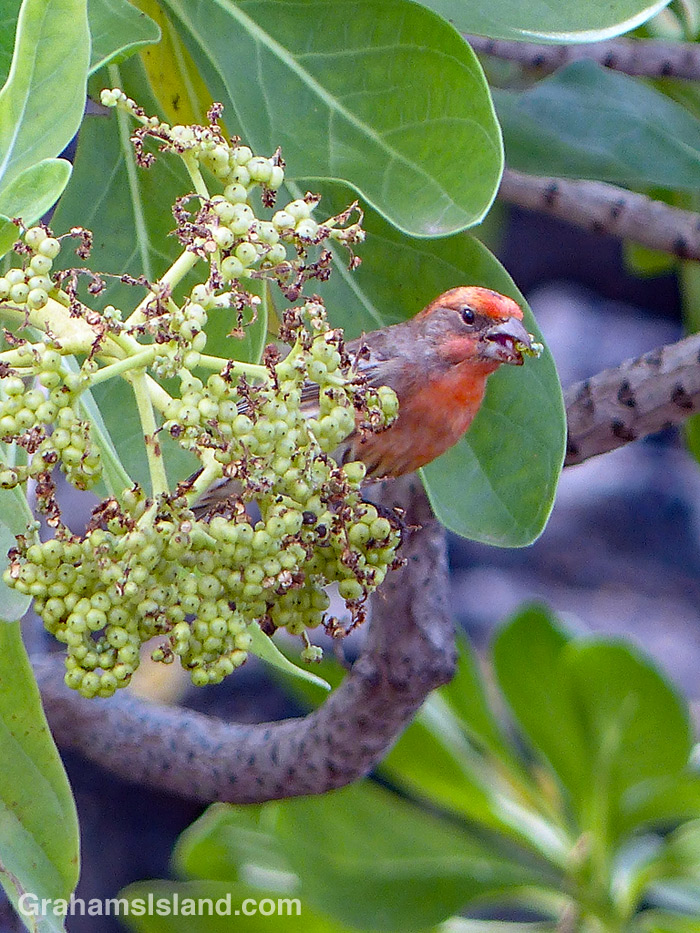
In the middle photo, a house finch chows down on the fruit of a tree heliotrope (Tournefortia argentea).
In the bottom photo, a palila feeds on a mamane (Sophora chrysophylla) seed pod. Typically, a palila will grab a pod from one place and then take it to another branch to eat it. It pins the green, immature seed pod to the branch, as in this photo, and then bashes away at it with its powerful beak. The seeds are poisonous, but palilas have developed an immunity to the toxins. The brown pods in this photo won’t be eaten by palilas. They will remain on the tree for a long time before dropping and hopefully producing more trees, though mamane seeds have quite low propagation rates.