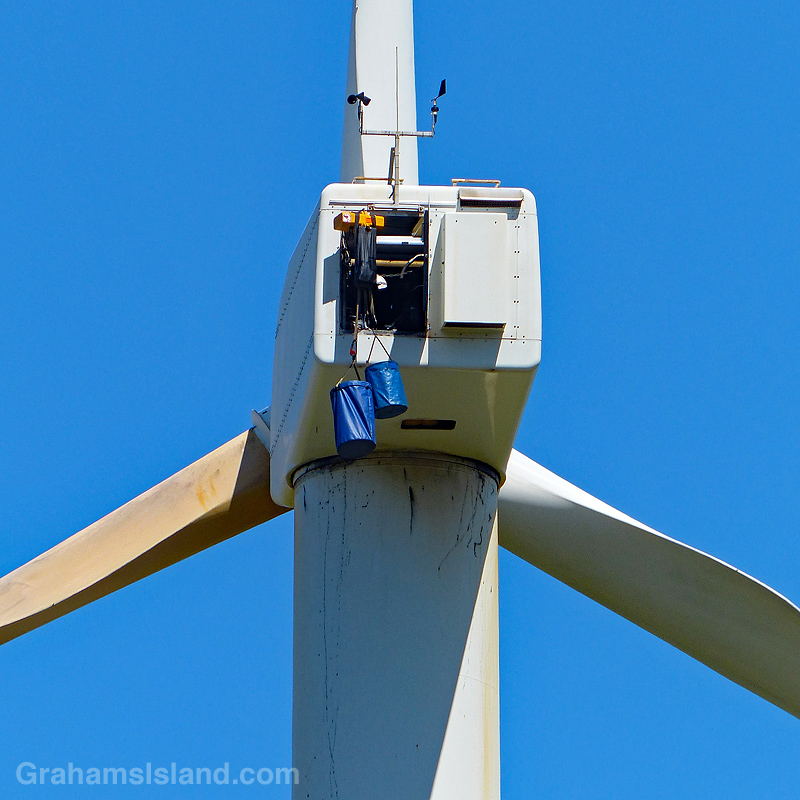
At the top of wind turbine towers is a small room containing the machinery and electronics for the unit. Once in a while, I’ll see the door open and a couple or three blue bags hanging from a cable. Sometimes I can make out the technician inside, checking things out and performing routine maintenance.
It looks a little cramped in there, but given the trend towards tiny houses, when the turbine’s day is over, the space could probably be rented out for around $800 a month.
Posted in response to Becky’s April Squares challenge theme of ‘Top.’ See more responses here.
Two Step is a popular snorkeling spot, next door to Pu’uhonua o Hōnaunau National Historical Park, otherwise known as Place of Refuge. It gets its name from one of the entry points to the water, where two flat lava ledges make it easy to get in and out. Well, fairly easy; there’s usually a crowd gathered around the steps so it can be a bit of a scrum. Also, small sea urchins sometimes lurk in hollows in the steps.
Once it the water, there’s room to roam. I like to swim the length of the bay and out a little bit, to where I can look down the coral slopes leading to the sandy floor of the bay.
Posted in response to Becky’s April Squares challenge theme of ‘Top.’ See more responses here.
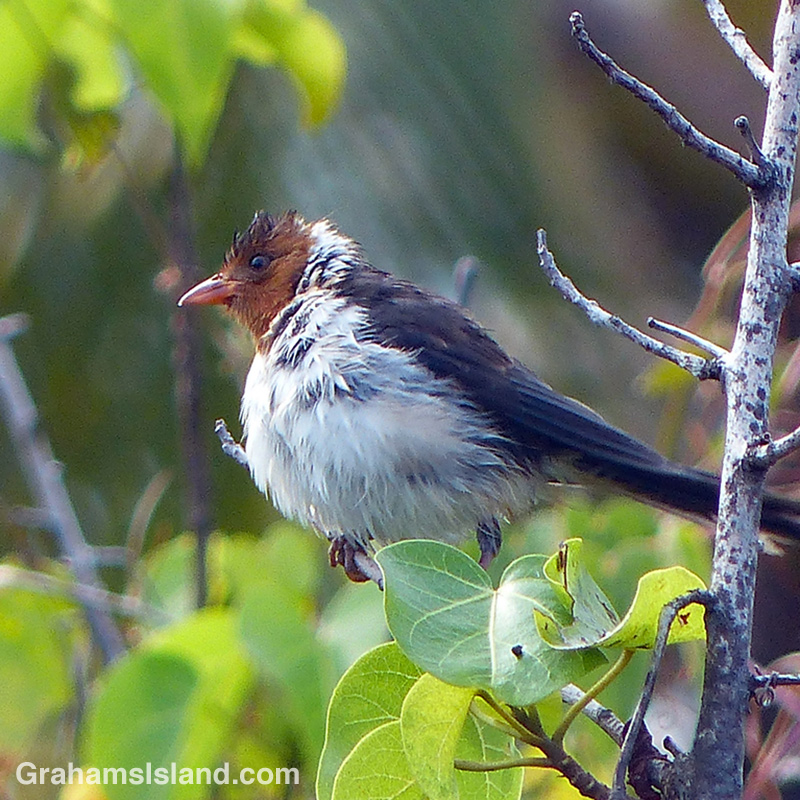
This yellow-billed cardinal juvenile was drying out after its morning bath. A bit of preening followed and then it was in good shape for the rest of the day.
Posted in response to Becky’s April Squares challenge theme of ‘Top.’ See more responses here.
I’ve seen sharks when I go snorkeling, but this was the only time I’ve seen a shark from shore. I couldn’t identify it from just the fin and tip of the tail, except to rule out whitetip and blacktip reef sharks. Likely candidates would include gray, tiger, hammerhead, and Galapagos sharks.
Posted in response to Becky’s April Squares challenge theme of ‘Top.’ See more responses here.
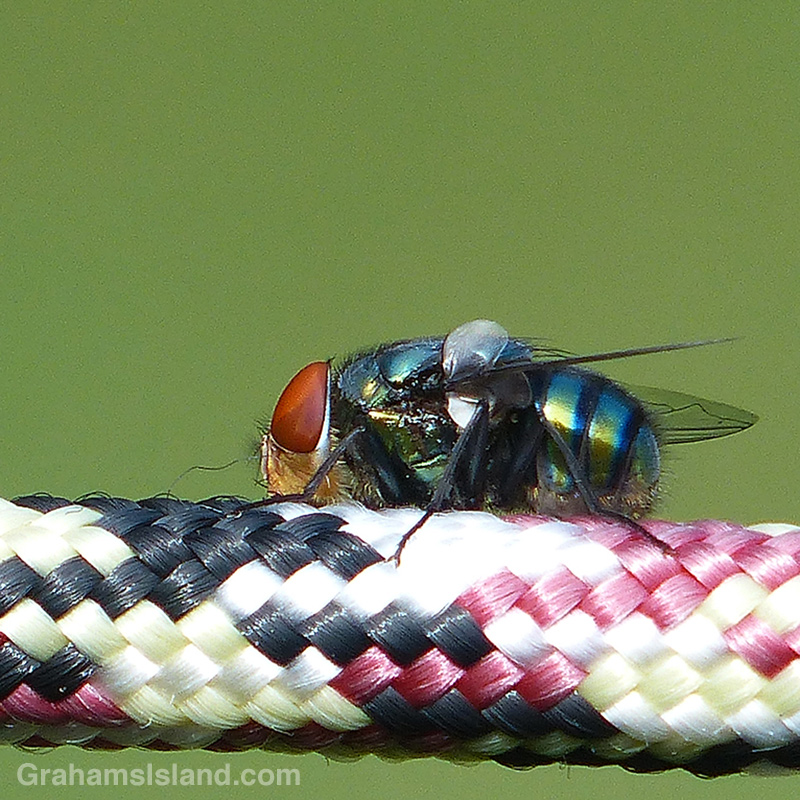
I saw this green bottle fly perched on top of a washing line. Every time I pointed my camera its way it would rotate to the other side of the line. We played this game for a little while before I was able to snap a couple of shots with the fly still in the picture. This was one of them.
Posted in response to Becky’s April Squares challenge theme of ‘Top.’ See more responses here.
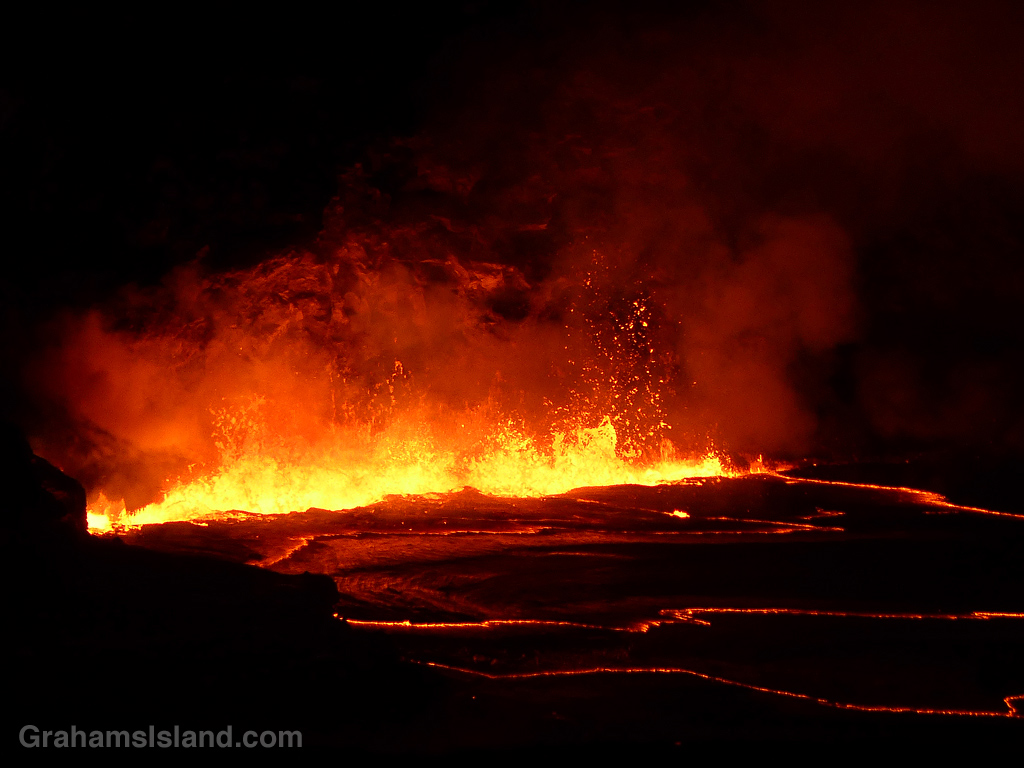
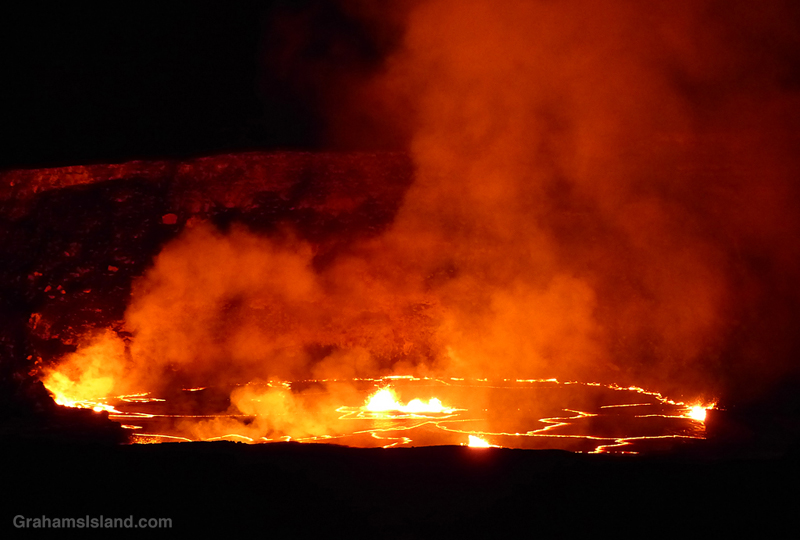
Lava fountains flare up alongside the rim of the active vent in Halemaʻumaʻu Crater at the summit of Kilauea Volcano.
The walls of the crater illuminated by the lava.
This week’s Sunday Stills challenge theme is ‘Mother Earth.’ See more offerings here.
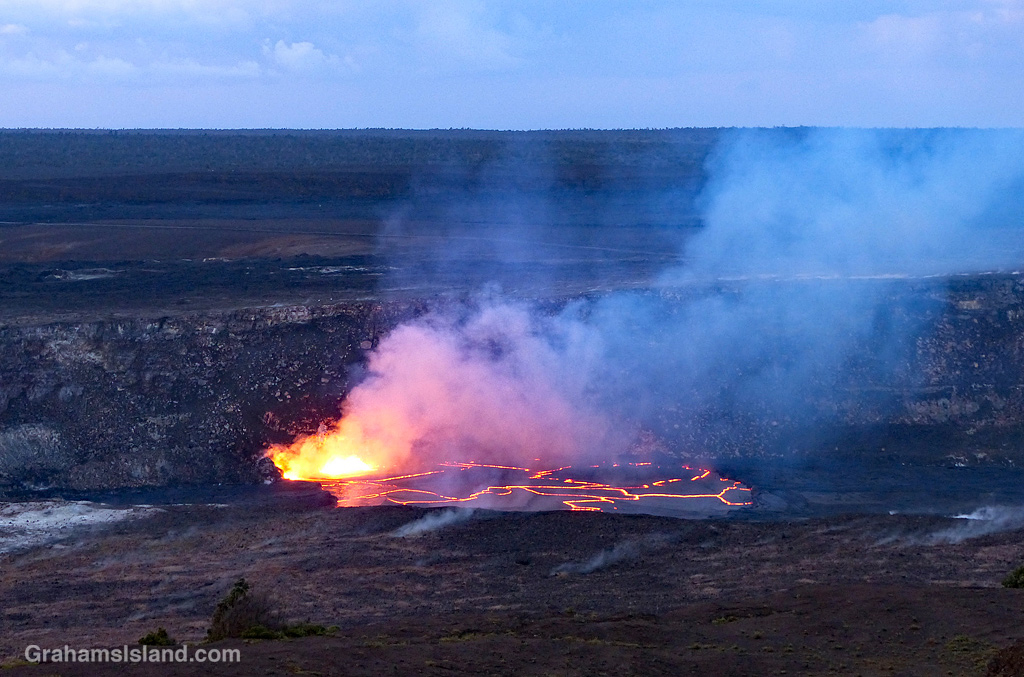
The Big Island is home to Madame Pele, who in Hawaiian culture is the goddess of volcanoes. She is the creator of new land as well as a destroyer. These photos were taken on April 24, 2018. (An account of that visit, and more photos, can be found here.) On May 1, the lava in the lake began to drop. Within a week, it had dropped more than 700 feet and continued falling. Lava had also disappeared from Pu’u O’o, the other active vent on Kilauea.
The drop in lava levels was due to magma in the system moving down the east rift zone of the volcano where it emerged in a series of vents in Leilani Estates, a housing subdivision in the southeast part of the island. This new eruption lasted until late August, 2018, since when the volcano has been quiet.
While there has been no visible activity, below ground, magma has been moving through the system, notably into Kilauea’s summit chamber. It’s surely only a matter of time before Madame Pele makes her presence known again on one of the world’s most active volcanoes.
The early morning light shows the crater and land around Halemaʻumaʻu Crater. This is a scene that no longer exists. Since this photo was taken, not only is the vent no longer active, but the crater floor has collapsed numerous times and the walls have also subsided in places.
This week’s Friendly Friday challenge theme is ‘Something Good.’ See more responses here.
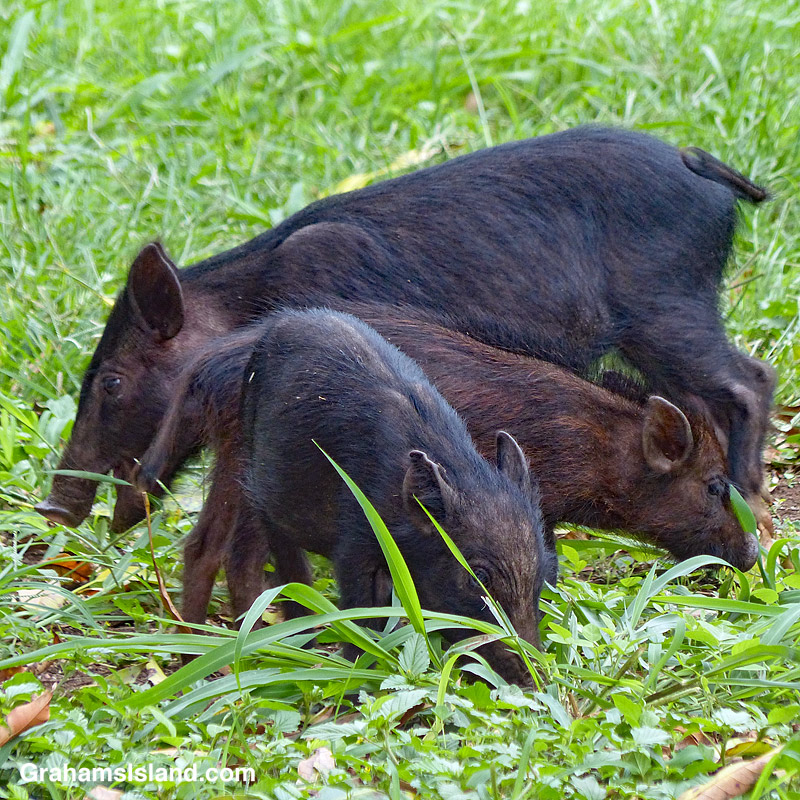
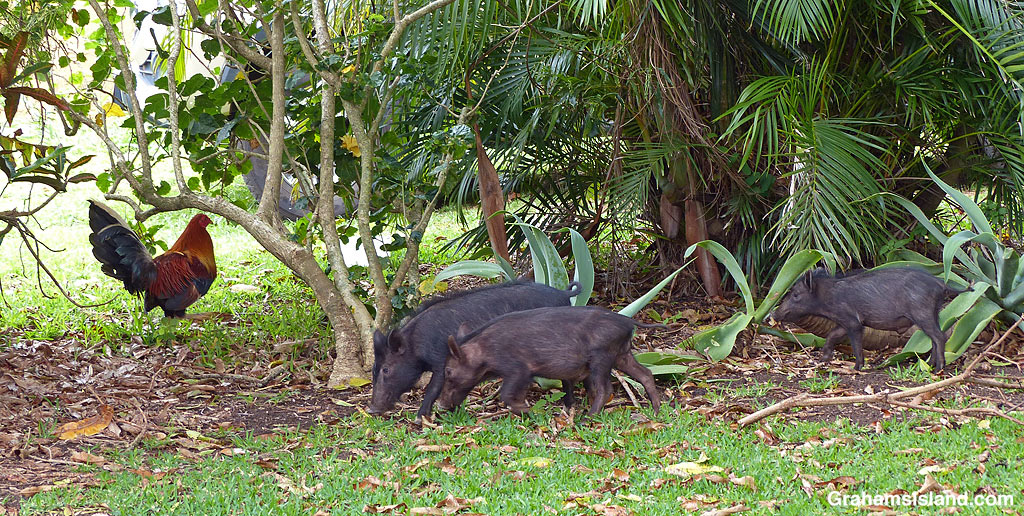
These three little pigs have been my top source of entertainment over the last couple of weeks. They’ve been regular visitors, looking for fallen mangoes and tangerines, or just foraging for worms and the like in the grass. The littlest pig seems the most adept at finding things and, when it does, the others try and get a piece of the action. Usually the littlest pig runs off with its trophy and the others chase it.
A couple of days ago they met Hopalong, a rooster thinking about making the yard his territory. Usually, when a rooster does that, I make a point of ushering it away every time it shows up and eventually it gives up. But Hopalong has a bad foot and doesn’t get around well, so he’s reluctant to move on. He wasn’t sure what to make of these pigs trotting toward him, so he retreated into the neighbor’s yard, looking affronted.
The three little pigs are easily spooked, scooting into the cane grass at the least disturbance. I think that’s where they live. I ventured in there one day and saw three little houses, one made of straw, another of sticks, and a third of bricks. I was going to investigate more, but I heard a low growling noise followed by some huffing and puffing, so thought better of it.
Also posted in response to Becky’s April Squares challenge theme of ‘Top.’ See more responses here.