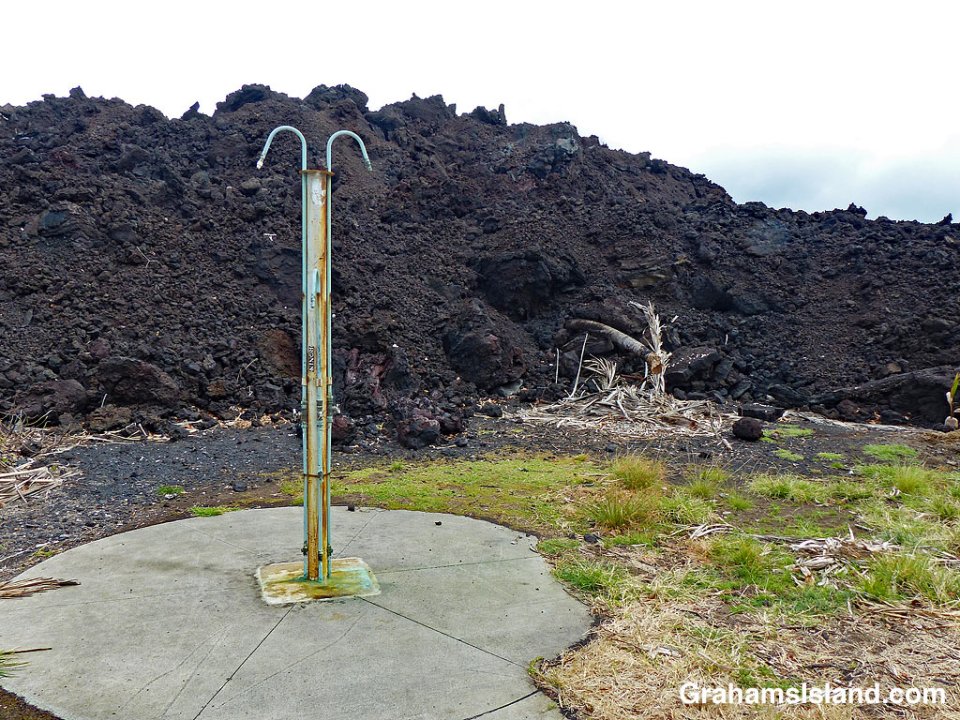
A couple more photos from my visit to Pohoiki at the end of January. Here, an abandoned shower in the picnic area is backed by lava from last year’s flow.



A couple more photos from my visit to Pohoiki at the end of January. Here, an abandoned shower in the picnic area is backed by lava from last year’s flow.
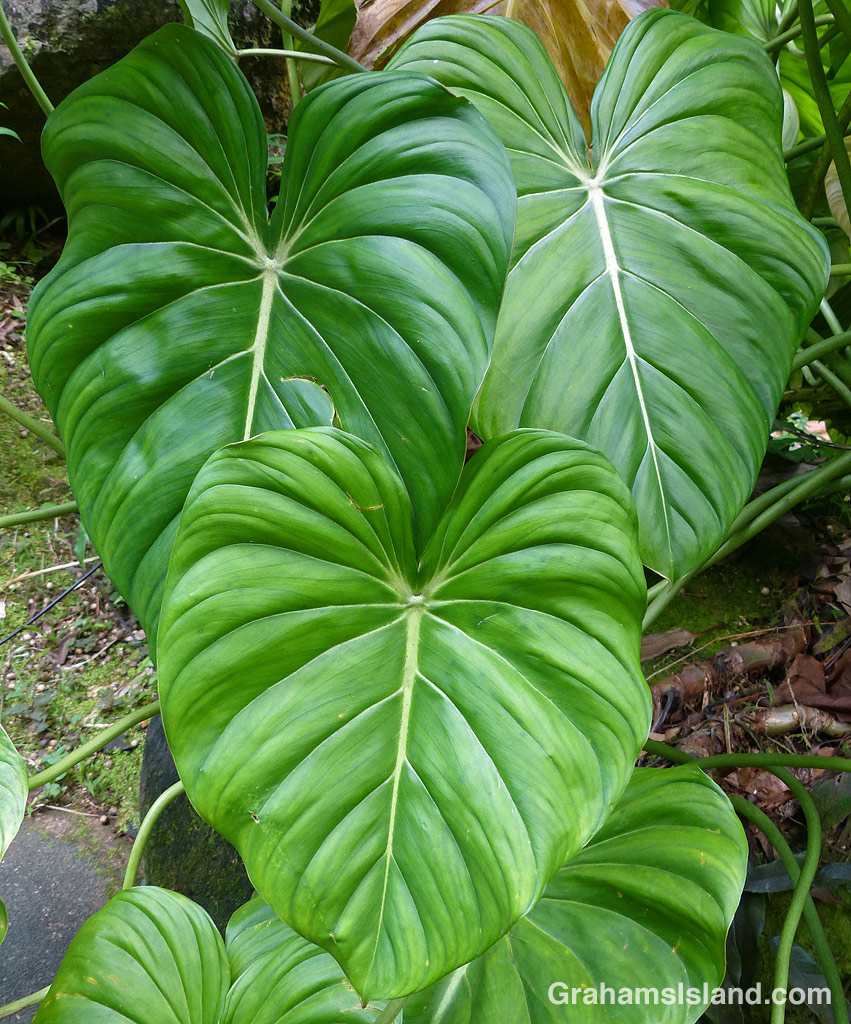
With its big heart-shaped leaves and prominent white veins, Philodendron × ‘McDowellii’ is a quintessentially tropical plant. This one was at Hawaii Tropical Botanical Garden. For more information about Hawaii Tropical Botanical Garden, go to htbg.com.
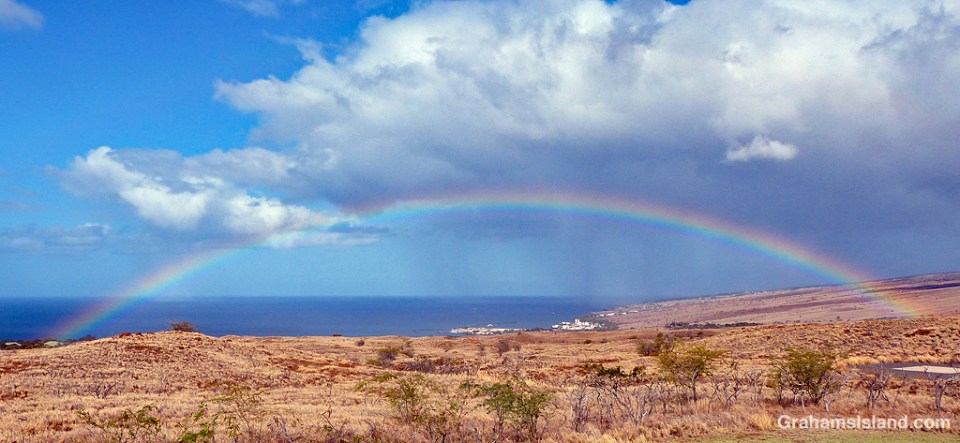
A rainbow stretches out above Kawaihae, the main port on the west side of the Big Island.

A couple of views of different bluefin trevallies. There are two things I particularly I like about this quite large fish. One is that they’re quite beautiful when the sun catches their blue markings. The other is that they tend to hunt in twos and threes, often times in the company of goatfish, and an eel or octopus. Indeed, if you want to see an octopus, one of the best ways is to watch for trevallies, especially if they’re just stooging around in one area for no apparent reason. In that case, it’s probably because there’s an eel or octopus present that can’t easily be seen.

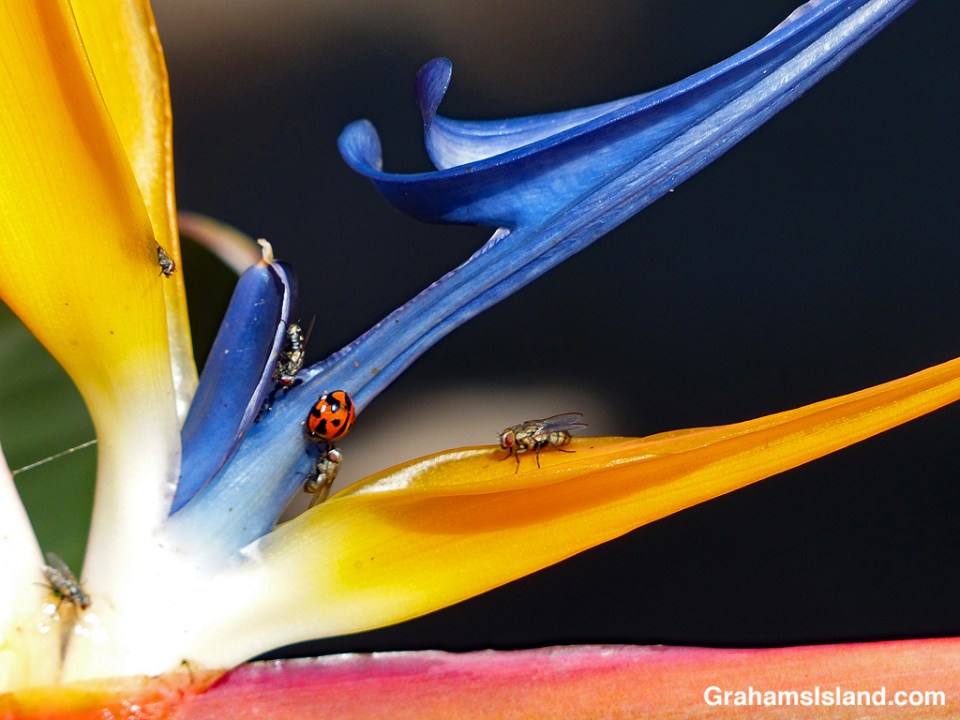
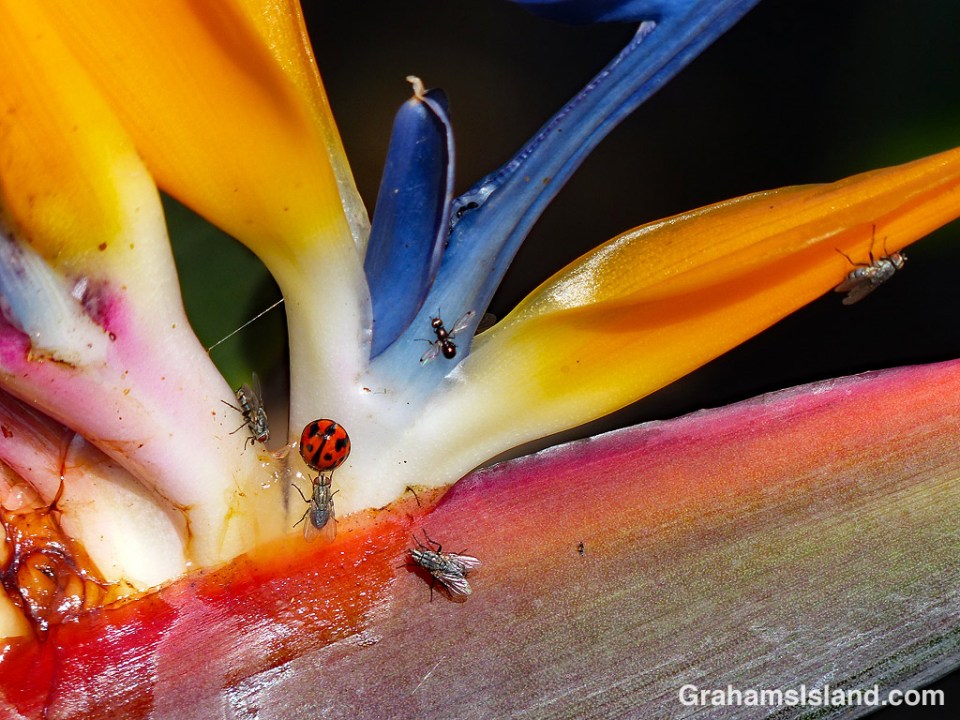
This variable lady beetle was one of two scuttling around on a bird of paradise flower. The flies seemed very interested in it and kept checking it out. There were also flying ants and a wasp on the flower, drawn by the nectar no doubt.
 This post is in response to two photo challenges, which I could say is killing two birds with one stone, but given the subject matter, that would be most inappropriate. This week’s Sunday Stills challenge theme is ‘Flight’ (see more responses here), and this week’s Friendly Friday challenge theme is ‘Dreamy’ (see more responses here).
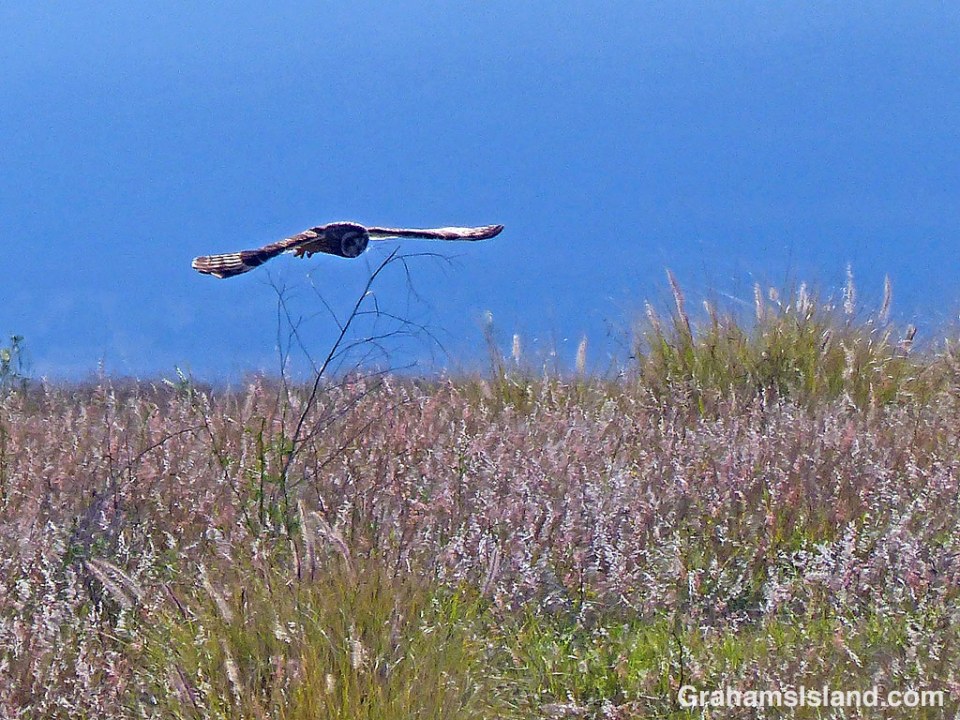
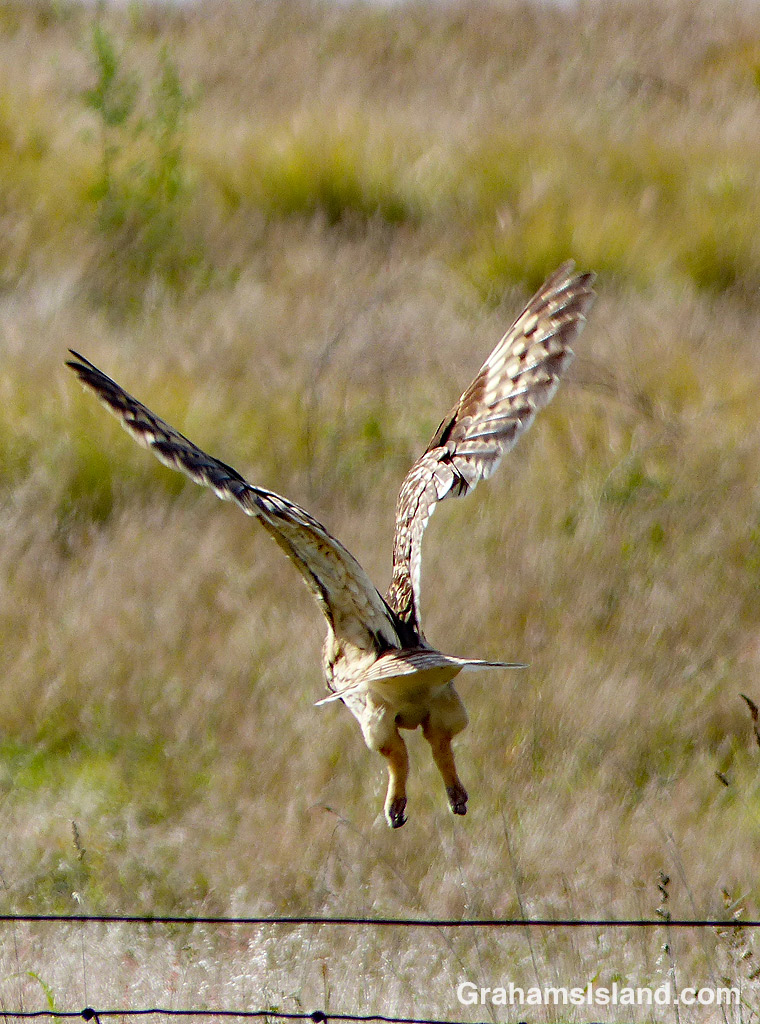
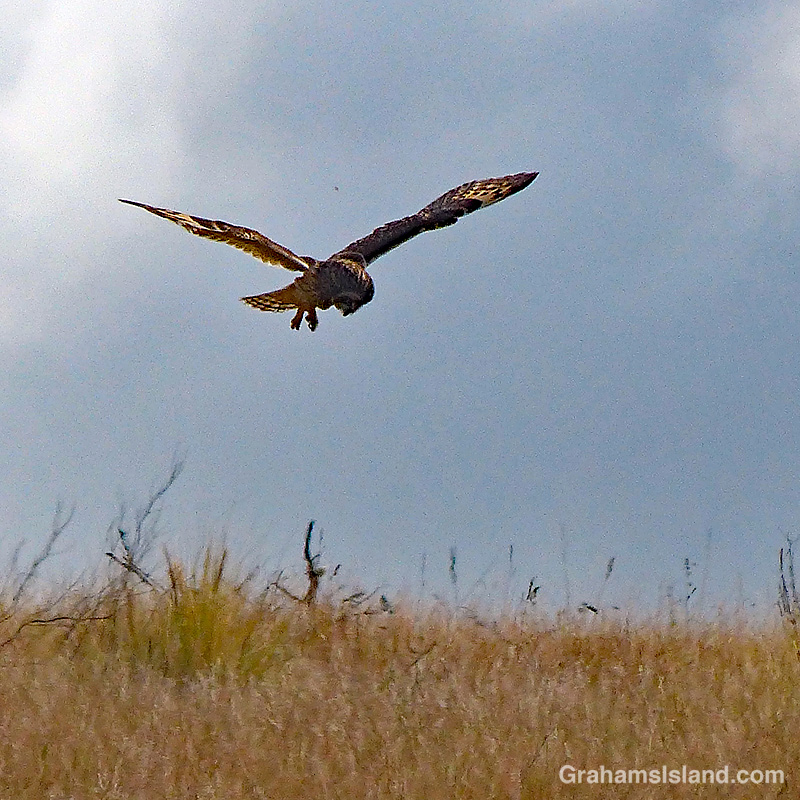
The ‘flight’ response is more immediately obvious. This is a pueo (Hawaiian short-eared owl) flying. In the top photo it’s cruising over pastureland. In the middle is its initial launch into the air. Below that, hovering above something promising in the grass. And at the bottom, a dive to take a better look.
These photos also work for the ‘dreamy’ response for two less apparent reasons. The first is that I’ve always had flying dreams, less frequently these days, but still every now and again. The thought of gliding above the landscape, as in the top photo, is very pleasing for me. The second reason is that seeing pueo is still a somewhat surreal, dreamy event. Owls are often nocturnal, but pueo are active during the day. In the air they are accomplished fliers, gliding, hovering, diving with little apparent effort. At rest, they look very dignified as they sit, keeping watch, head swiveling a disconcerting 360°.
These photos are of the same pueo, seen on a recent drive along Old Saddle Road, southeast of Waimea. I’ll post other photos of this bird once I’ve had time to go through them, but seeing it was a great, chance encounter at the end of my best ever day for seeing pueo.

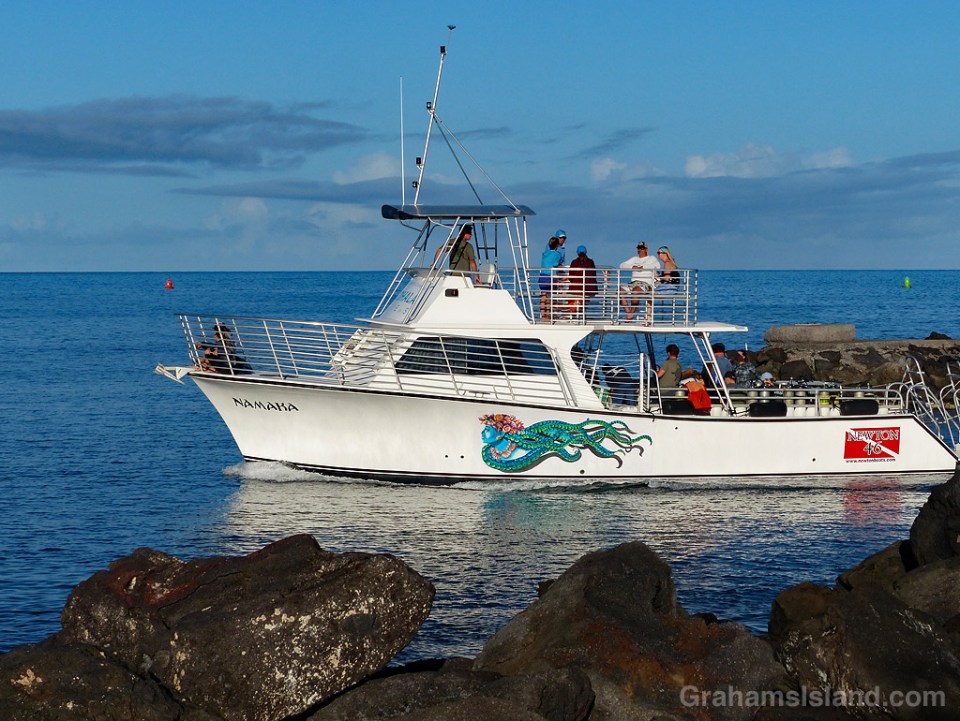
The Kohala Divers boat, Namaka, heads out of Kawaihae harbor for an early morning dive session. The boat is also used for whale watching cruises.
For more information about Kohala Divers, go to kohaladivers.com.

Not far from South Point, the most southerly tip of the Big Island and the United States, is a green sand beach, which I’ve posted about here.
The beach is 2.5 miles from the parking lot and, if you don’t want to walk, locals will drive you there ($20 is the current fee I think) in an assortment of trucks of dubious-looking pedigree. One problem with this practice is that it has generated a warren of deep, rutted routes in the sandy soil. Erosion is a problem. Sand is swept into the ocean when it rains and when the wind blows, both of which happen often and in strength.
The county is looking into ways to mitigate these problems, which could include regulating these unofficial taxis or banning them altogether. However, before anything happens, studies will be needed along with public forums to discuss the issue. These will result in an unacceptable proposal that requires further consideration. It’s entirely possible that, by the time action is taken, South Point will no longer be the most southerly tip of either the Big Island or the United States.

