Category Archives: Arthropods

The trail to Pepeiao Cabin

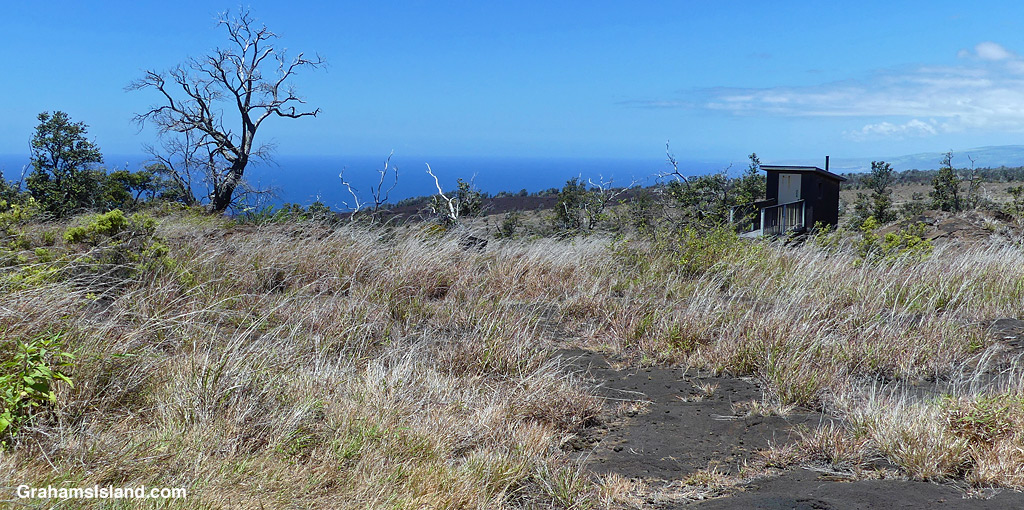
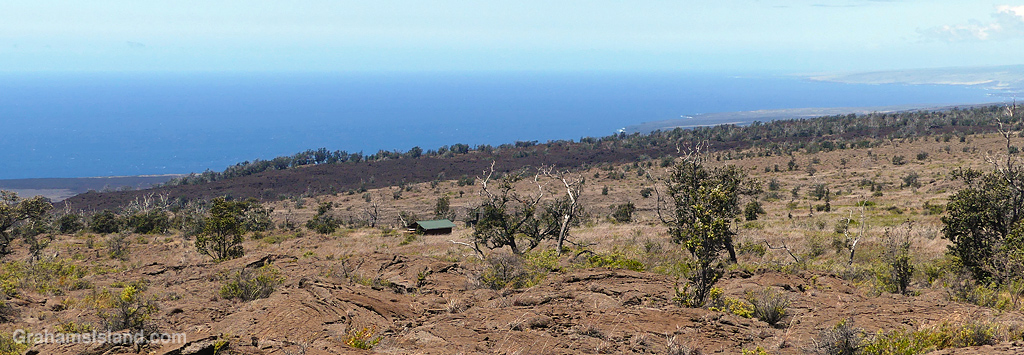
View from Hilina Pali Shelter on the Kau Desert Trail in Hawaii
View from the shelter at the trailhead.

This week’s Sunday Stills challenge theme is ‘Great Outdoors Month.’ See more responses here.

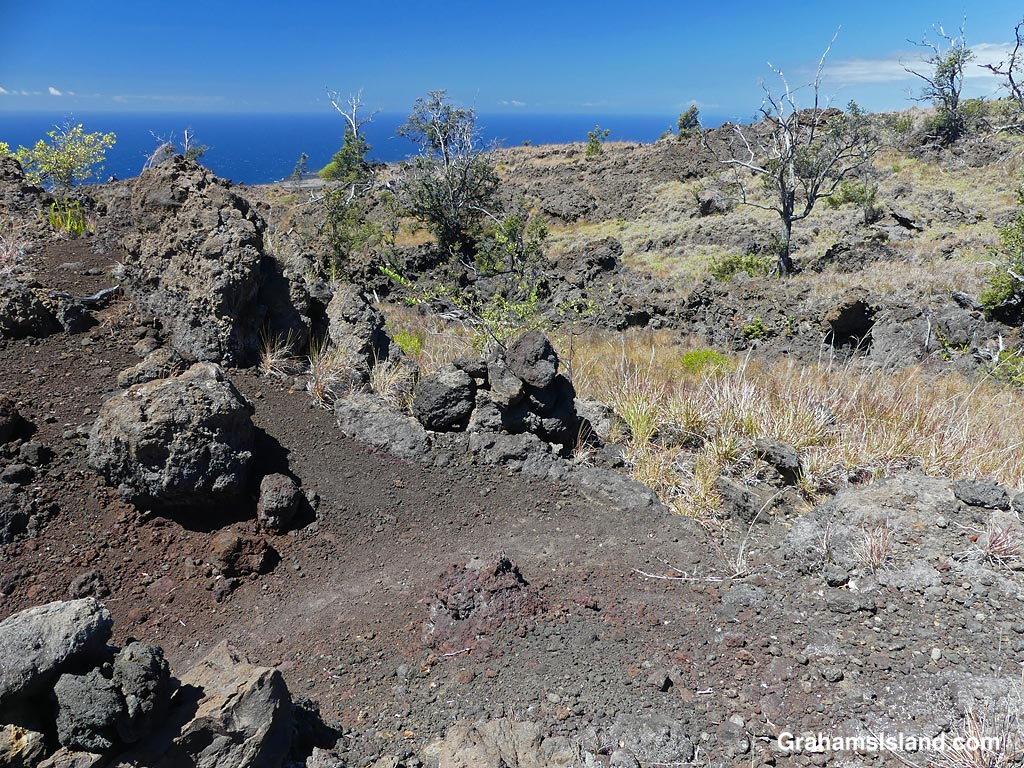
I did this hike, at Hawaiʻi Volcanoes National Park, quite a while ago, but for one reason or another the post never came together and then went missing in my files! This hike started from the lookout at the end of Hilina Pali Road. A few years back, I did a different hike from this starting point that almost did me in (here). This time, having learned from that experience, I stayed on top of the pali (Hawaiian for cliff). My destination was Pepeiao Cabin (pronounced ‘pay-pay-ow’), about five miles away, though the trail is the Ka’u Desert Trail, part of which I’ve hiked from the other end (here).
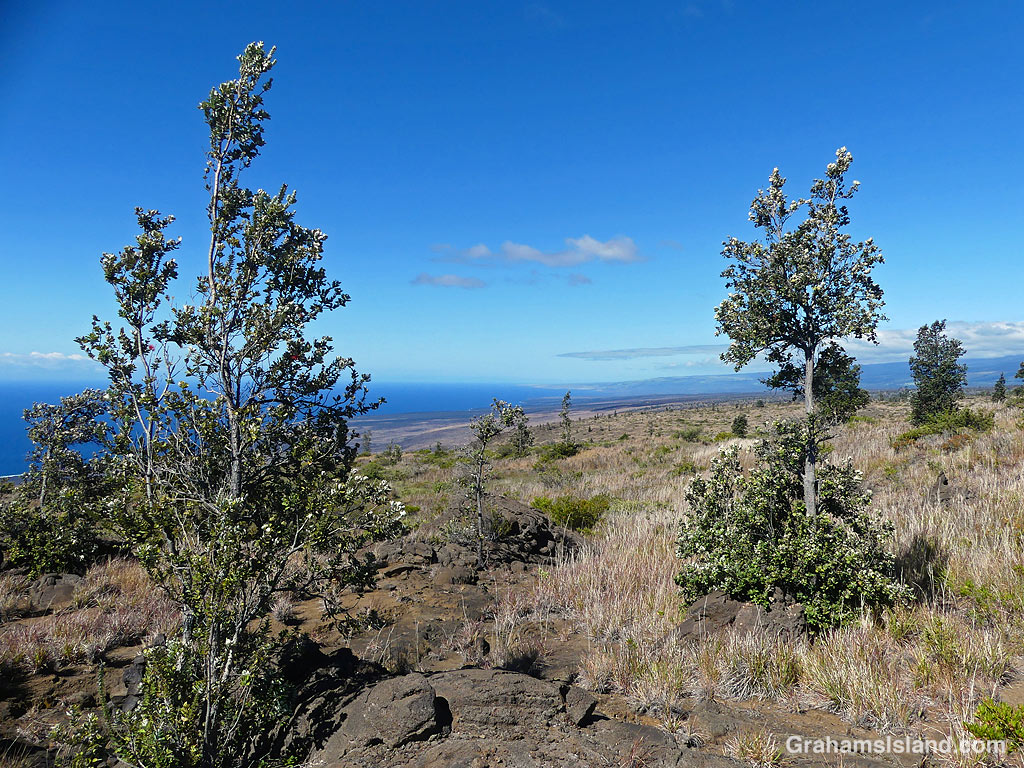
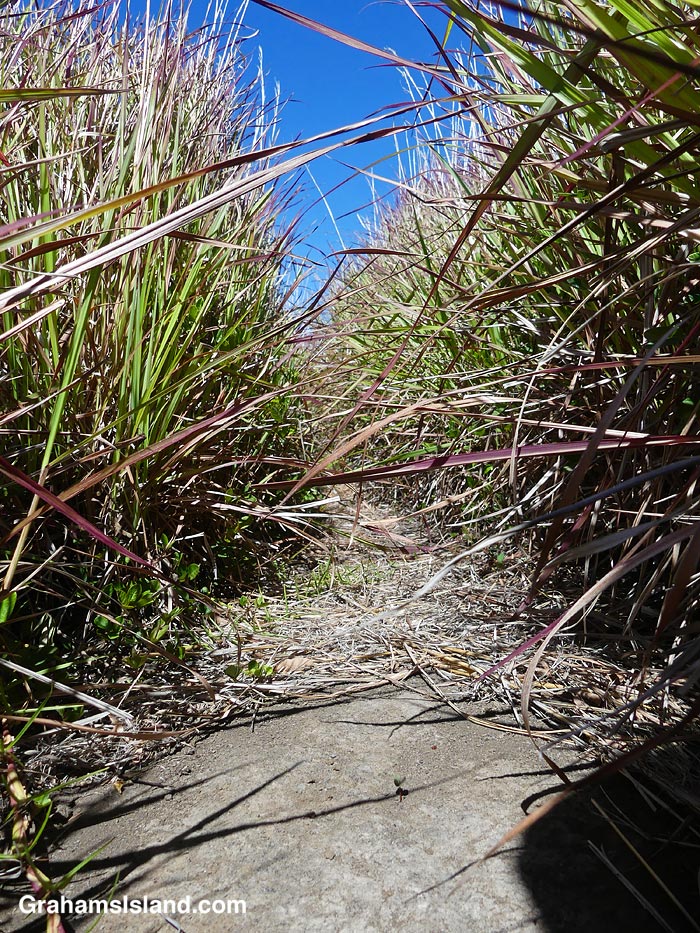
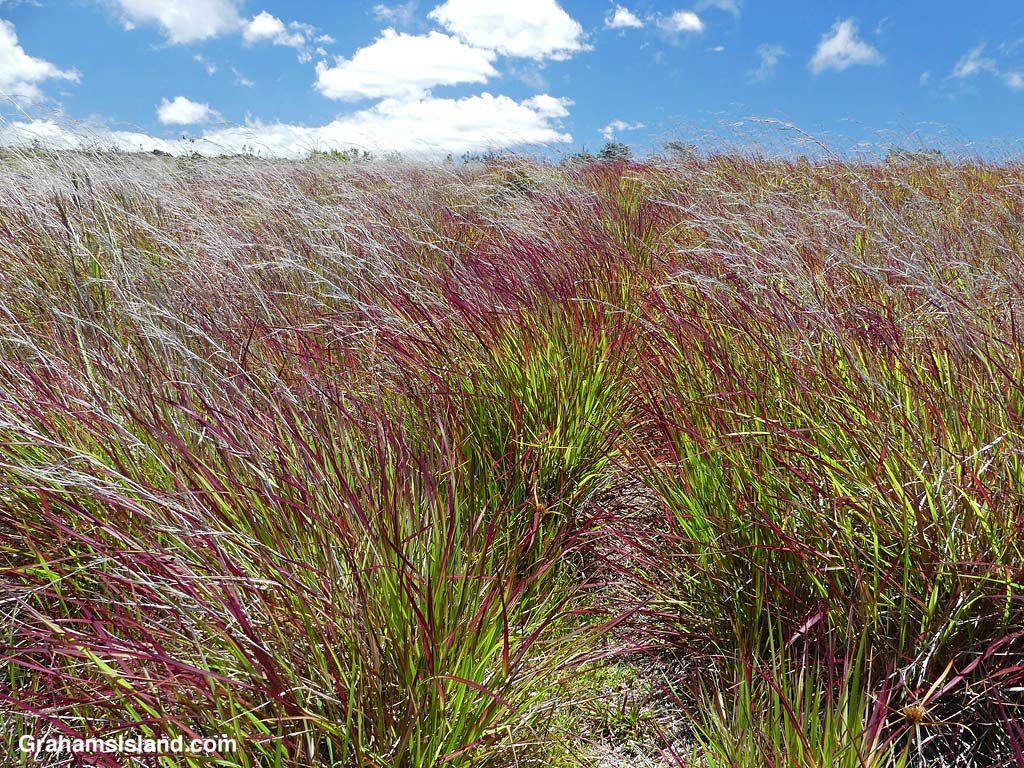
The day was sunny, but not too hot, and with a nice breeze for the most part. The elevation drop (and gain on the return) is only around 500 feet so it wasn’t too strenuous, and the trail was fairly easy to follow. It passes through grassy areas and across lava flows, and is well-marked with cairns. Ohia trees dot the landscape, along with a variety of shrubs and other flowers. I didn’t see too many birds, but there was a decent show of butterflies and bugs. The views were splendid, down to the coast or upslope towards Mauna Loa.
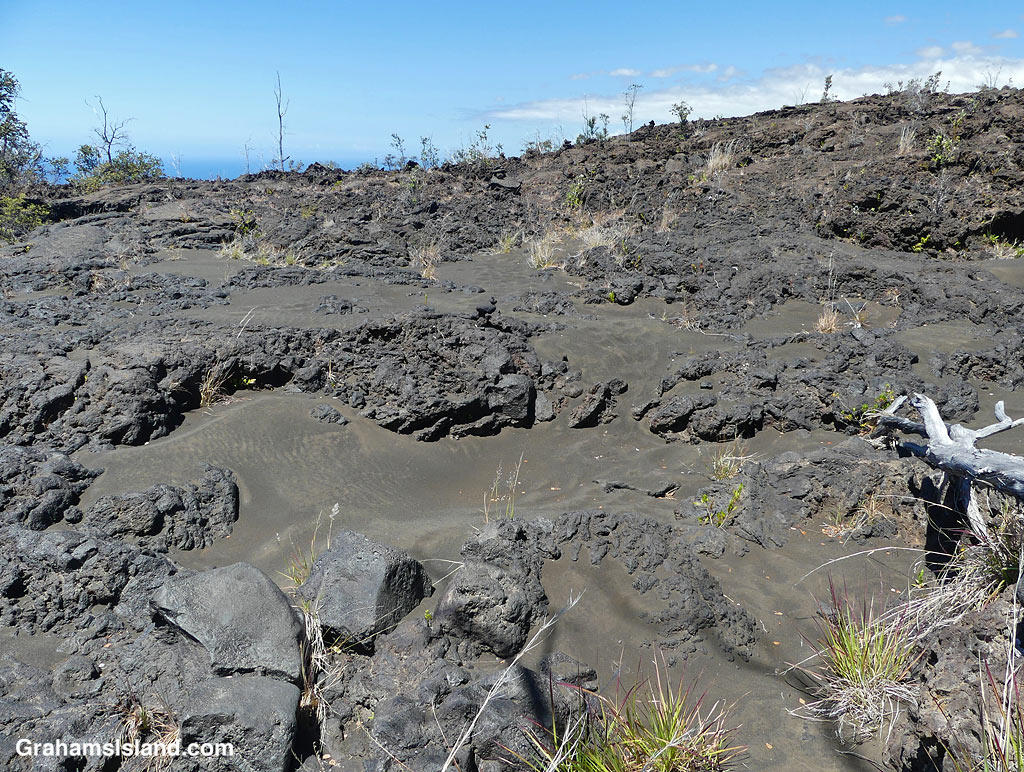
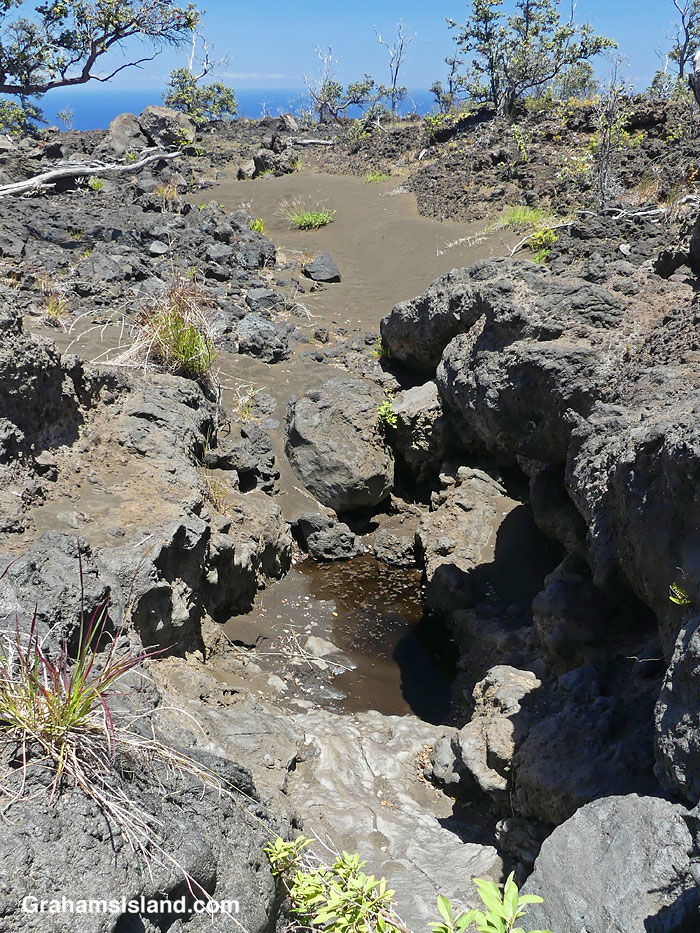
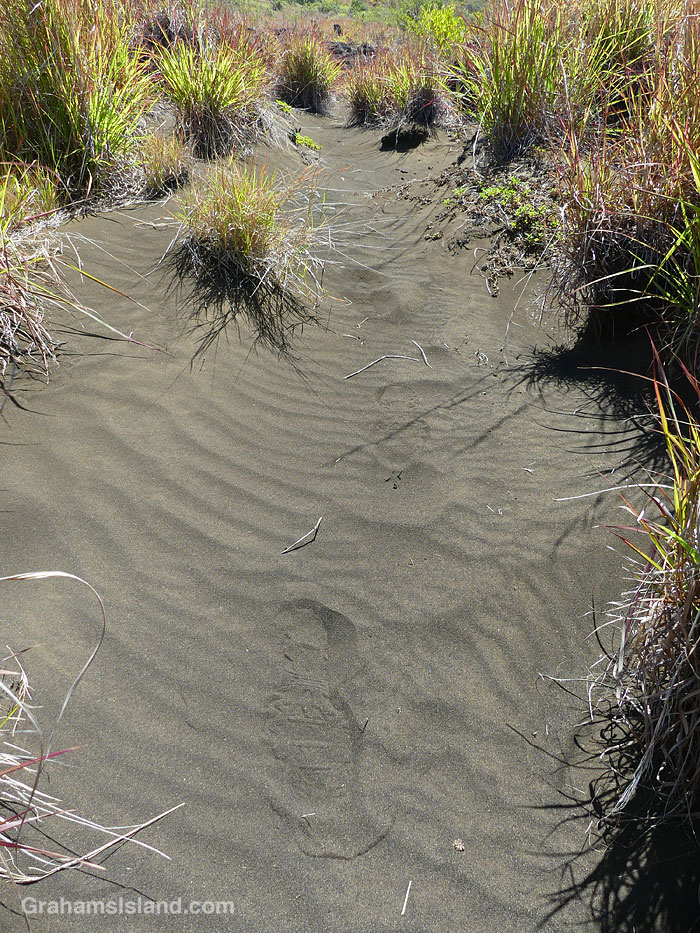
All the backcountry trails I’ve hiked in the park have featured something particularly unusual and interesting. On this hike, I was amazed by the substantial areas of sand on the trail or alongside it. This certainly didn’t get there from the beach, since the elevation is around 2,000 feet. My assumption is that it’s just volcanic rock broken down by rainfall, but just not washed down to the coast. Some of the sand was grassed over and it was like walking through dunes on the coast!
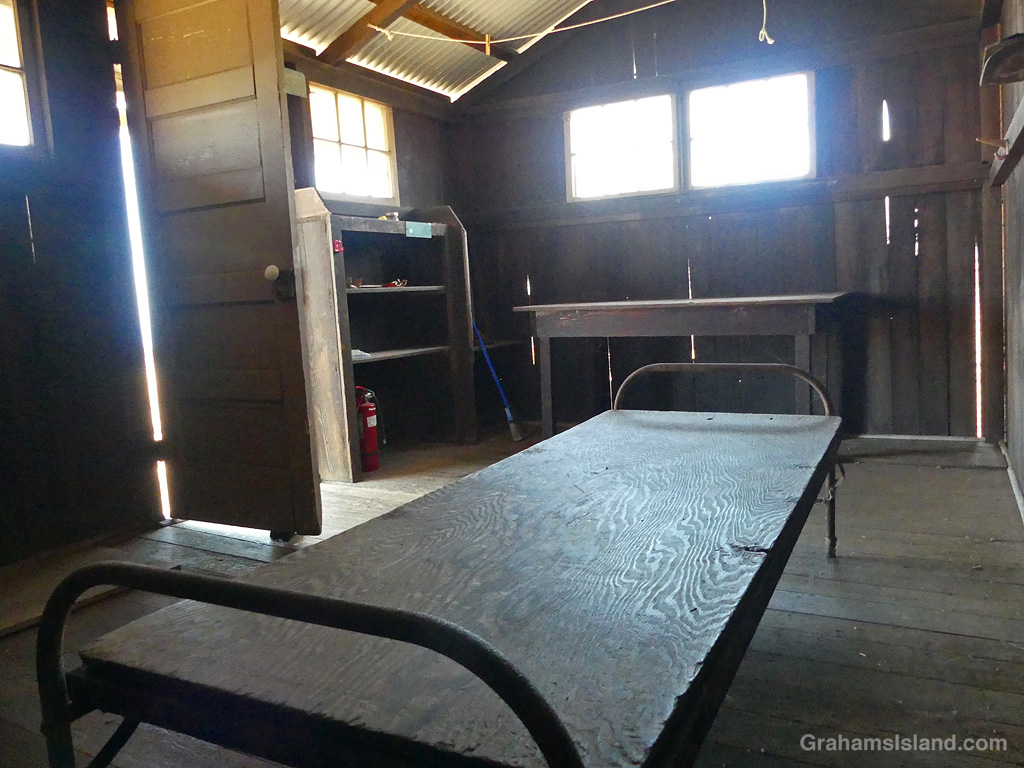
Eventually, I reached Pepeiao Cabin. There are several of these backcountry cabins in the park, and they require a permit to stay at them. This one was typically rustic, with a catchment water tank that may or may not contain water, depending on the weather and use. There’s also an outhouse with a splendid view. Inside, the cabin was basic, but the kind of place I’d be happy to stay in if it was raining outside.
After I got back, I saw that the park website says “Pepeiao is in the southwestern reaches of Hawaiʻi Volcanoes National Park backcountry. The cabin is no longer safe for use and visitors should plan on tent camping.” I was a bit surprised because I’ve certainly stayed in plenty of less salubrious accommodations in my day!

Also posted for Jo’s Monday Walk. See more responses here.

The Numbers Game #19

A Helicopter taking off from a ranch on Kohala Mountain, Hawaii
The photo number isn’t 140, but this still works. Watch out for that tub!
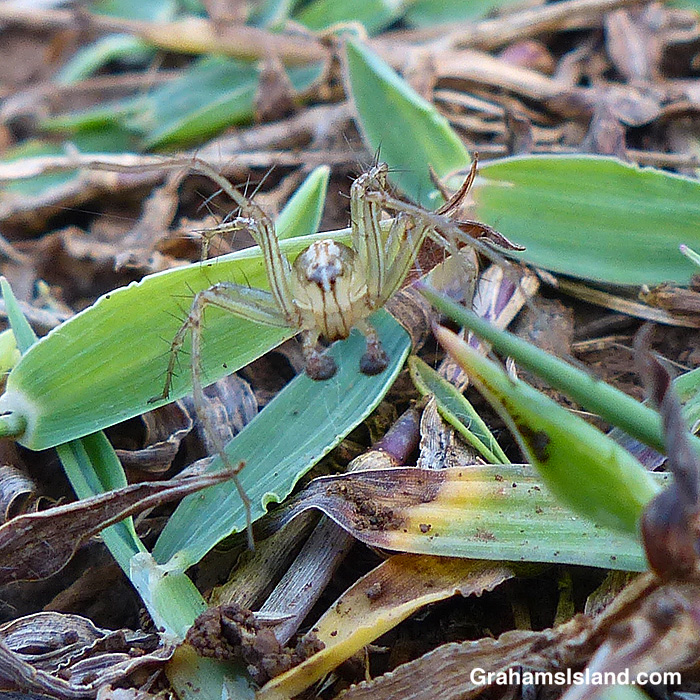
A Striped Lynx spider in Hawaii
An itsy bitsy, teeny weeny Striped Lynx Spider.

The idea of The Numbers Game is to enter a number into the search bar of your computer and then post a selection of the photos that turn up. This week’s number is 140. Captions are on the photos.

You can see more responses here.

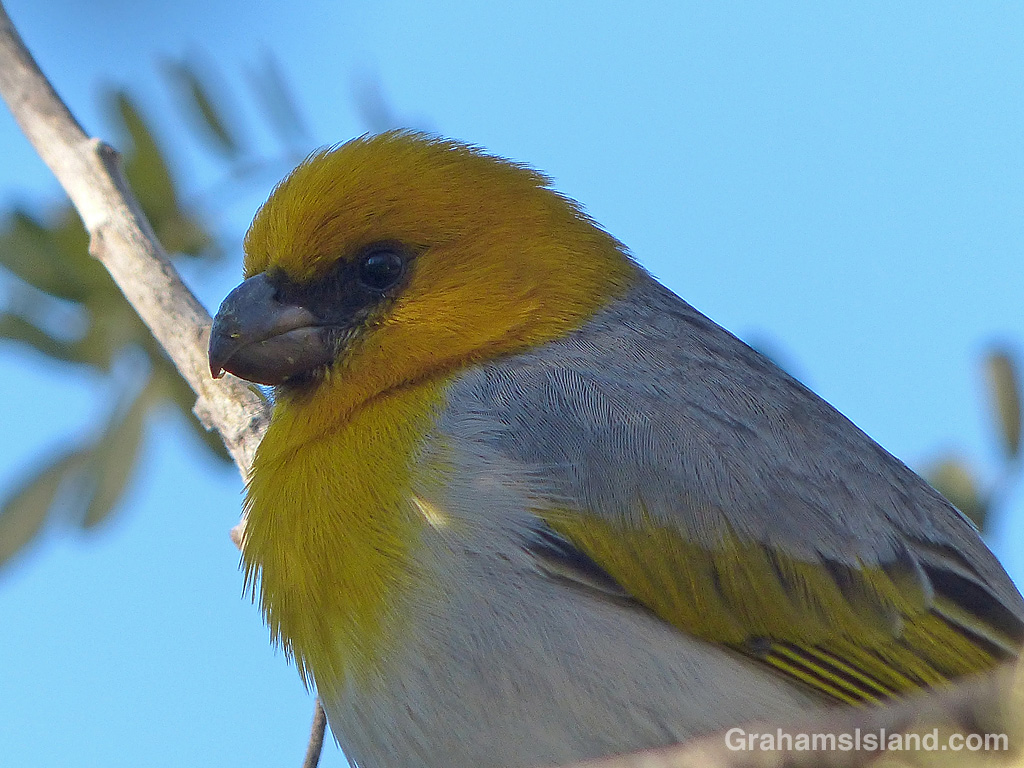
An endangered Palila, a bird found only on the Big Island, Hawaii.

Big webs, small spiders

Crab spider webs in Hawaii

Crab spiders are small, but they build good-sized webs. They’re also not territorial, which means they’re fine having other crab spiders for neighbors. When there’s a lot in one area, walking around becomes a bit of a challenge. I’ve wrapped webs around my head so many times it’s amazing I haven’t turned into a spider myself!

Shower time

An Hawaiian Garden Spider in the rain

I saw this female Hawaiian Garden Spider scooting up a strand of her web during a welcome rain shower. She stopped just before reaching the top and was soon the recipient of drops of water dripping from the roof. When the rain passed, she carried on up to the gutter.

I think she was getting some water to drink and possibly enjoying having a little wash. It’s been very dry here lately and water has been in short supply for the local wildlife.

What’s going on here?

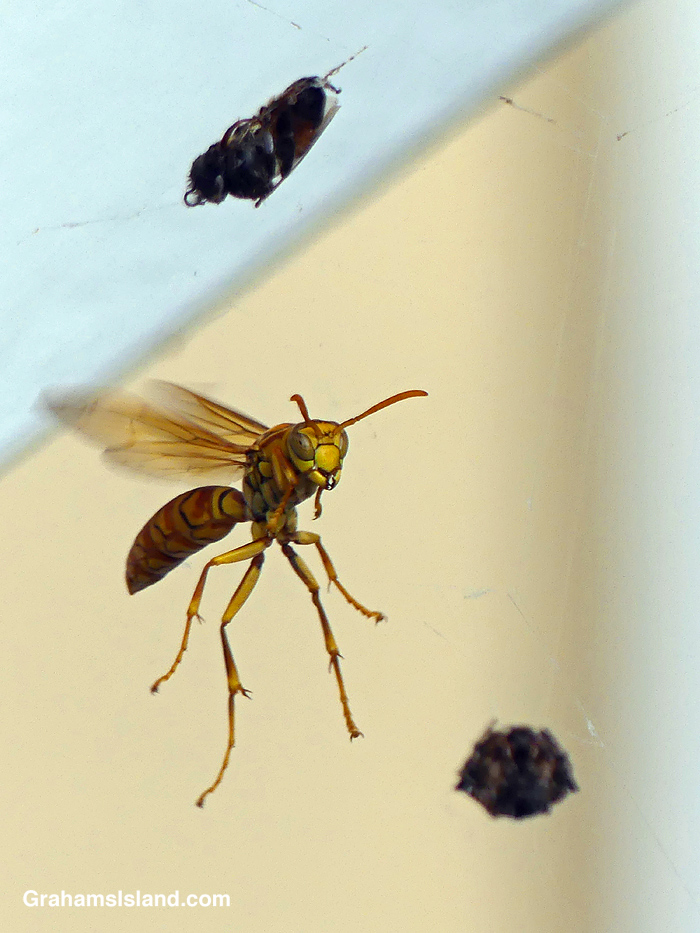
A wasp preening in Hawaii.
A wasp and a crab spider in Hawaii.

The house where I live is ready for Halloween thanks to the generous numbers of spiders living around it. By the front steps, there’s a small Hawaiian Garden Spider and several crab spiders.

One day, I came home and saw a wasp flying close to the various webs. I thought it was dicing with danger, but soon saw that wasn’t the case. Instead, it would approach a web and bob its head toward the spider. It didn’t seem to be a terribly threatening act, though perhaps it was from the spiders perspective. The wasp didn’t push home an attack, but would instead fly away, settle for a bit, and preen itself.

The garden spider didn’t seemed to be bothered by the attention, but the crab spiders would drop suddenly on a strand of silk, before returning to their web as soon as the wasp moved on. I watched these maneuvers for five or ten minutes before heading inside. No webs were damaged, no spiders hurt, and I still don’t know what was really going on!

There’s something bugging me

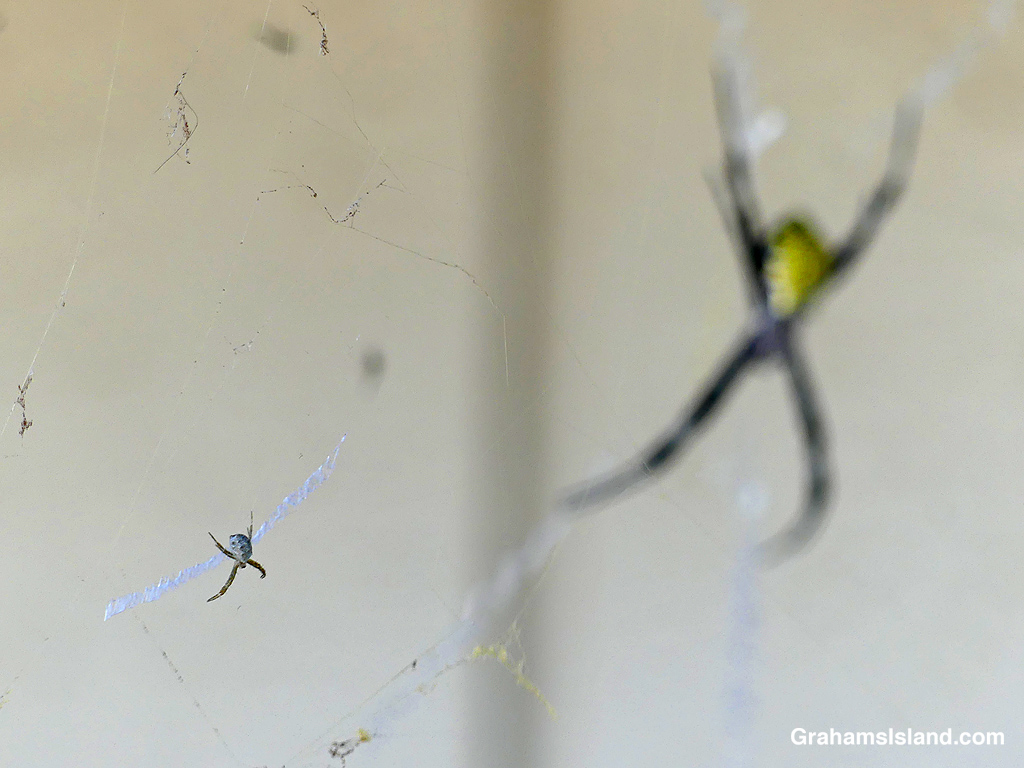
A tiny female Hawaiian Garden Spider with a much bigger one in the background

This week’s Sunday Stills challenge theme is ‘Let’s Get Small.’ See more responses here.

Sorry to start off (above) with spiders, for those with aversions to them, but this one is very small. It’s a tiny female Hawaiian Garden Spider, probably no more than a quarter-inch across, though if it survives, it will grow to be as big as the other one in the photo.

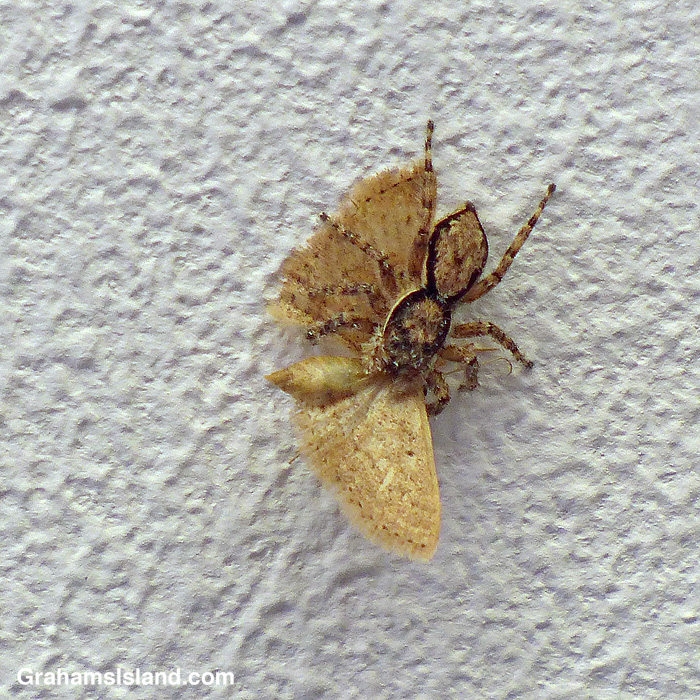
In the gallery below, a Seven-spotted Ladybug putters about in some very green leaves. Another spider, this time a jumping spider no bigger than the little one at the top, has jumped a moth bigger than itself. Finally, what I think is a hover fly pretending to be a wasp with its black and yellow markings.

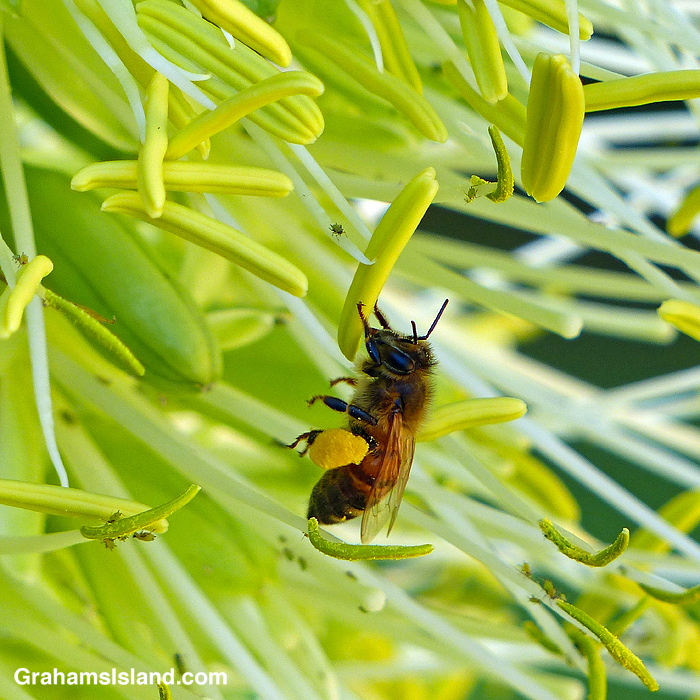
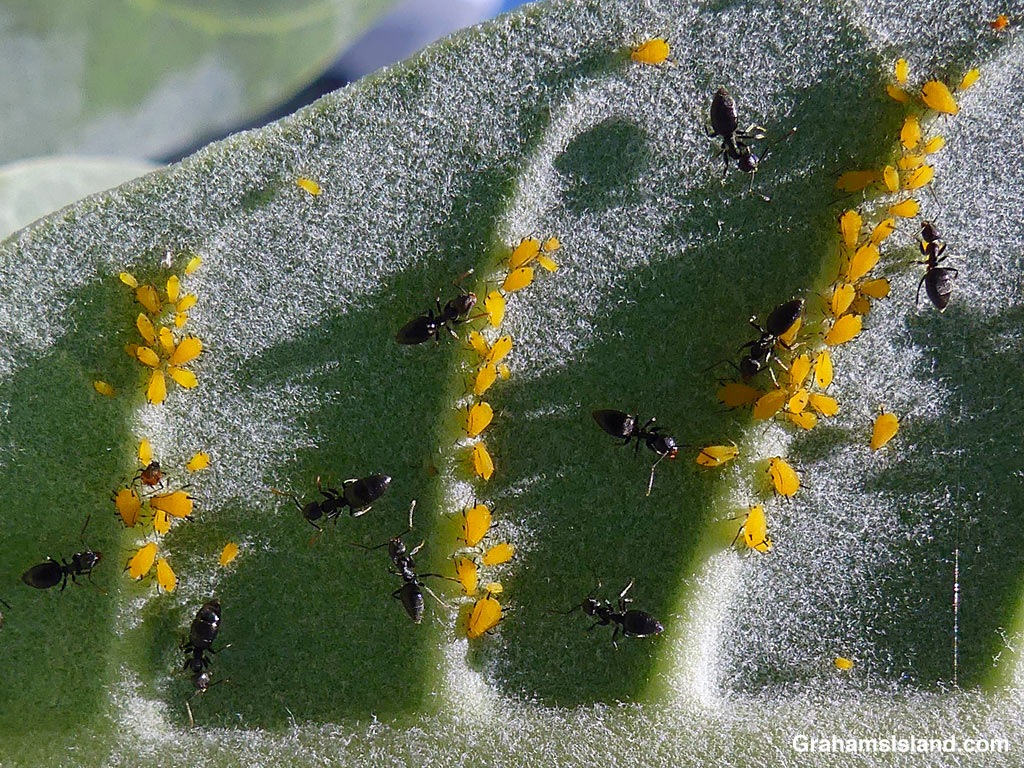
Finally, a Camponotus variegatus ant or carpenter ant. Next, a bee collecting pollen on an agave attenuata. Note the tiny aphids sharing the flower. And finally ants and aphids on the leaf of a Hawaiian Crown Flower. In this symbiotic relationship, the aphids produce sweet goodies for the ants to eat and the ants provide protection against the aphids’ predators.

Hawaiian Garden Spiders

Hawaiian Garden Spiders and their webs

I noticed that in the front border of the house, the ferns and Mother-in-Law’s Tongue or Snake Plant (Sansevieria Trifasciata) needed weeding and cutting back as there was foliage up against the house, a handy highway for ants and centipedes and who knows what else. The only problem is that, at this time of year, this little garden is guarded by a wall of spiders.

These three Hawaiian Garden Spiders are just a few of that kind there, and they’re accompanied by the usual mass of crab spiders and one or two others I’m not familiar with. I wouldn’t mind moving the crab spiders, whose main activity seems to be to build webs in places that mean they’ll end up wrapped around my head. But the garden spiders, I have a soft spot for. The females are quite beautiful and the males, while drab and tiny, are very watchable as they try to mate with the mighty females.

I guess the weeds can wait for another week or two.

Baby centipede

A small centipede in Hawaii

Centipedes have a modified pair of front legs behind the head, through which they inject their venom, so they don’t really bite, but sting. I have yet to be stung by a centipede, he says tempting fate, but I’m told that it’s extremely painful regardless of the size of the centipede.

This little centipede, which I was happy to spot outside the house, was probably no more than an inch long. But I was taking no chances and ushered it away from the house without getting too up close and personal.