Category Archives: Animals

Two donkeys

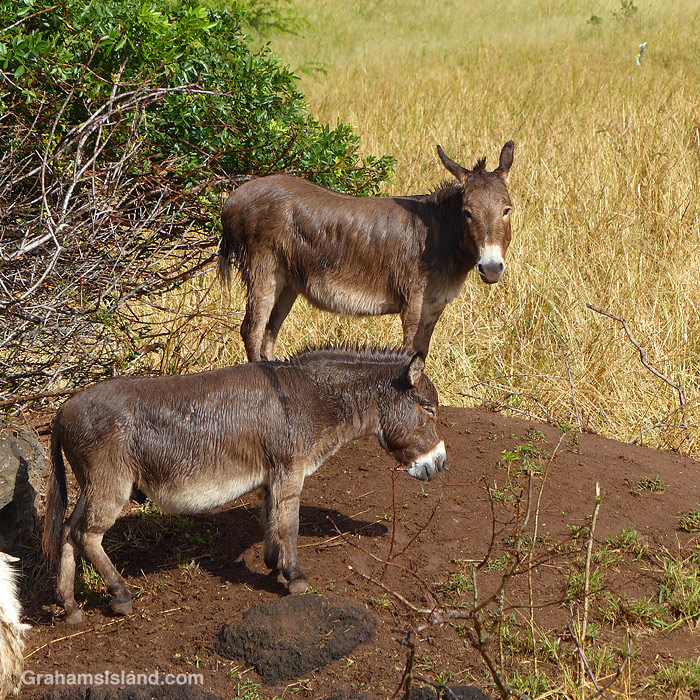
Two donkeys in Hawaii

Here’s the third of my three weather-related posts. Driving home from the walk in yesterday’s second photo, I saw these two donkeys. They live right on the shoulder of Kohala Mountain in the same 45-inches-of-rain-a-year range as Upolu. They’d been on the receiving end of the same weather as my first photo yesterday, but now they were standing on their little hill, soaking up bright sunshine, and drying out a little.

Posted in response to Becky’s April Squares challenge theme of ‘Bright.’ See more responses here.
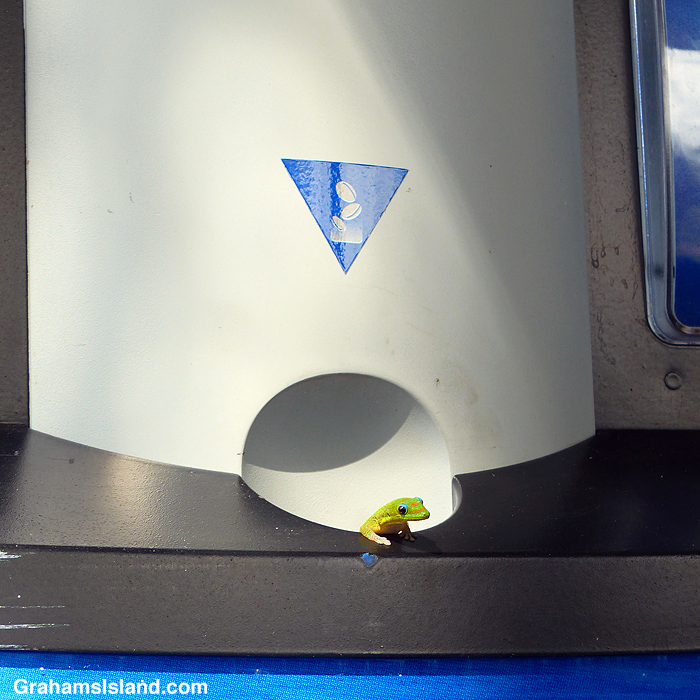
Gecko in a Pepsi machine

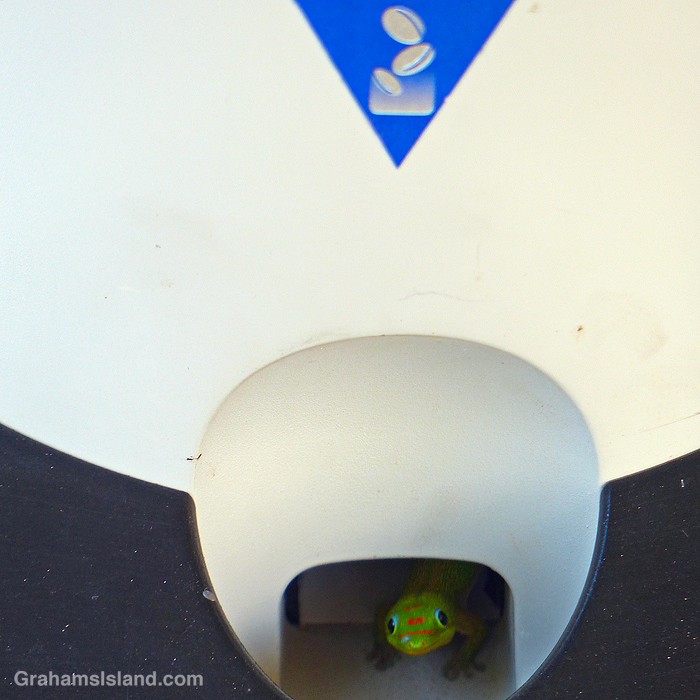
A gecko looks out from a Pepsi machine

This week’s Sunday Stills challenge theme is ‘Emerging.’ See more responses here. I’ve posted photos of this scene before, but I thought a couple more fit the bill for this week’s theme.

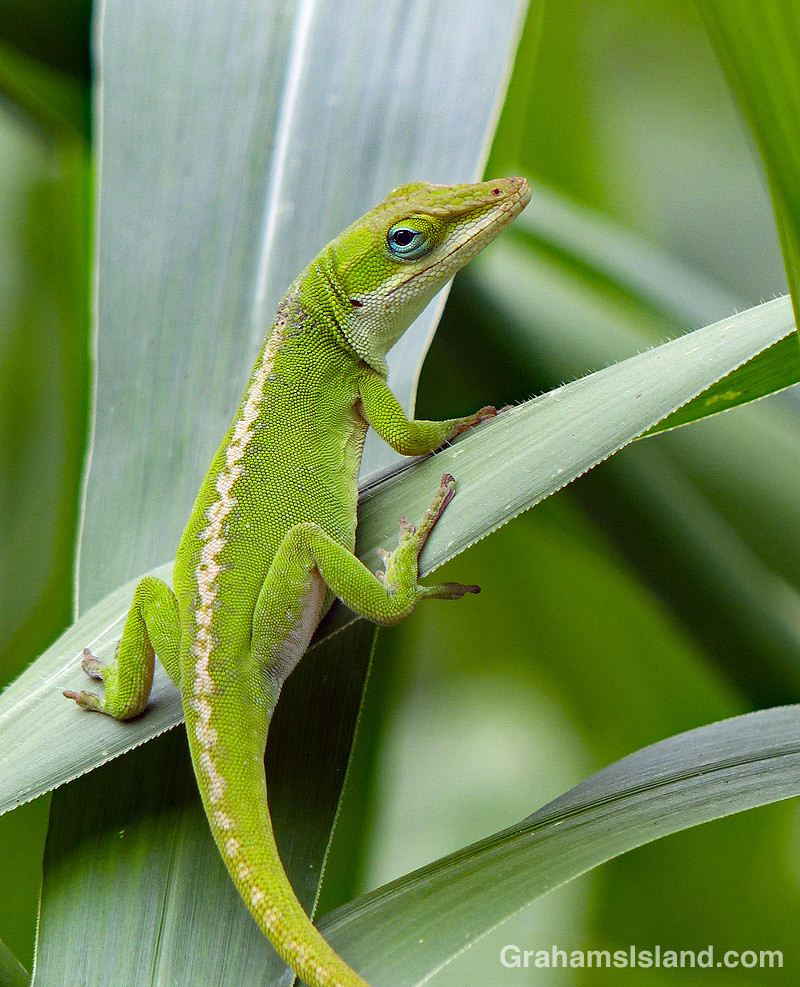
This brightly-colored gold dust day gecko lived in a Pepsi machine for a while and regularly emerged from the interior via the coin return slot. Then it would hang out on the edge for while, checking out the scene, before returning to the cool, dark interior.

Also posted in response to Becky’s April Squares challenge theme of ‘Bright.’ See more responses here.
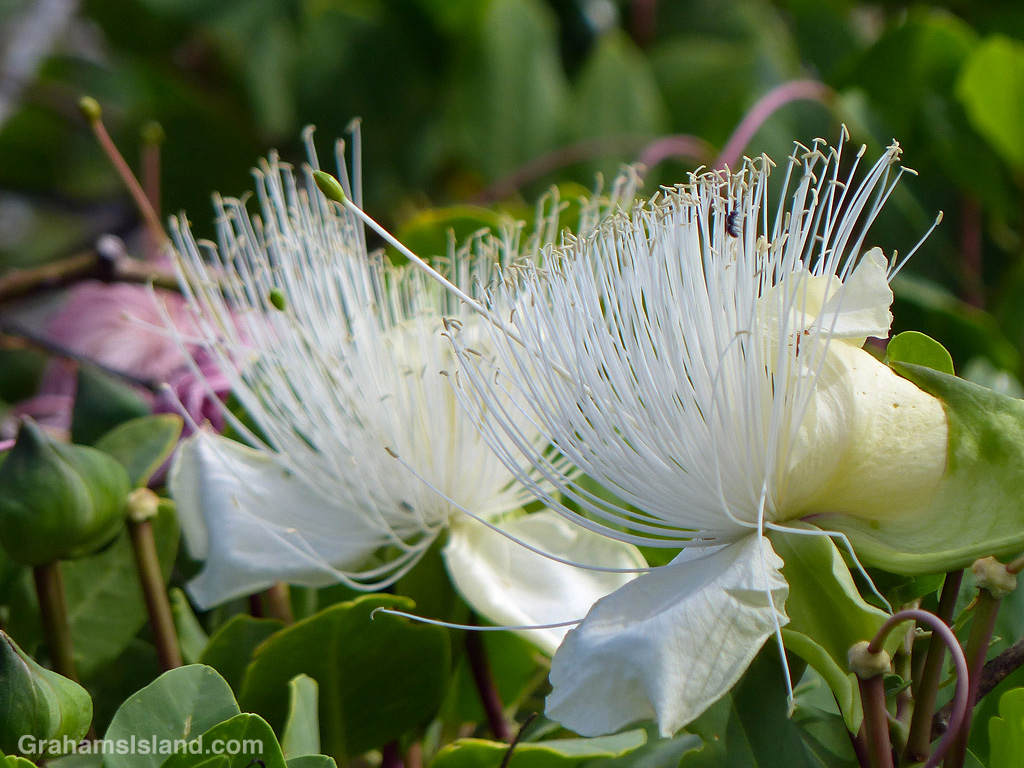
Maiapilo

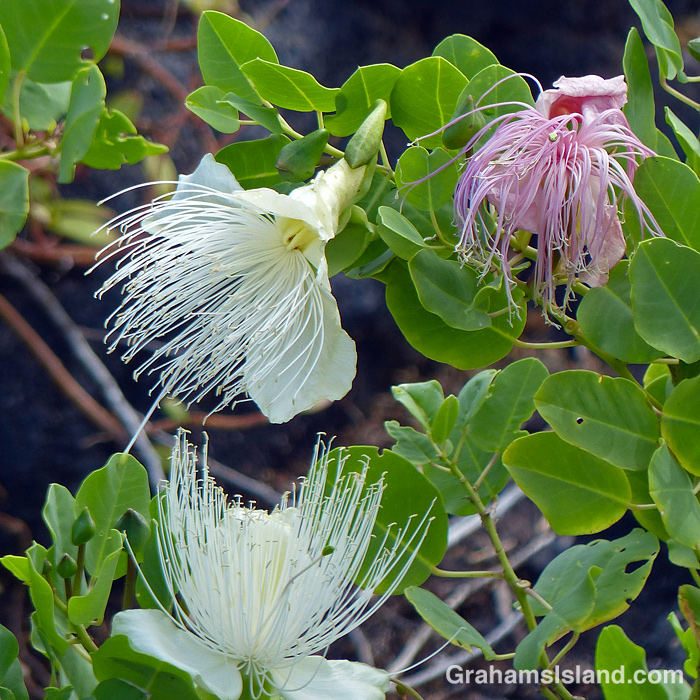
Maiapilo flowers in Hawaii
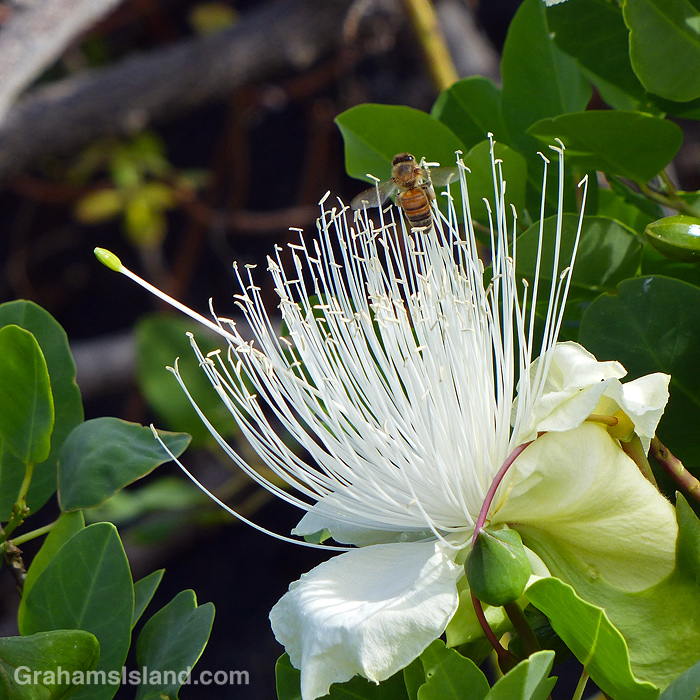
A bee forages on a Maiapilo flower in Hawaii

Maiapilo (Capparis sandwichiana) is an endemic plant that requires little water once established and is also salt tolerant. This means it grows well on the dry side of the island along the coast. This of course is also an area popular with humans, both for living and recreation. Consequently, maiapilo is considered an at risk plant.

Its standout feature is the beautiful white flowers, but if you want to see them, bring a flashlight or be prepared to get up early. Maiapilo blooms at night and begins to wilt early in the morning, fading to pink as it does so.

These photos were taken around nine in the morning and the bees were busy exploring and pollinating the flowers. At night though, native moths are the main pollinators, attracted by the white flowers and pleasant lemon scent. A cucumber-like fruit follows the flowers but, unlike them, it is said to have a very pungent smell.

The plant can be low-growing and sprawling, or a more upright shrub reaching 10 feet.

The BGP

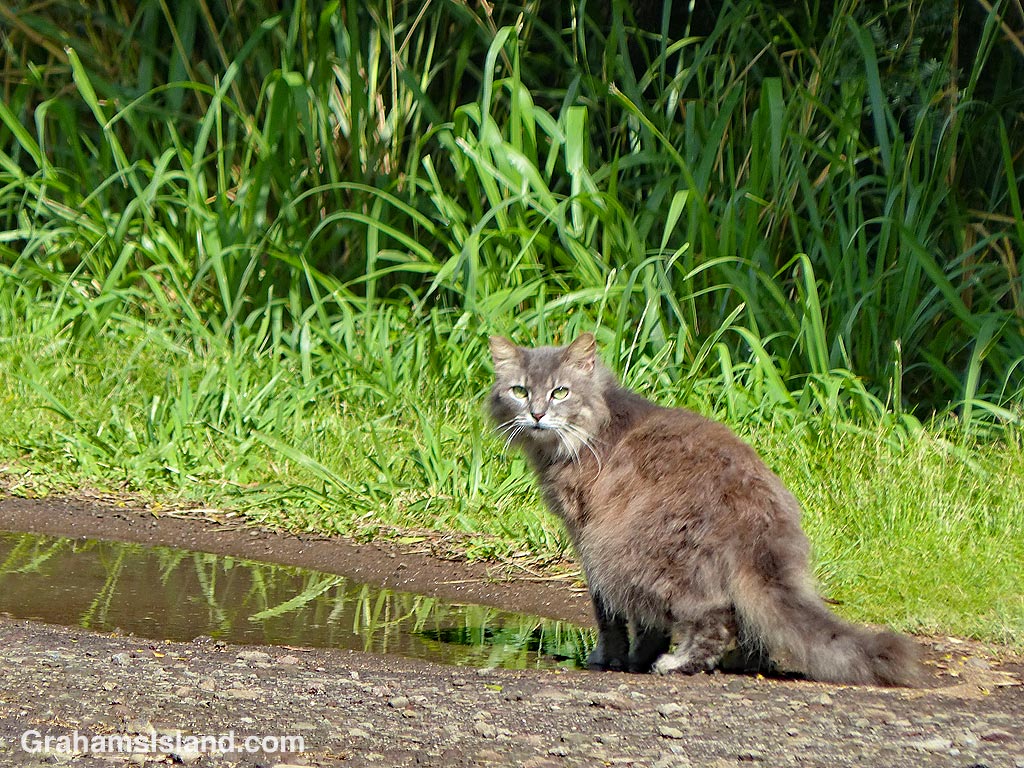
A cat sits by a puddle

This week’s Sunday Stills challenge theme is ‘Respect the Cat.’ See more responses here.

We don’t have a cat here in Hawaii, but this is one of our neighbor’s cat. It used to spend more time around our house, but as it’s got older, it seems to stick closer to home. We call it the BGP, which stands, of course, for big gray pussycat.

Goats at Kiholo

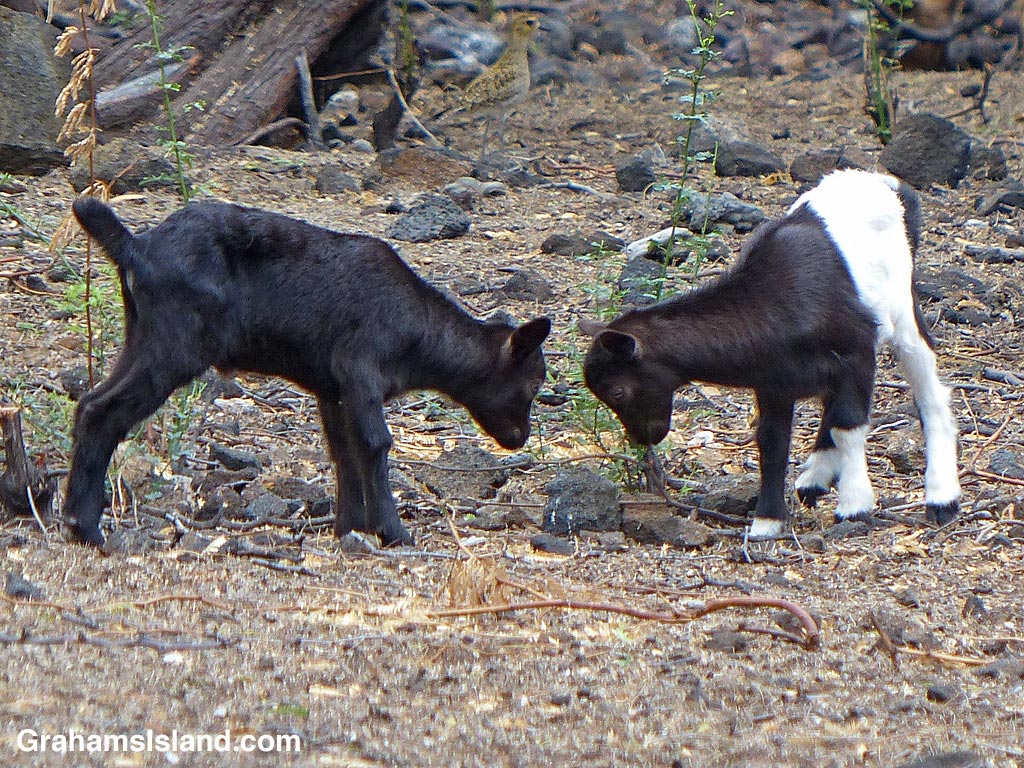
Two goat kids playing at Kiholo, Hawaii
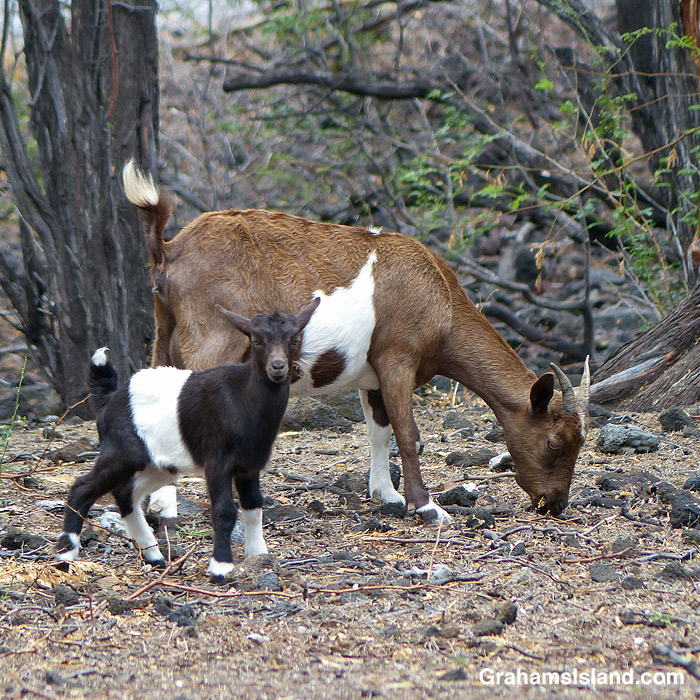
A goat and her kid at Kiholo, Hawaii

There are no shortage of goats at Kiholo and it doesn’t look like their numbers will be dwindling any time soon. On my last visit these two kids caught my eye with their typically rambunctious behavior. Mom, in the middle photo, looked singularly unimpressed.

Two goat kids playing at Kiholo, Hawaii

Praying mantis egg sacs

A praying mantis egg sac on a branch
A praying mantis egg sac on a tree trunk

When I’m out walking, I rarely see praying mantis egg sacs. They’re no more than an inch long and they can blend in with the trees and branches where they tend to be found. However, on a recent walk on the coast, I saw these three sacs in the space of 20 minutes, the top two on branches and the third on a tree trunk.

I’m not sure why they caught my eye, though this is the time of year when they’re typically seen. Perhaps it was because I was watching for butterflies and dragonflies, so was paying a bit more attention to details than usual.

Each sac can contain up to 300 eggs. The eggs are encased in foam, called ootheca, which hardens into the sacs seen here. The sac in the middle photo was crawling with ants, which I suspect is not good news for the would-be mantises inside.

Butterfly on a kiawe flower

A Painted Lady Butterfly feeds on a kiawe flower

Kiawe trees (Prosopis pallida) are native to the northeastern corner of South America. They were introduced to Hawaii way back in 1828 and now are the dominant tree in coastal areas on the drier west side of this island. The downside of this is that the tree has wicked thorns that penetrate tires and footwear. My feet have been jabbed through Teva sandals and Adidas hiking shoes. The most popular footwear in Hawaii are slippahs (flip-flops or thongs), but one has to be brave and vigilant, or maybe foolish, to wear those where kiawe grow.

On the plus side, the tree’s wood is popular for firewood and barbecues. Kiawes also provide shade and have light yellow flowers which are popular with bees and butterflies such as the painted lady butterfly in this photo.