Recently, I was down at the lagoon behind the beach at Pelekane Bay in Kawaihae. I was engaged in one of my favorite activities – failing to get photos of dragonflies in flight!
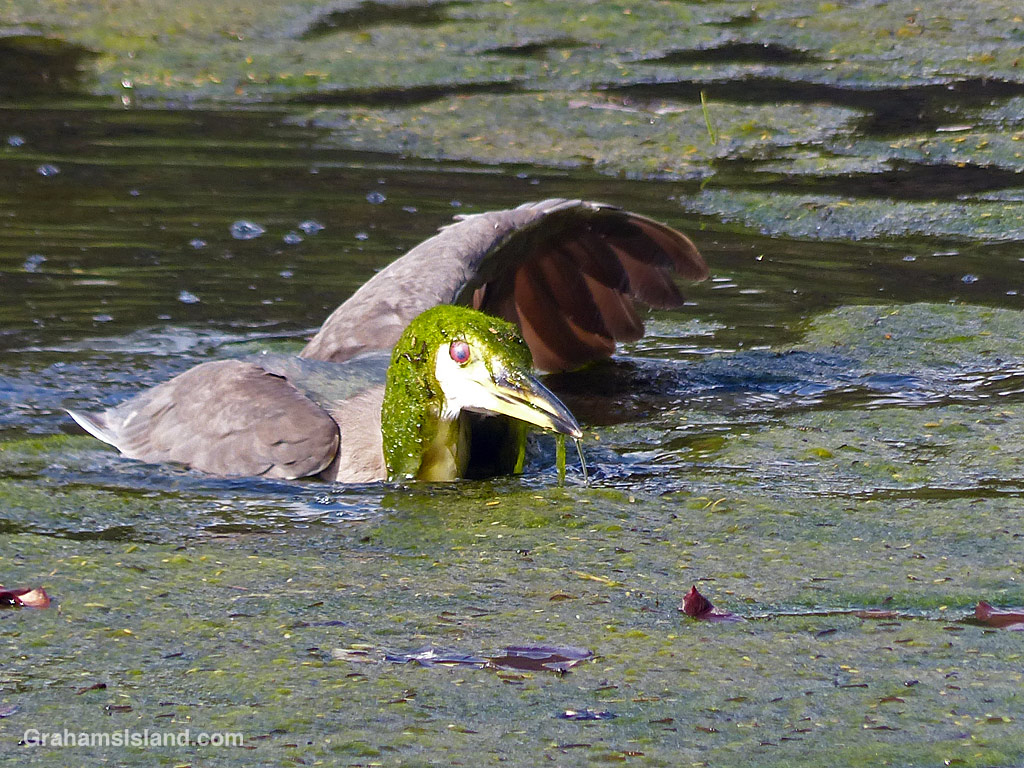
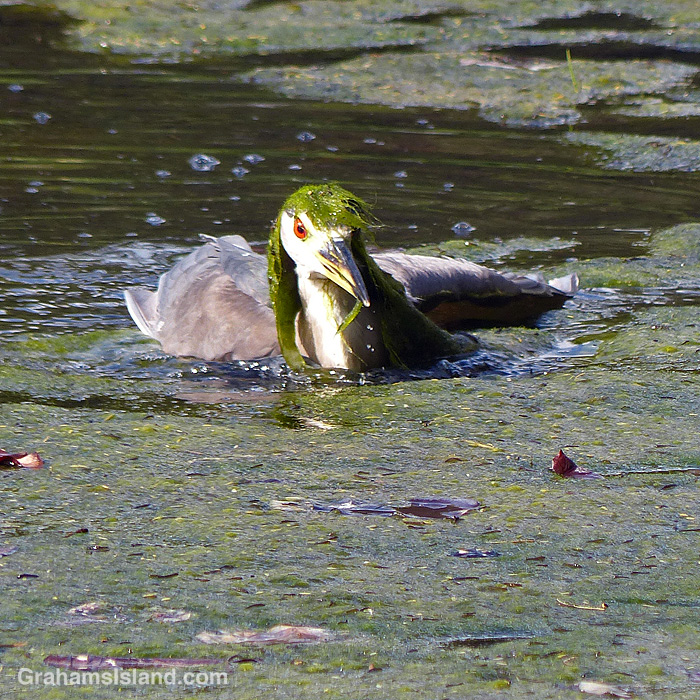
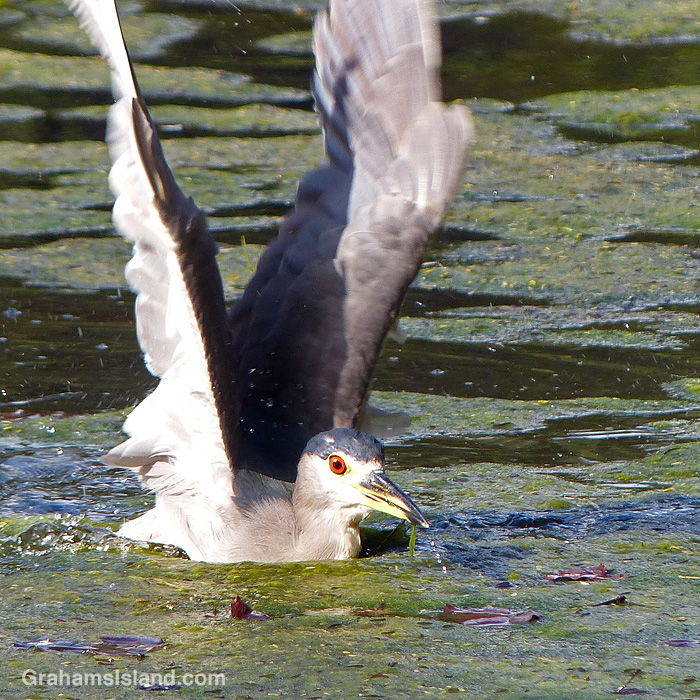
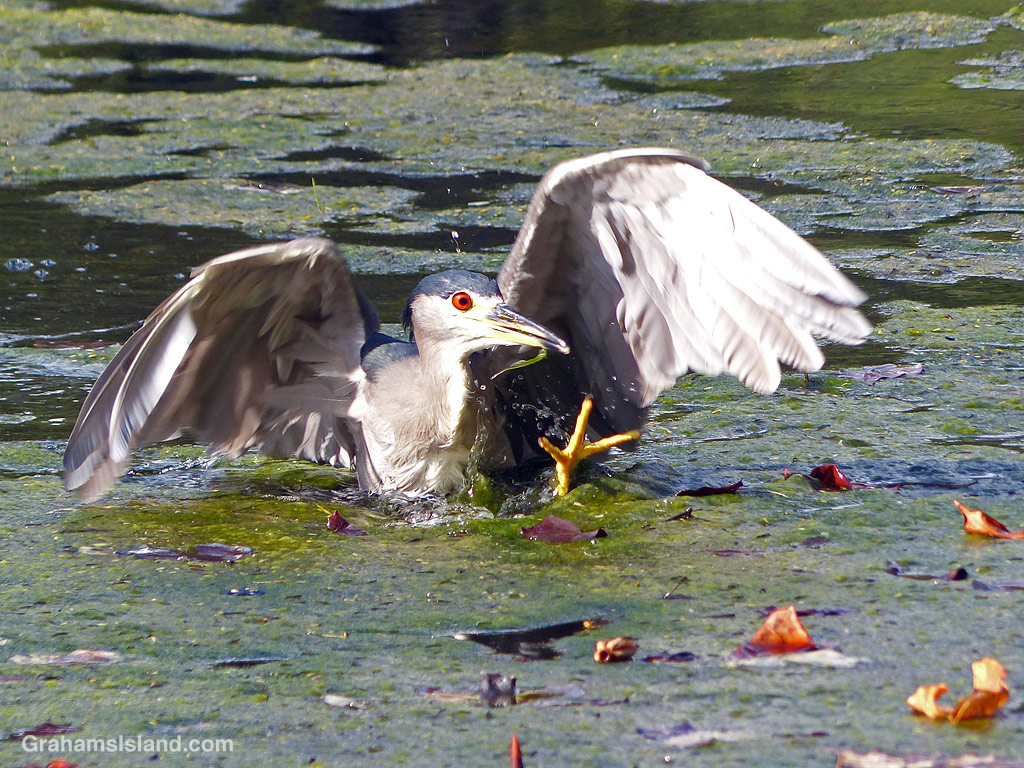
When I heard a loud plop behind me, I turned to find this scene. This Black-crowned Night Heron had dropped into the algae-covered water, probably after a fish. I don’t think it caught anything, but when it popped up again it sported a rather fetching green hairdo. Even after it had shed that, it still found the process of getting out of the water was hard going, with a lot of flapping and splashing producing little result.
Eventually the bird reached dry land and resumed a watchful pose, apparently none the worse for its ordeal.
For Bushboy’s Last on the Card challenge (see more responses here), I had to hunt a bit for the last photo I took. Turned out it was almost a week ago, when I was walking on the coast. The top photo is the last one, unedited. The one below is the next to last, cropped and edited a bit.
This was one of those occasions when I noticed the bird before it reached me, something of an uncommon occurrence in my experience.
When I returned to my car after a visit to the post office, this young myna bird landed nearby. It started out on two legs, then one, then plunked down to wait. I think it was looking for its parents to deliver food. They were probably waiting for me to depart. This might be a young bird, but it’s clearly mastered the myna bird scowl.
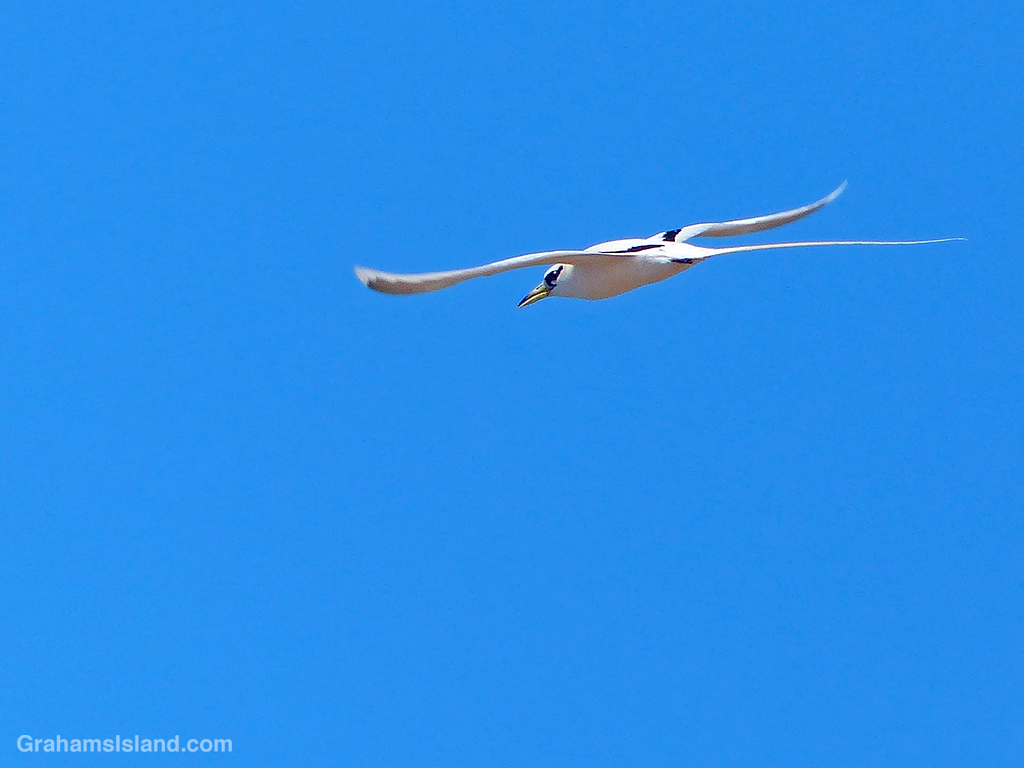
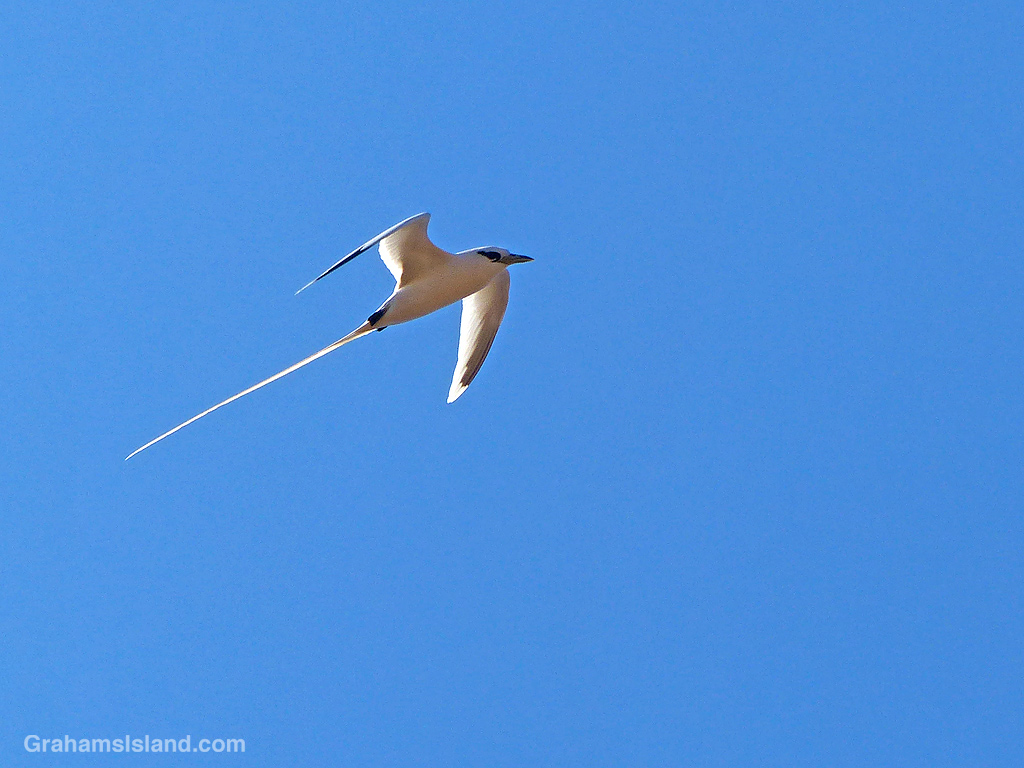
Sometimes, when I’m walking along the coast, the first thing that alerts me to the presence of a bird is its shadow passing over me. This happened again a few days ago and I glanced up to see this White-tailed Tropicbird practically over my head and not by very much. By the time I wrestled my camera out the bird had glided out over the water and away. I watched it receding and put my camera away.
Moments later, I realized the bird was riding the wind back in my direction. I whisked my camera out and started doing pirouettes as it skimmed closer and turned again when overhead. Again it slid away towards the water. It repeated this maneuver two or three times before heading into the wind and out of sight.
I put my camera away again, hoping I had some good shots, and carried on with my walk. About a half mile father on, a shadow passed over me. I looked up and there was the bird again. I assumed it was the same one, and had snuck behind me while I wasn’t looking. This time the bird drifted out into the channel and disappeared towards Maui. These photos are from that encounter.
The next day, walking in the same area, I kept a watchful eye out for a reappearance, but didn’t see a thing … until a shadow passed over me. There it was again. This time the bird kept going and I didn’t even try to take a photo. It disappeared from view. A couple of minutes later, another shadow passed over. This was a different bird, following the first, so perhaps the day before had also been two birds.
I see these graceful birds once in awhile on my walks in this area, but I think large numbers of them can be found farther along the coast between Pololu and Waipio, nesting on the cliffs.
This bird looked a bit forlorn when it landed on an outdoor shower at Spencer Beach Park. I think it was just looking for a drink of water, though there were alternatives not far away.
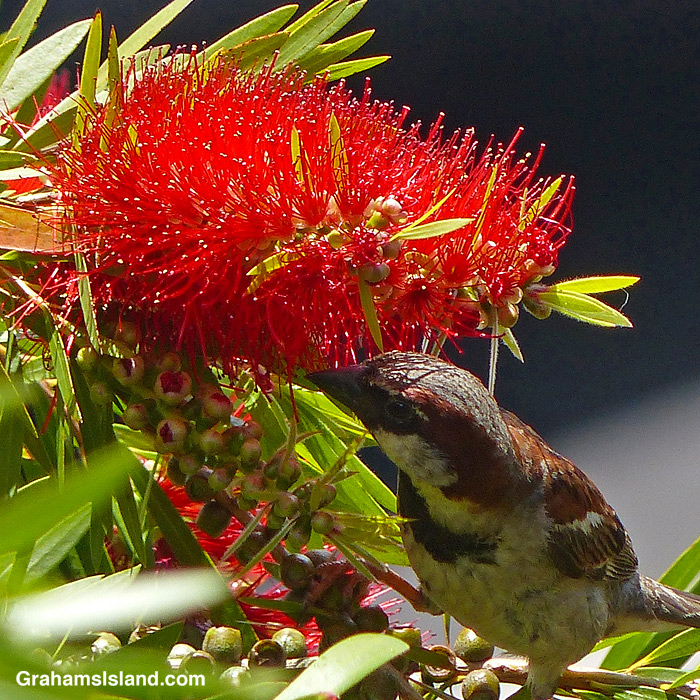
I was surprised to see this House Sparrow feeding on this bottlebrush flower. I usually see them snapping up fallen food at outdoor restaurants or squabbling over bird seed thrown out by sympathizers.
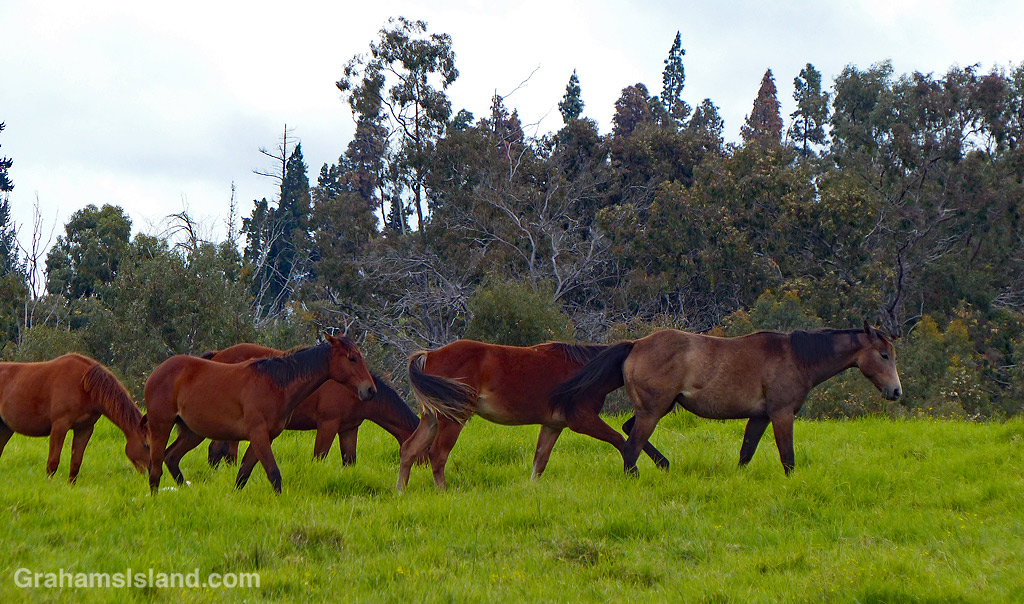
Horses frolic in pasture land alongside Old Saddle Road.
This week’s Sunday Stills challenge theme is ‘Road Trippin’.’ See more responses here. Since there aren’t any road trips, in the usual sense of the expression, here on the island, I thought I’d focus on a stretch of road that is one of my favorite drives here.
Old Saddle Road is an 11 mile stretch of the old highway that connected the west side of the island to the east side, through the saddle between Mauna Kea and Mauna Loa. These days, people take the new road, which is wide and smooth and allows drivers to zip along at 80 mph even though the speed limit is 60 mph. I like this highway, too, but the best part of any cross-island trip is always the old highway, which is up and down, winding, and dotted with one lane narrows where culverts pass under the highway (they’re not bridges) to channel the copious amounts of rain away from the road.
This stretch of road is bordered by ranch land, with horses, cattle, and sheep to the fore. There’s also a good variety of wildlife that can be seen in this area. And the weather can be anything from stunning to biblically awful, sometimes within the hour. So here are a few scenes that give an idea of that short, but special drive.
One of the ranches on Old Saddle Road.
Old Saddle Road undulates down towards the junction with the new highway.
A view of Hualalai from Old Saddle Road, showing the new highway winding down towards Kailua Kona.
Goats can often be seen alongside Old Saddle Road.
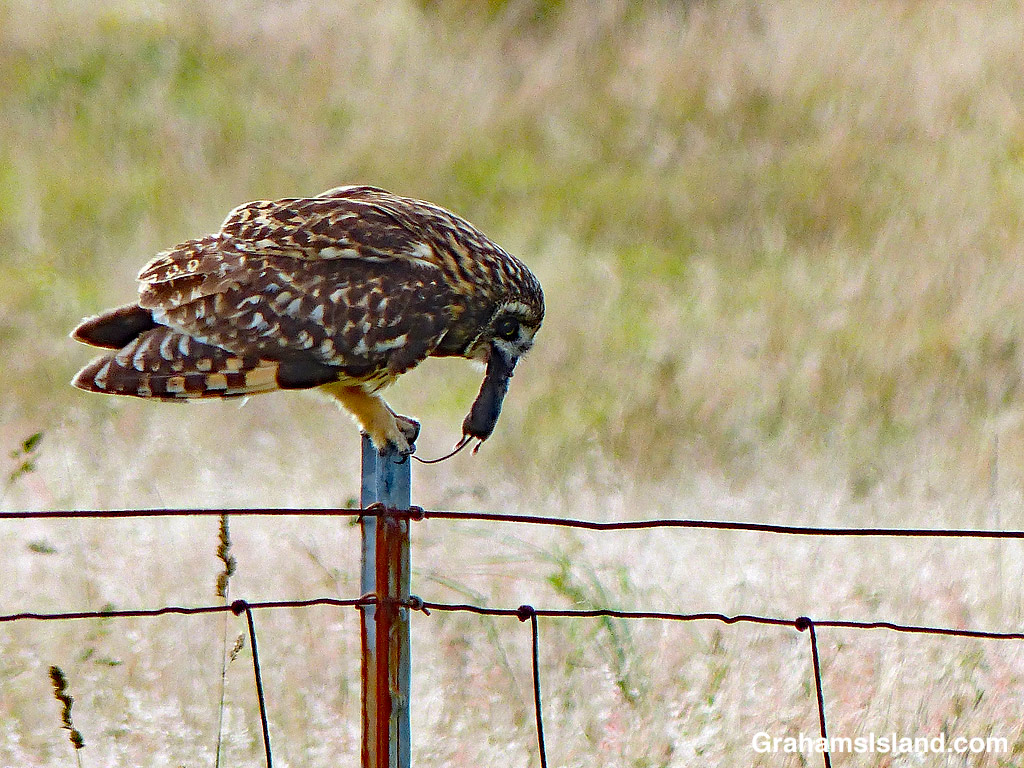
O;d Saddle Road is a great place to see pueos, the endemic Hawaiian short-eared owl.
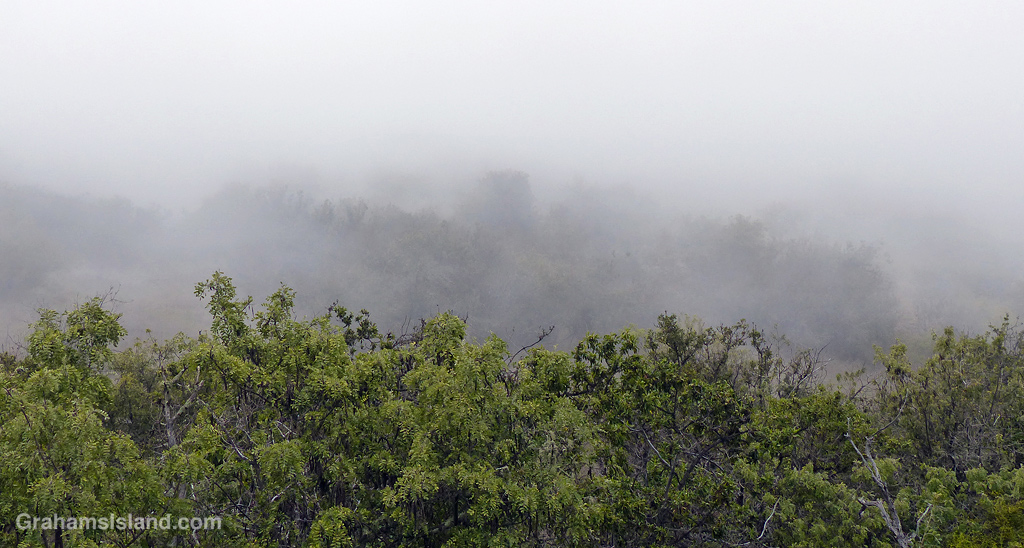
Sometimes I’m lucky enough to see a pueo catch a meal.Old Saddle Road can be shrouded in mist…
There are four Grey Francolins in this photo. Two are obvious, and a third fairly clear, but I didn’t notice the fourth until I was processing the photo and looking closely at it.
I first saw this batch of francolins driving home from work. They were in the road and I stopped while the adults ran off. I was about to start moving again when I noticed a tiny lump in the road ahead. A small rock? A lump of dirt? Turned out it was a baby francolin, about three inches high. My pause allowed it to rejoin it’s parents and, tiny legs or not, that sucker could run!