

I hadn’t seen a spotted eagle ray in quite some time before I saw this one, hunting in deeper water. It looked in very good condition and had a fine array of spots.

I hadn’t seen a spotted eagle ray in quite some time before I saw this one, hunting in deeper water. It looked in very good condition and had a fine array of spots.
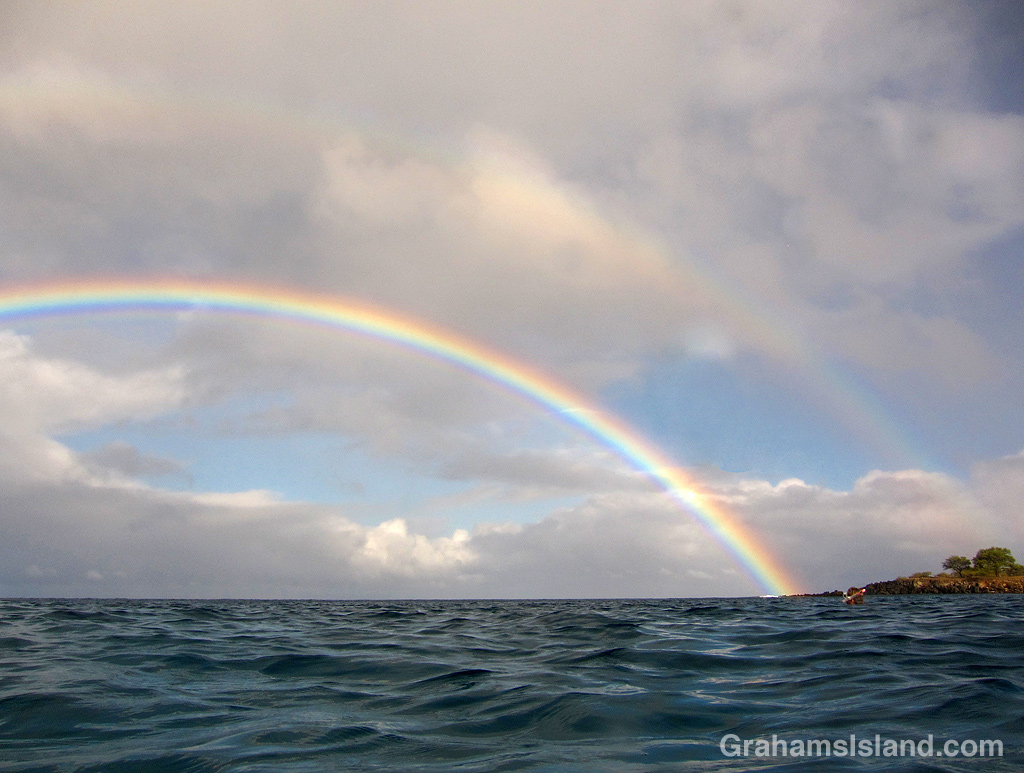
I saw this double rainbow while out snorkeling. We get a lot of rainbows here because it rains a lot, but is also rather sunny.
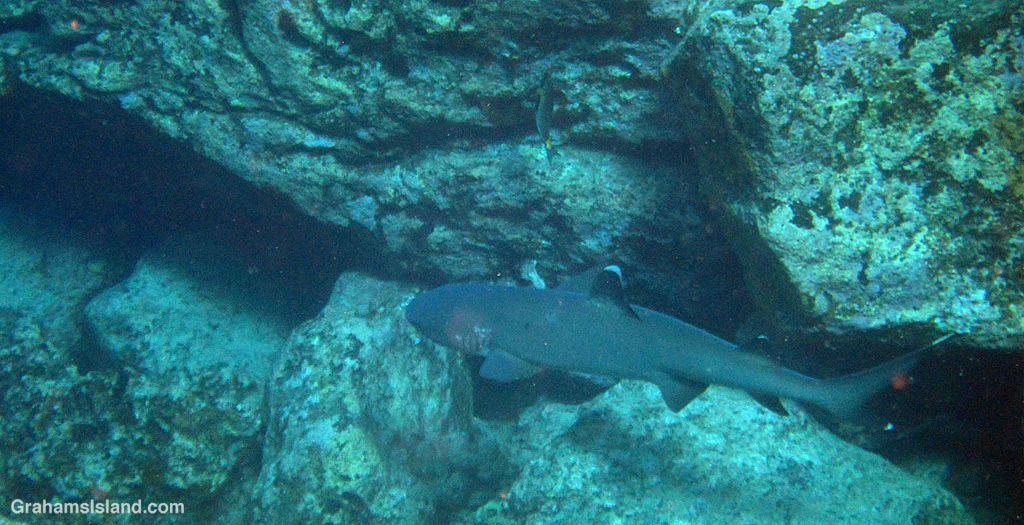
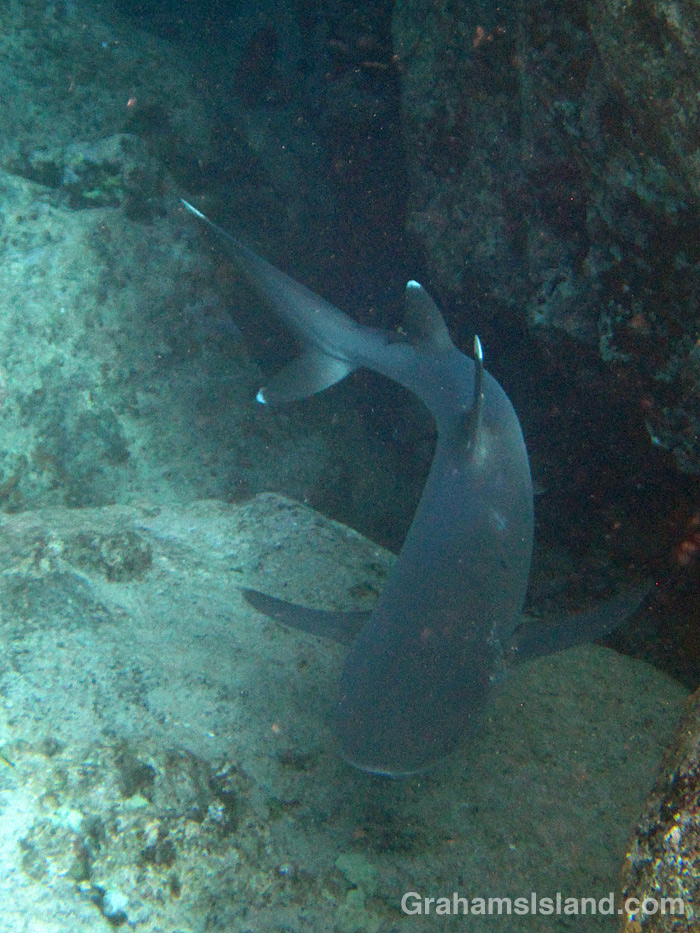
It’s been a while since I last saw a shark (cue seeing one this morning!) so I thought I’d post a couple of photos to remind myself what they look like.
This whitetip reef shark was cruising back and forth at the foot of a rocky ledge, possibly looking for a recess where it could rest.

Yellow tangs are common here and are usually seen in schools. I like how, when they move from one feeding spot to another, they string out in long, colorful lines. They’re often seen in mixed schools with convict tangs, the paler fish with vertical black lines.
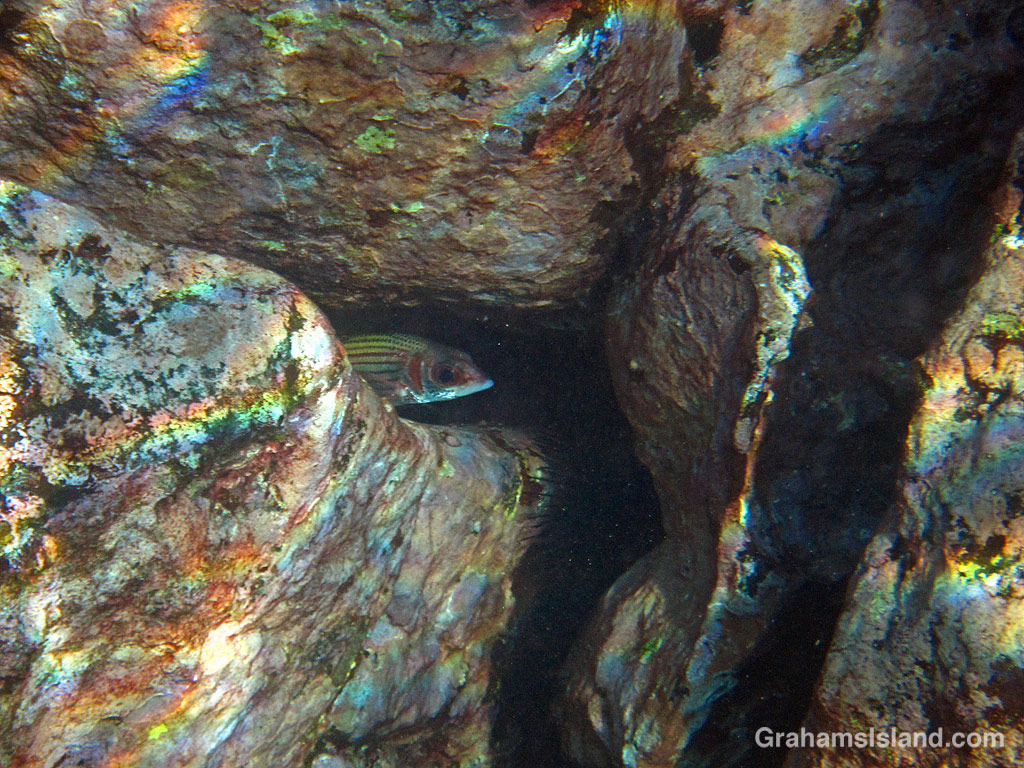
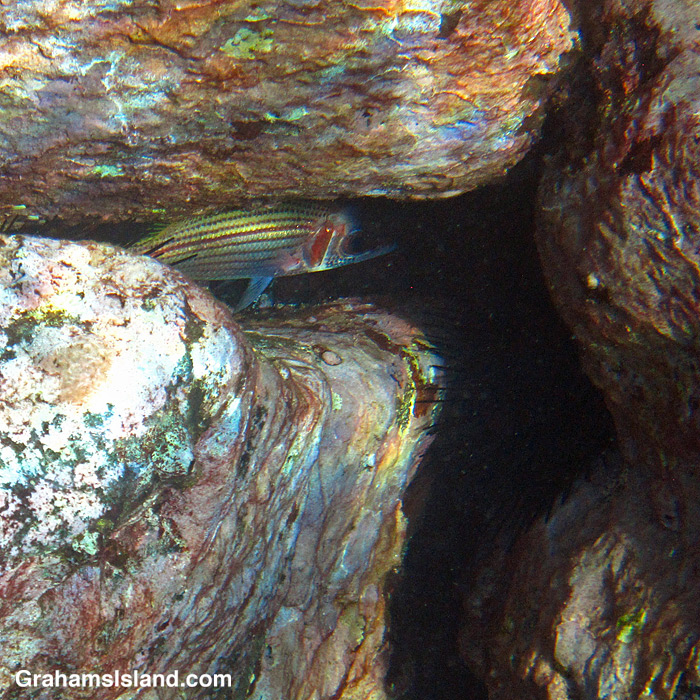
A few days ago, I posted a photo of a common bigeye, a fish that tends to hang out in recesses in the rocks. The yellowstripe squirrelfish is a similar creature. I see them occasionally, but they’re down in holes and recede even farther when I appear. This one lingered momentarily before sinking out of sight. They’re more often seen in deeper water, but not if you’re a snorkeler.
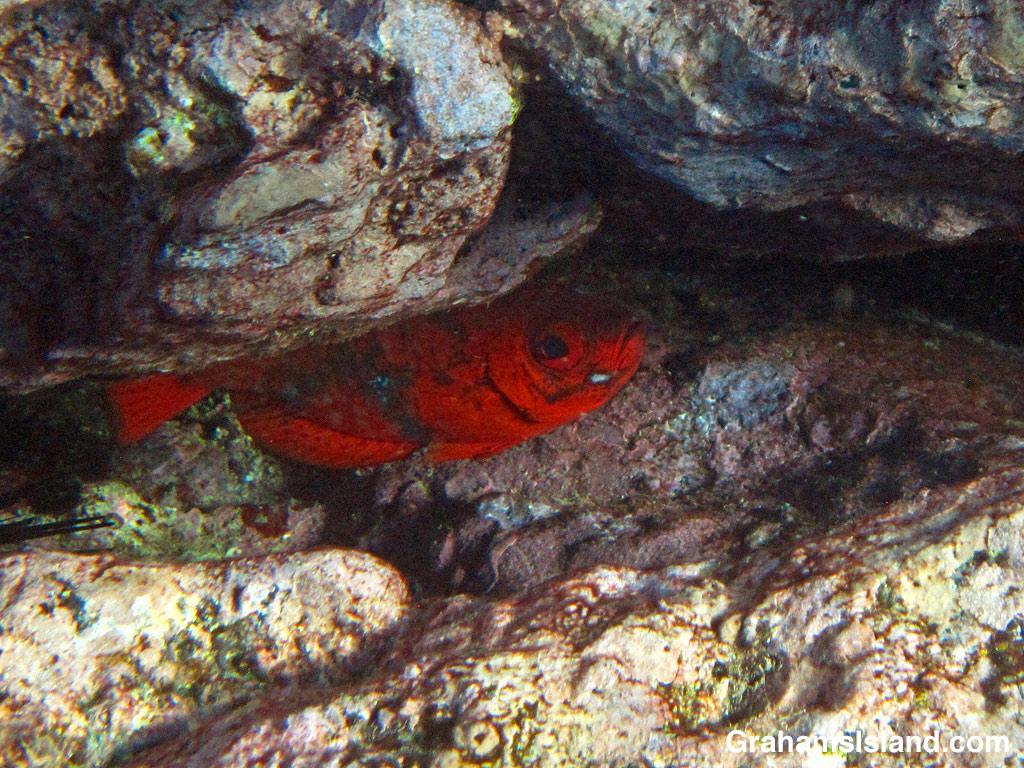
When I see very red fish hanging around in deep recesses in the rocks, I assume they’re soldierfishes. That’s what I thought this was, so I was a bit puzzled when I couldn’t identify what kind of soldierfish it was.
It was much later that I was thumbing through my fish identification book, looking for something else, and happened on the pages for bigeyes. I’d never heard of them before. There were only two listed and this one is the common bigeye. It’s most easily distinguished by its slightly convex tail, as opposed to the slightly concave tail of the other one, the Hawaiian bigeye.

This week’s Sunday Stills challenge theme is ‘Feed the Birds.’ See more responses here.
In the top photo, this ambitious juvenile black-crowned night heron snaffled a tilapia from a large backyard pond. However, that was the easy part. I watched it for quite a while, trying to swallow the fish. It flew from the pond into a tree, then on to another one, before returning to the ground beyond some rocks. The fish was still in its beak, but no closer to reaching its stomach.
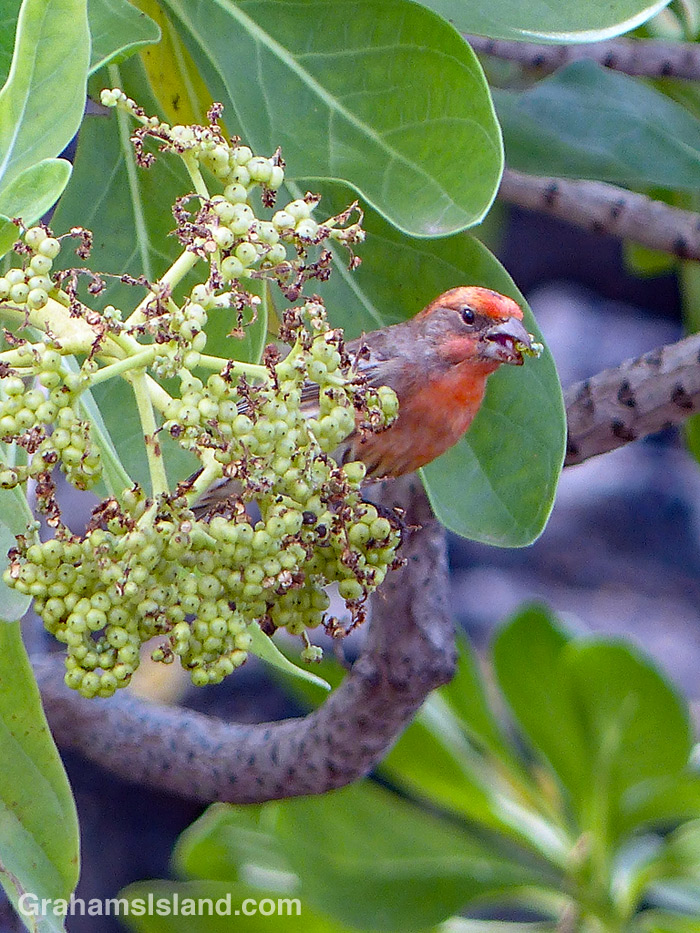
In the middle photo, a house finch chows down on the fruit of a tree heliotrope (Tournefortia argentea).
In the bottom photo, a palila feeds on a mamane (Sophora chrysophylla) seed pod. Typically, a palila will grab a pod from one place and then take it to another branch to eat it. It pins the green, immature seed pod to the branch, as in this photo, and then bashes away at it with its powerful beak. The seeds are poisonous, but palilas have developed an immunity to the toxins. The brown pods in this photo won’t be eaten by palilas. They will remain on the tree for a long time before dropping and hopefully producing more trees, though mamane seeds have quite low propagation rates.

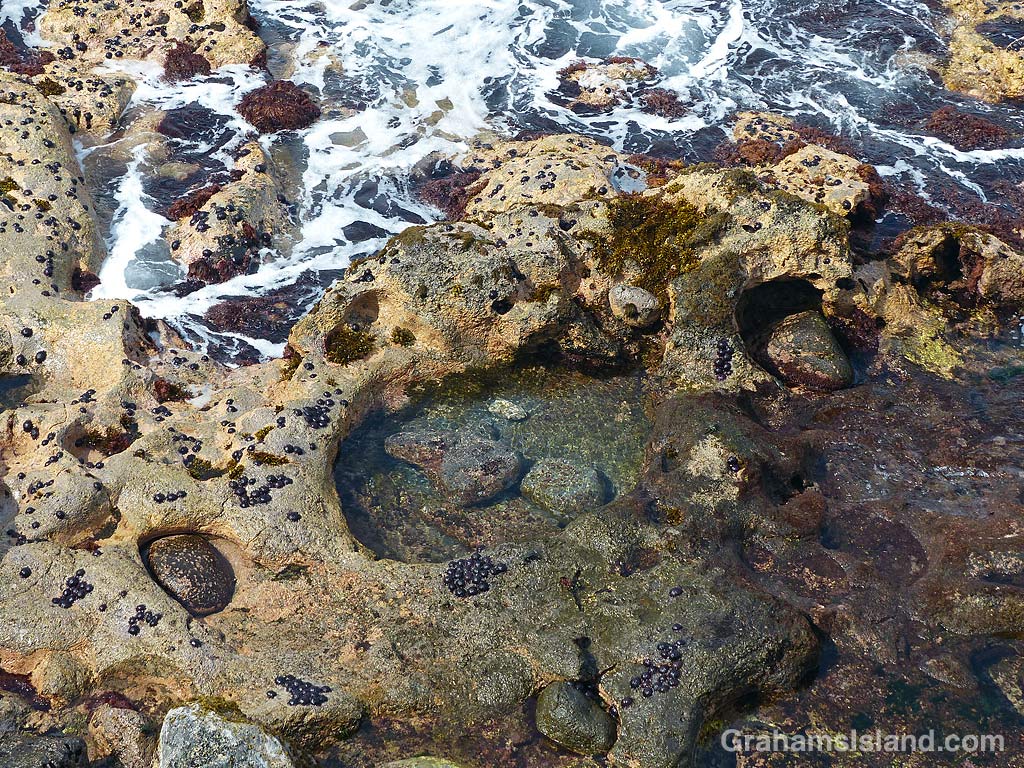
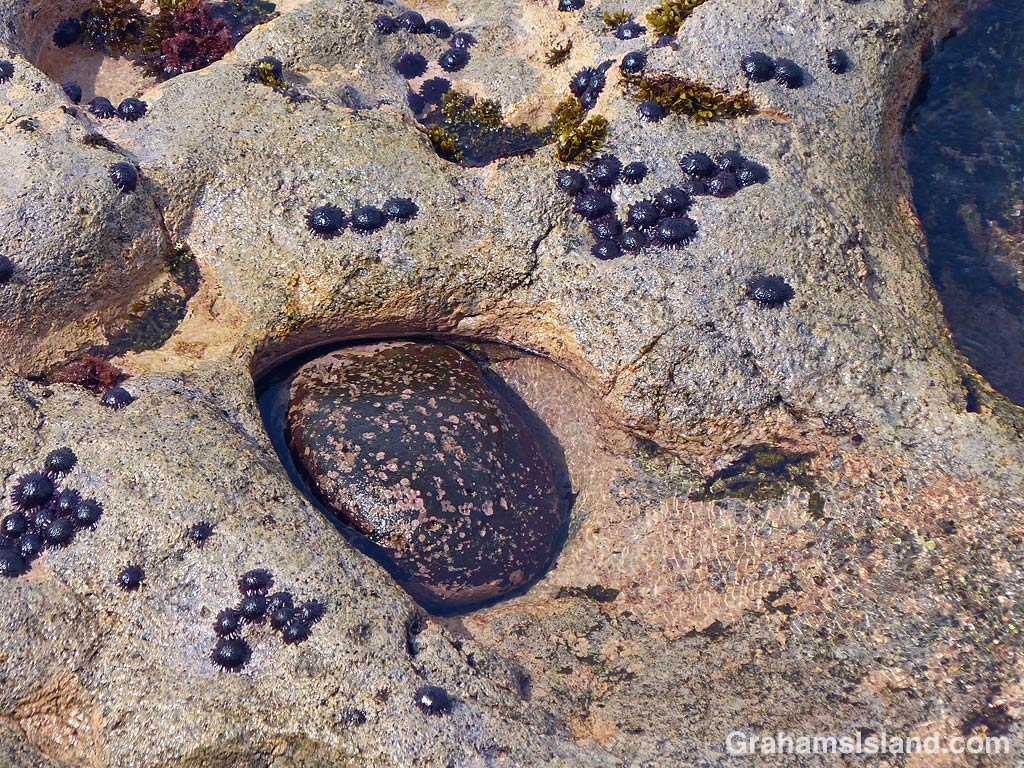
This scene drew my attention because of the smooth, round rock nestled into a matching recess in the shore (bottom left in the top photo). It was when I zoomed in (bottom photo) that I noticed the large number of helmet urchins stuck to the shoreline. These cheerful-looking purple blobs live in the harsh tidal zone, and area of crashing waves and surging water. They feed on algae that grows there.
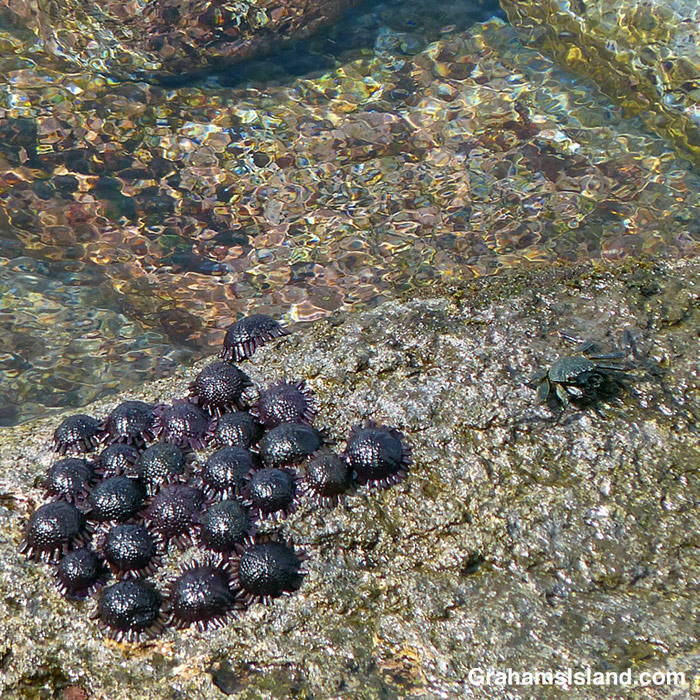
In the middle photo, an a’ama crab skirts a colony of urchins. When the tide comes in, the crab will move to higher ground, but the urchins will stay put, tenaciously defying everything the ocean throws at them.
 Graham's Island