This is the first time I’ve seen signs like this one at Spencer Beach Park. I didn’t see any jellyfish on the beach so perhaps the signs were a warning for those getting in the water. There are often jellyfish in the water, but not in such numbers as to be a problem.
This park is popular with families with small kids so perhaps the authorities were being extra cautious with the signs.
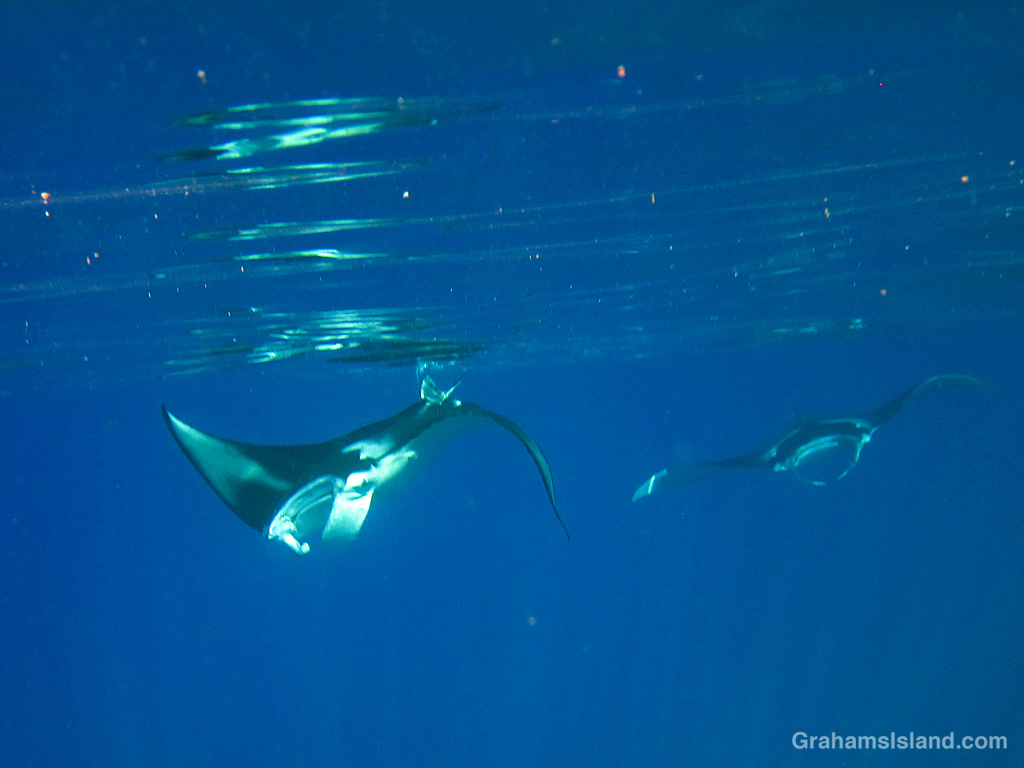
My most recent manta ray encounter happened a few days ago. I was swimming along and saw a familiar shape in front of me. It was a manta ray heading in the same direction. I tracked it for a while, hoping to catch up, but knowing that doing so was entirely up to the manta. Eventually I did draw level for a short while. Then the manta pulled away again.
As it disappeared, I thought at first I was seeing some kind of weird reflection in the water. Then I realized it was a second manta swimming toward me. As it approached the first manta turned and followed behind. Both were pretty large and up near the water’s surface, creating reflections.
They passed by, and receded in the direction I’d come from. I hung around for a while hoping they’d reverse course again and, sure enough, a few moments later the two of them came back toward me. On this pass, I could see that one had a badly damaged cephalic flap. It looked like an old wound and didn’t seem to trouble the manta much, but I don’t know how it would affect it when it came to feeding since they use the flaps to funnel plankton into their mouths.
Eventually, the mantas headed away and out into deeper water. I stayed out for a while on the off chance that they’d return, but wasn’t surprised when they didn’t. Still, it had been another wonderful encounter and I headed back toward shore in a very good mood.
I had just jumped in the water and submerged my head when I saw something move. The fish immediately plopped down by a rock but I’d already recognized the distinctive shape of a devil scorpionfish. I hung around for a short while hoping it would spread its pectoral fins in its distinctive display, but it never did. The second photo, which has run on the blog before, shows what I was looking for.
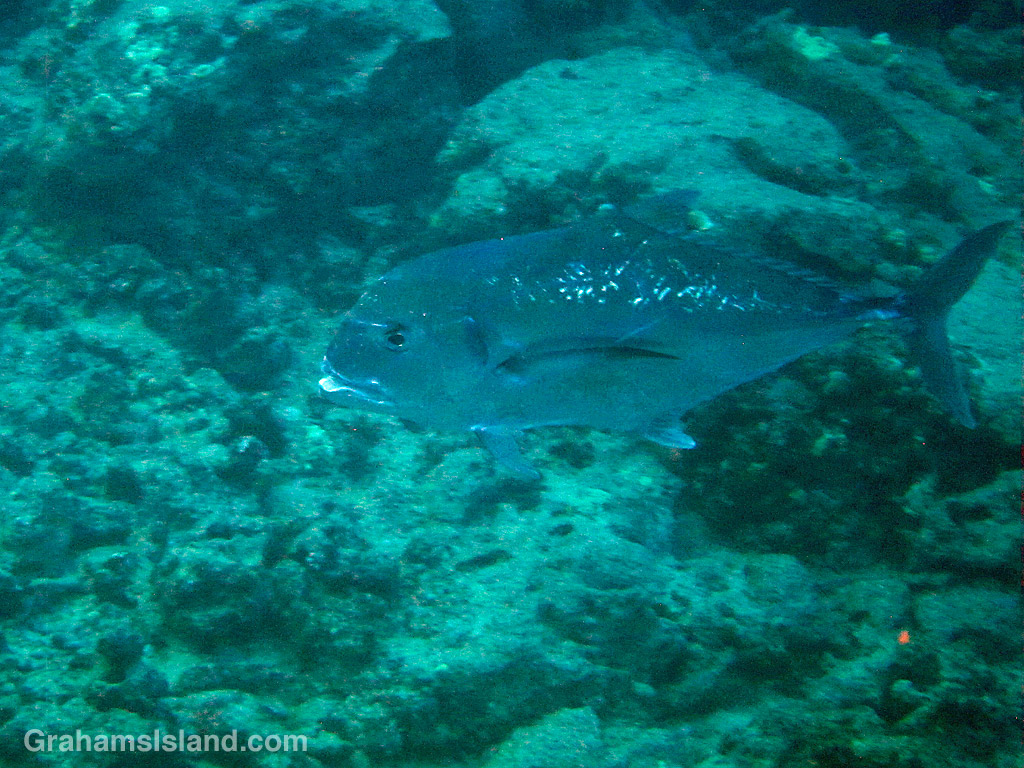
A couple of days ago, I was snorkeling when I saw this enormous fish. I snapped a quick photo, fearful that the fish would quickly disappear. But it stuck around for a minute or two, passing back and forth in front of me, before sliding away into deeper water.
I knew it was a jack, but not one I’d seen before. When I got home, I dove into my fish book and figured out this was a giant trevally. According to my fish book, the giant trevally is the largest of the jack family. The biggest recorded catch is one that weighed 191 pounds. That would be heavier than me! That’s a tad worrisome because my fish book also notes that these curious and fearless fish ‘have been known to grab and rip away divers’ bright snorkel tips and colorful fins.’
This one was smaller than that, probably somewhere between three and four feet long, but comfortably the largest jack I’ve ever seen and probably the largest fish I’ve seen of any kind other than rays and sharks.
My fish book notes that the large-spotted snake moray eel can be encountered both day and night, but is not often seen. That’s true in my experience. This is only the second one I’ve seen here and the first I’ve photographed.
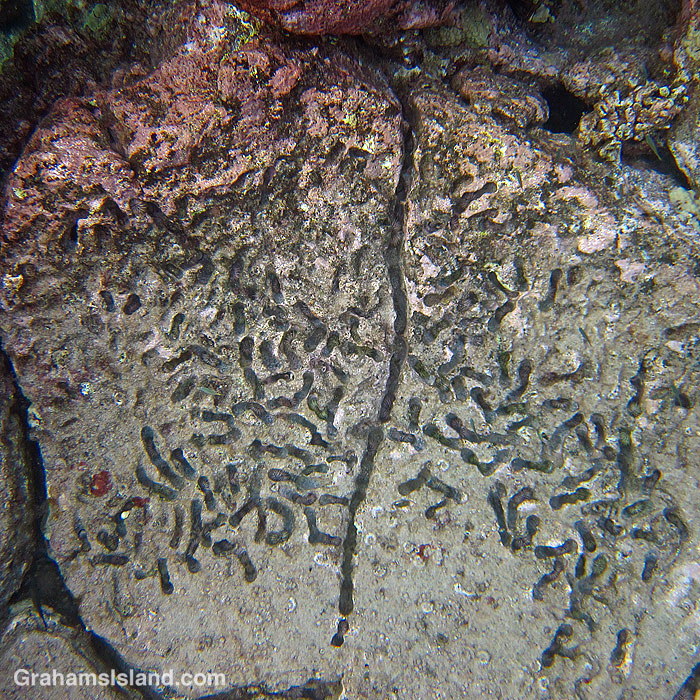
Yesterday I posted a photo of a crown-of-thorns star, with a few rock-boring urchins in it. Today’s post shows one example of the channels left by these urchins. This image initially looked like a brain to me, but then I began to see more of a tree in it.
Posted in response to Becky’s October Squares challenge theme of ‘Past Squares – Spiky/Lines.’ See more responses here.
I saw this crown-of-thorns star working its way across the rocks in shallow water. Those spiky spines are venomous so this is not something to handle. Also visible in this photo are some equally spiky, though not poisonous, rock-boring urchins
Posted in response to Becky’s October Squares challenge theme of ‘Past Squares – Spiky.’ See more responses here.
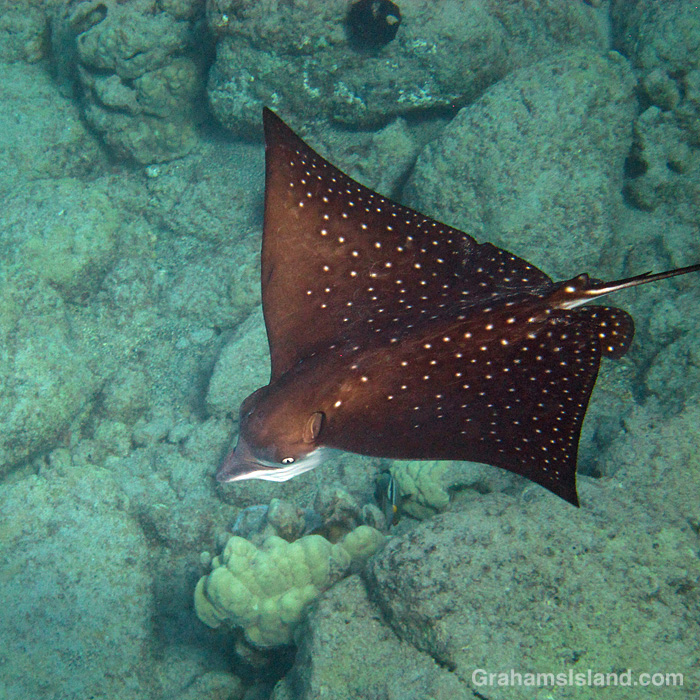
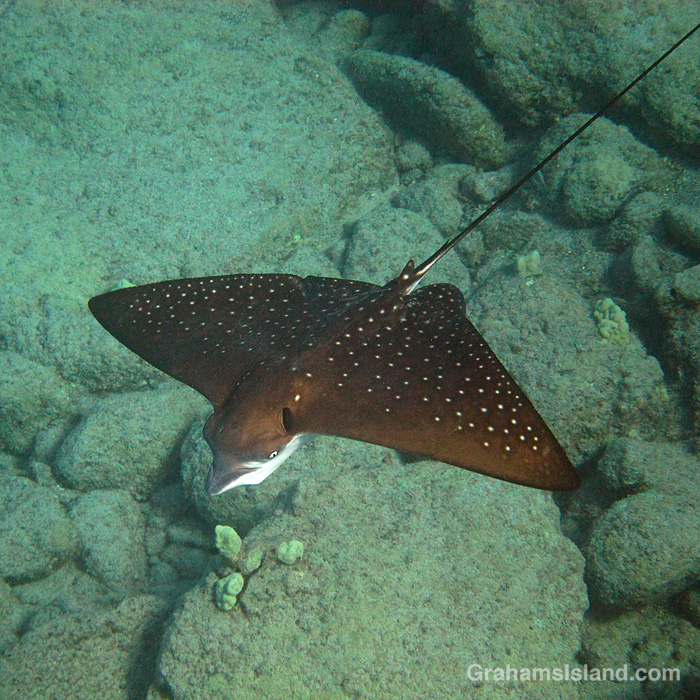
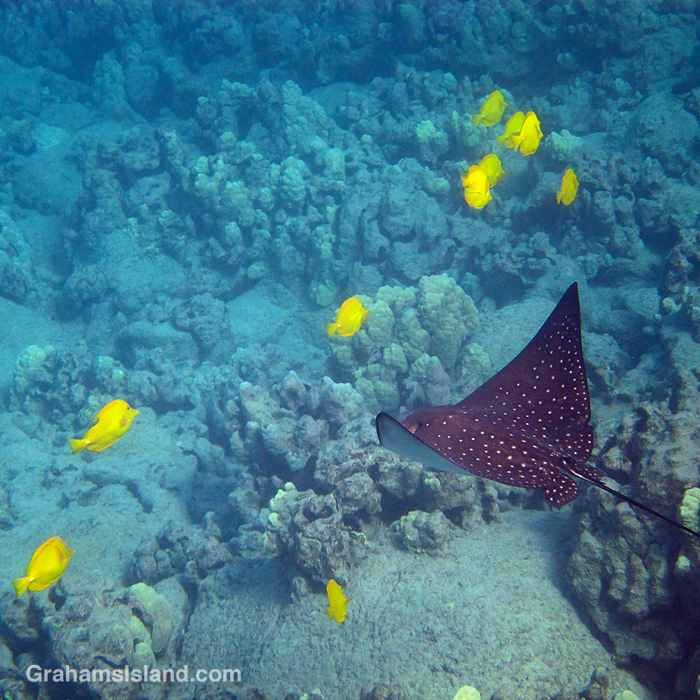
A few days ago, returning from a swim, I ran into this little eagle ray not far from shore. It’s probably the smallest one I’ve seen, with a wingspan of not more than two feet. But what really jumped out at me was it’s small beak, long tail, and clear white eyes. I hadn’t seen eyes like that before.
The ray looked in very good shape, which is always good to see. Some of them look like they’ve been in the wars. Like most rays, eagle rays have poisonous spines at the base of their tail so, as with most things in the water, it’s best to look but don’t touch.
Posted in response to Becky’s October Squares challenge theme of ‘Past Squares – Spiky.’ See more responses here.