
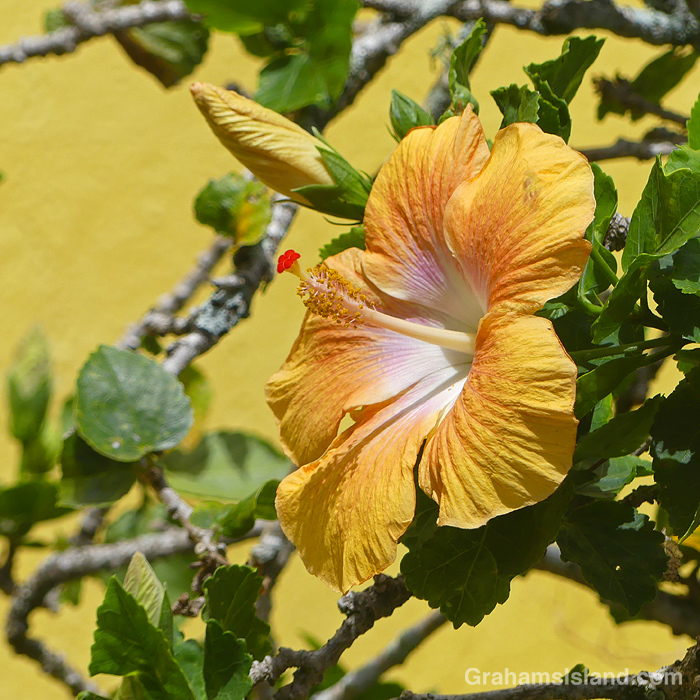
I noticed this hibiscus because the flowers were larger than those I usually see and I liked the color as well.

I noticed this hibiscus because the flowers were larger than those I usually see and I liked the color as well.


Yesterday was the birthday of King Kamehameha I, the first king to unite all the Hawaiian islands under one leader. He was born in North Kohala, and every year the community celebrates his birthday with ceremonies at his statue in Kapaau and with a parade.
The parade features Pa’u riders representing all the main Hawaiian islands. Each island has an official color and flower. Maui’s flower is the Lokelani rose and its color is pink.
Hawaiian men and women started riding horses, soon after their introduction to the islands in the early 1800s. Sidesaddle riding was common for women in those days, but it was never introduced here. Women learned to ride the same way as men. They wore a Pa’u skirt, 12 yards of colored cloth wrapped in such a way as to preserve their modesty and dignity while riding astride their horse.


The ceremonies include draping leis over the arms of the statue. These leis are made as a mark of respect, by groups and organizations. It can be a tricky business getting the leis into place, especially when there’s a good breeze blowing as there was yesterday.


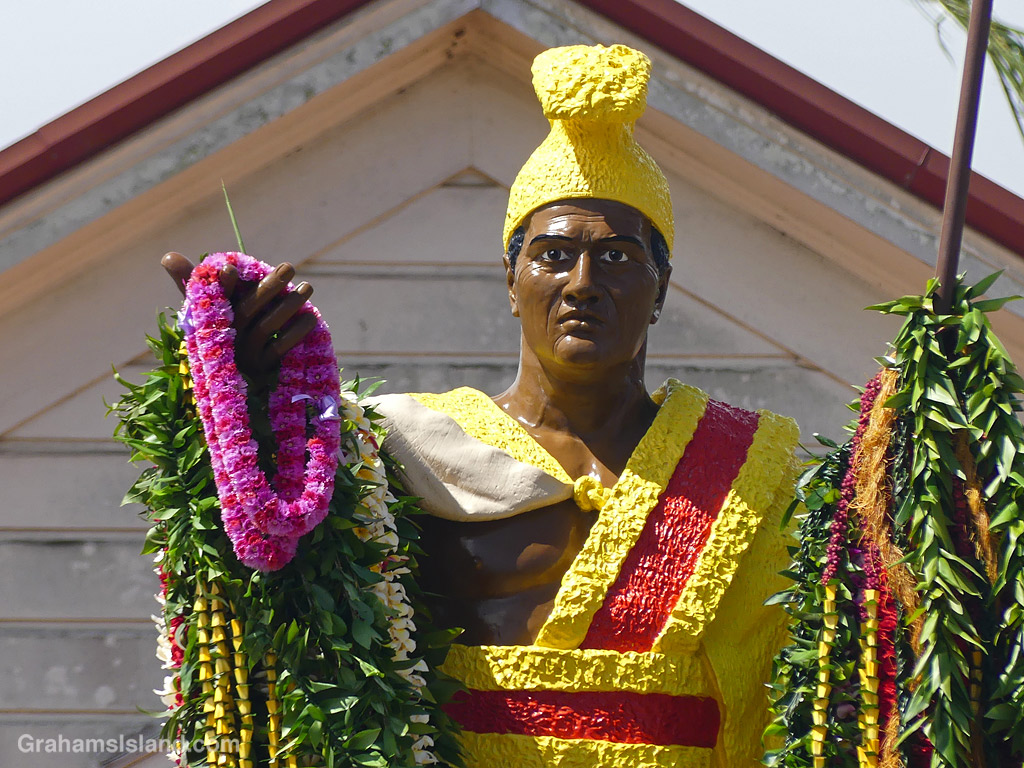
Posted for this week’s Sunday Stills color challenge theme of ‘Pink.’ See more responses here.
This week’s Sunday Stills Color Challenge theme is ‘Pink.’ See more responses here.
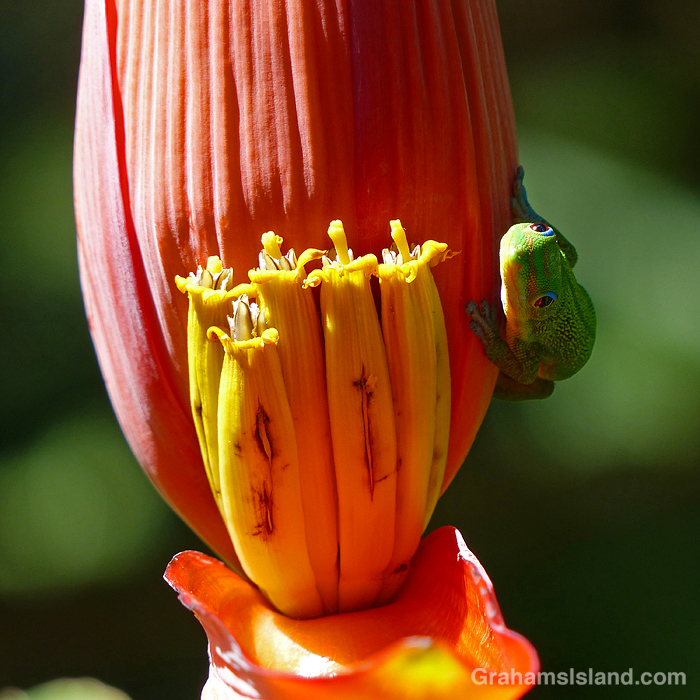
Here’s a Gold Dust Day Gecko exploring a banana flower, looking for water or something sweeter. Weather permitting, I hope to have another pink post tomorrow!
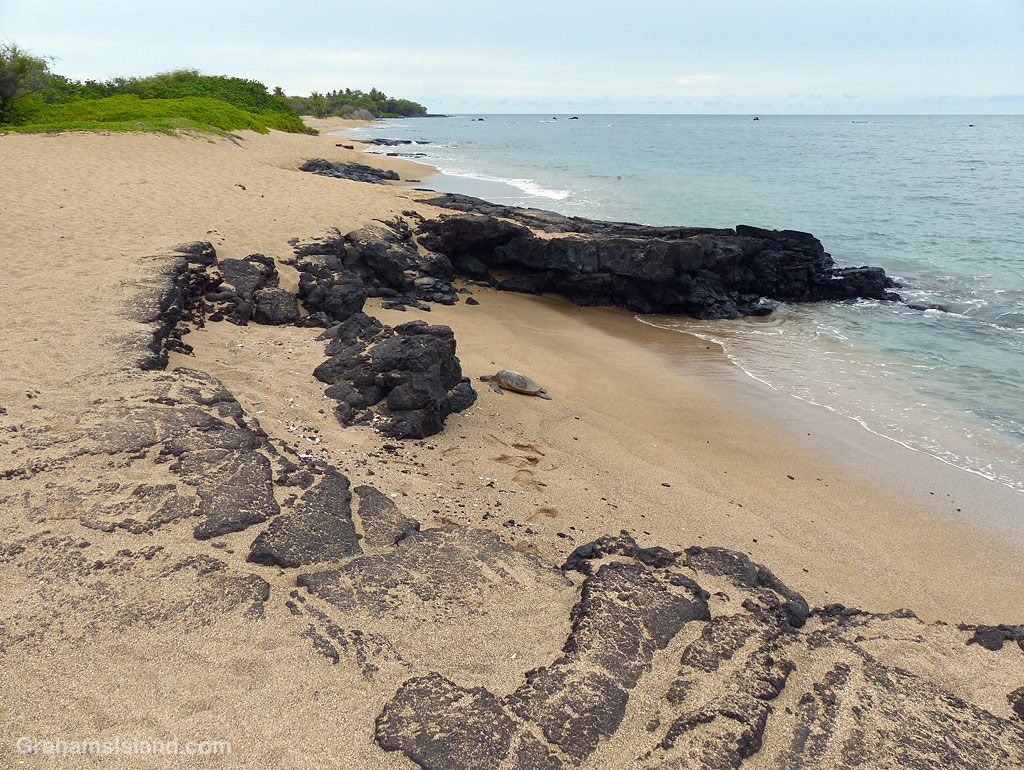
This week’s Sunday Stills challenge theme is ‘The Great Outdoors.’ See more responses here.
Recently, I took a hike along the South Kohala Coast, starting out at ʻAnaehoʻomalu Bay in Waikoloa Resort, and heading south to Keawaiki Beach, before returning the same way. This is a hike I’ve done before, but not for some time.
ʻAnaehoʻomalu Bay is often referred to as A Bay because it’s a tad easier to pronounce. It’s one of the more popular beaches on the island, but head south, around the corner from the main beach area, and the golden sands are largely deserted. Well, except for the odd green sea turtle taking a nap.
There are a few rustic structures behind the beach along here, but it’s a far cry from the resort developments less than a mile to the north. When the sands end, there’s a short stretch where high tides wash up against a wall of greenery. Hiking at those times, which I did, involves nimble footwork or getting your feet wet. I’m not nimble!
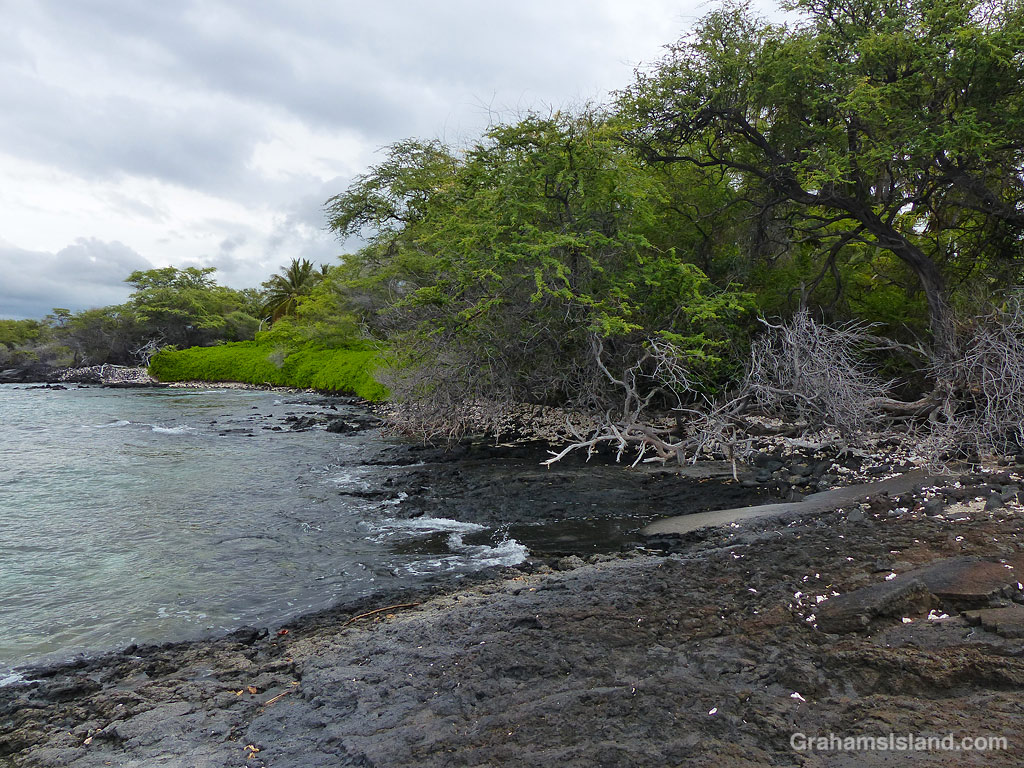
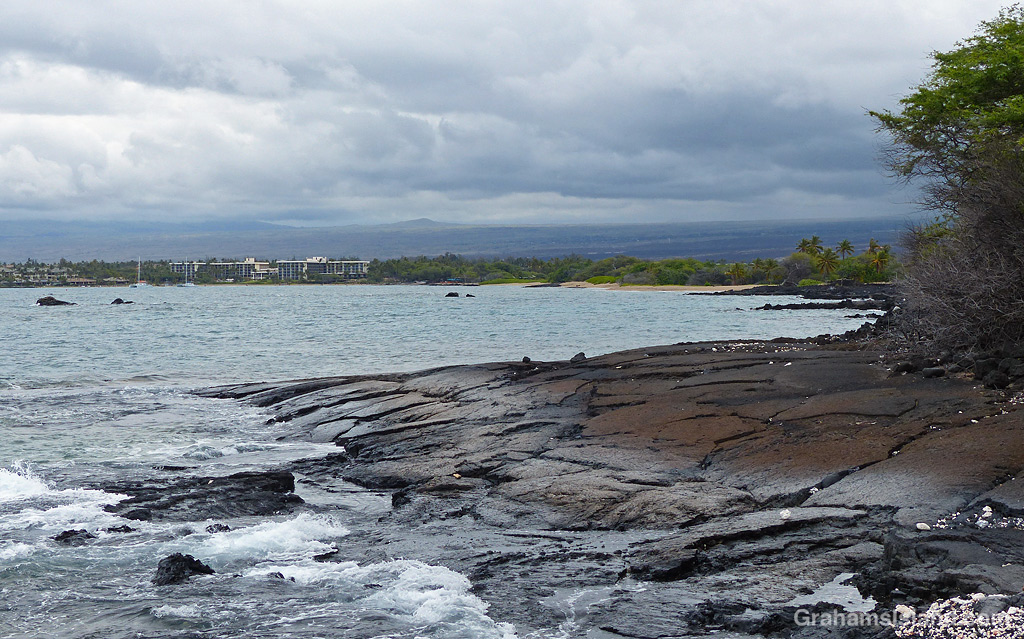

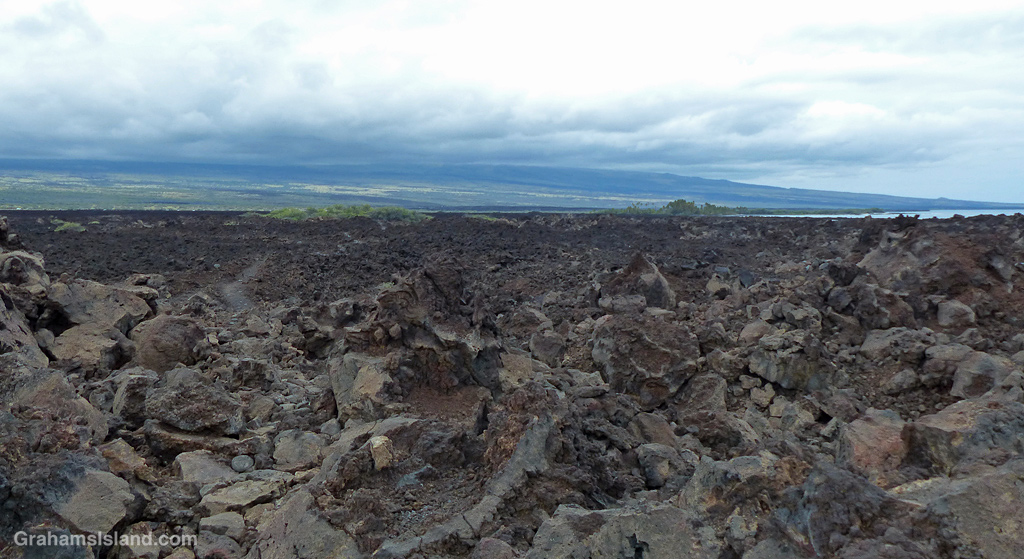
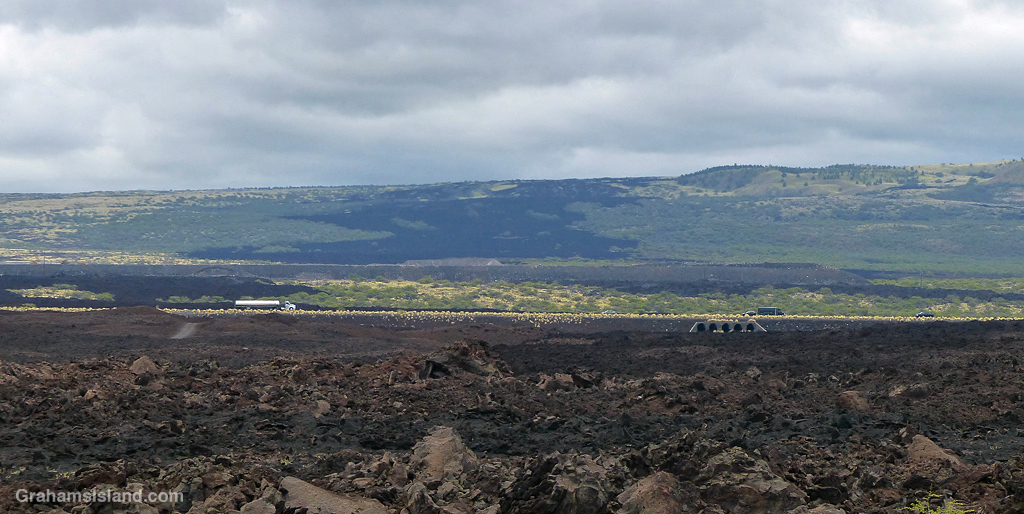
Beyond this point the coast becomes rocky lava, where flows from Mauna Loa have tumbled into the ocean in bygone days. The trail is mostly over a’a lava, which is irregular and rough. The trail itself is not hard to walk, but straying into the lava fields is another matter entirely.

The first marker on this part of the trail is the lone palm tree at Akahu Kaimu Bay. Just inland from this palm is a pool, which is mostly freshwater and deep enough to swim in. This is a welcome option on a hot day, but since it was mostly overcast with a nice onshore breeze, I didn’t take a dip this time.


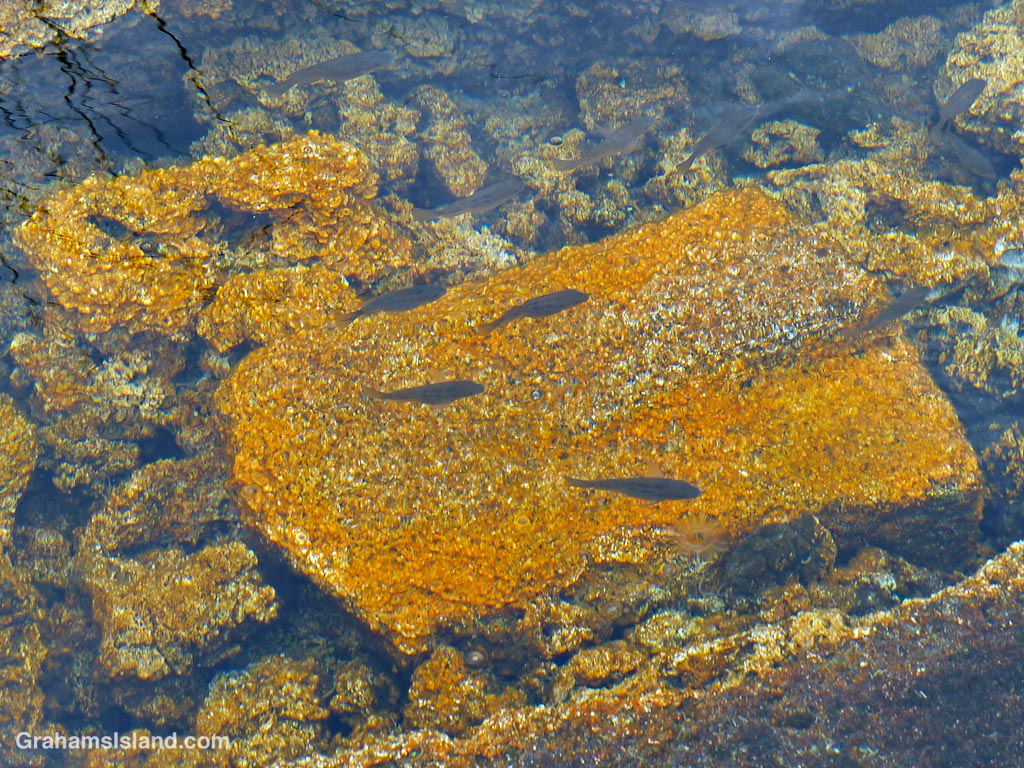
The trail continues over the lava field to the next bay and it was here I got lost. The coast trail often passes over the lava rather than follow the coast around points and the only trail I could see appeared to be doing just that. But when I followed it for a while I saw that it continued inland. However, I could also see that where it headed was to the Golden Pools of Keawaiki, which was I planned on visiting anyway, so I carried on until I came to familiar ground. The golden pools owe their color to a unique algae that grows here. These are not pools for swimming in since that could alter the conditions and destroy the algae.

Heading back to the coast, the trail comes out at Pueo Bay where I found an abandoned kayak, not in great condition. Keawaiki beach, just beyond, is another bay marked by a sole palm tree, but this poor tree has been badly damaged by storms and is no longer much of a tree.


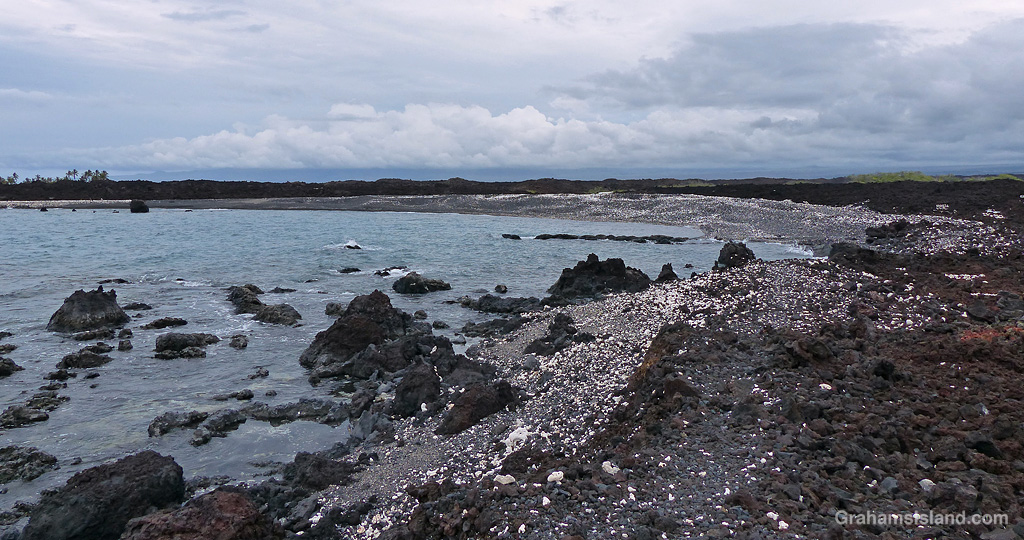

Heading back north, I passed the sole house on this part of the coast, just beyond Weliweli Point. I have yet to see anyone at this spot, though someone obviously maintains the property. I got back to the bay where I had strayed off the track and realized where I’d gone wrong. The coast trail zigzags up from the beach and is marked only by a couple of pieces of bleached coral, which don’t stand out much on a beach strewn with the same kinds of coral pieces.
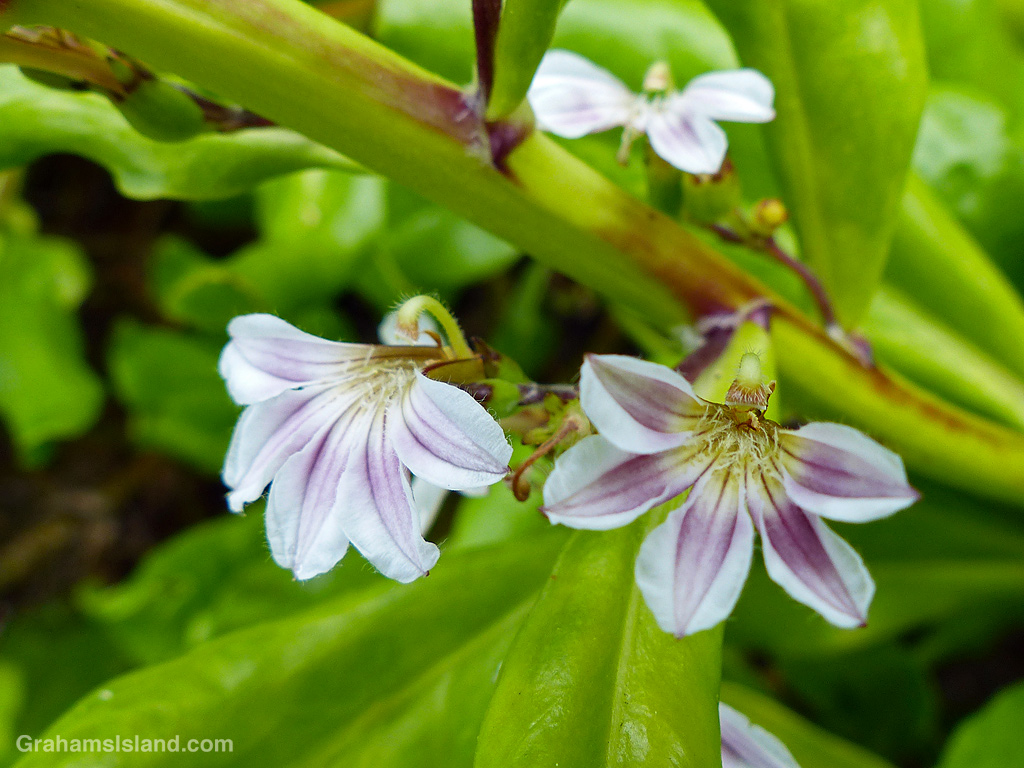
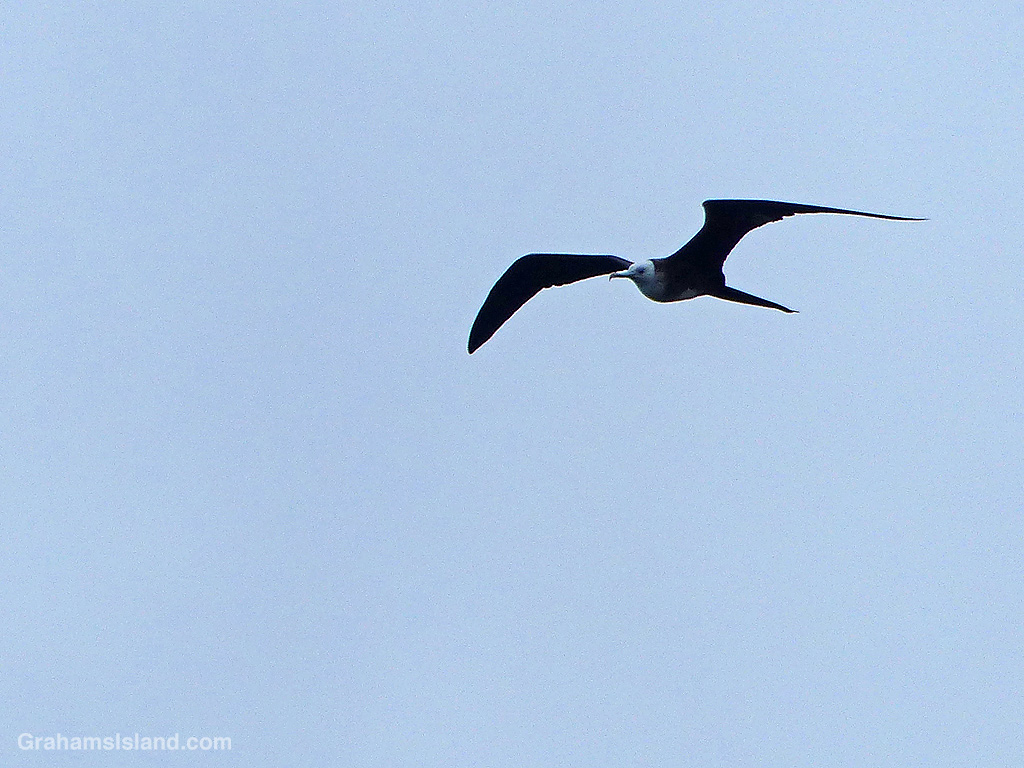
This trail isn’t a great one for birds, but I did see a Great Frigatebird wheeling overhead, which is always nice. And though this coast appears unforgiving, there are hardy plants to be found including native Hau trees and swathes of Beach Naupaka.

By the time I got back to A Bay, the Lava Lava Beach Club was busy with dinner patrons, enjoying their meals at tables set up on the sand and close to the water.

Also posted for Jo’s Monday Walk. See more responses here.

Bees and butterflies aren’t the only ones attracted to flowers. This Japanese White-eye was digging deep for the good stuff within a Japanese Aloe flower.
This week’s Sunday Stills Monthly Color Challenge is ‘Purple.’ See more responses here.
I’d like to say I have some kind of theme going here, but I don’t, outside the color.
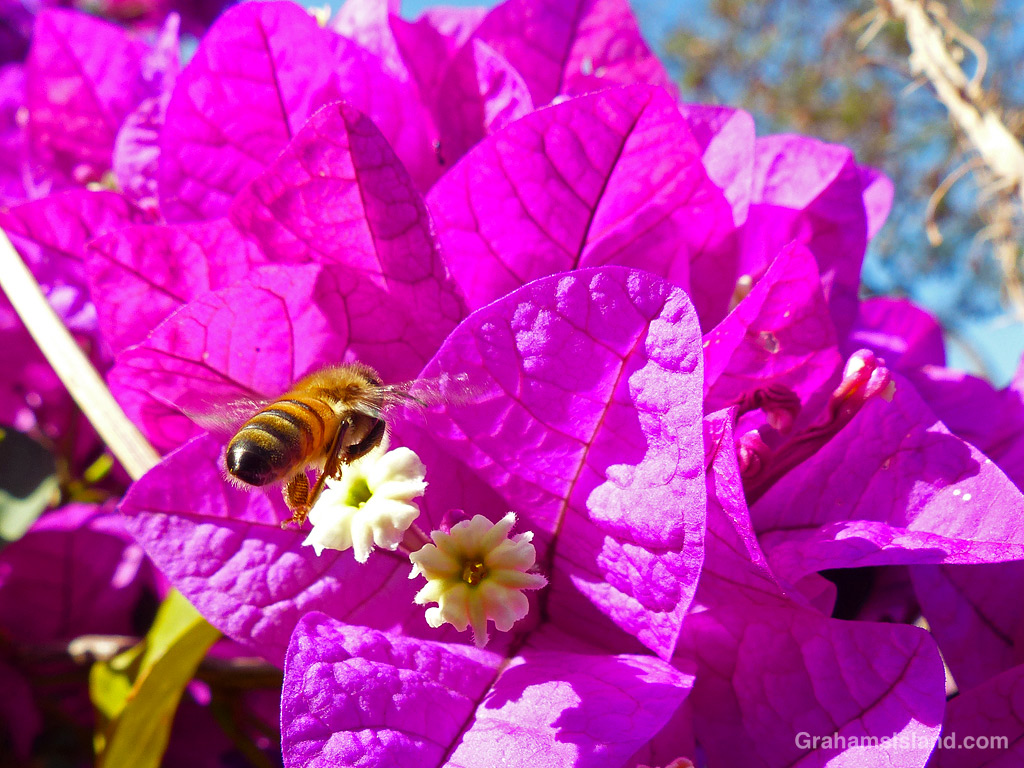
First up is a bee approaching a very purple bougainvillea.
In the gallery, we have a Fiery Skipper butterfly feeding on a Blue Heliotrope (Heliotropium amplexicaule) flower, a purple and white spider lily, and some dark purple Helmet Urchins clinging tenaciously to a rock.


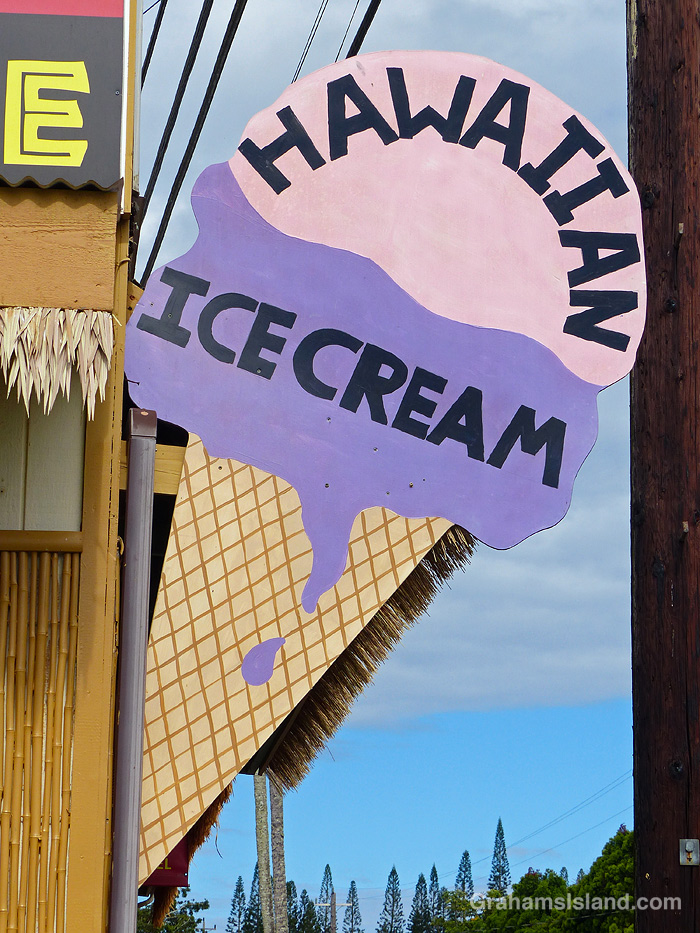
Then there’s a sign advertising purple ice cream. Not sure what flavor that is, but I’m a bit wary.
And finally, a lush purple orchid.

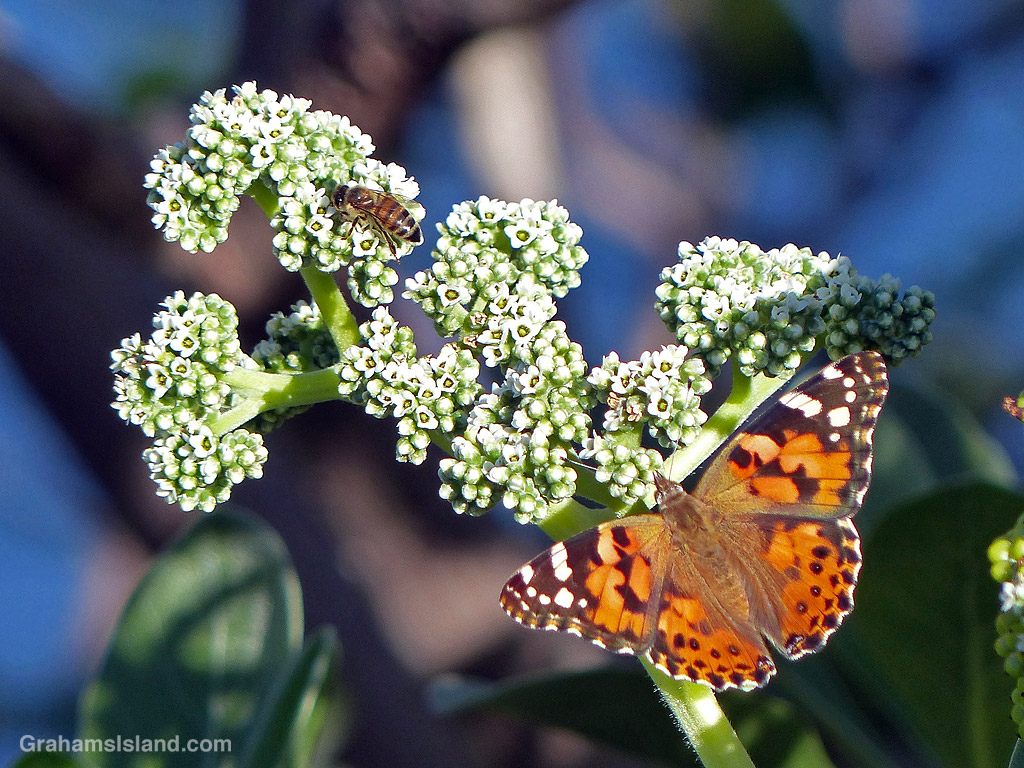
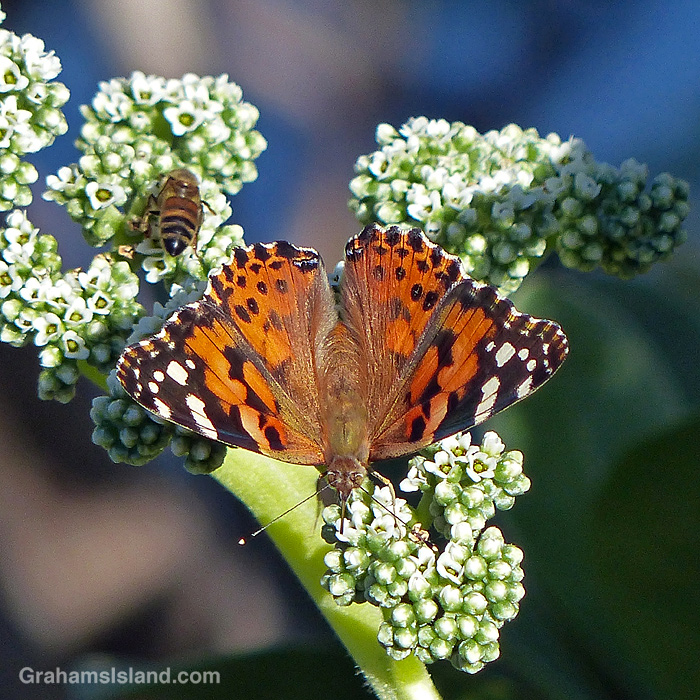
I saw this Painted Lady Butterfly and bee feeding on Tree Heliotrope flowers. Mostly, the various insects at work seem to accommodate each other, but I’ve seen occasional flurries of activities when one insects behavior disturbs the others. These two were very harmonious.


This week’s Sunday Stills challenge theme is ‘Churches, Temples, and Spiritual Centers.’ See more responses here.
Here’s a few of the churches that can be found in this part of the island.
Kalāhikiola Congregational Church (top photo) is located east of Kapaau, where rainfall is plentiful and the foliage lush. It was built in 1855, though previous versions had existed for some years before this. The church was badly damaged by an earthquake in 2006, but rebuilt in the winter of 2009/2010.
St. Augustine’s Episcopal Church (second photo) was founded in 1884 in Kapaau, and expanded in 1913. It sits on a small hill by the main highway.
Sacred Heart Catholic Church (third photo) was founded in Hawi in 1905, but this structure was built in 1925 and continues to be used daily to this day.
Kohala Baptist Church (bottom photo) is located on the road to Pololu at Makapala. It can’t be seen from the road, but there is a sign by the highway pointing out the way. Currently, the church is undergoing some renovations and services are held in the area below the Royal Poinciana tree on the grounds.

 Graham's Island