Category Archives: Hawaiian History

V-22 Ospreys at Upolu

V-22 Ospreys landing at Upolu

Upolu is a favorite spot where I walk most often. The coast below the airport is wild with crashing surf and strong winds. There’s a wealth of ocean life to be seen from turtles to humpback whales, though this year the whale numbers have been down, at least from my observations. There’s also a good variety of birds and other wildlife.

Also on this coast are Mo’okini Heiau and King Kamehameha’s Birthplace and, in a more modern vein, there’s the airport. I’m posting these photos, not because this is the most notable feature of the area, but because I just took them.

Last May, the Marine Corps got some flack for the amount of operations taking place at Upolu, so they stopped using it for the rest of the year. This is the first time I’ve seen the planes back since then, but it has been two days in a row that I know of.

In the top photo, the planes kick up the dirt as they come in to land. Below, they sit on the tarmac, dwarfing the little plane used by a local skydiving operation.

Posted in response to the WordPress photo challenge, ‘Favorite place’.

V-22 Ospreys at Upolu

Goat brigands

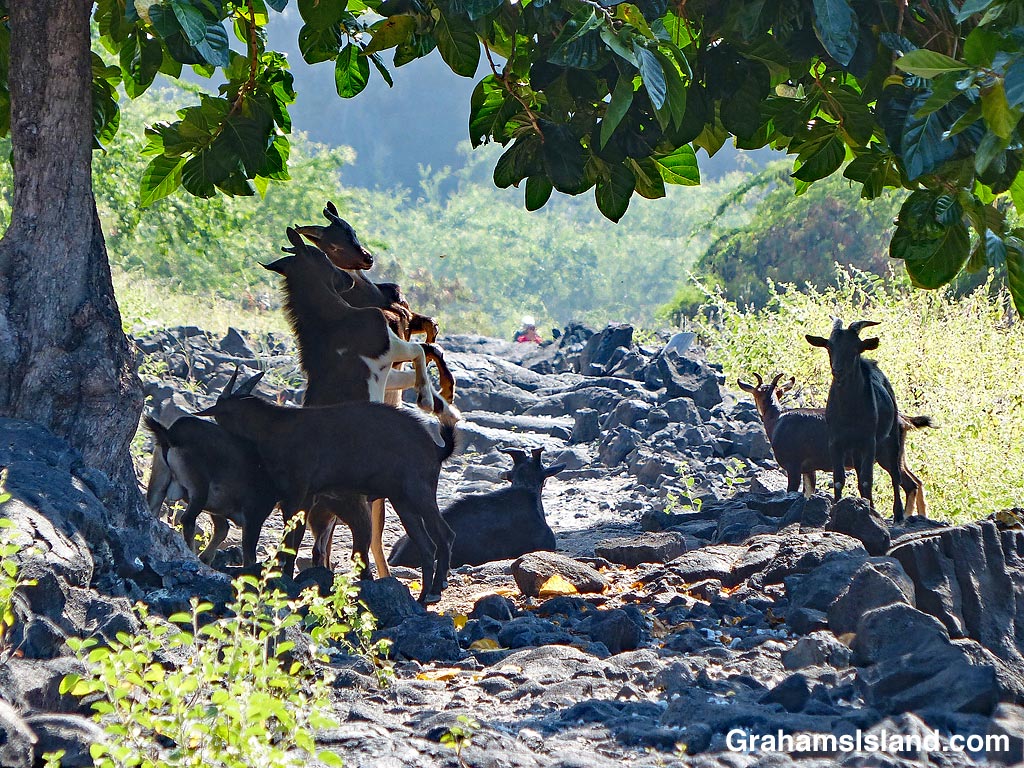
Hiking on the 1871 trail, heading south from Pu’uhonua o Hōnaunau National Historical Park, I came on this scene. A herd of goats blocked the trail. They watched me from the shadows. Two of them raised themselves onto their hind legs and repeatedly butted heads.

In the deep shade of the trees they carried the look of a gang of brigands, ready to relieve hikers of their valuables or, more likely, since they’re goats, something to eat. That could be just about anything from a carrot to the hiker’s shoes.

As I got closer, the goats filtered into the trees and scrub, disappearing from view. Perhaps next time I won’t be so lucky.

For more information about the 1871 Trail, and other hikes on the Big Island, go to bigislandhikes.com.

For more information about Pu’uhonua o Hōnaunau National Historical Park, visit https://www.nps.gov/puho/index.htm.

Posted in response to this week’s WordPress Photo Challenge, ‘I’d rather be…,’ because I’d rather be hiking.

Royal Hawaiian Band

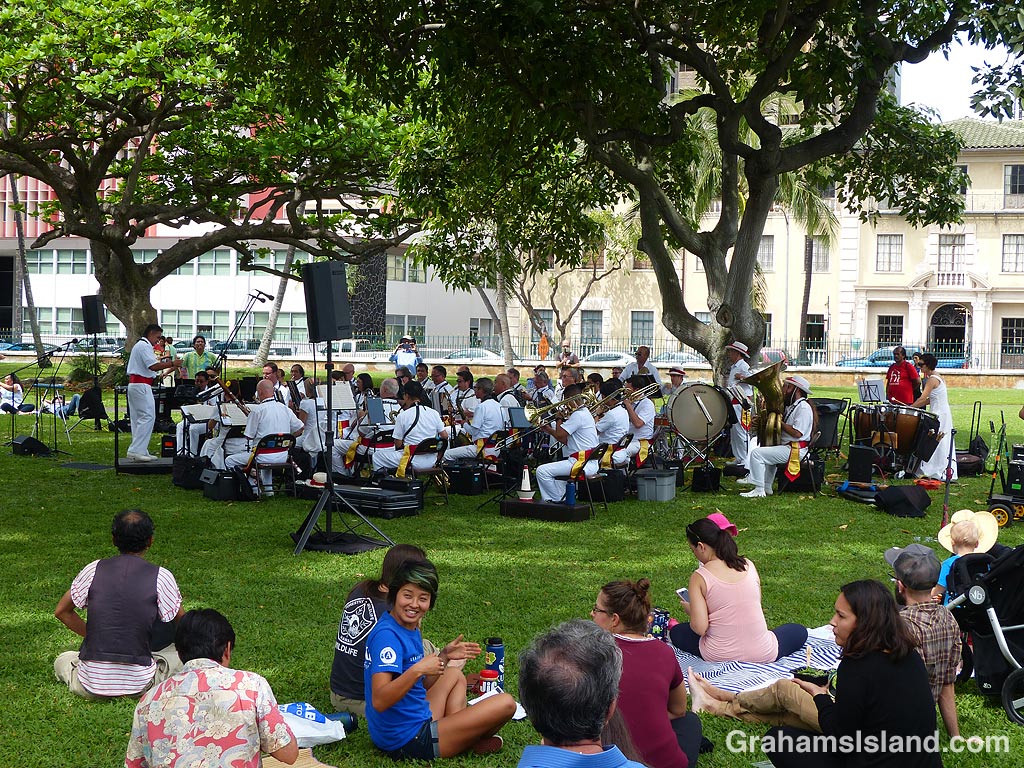
The Royal Hawaiian Band was founded in 1836 by King Kamehameha III. The band presents free concerts in the grounds of ‘Iolani Palace most Fridays from noon to 1 p.m. and at the Kapi‘olani Park Bandstand in Waikiki most Sundays at 2 p.m..

I hope the photos convey something of what an enjoyable experience the band’s concert offered.

For more information about the Royal Hawaiian Band, go to rhb-music.com.

Posted in response to this week’s WordPress Photo Challenge to be a visual storyteller.

Hawi Post Office mural

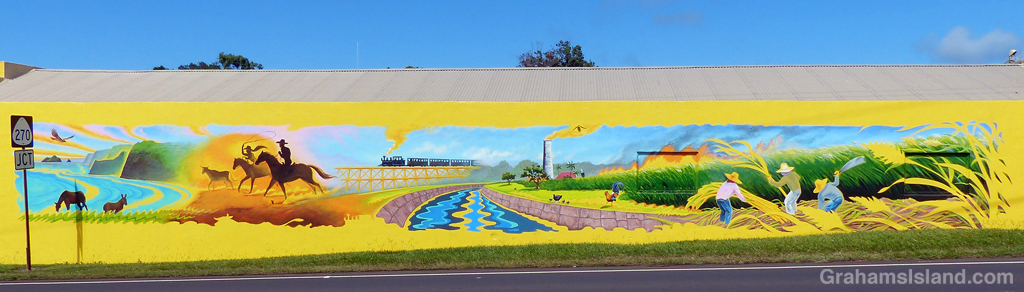
Murals tell stories and this one, on the side of the Hawi Post Office building, tells the story of North Kohala’s sugar plantation era. The mural was painted by students from Kohala High School working with staff, faculty and community members.

For more information about the mural, go to kohalamountainnews.com/2017 and click on the May edition.

Posted in response to this week’s WordPress Photo Challenge to be a visual storyteller.

Pu‘u Loa petroglyphs

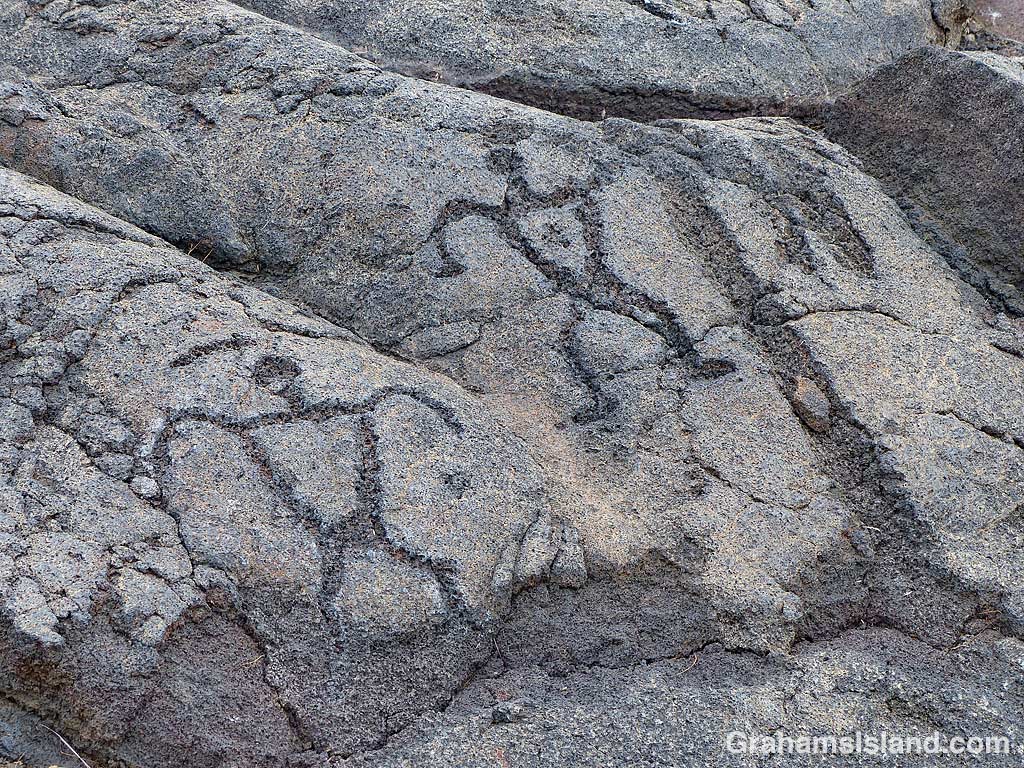
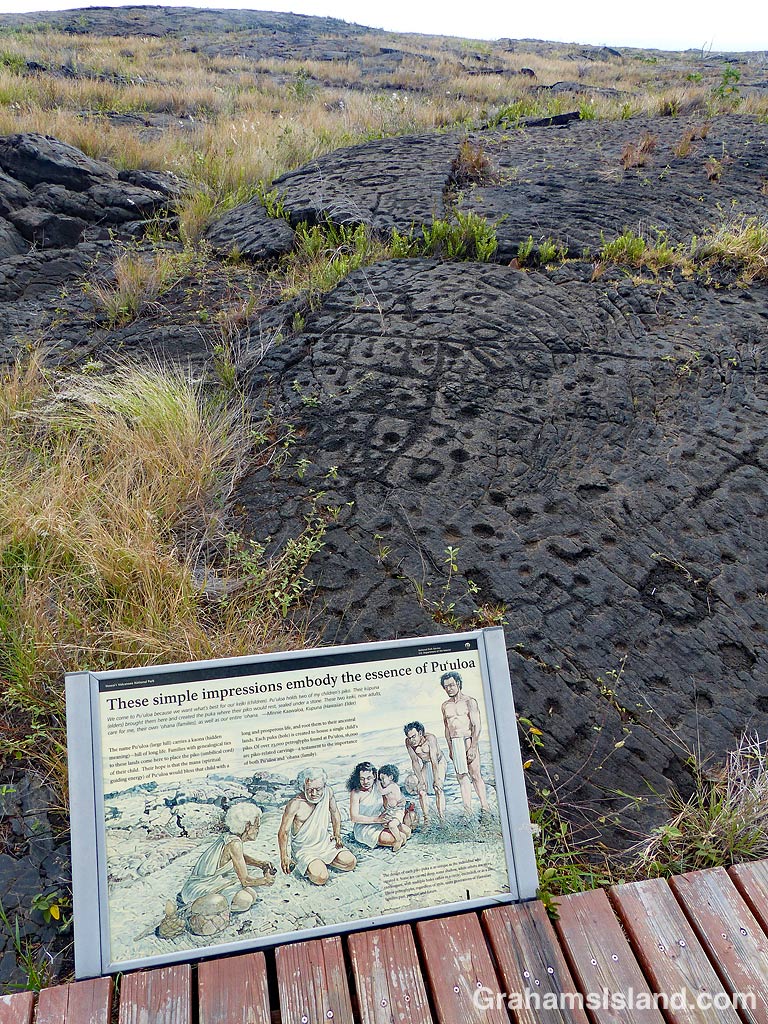
Not far from the coast, in Hawaii Volcanoes National Park, is Pu‘u Loa petroglyphs trail. It’s only a mile and a half round trip, but visits a place with a huge number of petroglyphs. A raised boardwalk circles part of this area, giving a good view of the petroglyphs without adversely impacting them.

One of the main features of this area and its petroglyph field is explained on a display seen in the second photo. It reads, ‘The name Pu‘uloa (large hill) carries a kaona (hidden meaning)—hill of long life. Families with genealogical ties to these lands come here to place the piko (umbilical cord) of their child. Their hope is that the mana (spiritual guiding energy) of Pu‘uloa would bless that child with a long and prosperous life, and root them to their ancestral lands. Each puka (hole) is created to house a single child’s piko. Of over 23,000 petroglyphs found at Pu‘uloa, 16,000 are piko-related carvings—a testament to the importance of both Pu‘uloa and ‘ohana (family).’

For more information about Pu‘u Loa petroglyphs, go to https://www.nps.gov/havo/learn/historyculture/puuloa.htm.

(On the park’s website, Pu‘u Loa is two words, but on the sign it is one word, hence the inconsistency.)

Pu’uhonua o Hōnaunau National Historical Park

The final post on this week’s theme of the WordPress photo challenge, ‘Tour Guide.’

These photos are from Pu’uhonua o Hōnaunau National Historical Park, otherwise known as Place of Refuge. This National Park showcases important Hawaiian history with it’s royal grounds where the Hawaiian royalty lived, Hale o Keawe where the bones of 23 ali’i were housed, and for the Pu’uhonua where anyone who had broken kapu (sacred laws) could seek shelter and ultimately forgiveness.

Here are views from the ocean side (above), of a hālau (right) which houses canoes, and of a ki’i (below) representing an Hawaiian god.

For more information about Pu’uhonua o Hōnaunau National Historical Park, visit https://www.nps.gov/puho/index.htm.