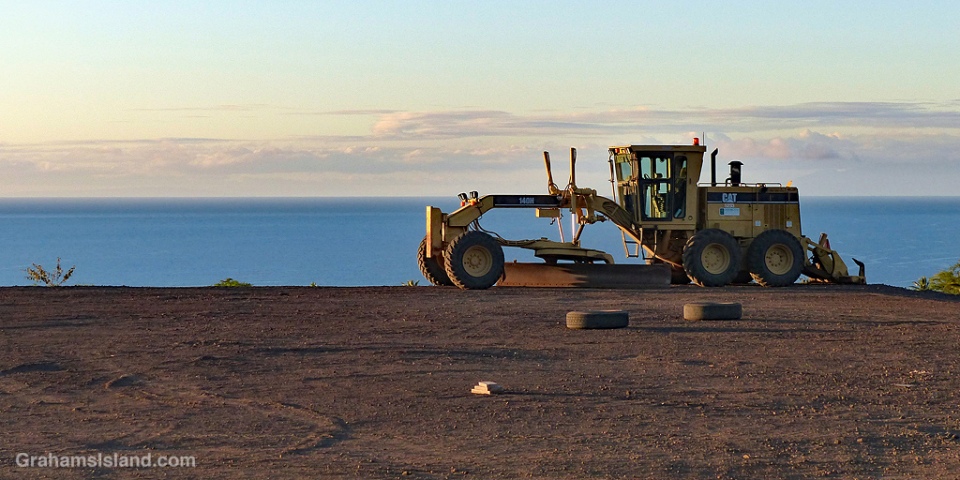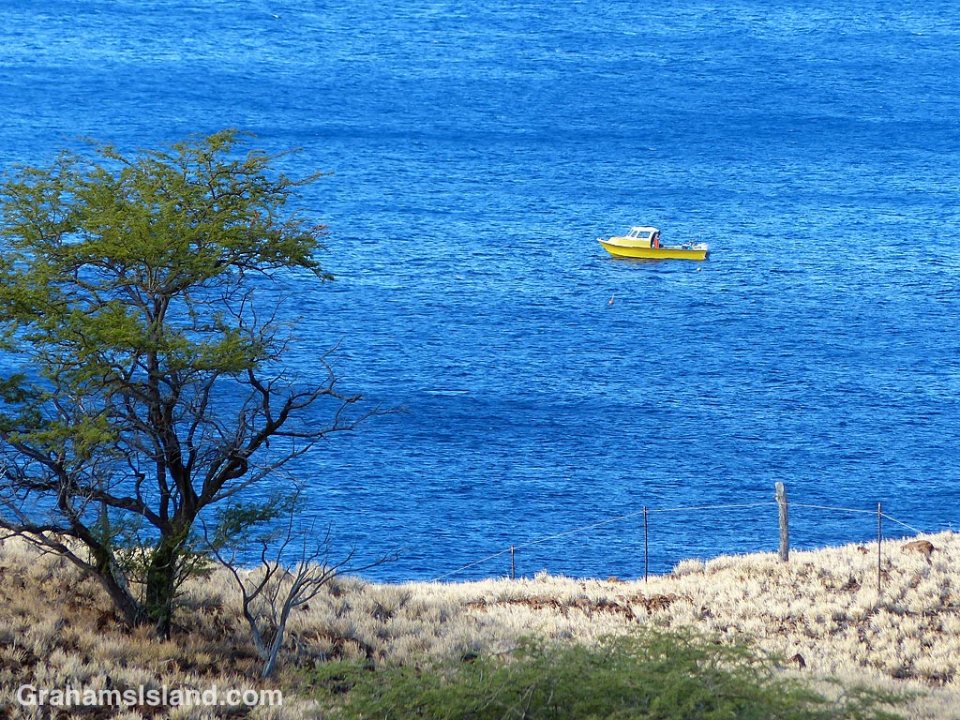
Kekaha Kai State Park, north of Kailua Kona, is a pretty park with some excellent beaches. It’s also right under the flight path for aircraft heading to Kona International Airport (officially known as Ellison Onizuka Kona International Airport at Keahole).
What this means is that a steady stream of jets, on final approach to the airport, pass overhead, and not that far overhead either. It’s not the quietest park in the state.
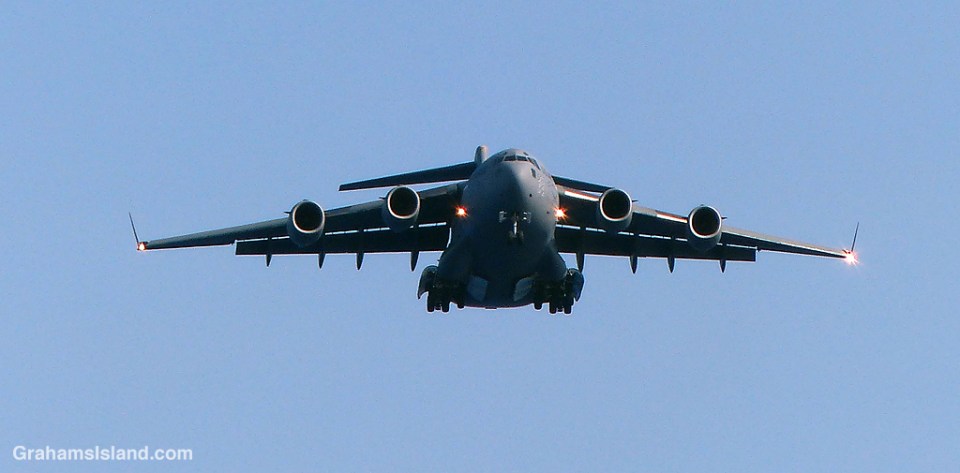
While most of the aircraft are operated by the usual airlines, a few military planes pepper the skies. This one is a C-17 Globemaster, a military transport plane. It was arriving from Oahu, delivering firefighting equipment for the military’s Pohakuloa Training Area.
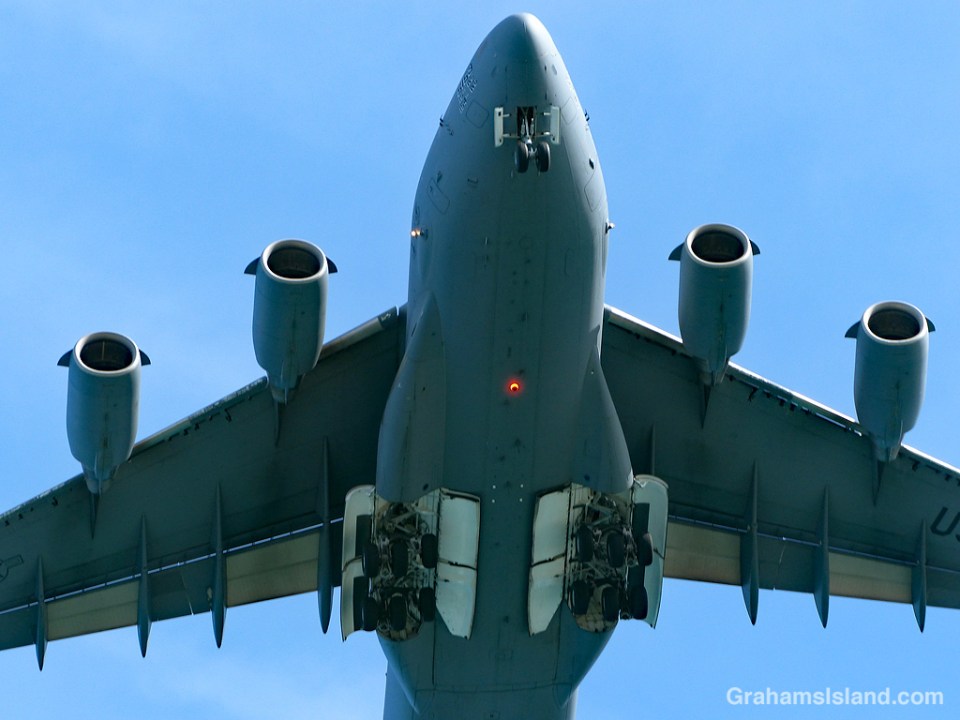
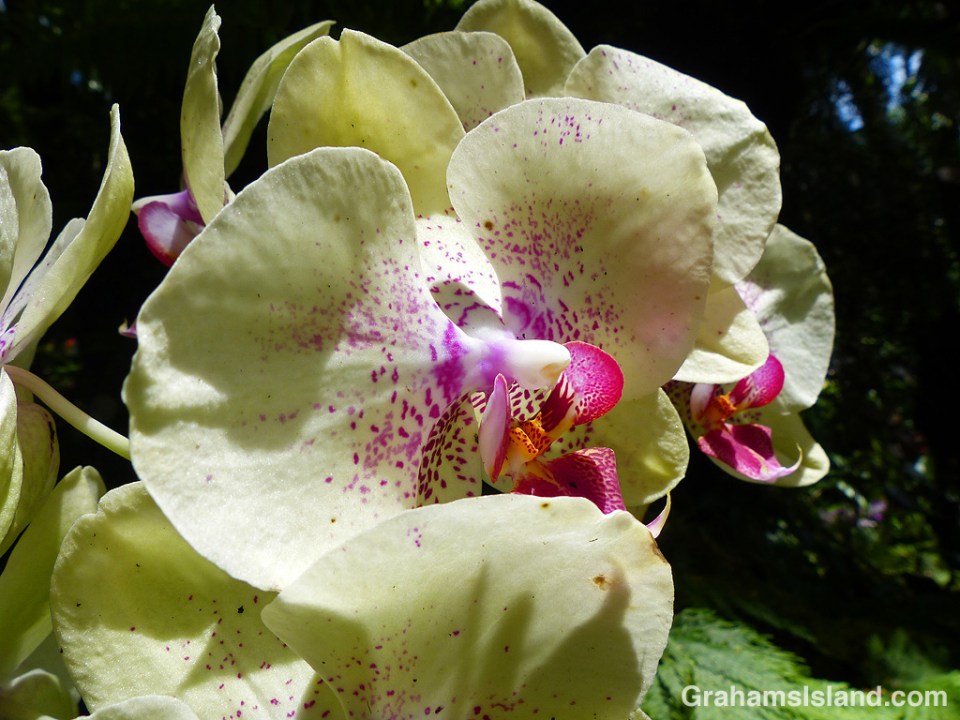
 There are many varieties of phalaenopsis orchids on show at Hawaii Tropical Botanical Garden. This one is Phalaenopsis (ChianXen Queen x Diamond Beauty).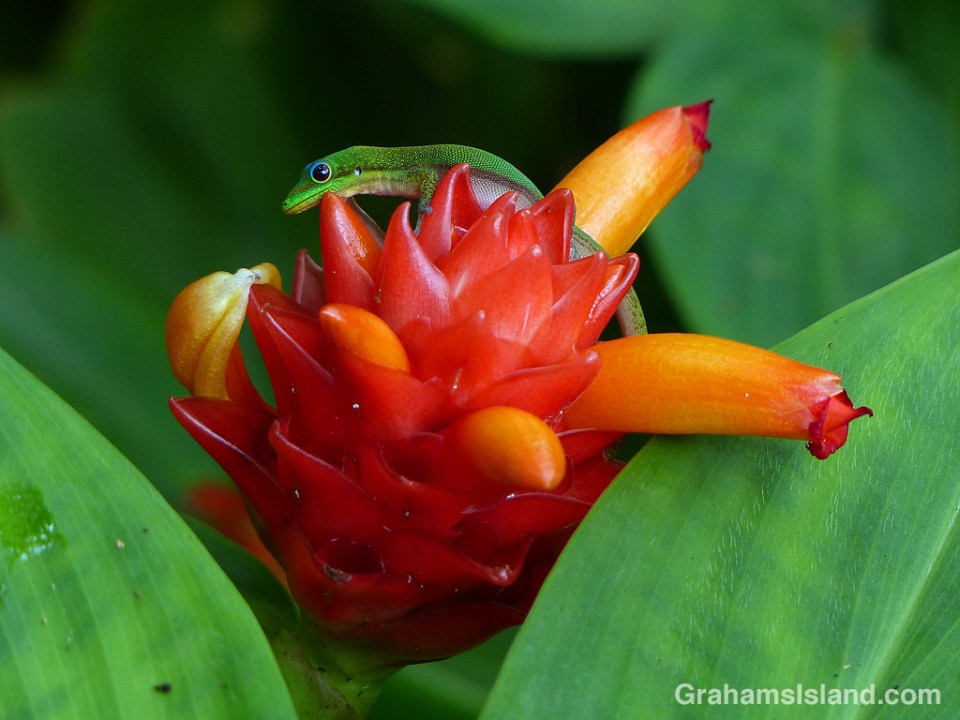
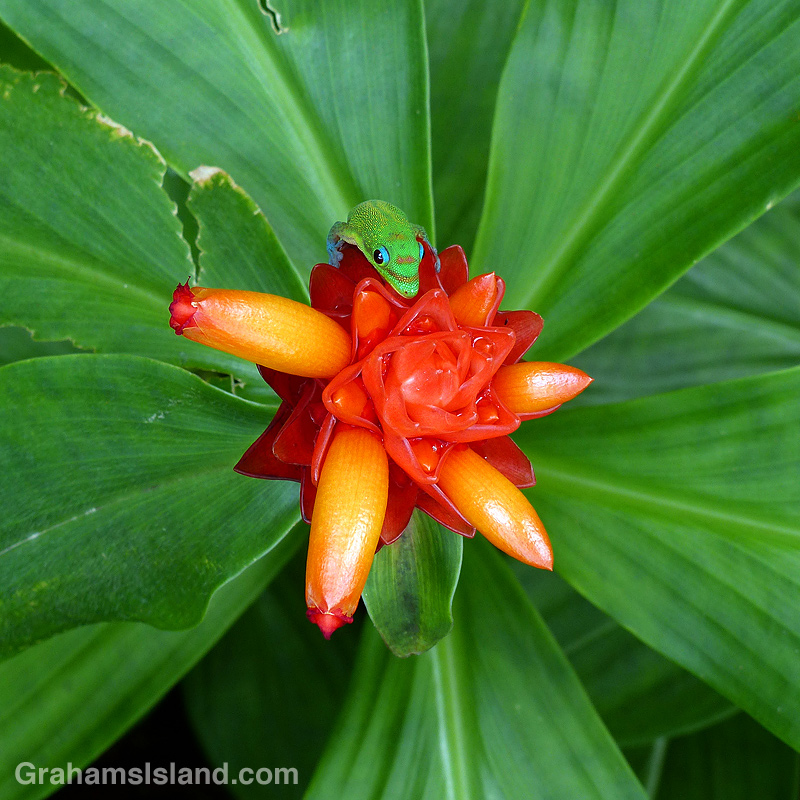 Costus curvibracteatus is also known as orange tulip ginger and hails from Costa Rica and Panama. In these photos, the overlapping red parts are the bracts and the longer orange tubular forms, emerging from between the bracts, are the flowers. However the bracts can also be orange, and the flowers a similar length as the bracts.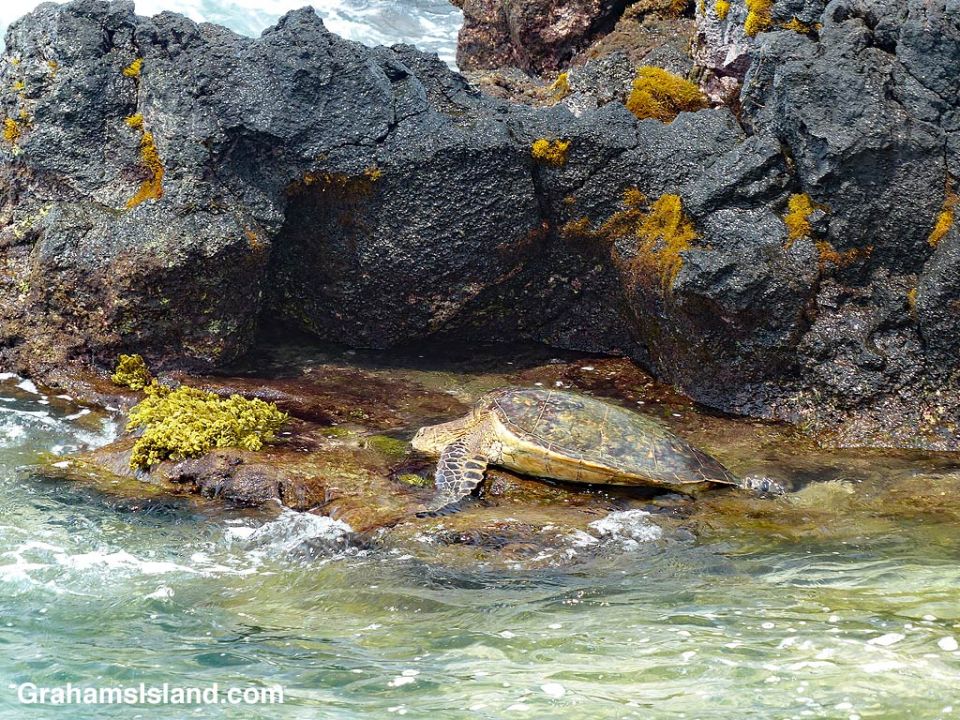
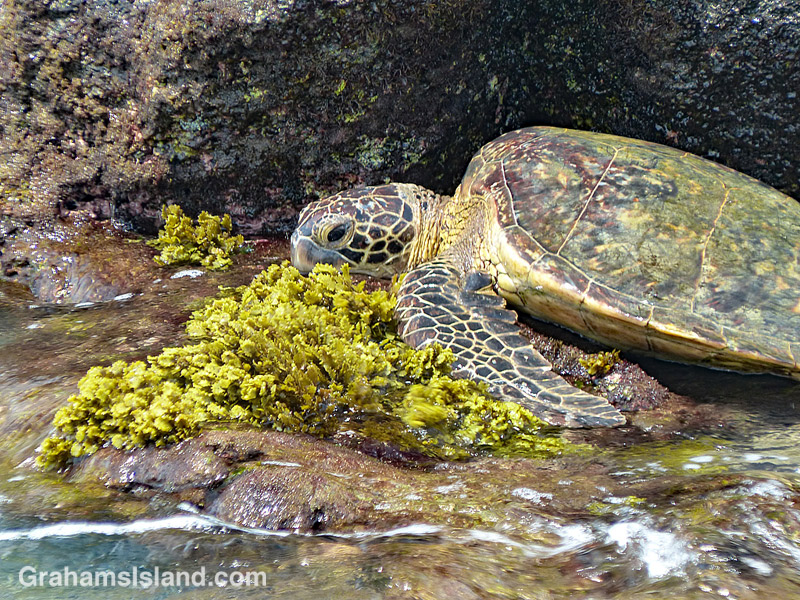
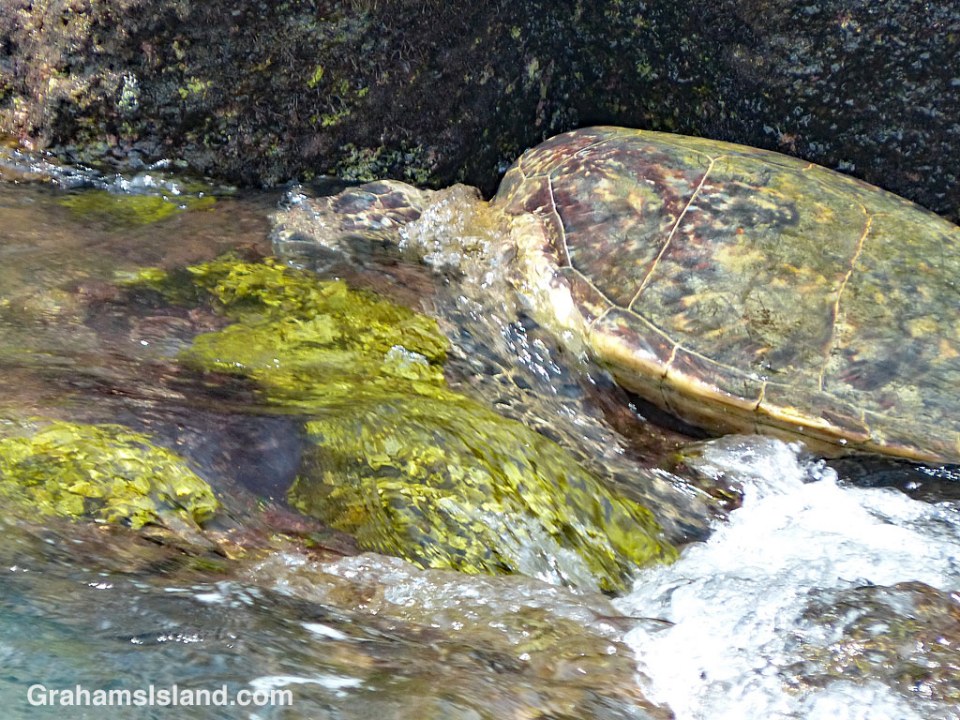
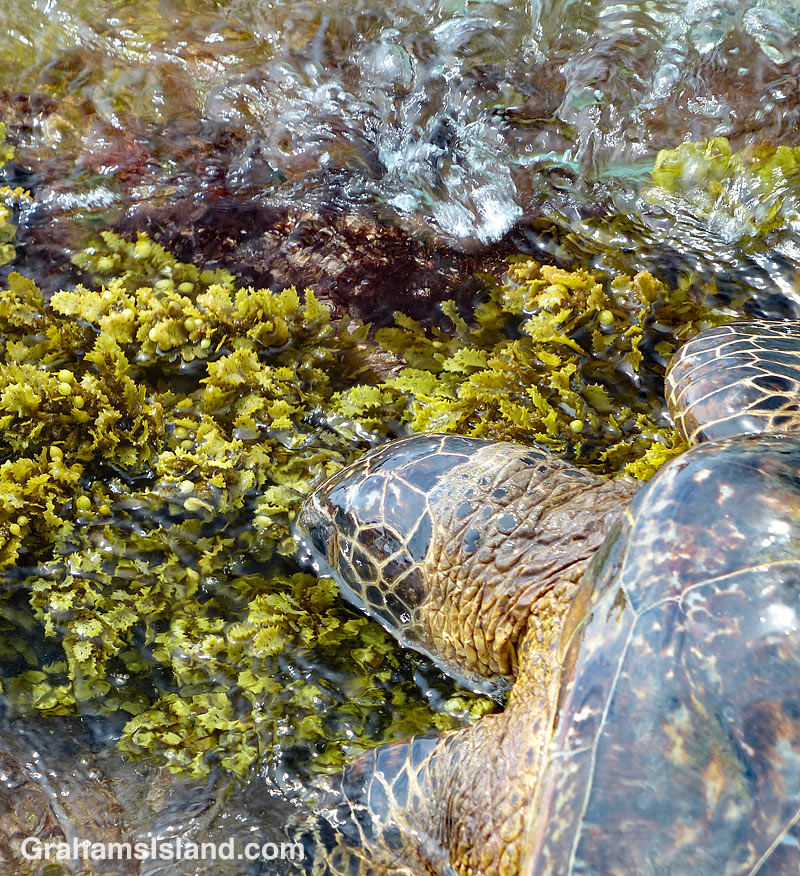 Toward the end of a hike along the coast, I came across this turtle feeding in a shallow tidal area. There was good grazing to be had, but the problem was that the ledge was continually swept by incoming waves.