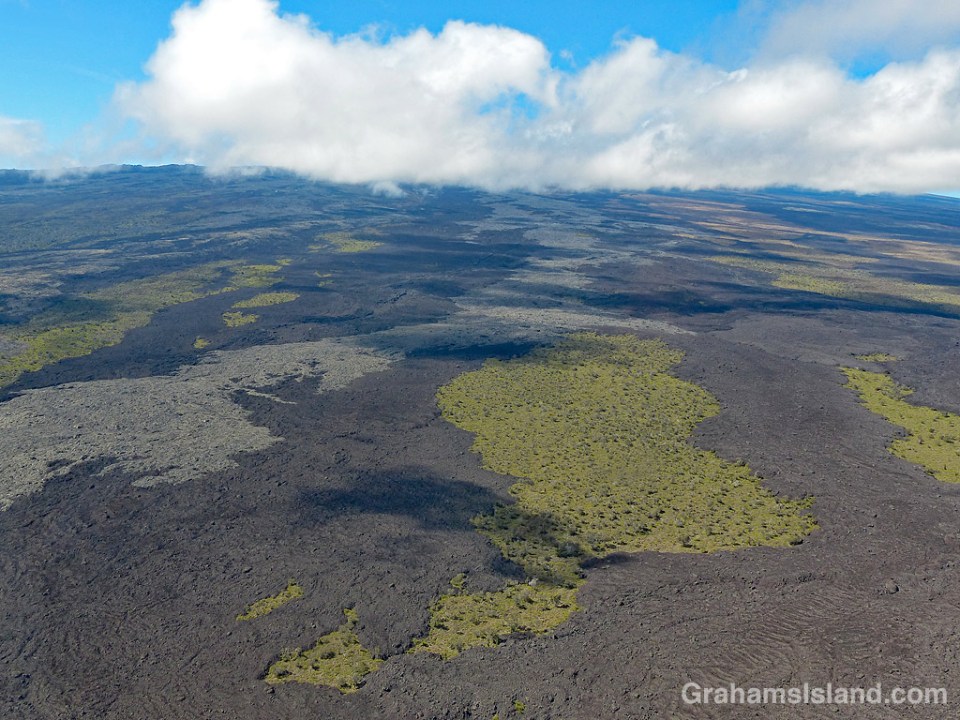
These lava flows, on the northeast slopes of Mauna Loa, show some of the colors lava takes. Together with the untouched islands of vegetation and cloud shadows, I think they make an interesting patterned landscape.

These lava flows, on the northeast slopes of Mauna Loa, show some of the colors lava takes. Together with the untouched islands of vegetation and cloud shadows, I think they make an interesting patterned landscape.

These yellow walking iris (Trimezia martinicensis) were growing at Hawaii Tropical Botanical Garden, near Hilo.
For more information about Hawaii Tropical Botanical Garden, go to htbg.com.
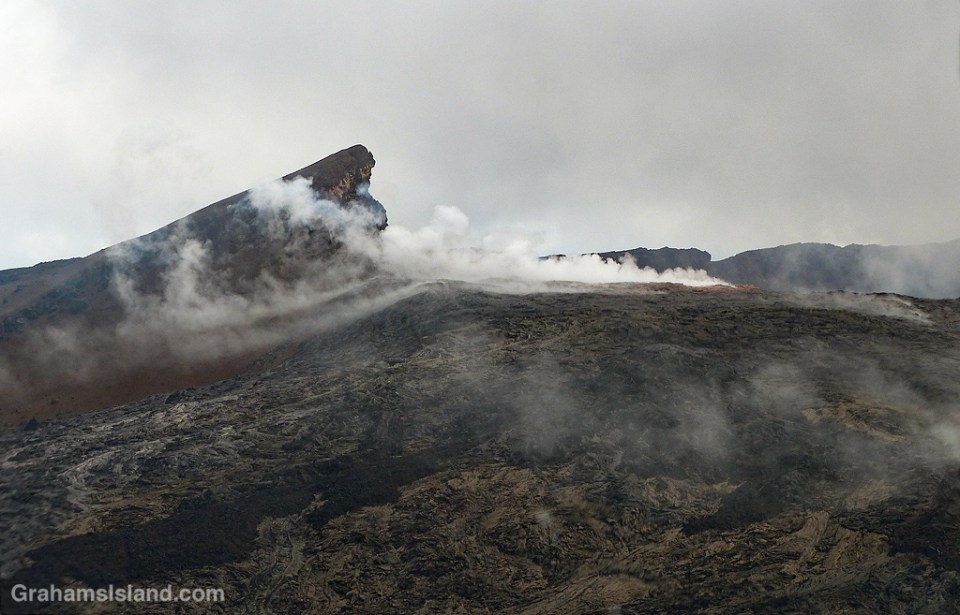
 This week’s Sunday Stills challenge theme is ‘Time.’ (See more responses here.) I had a couple of thoughts about this. The first is that the state of Hawaii is a kind of geologic timepiece. The Hawaiian islands exist because a magma source known as the Hawaii hotspot generates volcanic activity. This creates underwater seamounts that eventually break the surface to form new islands. Such a process is currently taking place with Lōʻihi Seamount, off the southeast coast of the Big Island. It’s about 3,000 feet below the surface but, if it continues its present activity, it will rise above sea level in another 10,000 to 100,000 years.
But if Hawaii is on a volcanic hotspot, why doesn’t it produce one volcano that just gets bigger and bigger? Well, the tectonic plate on which Hawaii sits is in constant motion to the northwest. So the volcanic activity generates an island, but as the plate moves, that island edges away from its creative source and the volcanic activity ceases. What happens then is that the winds and waves begin a long process of erosion until that island is reduced to an atoll and finally disappears below the ocean’s surface. We’re not talking months here. We’re talking millions of years for this process to take place.
Look at a map and you’ll see this chain of Hawaiian Islands stretching away to the northwest, the islands or atolls becoming progressively smaller until they disappear and return to being below-surface seamounts. And while I say this is a slow process, it can also be speedy. In October of this year, Hurricane Walaka ripped through the French Frigate Shoals, part of the northwest Hawaiian chain. Its passage completely removed the second largest island in the group, East Island, from the map. Researchers had been working there before the hurricane struck. After its passage, it was gone (more info here).
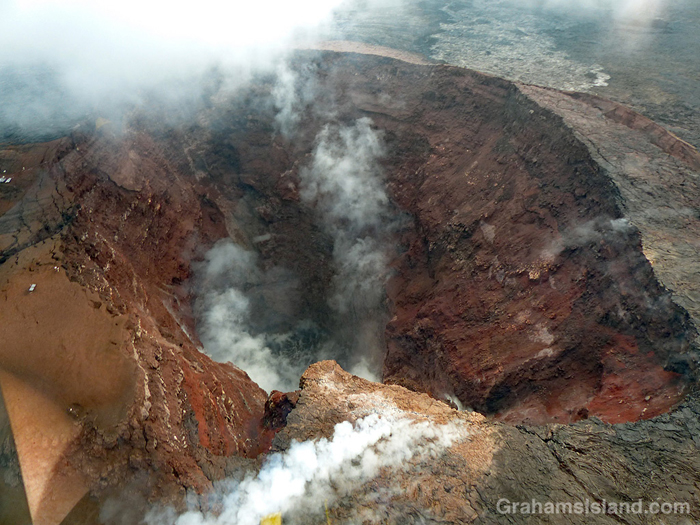
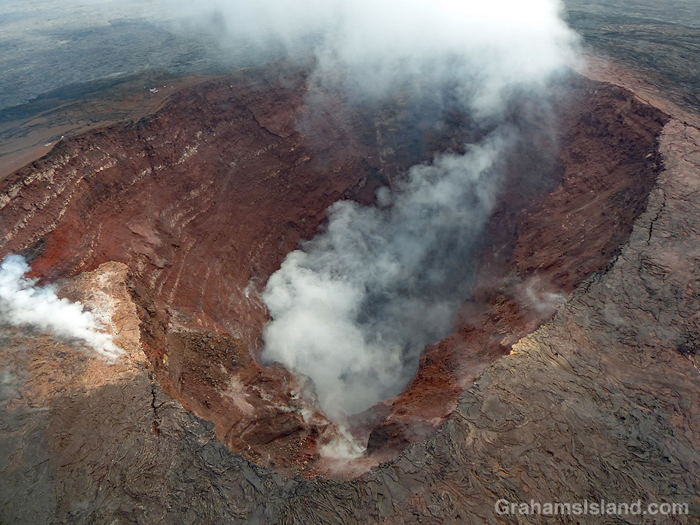
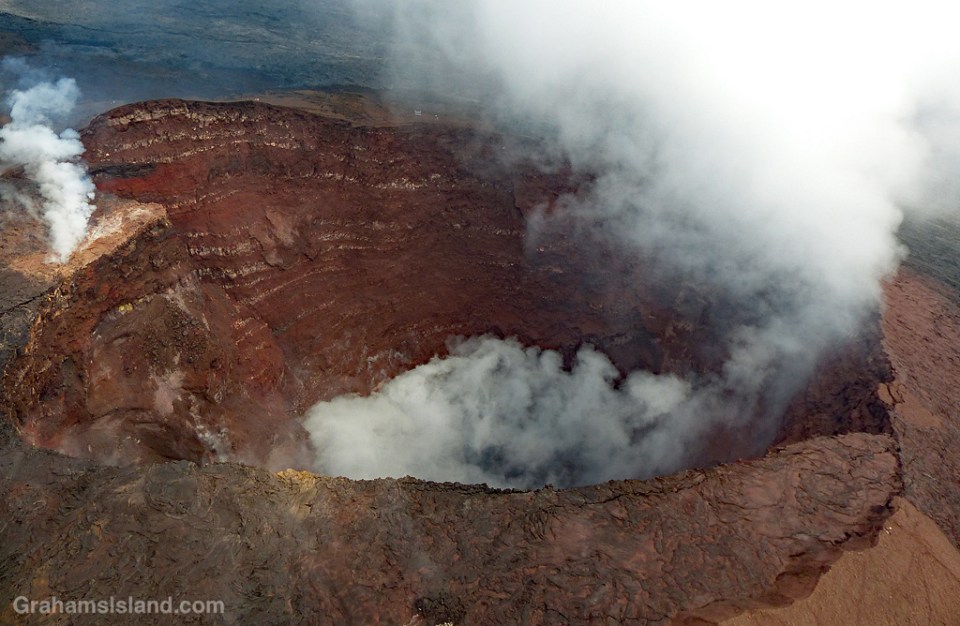
So Hawaii is an example of the geologic passage of time. But there’s another aspect of our view of time that is illustrated here. The photos are of Kilauea’s Pu’u O’o vent. Kilauea is one of the planet’s most active volcanoes and the Pu’u O’o vent had been more-or-less continuously active since 1983. Then, in May of this year, the activity in this vent, and in the summit vent at Halema’uma’u Crater, ceased. The magma drained from these places and traveled down the east rift zone of the volcano before emerging in a residential subdivision, Leilani Estates, in the southeast corner of the island. This new eruption produced a lava flow that reached the ocean, destroying more than 700 structures en route, but adding hundreds of acres to the Big Island coastline.
What’s the time aspect of this? Well, it’s part of the geologic time process noted above. But there’s another way of looking at it. Kilauea has been erupting so long and so regularly that it’s been a little bit taken for granted. “Oh, lava’s flowing into the ocean? You know, I’m really busy right now. I’ll catch it later.” “The summit vent is spilling onto Halema’uma’u Crater’s floor? I’ll check that out next time I’m down that way.”
I consider myself fortunate that I got to see the firehose of lava entering the sea after a cliff collapse (here). Next day, following another cliff collapse, it was no longer visible. And in April of this year I went down to see the summit lava lake (here) bubbling up to the crater floor and visible from Jagger Museum. Two weeks later, the level had dropped a thousand feet. It continued to fall.
I might never see these things again in my lifetime, but at the time, there seemed to be lots of time to visit. But even events happening in a long, geologic timeframe might occur in the space of a week, a day, even an hour. It’s a reminder to me that each moment is something fleeting, perhaps something special, something to pay attention to.
These photos are of Pu’u O’o vent in late September of this year. No lava is visible in the vent, but it’s still hot enough that rainfall generates steam, which is what’s visible here. It was quite dramatic to pass over this vent, which for 35 years has pumped lava out onto the surrounding landscape.
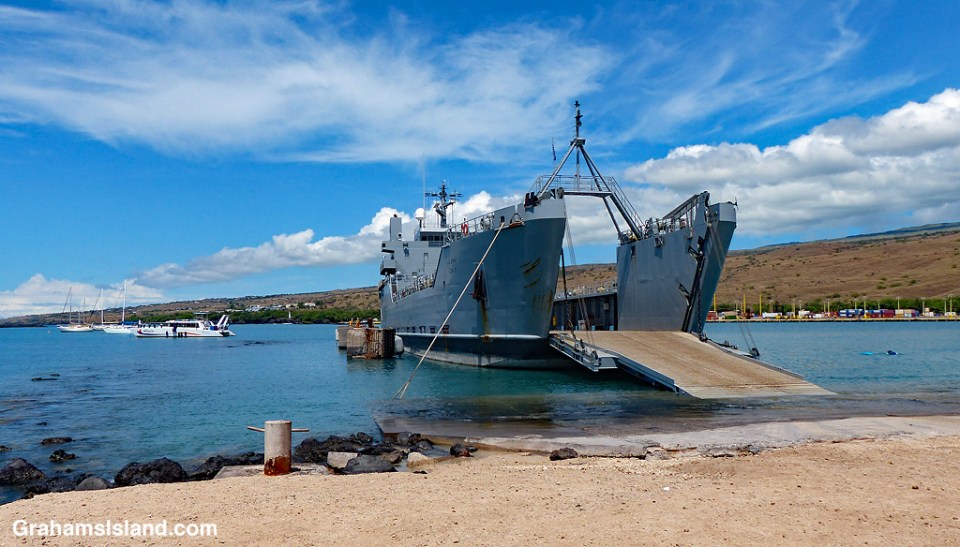
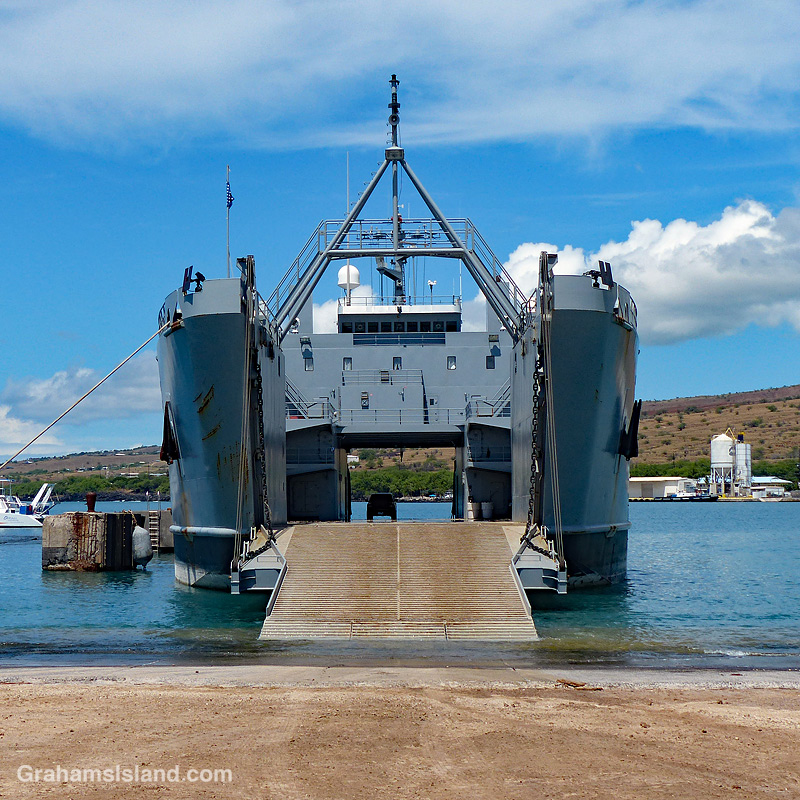 This is the ship that brings military troops and supplies from Oahu to Kawaihae Harbor en route to Pōhakuloa Training Area (PTA). I often see the ship going back and forth off the Big Island and had always assumed it to be a Navy vessel because, well, it’s a ship. But no, this is an Army LSV (Landing Ship, Vehicle) where they drop the ramp and roll the vehicles on or off.
These activities coexist with commercial shipping, pleasure craft, and locals enjoying the splendid beach and calm waters of the harbor, where I understand the snorkeling is pretty good. Got to try it out sometime soon.
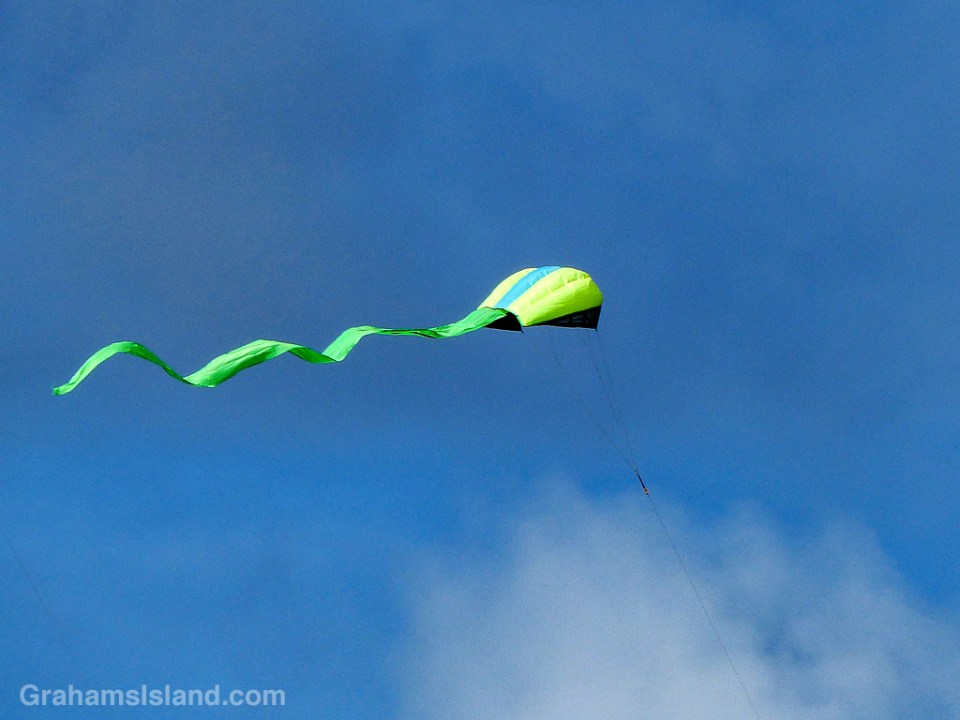
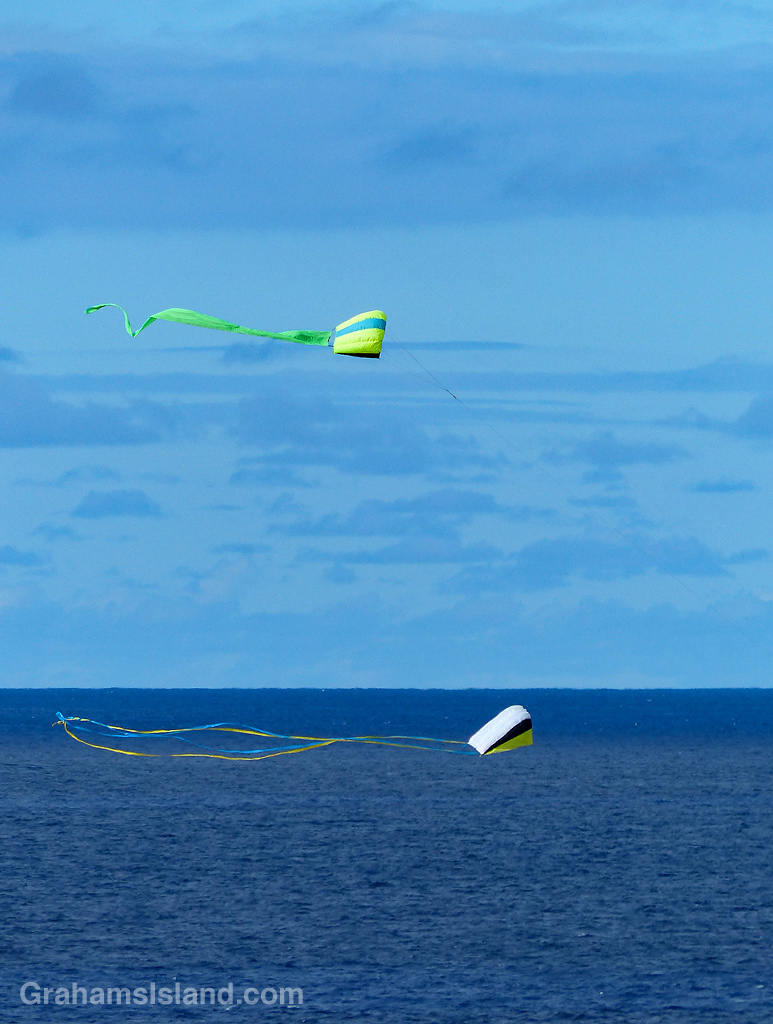 On one of my recent walks, I saw half a dozen kites soaring in the air and I realized it might be the first time I’ve seen kites around here. This is somewhat surprising since North Kohala is notoriously windy and seems like it would be a mecca for kite flying.
Kites are no longer simple diamond shapes on a wooden cross and these were by no means the most exotic kites available these days. But I did like the pterodactyl below and the others were also striking, particularly when they caught the sunlight.
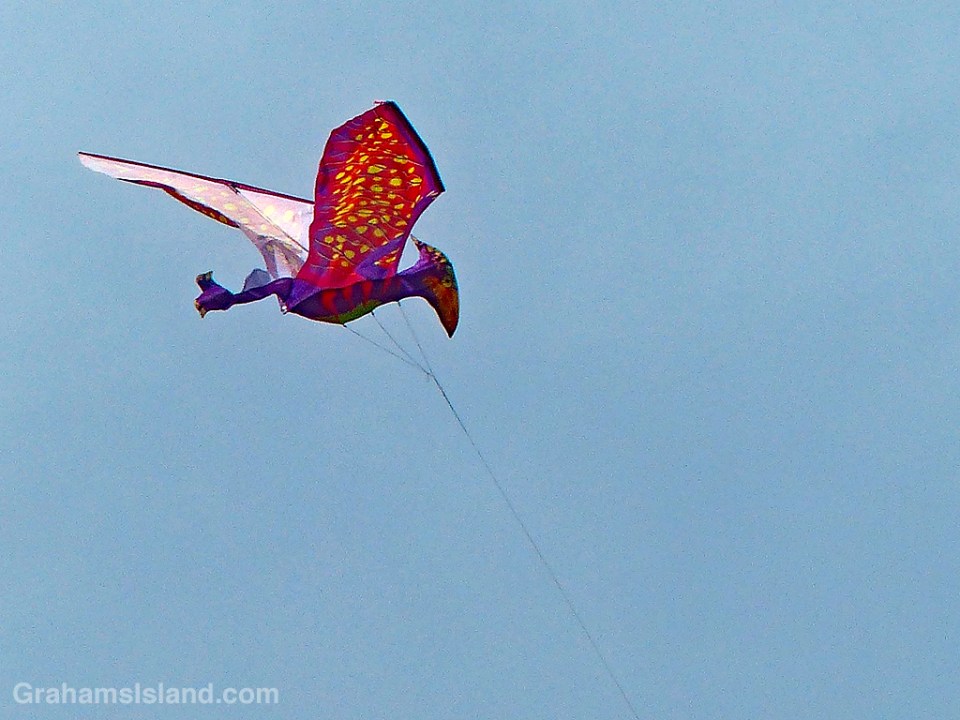
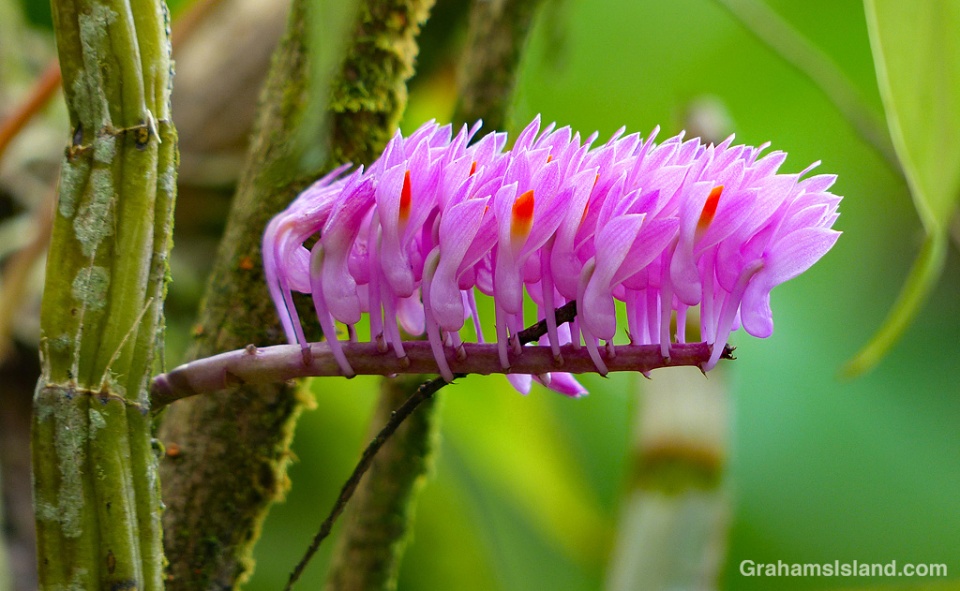
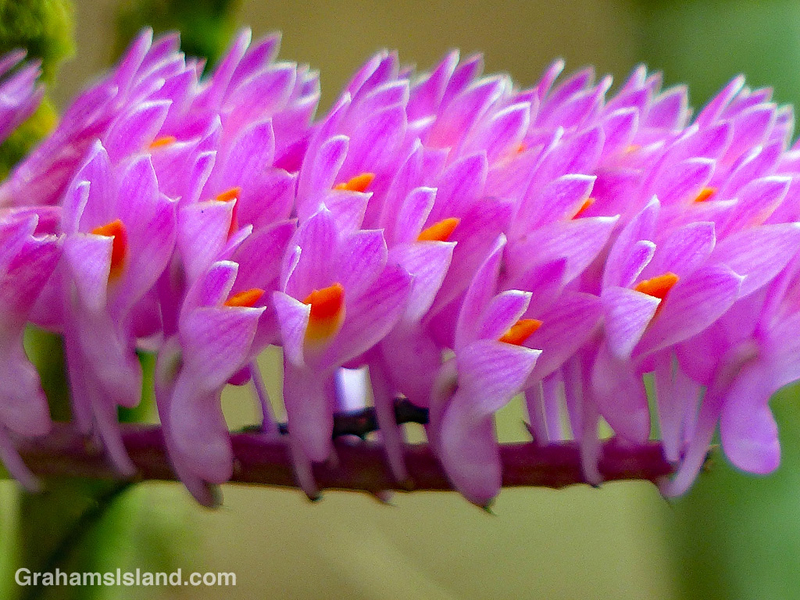 This week’s Sunday Stills theme is ‘Orange.’ (See more responses here.) Usually I pick one subject for these challenges, but I had two recent subjects that fit the bill and I couldn’t make up my mind, so I’m including both.
The flower photos are of a dendrobium secundum orchid, which is also known as a toothbrush orchid. The flower color can vary from pale pink to purple with an orange labellum at the tip. These flowers were soft and delicate looking, yet so lush.
The bottom photo is from the recent Ironman race on the island. I liked the pop of this cyclist’s outfit and how his water bottle matched his orange helmet.

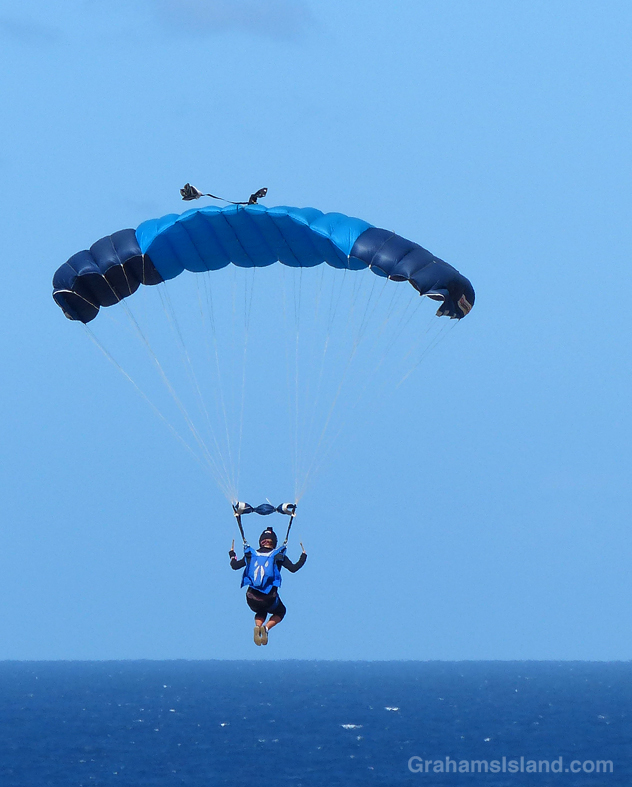
A skydiver heading for a watery landing? It’s all a matter of perspective. Actually, she’s about to take a right and curl down safely to a grass landing at Upolu Airport.
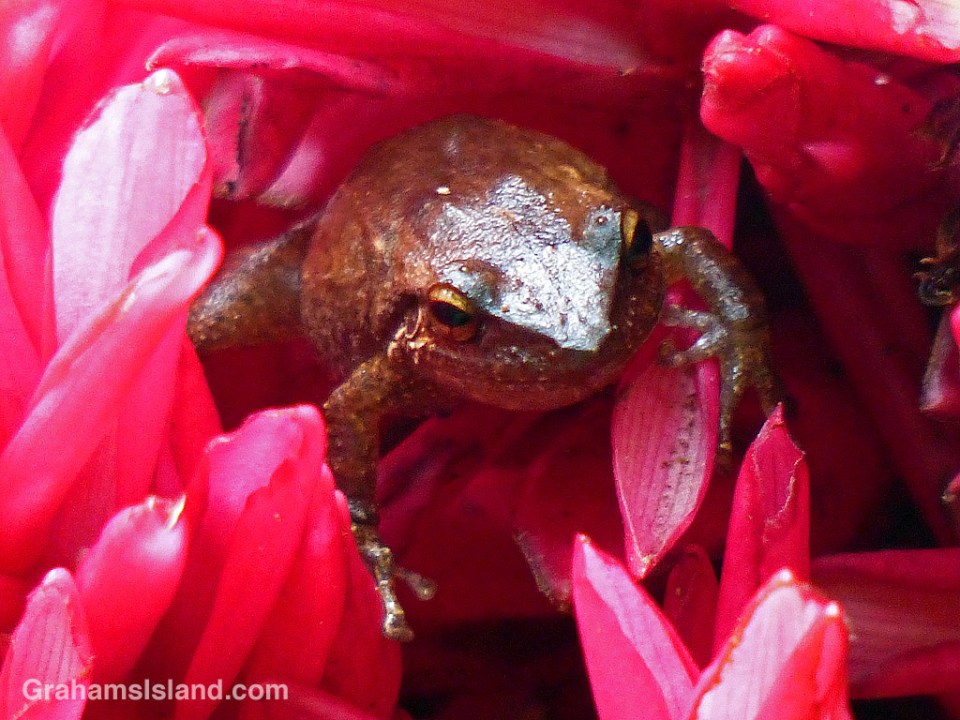
What is there to say about the coqui frog (Eleutherodactylus coqui)? How about KO-KEE, KO-KEE, KO-KEE, KO-KEE, KO-KEE, KO-KEE. And how about calling that out at around 100 decibels ALL NIGHT LONG.
Coquis came to the Big Island in the late 1980s, believed to be an accidental import on some plants. They hail from Puerto Rico where they’re a popular cultural symbol. But in Puerto Rico, the coqui has predators such as snakes and birds. In Hawaii, it has no predators and it’s thriving. Indeed, I recently read that supersized coquis have been found here, not the usual frogs the size of a quarter, but silver dollar sized – about 50% bigger. One theory for this is that the excellent conditions and lack of predators means the coquis live longer and thus eat more and grow bigger. Watch for ‘The Coqui That Stomped Hilo’ coming soon to a theater near you.
Suffice it to say that coquis are considered an unwanted invasive species here. Homeowners try to eradicate them because their noise is believed to lower property values. Even businesses are affected, with tourists considered less likely to want to stay in areas infested with coquis. (Ironically, while Hawaii tries to battle this mostly-loathed frog, in its native Puerto Rico this much-loved frog is threatened by a fungus called Batrachochytrium dendrobatidis and coqui numbers there are in decline.)
The east side of the island, with its greater rainfall and abundant vegetation, is prime coqui habitat. The northern part of the island, where I live, is considered coqui free. What that means is that the frog is not established here and coordinated efforts are made to find and eliminate those that are heard. It’s an uphill battle. I know I hear them at night. A few weeks ago it was just one, but now that one’s call is being answered by others.
And what about that call? Well, as usual, it’s the males making all the ruckus. The call is both a warning to other males (the KO part) and an alluring come hither to females (the KEE part). With the males, one will make the call to establish his territory and then another might respond to challenge this. They keep up this call and response until one gives up, a process that can last many minutes. The loser will move on while the winning male will start over until another challenger chimes in.
I’ve heard plenty of coquis, but the one above is the first I’ve actually seen. I was visiting Hawaii Tropical Botanical Gardens and taking photos of a gold dust day gecko that I saw on a red ginger (Alpinia purpurata). The gecko was poking its nose into the plant looking for moisture or nectar, when there was a sudden flurry. If you look at the photo below, the reason can be seen toward the top left corner, lurking deep in the bloom. The coqui hadn’t appreciated being disturbed and seemed to nip the gecko causing it to jump back. Then the frog came out a bit farther to check the coast was clear, before returning to its hideaway.
For more information about coqui frogs in Hawaii, go to https://www.ctahr.hawaii.edu/coqui/index.asp.


