Category Archives: Parks

Goat brigands

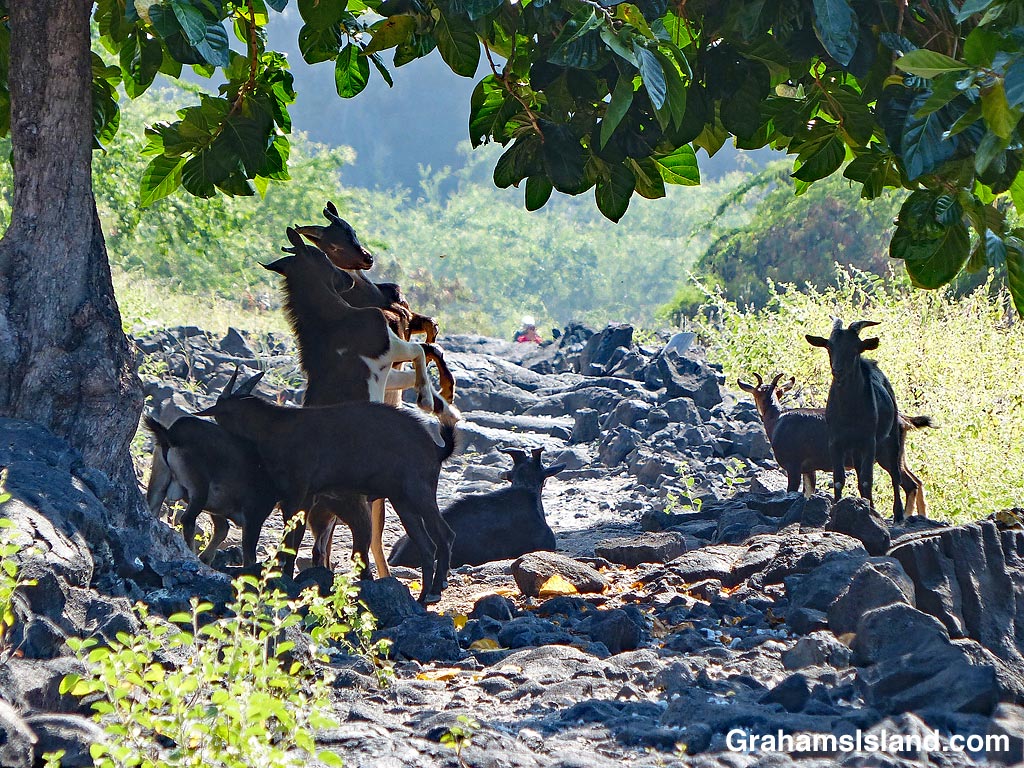
Hiking on the 1871 trail, heading south from Pu’uhonua o Hōnaunau National Historical Park, I came on this scene. A herd of goats blocked the trail. They watched me from the shadows. Two of them raised themselves onto their hind legs and repeatedly butted heads.

In the deep shade of the trees they carried the look of a gang of brigands, ready to relieve hikers of their valuables or, more likely, since they’re goats, something to eat. That could be just about anything from a carrot to the hiker’s shoes.

As I got closer, the goats filtered into the trees and scrub, disappearing from view. Perhaps next time I won’t be so lucky.

For more information about the 1871 Trail, and other hikes on the Big Island, go to bigislandhikes.com.

For more information about Pu’uhonua o Hōnaunau National Historical Park, visit https://www.nps.gov/puho/index.htm.

Posted in response to this week’s WordPress Photo Challenge, ‘I’d rather be…,’ because I’d rather be hiking.
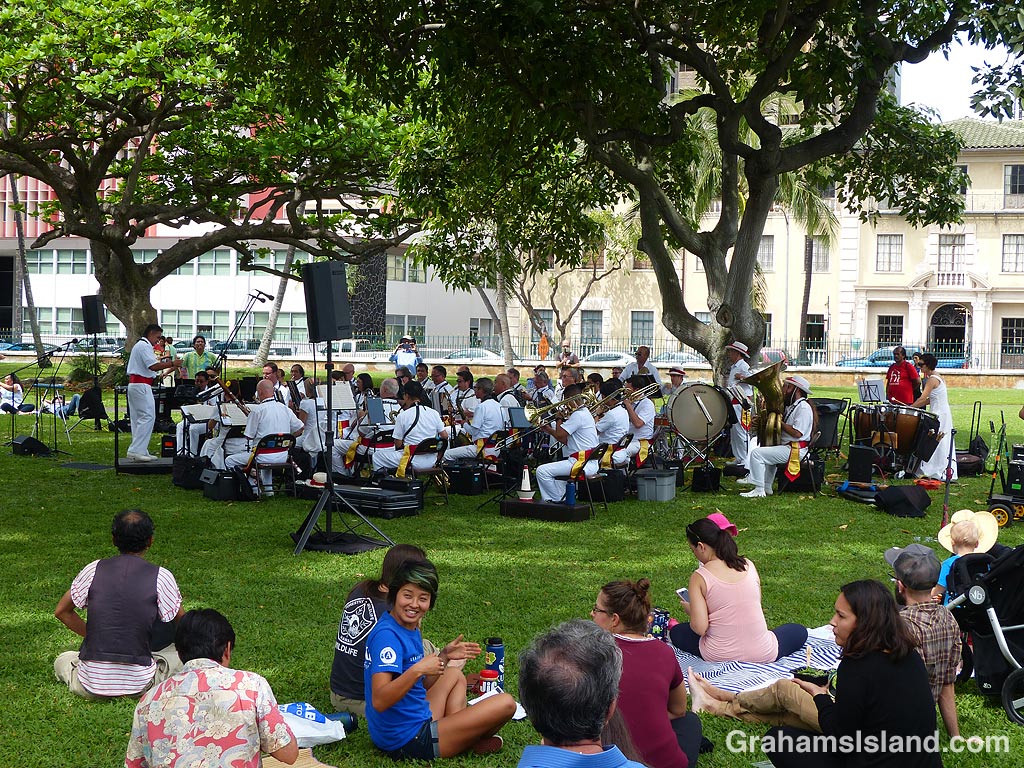
Royal Hawaiian Band

The Royal Hawaiian Band was founded in 1836 by King Kamehameha III. The band presents free concerts in the grounds of ‘Iolani Palace most Fridays from noon to 1 p.m. and at the Kapi‘olani Park Bandstand in Waikiki most Sundays at 2 p.m..

I hope the photos convey something of what an enjoyable experience the band’s concert offered.

For more information about the Royal Hawaiian Band, go to rhb-music.com.

Posted in response to this week’s WordPress Photo Challenge to be a visual storyteller.

Hawaiian monk seal and her new pup

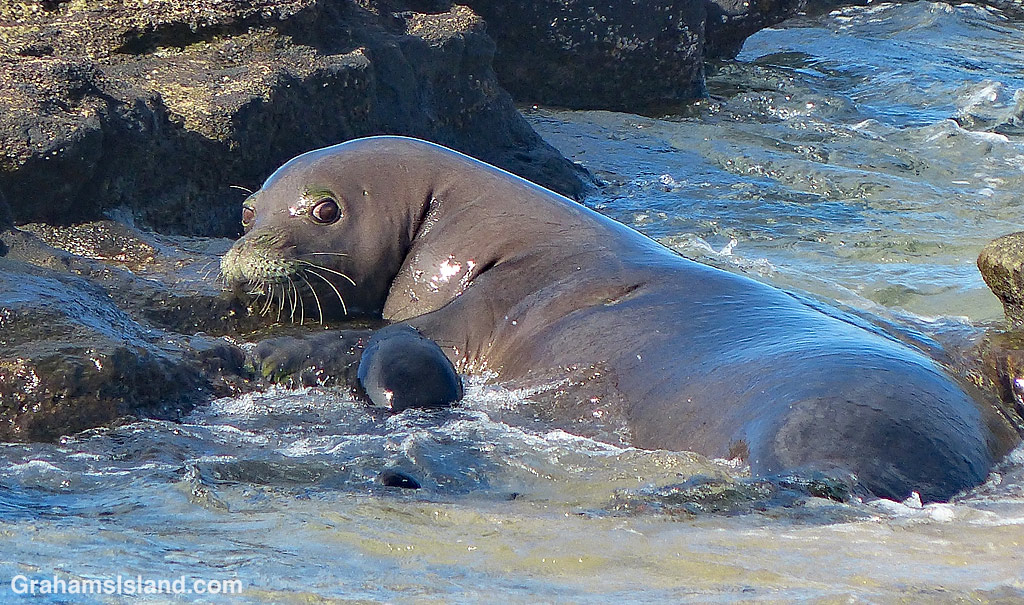
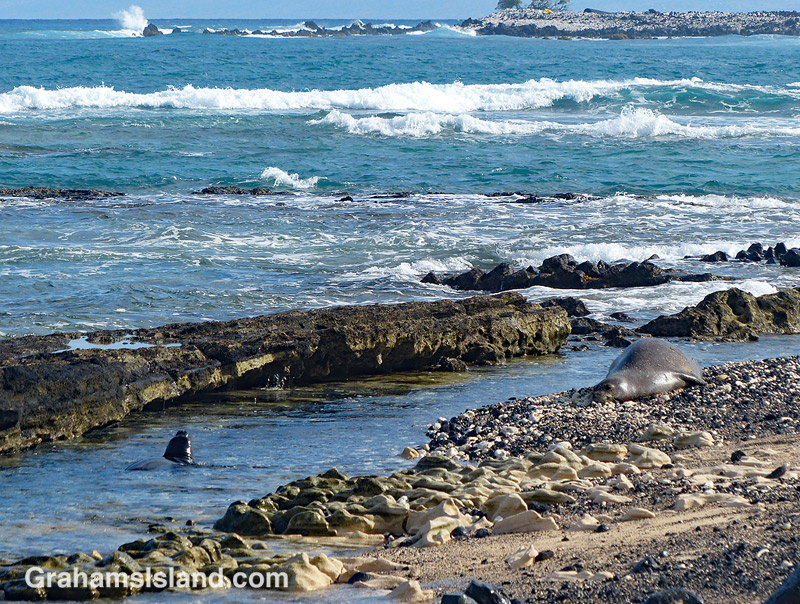
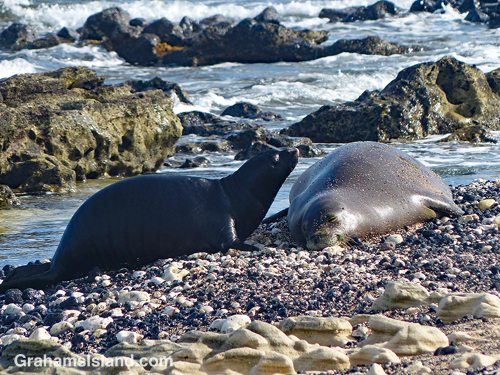
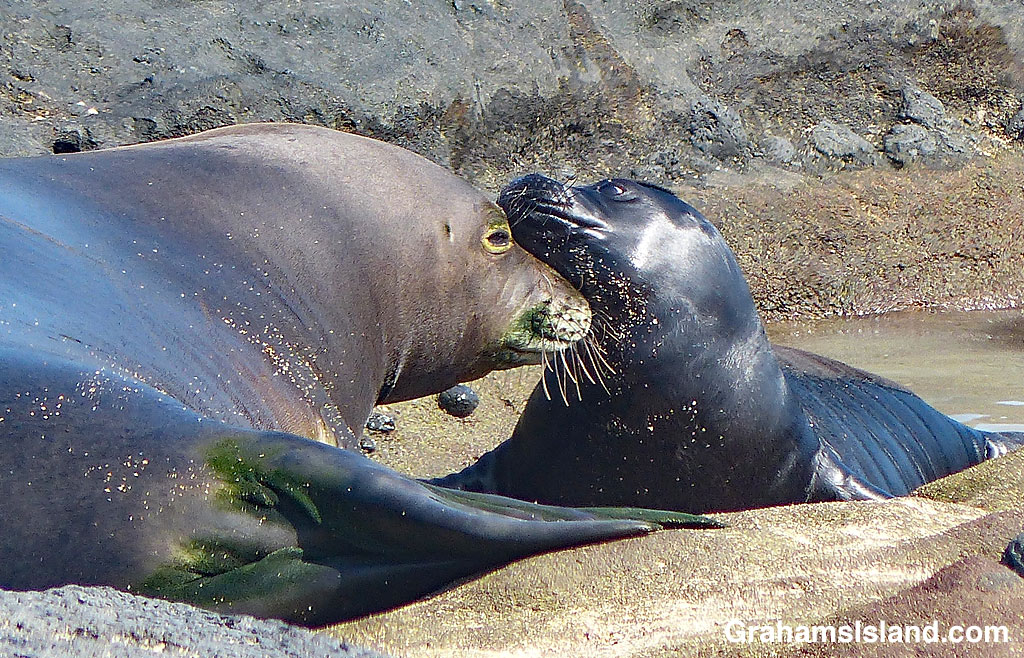
There’s a new monk seal pup on the Big Island and, happily, both mother and pup are doing well. The pup is just over a month old now and its mother will stay with it for another two weeks or so. At that point, she’ll head out to feed, having not eaten since giving birth, and the pup will be left to fend for itself.

I’ve been to see them three times and the pup’s growth has been dramatic as seen in the third and fifth photos. In the top one, the pup is 11 days old and below, exactly a month old.

For more information about Hawaiian monk seals, go to www.pifsc.noaa.gov/hawaiian_
monk_seal/ or www.marinemammalcenter.
org/hawaii
.

Posted in response to this week’s WordPress Photo Challenge to be a visual storyteller.

Pu‘u Loa petroglyphs

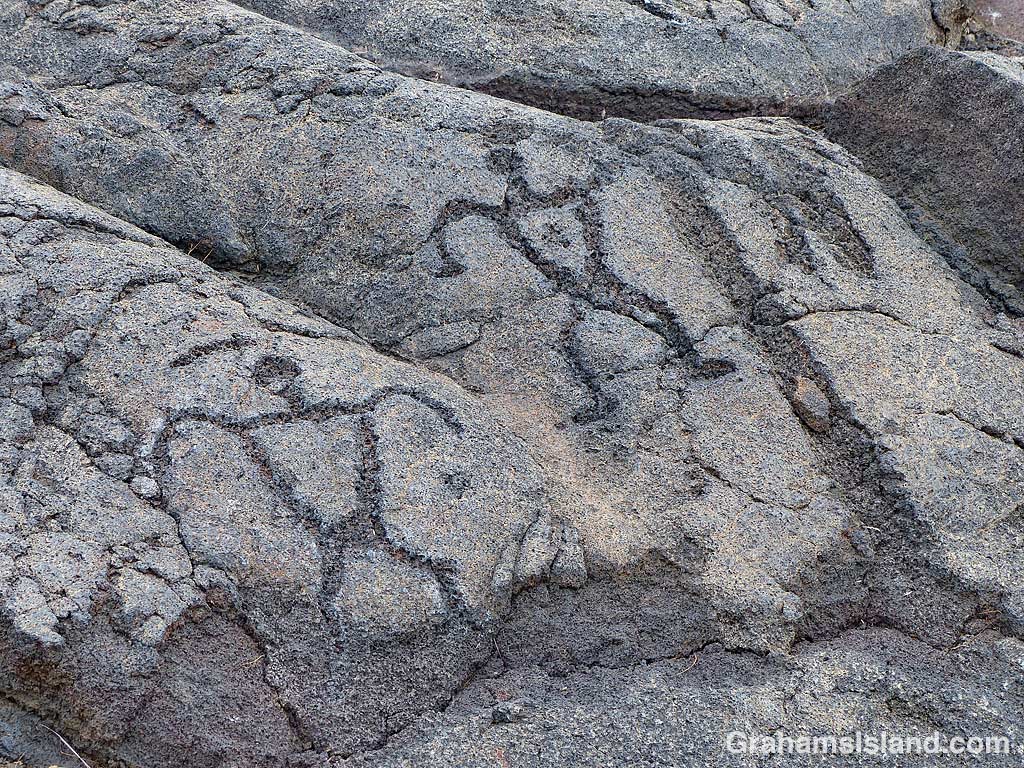
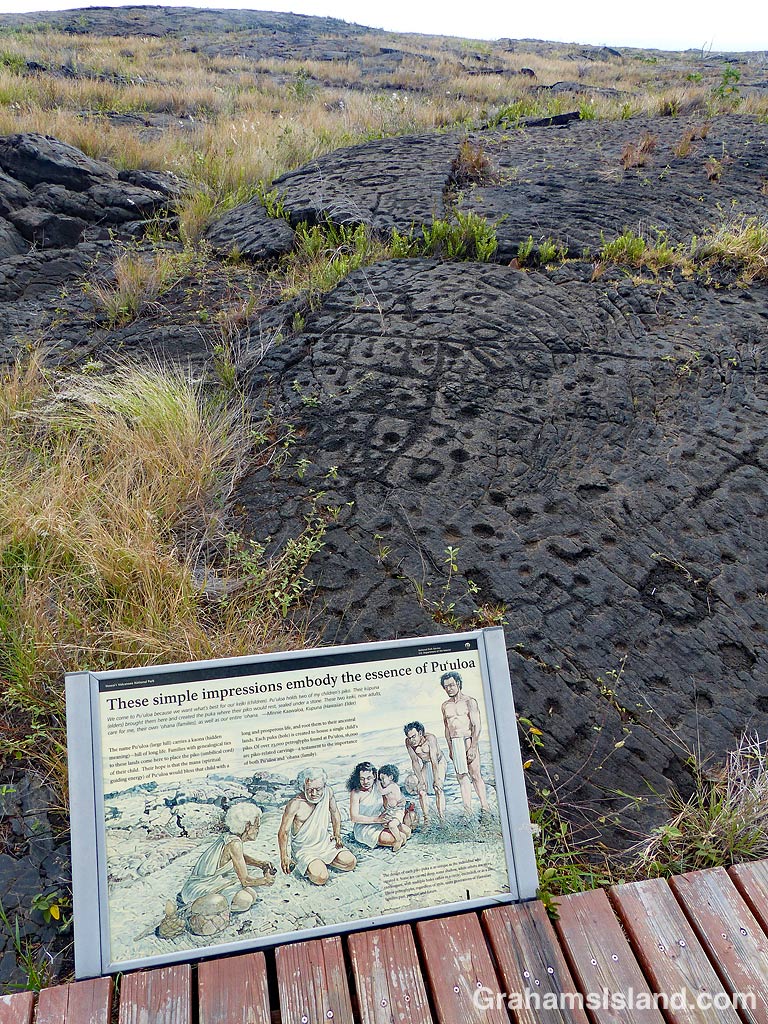
Not far from the coast, in Hawaii Volcanoes National Park, is Pu‘u Loa petroglyphs trail. It’s only a mile and a half round trip, but visits a place with a huge number of petroglyphs. A raised boardwalk circles part of this area, giving a good view of the petroglyphs without adversely impacting them.

One of the main features of this area and its petroglyph field is explained on a display seen in the second photo. It reads, ‘The name Pu‘uloa (large hill) carries a kaona (hidden meaning)—hill of long life. Families with genealogical ties to these lands come here to place the piko (umbilical cord) of their child. Their hope is that the mana (spiritual guiding energy) of Pu‘uloa would bless that child with a long and prosperous life, and root them to their ancestral lands. Each puka (hole) is created to house a single child’s piko. Of over 23,000 petroglyphs found at Pu‘uloa, 16,000 are piko-related carvings—a testament to the importance of both Pu‘uloa and ‘ohana (family).’

For more information about Pu‘u Loa petroglyphs, go to https://www.nps.gov/havo/learn/historyculture/puuloa.htm.

(On the park’s website, Pu‘u Loa is two words, but on the sign it is one word, hence the inconsistency.)

Pu’uhonua o Hōnaunau National Historical Park

The final post on this week’s theme of the WordPress photo challenge, ‘Tour Guide.’

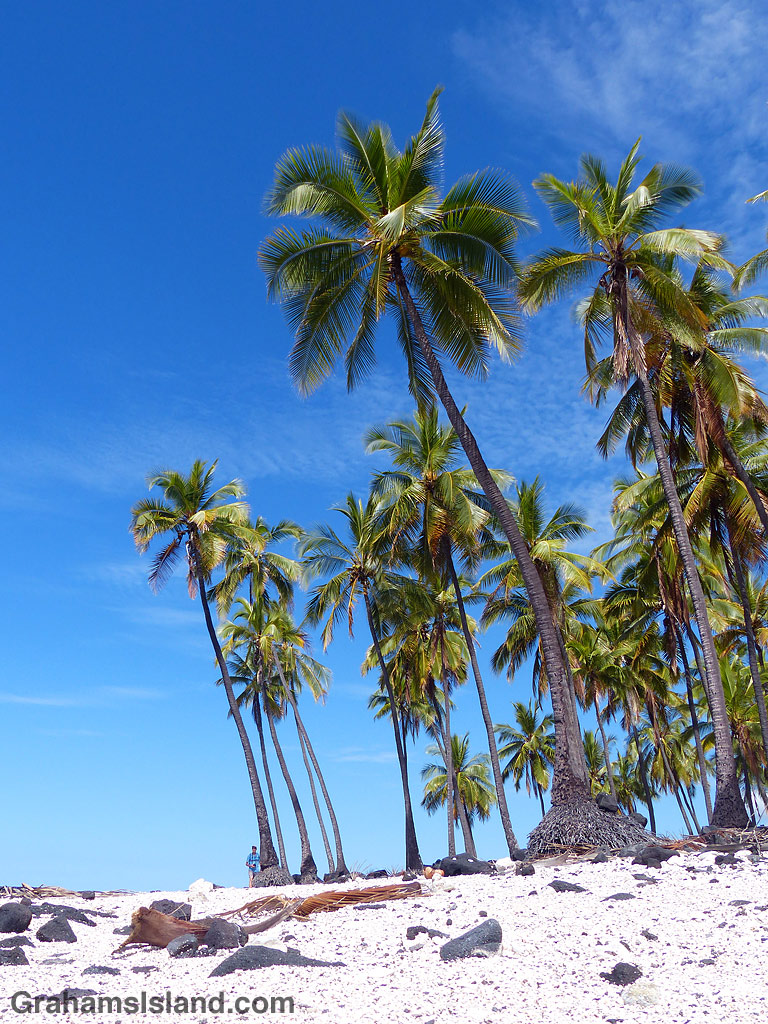
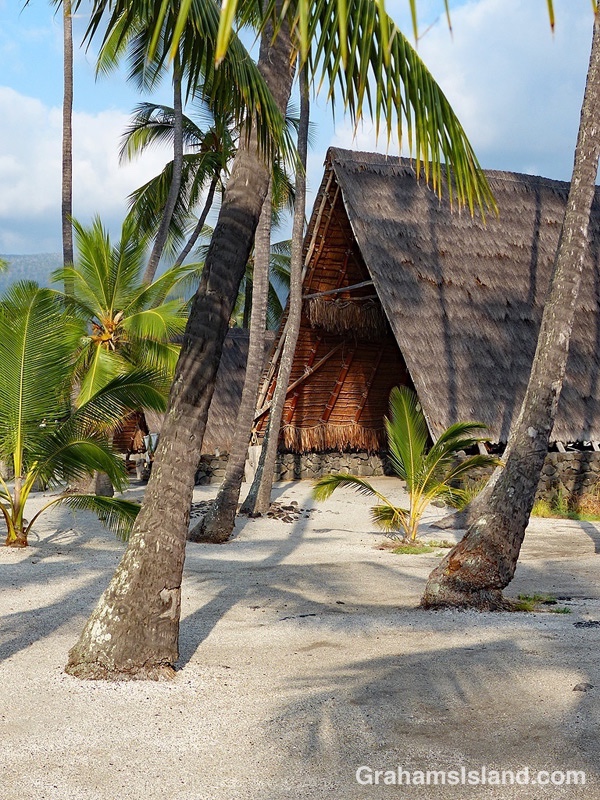
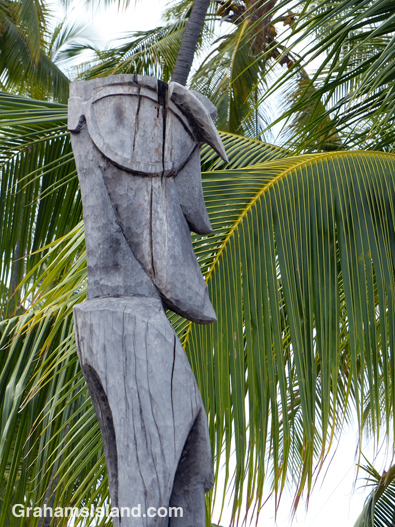
These photos are from Pu’uhonua o Hōnaunau National Historical Park, otherwise known as Place of Refuge. This National Park showcases important Hawaiian history with it’s royal grounds where the Hawaiian royalty lived, Hale o Keawe where the bones of 23 ali’i were housed, and for the Pu’uhonua where anyone who had broken kapu (sacred laws) could seek shelter and ultimately forgiveness.

Here are views from the ocean side (above), of a hālau (right) which houses canoes, and of a ki’i (below) representing an Hawaiian god.

For more information about Pu’uhonua o Hōnaunau National Historical Park, visit https://www.nps.gov/puho/index.htm.

Birds bathing

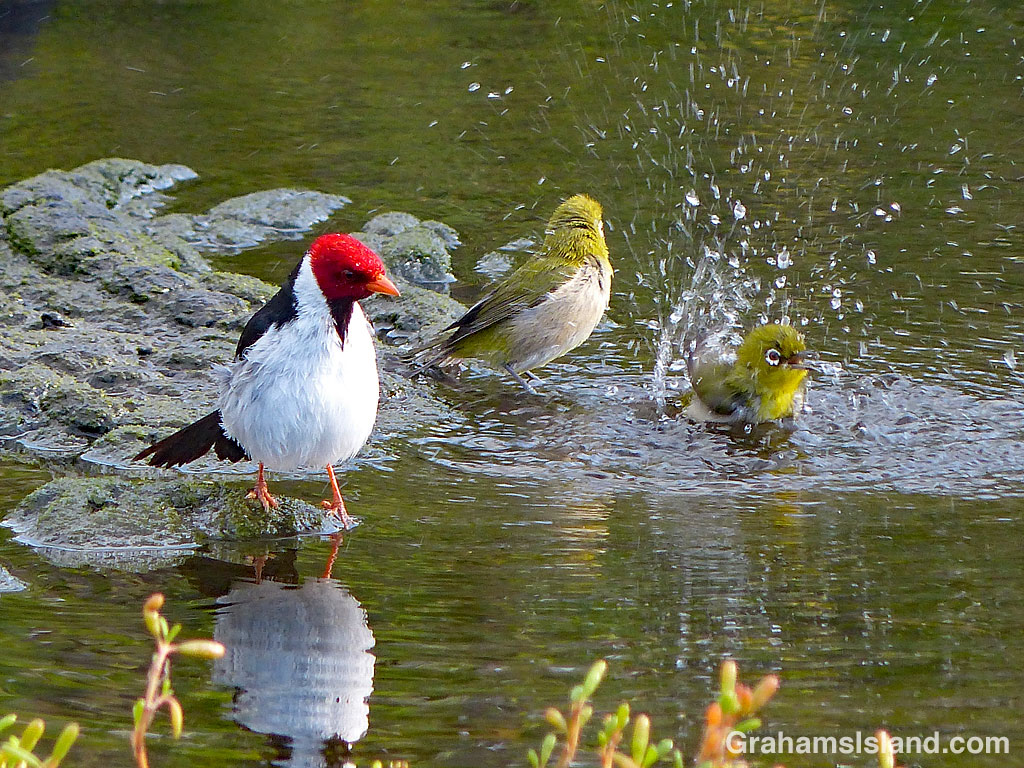
Birds bathing in a pond at Place of RefugeBirds bathing in a pond at Place of Refuge

Two Japanese white-eyes and a yellow-billed cardinal take a dip in one of the ponds at Pu’uhonua o Hōnaunau National Historical Park, also known as Place of Refuge. The ponds are very popular with birds and it’s a good spot to sit and watch them for a while.

For more information about Pu’uhonua o Hōnaunau National Historical Park, visit https://www.nps.gov/puho/index.htm.

Birds bathing in a pond at Place of Refuge

Better Days: ’Aimakapa Fishpond sluice

’Aimakapa Fishpond sluice at Kaloko-Honokohau National Historical Park

’Aimakapa Fishpond is one of two fishponds at Kaloko-Honokohau National Historical Park. The other is Kaloko Fishpond, which is separated from the ocean by a huge rock wall, currently being restored. ’Aimakapa Fishpond’s barrier is made up of sand dunes.

A channel was dug to the ocean to allow water to circulate back and forth and, at the ocean end (seen here), a sluice gate (makaha) installed. The sluice gate helped keep predators out. These days it isn’t used and so the channel has silted up with sand.

Fishponds are different to fish traps. Ponds allow for the rearing of fish from small fry. Traps are shallow walled enclosures, which fish can cross at high tide, but cannot escape from when the tide goes out.

For more information about Kaloko-Honokohau National Historical Park, go to www.nps.gov/kaho/index.htm.