The bright red bracts of a tree poinsettia (Warszewiczia Coccinea) contrast with the mass of green leaves around it.
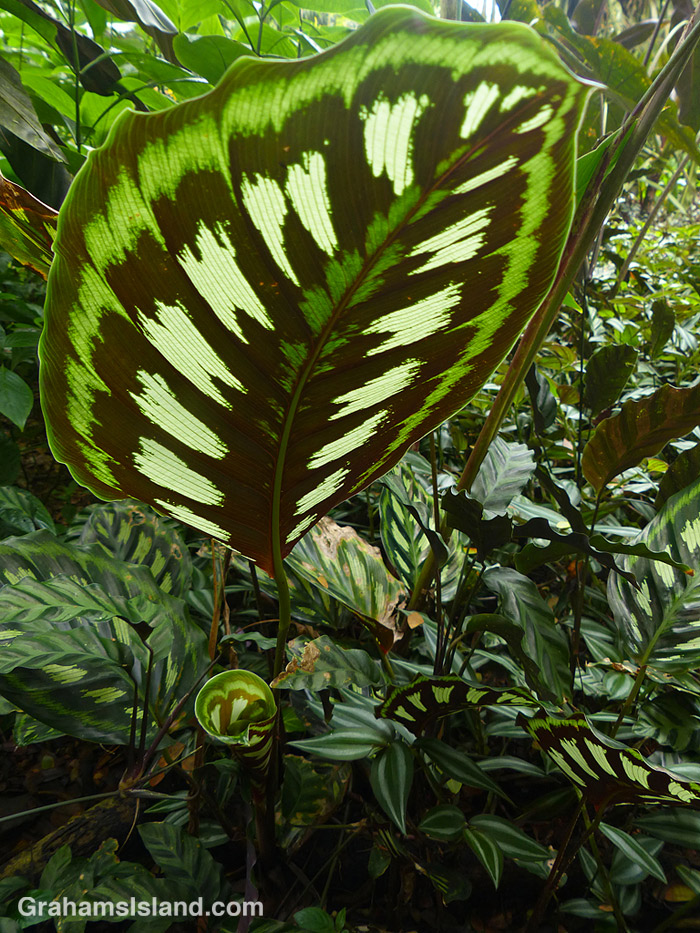
This week’s Sunday Stills challenge theme is ‘Leaves.’ See more responses here.
This gave me an excuse to post more photos from Hawai’i Tropical Bioreserve & Garden, which is still closed at this time. For more information about Hawai’i Tropical Bioreserve & Garden, go to htbg.com.
These are the same kind of trees surrounded by the same kind of ground cover and occupied by two of the same kind of horses. But, taken together, they make a one of a kind image that many people on the island would very quickly recognize as Waipi’o Valley.
Posted in response to Becky’s October Squares challenge theme of ‘Kind.’ See more responses here.
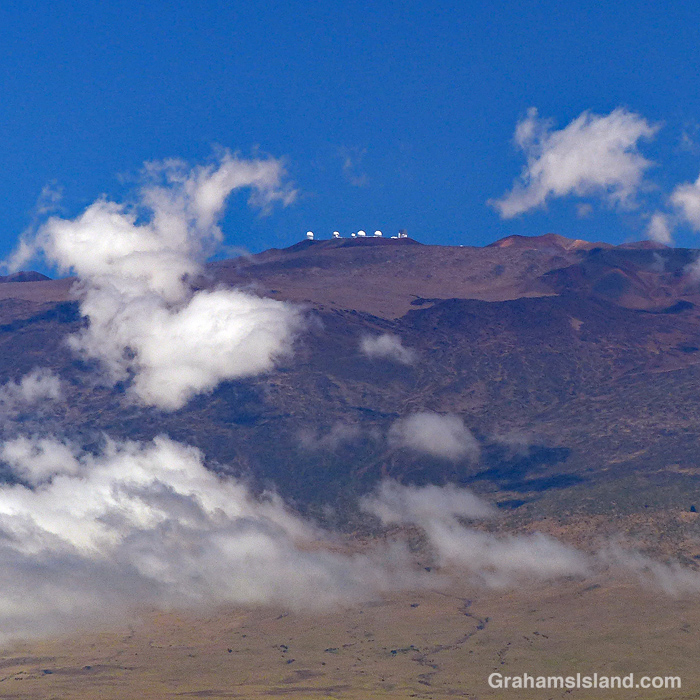
There are 13 telescopes atop Mauna Kea, but while they’re all one of a kind in that regard, they vary in how they make observations. Some collect visual light, some infrared. Others are used for radio astronomy. I’d go in to more detail about this, but the science is as far over my head as the telescopes are in this photo!
Posted in response to Becky’s October Squares challenge theme of ‘Kind.’ See more responses here.
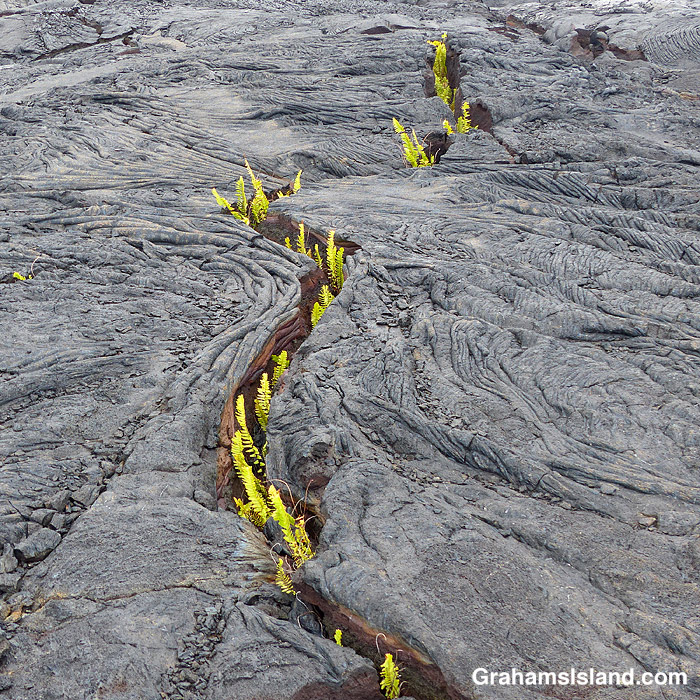
It’s often easy to see cracks in a lava field because there are endemic ‘ae ferns (Polypodium pellucidum) growing in them and they make a distinct green line through the mostly gray lava.
Posted in response to Becky’s October Squares challenge theme of ‘Kind.’ See more responses here.
On my walk the other day, I saw an outrigger canoe heading west just off the North Kohala coast. The sea wasn’t too rough, but I was surprised to see it because it was a long way from the place it probably launched to the first place it could safely be taken out.
A few minutes later I saw two other canoes, and they kept coming. Over a span of about 15 minutes, at least a dozen of the same kind of outrigger canoe hove into view. Some were brightly colored, such as the one in the top photo, but they all looked very small when seen from a distance.
The one bring up the rear, at least as far as I could tell, was all white and it made me think that if the sea got rougher and the canoeist got into trouble, his boat would be awfully hard to spot in a sea of whitecaps.
Posted in response to Becky’s October Squares challenge theme of ‘Kind.’ See more responses here.
This week’s Sunday Stills challenge theme is ‘Your Happy Place.’ See more responses here.
There were a few options for this theme, but I went with this collection because I love going snorkeling and because, just a few days ago, my wife and I revisited Two Step for the final time before Hawaii loosened its restrictions on visitors. We got up early, drove down, and were in the water around 7:45 am. There were two other people swimming at that time, no one else waiting to get in.
The top photo was taken after our swim, around 9:30 am. In a ‘normal’ year, at this time of day, this whole area would be dotted with groups of people, and chairs and mounds of towels left by people already in the water. The bay would also be similarly populated with people, cruising around, looking at fish. There would be several snorkeling tour boats out in the bay, dumping people into the water. Two Step is one of the best spots for snorkeling on the island but, truth is, much of the time it’s kind of a zoo.
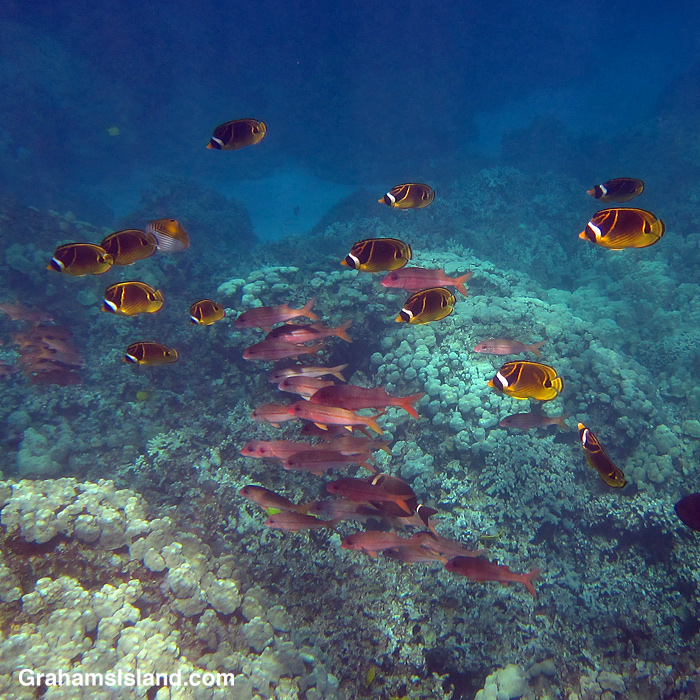
Goatfishes and raccoon butterflyfishes hang, almost motionless.
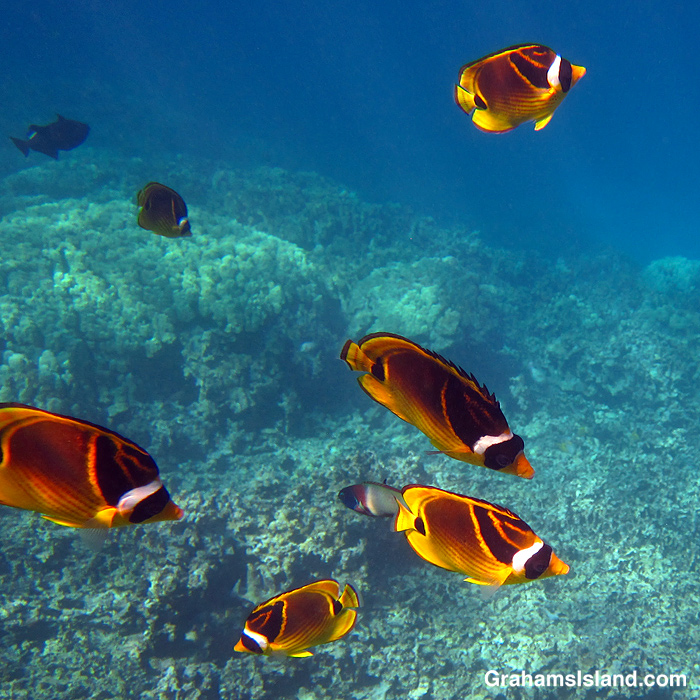
Raccoon butterflyfishes are more curious here …
… although there’s such a thing as too close. This one butted the camera housing.
Pearly soldierfishes hover.
An ember parrotfish catches the light.
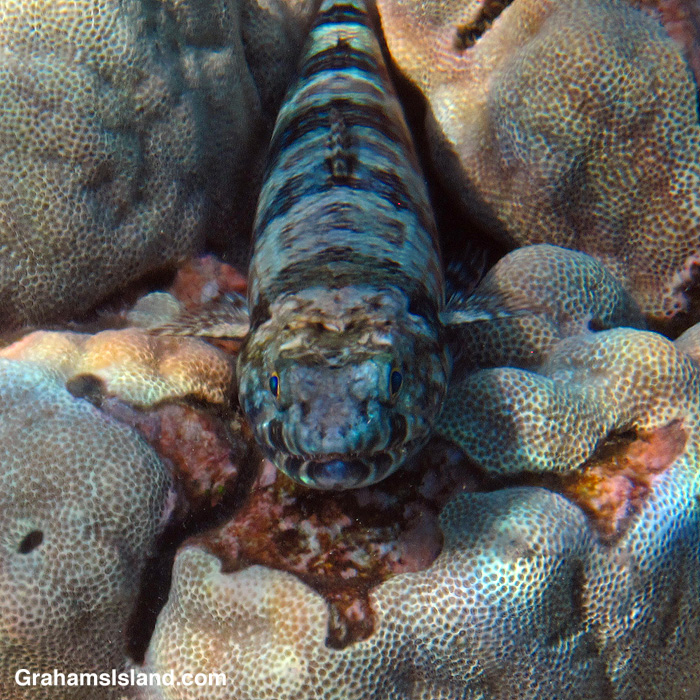
We saw more reef lizardfishes than we’d seen before, including this handsome fellow.
However, one of the nice things about Two Step, that I’ve mentioned before, is that it’s a marine reserve. No fishing is allowed and the fish have figured that out. I can’t emphasize enough how differently the fish there react to people than they do in areas where fishing and spear fishing is allowed. They’re so much more mellow and less inclined to dart away.
Also posted in response to Becky’s October Squares challenge theme of ‘Kind.’ See more responses here.
I took this photo of two reef lizardfishes, waiting in their usual manner. It was only after I got home and looked at the photos that I noticed the third lizardfish lower down, near the right edge of the photo. On this day, they were everywhere.