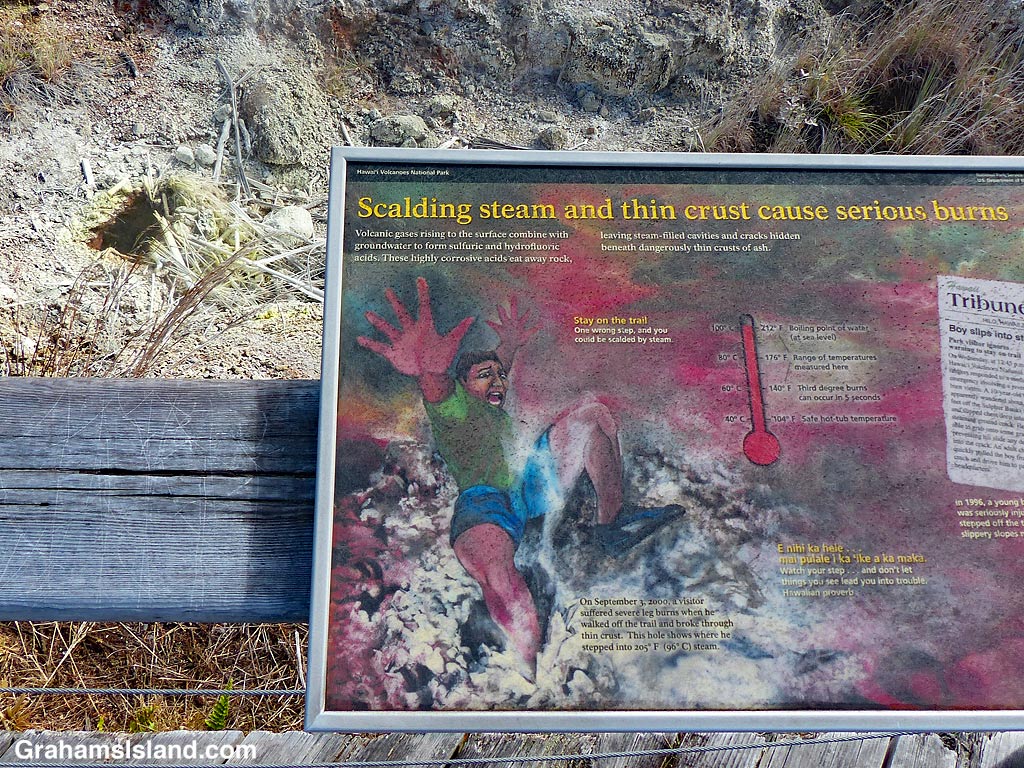
I was rather taken by the vivid graphic on this sign alongside the Sulphur Banks Trail in Hawaii Volcanoes National Park. But it illustrates an incident from 1996 when a 10-year-old boy wandered off the trail and his foot went through the crust into a steaming vent leaving him with serious burns. That small, dark hole in the upper left of the photo is one such vent and it was busily steaming away while I read the gory details.
For more information about Hawaii Volcanoes National Park, go to nps.gov/havo/.
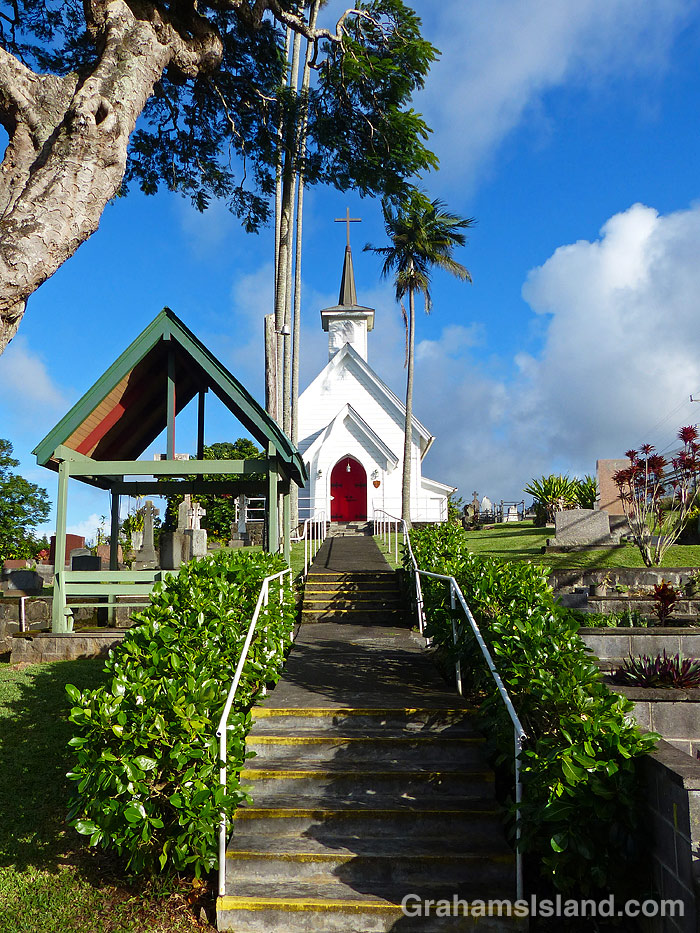
St. Augustine’s Episcopal Church in Kapaau sits on a small hill alongside the main highway. Known as “the red door church,” it was founded in 1884 and has been in use ever since.
Kealia Beach, north of Ho’okena in South Kona, is a mostly rocky beach with a strip of sand behind the rocks. It’s a good place to escape the crowds and for exploring tide pools. If you want sand and swimming, Ho’okena Beach Park is only half a mile away.
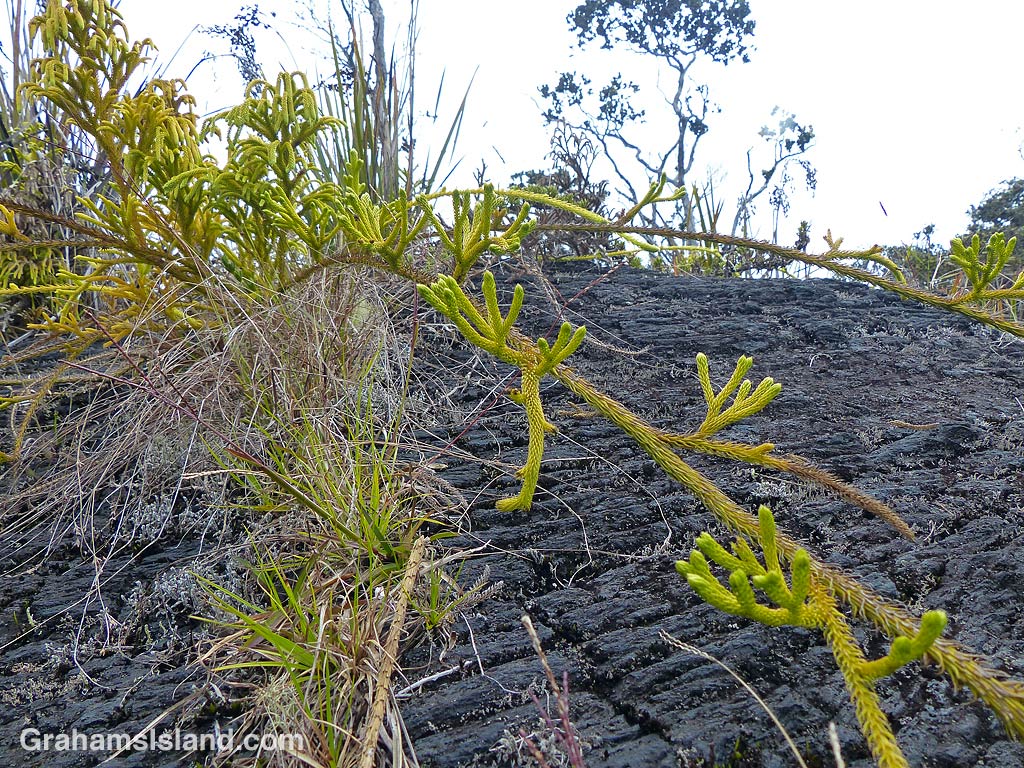
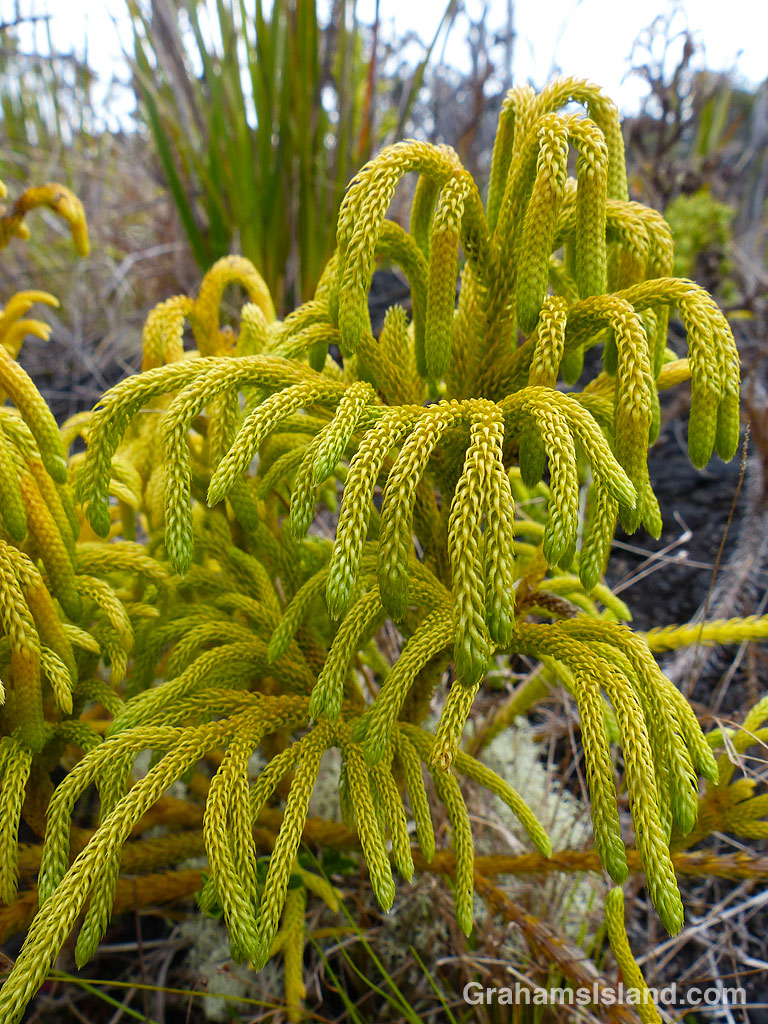
Staghorn clubmoss (Lycopodiella cernua) is indigenous to Hawaii and is found in the tropics worldwide. Generally, staghorn clubmoss grows in bogs and wet areas, but these were growing in the lava off Saddle Road, an area that gets lots of rain but also drains readily.
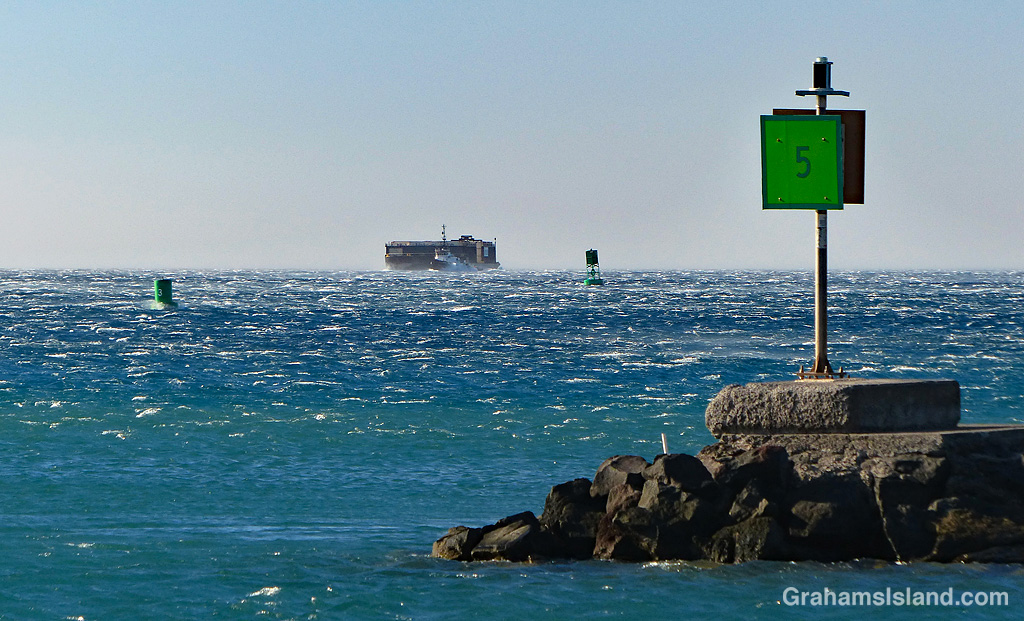
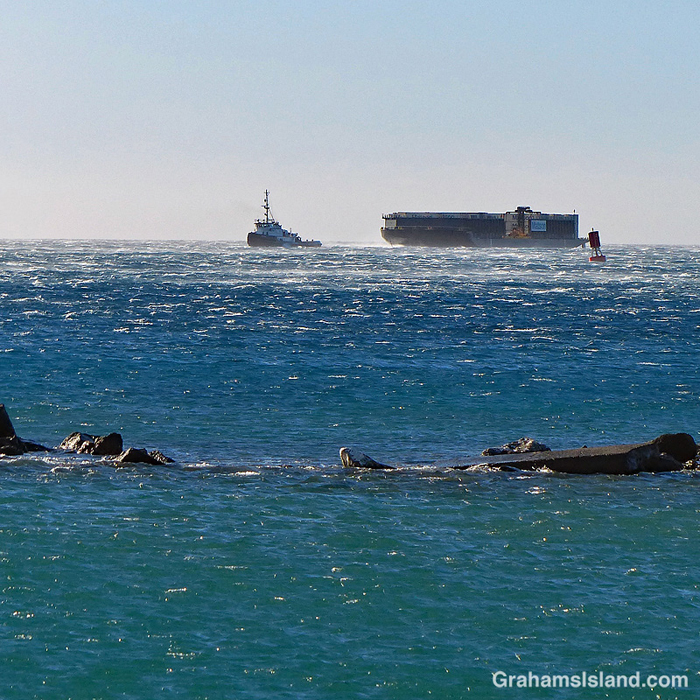
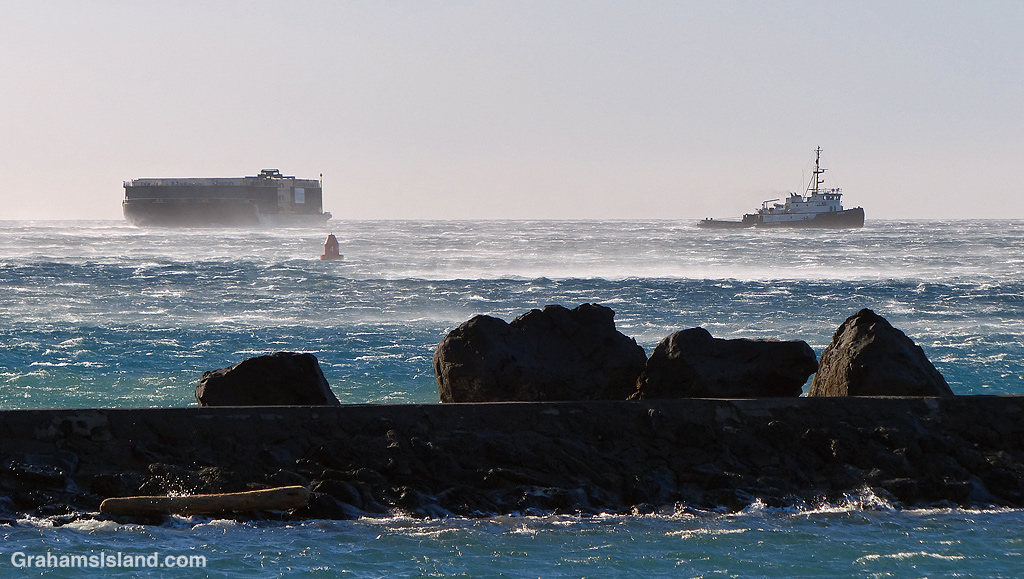
One day, when the wind was howling, I watched this tug trying to bring its barge in to Kawaihae harbor. Trouble was, the wind was blowing across the entrance channel. As it came in, the tug had to slow down, leaving the slab-sided barge even more prone to the effects of the wind.
In the top photo, the tug needs to leave the green buoy on its port (left) side, which it’s doing. Problem is, the wind is blowing from that direction, so the tug is already too far over. Also, it’s easy to see how the barge is no longer directly behind the tug, but has been pushed farther over by the wind.
In the middle photo, the tug has to leave the red buoy on its starboard (right) side, but it’s obviously too late for that. The tug captain knows he has no shot and, in the bottom photo, turns into the wind before heading out into open water.
I watched the tug try this maneuver several times without success. Next morning, on my way to work, I saw the tug and barge still out in the bay. It wasn’t until later that morning that it finally gained entrance to the harbor and tied up safely alongside the jetty.
This week’s Sunday Stills challenge theme is ‘Weathered.’ See more responses here.
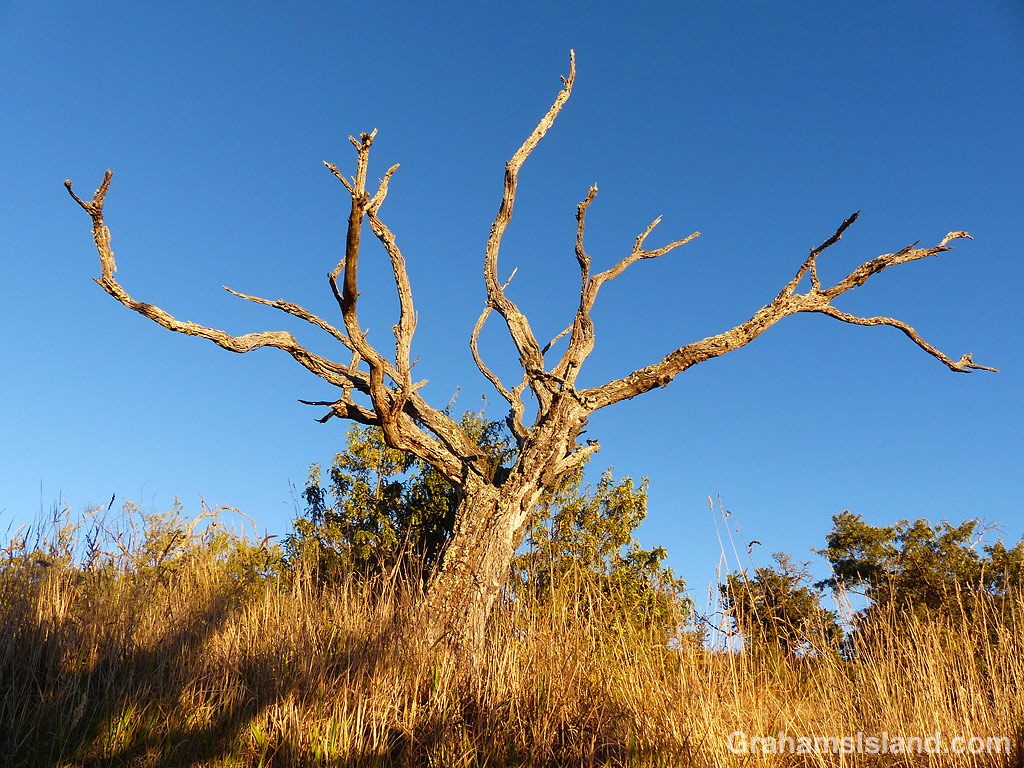
In the top photo, a dead tree on the lower slopes on Mauna Kea, stretches weathered branches toward the sky.
Second photo: Petroglyphs in Hawaii Volcanoes National Park have been weathered by years of sun and rain, but are still clearly visible.
Third photo: A cattle ranch alongside old Saddle Road includes this old structure bordering a stockyard.
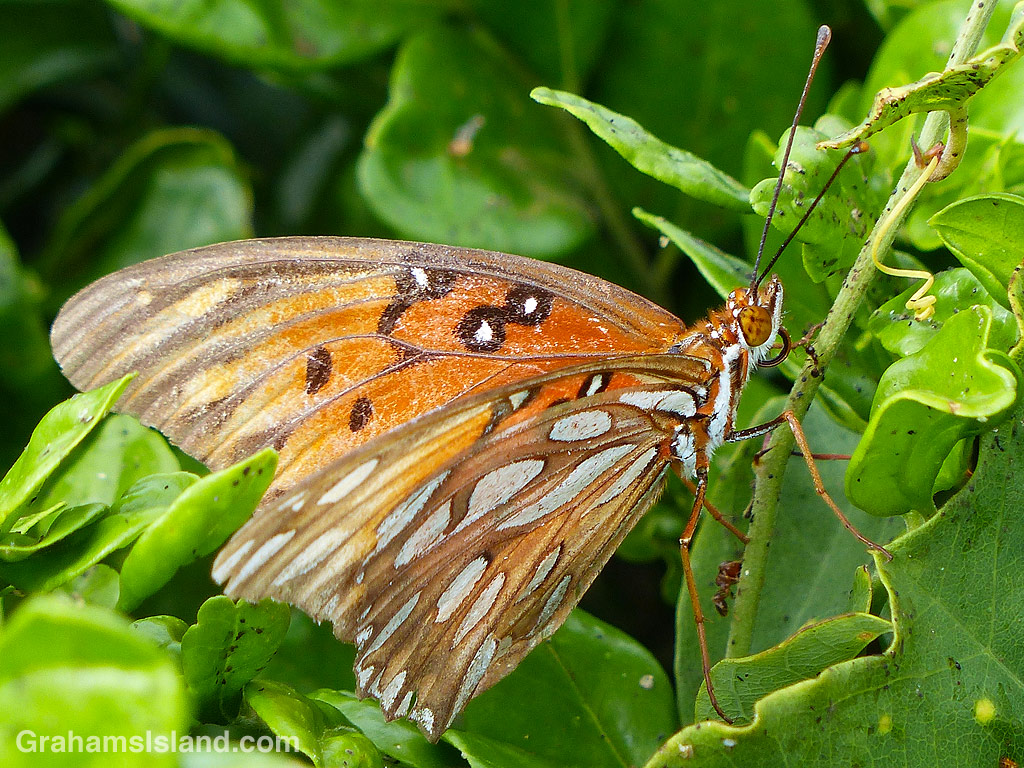
Bottom photo: Butterflies have a short lifespan, but in that time they can go from looking boldly marked and colored to very faded, with some looking like it’s a miracle they can fly at all.
For more information about Hawaii Volcanoes National Park, go to nps.gov/havo/.
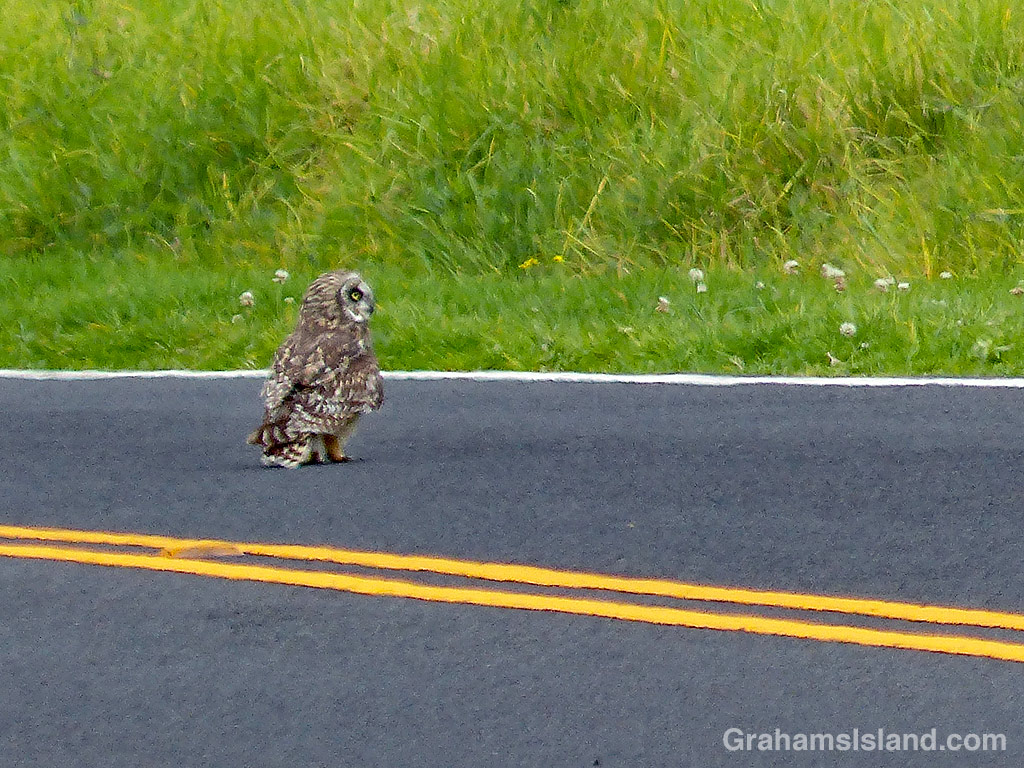
When I took this photo, I was thinking of the James Thurber short story, “The Owl Who Was God,” which can be read here. The main differences between that story and this photo are that pueos have very good eyesight during daylight hours, which is when they’re active, and no animals were harmed in the taking of this photo. The bird flew away shortly after I took it. He does have that look though.
Bushboy’s Last on the Card photo challenge for October 2020 (see more responses here) reminded me that I didn’t take any photos on the 31st, but this was the last one taken the day before.
I sometimes see odd things on my daily walks. One time, I saw a TV in the grass. It was there a couple of days, then gone. On this occasion, this lawnmower was sitting by the dirt road. It’s an older machine so it might have been dumped there, but why? If someone wanted to get rid of it, they could take it to the transfer station and leave it there, without having to pay anything. It’s possible it fell out of someone’s truck bouncing along the dirt track. It could be that fishermen unloaded it while organizing their gear and then forgot to pick it up again.
One thing’s for sure – it wasn’t being used to mow anything. Where it sits, a weed wacker would be more useful, or one of those industrial machines the county uses to trim trees alongside the road.
The top photo is the last one I took in October, where I knew my shadow was in the photo. But I had in mind the crop in the bottom photo, emphasizing the lawnmower, the swathe of rough grass, and the bit of ocean in the background.