
The rather showy display of a heliconia colgantea at Hawaii Tropical Botanical Garden. For more information about Hawaii Tropical Botanical Garden, go to htbg.com.

The rather showy display of a heliconia colgantea at Hawaii Tropical Botanical Garden. For more information about Hawaii Tropical Botanical Garden, go to htbg.com.

This sign marks the border between Hualalai Resort and one of the public beaches there. It’s the equivalent of prescription drug warnings that taking them might turn you into a four-armed, paranoid psychopath.
Here, the dangers include man-o-wars, sharp coral, slippery rocks, sudden drop-off, dangerous shorebreak, high surf, and strong current. Oh, and there’s no lifeguard on duty. Well, no wonder, they’d have to be crazy to enter the water there.

This week’s Sunday Stills challenge theme is ‘Favorite Place.’ See more offerings here.
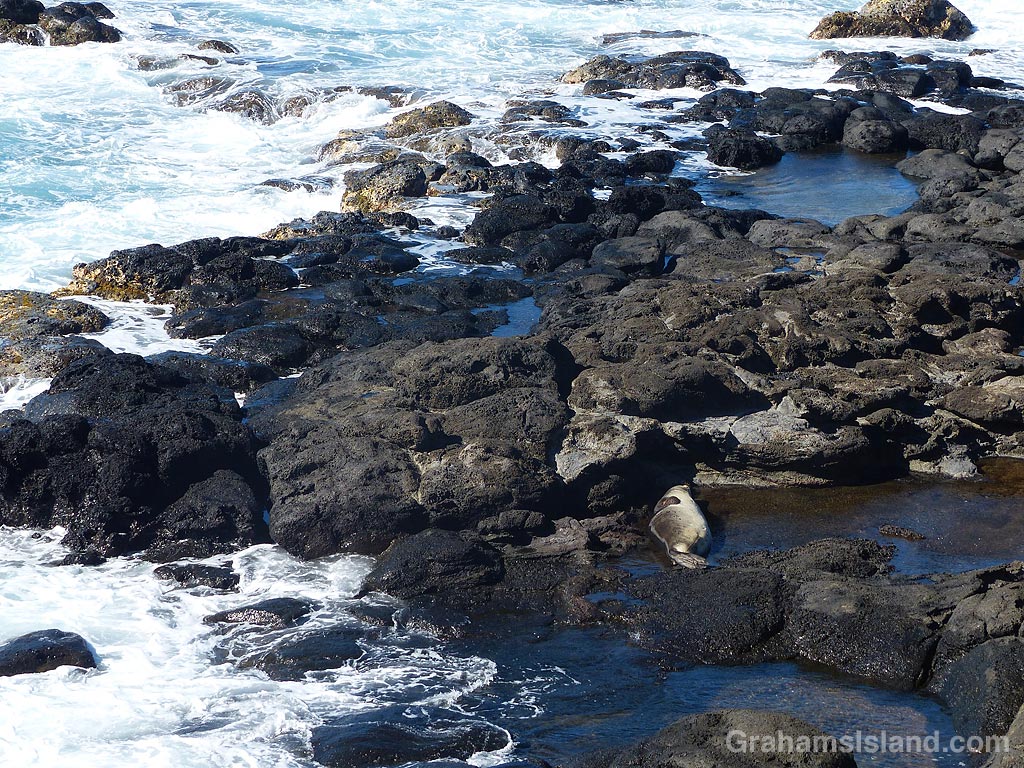
I could think of several places on the Big Island that would fall into the category of favorite place. Hawaii Tropical Botanical Garden, Hawaii Volcanoes National Park, Palila Forest Discovery Trail, the ocean – all these are places I return to. But the coast at Upolu is where I go for exercise and to enjoy the ever-changing scene there.
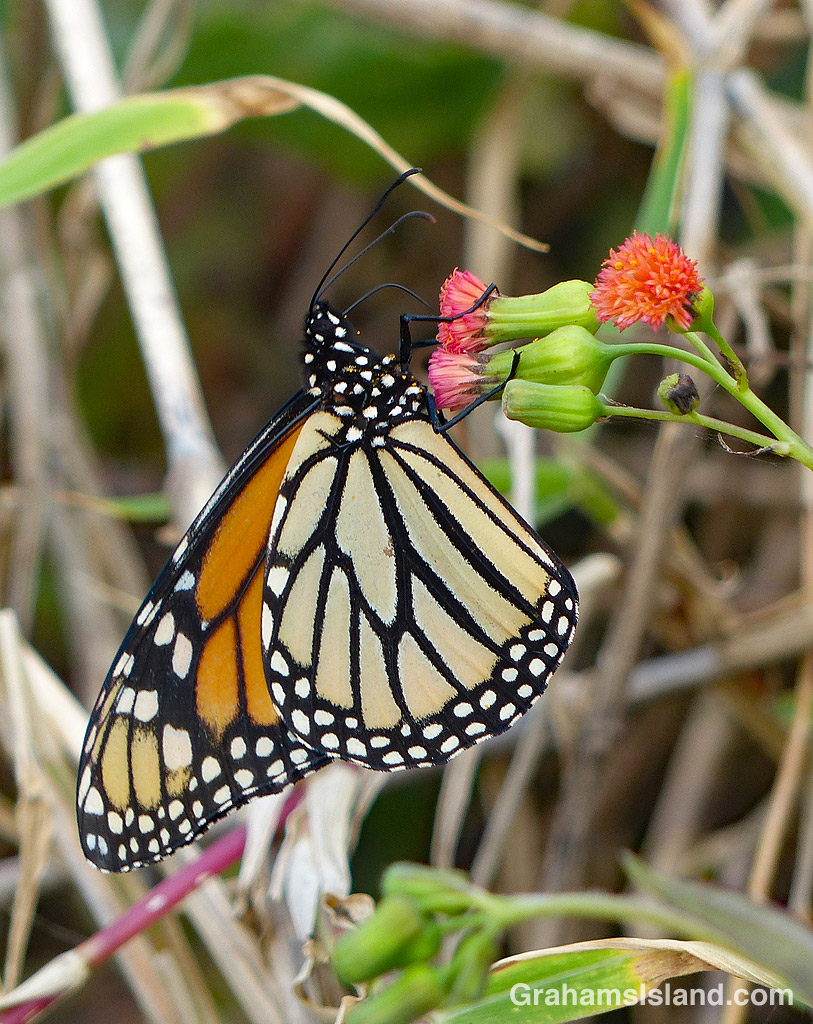
This stretch of coast features scenic high cliffs interspersed with lower areas where tide pools nestle among the rocks. Often, there’s a great view of Maui across the ʻAlenuihāhā Channel. In those waters I look for humpback whales, turtles, monk seals, and once, even a passing shark. Up in the air I might see anything from plovers to noddys to great frigatebirds. On land, there’s an assortment of birds, bugs and butterflies to be seen, as well as horses, cattle, and the occasional wild pig.
Sometimes, it’s hot and dry, but usually there’s a decent breeze, occasionally strong enough to make me lean into it while blown dirt sandblasts my legs. Sometimes, I get caught in the rain, but when I do, I’m usually dry again by the time I get back to my truck.
I’ve lived here seven years now and I never tire of going down there and looping around the fenced airstrip, wondering what I’ll see.


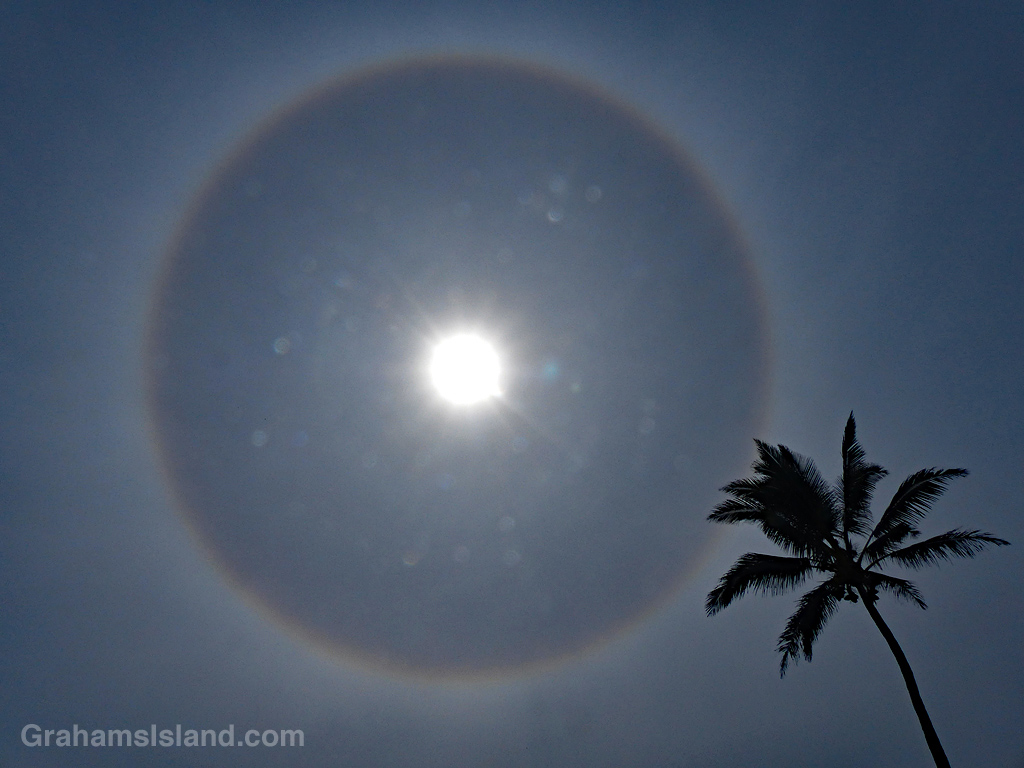
I was about to set out on one of my regular walks at Upolu, when I looked up and saw this halo around the sun. It’s the first I’ve seen here (which doesn’t mean there haven’t been others).
In days of yore, halos were considered a sign of impending bad weather. In this case, there’s some evidence to back that up. The ice crystals that cause halos are found in clouds, high in the troposphere, and these clouds are often a sign of an approaching weather front. Sure enough, the next day was fairly wet though, ironically, not in the area where I saw the halo.


I was on my way to work one morning when I noticed the sailboat in the top image. The array of white sails caught the early morning sun and stood out against the deep blue water. I pulled over, took this photo and headed on in to work.
I saw later that the boat had anchored in Kawaihae harbor, so on my way home I stopped by to check it out. The SSV Makani Olu is a three-masted staysail schooner (SSV stands for Sailing School Vessel), and is used as a training vessel for various programs run by Marimed Foundation. The boat is based at Kaneohe Bay, on the east coast of Oahu.
In the photo to the right, the boat appears to be four-masted, but that’s just because the mast of the boat behind it lined up perfectly.
For more information about SSV Makani Olu and Marimed Foundation, go to marimed.org.

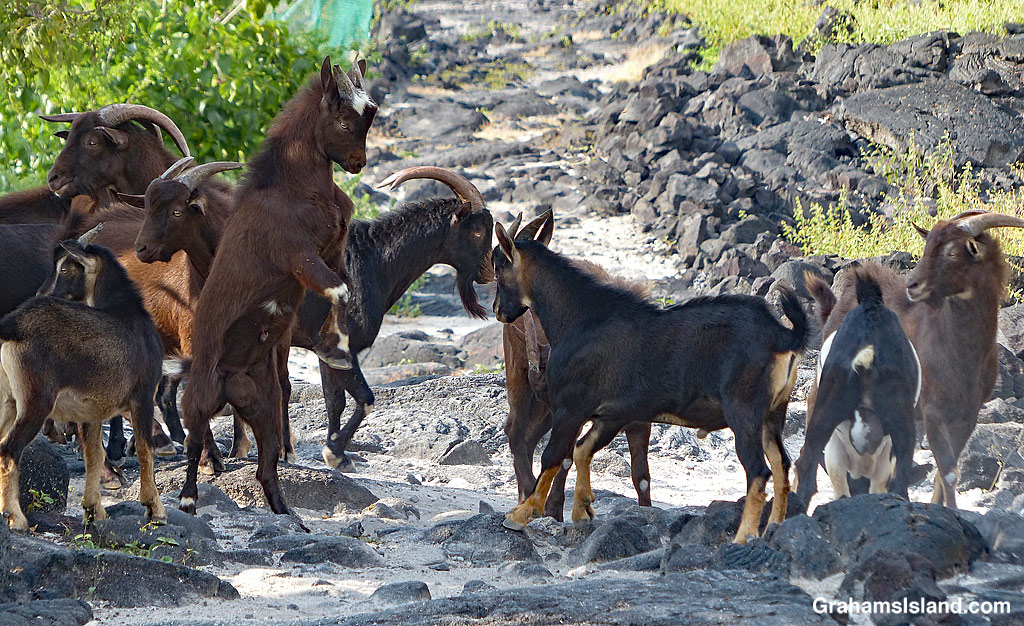
A herd of goats mill about on a trail in South Kona. In any sizable gathering of goats I usually see younger ones butting heads as they tussle with each other. This is practice for when they’re older and the jousts become a more serious contest for position within the group.

Containers are unloaded from one of the inter-island barges at Kawaihae harbor. It’s not a forklift doing the work, more of a grip-n-raise, though I doubt that’s its official name. No prizes for guessing that the shipping company is Matson, but I like the repetition of their name in the images.

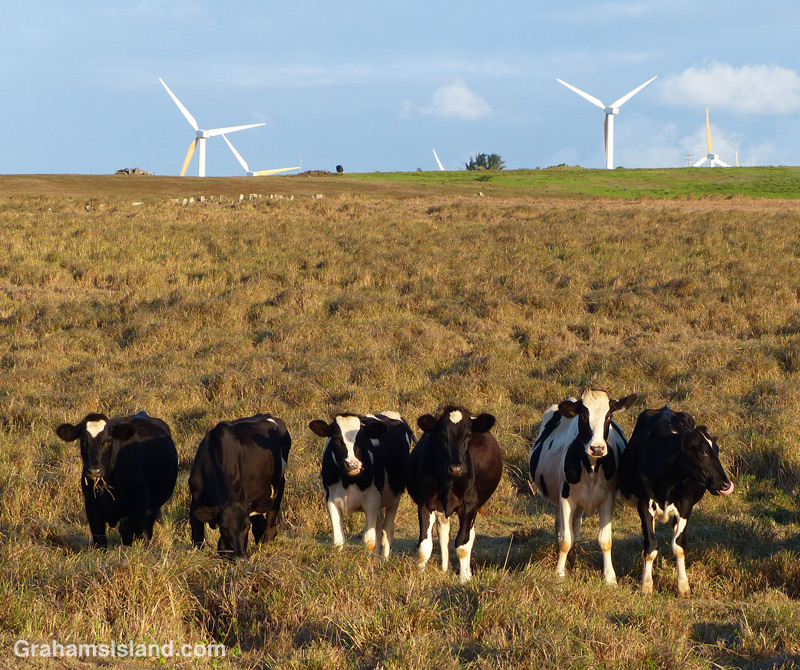
I grew up on a dairy farm so I have a soft spot for cattle (as opposed to some who may have grown up on a dairy farm and have a virulent dislike of cattle).
Sometimes, when I walk by on the dirt road bordering their pasture, the cattle run away. Other times they run towards me. These six lined up and just watched me, which was probably the right response. I’m not that exciting.
 Graham's Island