Dendrobium Jacquelyn Thomas is a hybrid orchid. I’ve seen descriptions that date it to the 1970s and others that go back to 1949. Either way, it is a popular orchid with long lasting flowers.
This one was at Hawaii Tropical Botanical Garden. For more information about Hawaii Tropical Botanical Garden, go to htbg.com.
This time last year, the newest eruption of Kilauea Volcano was still going strong in the Puna district of the Big Island. The previously active vents, in Halemaumau Crater and at Pu’u O’o, drained of lava at the end of April. Lava then moved underground, down the east rift zone, toward the southeast tip of the island. It resurfaced in May in Leilani Estates.
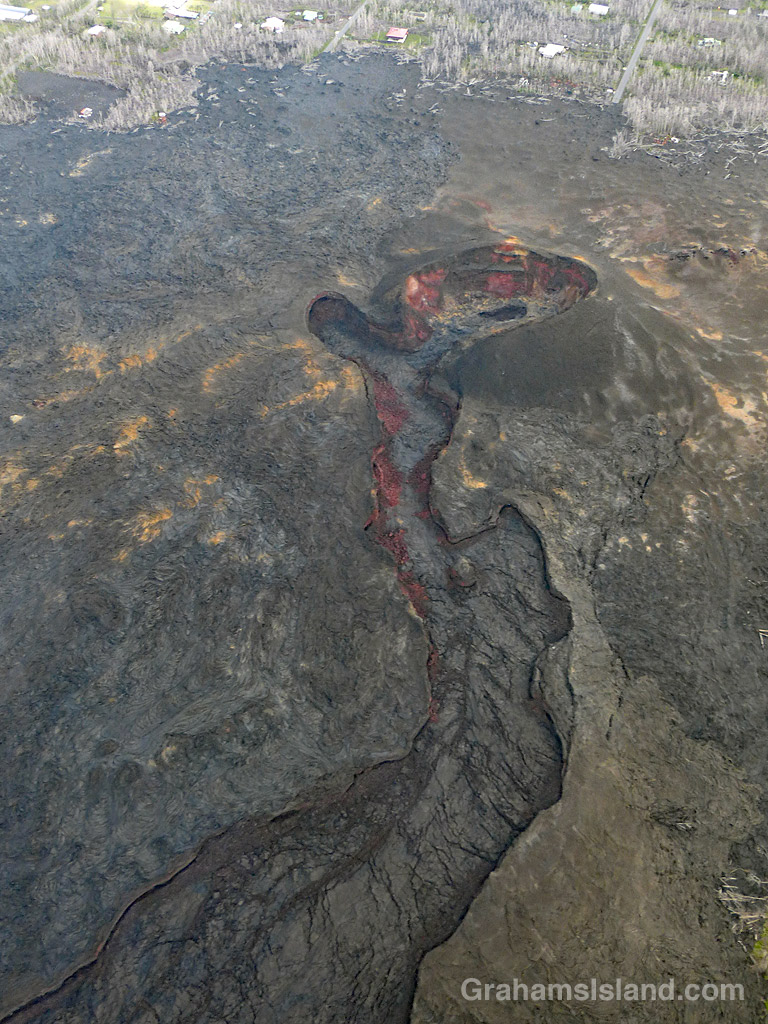
By the end of May, 24 fissures had discharged lava. Two of those sent flows down to the coast, but at the end of May the main eruption settled on Fissure 8. A river of lava flowed northeast, inundating Highway 132 and reaching the ocean at Kapoho Bay in early June. This flow continued into August, but by the end of that month all activity had more or less ceased. In all, more than 700 homes were destroyed during the eruption, but more than 800 acres of new land had been formed.
These photos show Fissure 8, the source of the main flow. The top photo shows Fissure 8’s location, bordered by houses in Leilani Estates that escaped destruction during the eruption. In the middle, the main crater and the ‘canal’ that channeled the flow toward the coast. Below, another view of Fissure 8 and the wasteland of destruction surrounding it.
PBS’s NOVA put out a show about the eruption earlier this year with some great information about what was actually going on during the eruption. It might be accessible on their site, PBS.org, or search online for the title of the show: PBS Nova Kīlauea: Hawaiʻi on Fire.
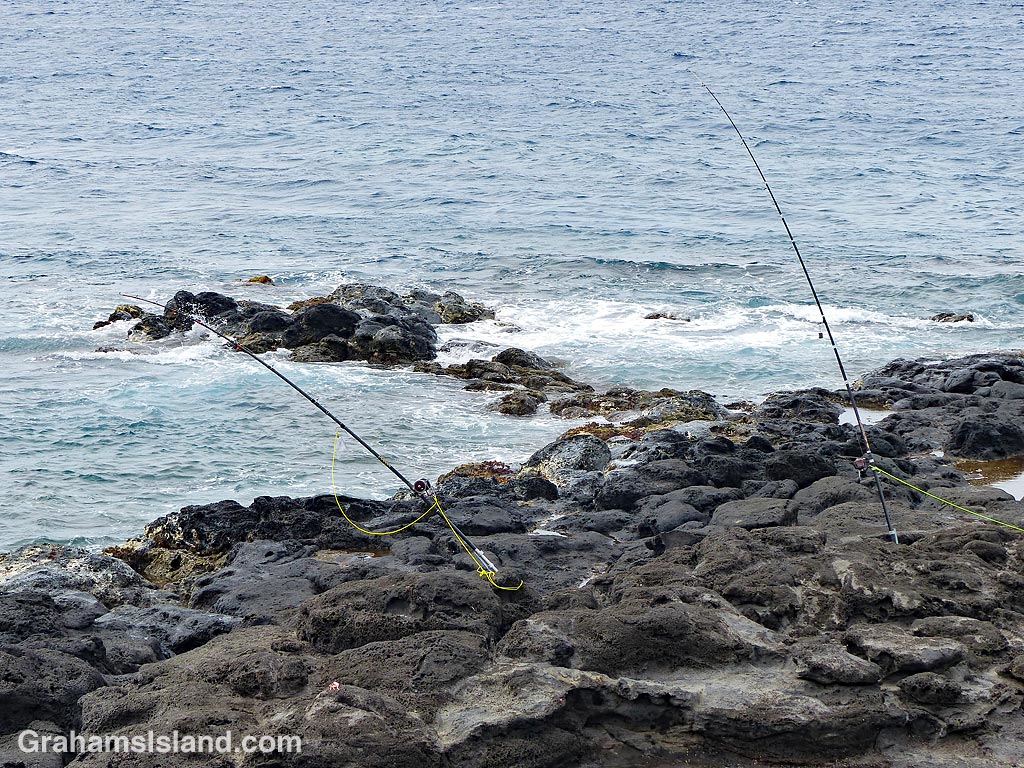
These fishing poles were two of many set up along the North Kohala coast for a fishing tournament. Typically, fishing poles are set into a piece of pipe lodged or cemented into the rocks. They’re anchored on something solid so that they can’t be yanked out – the yellow lines in these photos. Often a bell is attached to a pole so that when something strikes the fisherman is alerted, since they’re not usually tending the poles, but hanging out nearby, often nursing a beer.
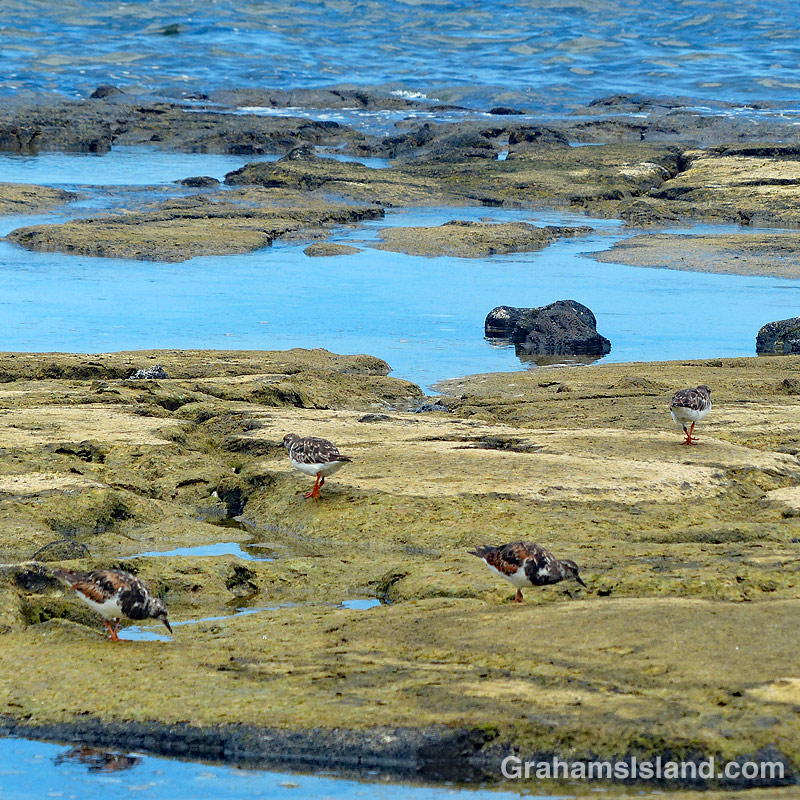
Ruddy turnstones are one of several species of birds that summer in Alaska and winter in Hawaii. Here, the bird is known as the ‘Akekeke, the name resembling its call. In the photos, this small group of ruddy turnstones was foraging along the Kona coast at low tide, looking for invertebrates to eat.
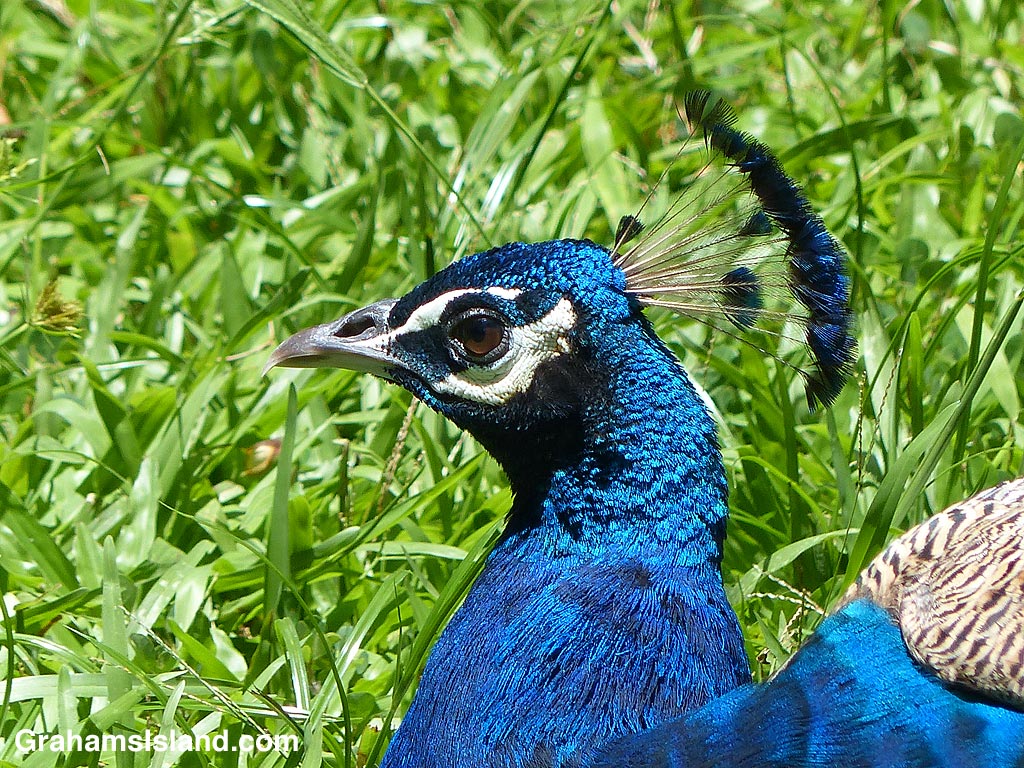
An Indian blue peacock at Pana‘ewa Rainforest Zoo & Gardens. The blue is very eye-catching. I particularly like the expression of the bird in the lower photo. It looks like an angry punk rocker.
For more information about Pana‘ewa Rainforest Zoo & Gardens, go to hilozoo.org
These two photos were taken at different times, different years in fact, of one of the beaches at Kaloko-Honokohau National Historical Park. The park is just north of Kailua Kona, the largest population center on the west side of the island. It’s a park I visit at least two or three times a year because it’s easily accessible and is a good place to see turtles, on the beach or in the water, and also birds on ’Aimakapa Fishpond, on the inland side of the sand.
The top photo looks north (that little lump on the wet sand is a resting green turtle). The bottom photo looks south (those little white specks are people). The thing is, these two photos are how the beach looks every time I visit. A few people will walk along it, but most go to the more protected beach at the south end of the park. And this situation is similar to many on the Big Island. If you’re willing to walk a quarter or half mile from any beach nearest the parking lot, then peace and solitude is almost certainly yours.
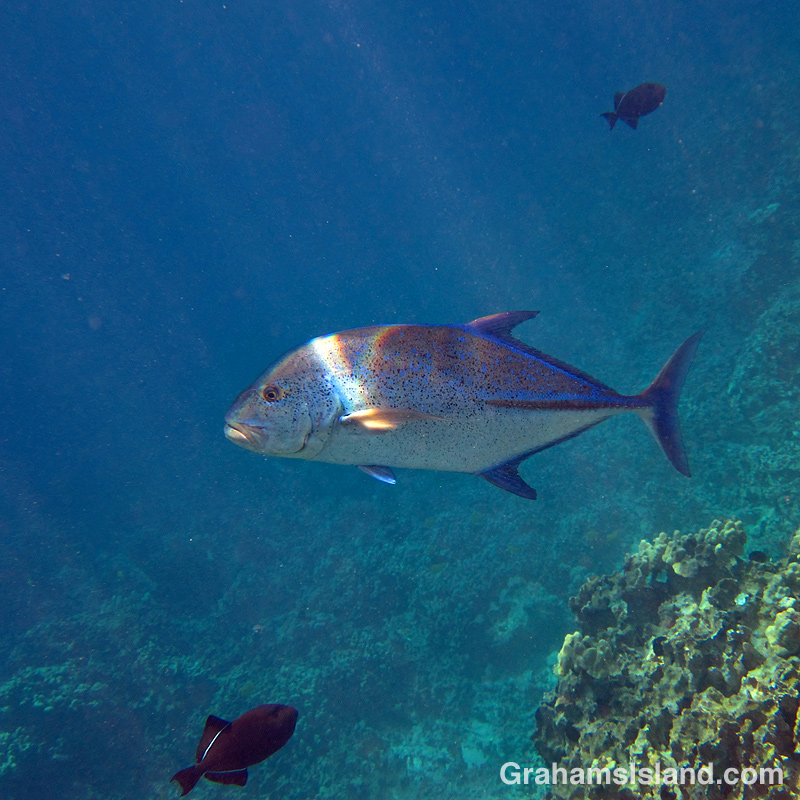
A couple of bluefin trevallies seen while snorkeling in Kealakekua Bay. The area is a marine conservation district where fishing is prohibited. In general, I’ve found that fish in such districts are less skittish and more likely to approach snorkelers, so it’s a good place to get photos of some otherwise elusive fish.
Bluefin trevallies aren’t exactly elusive, but these two passed close by, unperturbed by my presence.

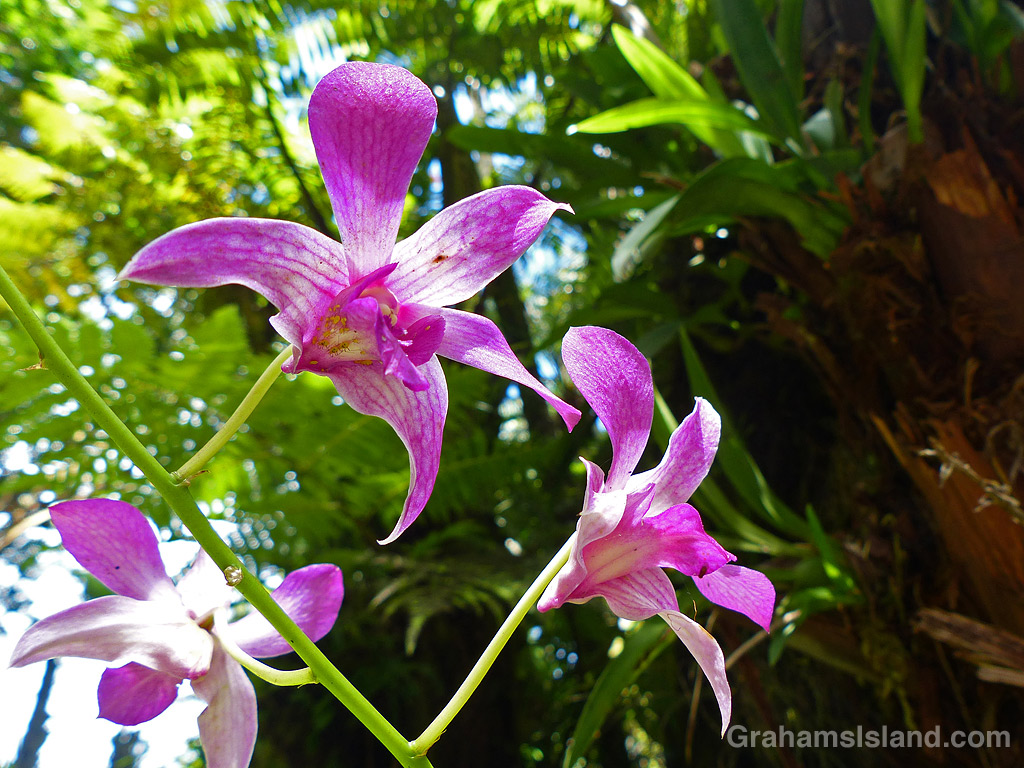 Dendrobium Jacquelyn Thomas is a hybrid orchid. I’ve seen descriptions that date it to the 1970s and others that go back to 1949. Either way, it is a popular orchid with long lasting flowers.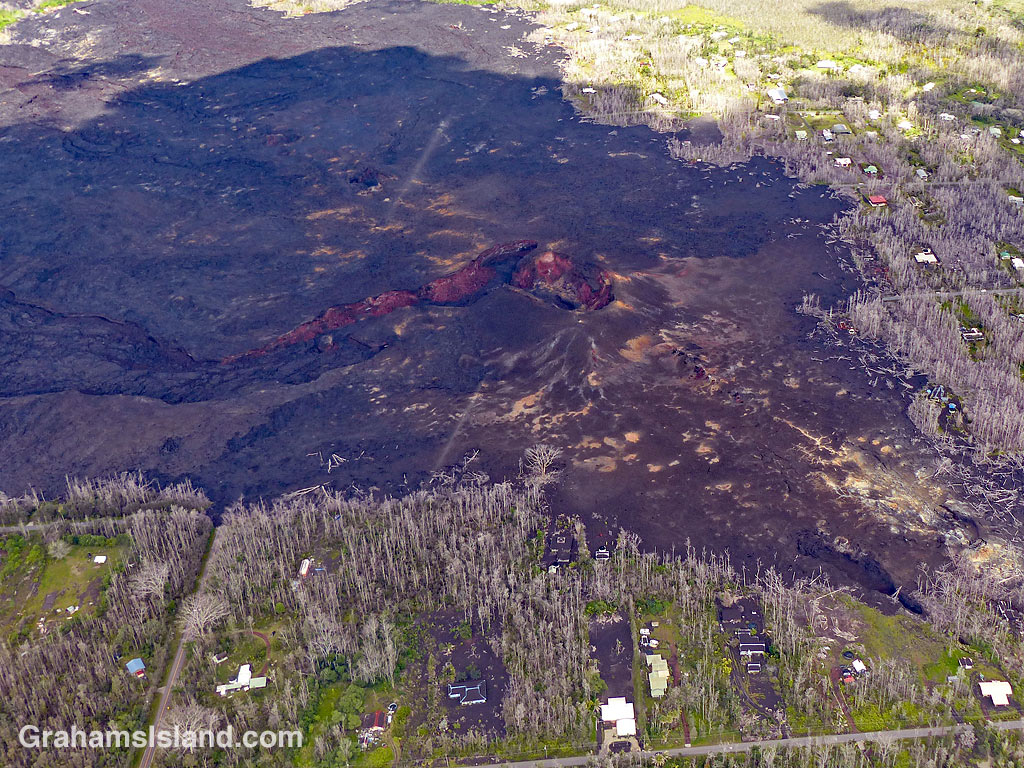





 Graham's Island