Category Archives: Places

Signs: Do not climb

A sign on a mimosa tree forbids climbing

This week’s posts are in response to the WordPress photo challenge on the theme of ‘transient.’

This sign is attached to one of two mimosa trees near King Kamehameha’s statue in Kapaau. The trees are huge with the kind of bumps and hollows that invite exploration. They’re believed to be more than 100 years old.

Not long after taking this photo, I was somewhat taken aback to see the trees almost devoid of foliage, the limbs hacked back. It turns out that one of the trees basically split in two, took out power and water lines, a chunk of the other tree, and blocked the road. It was, as they say in potboilers, rotten to the core. The cleanup is still in process, but will likely involve the removal of both trees, more than a century old, but transient in the larger scheme of things.


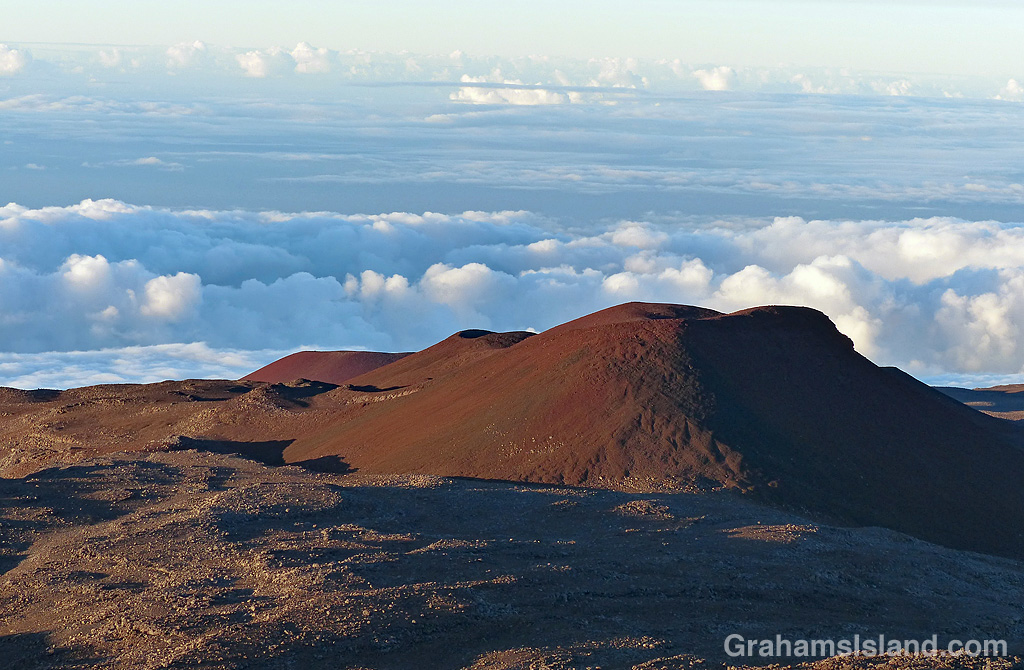
Mauna Kea snow

Snow covers the summit of Mauna Kea

This week’s posts are in response to the WordPress photo challenge on the theme of ‘transient.’

Despite the tropical latitude of the Big Island, Mauna Kea can get snow at any time of year. It’s always fun to see the mountain with a white coating. In the winter it sometimes sticks around for a while. At other times of the year it’s usually here today, gone tomorrow.


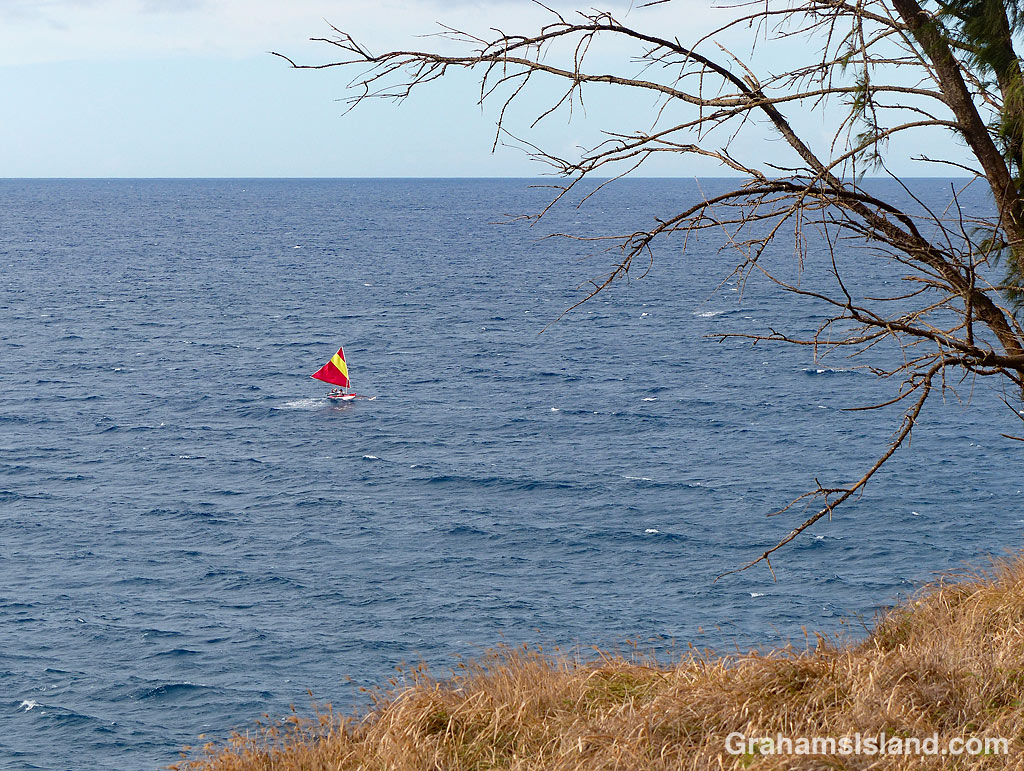
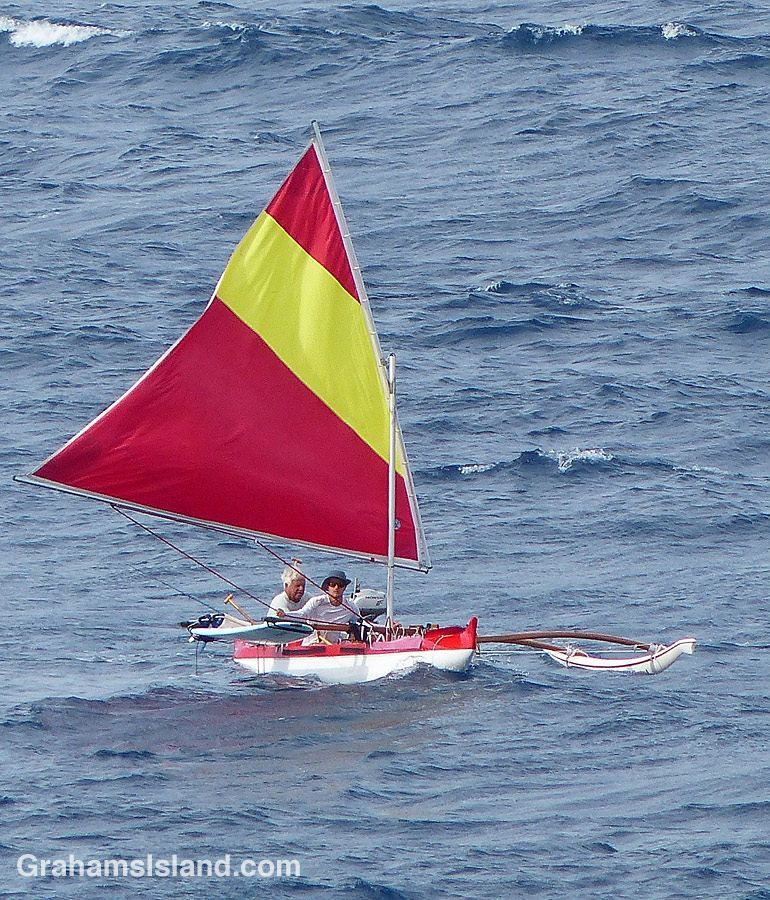
Fa‘afaite Tahitian voyaging canoe

The Tahitian voyaging canoe Fa‘afaite off the coast of the Big Island of Hawaii.The Tahitian voyaging canoe Fa‘afaite off the coast of the Big Island of Hawaii.

Yesterday saw the return of the Hawaiian voyaging canoe, Hokuleʻa, from its 3-year Mālama Honua Worldwide Voyage. There was a ceremony on Oahu to mark the return featuring Hokuleʻa’s sister canoe, Hikianalia, and several other Polynesian voyaging canoes.

Earlier in the week, one of the canoes, Fa‘afaite, from Tahiti, was waiting for its sister canoe, Okeanos, off the Kohala coast, before carrying on to Oahu. These voyaging canoes use traditional instrument-free navigation on their travels.

For more information about Hokuleʻa and the Polynesian Voyaging Society, go to www.hokulea.com.

The Tahitian voyaging canoe Fa‘afaite off the coast of the Big Island of Hawaii.

Turbine trouble

A wind turbine at Hawi Wind Farm undergoes repairA wind turbine at Hawi Wind Farm undergoes repair

This is what happens when you don’t use a torque wrench! Wouldn’t that be great. Just imagine those blades flying off when the nut comes loose. Alas, this was nowhere near as dramatic.

This is Hawi Wind Farm in North Kohala. I saw the cranes in place one Friday afternoon, and the lighting units suggested night work. Nothing happened that weekend. On Monday, ropes were attached to the blades. On Tuesday, this scene was what I found, the blades having been removed overnight. On Wednesday, everything was back to normal, with this turbine whirring around in concert with the rest of them.

Hula dancers

A hula dancer holds a rattleA hula dancer performs on Kamehameha Day in Kapaau.

Some more photos from the hula dancing at Sunday’s Kamehameha Day ceremony in Kapaau, North Kohala. The performers are members of Halau Hula O Napunaheleonapua.

For more information about the Kamehameha Day and the statue, go to kamehamehadaycelebration.org.
For more information about the Kamehameha’s history, go to nps.gov/puhe/learn/historyculture/kamehameha.htm.

Beads on the legs of hula dancersHula dancers performs on Kamehameha Day in Kapaau.Hula dancers perform on Kamehameha Day in Kapaau.Hula dancers perform on Kamehameha Day in Kapaau.

Kamehameha Day ceremony in Kapaau

A lei is draped over the spear of the statue of King Kamehameha 1 in KapaauA hula group performs on front of the statue of King Kamehameha 1 in KapaauA group pays its respect to the statue of King Kamehameha 1 in Kapaau

Yesterday was Kamehameha Day, celebrating Kamehameha 1, the king who first united the Hawaiian Islands under one leader. There’s a statue of the king at Kapaau in North Kohala, and this was the scene of a ceremony honoring him.

The ceremony began in steady rain, but the weather brightened so that proceedings ended in bright sunshine. After opening blessings, various groups approached the statue and paid their respects to the king. This was followed by the draping of leis on the statue. Finally, a hula performance in front of the statue concluded events – at least as far as this ceremony was concerned. An hour or so later, there was a parade featuring representatives of all the Hawaiian islands, and for the rest of the day, there were events and music in a local park.

The top photo shows a lei being draped over the king’s spear. The lei is made up of plumeria blossoms. The leis draped over his extended arm are mostly made up of ti leaves. In the second photo, members of one of the groups honoring the king performed a hula in front of the statue. Third, I think this is the order of Kamehameha presenting an offering which was carried up and placed at the base of the statue. Below, a red plumeria lei is hoisted over the king’s spear. Bottom, after all the lei were placed on the statue, another hula performance concluded events.

For more information about the Kamehameha Day and the statue, go to kamehamehadaycelebration.org.
For more information about the Kamehameha’s history, go to nps.gov/puhe/learn/historyculture/kamehameha.htm.

A lei is draped on the statue of King Kamehameha 1 in KapaauA hula group performs on front of the statue of King Kamehameha 1 in Kapaau

Kohala Girls School shadows

The old Kohala Girls School sits on land at ‘Iole in North Kohala.

The old Kohala Girls School sits on land at ‘Iole in North Kohala. ‘Iole is one of the few remaining ahupua‘a, a pie-shaped division of land stretching from the mountain to the ocean. It’s now managed by Kohala Institute as a retreat center and the recently renovated school is part of that setup.

I like the geometric order of the building – the squares of the windows, the straight lines of the roof and siding – as well as the light and shadows.