
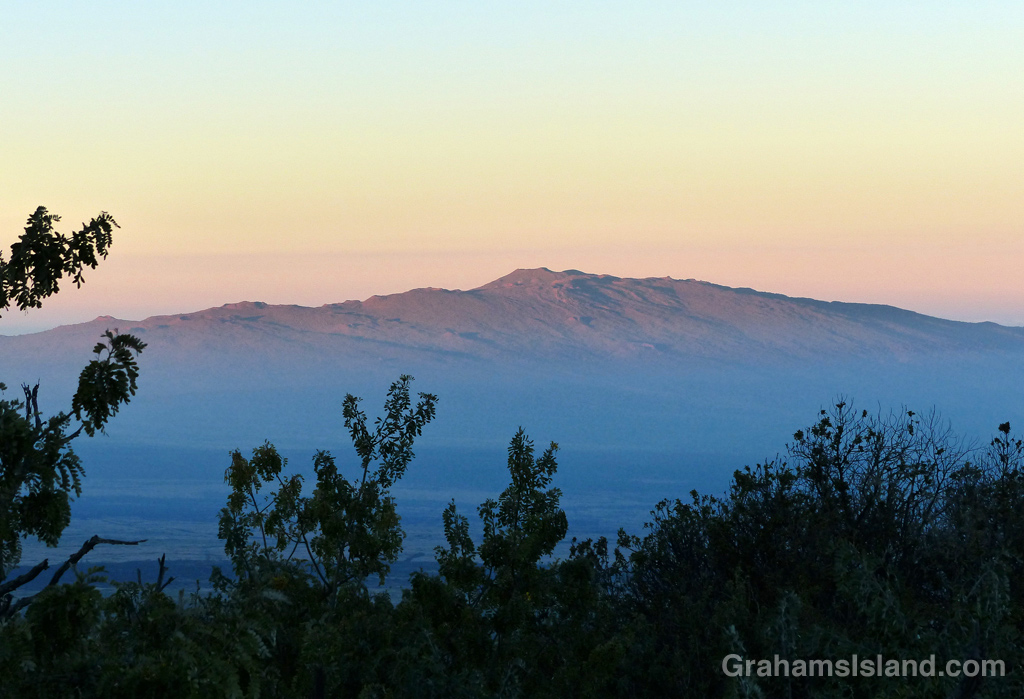
This is Hualalai volcano soon after sunrise, as seen from the western slope of Mauna Kea.
Category Archives: Places
Game bird guzzler

On a recent hike, I came across this contraption. What I liked most about it was its name – Game Bird Guzzler. It’s basically a device for providing a source of water for game birds. The way it works is that when rain hits the roof of this structure, it’s collected in a gutter and piped into the back into the tank. This water is then fed, through the white pipe, into the small basin at the front. There’s a flap in the basin so that when a game bird such as a turkey takes a drink, its head will push the flap and release more water into the basin.
When I was there, I didn’t see any turkeys or other game birds, but my approach prompted great activity and squawking as a good number of assorted finches and African silverbills took to the surrounding trees. They sat there, refusing to return to the water but not leaving either. The area surrounding the guzzler was alive with bird calls in an area otherwise not noticeably populated.
Eventually I gave up waiting for a bird to take a drink and moved on. No doubt, within a few minutes the guzzler was again crowded with small birds.
Pacific golden plover
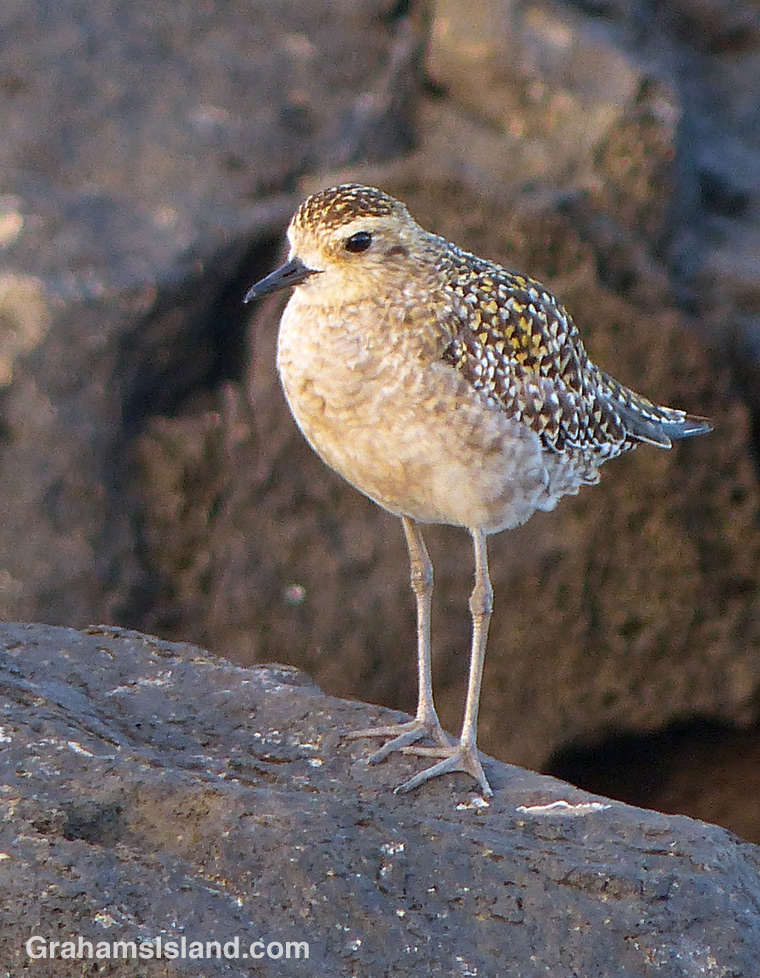
A Pacific golden plover soaks up the late afternoon sun on the Kohala coast.
A view of Maui and a wandering tattler
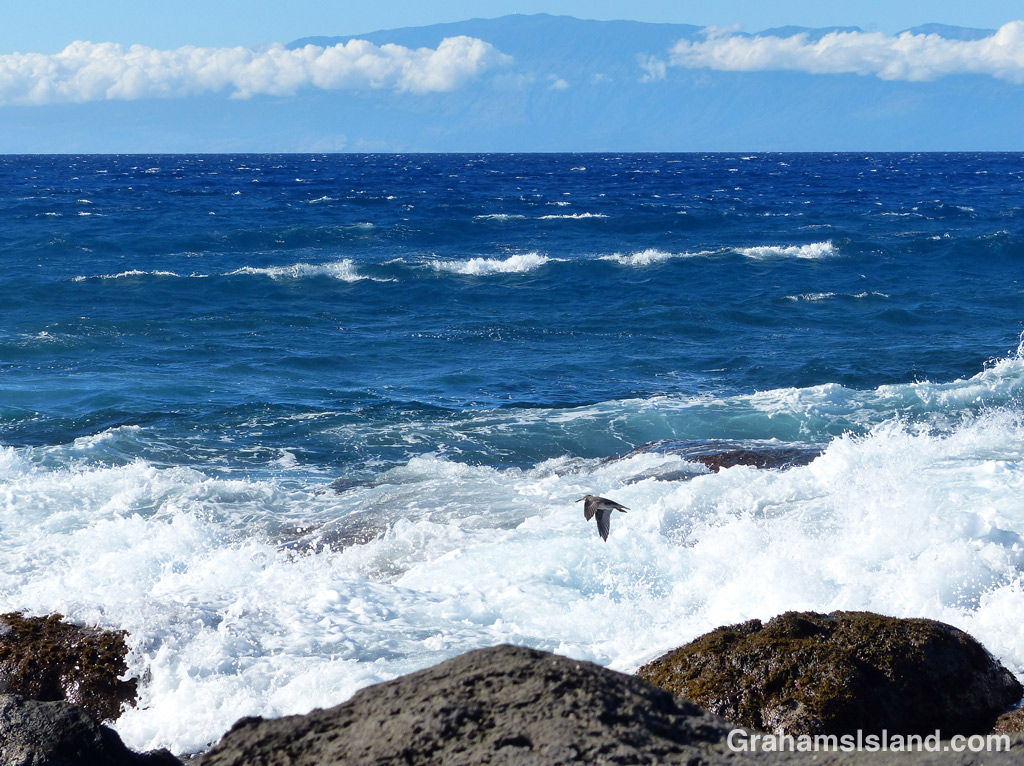
A wandering tattler flies along the Kohala coast on a bright breezy day. What’s notable about this photo is that it was taken in the afternoon and Maui is visible. The reason for that can be seen in the waves. They’re coming from the west to northwest. Waves were from the northeast are driven by the usual northeasterly trades, and those winds would have pushed cloud cover across Maui by this time of day.
Abstracts: Morning webs
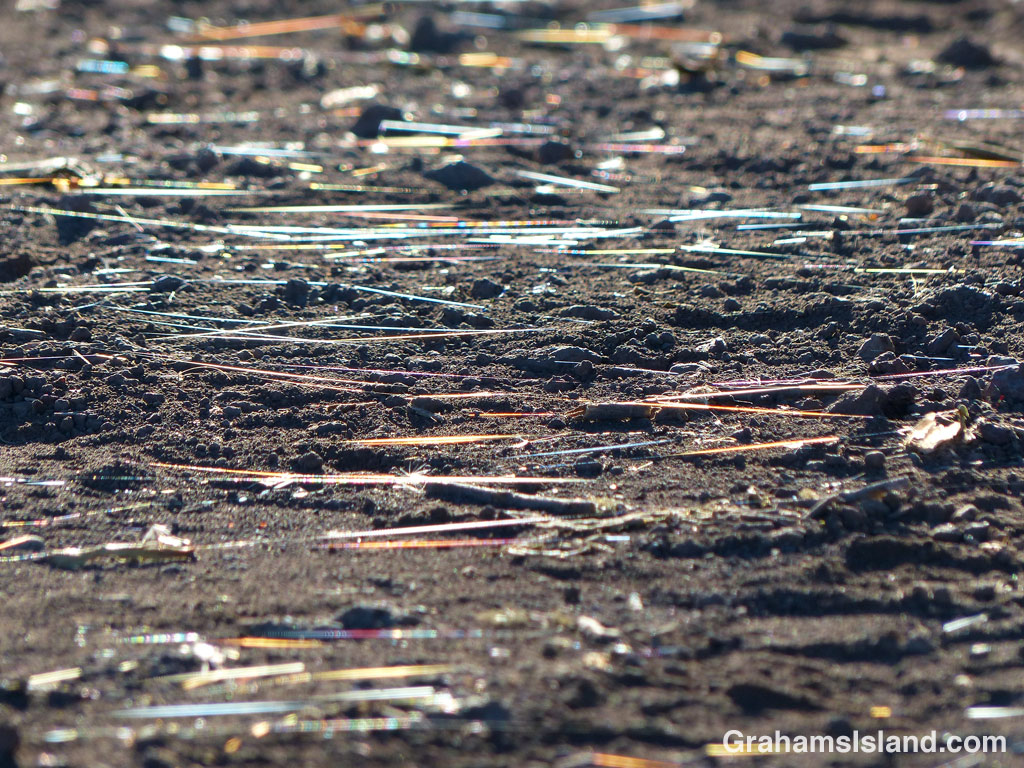
I was on the west side of Mauna Kea, at around 7,500 feet, when I saw these lines all over the ground. I don’t know what they are. I doubt they’re spider webs, though they look like it. If they’re trip wires, they didn’t work. But I did like how they caught the early morning sun, which had just cleared the edge of the volcano.
Waipi’o River
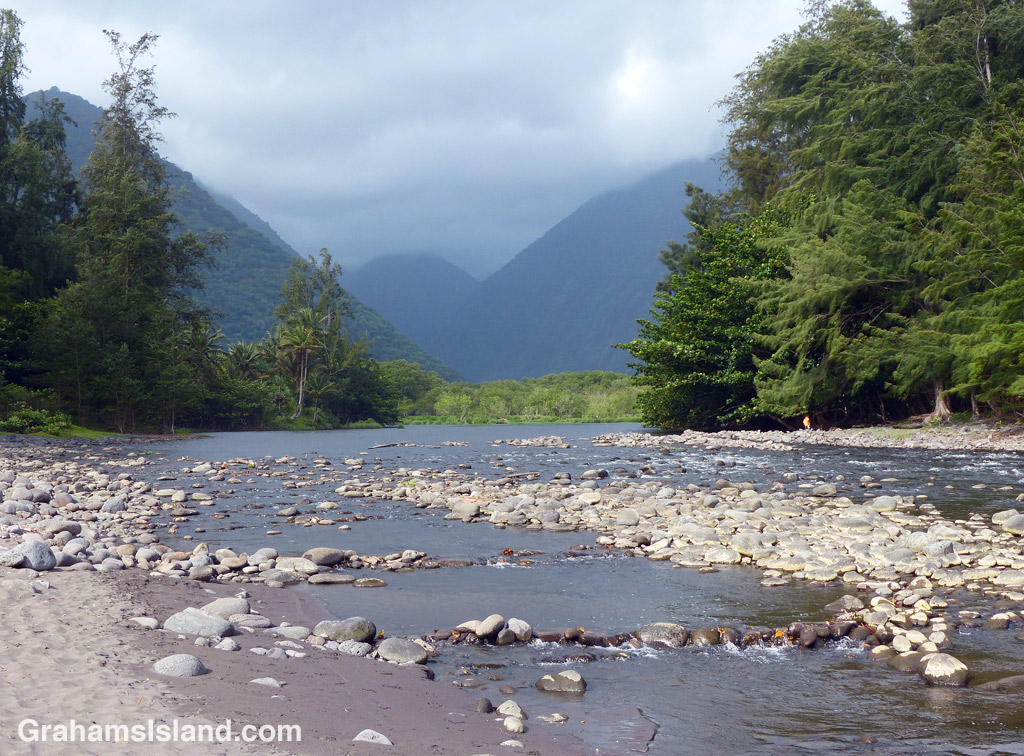
A view of Waipi’o Valley taken from the mouth of the river, with dark clouds hanging over the Kohala Mountains.
Satin pothos
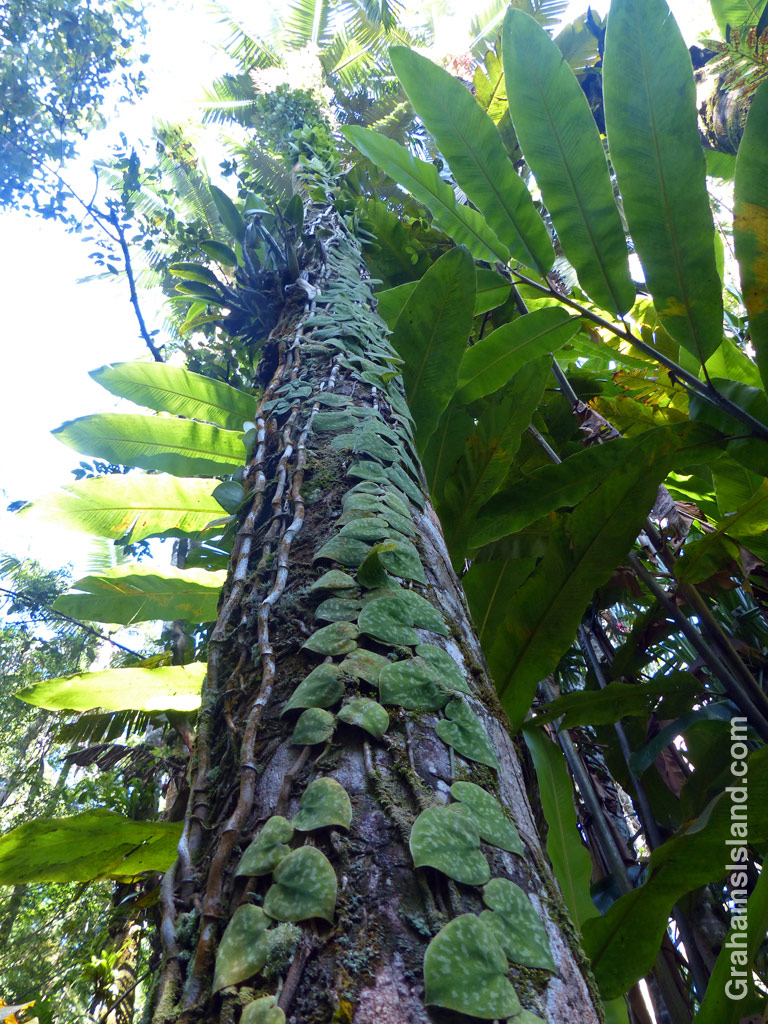
A satin pothos (Scindapsus pictus) climbs a tree in Hawaii Tropical Botanical Garden. While rampant in tropical climates, this plant is quite popular as a houseplant elsewhere. It’s poisonous to dogs and cats though, so that’s something to consider.
For more information about Hawaii Tropical Botanical Garden, go to htbg.com.
Abstracts: A softer, gentler firehose of lava
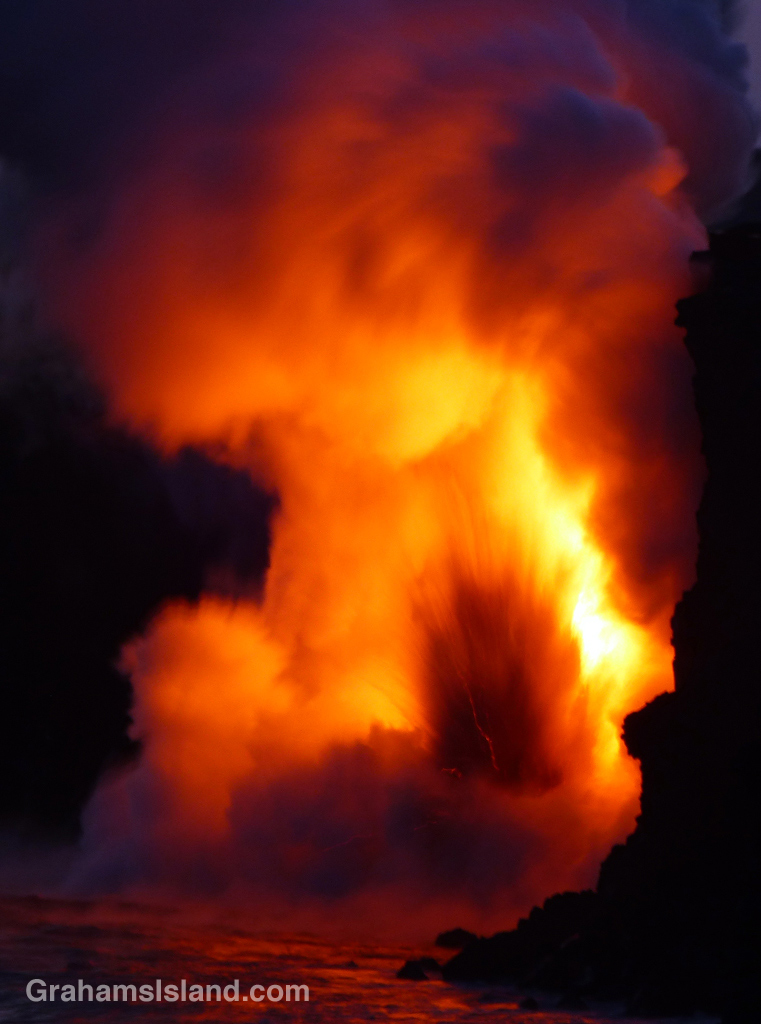
One last photo from my trip to see the firehose of lava from Kilauea Volcano gushing into the sea. I tried a few longer exposures and I particularly like the effect of this one. More lava photos here.
For more information about Kilauea Volcano and it current eruption, go to hvo.wr.usgs.gov/activity/kilaueastatus.php.
 Graham's Island