
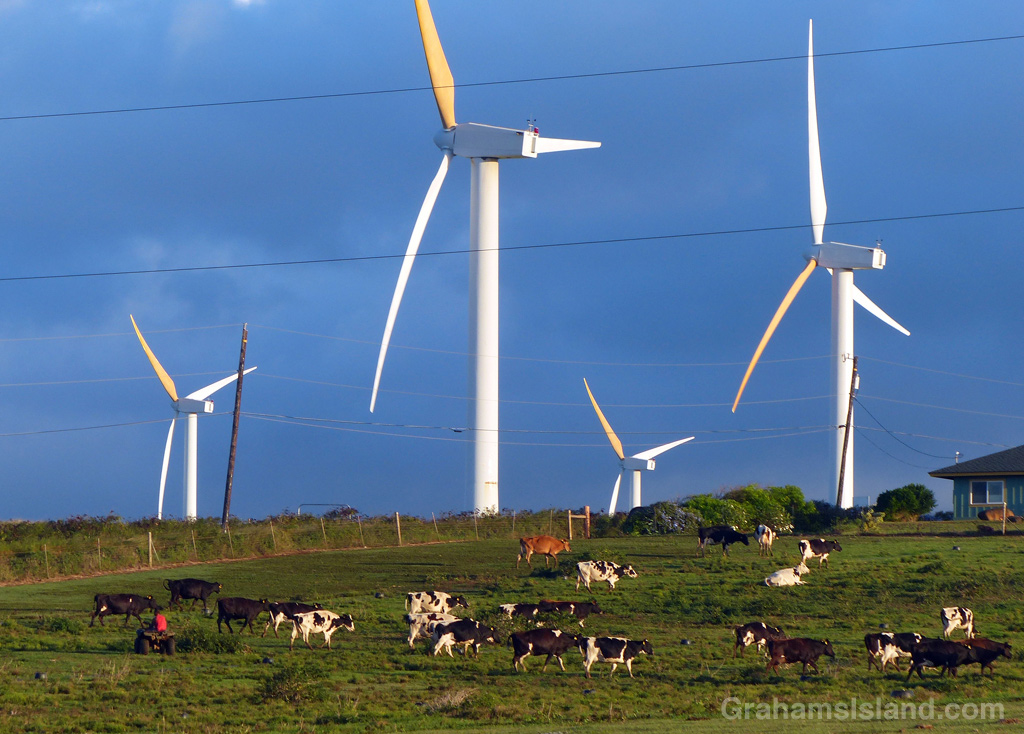
Cows are rounded up for milking on one of the Big Island’s two remaining dairy farms. These days most cowboys, called paniolos in Hawaii, do their work on four-wheelers, though horses are still sometimes used.
Category Archives: Places
Log yard

The Hamakua coast of the Big Island is the first landfall of the northeast trade winds and, consequently, gets a good deal of rainfall. Combined with warm tropical temperatures and good soil, the area is a prime growing area.
One of the crops is eucalyptus trees. The trees grow fast and straight. When they’re harvested they’re trucked to Kawaihae, the port on the west side of the island, to this log yard. They’re stored there until there are enough logs to ship to Asia, which seems to be about every couple of months at present.
I happened to be driving by late one afternoon and was struck by the light on the log ends. As can be seen from the hillside in the background, Kawaihae is one of the driest spots on the island, averaging around 10 inches of rainfall a year.
Green Turtle sunbathing
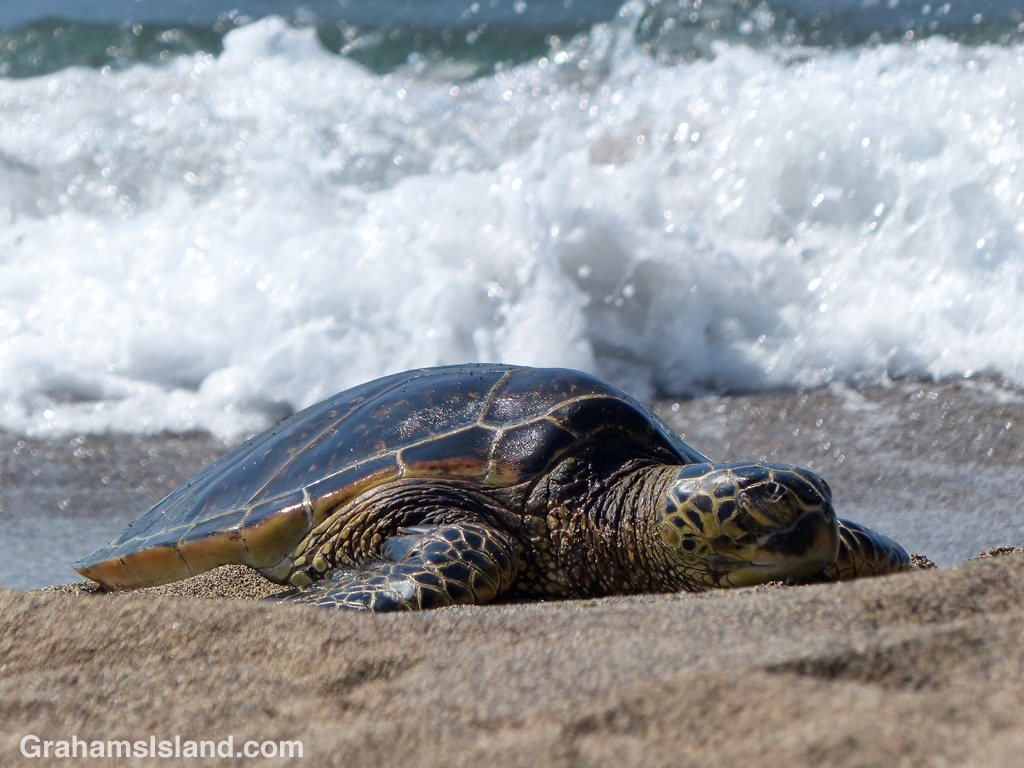
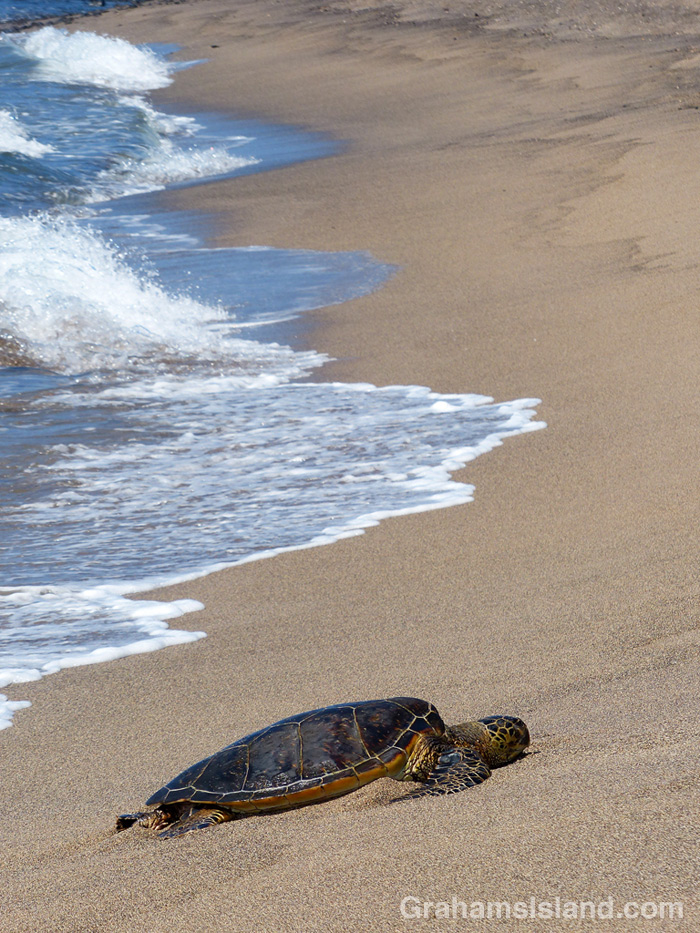
One of the attractions of Kaloko-Honokohau National Historical Park, north of Kailua Kona, is that it’s a popular resting spot for Hawaiian green sea turtles. This turtle was hauled out on a long curve of golden sand known as Honokohau Beach. He had the spot to himself, which is good. People are supposed to stay at least 20 feet away from turtles, but many don’t.
For more information about Kaloko-Honokohau National Historical Park, go to bigislandhikes.com/kaloko-honokohau-park/.
Abstracts: Queen’s Bath fish
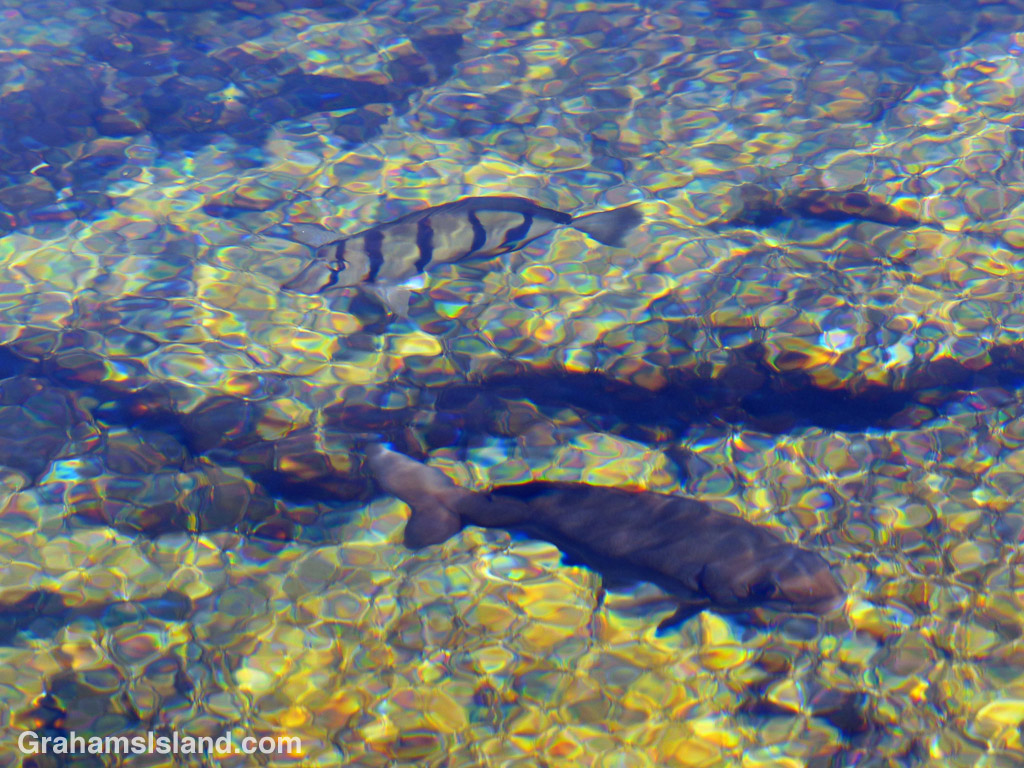
Kaloko-Honokohau National Historical Park, just north of Kailua Kona, contains a feature known as the Queen’s Bath. This is an anchialine pond, containing a mix of freshwater and saltwater. Freshwater seeps into the pond from rainfall. Saltwater infiltrates through cracks in the lava. Because of this, the water level rises and falls with the tide. I can verify this as I took this, and other photos, sitting on a rock near the water’s edge. Just before I left, I realized my feet were now resting in water, the level having risen.
Anchialine ponds are unique ecosystems and this one contained several fish including these two. The one in the back is a convict tang. Not sure what the other one is. What I liked about the pond is the stained glass effect it created.
For more information about Kaloko-Honokohau National Historical Park, go to bigislandhikes.com/kaloko-honokohau-park/.
Approach to Mauna Loa Observatory
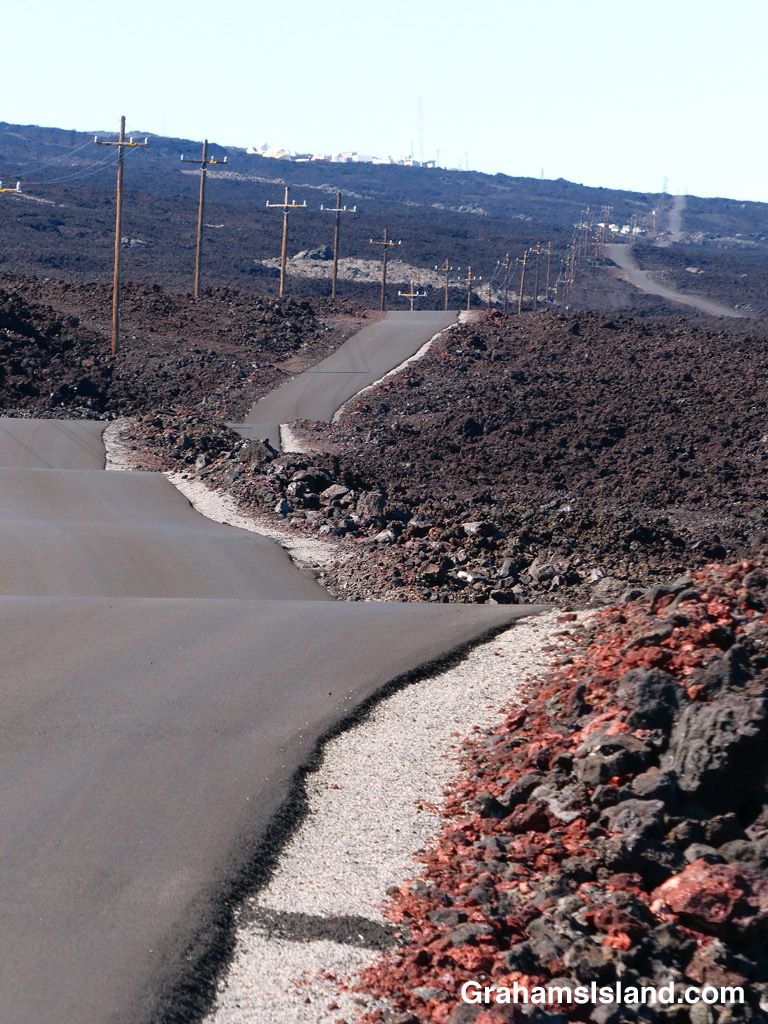
The road to the Mauna Loa Observatory is a one-lane highway, currently in good condition, and chock full of ups and downs and bends. It’s a fun drive with wonderful views, but it’s one that demands attention lest one drifts onto the unforgiving lava on either side or plows into an oncoming vehicle.
Kahuku hike
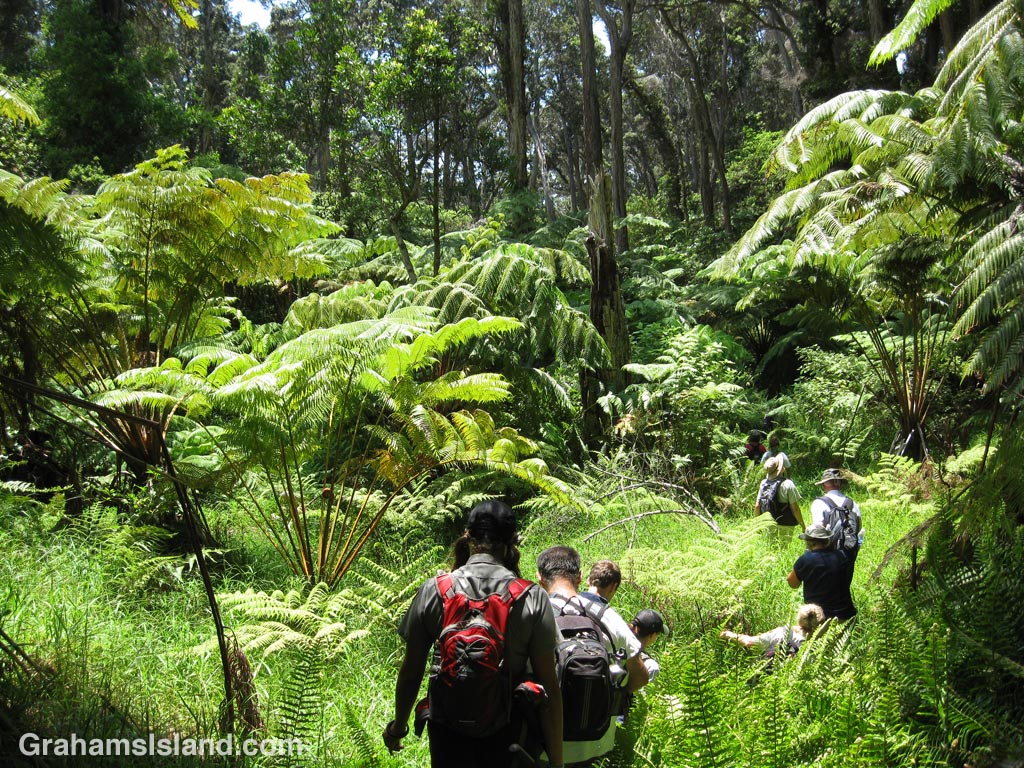

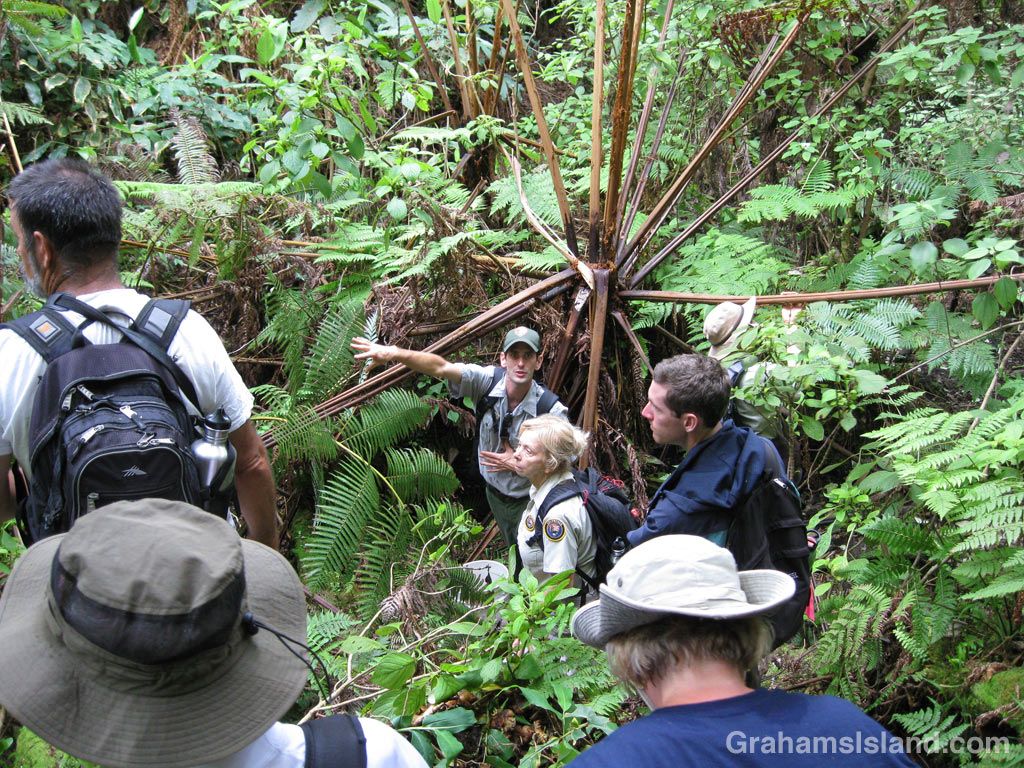
Kahuku is part of Hawaii Volcanoes National Park. Its 116,000 acres was added to the park in 2003, an estate purchase of former ranch land. This purchase almost doubled the size of the park.
Not far from the southern tip of the Big Island, the entrance to Kahuku is about an hour’s drive from the main park entrance, but the two areas are contiguous, joined at the summit of Mauna Loa.
These photos are from a guided hike in Kahuku that I did a while back. The hike went through fairly dense old growth Hawaiian forest that had been spared because it was in a steep gully and thus not suitable for clearing for pasture. There was no real trail.
Currently this part of the park is closed because trees with Rapid ‘Ōhi’a Death (ROD) have been found in the lower part of the park and the goal is to prevent it spreading to other areas.
For more information on the Kahuku Unit of Hawaii Volcanoes National Park, go to nps.gov/havo/planyourvisit/kahuku-hikes.htm or bigislandhawaiitravelguide.com/places/puu-o-kahuku-at-hawaii-volcanoes-national-park.html
Hi’ilawe Falls in Waipi’o Valley
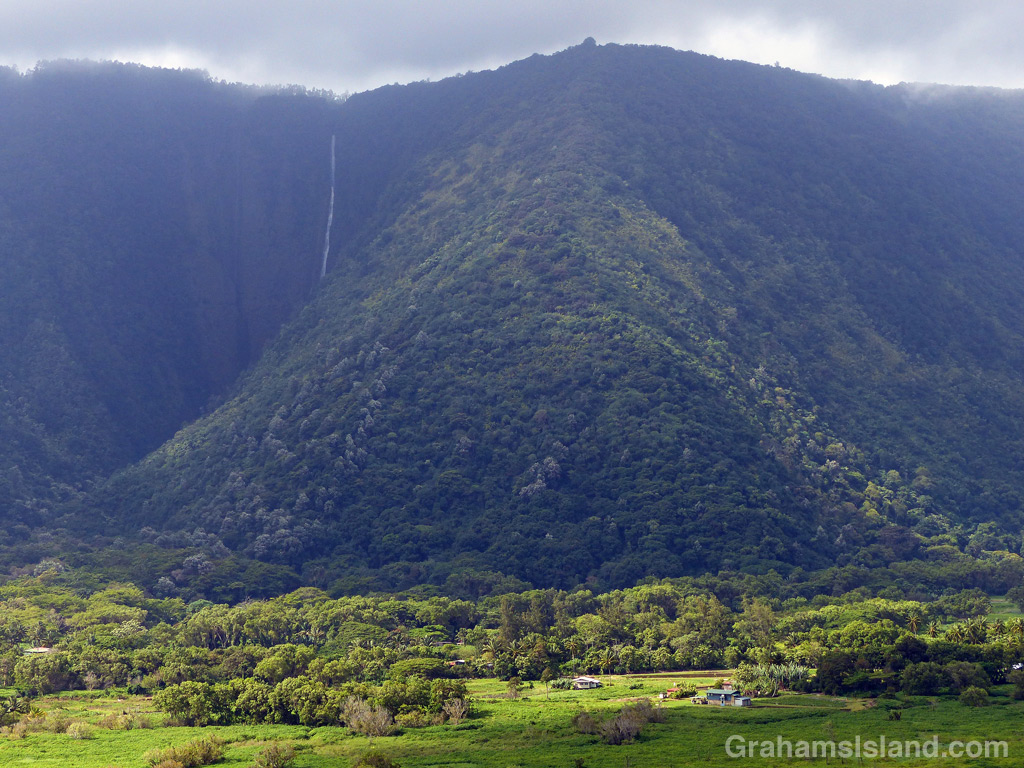
The sun illuminates a homestead in Waipi’o Valley with Hi’ilawe Falls in the background.
Cackling goose
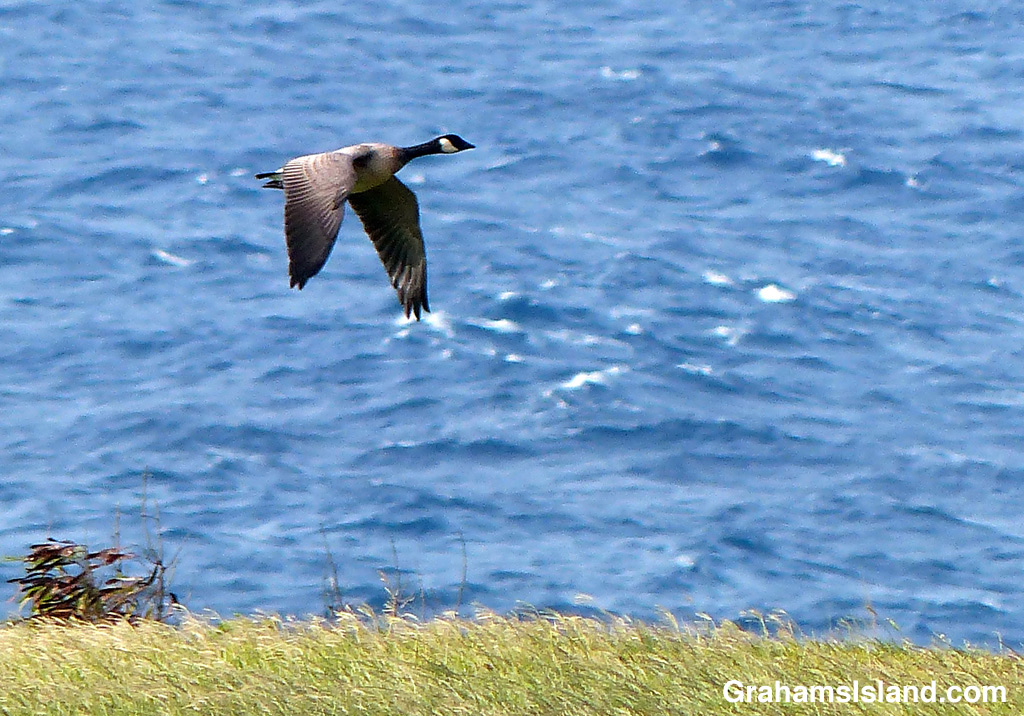
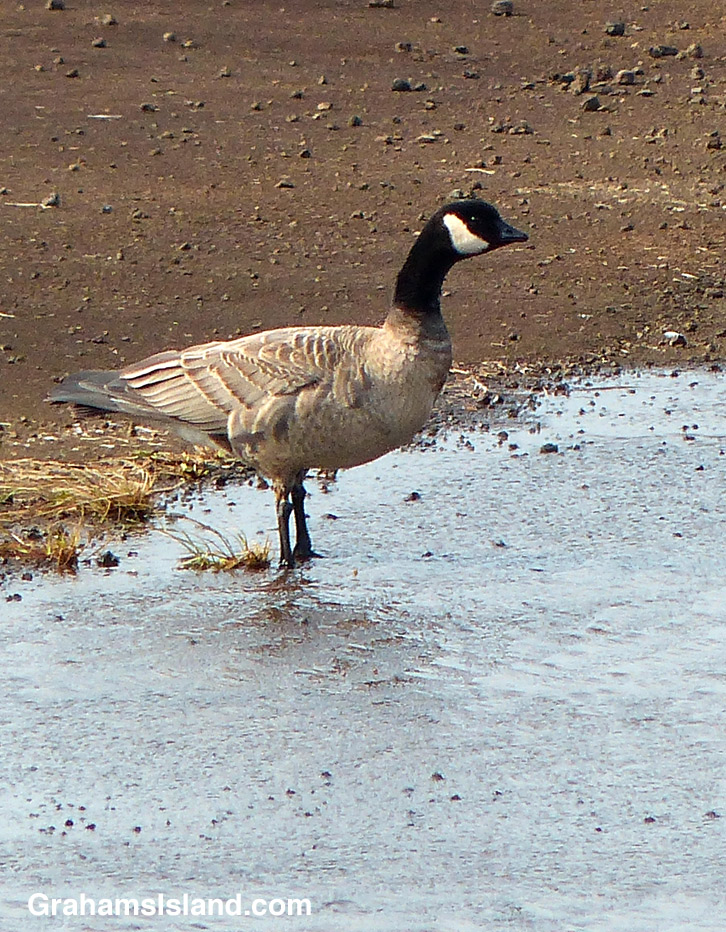
A cackling goose is similar in appearance to a Canada goose, but much smaller and with a shorter beak. Both are rare visitors to Hawaii. This cackling goose was taking a drink of water from a puddle at Upolu airport until a couple of mynah birds started harassing it. Then it took off and headed east, into a strong wind.
 Graham's Island