The boat hoist at Mahukona has featured in a few of my posts, most notably here and here. Over the years, it’s taken a lot of punishment and that has finally caught up with it. When I went for a swim a couple of weeks ago, this was all that remained of it. I rather liked the jaunty hat on the piece at the left. When I went down there again a few days ago, the last of the metal had gone.
I’ve heard it might be replaced, but the wharf would probably need fixing first. Next door at the beach park – though there is no beach – the old pavilion is cordoned off awaiting demolition and replacement. That process started several years ago and the old building is still standing. Everything will happen in its own good Hawaii time!
A pair of Fourspot Butterflyfishes disturbed a pair of Arc-eye Hawkfishes perched in a head of Cauliflower Coral, as they often do. The coral head is doing OK, but areas of it have died off, probably during one of the coral bleaching events that have happened in the past few years, where the water gets too warm.
I can get chilly fairly easily when I go swimming, but for me, it’s more distressing when the water feels oddly warm because I know this is bad news for the corals.
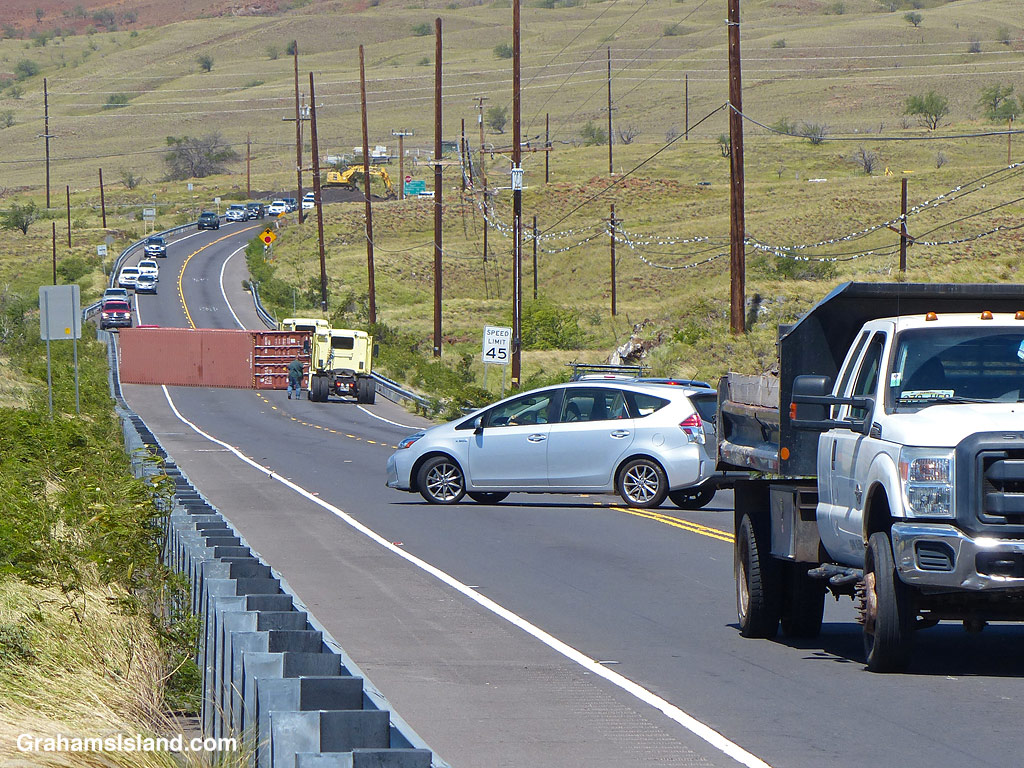
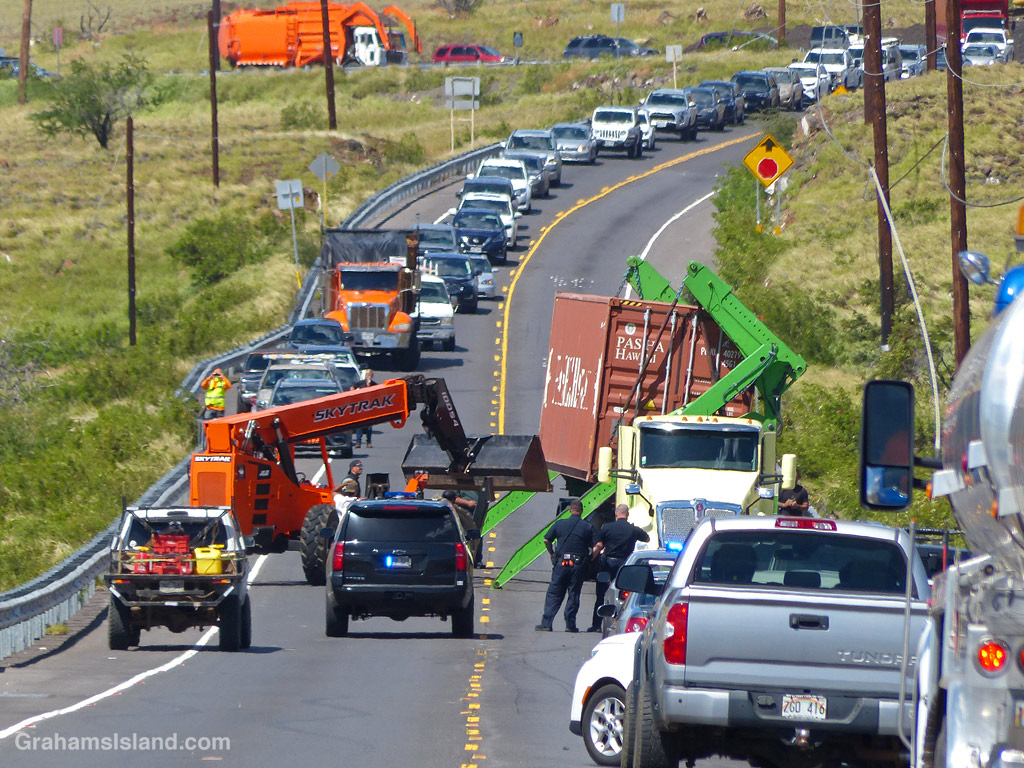
It was nice to get out of work earlier than expected yesterday. What wasn’t nice was to be five minutes into my return home and finding this scene.
This is the northern end of the Queen Ka’ahumanu Highway, the main coastal highway north of Kailua Kona. There aren’t a lot of alternative routes on the island, so this blocked road would have converted my 20 miles, 25-minute commute to three times the distance and at least a 90-minute drive over slower roads.
I was about to do just that, when I noticed the shipping container had already been moved off to the side of the road. I figured it must have been empty for them to be able to do that, which was probably the reason it blew over in the strong winds we had yesterday.
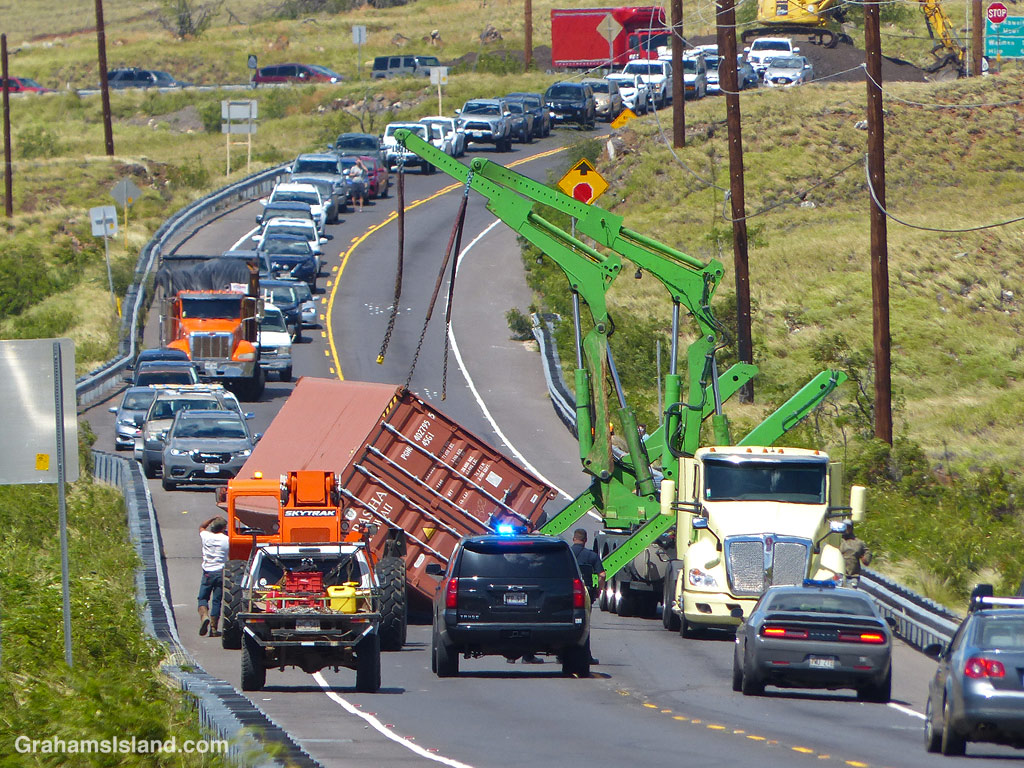
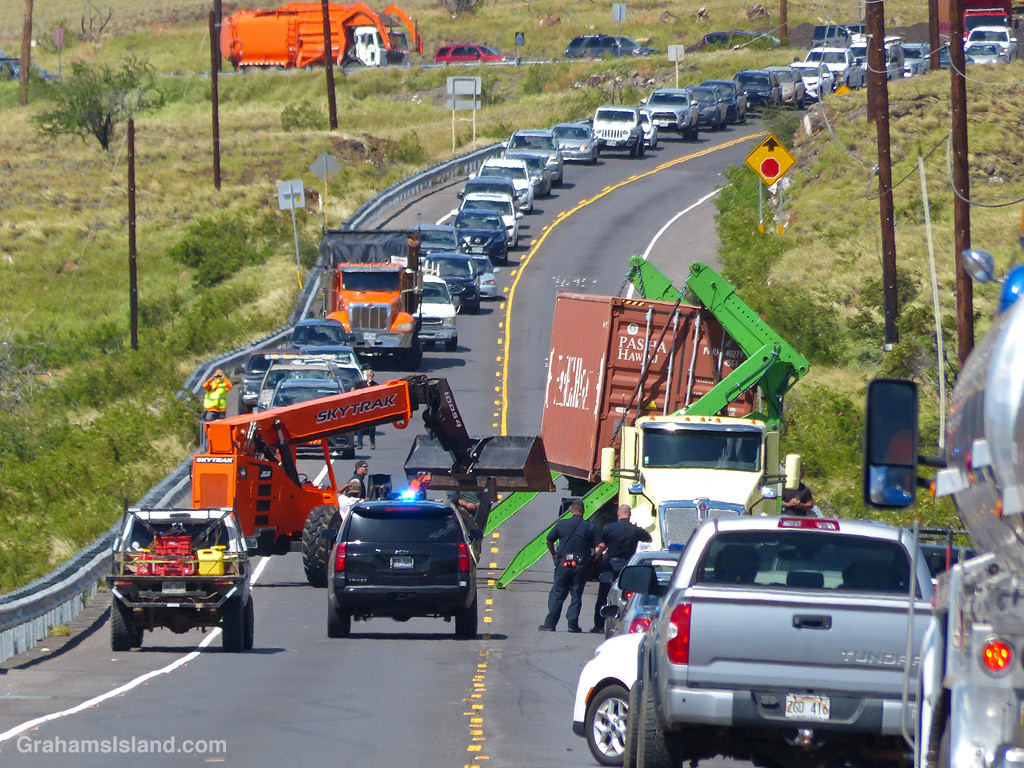
I’d been stopped for 10 minutes before a couple of police cars arrived. I watched for a while and then walked down to see how long they thought the road would be closed. As I approached, I saw the container’s trailer being bounced back onto its wheels. Typically, I got no useful information about how long the road would be blocked, but by the time I returned to my car, the trailer and two semi-trucks had driven off. All that remained was for the container to be removed. I decided to stick around.
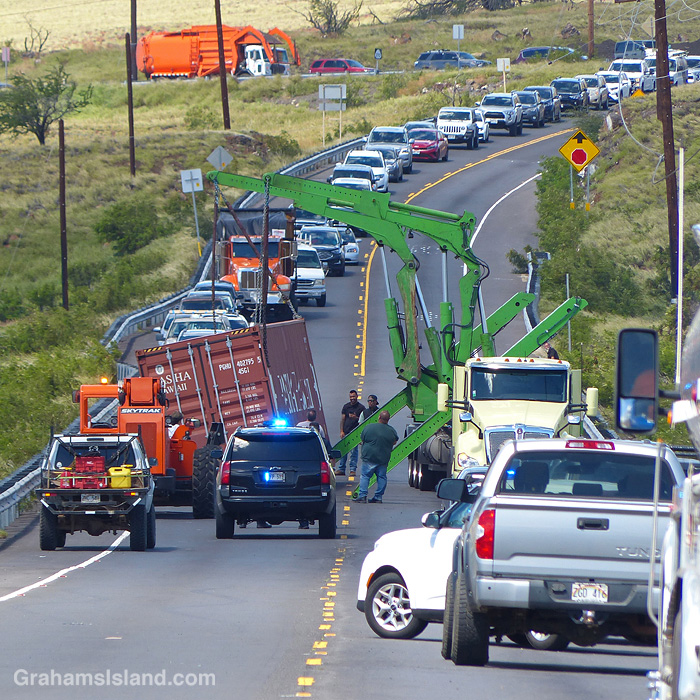
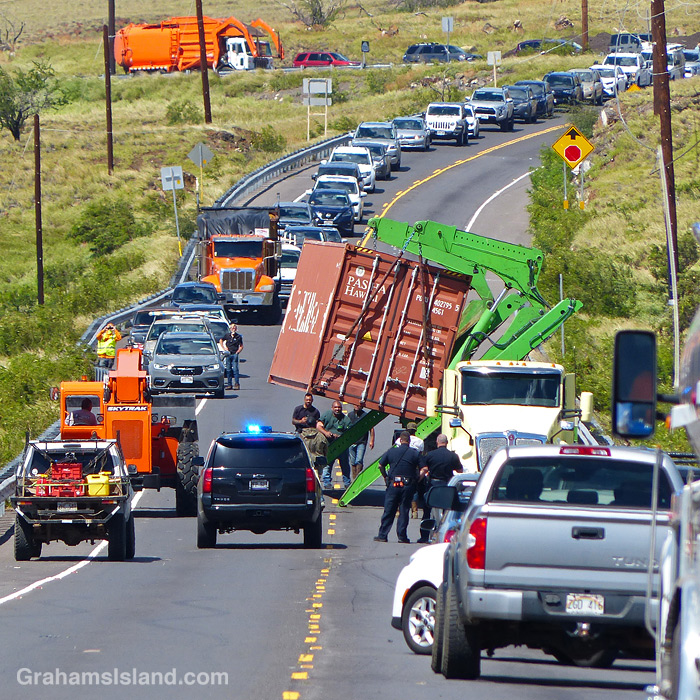
The container retrieval truck, with its flashy green arms, was maneuvered into place and the rescue operation began. It took three tries before the container was successfully snagged and hauled aboard the truck, but once it was, traffic started to flow quickly and I was on my way again after a delay of not much longer than half an hour.
Easy does it.Not this time.Here we go.Got you this time.
I was very glad I decided to wait it out, though my happiness was rattled when, about five miles farther on, I saw blue lights flashing and traffic slowed. Luckily, it was just a couple of trees blocking one lane and I didn’t even have to stop.
The high winds are supposed to diminish today and I’ll be happy to see them go!
Almost like a video. Nothing moving, but the police lights flashing!
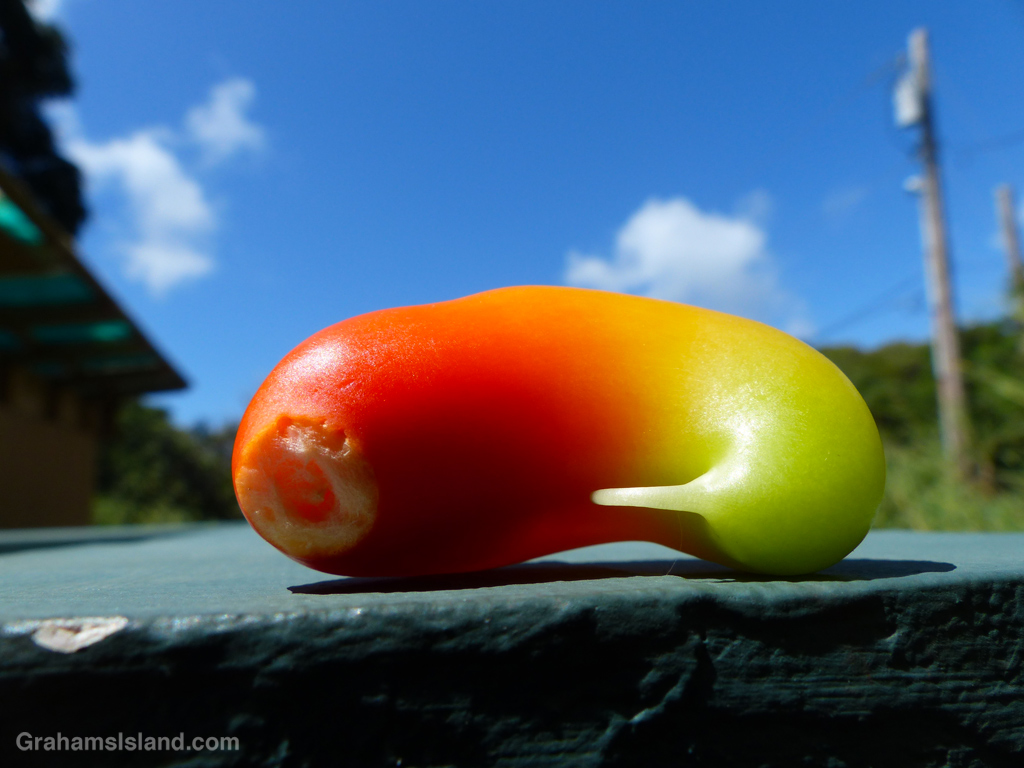
I was about to cut up a red pepper recently, when I heard something rattling around inside it. I sliced the pepper open and I found this cute baby pepper.
Posted for Bushboy’s Last on the Card photo challenge. See more responses here.
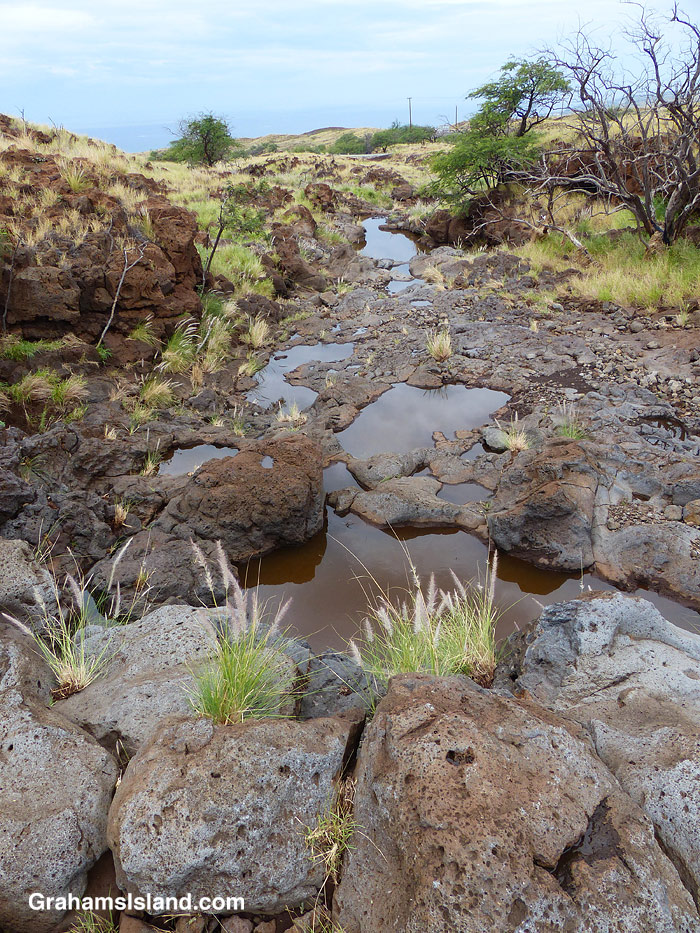
The weather has been dreadful here this last two or three weeks. Recently, we had another of a series of flash flood warnings. Seemed like a good time to explore this dry river bed!