When I visited Hawaii Volcanoes National Park in the summer I hiked the Kilauea Iki Trail again. On that occasion, I descended into the crater on the western end and came back up on the eastern end. Shortly after I got up to the crater rim I took the top photo.
The trail continues around the northern rim of the crater and I continued walking. Three minutes after I took the first photo, I came to another overlook into the crater and the bottom photo shows the view I got there, an illustration of how quickly the weather can change in this area.
For more information about Hawaii Volcanoes National Park, go to nps.gov/havo/.
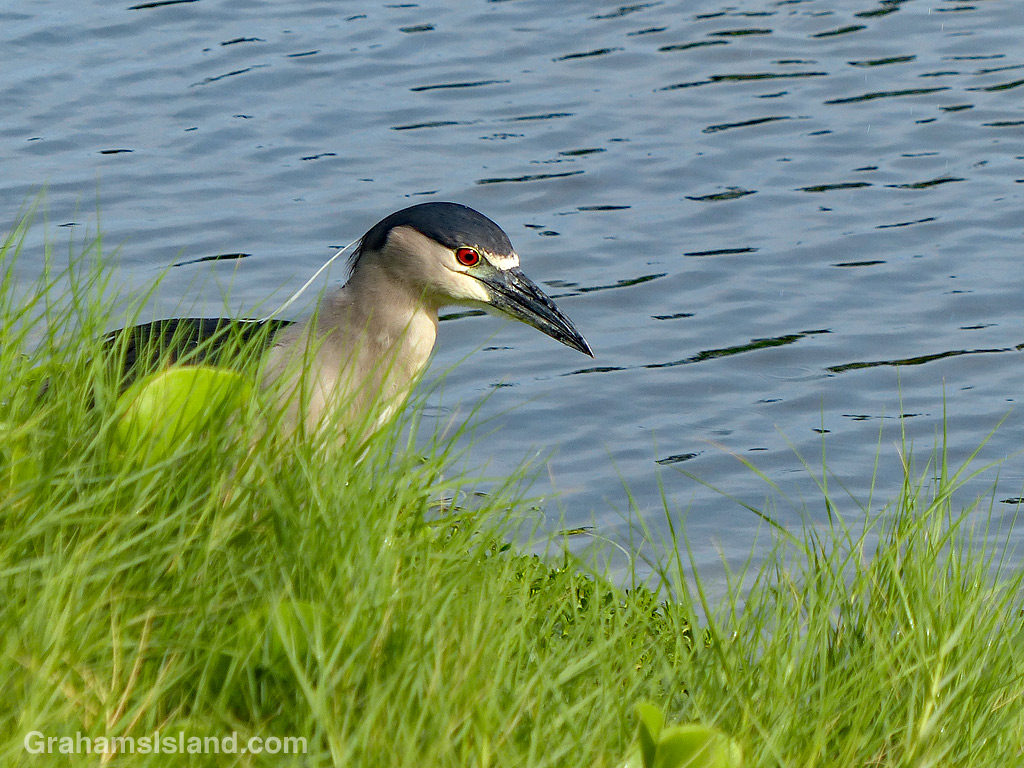
At various places along the North Kona and South Kohala coast there are pools just inland from the coast. Many of these pools are connected to the ocean and serve as breeding grounds for fish. In the larger pools those fish can be quite large. And where there’s a large pool of water with fish in it, herons won’t be far away.
The bird in the top photo was actively hunting, while the other was merely monitoring the situation. These adult birds have the black crowns that juveniles lack and also sport a long, white head plume, that I think is rather elegant.
Black-crowned night herons are considered indigenous because they weren’t introduced to Hawaii, but arrived on their own hundreds of years ago. Thus far, they haven’t changed from their mainland counterparts.
Ambon tobies are little pufferfishes that are usually found fairly close to shore. This colorful little fish is liberally covered with blue spots and lines.
On Saturday, I was finalizing my post for Sunday when I had a copy editor drop in. This baby gecko checked out my typing and seemed satisfied. Then it padded up the screen to the top, perched there for a while, before disappearing down the back.
I usually use my laptop while sitting next to a window in the living room. It’s a long-standing tradition in this house for baby geckos to peer over the edge of the trim above this window, before leaping down onto my head, legs, or computer. This is a drop of five or six feet, which is 60 to 70 times the length of these little geckos. That would be like me throwing myself off a 400-foot-high cliff. The only difference is that I wouldn’t be getting up and going anywhere after that.
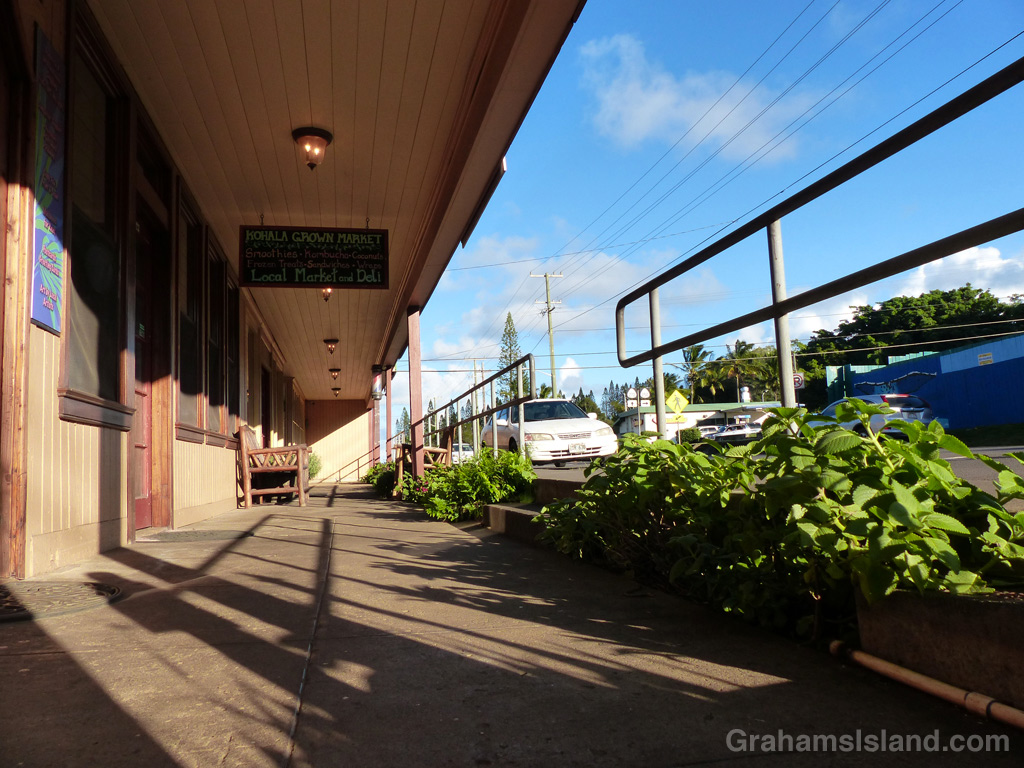
This week’s Sunday Stills challenge theme is ‘City Sidewalks.’ See more responses here. The Big Island is a bit short on cities, but we do have a few sidewalks, even up here in North Kohala.
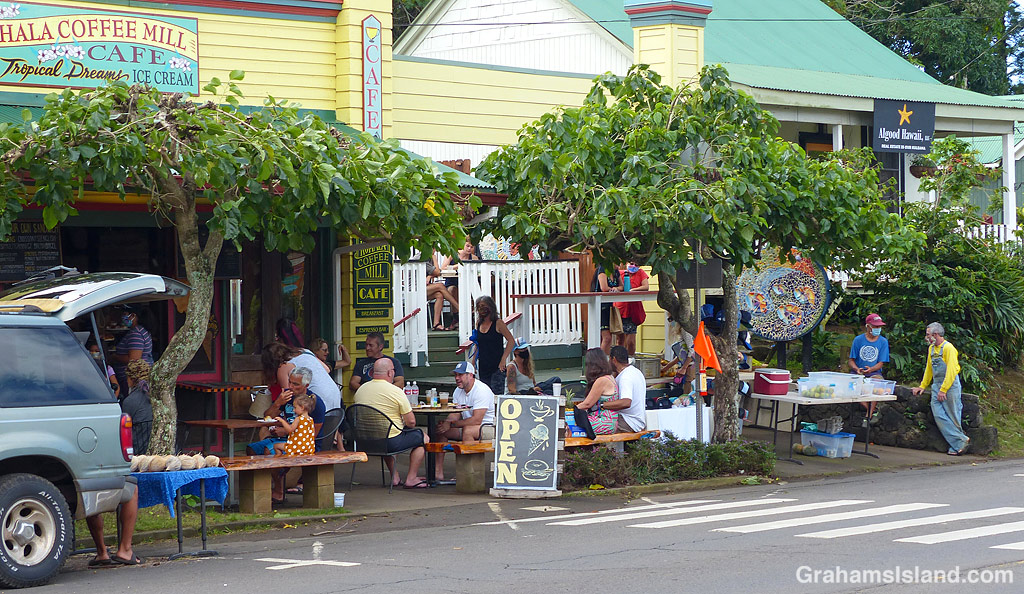
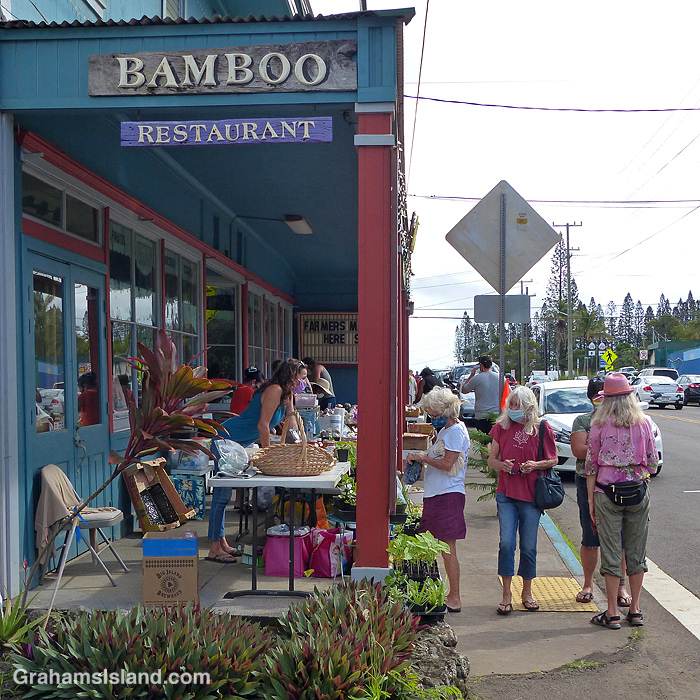
For many years, Hawi had a Saturday farmers’ market, which was held on a green space, under the banyan trees, near the heart of the community. The Covid virus shut that down and after a while, it was announced that the market wouldn’t return. Instead, once restrictions were eased, a Saturday morning market appeared on the sidewalks downtown. This wasn’t a problem since pretty much all the businesses were closed.
Yesterday’s market was quite busy, with the added boost of the approaching Christmas season. In the top photo, the Kohala Coffee Mill was open for business but still had room for a couple of vendors out front. In the second photo, the space in front of the Bamboo Restaurant is fully occupied. The restaurant has been closed since March, and while limited seating and take out is allowed now, the restaurant has not reopened. A lot of their trade was from tourists so I suspect they’re waiting to see how that develops. They do, however, appear to be planning on reopening.
The third photo, taken farther down the street, was taken a few days earlier and reflects how things are without an event like the market. This building, at street level, was occupied by a gallery and a popular restaurant. Both have not only closed, but aren’t going to reopen. The spaces appear to be in the process of gaining new tenants, though I doubt they’ll open soon since there are still relatively few tourists visiting the island, at least compared to previous years.
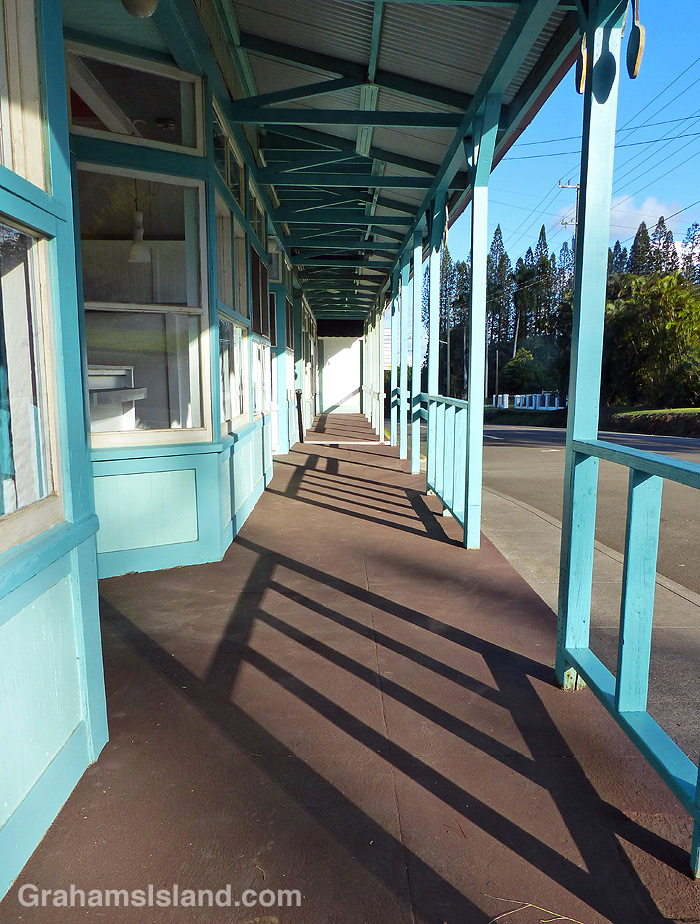
The bottom photo shows a covered sidewalk, which complements the street sidewalk. There are several active businesses in this building, but it’s still much quieter than it used to be. I suspect that this year might have reminded old timers of how this part of the island used to be in the days before the tourist boom happened.
The bottom photo is also posted in response to Bushboy’s Last on the Card photo challenge for November. See more responses here.
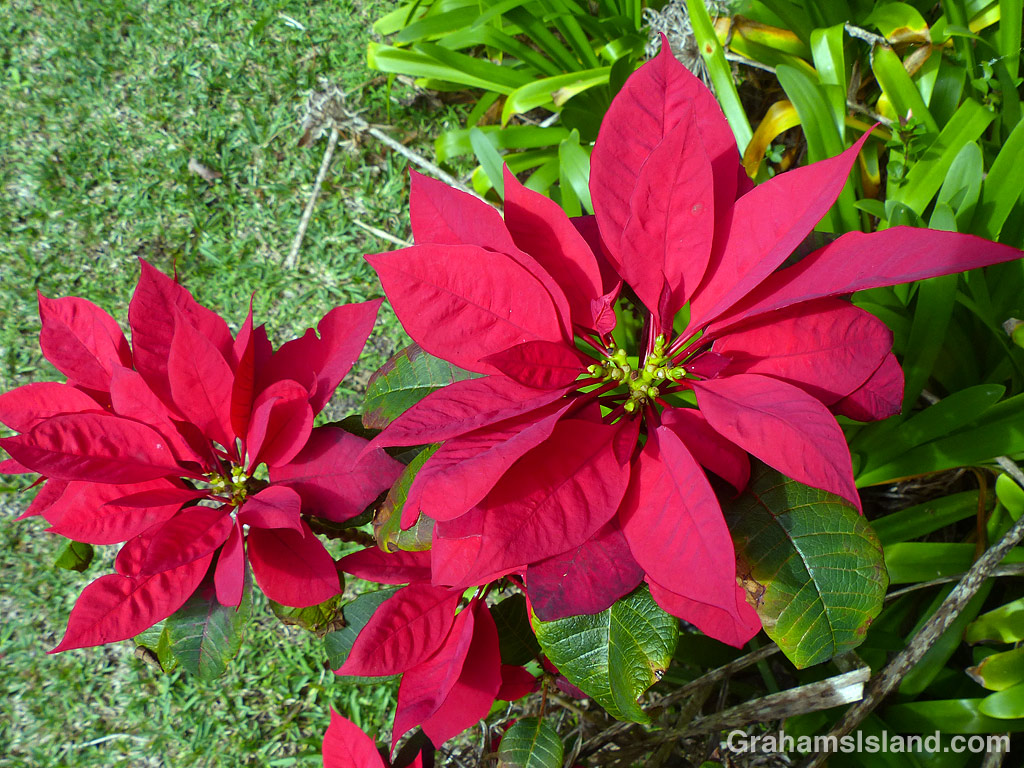
This week’s Friendly Friday challenge theme is ‘Red and Green.’ See more responses here.
Poinsettias (Euphorbia pulcherrima) have been associated with Christmas for centuries in Mexico and Central America, where the plant hails from. The plant was introduced to the United States in the 1800s, but it wasn’t until the last century that the Christmas link really took off. This was mostly due to savvy marketing tactics by the Ecke family, which had a monopoly on the poinsettia market thanks to their discovery of a secret grafting method which produced a denser plant and wasn’t duplicated until the 1990s.
The red ‘flowers’ are actually bracts, which hold the fairly insignificant flowers. On the Big Island, their brilliant displays are quite common on the west side of the island, where they can be seen as bushes and trees.
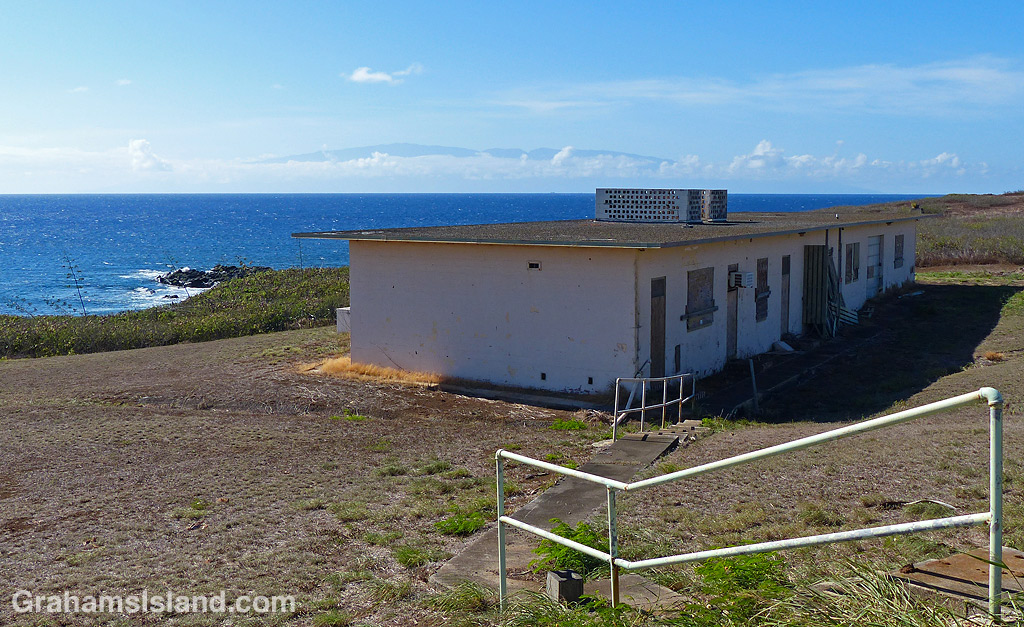
The Old Coast Guard Station near Upolu was constructed in 1944 as a Loran station. Loran was an early navigation positioning system. The original system was Loran A, but this was replaced by Loran C in the early 1960s.
Over the years there were changes to the buildings, staffing, and equipment at the station until, in 1993, the station closed. For many years not much happened. The buildings began a steady decline. The station had been built on two different land parcels and, upon closure, these ended up in the hands of the Hawaiian Homelands and Parker Ranch.
When I first moved to Hawaii, a local policeman used to live in one of the buildings. It was all fairly low key and mellow. When the policeman moved out, Parker Ranch put up no trespassing signs and had security personnel driving by to check the area. They stopped people from walking along the coastline for exercise or to fish because, God forbid that unauthorized people should set foot on any of the thousands of acres they own. (Yes, I was bitter about that attitude.)
Eventually, Parker Ranch sold their slice of the old station and the new owners refurbished the two buildings on that property (the blue buildings in the top photo). Regular people can now walk the coastline again as the very nice owners marked a path with coconut shells.
The rest of the station continues to slowly decay. Owned by Hawaiian Homelands, the chances of anything happening in my lifetime are remote.
For more information about the history of the Old Coast Guard Loran Station near Upolu, go to http://www.loran-history.info/upolu_point/upolu_point.htm. Scroll down to Documents and find the General Information Books for 1969, 1978, and 1988 for some interesting historical information about the station and the area.