Threadfin jack juvenile

Threadfin Jack juvenile

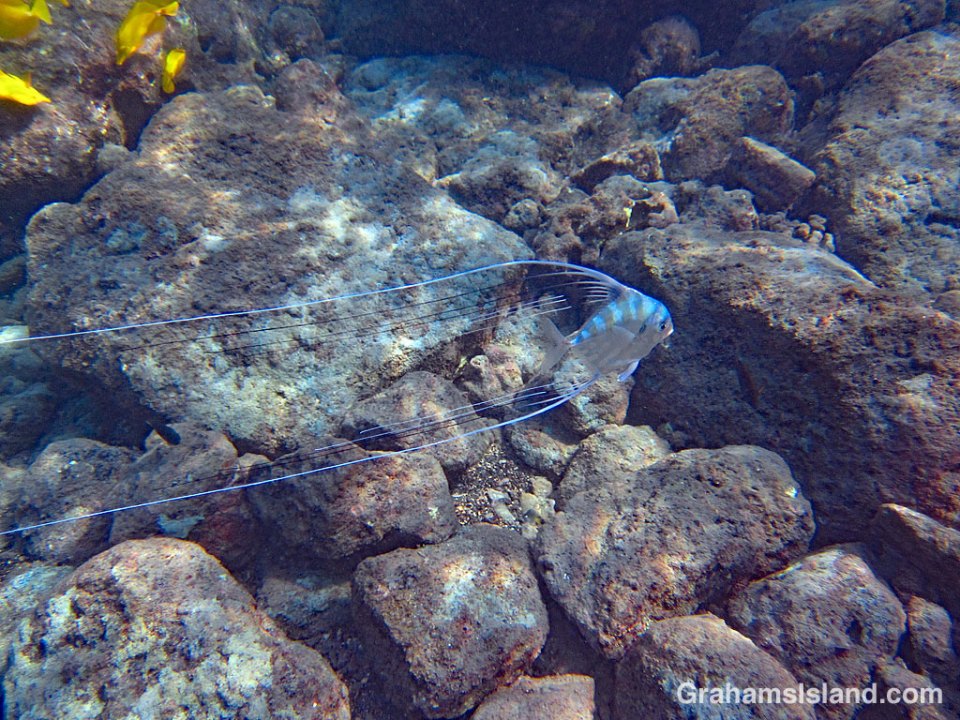
This is the time of year when juvenile threadfin jacks can sometimes be seen in inland waters. I’ve been on the lookout for them since May, but haven’t seen any. This doesn’t mean they’re not there; so small and shimmery, they’re easy to miss in murky shallow water.

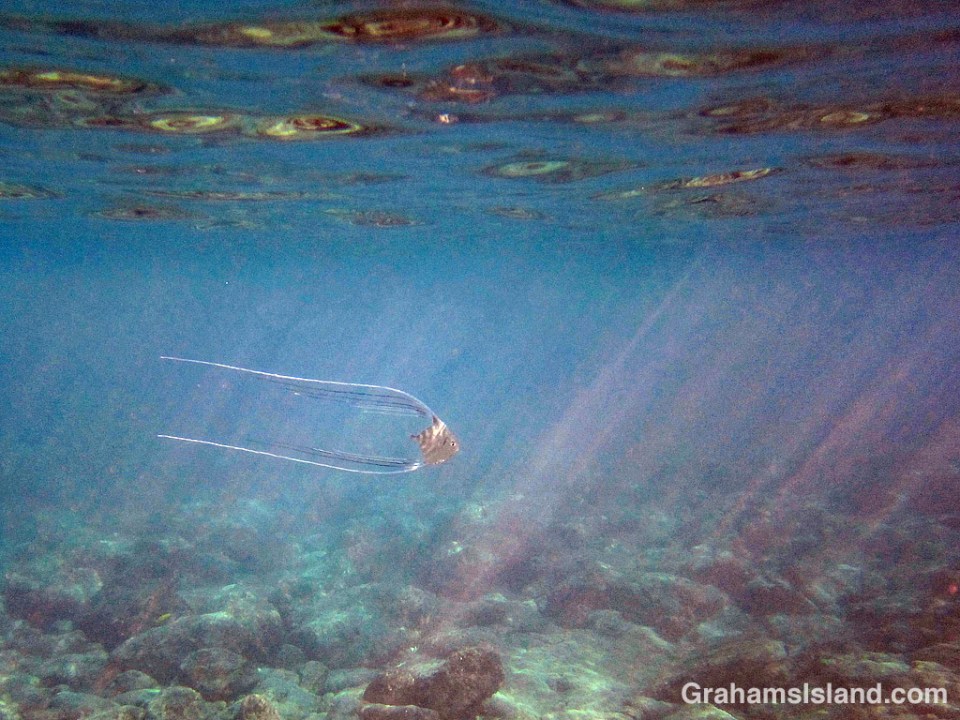
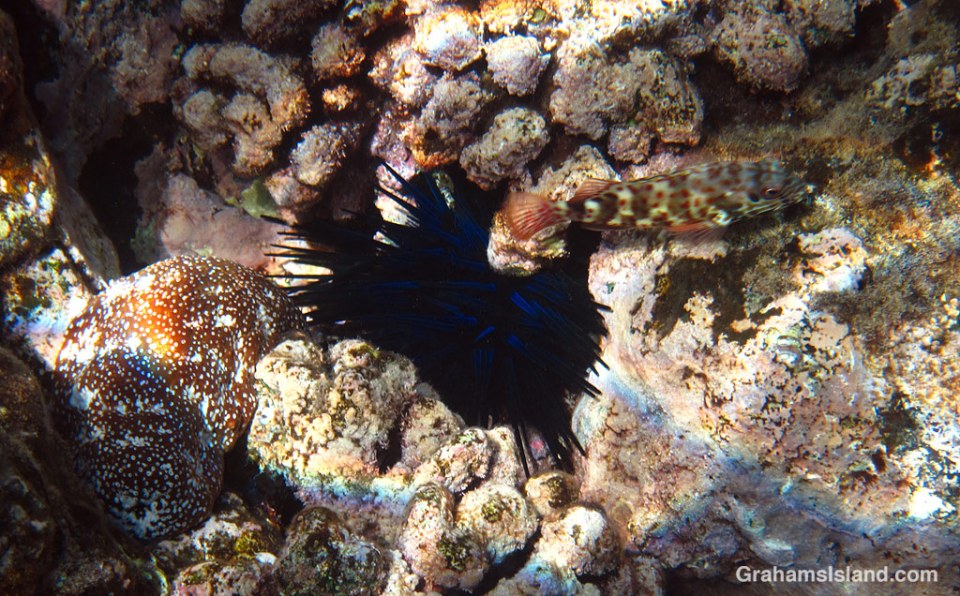
Last week, my vigilance was rewarded. While the water wasn’t too clear, the swell was low so I headed among the rocks near the shore and saw my first threadfin of the year. I took the bottom photo which, while not great, does show the shallow area it tends to inhabit and the sun filtering through that water.

Next day, I went back to the same spot but didn’t see the fish. So I turned and headed out toward deeper water and almost bumped into it coming the other way. I quickly snapped the top photo as it went by, not sure if it was even in the frame, before it disappeared into the shallows.

In the past, these juveniles have stuck around for several weeks, so I’ll hopefully get to see this one a few more times. Ultimately, it will head out to deep water and grow up to be a stocky four-footer living up to 200 feet down.
Threadfin Jack Juvenile in sunlight

Fish farm

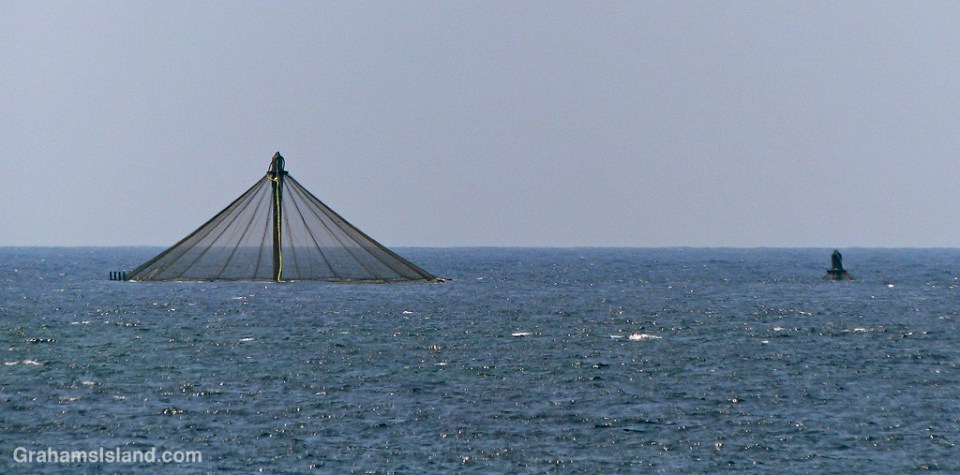
Fish farm net pen and boat

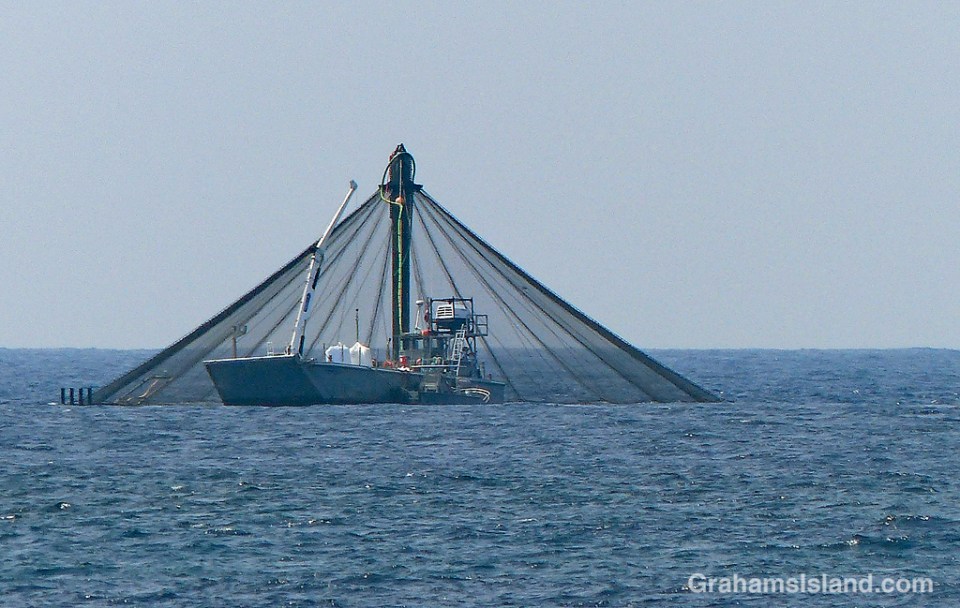
Not far off the Kona coast, near the airport, one or more of these nets can often be seen. They’re the submersible net pens of a fish farm run by Blue Ocean Mariculture. The farm raises Almaco jack which it markets under the name Hawaiian Kanpachi.

In the wild, the fish is prone to ciguatera, a toxin that can cause diarrhea, vomiting, numbness, and other unpleasant symptoms. This is the reason almaco jacks aren’t fished commercially. But the farmed fish are free of this problem. I have mixed feelings about farmed fish, but this farm seems to be well regarded and is approved by Monterey Bay Aquarium’s Seafood Watch.

Part of my ambivalence may be down to the fact that, last year, one of the few resident monk seals living around the island became trapped in a pen and drowned. I’ve since heard that when work is being done on a pen, it should be raised so part is above the surface. That way, if something swims into a pen and can’t get out again, it can at least surface inside the pens to breathe. Whether that happened in this case, I can’t say. The official word is that mariculture projects in Hawaii are under review by the Army Corps of Engineers and NOAA.

Fish farm net pens

Wind turbines crank out the power

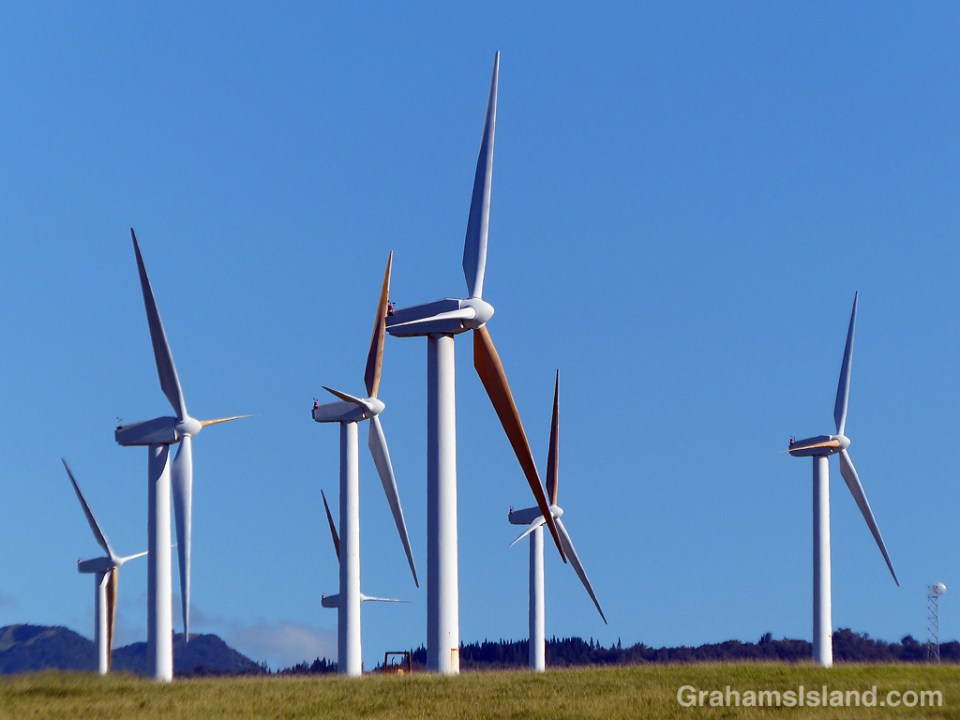
Wind turbines Hawi and Mauna Kea

This week’s Sunday Stills challenge is ‘Drunk with .…’ I thought about a photo of my liquor cabinet, but settled instead for ‘Drunk with Power,’ a reasonable choice in these turbulent times.

Hawi Wind Farm began operations in 2006 and has 16 turbines churning out 10.56 MW. This power is supplied to Hawaii Electric Light Company, which runs the power grid on the island.

My interest in the wind farm is mostly visual. I like the patterns that the turbines make, and every once in a while the telescopes of Mauna Kea can be seen in the distance.

See more Sunday Stills responses here.

Wind turbines Hawi

Abstracts: Rainbow Falls banyans

Abstracts-Rainbow Falls Banyans

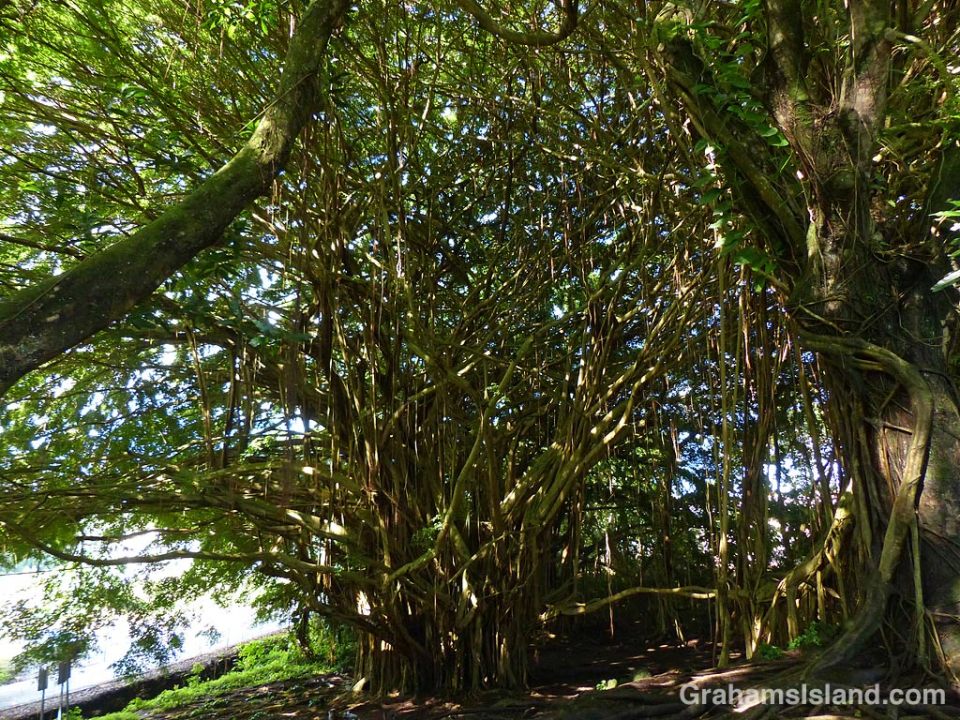
Abstracts-Rainbow Falls BanyanThe main attraction of Wailuku River State Park, in Hilo, is Rainbow Falls. But at the top of the hill are these huge banyan trees.
Banyans are not just a huge sprawl of branches, but a sprawl of roots, too. As epiphytes they begin life growing on other trees, from seeds dispersed there by birds. Over time, they send roots down to the ground, known as prop roots, which help support the mass of branches.

Banyan trees are also known as strangler figs because their roots and branches will ultimately overwhelm the host tree and kill it. Eventually, the dead host will decay and leave a hollow center to the banyan tree that’s left.

By continuing to send down prop roots, banyans grow out as well as up. Very old trees can cover a huge area. For example, the Great Banyan Tree in Kolkata, India is more than 250 years old. Its covers around four acres and has more than 3,500 prop roots. Here in Hawaii, the largest banyan grows in Lahaina on Maui. Planted in 1873, it now has 16 main trunks and covers two thirds of an acre.

The Rainbow Falls trees aren’t that large, but they’re coming along nicely.

Lesser grass blue butterflies

Lesser grass blue butterflies

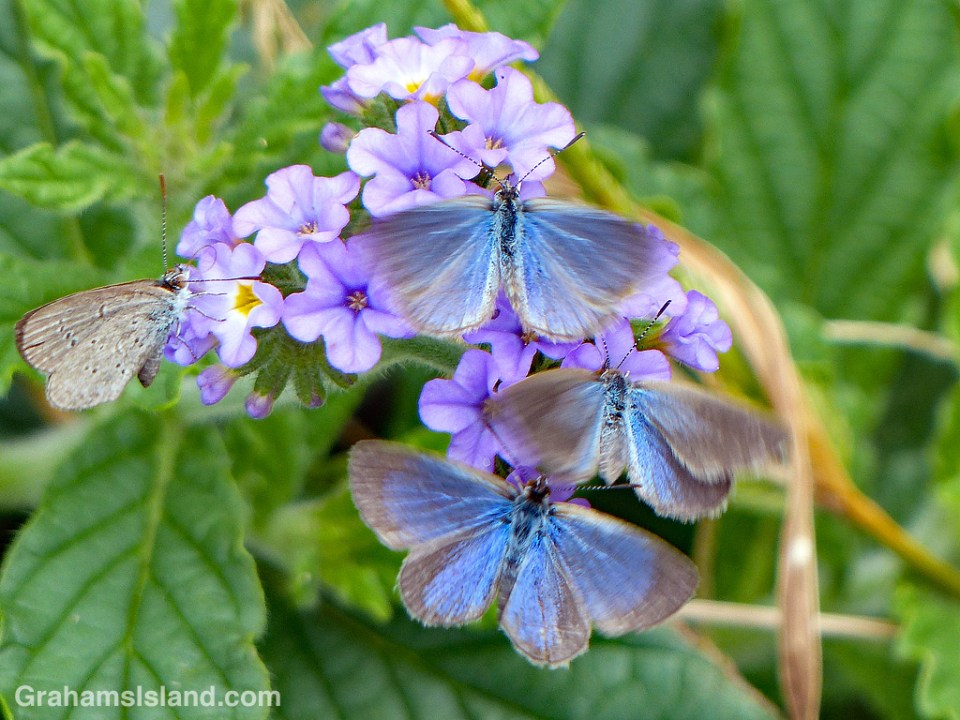
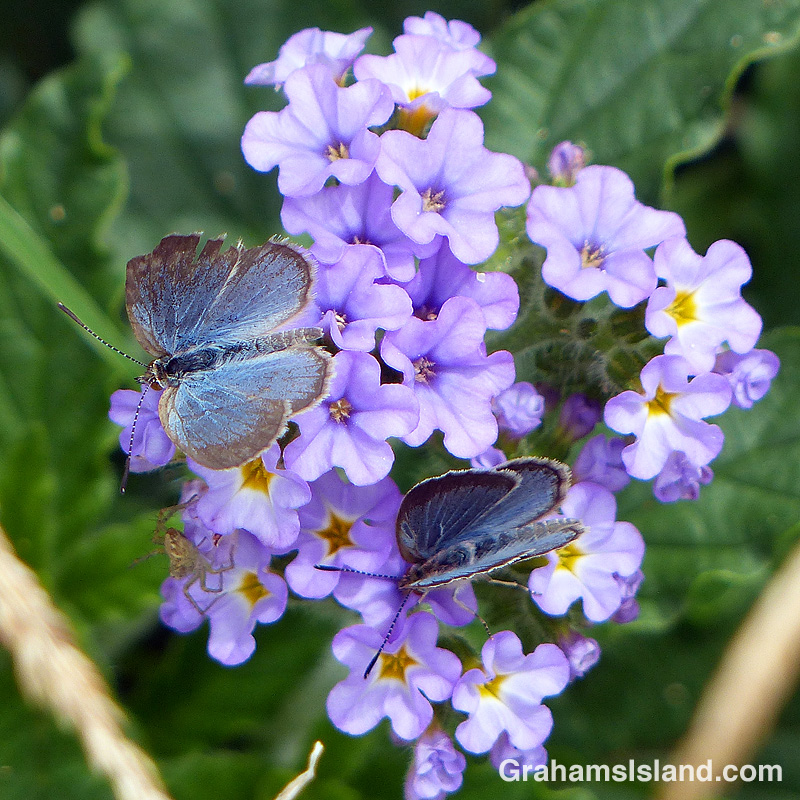
Lesser grass blue butterflies and a spiderThe lesser grass blue butterfly (Zizina otis) was first seen in Hawaii on Oahu in 2008 (for an article, or most of an article, about the find, click here). They’re now well established on the Big Island as well.

Lesser grass blues are very small, with a wingspan no more than ¾-inch. With wings folded up they’re the size of a small fingernail. They also fly close to the ground, within a foot or two.

Lately, I’ve been seeing them in large numbers on these blue heliotrope (Heliotropium amplexicaule) flowers. When I say ‘seeing them,’ what I mean is that when I walk past a patch of these flowers, a host of lesser grass blues will flutter up from the flowers, dance around in a tizzy for a few moments, and then settle back down again. When they do this, it’s like blue confetti being thrown (a few inches) into the air.

I’ve tried to capture this image with my camera, but haven’t been able to (and I’ve taken LOTS of photos). The butterflies are so small, I’m tall, and the effect is fleeting. But the top photo gives an idea of what’s going on, with three lesser grass blues homing in on the small blue heliotrope flowers while a fourth has already found a spot.

It wasn’t until I processed the photos at home that I noticed the spider in the second photo. I don’t know what it made of all the butterfly activity. I hope they weren’t its prey.