
When I was last at the Golden Pools of Keawaiki, I encountered this metallic skink skittering along the water’s edge and then clambering up over the lava. I’m always impressed by creatures that live in such a harsh environment.


When I was last at the Golden Pools of Keawaiki, I encountered this metallic skink skittering along the water’s edge and then clambering up over the lava. I’m always impressed by creatures that live in such a harsh environment.
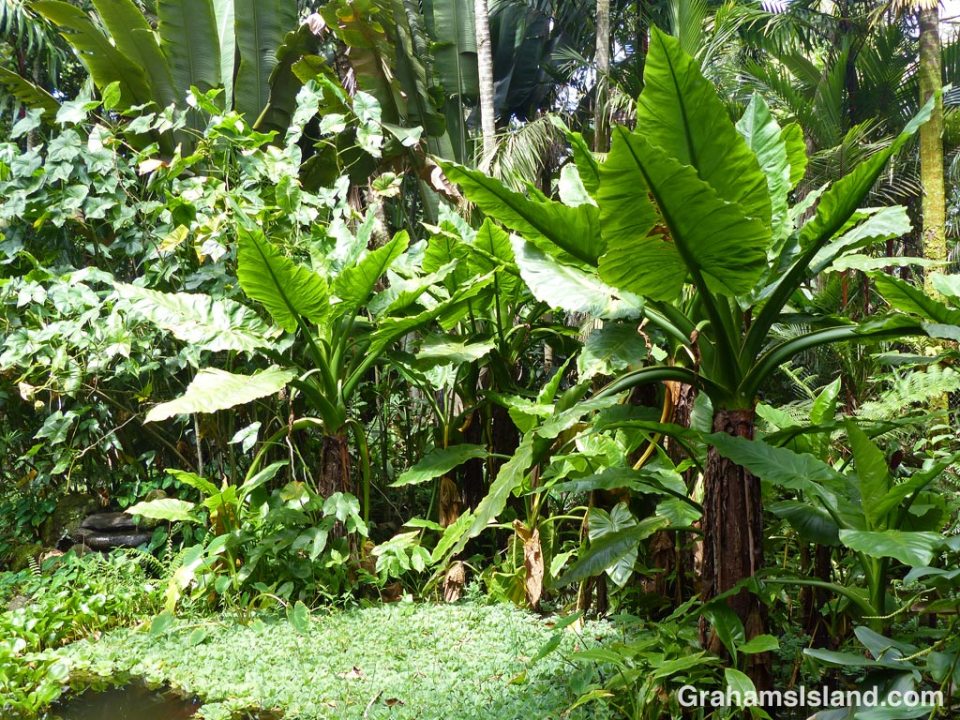
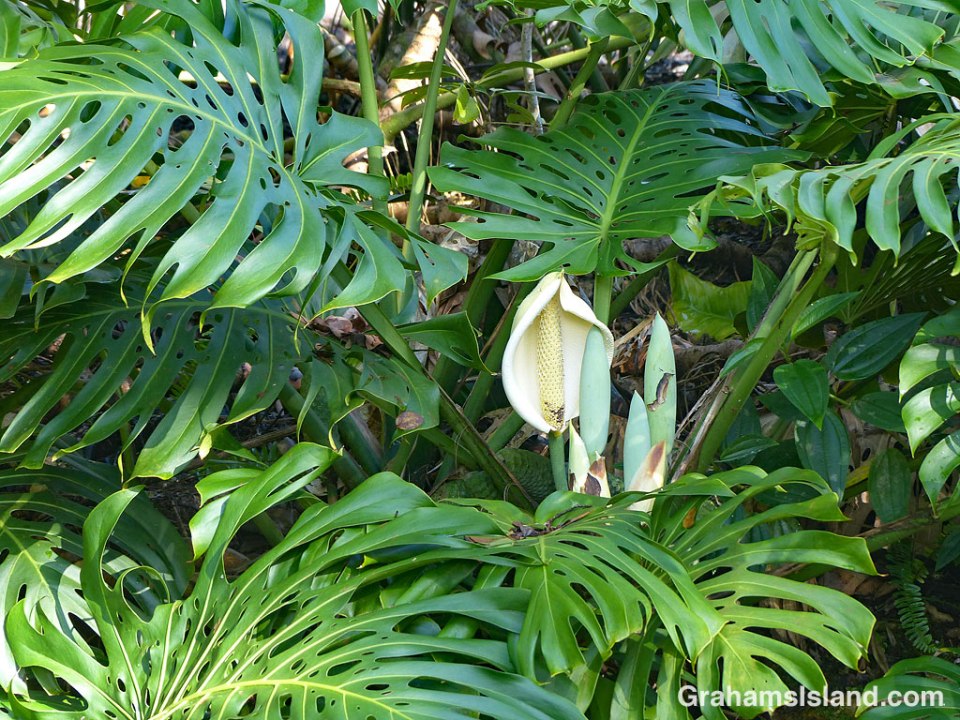
 I live in a pretty green area of the Big Island, but I always enjoy a visit to the much wetter east side. The extra rain allows the tropical foliage to run amok. Trees and shrubs compete for space and light, and vines run everywhere – along the ground and up tree trunks. It’s a riot of many shades of green and leaves of every size, from tiny ground covers to giant bananas to the distinctive leaves of a monstera deliciosa surrounding its flower (below).
Posted in response to this week’s Sunday Stills challenge on the theme of ‘Plant Life.’ See more responses here.
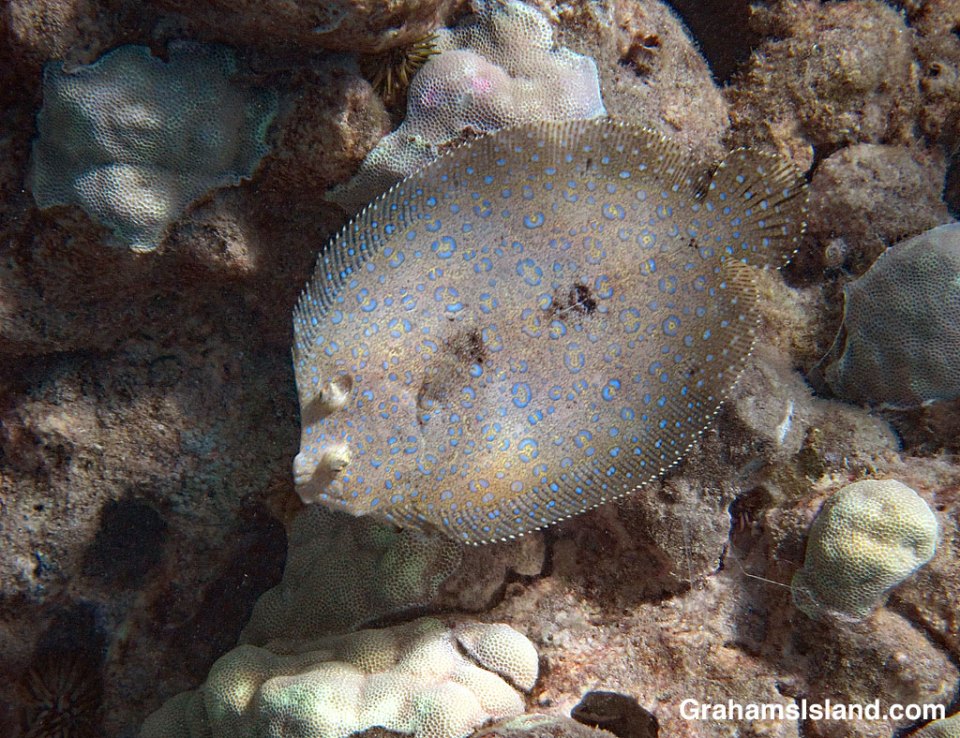
A small flowery flounder passes over what I think are patches of lobe coral. Those two bumps casting shadows on the top of the fish are the flounder’s eyes, which sit on the end of small stalks. As you can see in the photo, the two eyes are pointing in different directions. This isn’t a case of wandering eyes; they work independently.
However, flounders, like other flatfish, do indeed have the most remarkable wandering eyes. Flatfish start out looking like regular fish, with one eye on each side of the head. As they transition from the larval to juvenile stage, one of the eyes migrates over the head to join the other one on what ends up being the top side of the fish.
The eyes migrate to different places, depending on the kind of flatfish. Some are left-eyed and some right-eyed, which refers to the eyes’ relationship to the mouth. Flowery flounders are left-eyed flatfish, the eyes being to the left of the mouth when seen from head on.
There are pros and cons to photographing flounders and other fish that rely on camouflage for protection. On the plus side, once they settle, they tend not to move so it makes it easier to get a photo. On the downside, because they blend in so well, it’s not easy to get a photo where the fish is clear. The best hope is to see one on the move, as I did with this one, not only to get a photo, but also to enjoy their elegant motion as they ripple through the water.
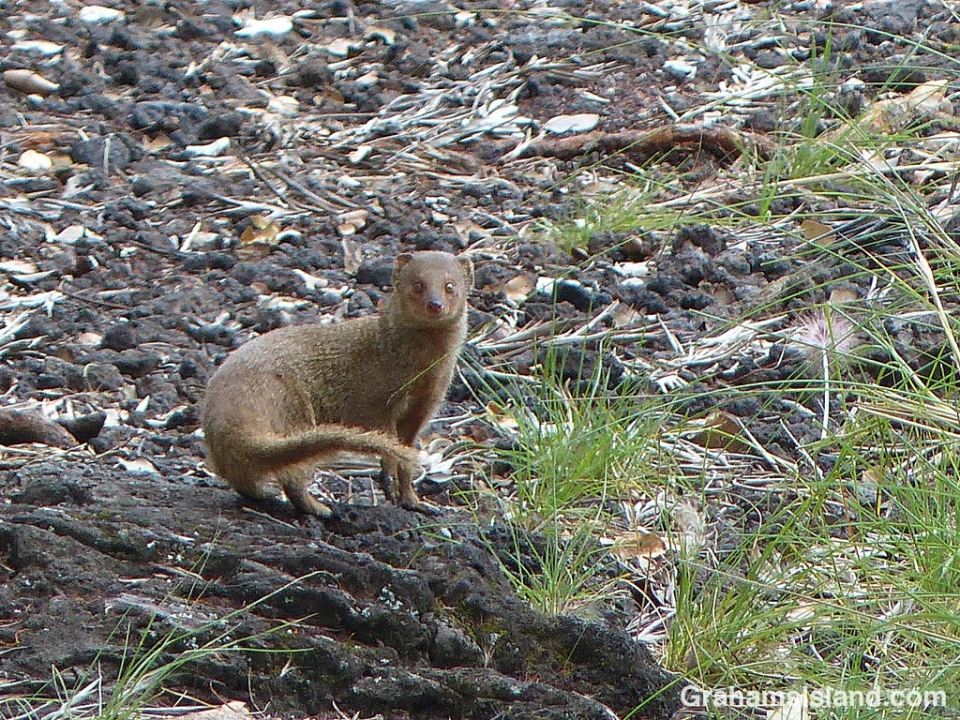
On a recent hike at Pu’u Wa’awa’a, I was ambling along one of the trails when I heard squeals and a commotion in the grass a few feet off to the side. A mongoose shot out from cover hotly pursued by a second one. They took off down the trail, away from me, before vanishing into the undergrowth on the other side.
A couple of minutes later, this one reemerged, trotting away on the trail before it turned suddenly and gave me this look. I don’t think my presence had registered earlier, so it must have been a bit surprised to see me. Don’t know what happened to the other one, but since I didn’t hear any horrendous screeching, I suspect it got away.
For more information about Pu’u Wa’awa’a and its trails, go to puuwaawaa.org.
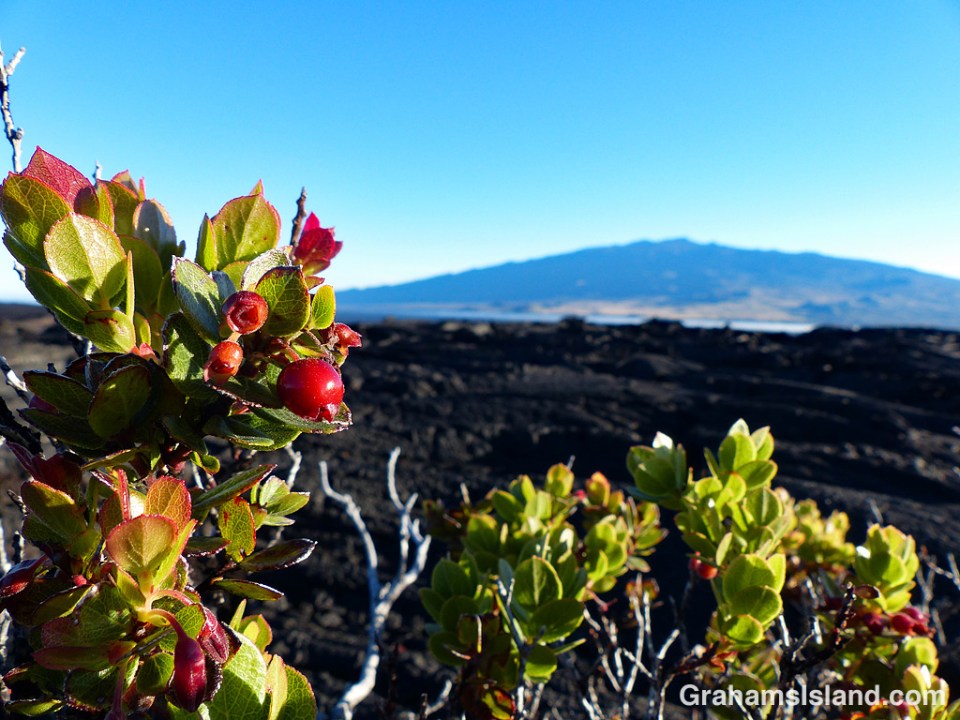
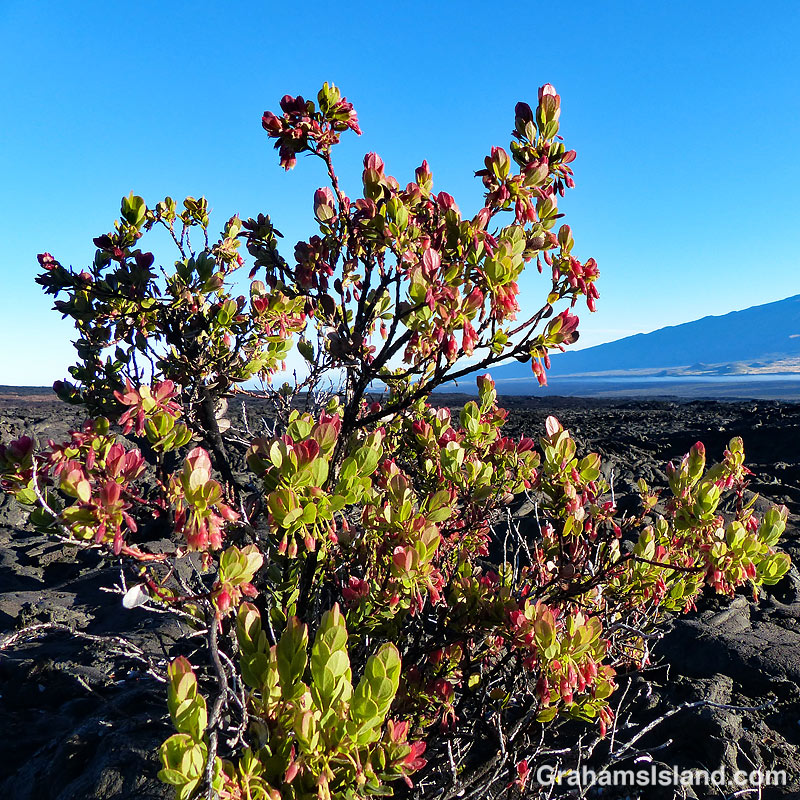
Ohelo ‘Ai (Vaccinium reticulatum) is an endemic plant also known as Hawaiian blueberry. It’s seen here growing on the inhospitable slopes of Mauna Loa, with Mauna Kea in the background.

It should be no surprise that Hawaii generates a good deal of solar power. Many houses have panels, but there are also larger arrays serving communities. These solar panels are at Waiki’i Ranch, a planned community, on old Saddle Road. I like that they’re sitting next to an old water tank.
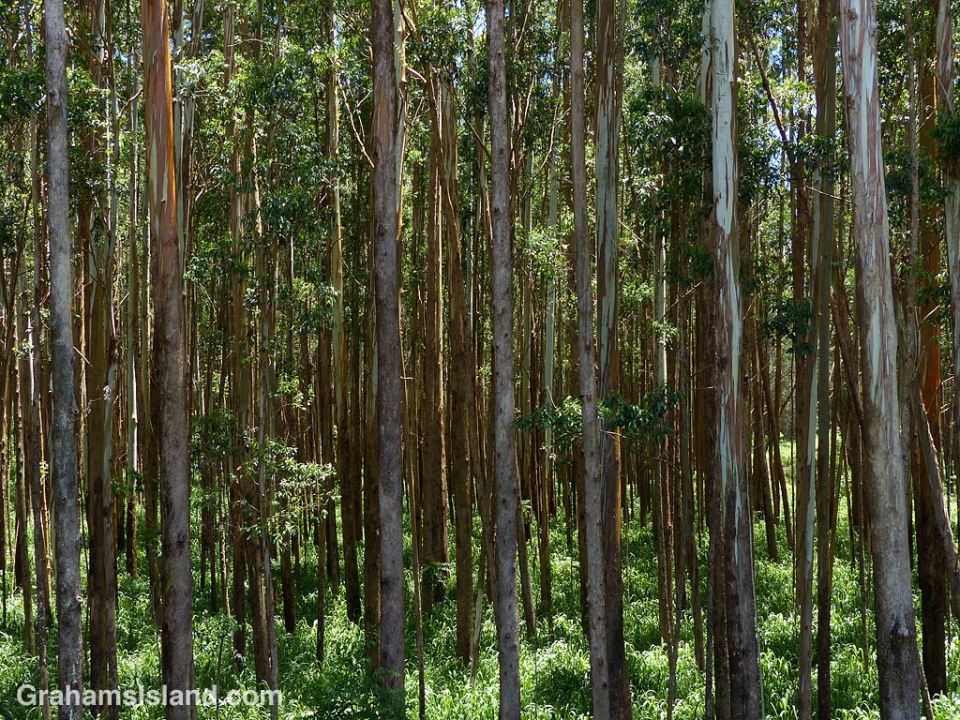
The Hamakua coast of the Big Island is the site of extensive eucalyptus forests. These tall, fast-growing trees are grown for export to Asia. Harvested trees are trucked to the west side port of Kawaihae and stored there until the next ship comes in.
However, last year, the company running the operation decided not to renew its lease. Since then, the landowners have been casting around for a new business to carry on the work, so far without success. So the trees continue to grow, making a pleasing sight with their dappled trunks catching dappled sunlight.
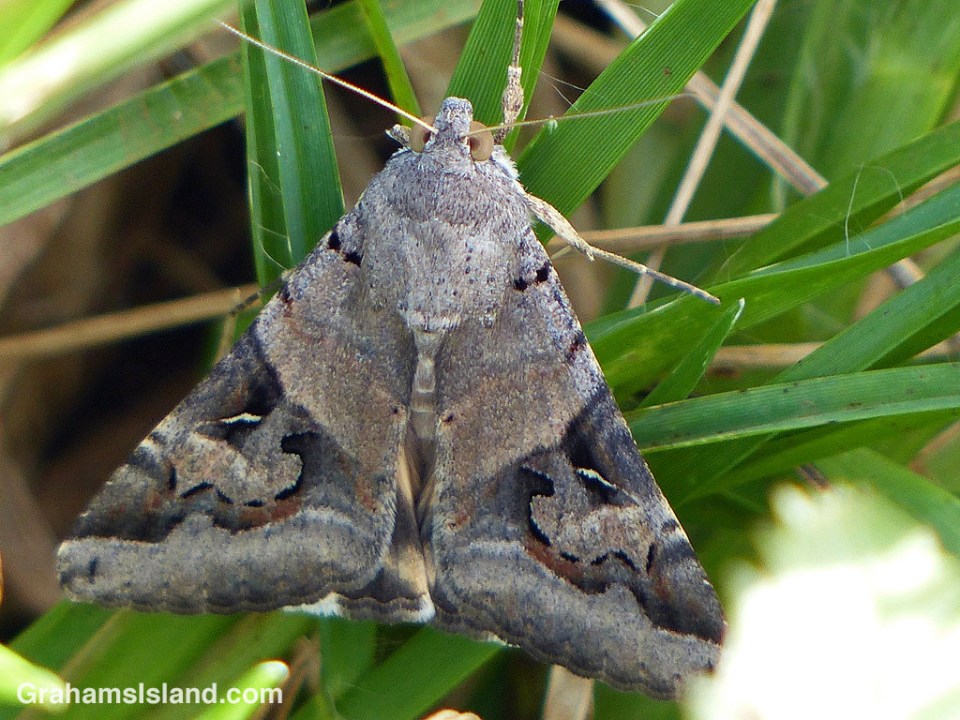
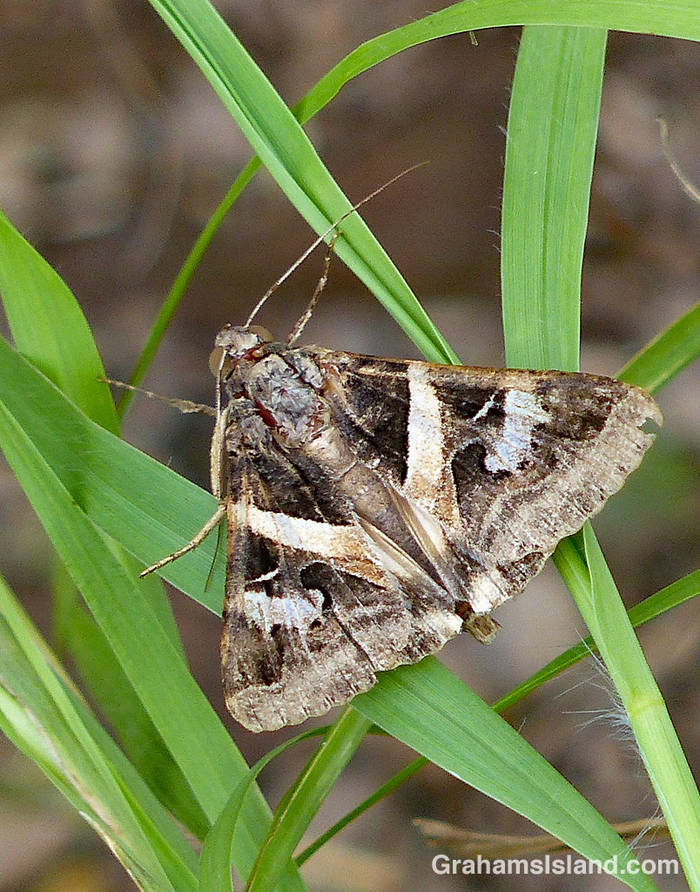 Two photos of indomitable melipotis (Melipotis indomita) moths, a female above and a male below. This species is common across the southern United States, but many sources do not include Hawaii in its range. However, it was first recorded here in 1969 according to this paper (https://scholarspace.manoa.hawaii.edu/handle/10125/11031) published in 1974.
Caterpillars of the moth were first found on kiawe trees but soon after turned up on defoliated monkeypod trees, hence it also being known as the monkeypod moth, because of its fondness for shrubs and trees of the legume family. They’re certainly quite common up here on the northern tip of the Big Island as I see them often when I’m out and about.
Many thanks to Daniel at whatsthatbug.com for help with the identification. For his detailed information about the moth, see https://www.whatsthatbug.com/2018/05/01/indomitable-melipotis-moth-from-hawaii/.

