
 The wandering glider (Pantala flavescens) is a fairly common dragonfly with a worldwide distribution, but it’s not one I’ve previously photographed. This isn’t for lack of trying.
I like dragonflies, so I’m always lured in when I see them flitting around. I figure that, even though they’re in motion, I should be able to get a photo because they often fly back and forth over small areas looking for food. So I’ve taken hundreds of dragonfly photos, many of which have a bit of dragonfly in them, some of them a whole dragonfly, a few where the dragonfly is fuzzy but identifiable, one or two that look pretty good.
This was another of those days. There were three or four dragonflies in the area and I was shooting photos with my usual success rate when I saw one of them settle. This one was clearly not familiar with dragonfly rules of conduct, which state: 1. Remain in constant motion if photographers are present. 2. If you must rest, make sure you aren’t observed.
Cashing in on my luck, I got several photos before the dragonfly flew off. I took a few more futile flying shots and was about to leave, when the same dragonfly landed again in almost the same spot. I particularly like the single yellow-brown cell in each of the wings, which is a handy identifier.


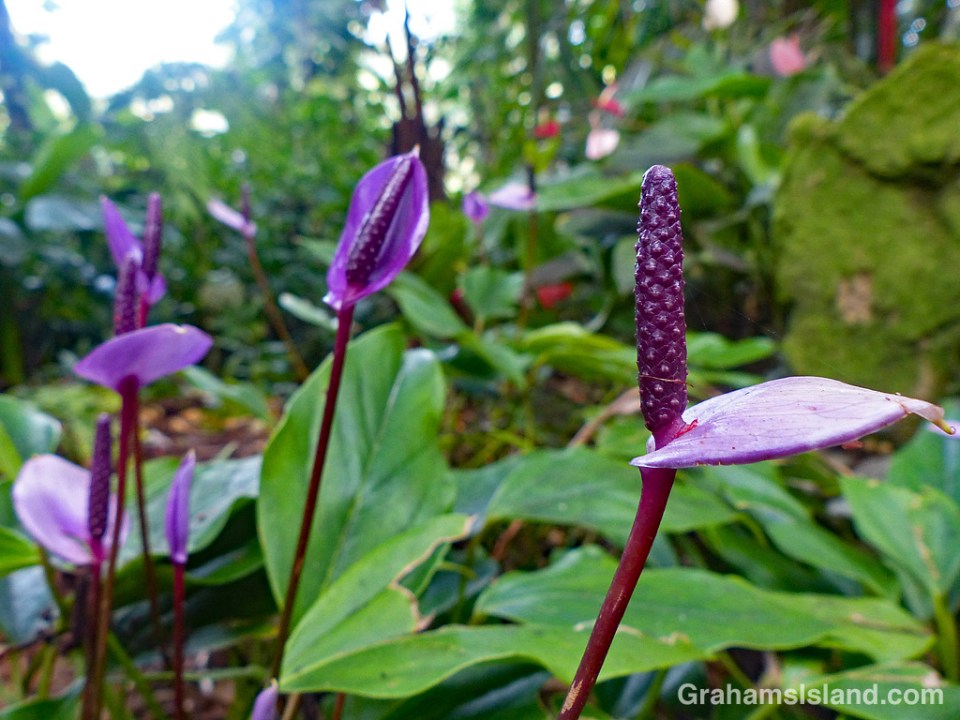
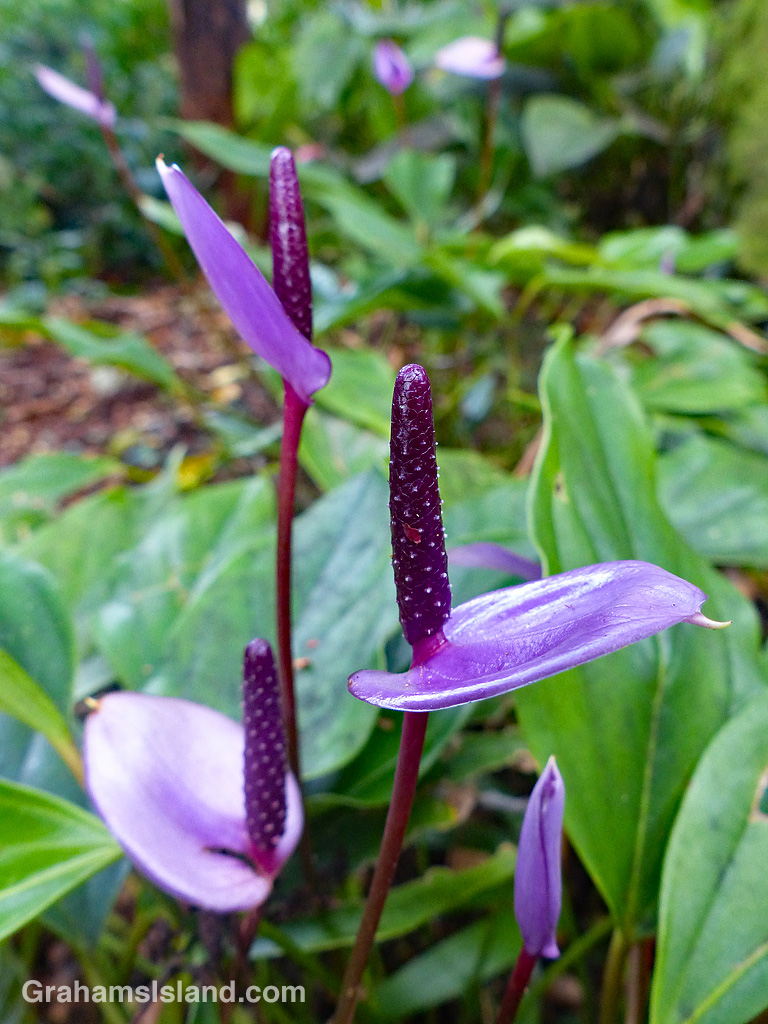 Let’s face it, anthuriums are a little bit strange. But I’ve grown to appreciate them more, living in Hawaii, and they certainly are a richly tropical flower.


 I was swimming one day when I realized I was being watched. Peeking up from a crevasse in the reef, was this giant porcupinefish. These fish do seem to be quite curious and this is a look I’ve seen before. The difference here was that the water was quite shallow, so the fish was not as deep as they usually are. If I got too close, the fish would dip deeper into the crevasse. If I moved away, it would pop up again.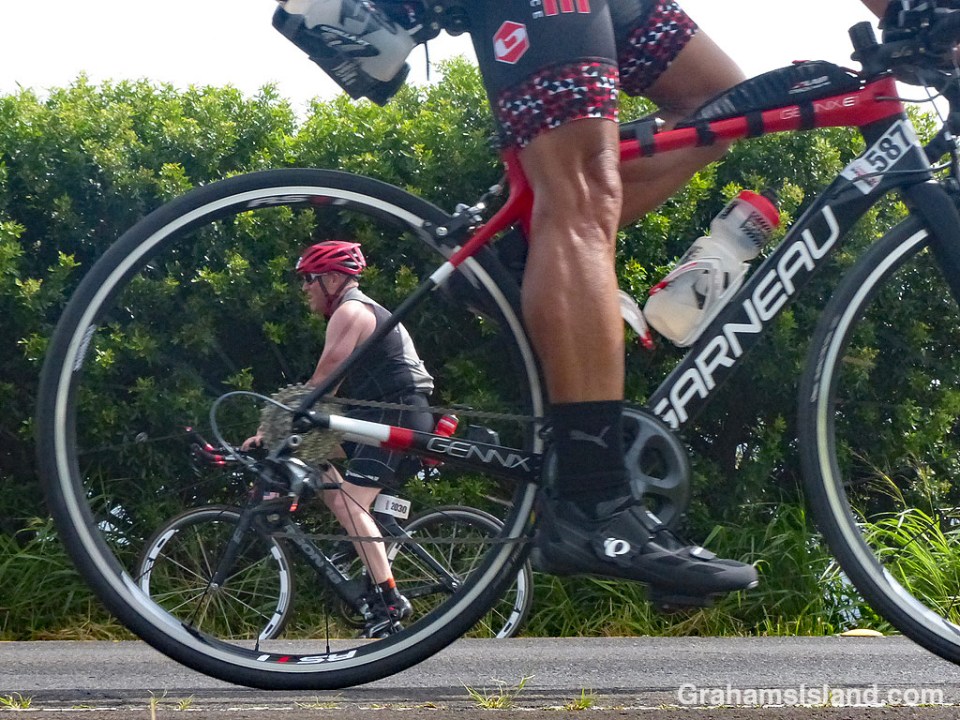
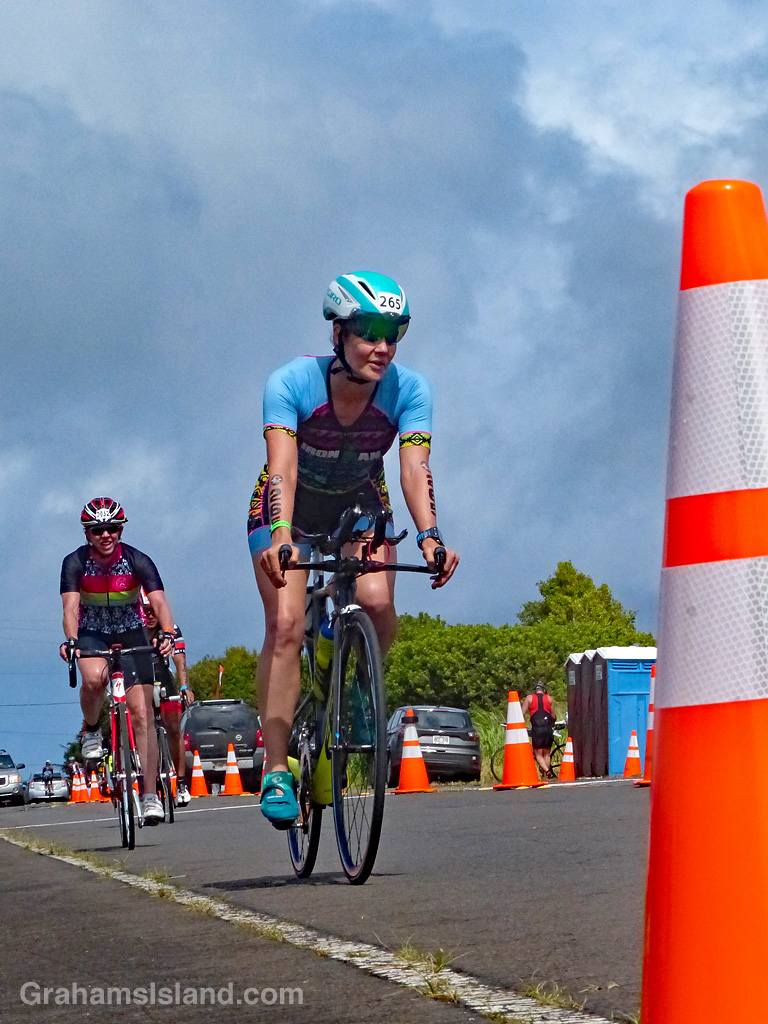 Last Saturday was the Ironman 70.3 race on the island. Unlike the Ironman world championship, held here in October, the 70.3 series covers half the distance. That means there’s a 1.2 mile swim, a 56 mile bike ride, and a 13.1 mile run. However, as with the longer race, Hawi is the turnaround point on the bike leg, so I ambled down to take a look.

