
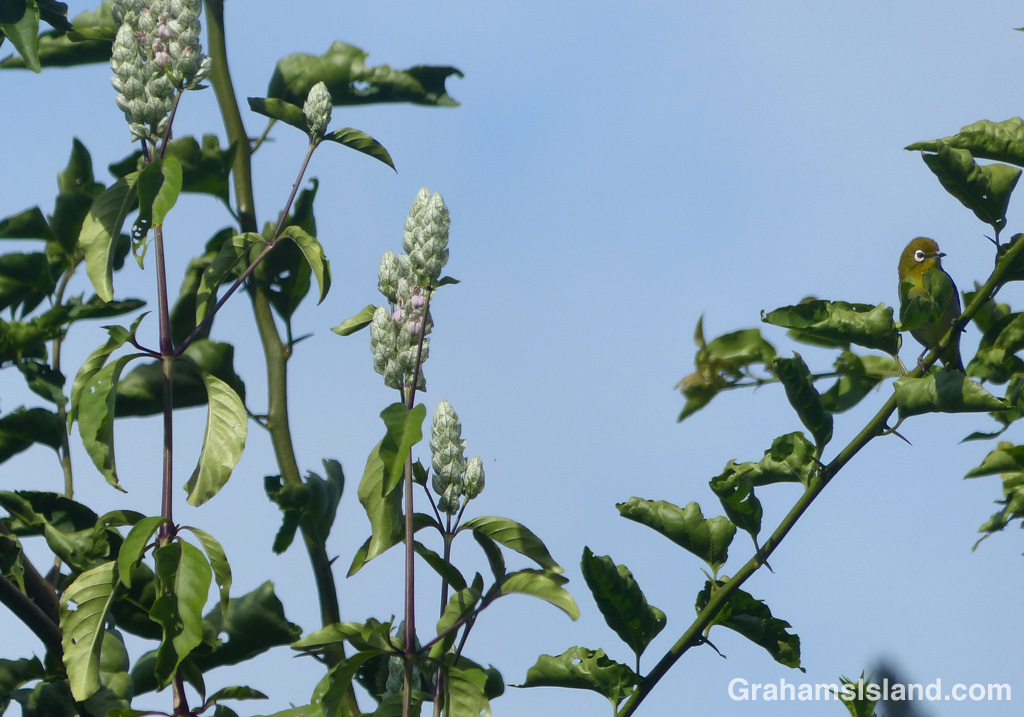
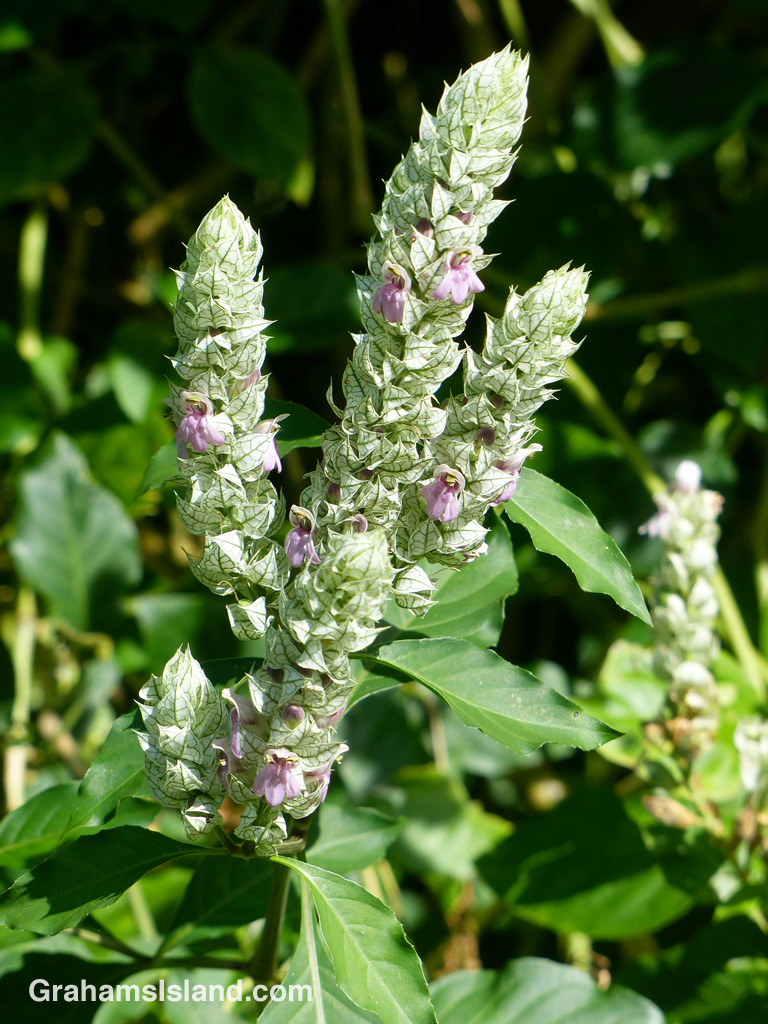
Squirrel’s tail (Justicia betonica) is a fairly common plant on the Big Island. It can grow into a quite large shrub with pink flowers on distinctive stalks. This one offered a handy perch for a Japanese white-eye.
King Kamehameha’s birthplace

At Kapakai Kokoiki Heiau in North Kohala, not far from Mo’okini Heiau (which can be seen on the hill in the background), stands this sign. Kamehameha Akāhi ‘Āina Hānau loosely translates as the birthplace of Kamehameha I. He was born here around 1736. The exact date isn’t known, with some accounts placing it as late as 1758. Known as Kamehameha the Great, he was the king who fulfilled Hawaiian prophecies and united the Hawaiian islands for the first time in 1810.
He was succeeded by four others in his family who took the name Kamehameha, so the name is in the forefront of Hawaiian history. In present day life it occurs in numerous ways. There’s Kamehameha Day, a state holiday, which celebrates his birth. Kamehameha Schools is an private school system with extensive land holdings on the Big Island and elsewhere. Hotels and other businesses sport the name. A fair number of them will be located on Kamehameha Street, Road, Highway, Avenue, or Boulevard.
In short, the name Kamehameha is still an integral and important part of everyday Hawaiian life.
Abstracts: Fruit picker
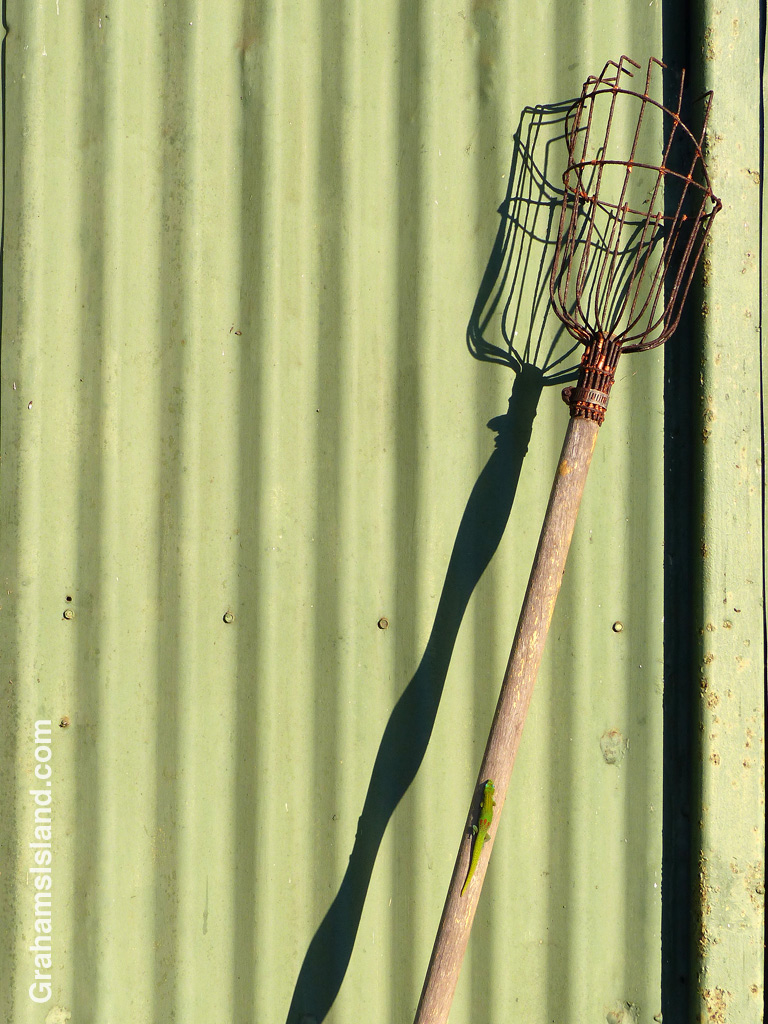
Leaning against a corrugated shed, a fruit picker casts a strong shadow in the late afternoon.
Cane spider

The official unit of measurement for cane spiders is the tuna can as in, ‘that spider is the size of a tuna can.’ In the case of this particular cane spider that statement is true – the trim it’s resting on is a 1×4.
While large, cane spiders aren’t particularly aggressive. If threatened, they prefer to run off – and they are fast. If one does bite, it can inject venom, but it isn’t considered dangerous. On the plus side, cane spiders are hunters and include cockroaches amongst their prey. While I heartily endorse this activity, it’s a bit much for me to have a mobile, hairy tuna can scurrying around the house and leaping out at inappropriate moments.
The first time I saw a cane spider was while reading in bed, which was startling to say the least. There then followed a merry chase, involving moving furniture, before I was able to trap the beast and release it outside. That’s where I prefer to see them and I was happy to see this one on the side of the house. It stayed in this spot for quite a while until one time I went to look again and it was gone. At that point, the trick is to carry on as usual and not start wondering whether it followed me inside after the last time I saw it.
Sergeants feeding

It’s always fun to see fish active just below the surface of the water. Needlefish live in this area, but schools of sergeants also gather there to feed. The fish with the darker stripes and yellow patch on the upper back is the Indo-Pacific Sergeant. It’s a relatively new to Hawaii having arrived around 1990. The fish with less distinct stripes is the Hawaiian Sergeant, an endemic species. Apparently, the two species have been interbreeding, producing a fish with the coloration of the Hawaiian Sergeant, but with the more pronounced stripes of the Indo-Pacific Sergeant.
Mauna Kea’s winter wonderland
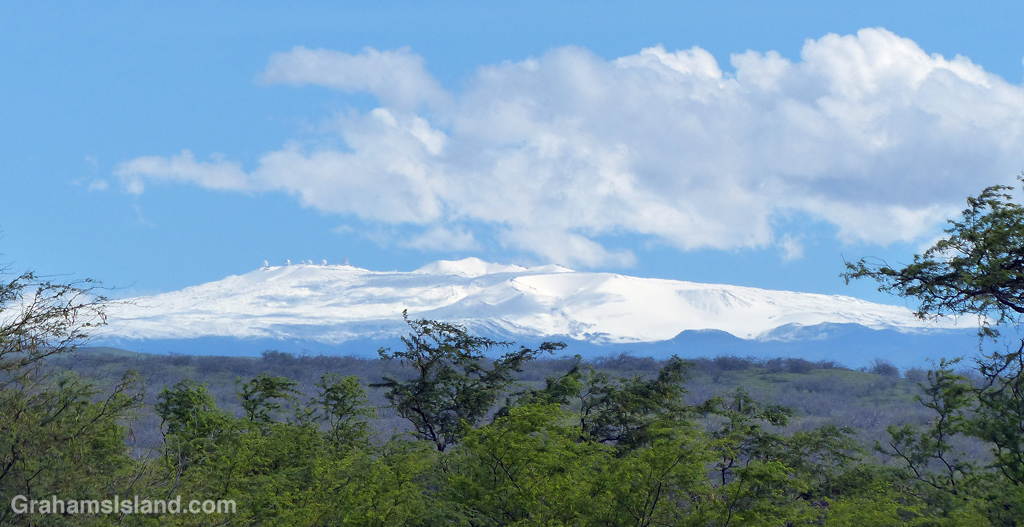
The past few weeks have been very wet on the Big Island with moisture-laden systems sweeping through from the south as well as the usual northeast. As a result, both Mauna Kea and Mauna Loa have received generous amounts of snow. This view is taken from the relative warmth of the Kohala coast.
Ruddy turnstones

Ruddy turnstones get their name from their red legs and their feeding habit of turning over rocks in search of invertebrates. This group was mostly resting and grooming near the water’s edge. In the foreground is a Pacific golden plover.
Morinda citrifolia
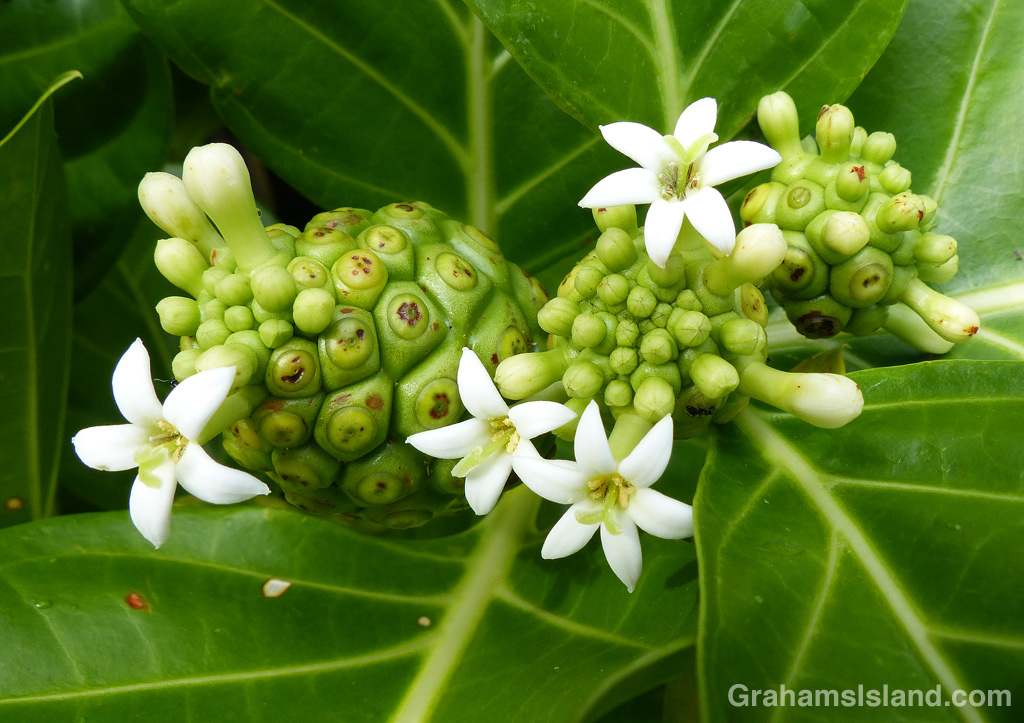

Morinda citrifolia is also known as Noni or Indian Mulberry. The flowers generally have 5 lobes, but this can vary, as this plant shows. The flowers emerge from what will become the fruit, which will end up white or yellowish.
The fruit is edible and used for medicinal purposes, but usually in a juiced form. There’s a good reason for this. As is noted on Wildlife of Hawaii’s plant page, “The ripe, white fruit has a nauseatingly bad smell, very much like fresh vomit mixed with rancid garbage. Avoid smelling it if you have a weak stomach.” Duly noted!
This plant was next to one of the Golden Ponds of Keawaiki.

