
The idea of The Numbers Game is to enter a number into the search bar of your computer and then post a selection of the photos that turn up. This week’s number is 165. Captions are on the photos. You can see more responses here.




The idea of The Numbers Game is to enter a number into the search bar of your computer and then post a selection of the photos that turn up. This week’s number is 165. Captions are on the photos. You can see more responses here.
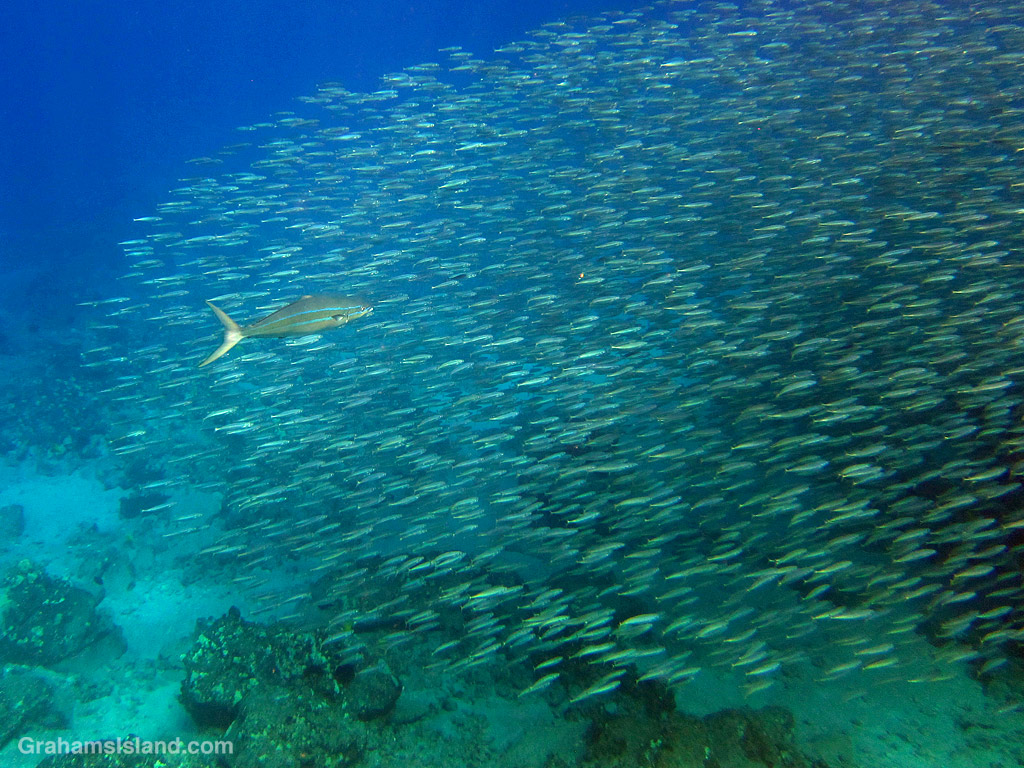
Leatherbacks are members of the jack family. They tend to be solitary or seen in small groups, but until recently, I hadn’t been seeing any at all. I don’t know why that was, but they seem to be back in their usual numbers and activities now.
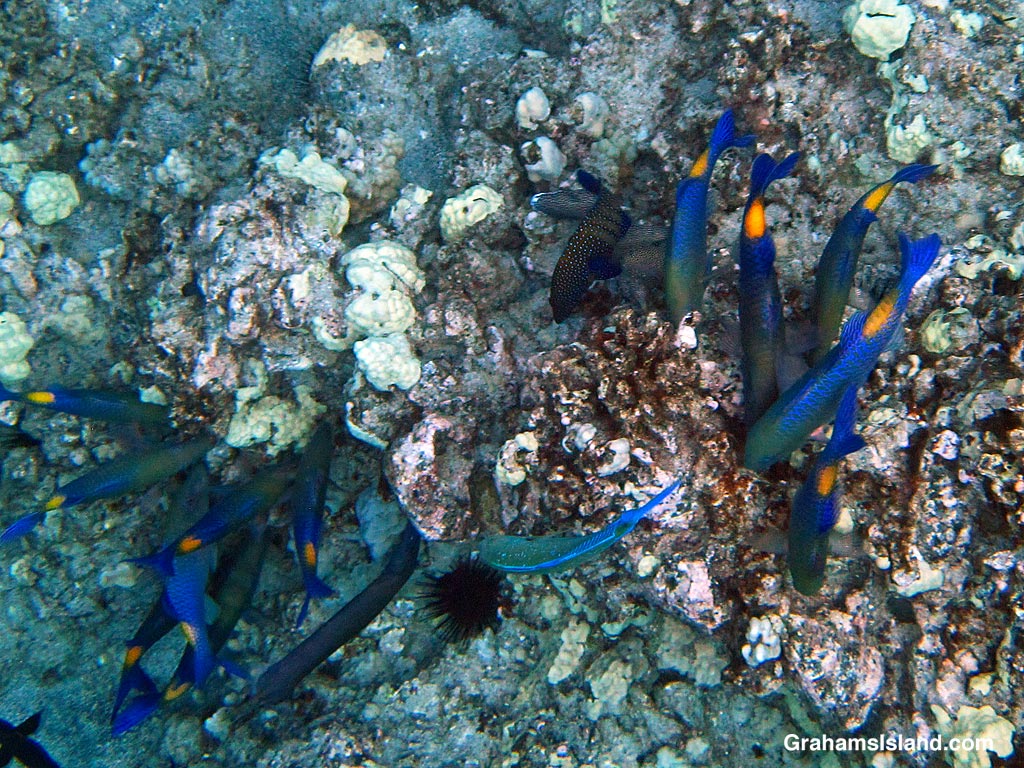
It’s not unusual to see this kind of gang activity while snorkeling, and what they’re doing is hunting. Their prey is small fish that take sanctuary in coral heads and among the rocks.
This bunch of hunters is dominated by Blue Goatfishes, easily identified by their blue bodies and yellow saddle at the base of the tail. There’s also a Bluefin Trevally and Pacific Trumpetfish toward the bottom of the photo and, near the top of the photo, a Peacock Grouper with a Whitemouth Moray Eel curling below it.
Eels are popular members of these hunting parties because they can wriggle into the smallest spaces, flushing out prey. The goatfishes perform similar work using long, white barbels below the chin to probe small spaces in the hopes of disturbing a meal. Other fish tag along hoping to be beneficiaries of this work by being the first to snag any victims that get flushed out.


This month’s Becky’s Squares challenge theme is ‘Odd.’ (See more responses here.) I have resisted the temptation to post 28 selfies, which will be a relief to everyone, including me. Instead, I start with a favorite fish of mine, the odd-looking Threadfin Jack juvenile.
The key word here is ‘juvenile,’ because when Threadfin Jacks mature, they end up looking like creatures that could provide security at a Beyoncé concert. But as juveniles, they sport a little diamond body, silvery with black bars, and an extravagant array of trailing filaments. This appearance is intended to mimic jellyfish, which was my assumption when I first saw one.
I used to see these regularly, but in the last couple of years I’ve only seen one pair, and that only for a fleeting moment. Not sure if that’s to do with changing conditions or that I’m missing them in the murkier water that prevails these days.
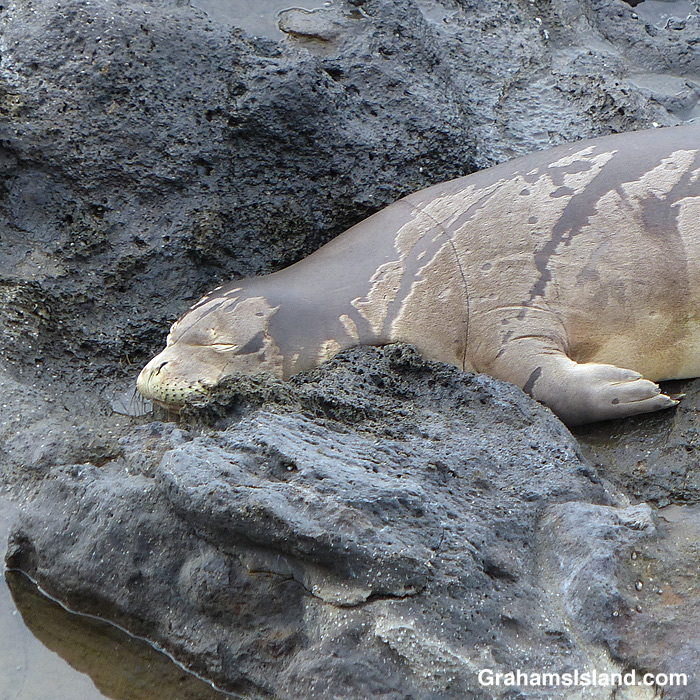
This week’s Sunday Stills challenge theme is ‘2021 in Your Rear-View Mirror.’ See more responses here. I’ve gone with a favorite photo from each month of 2021, with a caption and link to the post the photo first appeared in.


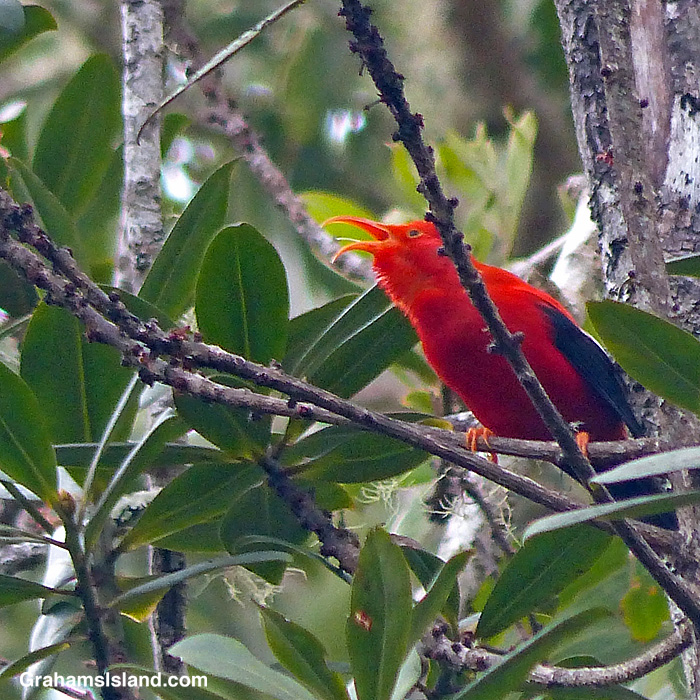
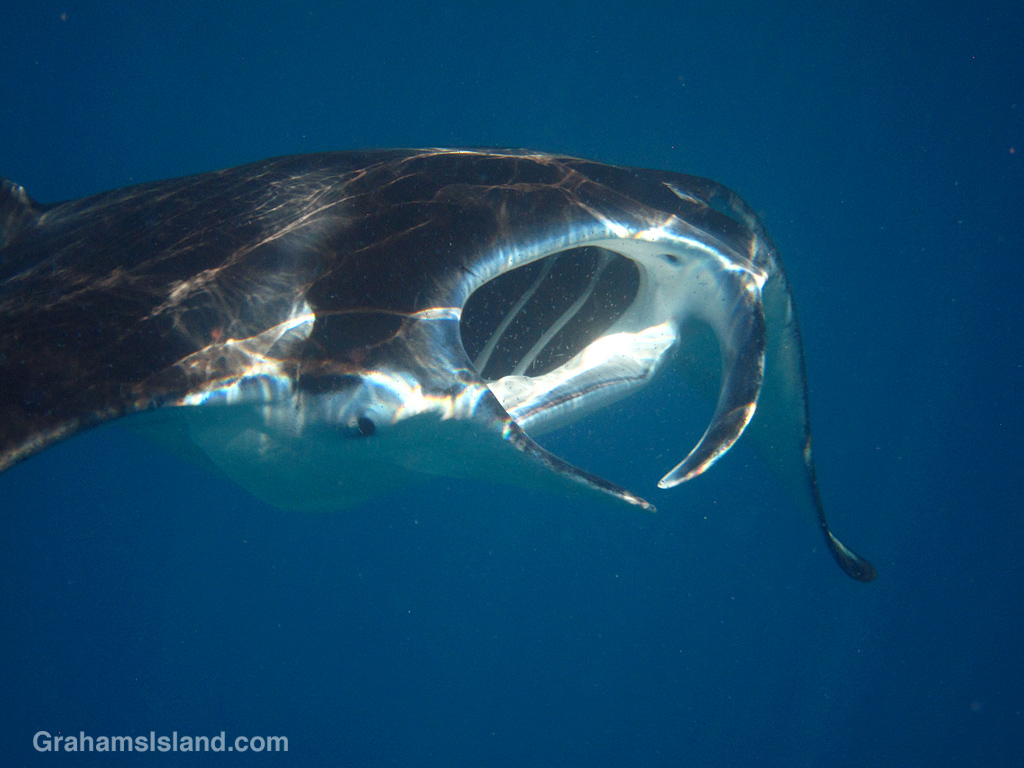




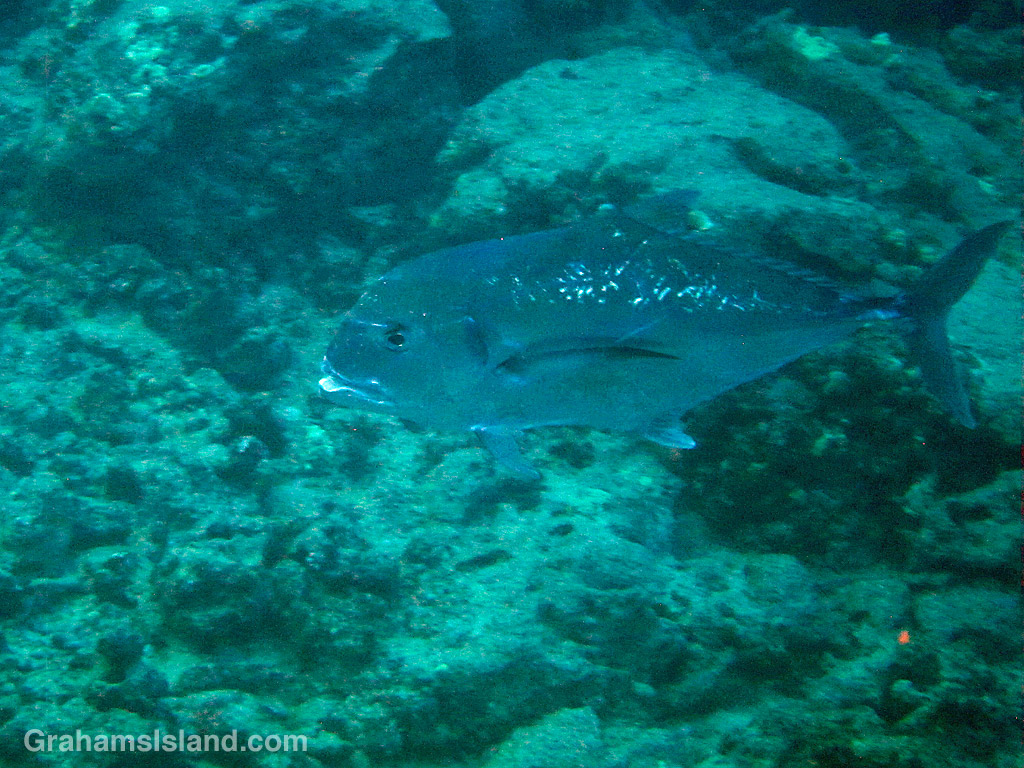
A couple of days ago, I was snorkeling when I saw this enormous fish. I snapped a quick photo, fearful that the fish would quickly disappear. But it stuck around for a minute or two, passing back and forth in front of me, before sliding away into deeper water.
I knew it was a jack, but not one I’d seen before. When I got home, I dove into my fish book and figured out this was a giant trevally. According to my fish book, the giant trevally is the largest of the jack family. The biggest recorded catch is one that weighed 191 pounds. That would be heavier than me! That’s a tad worrisome because my fish book also notes that these curious and fearless fish ‘have been known to grab and rip away divers’ bright snorkel tips and colorful fins.’
This one was smaller than that, probably somewhere between three and four feet long, but comfortably the largest jack I’ve ever seen and probably the largest fish I’ve seen of any kind other than rays and sharks.

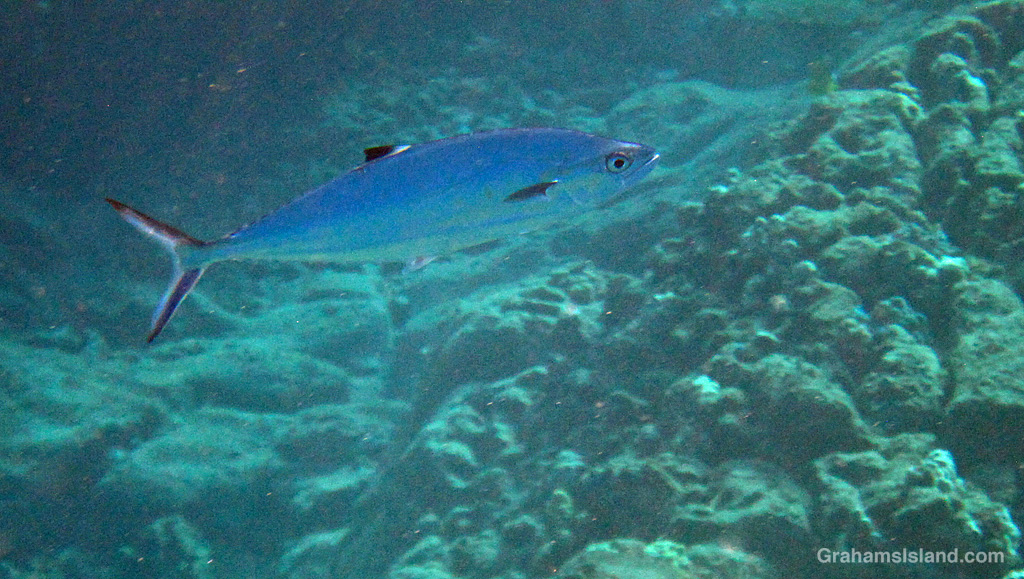
I was getting close to the ladder where I get out after a swim, when two large bluefin trevallies went by. One swam off, but the other one turned around and to check me out and I snapped this one photo in murky water.
I was happy how it cleaned up and how it caught the fish’s curiosity and it’s sparkling blue markings.
Posted in response to Becky’s October Squares challenge theme of ‘Past Squares – Blue.’ See more responses here.

Leatherbacks are members of the Jack family and are most often seen singly or in pairs. I see them quite often and always try to get a photo of them and almost always fail. That’s because they have a tendency to surge upwards to feed and then zip back down.
On this occasion, a group of a dozen or more leatherbacks went by in the company of several bluefin trevallies and other fish. As usual, they were traveling at speed, but the numbers meant I had a better opportunity to get this photo.
 Graham's Island