There are two kinds of Spanish Dancer nudibranchs in Hawaii, the Yellowmargin Spanish Dancer and the Redmargin Spanish Dancer. Both lay egg coils that look like roses. The Yellowmargin’s coils are pink and the Redmargin’s are red.
Posted for Becky’s Squares: Simply Red. See more responses here.
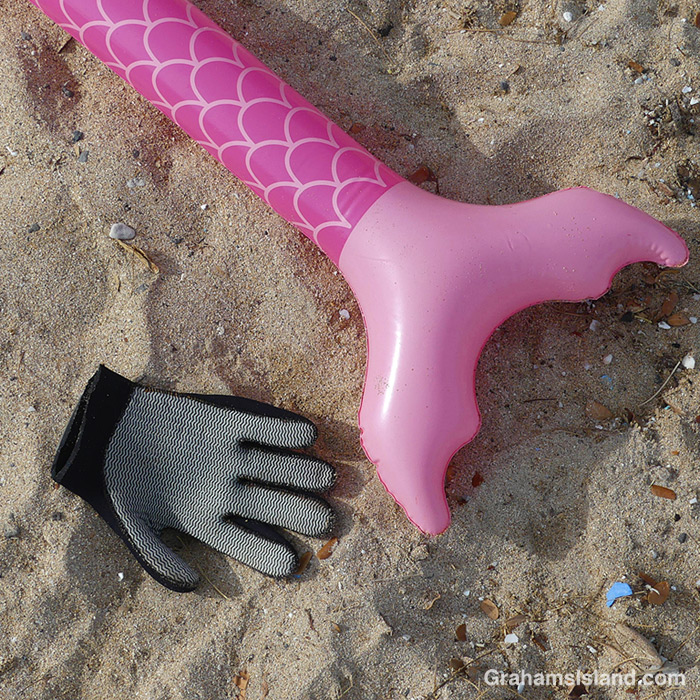
“I’m stranded here,” cried the mermaid. “Can someone give me a hand?” It did not end well.
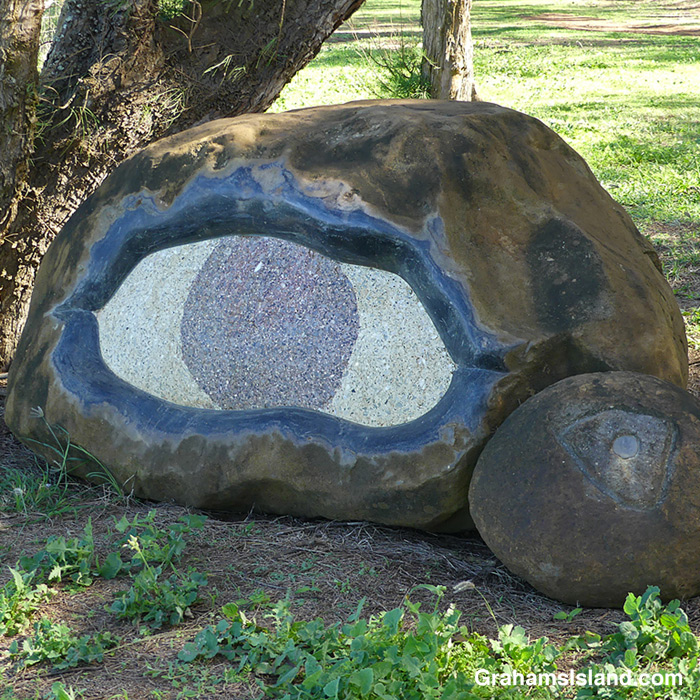
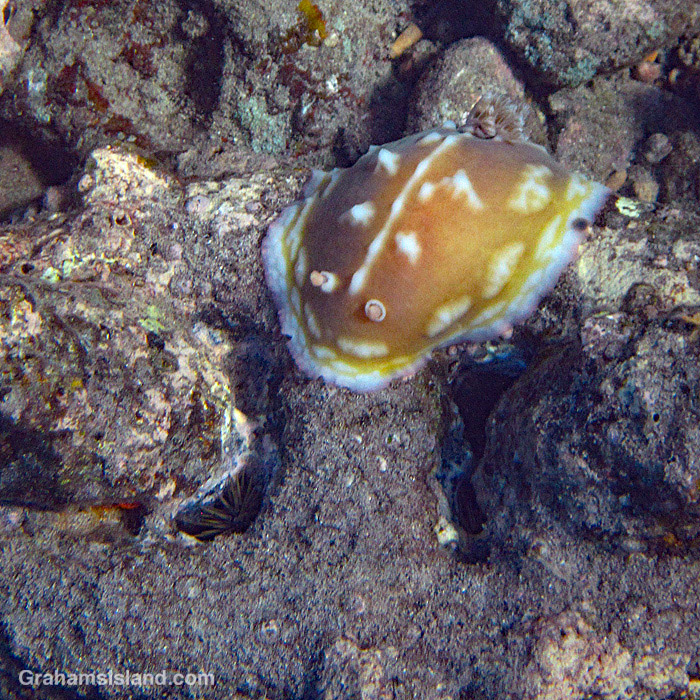
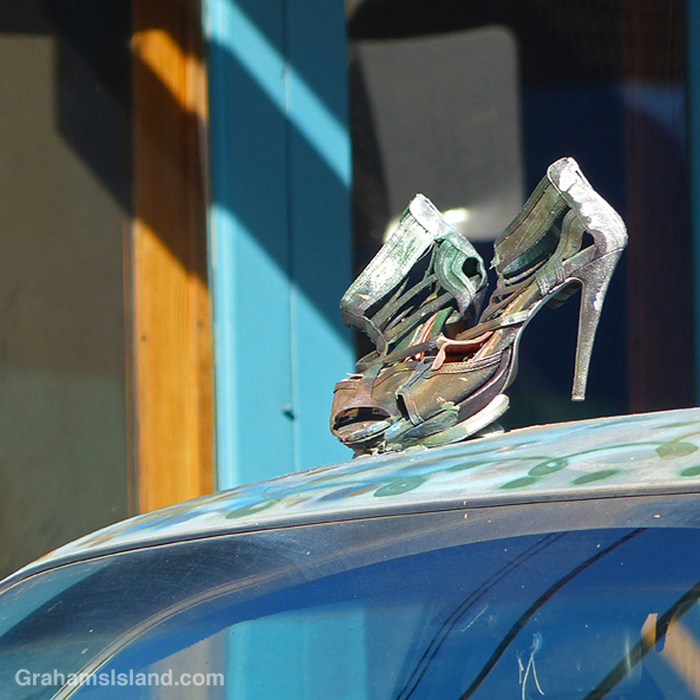
This week’s Sunday Stills challenge theme is ‘Oddballs, Wild and Weird.’ See more responses here. Captions on the photos.
Also posted for Becky’s Squares: Seven. See more responses here.
It’s a hat. It’s an umbrella, It’s a fruit bowl. I want one.See the rock. The rock sees you.There are many strange creatures in the ocean. This Clumpy Nudibranch in one of them.Unclear on the concept.It pays to keep them handy.I just want to say that I have never knowingly violated a dog!
This is Hawaii’s largest nudibranch and can reach a foot long. Mostly active at night, the best chance for snorkelers to see signs of this nudibranch, is to see one of their egg sacs, such as the one in the top photo, attached to a rock. These rose-like sacs are quite beautiful and waver as the water swirls around them.
I’ve only seen an actual Redmargin Spanish Dancer once (second photo). My marine invertebrate book says it resembles fatty ground beef, which is a pretty good description!
Today marks the start of the last week of this month’s Becky’s Squares challenge theme of ‘Odd.’ See more responses here. The ocean is full of oddities so I thought I’d include a few here.
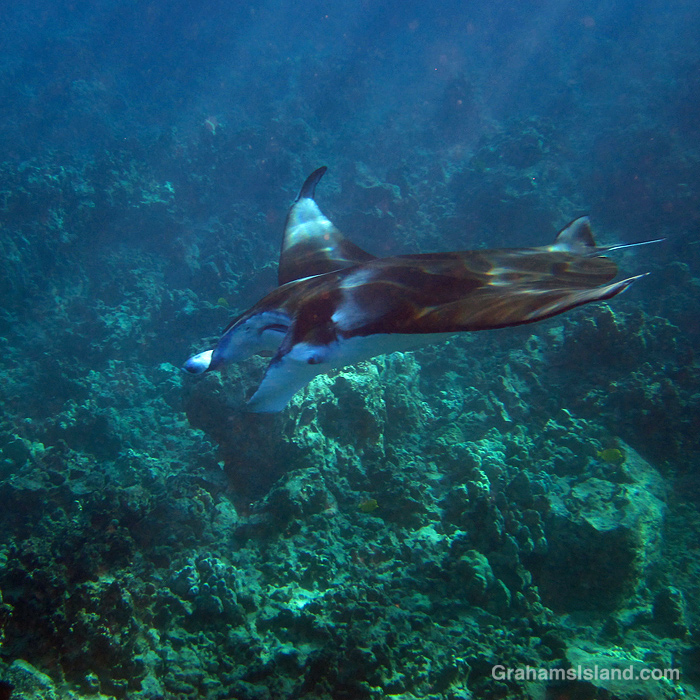
Above: A Manta Ray encounter is always something special, but there’s no getting away from their odd appearance. This one has the added wrinkle of one of its cephalic flaps being damaged.
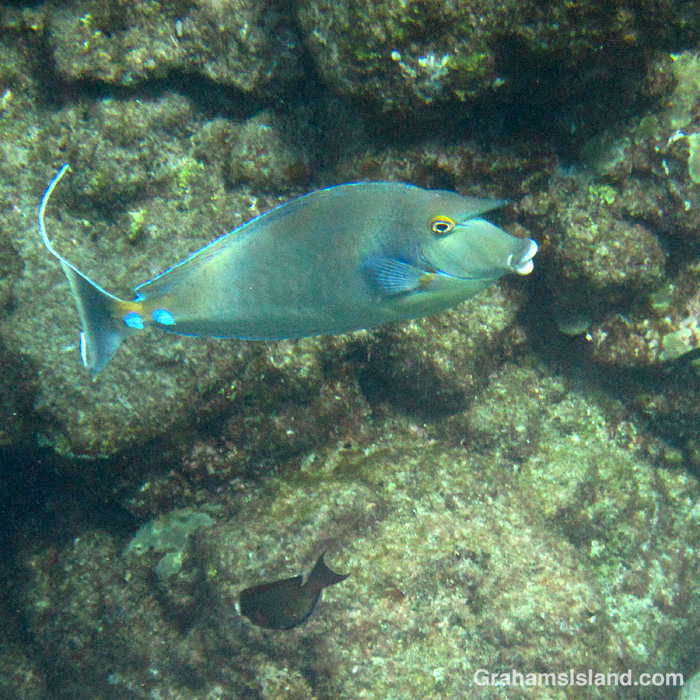
Top left: Bluespine Unicornfishes not only have a horn protruding from their foreheads, they have dayglow blue scalpels at the base of the tail and an array of expressions that are mostly odd.
Top right: Who knows how many scorpionfishes I’ve swum past? Masters of disguise, I could stare at a spot where one is perched and not see it. Even when I do see one, it’s not always clear that it’s not just a rock, as this Titan Scorpionfish illustrates.
Bottom left: Nudibranches are inherently odd looking, and this Clumpy Nudibrach is no exception. It suggests to me some top chef’s idea of an exotic entrée, but one that keeps sliding off the plate!
Bottom right: Blennies are indisputably odd, but absolutely endearing. The Hawaiian Zebra Blenny is no exception and, in addition, has an uncanny ability to launch itself into the next tidepool if someone disturbs it.
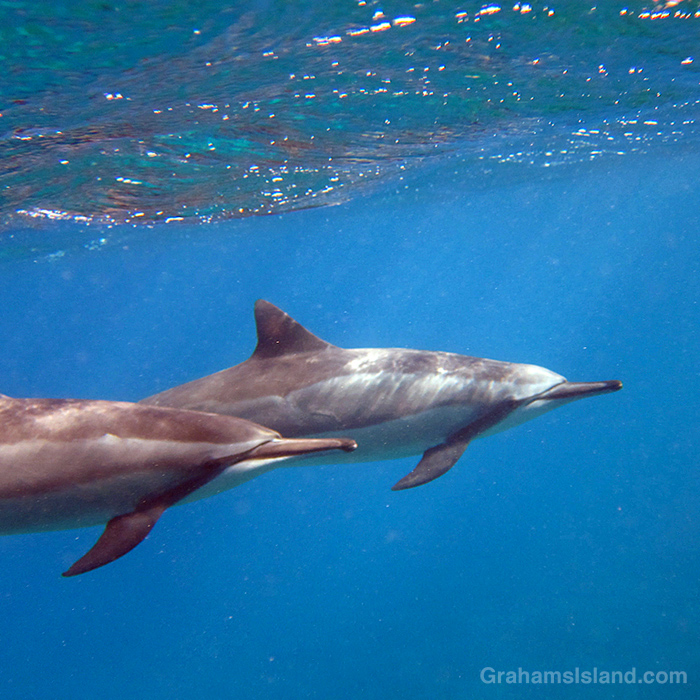
A pod of spinner dolphins stopped by my local snorkeling spot. (Link, link)
Lāhainā Noon, when shadows disappear in Hawaii. (Link)
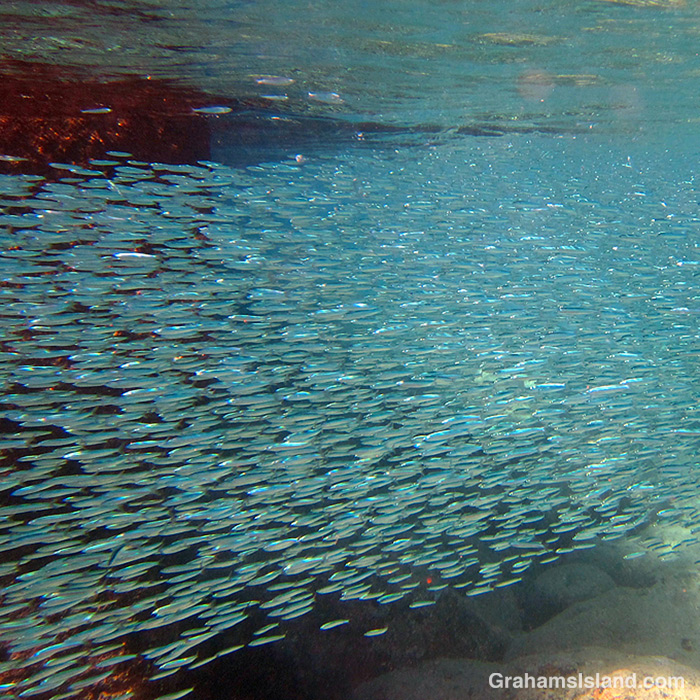
Shoals of Hawaiian silversides were abundant in the summer. (Link)
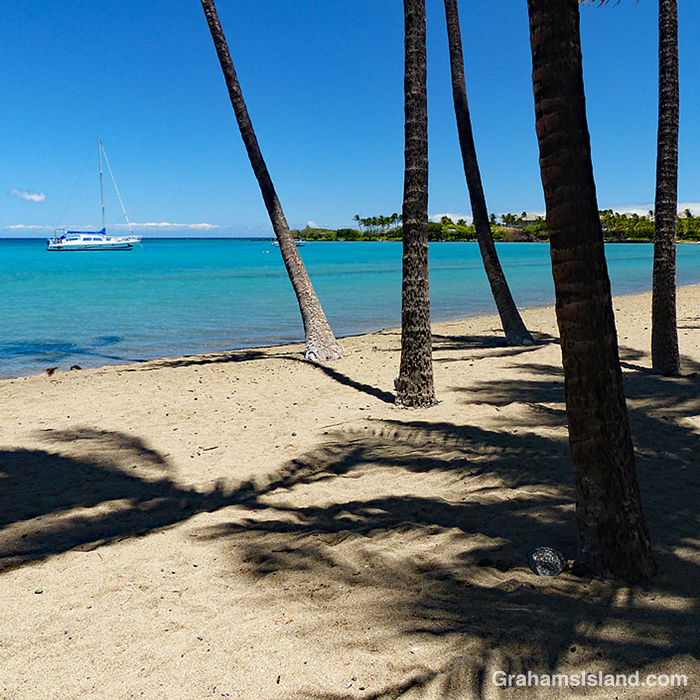
With no tourists here, Anaeho’omalu Bay was a sea of tranquility. (Link)
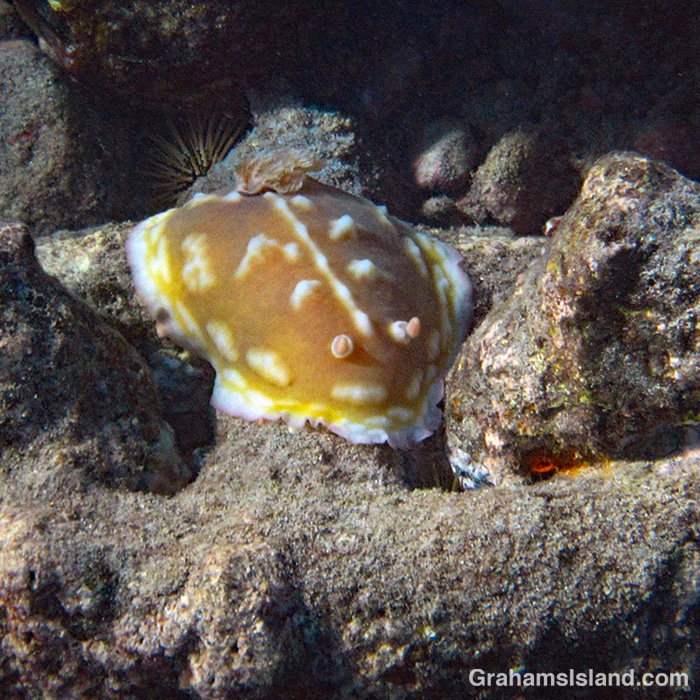
Some clumpy nudibranchs spent a few weeks in a local bay. (Link)
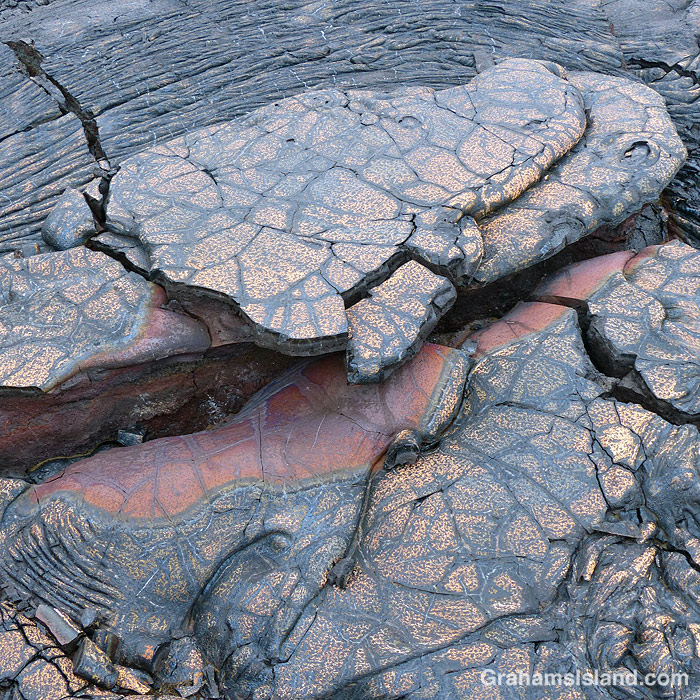
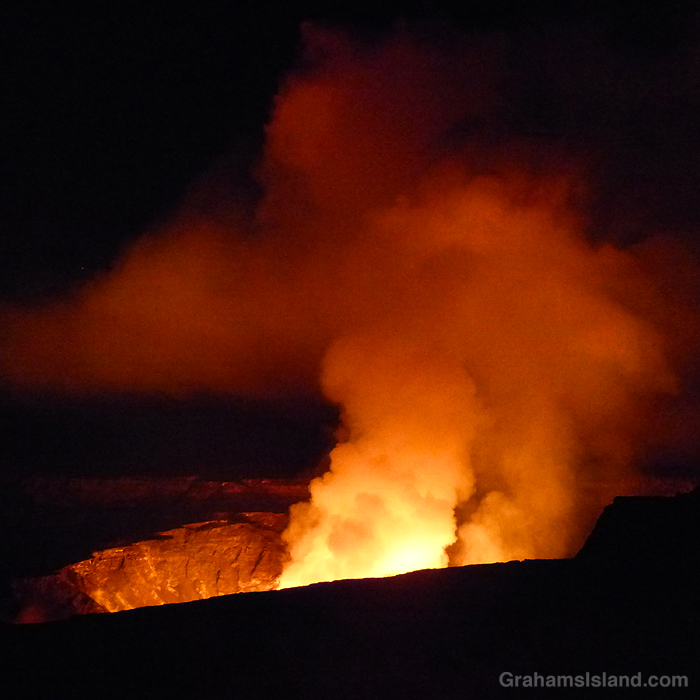
The year ended with a bang when Kilauea Volcano erupted again. (Link)
This week’s Sunday Stills challenge theme is ‘Your 2020 Retrospective.’ See more responses here. Also posted in response to Becky’s January Squares challenge theme of ‘Up.’ See more responses here.
In this retrospective I’ve focused on events and photos that were uplifting for me during the difficult year that was. Most of these photos haven’t run before, but were taken at the same time as those in posts that ran in 2020. Links to the original posts are at the end of the captions.
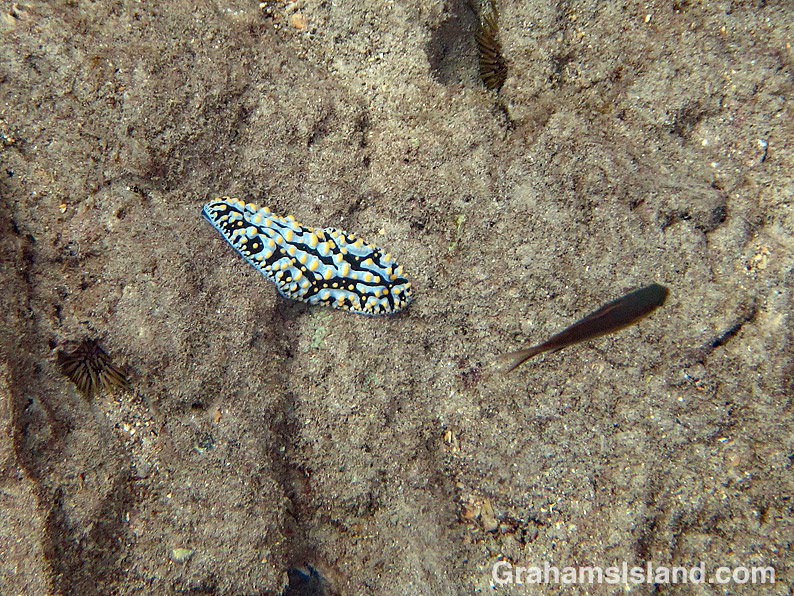
This varicose phyllidia is a small nudibranch, which I saw several times over the course of a week or so. Apart from being a lot smaller than the clumpy nudibranchs I saw a couple of months back, the varicose phyllidia has gills under the mantle skirt rather than in an exposed, wavy clump.
This one was two to three inches long. In the middle photo, the tiny white-spotted toby and small brown surgeonfish give a sense of scale.
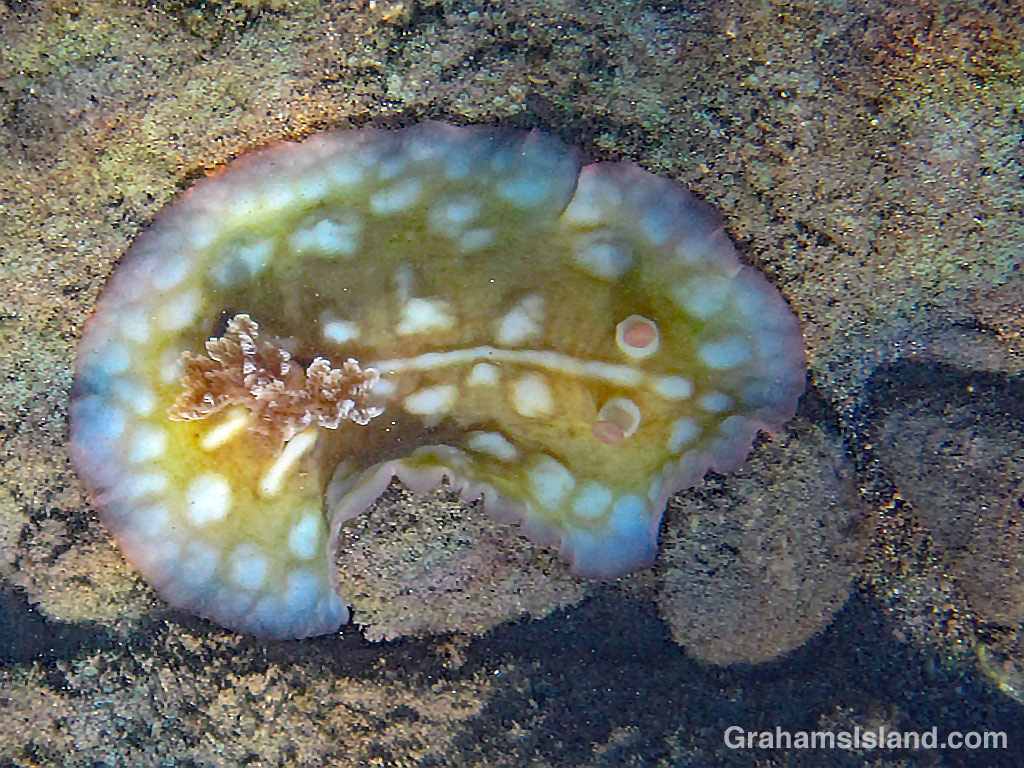
My local snorkeling spot has been roiled with excitement lately over the appearance of a couple of clumpy nudibranchs. Well, it’s exciting for us.
Nudibranchs (pronounced noo-di-branks or noo-da-branks) are members of the sea slug family. Granted this doesn’t sound too exciting, but nudibranchs are strange and exotic and often wildly colorful. The reason I haven’t posted photos of a nudibranch before is that I’ve never seen one before, let alone got a photo of one. That’s the downside of nudibranchs; they tend to be on the small side. One to three inches is typical for most of them. But clumpy nudibranchs are big, up to 10 inches long. In nudibranch world they’re like King Kong, visible from space.
When they were first spotted, I didn’t see them, but I was on high alert. And then, one day, I saw my first nudibranch. I popped up and called to my wife, only to see her waving at me to come see the nudibranch where she was. So this established that nudibranchs are like buses; you wait and wait and wait, then two come along at the same time. Since then, I’ve seen one or both of them most days I get in the water. Each time I’ve seen either of them they’ve been motoring along at speed, at least for a slug.
Clumpy nudibranchs have some color variations which can be seen in these photos. One has more yellow coloring, the other (second photo) being browner. The order’s name, Nudibranchia, means naked gills. These are the feathery clumps to the rear of the nudibranch. The two protuberances at the front are sensory organs. Clumpy nudibranchs feed mainly on sponges (not the cake variety).
This colorful little creature is a sea slug. As with many other nudibranchs, the bright coloring serves as a warning. They’re poisonous and, because of this, have no known predators. One tidbit I found interesting is that nudibranchs like this Varicose phyllidia, don’t produce their own poisons. Instead, they ingest toxins from their prey, such as sponges, and recycle it. So not just yellow and black and pale blue, but green as well.














 Graham's Island