For some reason, on many recent swims I’ve seen a variety of cones in the water. Cones are marine snails and many have a venomous sting, which can be dangerous to humans, though not likely fatal.
The Hebrew Cone gets its name from its distinctive markings, which supposedly bear something of a resemblance to Hebrew letters. It’s quite common here, though this was the first one I’ve seen. Apparently, the largest Hebrew Cones are found in Hawaii, though that only means a length of around 2.5 inches, which this one might have been close to.
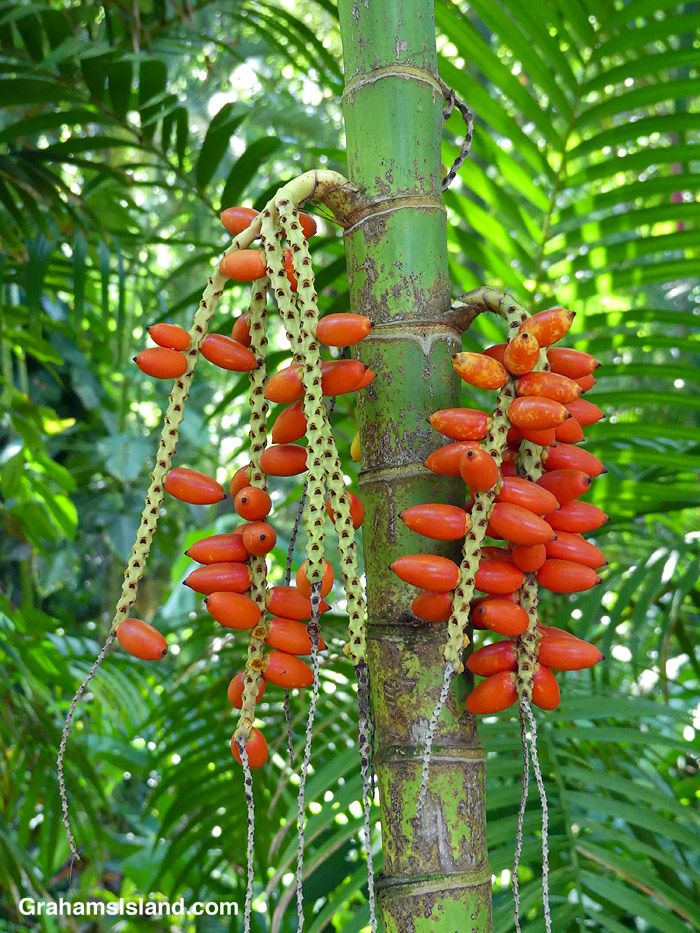
These are the fruits of a palm tree, not sure which kind. I was hoping someone would walk by so that I could say, ‘Looks like this Roma Tomato Tree has a good crop coming along.’ Alas, life is full of little disappointments.
Kohala by the Sea is an upscale gated community on the northern edge of Kawaihae. What appeals to me in this image is the curvy roads terminating in little asphalt blobs. It gives it an organic feel, which I suppose it is in a way.
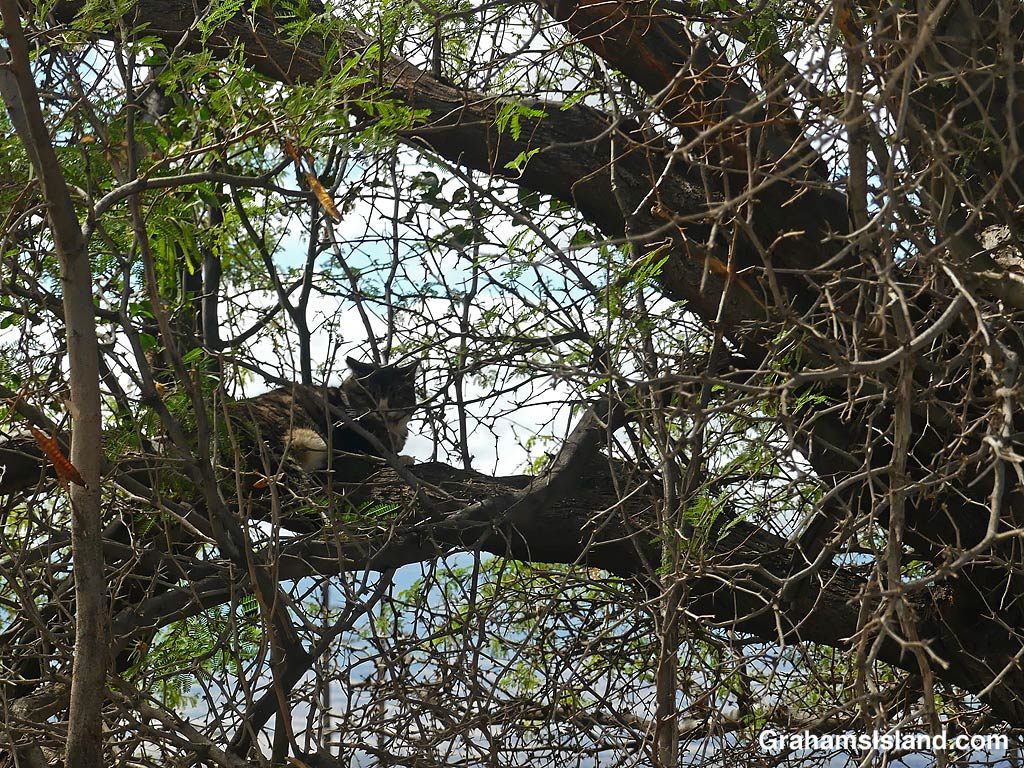
I was impressed to see one of our cats at work, looking comfy on a branch of the large Kiawe tree in the yard. The tree is not only studded with vicious thorns, but is also home to a colony of ants that might outnumber the human population of the island.
There are many things to like about this orchid. It’s a beautiful flower. It’s an epiphyte, growing on the trunk of a tree. It hosts a small hover fly, which I didn’t notice at the time. And it has a handy tag attached, identifying what it is, which I also didn’t see until later.
There’s an interesting story about the discovery of this flower here.
The Kohala Ditch was built in the early 1900s to carry water from the wet slopes of Kohala Mountain, to the sometimes drought-prone sugar cane fields of Kohala. A series of tunnels, flumes and ditches channeled water through ridges and over gullies for a distance of 14 miles.
After the sugar cane industry folded, ditch water continued to be used by other agricultural activities. But this valuable resource was always beset by difficulties. The challenging landscape was prone to landslides and flooding. Flumes were washed away, tunnels blocked. Increasingly expensive and time-consuming repairs did not provide the same economic benefit they once did.
After one such event, a few years ago, the operator of the ditch said it would no longer be repaired and maintained.
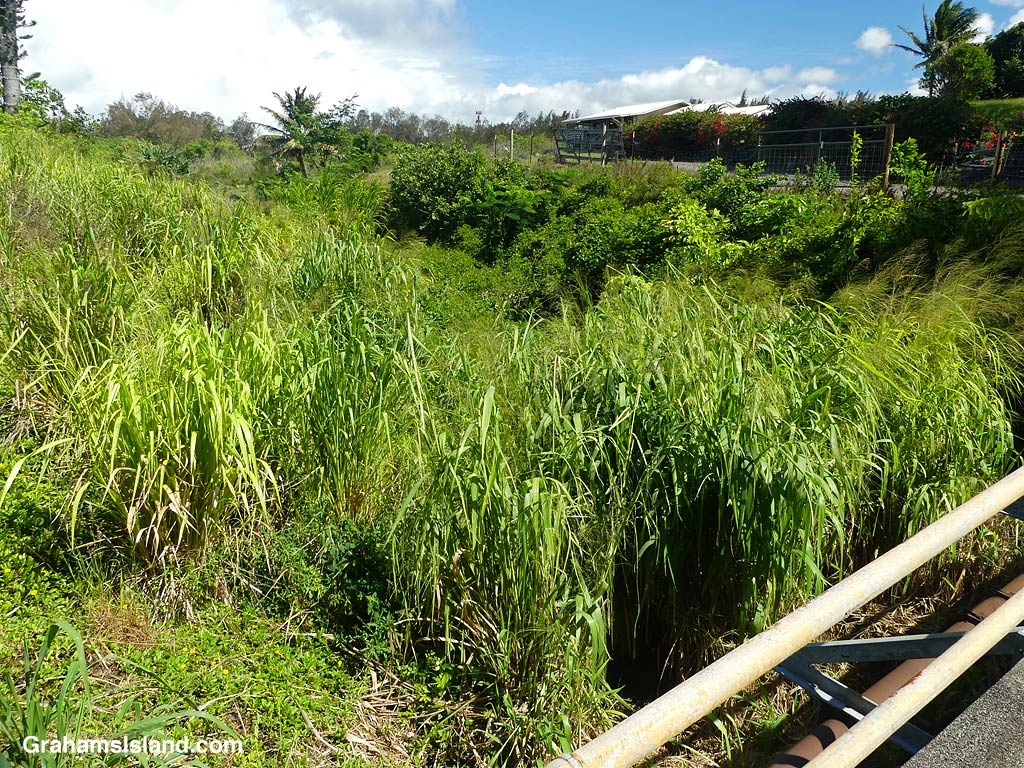
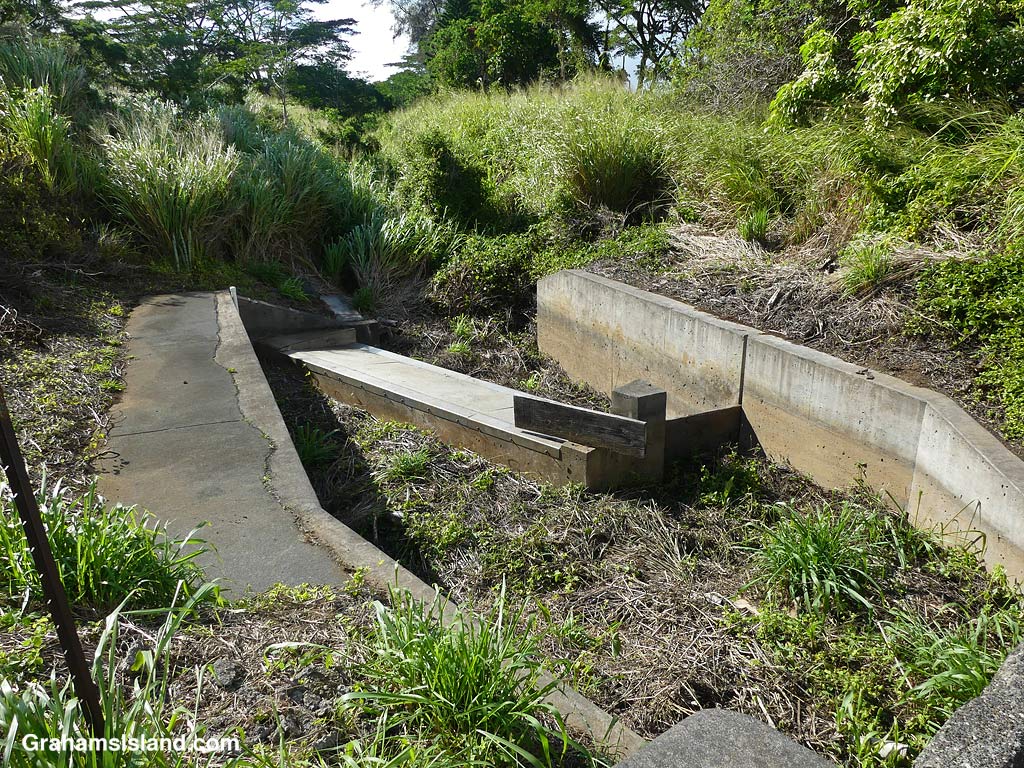
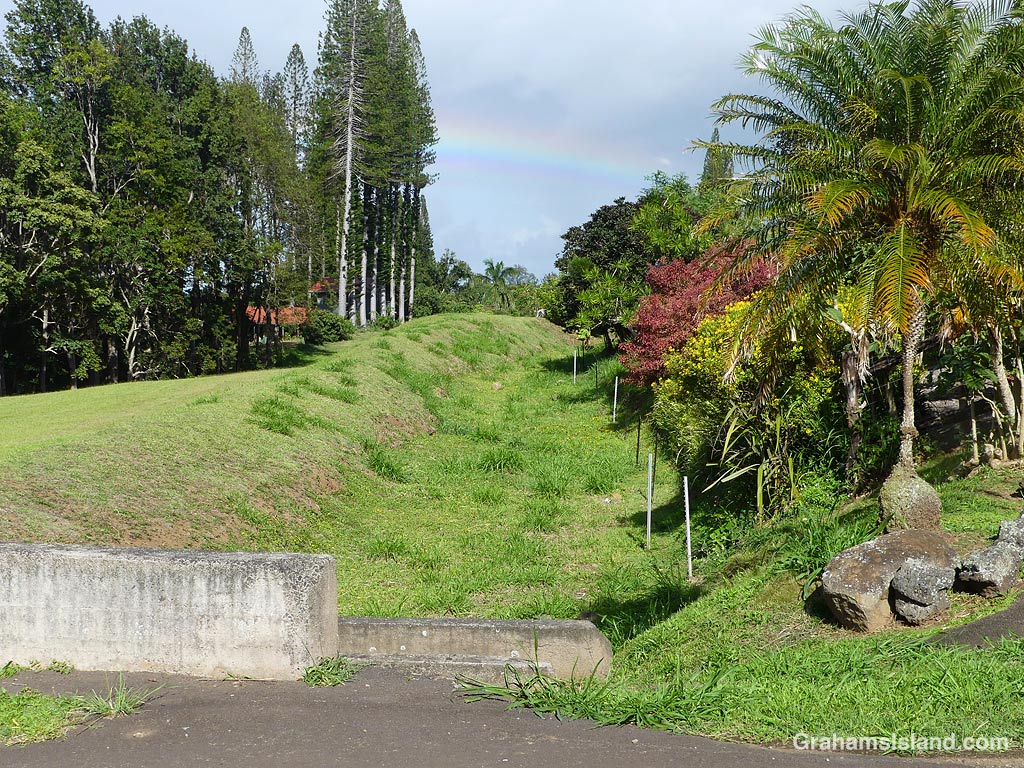
The top photo shows a section of the ditch in 2016. The others show how it looks today, in places, overgrown with weeds and even trees. In some areas it’s more manicured by those living next to it. In the meantime, access to water is a considerable problem, especially as dry weather is increasingly common in the area.
An arrangement to control the flow and level of water in the ditch.How the section in the top photo looks today.
The current Governor of Hawaii knows this region well and money has been earmarked for finding a solution to the area’s water shortage, but when and how that happens is still very much in the pipeline!









 Graham's Island