
A school of mackerel scad, known here as ‘Ōpelu, swim over a patch of sandy ocean floor.


A school of mackerel scad, known here as ‘Ōpelu, swim over a patch of sandy ocean floor.
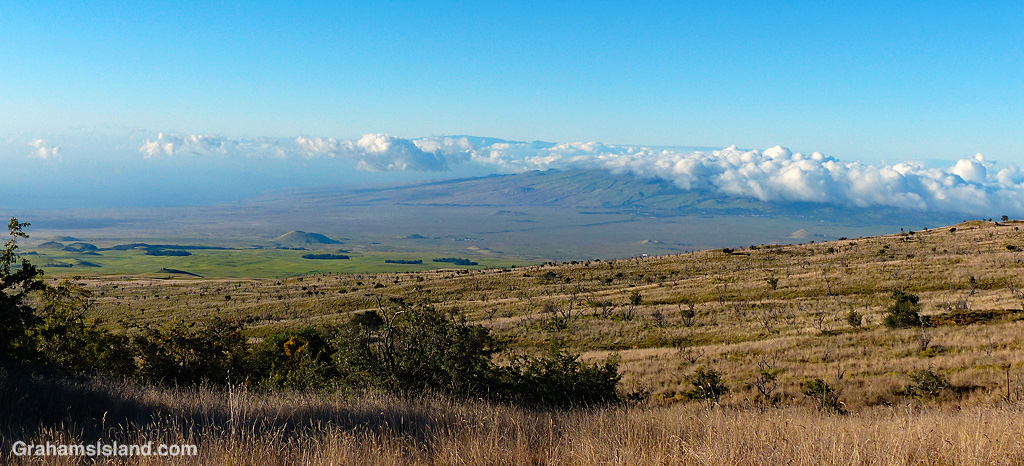
A view of Kohala Mountain, and beyond it Maui, taken from the slopes of Mauna Kea.


Naio (Myoporum sandwicense) is an endemic plant that has a variety of forms, from ground cover to tree. The flower color can also vary quite a bit. I’ve seen pinkish purple blooms previously, but these flowers, on a shrubby plant, were all white. Naio used to be common in Hawaii, but now is much less so. It’s known as false sandalwood because the heartwood of the tree form smells similar to true sandalwood.
The butterfly in the top photo is a Western Pygmy Blue butterfly. a native of the Americas, it was first seen in Hawaii in 1978.
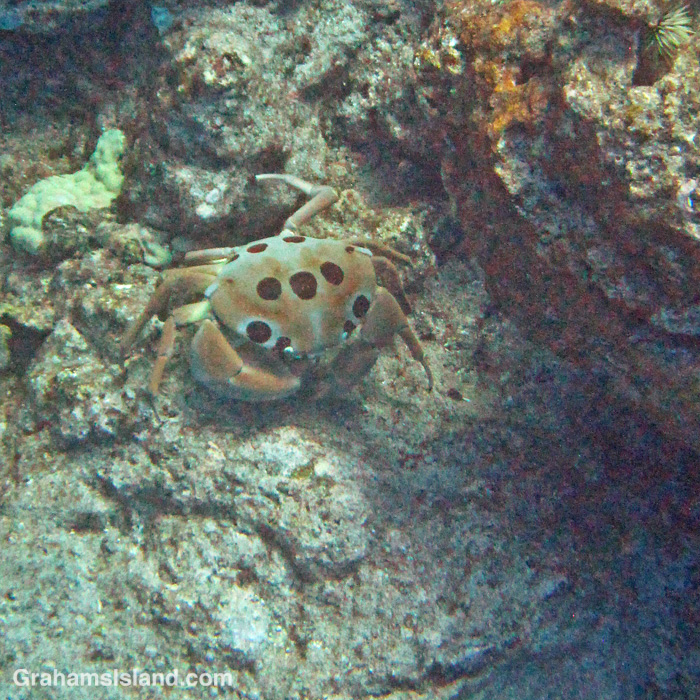
I’ve only seen one or two seven-eleven crabs (Carpilius maculatus) before, and not for several years. My wife had never seen one. One reason for this is that the crabs are active at night. But we saw this one a few days ago, scuttling over the rocks and sand. It was quite early in the morning, so the crab was probably headed for its home.
These crabs are quite large and have the distinctive markings that give it its name. There are the two spots alongside each eye and three across the center of the shell. Four more spots are less obvious on the back edge of the shell.
In Hawaii, these crabs are called ‘alakuma. Legend has it that a god caught an ‘alakuma, but the crab struck back and drew blood. This happened a second time, before the god finally snagged the crab. But the crab’s descendants continue to bear the markings of the god’s bloody fingerprints.
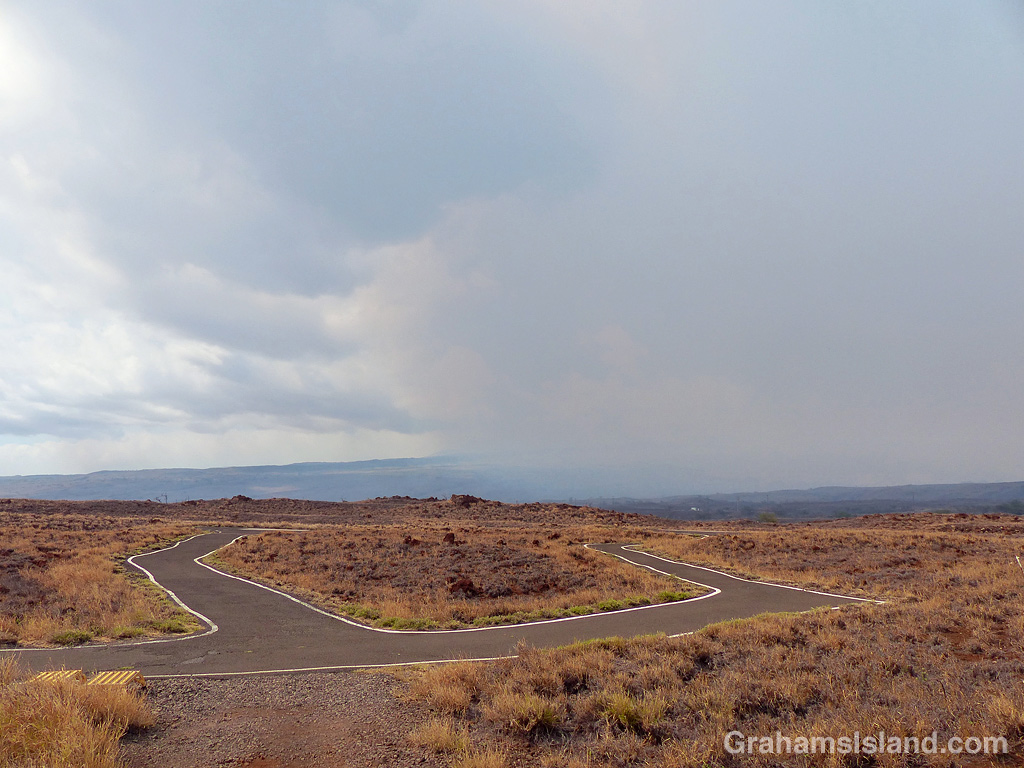
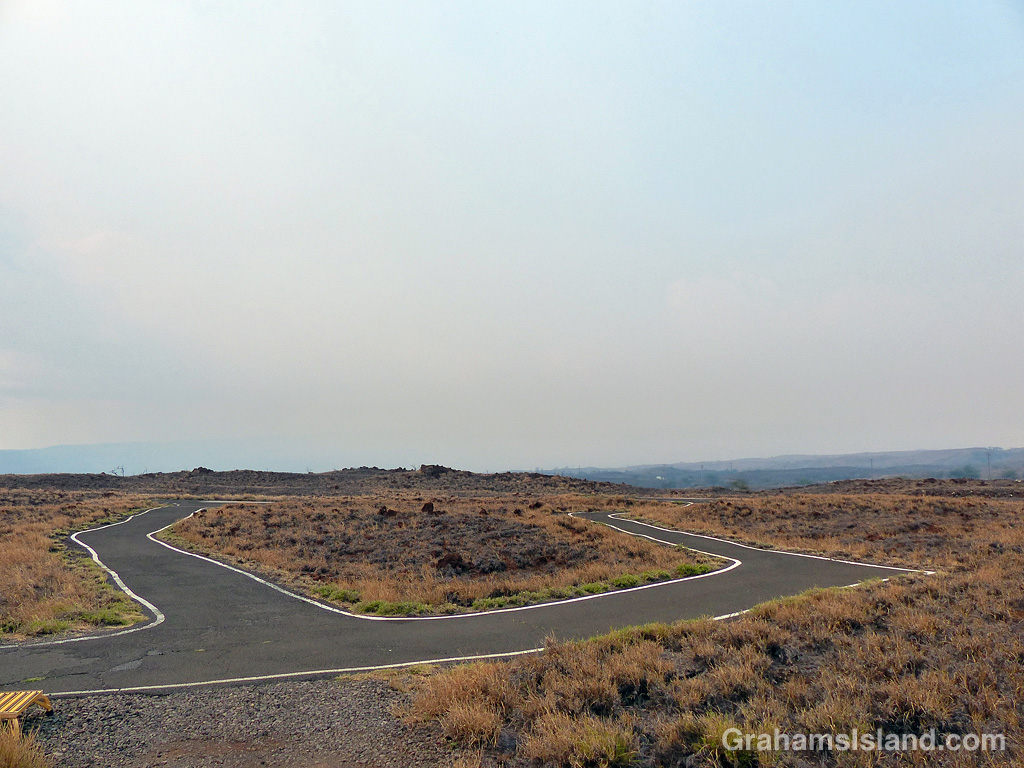
I work at Hapuna on the South Kohala coast and typically, during the day, clouds build up to the north and east until Kohala Mountain, Mauna Kea, and Mauna Loa are obscured. That was the case a few days ago when I noticed a dense, dark patch rolling down the hill from Waimea. My first thought was that this was rain headed my way, but it looked odd. It proved to be smoke, a fact soon confirmed when the smell filled the air.
The smoke came from a brush fire, 30 miles away, in the vicinity of Pa’auilo on the Hamakua coast. Tradewinds blew the smoke over the saddle at Waimea and on down towards the ocean. The fire consumed about 1,400 acres of brush and eucalyptus trees before it was contained late the next day. The cause of the fire is under investigation, but it’s been remarkably dry for quite a while so the fire danger is currently high.
The top two photos show smoke blotting out Kohala Mountain, the second one being taken 15 minutes after the first. (Compare this with the hillside under normal circumstances here.) The bottom photo, taken a little way north of Kawaihae, shows the plume of smoke over the ocean with clear skies to the north of it.

A closeup of the orange and yellow stamens, and purple stigma of the endemic Pua Kala or Hawaiian Prickly Poppy (Argemone glauca).
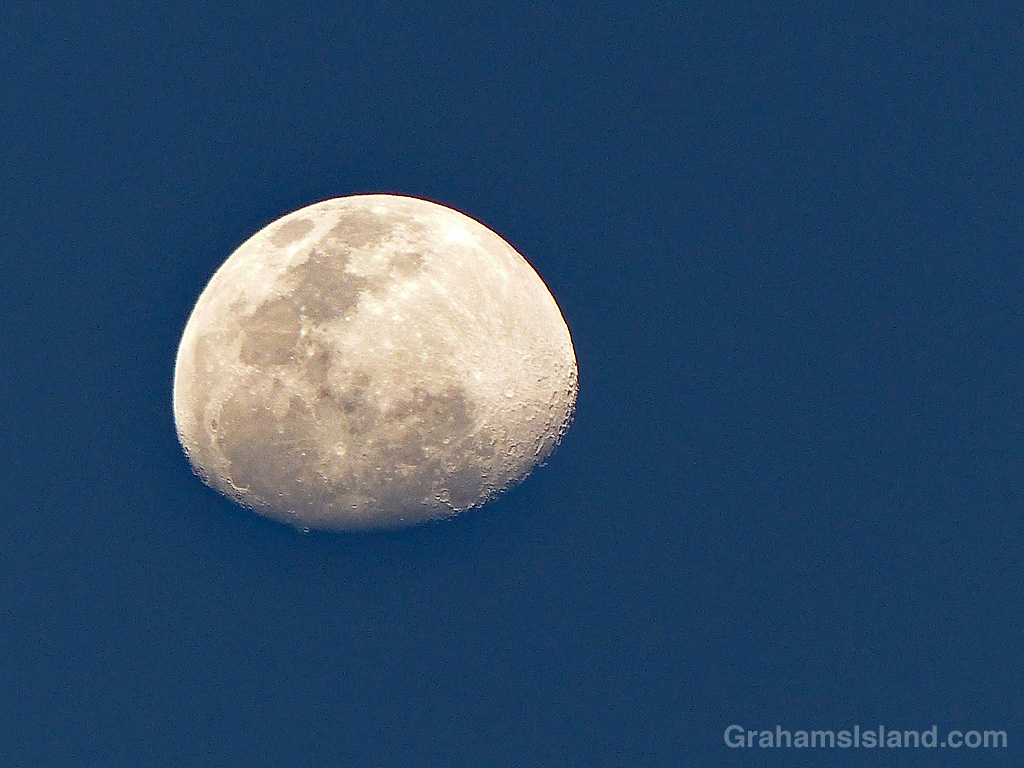
This week’s Sunday Stills challenge theme is ‘Celestial.’ See more responses here.
I don’t know what happened. The last time I looked, the moon was full and round. But not here. I think the mice got to it!
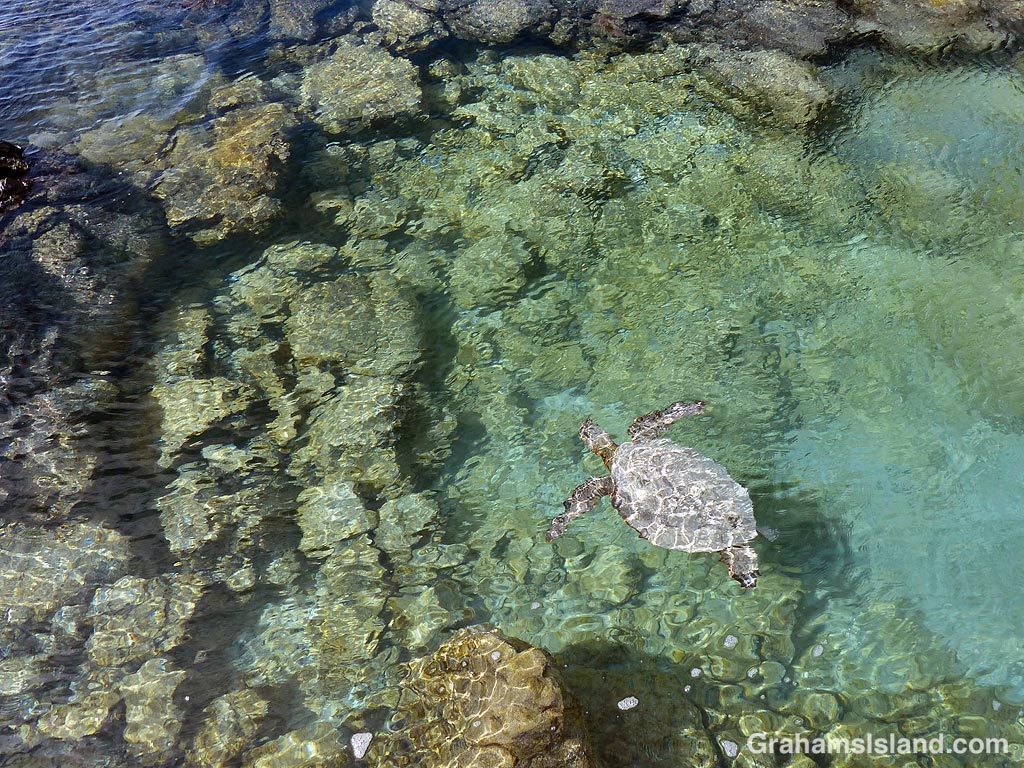


The last time I was down at Kiholo Bay I saw this green turtle in one of the pools around the edge the lagoon. When the turtle saw me, it might have felt a bit vulnerable in such shallow water. It immediately headed for the lagoon proper, at a leisurely pace, before cresting a ridge and easing into deeper water. Once there, it popped up for a breath, then disappeared into the milky waters.


