
A small group of boldly-marked orangespine unicornfish putter in the shallows.


A small group of boldly-marked orangespine unicornfish putter in the shallows.

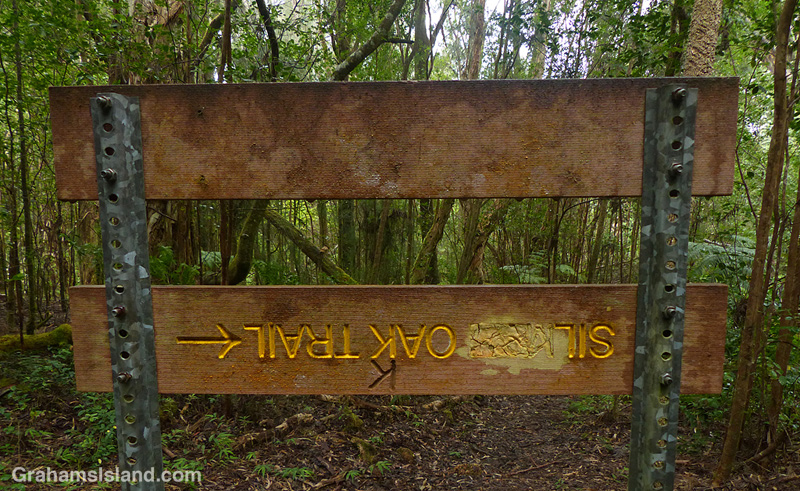

I was hiking in Kalopa Native Forest State Park when I came across the trail sign above. Nothing too remarkable about that, but I happened to notice the back side of the sign (middle), which showed that getting the sign right took a bit of practice.
On a subsequent visit, I noticed that the back of sign at the other end of the trail (bottom) had also seen a rejected first effort.
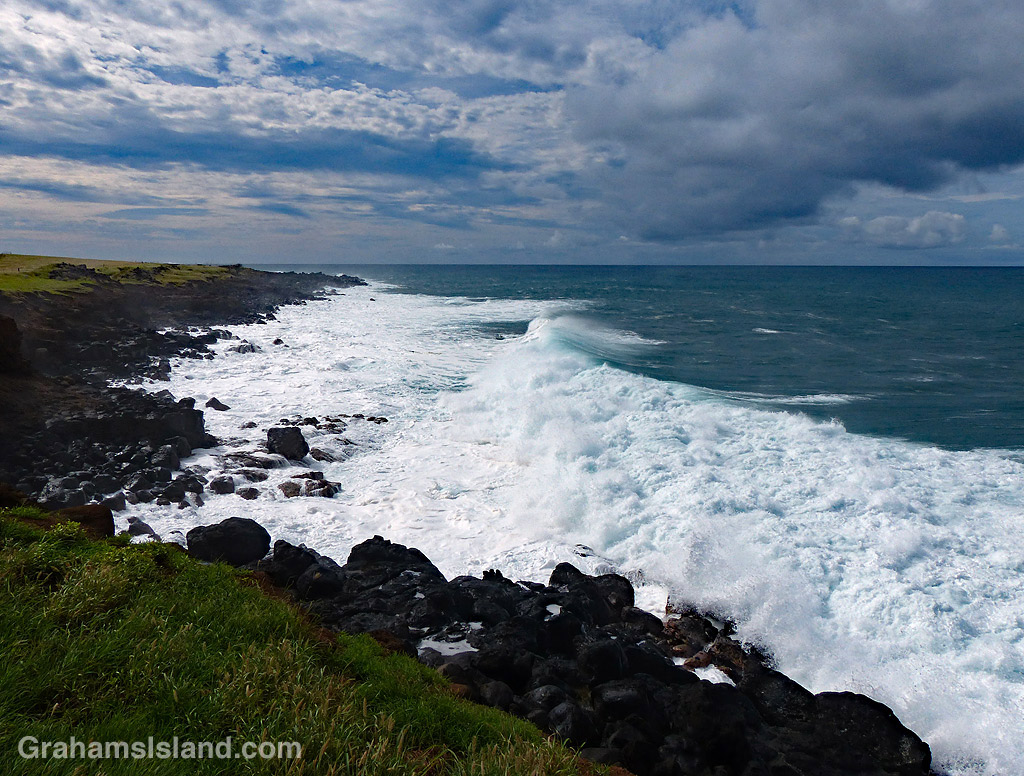
This week’s Sunday Stills challenge theme is ‘December Chill.’ (See more offerings here.)
Since I haven’t been to the chilly areas of the island recently, up on Mauna Kea or Mauna Loa, I’ve gone for a scene that at least looks chilly. Low, scudding clouds and high surf, driven by brisk trade winds make for a chilly scene, though the truth is I was almost certainly wearing shorts and a t-shirt when I took the photo.

This week’s Friendly Friday challenge theme is ‘Future.’ (See more responses here.) Since this is Snow’s last time hosting the Friendly Friday challenge I thought I’d offer a personal interpretation of the theme.
Here is one of the beaches at Kekaha Kai Park. What does this have to do with ‘future?’ Well I hope such blue-green water, white sand, palm trees and sun are somewhere in your none-too-distant future, Snow. Thanks for hosting the challenge.
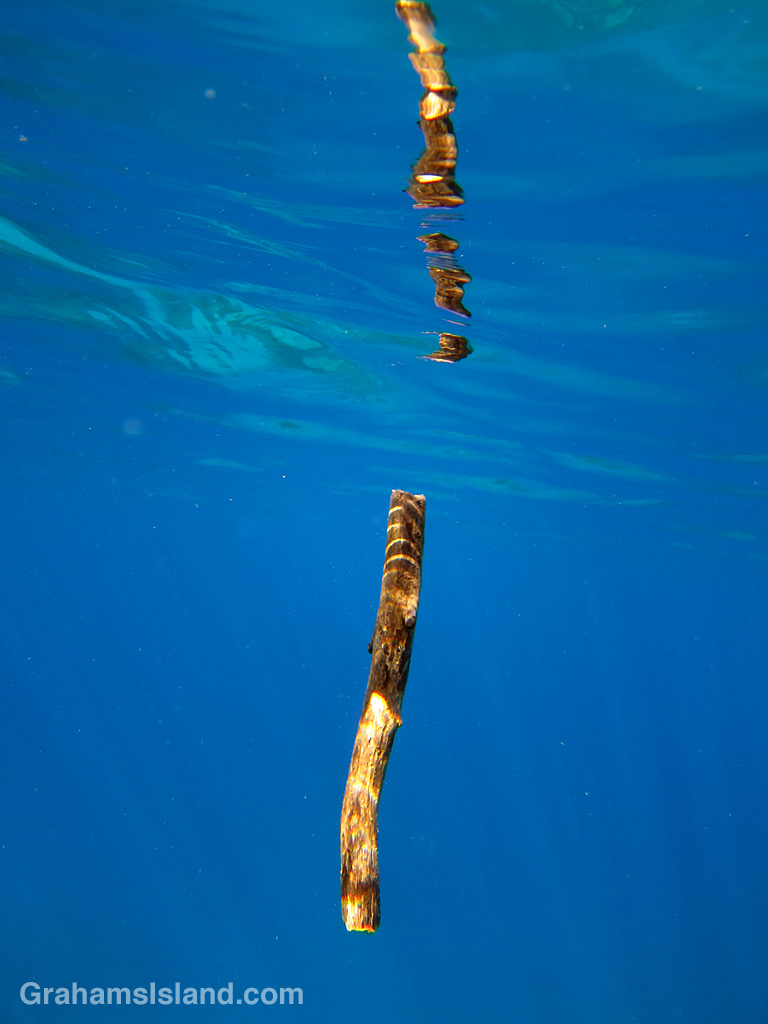
Just a stick that I came across, floating vertically in the water. Where does the stick begin and end and where’s the surface of the water?

Today is Thanksgiving, so here’s something I’m thankful for, both the flower and the location. This is a purple oncidium orchid blooming at Hawaii Tropical Botanical Garden near Hilo. For more information about Hawaii Tropical Botanical Garden, go to htbg.com.
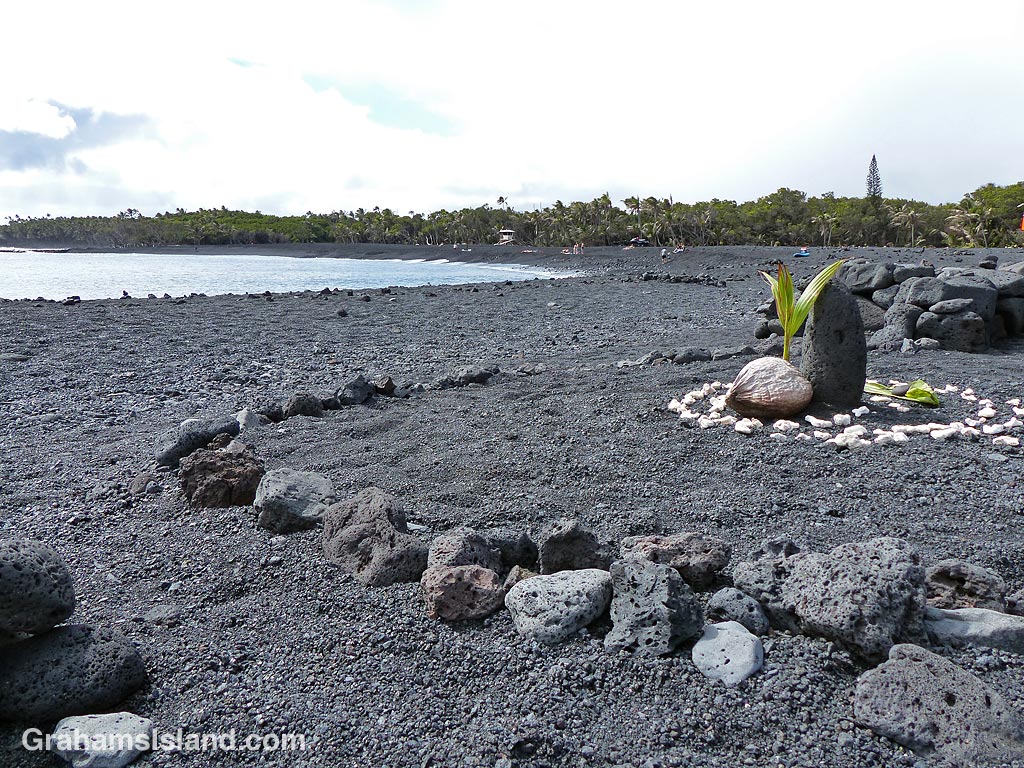
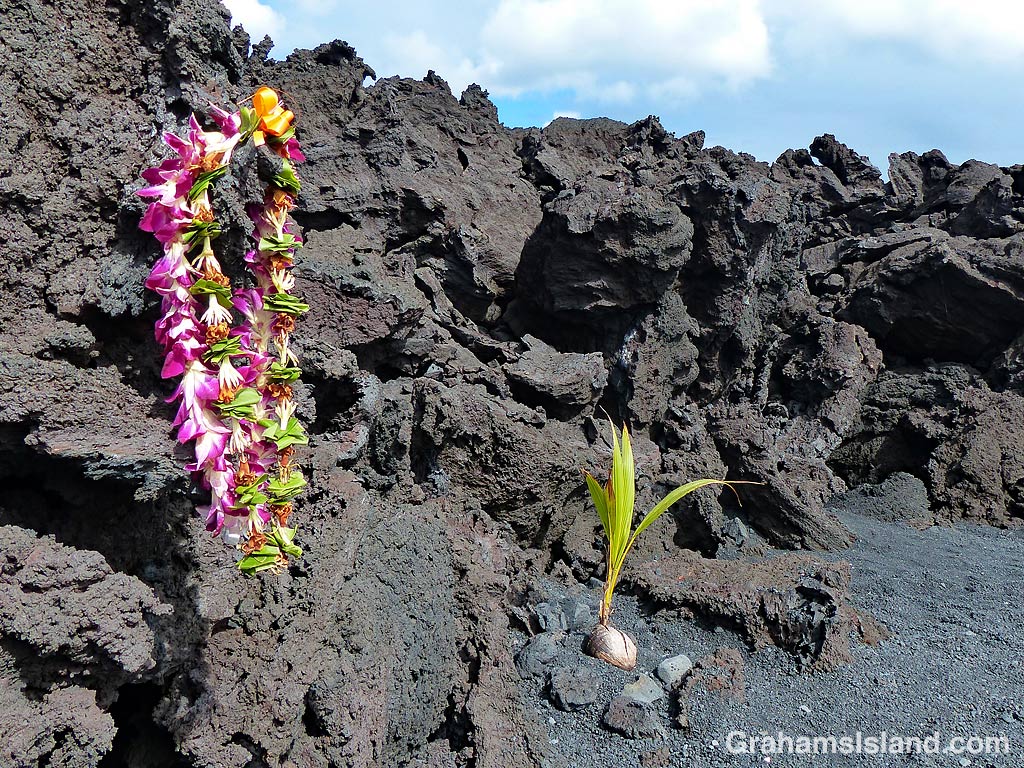
The Big Island’s newest black sand beach, at Pohoiki, was formed during last year’s eruption of Kilauea Volcano. Soon after its formation, offerings appeared at the beach and coconuts were planted.
For coconut planting, all that’s required is to plunk an unhusked coconut on the beach and wait. The coconut will sprout, as in these photos, but it can still be moved after it has sprouted as its roots are mostly fairly shallow. It’s tolerant of salinity, but likes regular rainfall, both of which are features of this location.
In several years, this somewhat stark black sand beach will become another scenic palm-lined tropical beach. That’s assuming the volcano doesn’t send another flow in this direction, in which case it might look more like the background of the bottom two photos.


Shoals of little fish look like silver bullets zipping back and forth just below the surface of the water.

