Category Archives: Activities

Kilauea Volcano’s firehose of lava

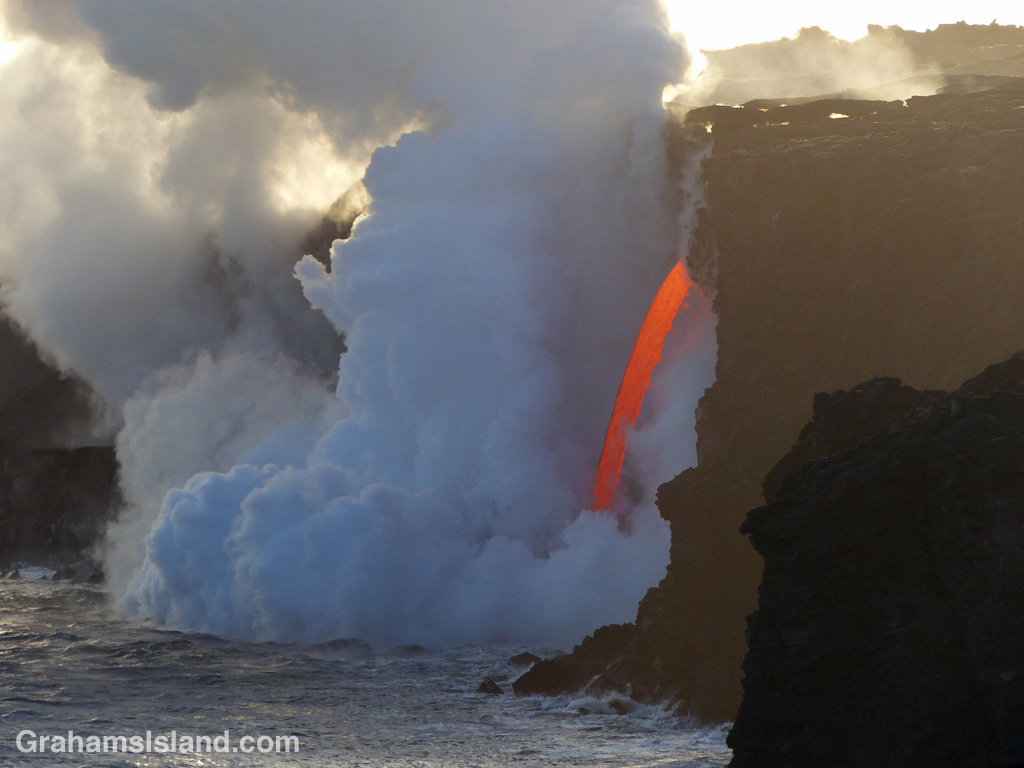
Lava from Kilauea Volcano’s Pu’u O’o vent enters the ocean as if from a firehose.Lava from Kilauea Volcano’s Pu’u O’o vent enters the ocean as if from a firehose.
I’ve posted before (here, here, here and here) about trips I’ve made to see the current lava flow from Kilauea Volcano’s Pu’u O’o vent. Lava first reached the coast on July 26, 2016 and has been pouring into the ocean ever since. However, on New Year’s Eve, much of the newly formed delta collapsed into the ocean taking with it a chunk of the older cliff. As a result, the lava tube carrying the active flow was suddenly left exposed and lava gushed out into the ocean as if from a firehose.

I was aware this was going on, but hadn’t really appreciated what it meant until this past Wednesday. Then, I read a report about the phenomenon, saw some photos, and realized this was something I had to see. Since the weather was favorable and it was early enough, I set out the same day.

After a three-hour drive and brisk hike I got to the viewing area, from the Kalapana side, around 5 p.m. These photos are from that trip. The top photo shows the firehose, lava gushing into the ocean in a constant, unwavering stream. When it hit the water, it generated a series of explosive reactions. The second photo shows the Lava Ocean tour boat nudging in toward the action as one of these explosions occurred. Below is a closer look at the stream with chunks of hot lava being hurled out into the water.

I stuck around until it got dark and then headed home – another hour-long hike and long drive – but it was so worth the effort. This was emphasized when, the next day, another cliff collapse caused the firehose to disappear from view. It might return, since the whole area is unstable, but it might also be gone for good.

I guess timing really is everything and I feel very fortunate that I was able to experience this phenomenon before it was gone.

For more information about Kilauea Volcano and it current eruption, go to hvo.wr.usgs.gov/activity/kilaueastatus.php.
Lava from Kilauea Volcano’s Pu’u O’o vent enters the ocean as if from a firehose.

Hawaiian Upland damselfly

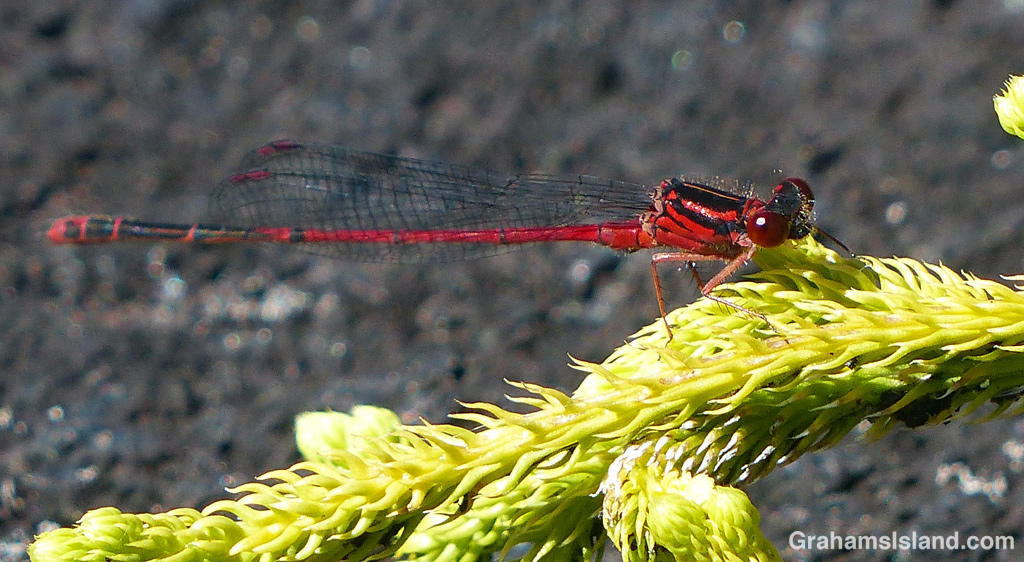
A Hawaiian Upland damselfly (Megalagrion hawaiiense) on the Big Island
The Hawaiian Upland damselfly (Megalagrion hawaiiense) is endemic to the state. Hawaiians called dragonflies pinao and damselflies pinao ‘ula. I’ve never been sure what the difference between the two is but I have learned that, among other things, damselflies tend to be smaller, have eyes on the side of the head that are clearly separate, and can fold their wings behind them.

This one was on the Kaumana Trail off Saddle Road (officially the Daniel K. Inouye Highway) at an elevation just over 5,000 feet.

Coastal manta ray

A coastal Manta Ray in the waters off the Big Island of Hawaii.
Not the greatest photo – swell had churned up the water – but I post it for two reasons.

One is, it’s the first manta ray I’ve seen outside of a tour where they set up lights and an unruly mob of people hung onto floats while the manta’s fed off plankton attracted by the lights. The manta’s were fabulous; the rest of the experience was weird, bordering on unpleasant. To top it off, I didn’t get any photos.

The second reason is how I came to spot this manta in the first place. A group of three women was swimming about 100 feet ahead of me. They had masks and snorkels but not fins. I happened to pop my head above water and heard a scream from one of the women, followed by a huge froth of whitewater in their vicinity. They’d obviously seen something dramatic and my first response was to find out what it was, never mind that a scream and churning water might be a strong indicator of a shark attack.

As I swam forward, this great creature came into view, angling across my path. At first it wasn’t clear what it was, but then the two distinctive cephalic flaps became clear. Manta’s use these to funnel water into their mouths when feeding. Manta’s are plankton feeders and harmless. Many rays have stingers in the tail area, but manta’s don’t. John Hoover says an 8 to 12 foot wingspan is most common for manta’s in these waters and this one certainly fell in that range.

With little effort, it glided past me toward deeper water. As it did so I saw a second manta join the first, then they disappeared into the murk.

A few minutes later I talked to one of the women who’d been in the group ahead. She said she’d screamed because she was startled by the sudden, unexpected appearance of this huge creature. I sympathized. I’ve had a similar response when unexpectedly meeting sharks and eagle rays at close quarters. But at the same time, such chance encounters are magical and memorable and I am grateful for them.

In my attempts to identify what I see in the water, I use John P. Hoover’s book The Ultimate Guide to Hawaiian Reef Fishes, Sea Turtles, Dolphins, Whales, and Seals. His website is hawaiisfishes.com.

Kilauea Volcano’s Pu’u O’o vent

Pu'u O'o vent on Kilauea Volcano
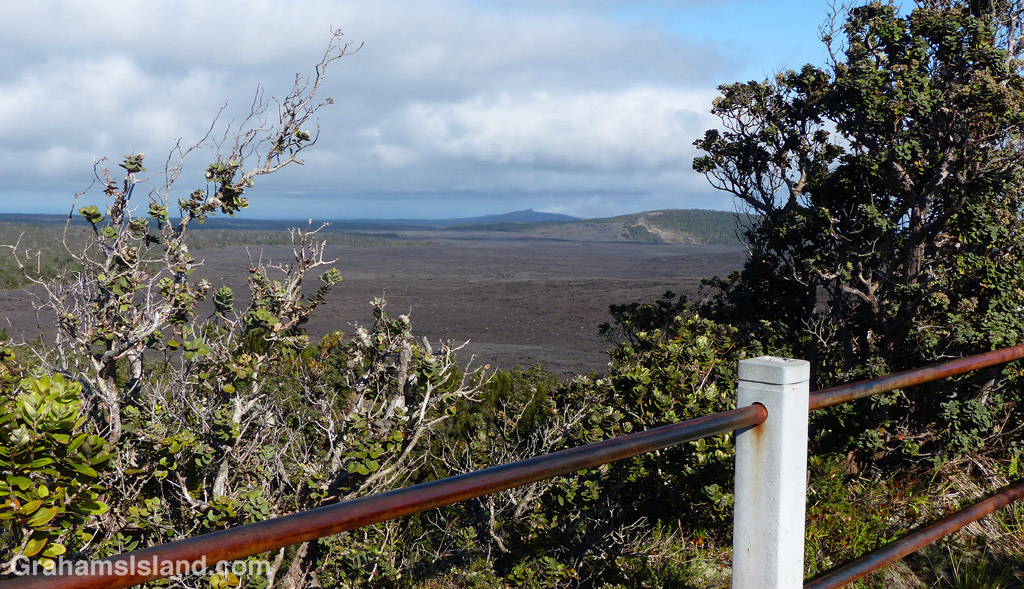
Pu’u O’o is one of two active vents on Kilauea Volcano. It sits on the eastern border of Hawaii Volcanoes National Park. Continuously active since 1983, Pu’u O’o is currently pouring lava into the ocean around Kamokuna on the south-eastern coast of the Big Island. These views of the vent were taken from Pu’u Huluhulu cinder cone.

For more information about Hawaii Volcanoes National Park, go to nps.gov/havo/. For more information about Kilauea Volcano and it’s eruptions, go to hvo.wr.usgs.gov/kilauea/history/main.html.

Pu'u O'o vent on Kilauea Volcano

V-22 Osprey

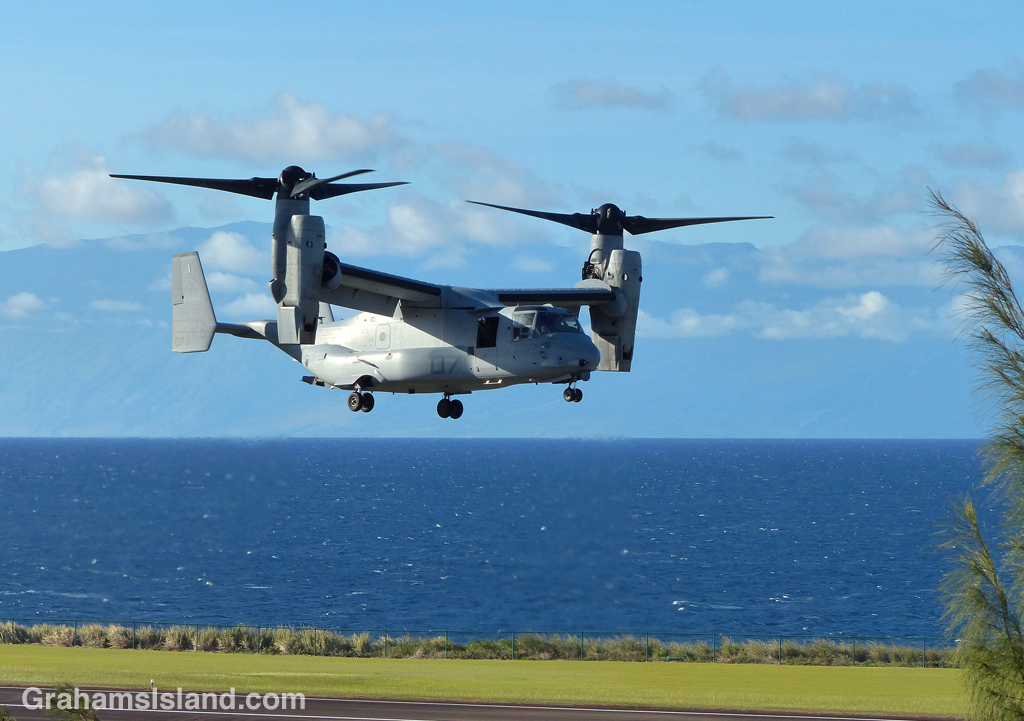
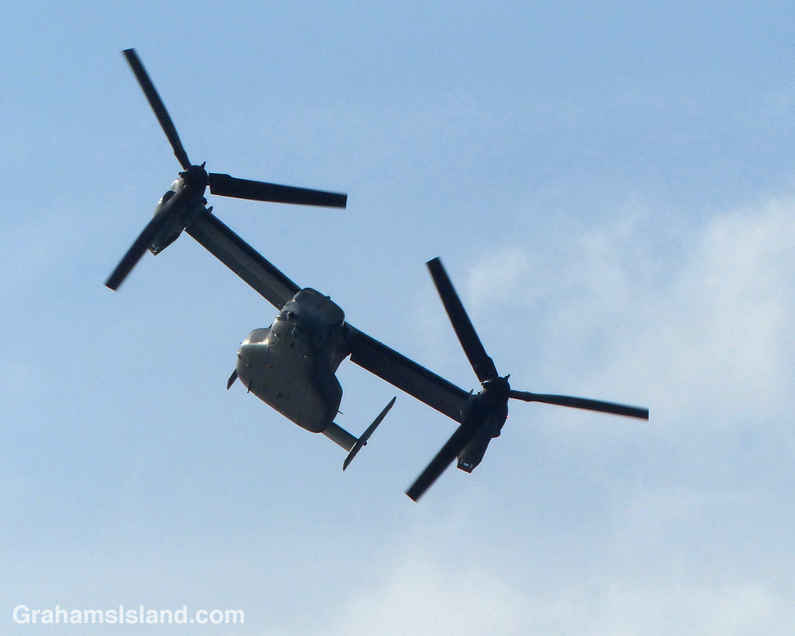
A V-22 Osprey lands at Upolu Airport.A V-22 Osprey banks as it approaches Upolu Airport.
Returning from a walk around Upolu Airport, I was startled by a loud thumping noise close by. Through the trees I saw this peculiar-looking aircraft touching down. The plane is a V-22 Osprey, a tiltrotor aircraft used by the military, in this case, the U.S. Marine Corps.

The plane made several loops, out over ʻAlenuihāhā Channel and back around to the airport to land, then do it all over again. It was actually quite fascinating to see the engines rotate from horizontal to vertical while in flight.

Eventually, the plane headed out over the channel and kept going, probably back to its base on Oahu.