
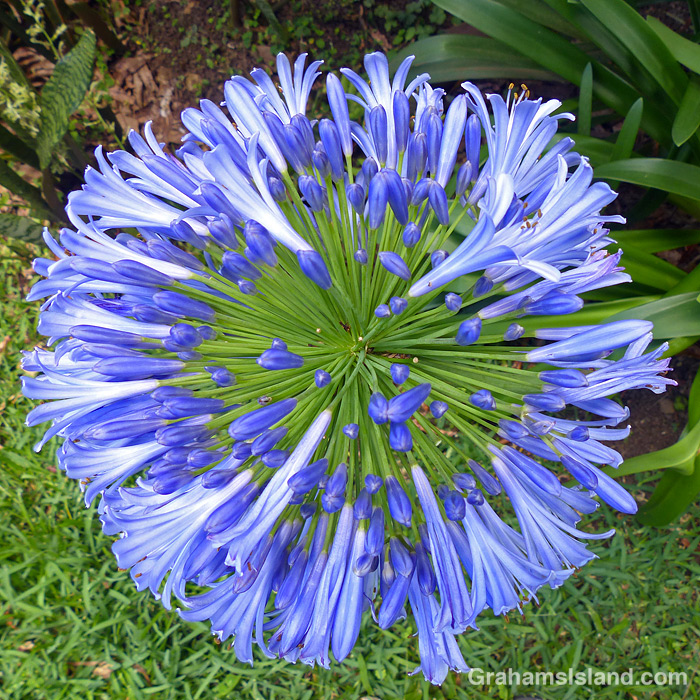
This agapanthus has bloomed for the first time, with a fine array of showy blue flowers. Not only do they look good, but the bees like them, too.


This agapanthus has bloomed for the first time, with a fine array of showy blue flowers. Not only do they look good, but the bees like them, too.
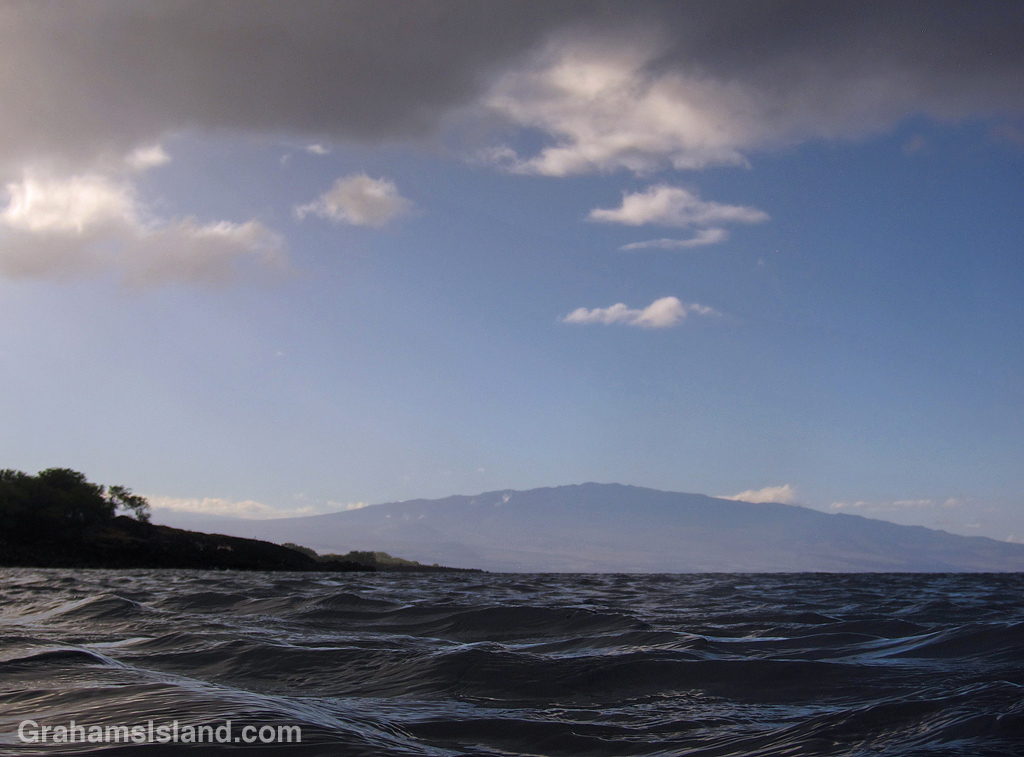
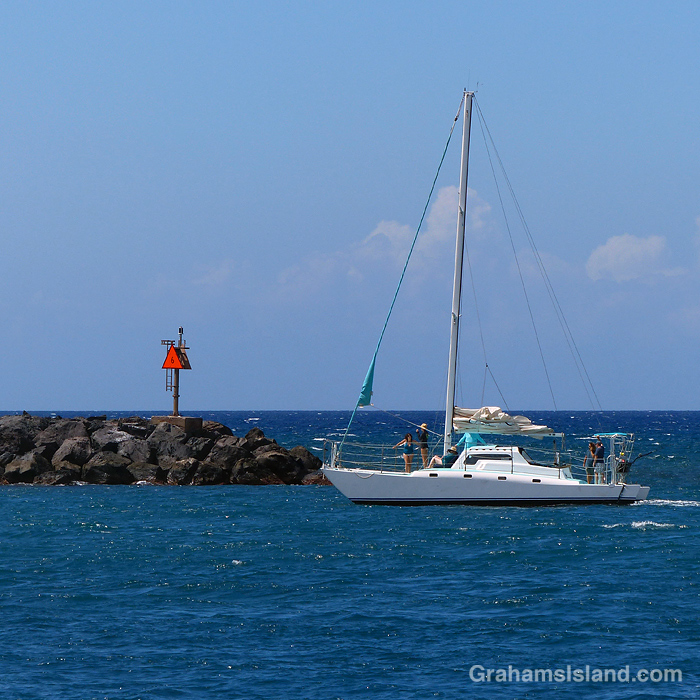
This week’s Sunday Stills challenge theme is ‘Great Outdoors.’ See more responses here.
In Hawaii, people spend a great deal of time outdoors. It’s common for people to have an outdoor kitchen, sometimes their only kitchen, sometimes a second one where a barbecue is the featured cooking apparatus. Carports often feature chairs and tables with cars parked elsewhere. The lanai, or deck, is as well-used as any room in the house.
Outdoor activities are popular here, too. Many involve the ocean and its inviting water: swimming, snorkeling, paddling, and of course surfing. Plenty of people go fishing and hunting, longtime sources of food for the table.
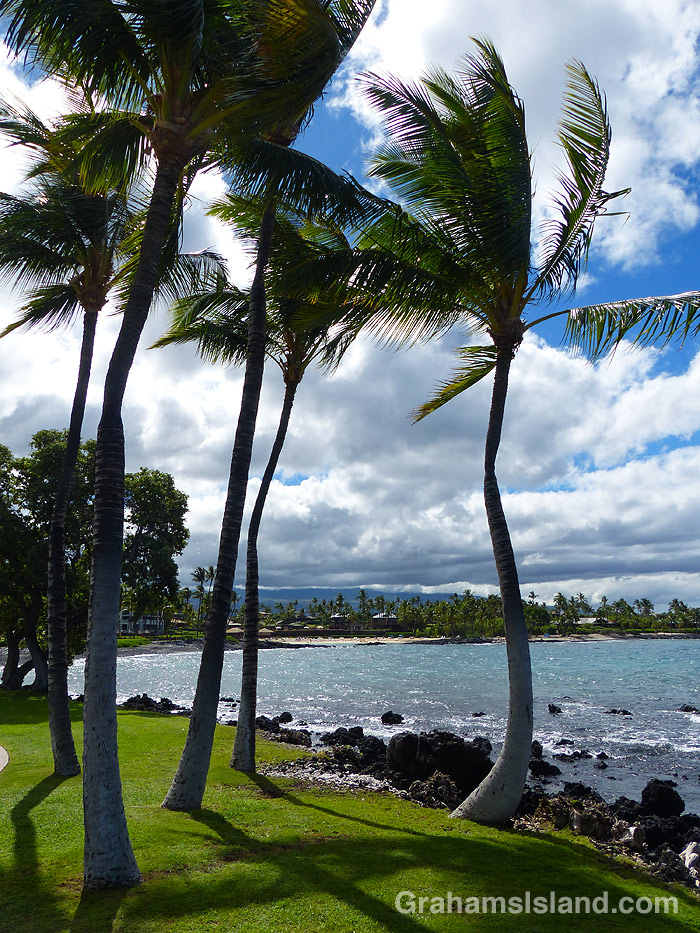
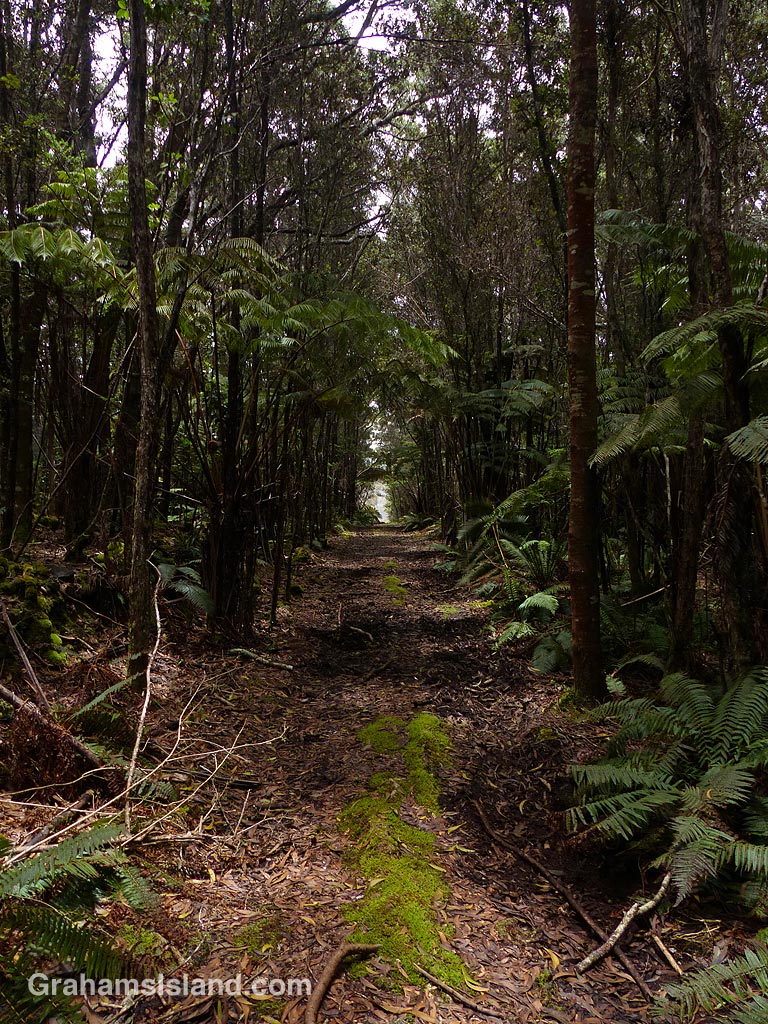
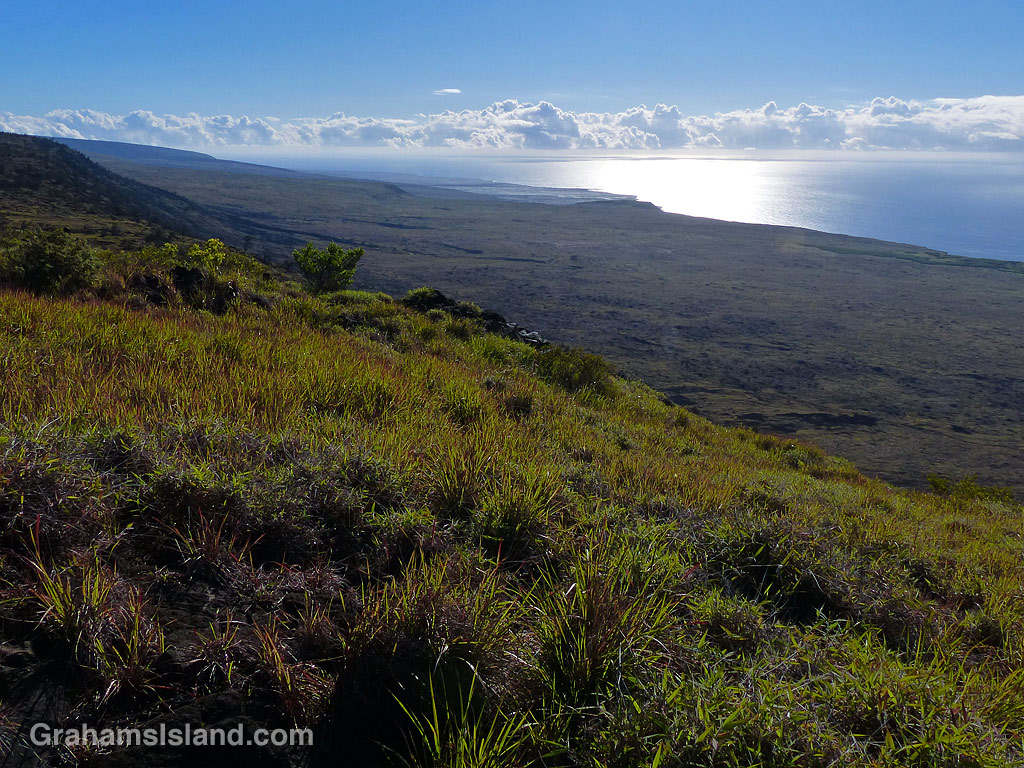
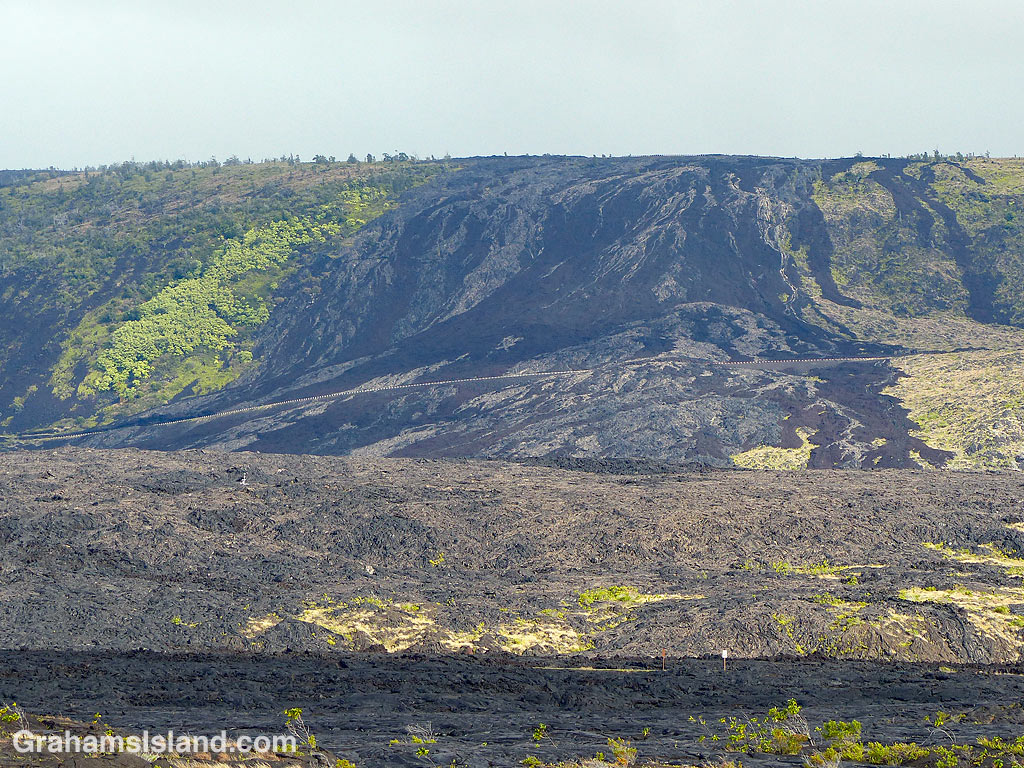
For me, experiencing the great outdoors primarily involves hiking and snorkeling. Hiking isn’t especially popular here, especially along the coast where it can get quite hot. I get strange looks when I hike the length of popular beaches togged out in hiking gear, including shoes, hat, and fanny pack loaded with water. For most, the beach is a place for stretching out and broiling in the sun, not actively working up a sweat.
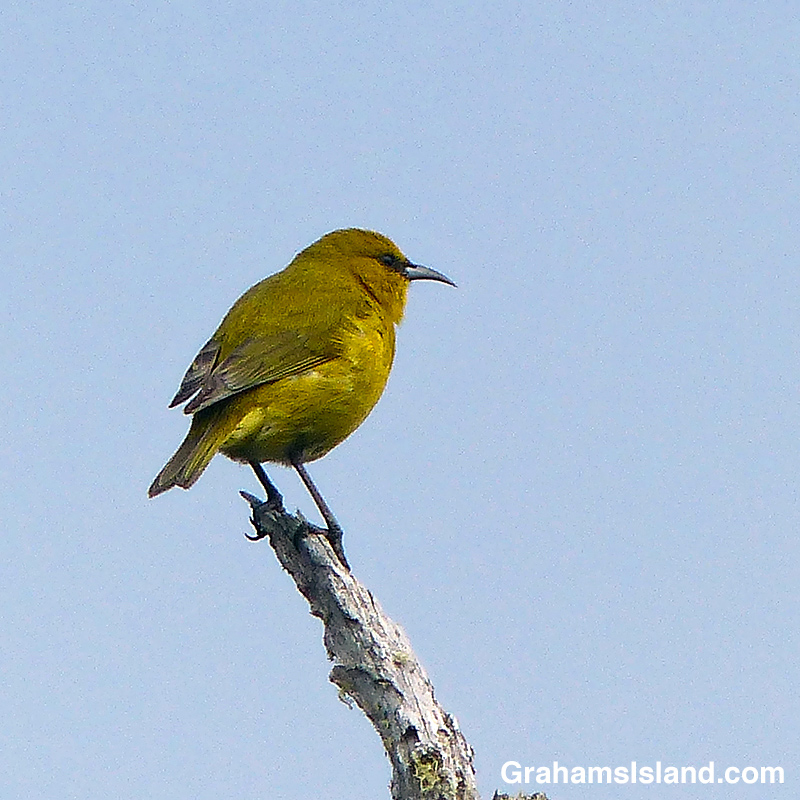
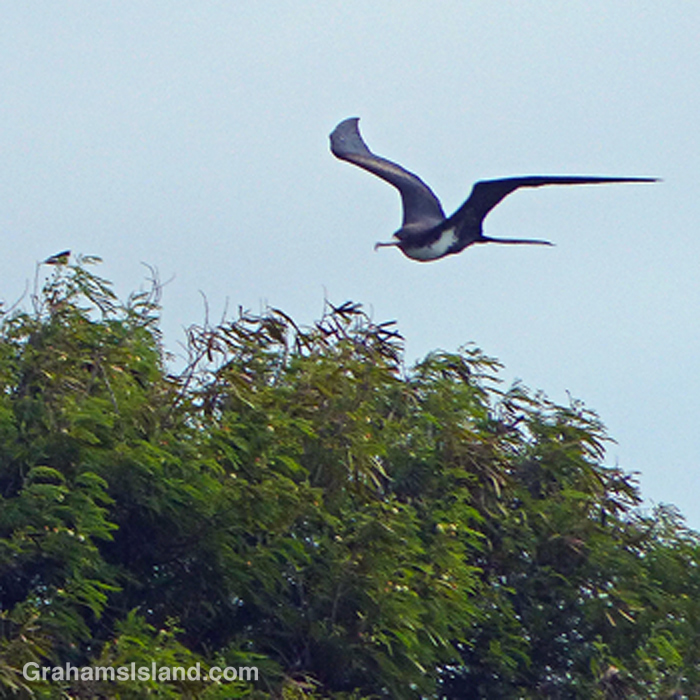
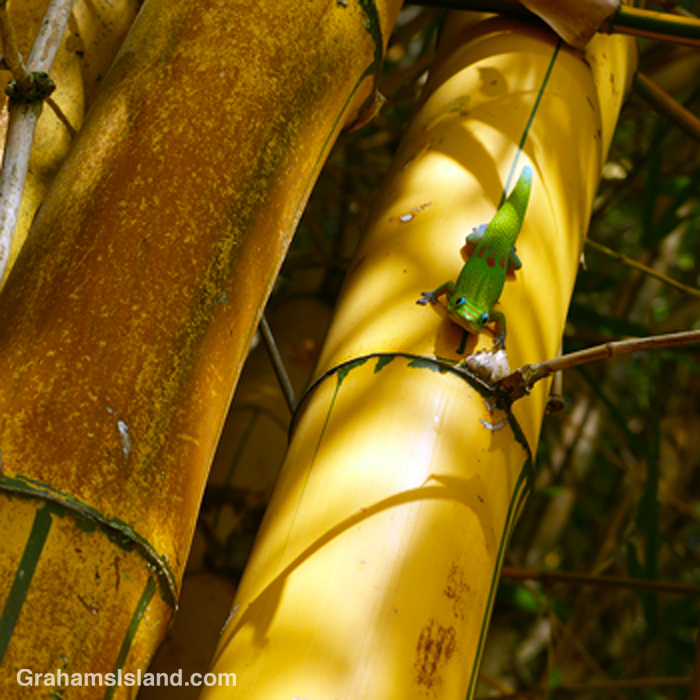
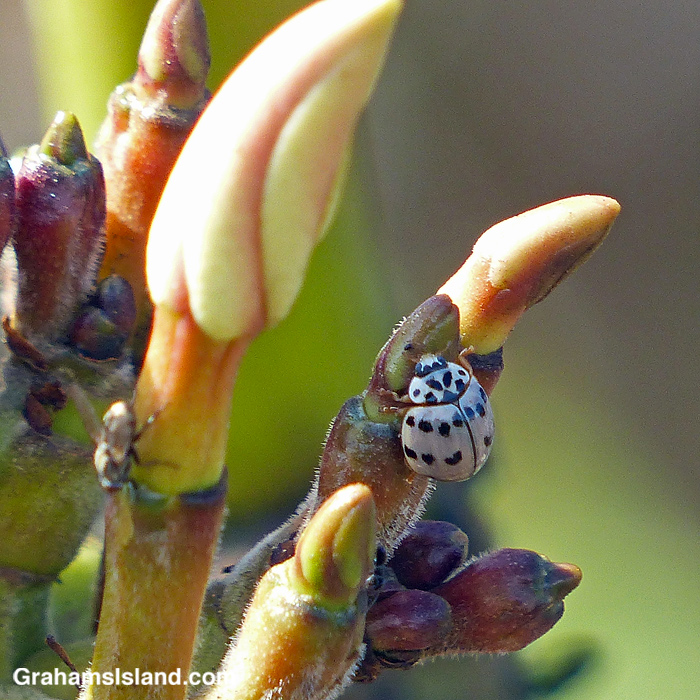
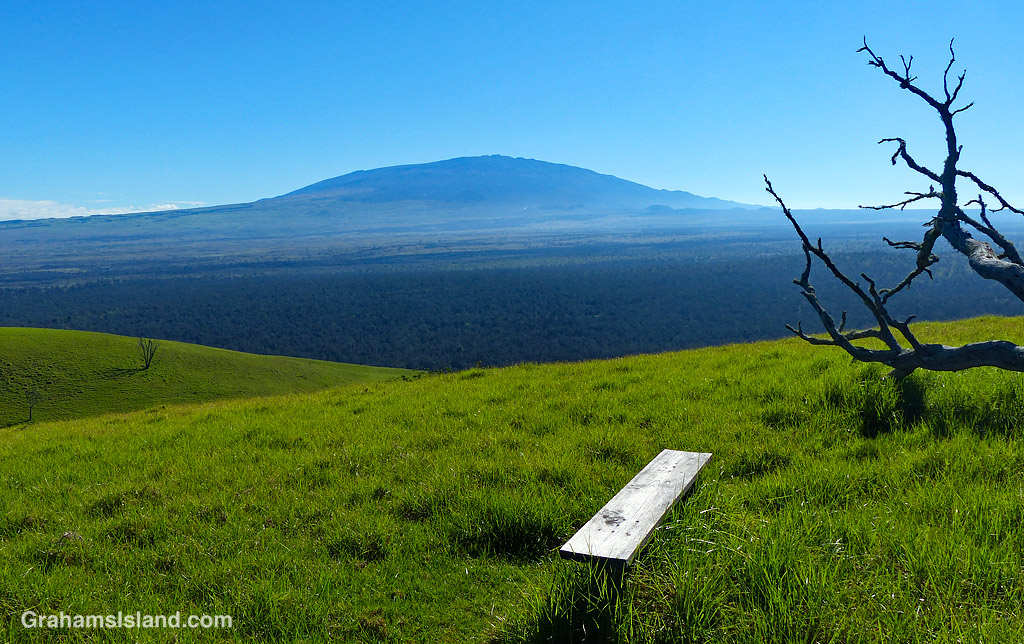
The vast majority of photos on this blog are taken in the great outdoors. These photos are a small selection of things I’ve seen while out and about, from sweeping views to birds and bugs.
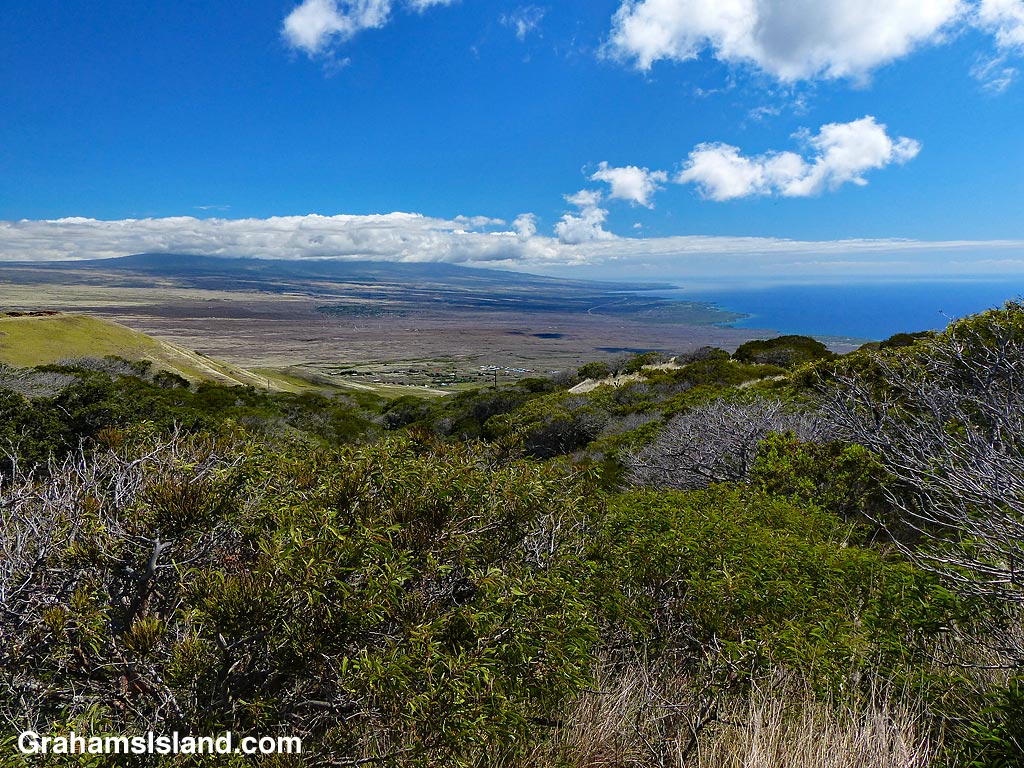
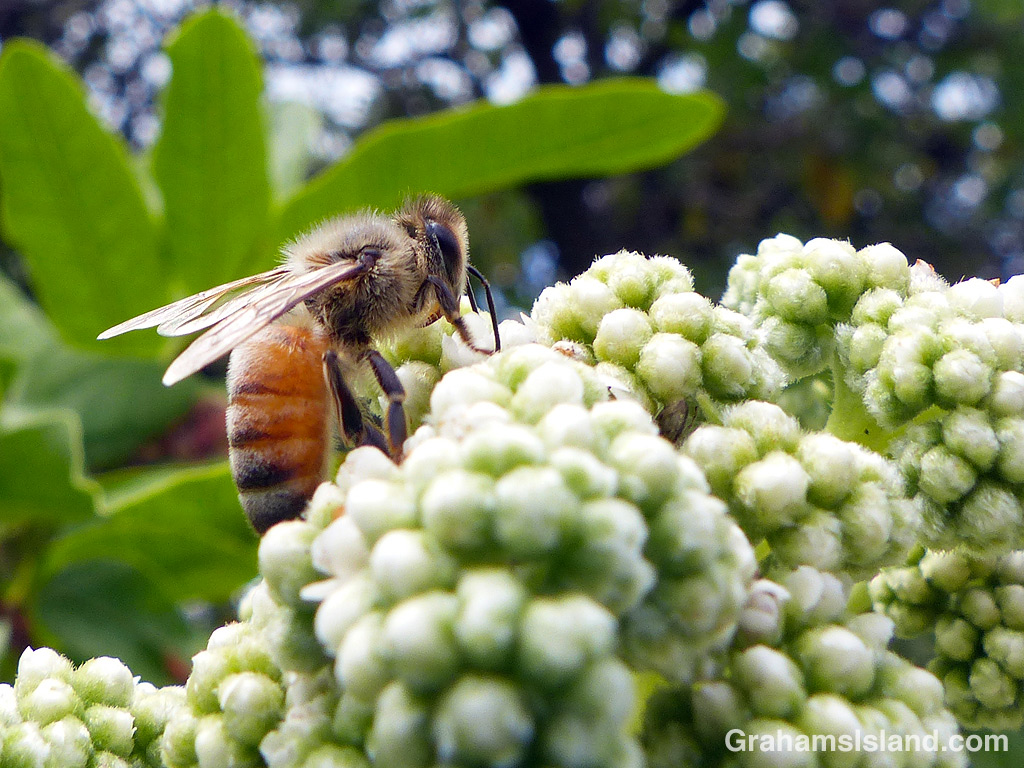
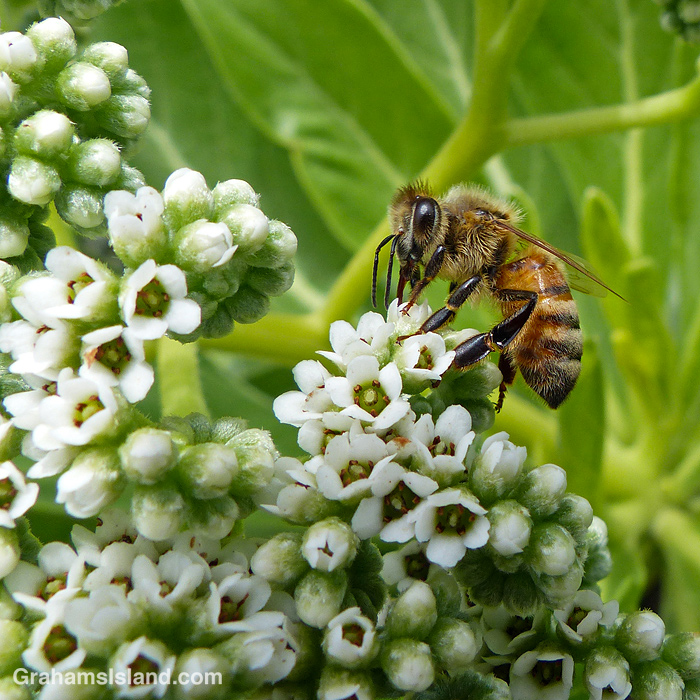
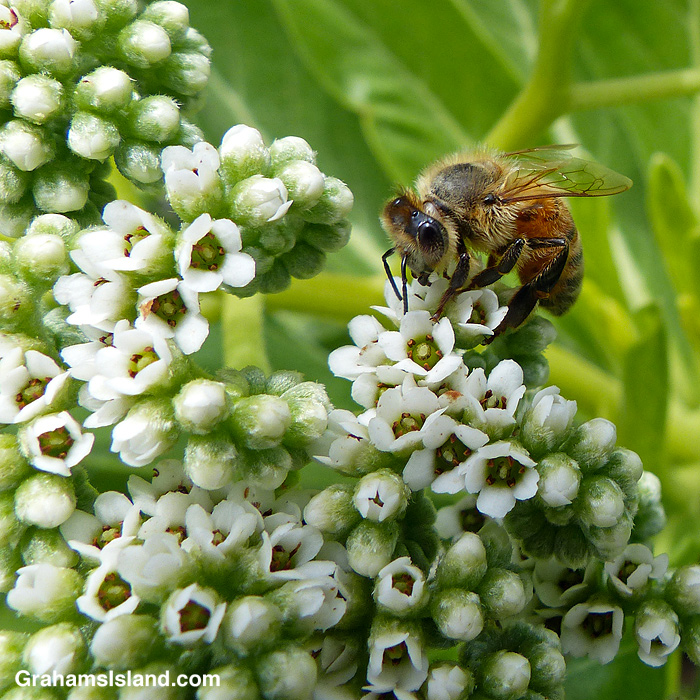
Tree heliotropes produce clusters of little white flowers which are a big draw for bees. When the flowers bloom there are usually plenty of bees in attendance to gather the goodies within.


Naio (Myoporum sandwicense) is an endemic plant that has a variety of forms, from ground cover to tree. The flower color can also vary quite a bit. I’ve seen pinkish purple blooms previously, but these flowers, on a shrubby plant, were all white. Naio used to be common in Hawaii, but now is much less so. It’s known as false sandalwood because the heartwood of the tree form smells similar to true sandalwood.
The butterfly in the top photo is a Western Pygmy Blue butterfly. a native of the Americas, it was first seen in Hawaii in 1978.
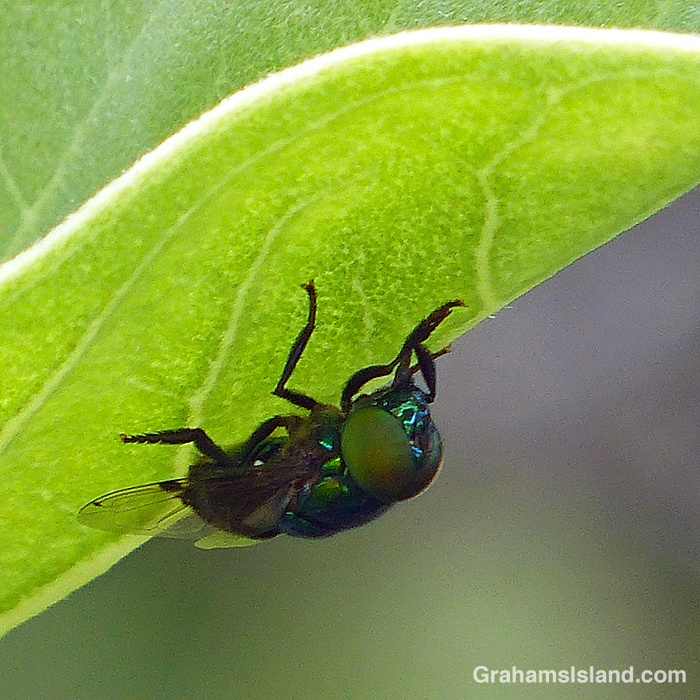
The reason I don’t like this photo is because, just a moment before, this green hover fly (Ornidia obesa) had been right side up in the sun, which illuminated its wonderful metallic-green body. Alas, by the time I got my camera out, it had relocated to this spot.
Still, it’s an interesting fly, which could just as easily be called the green wolf fly – ‘what big eyes you have.’
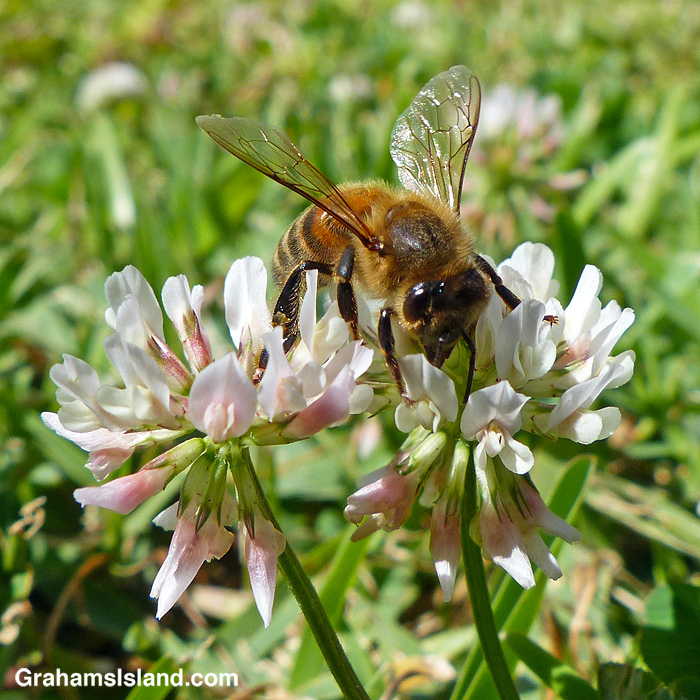
I was walking to my car when I noticed the bees had discovered the clover flowers in what passes for a lawn around here. So I got down and joined them for a little while.
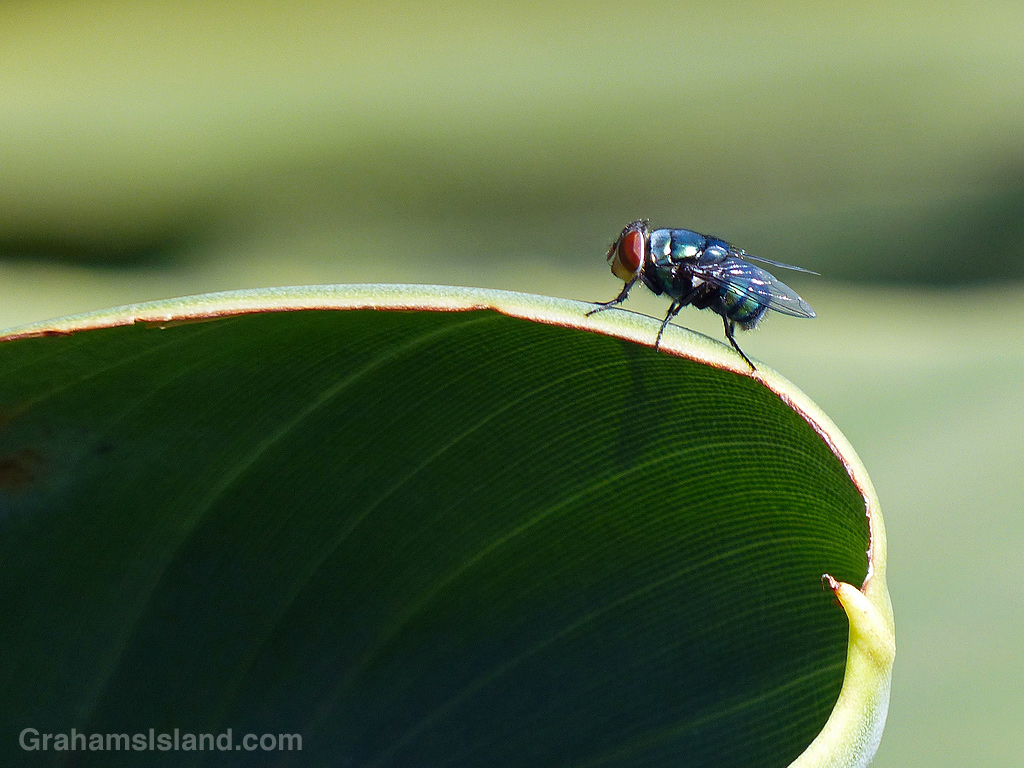
Just a green bottle fly perched on the edge of a leaf, but I liked the colors and the shape of the leaf.
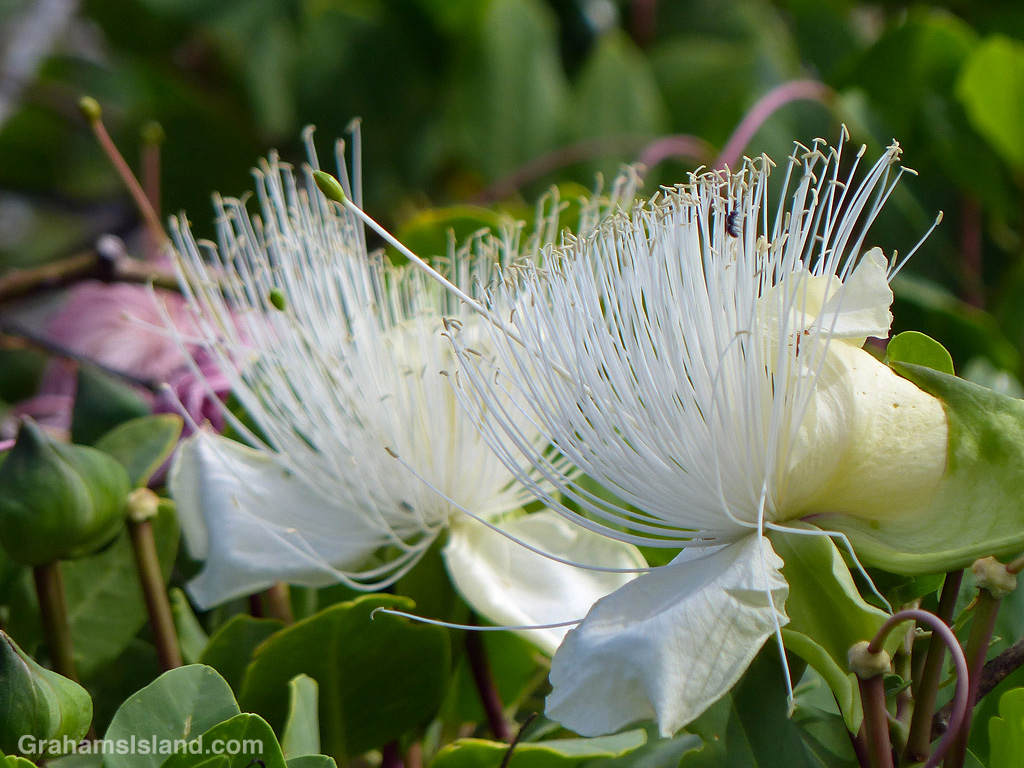
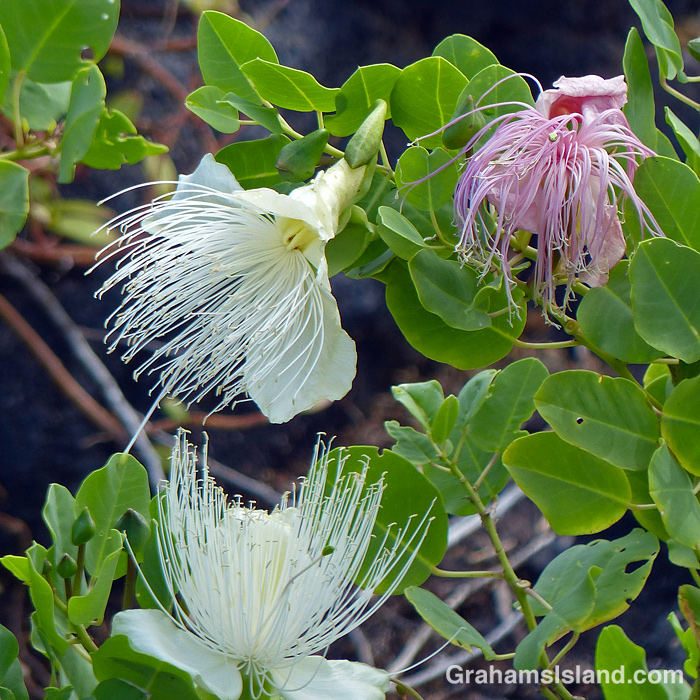
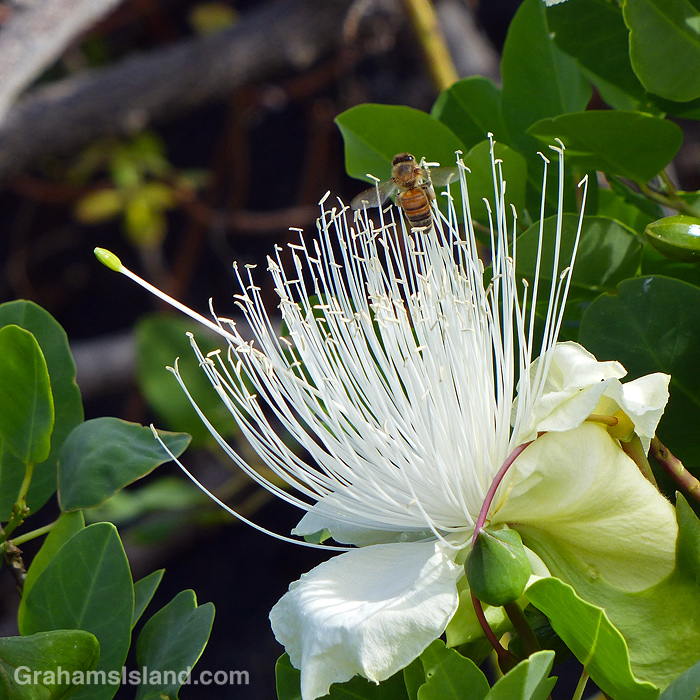
Maiapilo (Capparis sandwichiana) is an endemic plant that requires little water once established and is also salt tolerant. This means it grows well on the dry side of the island along the coast. This of course is also an area popular with humans, both for living and recreation. Consequently, maiapilo is considered an at risk plant.
Its standout feature is the beautiful white flowers, but if you want to see them, bring a flashlight or be prepared to get up early. Maiapilo blooms at night and begins to wilt early in the morning, fading to pink as it does so.
These photos were taken around nine in the morning and the bees were busy exploring and pollinating the flowers. At night though, native moths are the main pollinators, attracted by the white flowers and pleasant lemon scent. A cucumber-like fruit follows the flowers but, unlike them, it is said to have a very pungent smell.
The plant can be low-growing and sprawling, or a more upright shrub reaching 10 feet.
 Graham's Island