
A mango beetle checks out a bright orange Kou (Cordia subcordata) flower.

A mango beetle checks out a bright orange Kou (Cordia subcordata) flower.
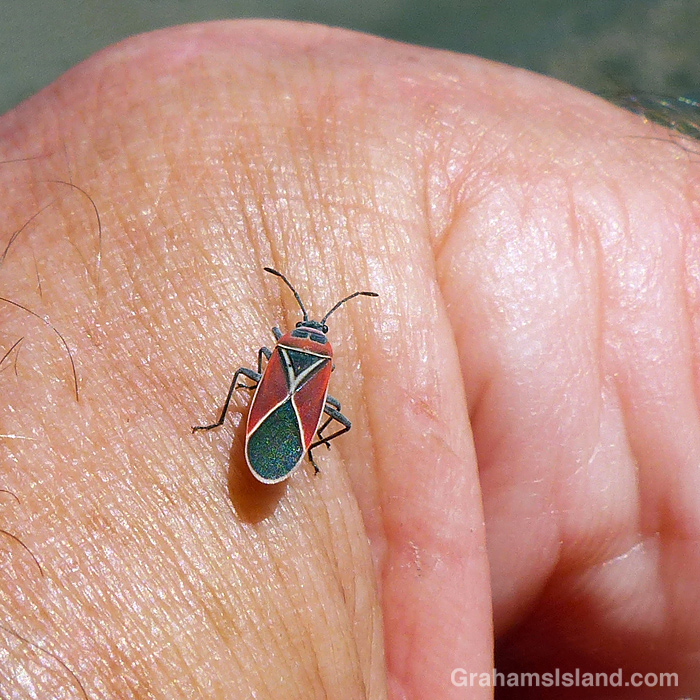
I was doing some cleanup work outside, when I noticed this bug on my hand. I headed in to where my camera was and the bug stayed in place the whole way. I got the camera organized and took a few photos before it finally flew off.
I knew I’d seen one of these before, but couldn’t remember where or what it was. A quick search revealed that this is a whitecrossed seed bug (Neacoryphus bicrucis), a resident of fields and meadows.
My previous sighting had occurred after a hike on Mauna Loa. It was on a water bottle I’d left in the cooler in my truck while I hiked. I suspect that one had inadvertently taken a day trip with me and was probably stunned to find itself at 11,000 feet, surrounded by barren lava!

A while back I posted a photo (here) of one of the heavily-laden tangerine trees in the yard. I noted that in my eight years living here I’d never seen a flower on the tree despite its prolific production of fruit.
However, last week, when I was up on a ladder harvesting the last of the current crop of fruit, I finally saw the flowers in the top photo. Then, when I’d knocked the last of the fruit down, I saw (bottom photo) one tangerine had a bit of branch still attached which bore, not only a flower, but also a leaf bearing a cluster of butterfly eggs.
I still don’t know how I’ve missed seeing these flowers before. They’re small, but not minuscule, and they have a lovely scent. While I wouldn’t expect to see flowers on higher branches, the lowest branches are at eye level and below. And I still haven’t seen bees and butterflies around the trees, though the eggs clearly show they do visit.

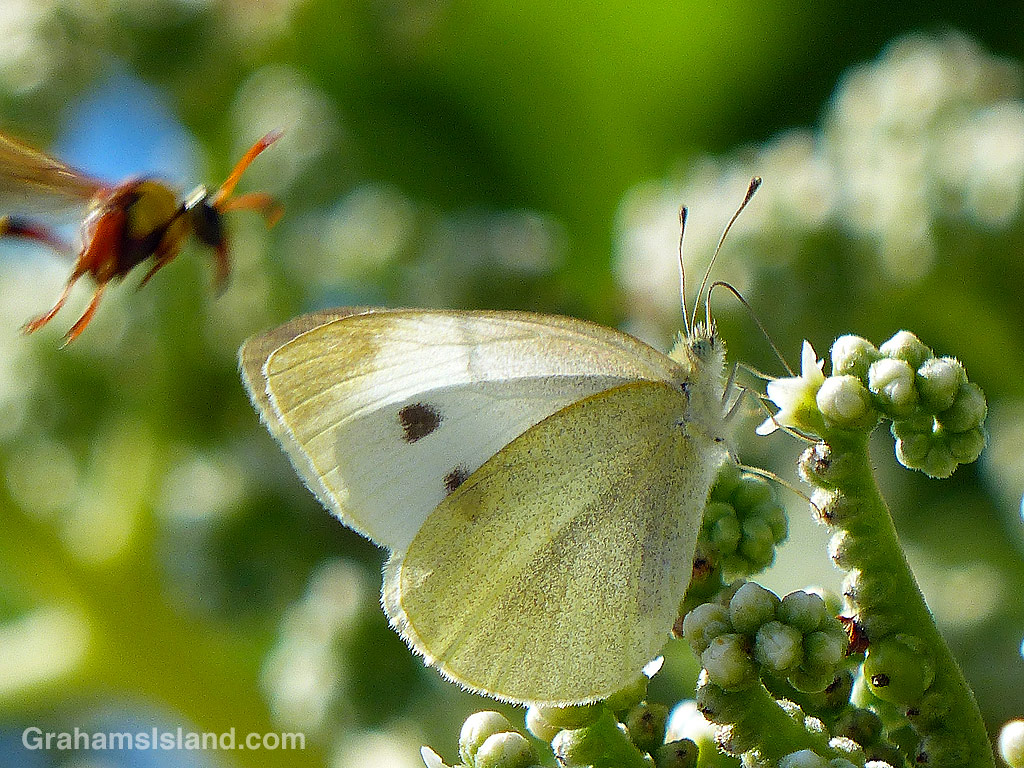
This cabbage butterfly was enjoying a feed on a tree heliotrope, apparently unaware that company was imminent.
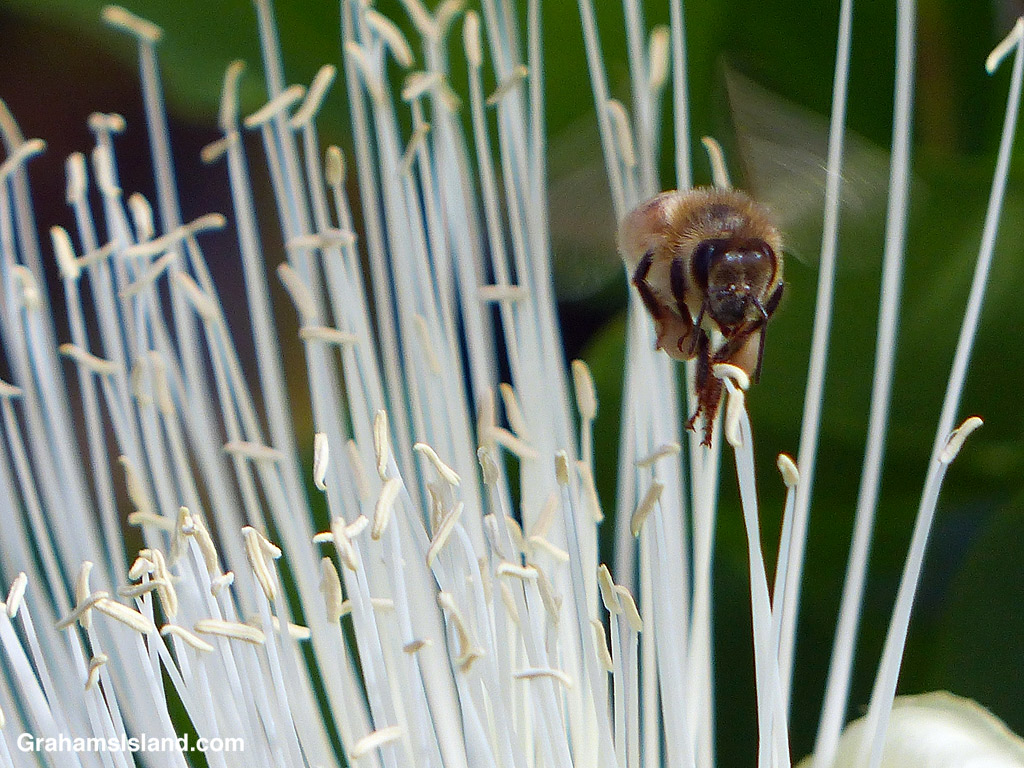
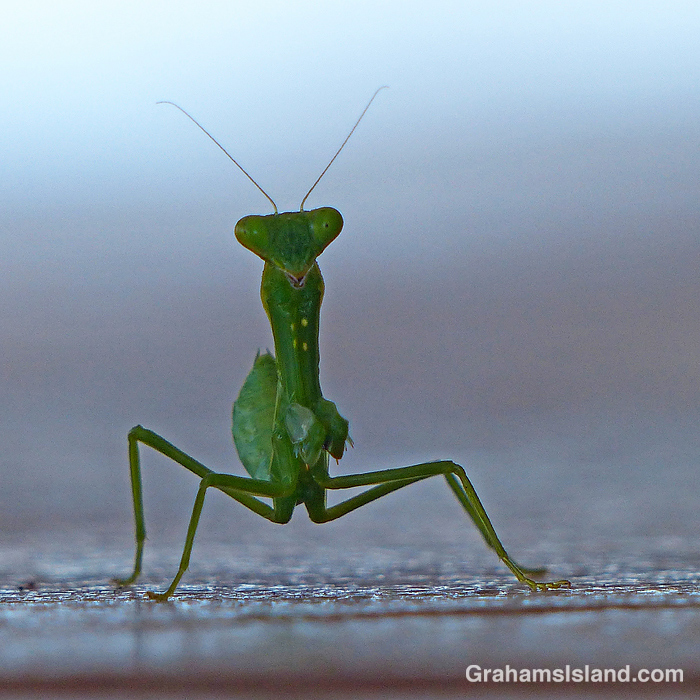
This week’s Sunday Stills challenge theme is ‘Summer Bugs.’ (See more responses here.) To the best of my knowledge, Hawaii’s bugs are pretty much the same year-round. Here are some of them.
The top photo shows a bee showing impressive balance on a maiapilo flower.
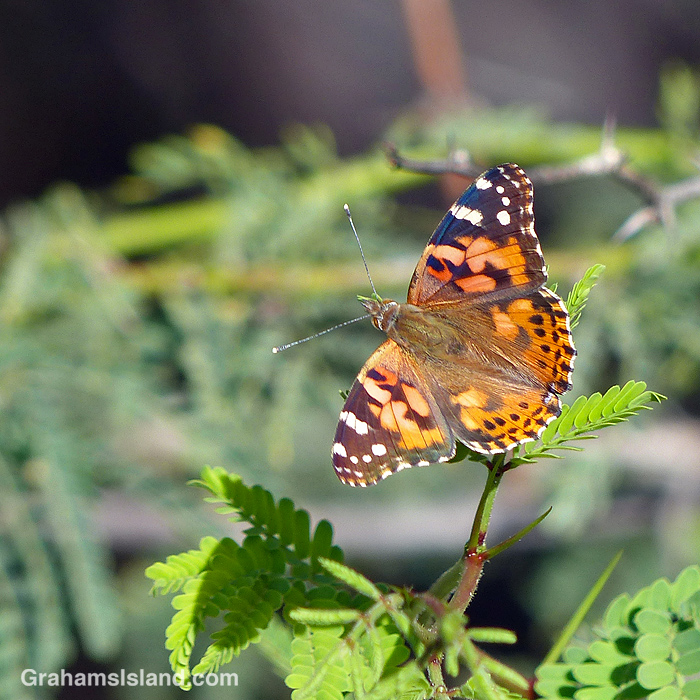
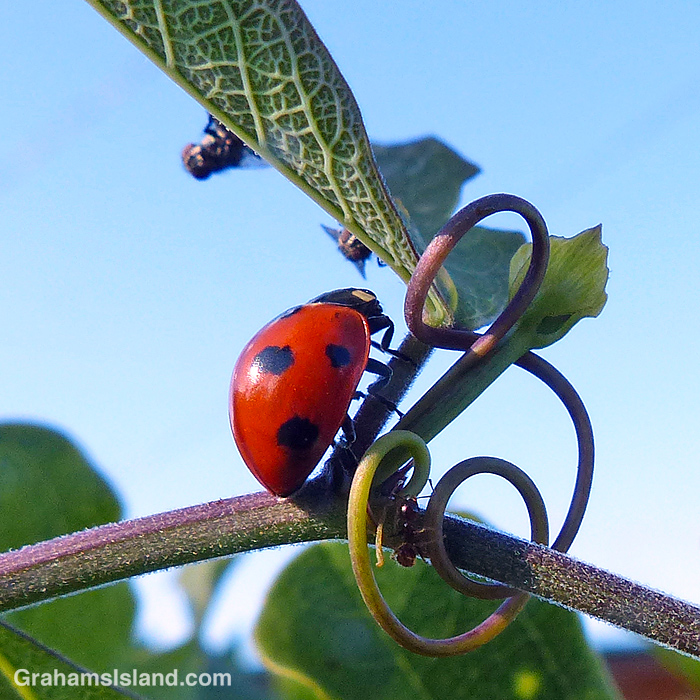
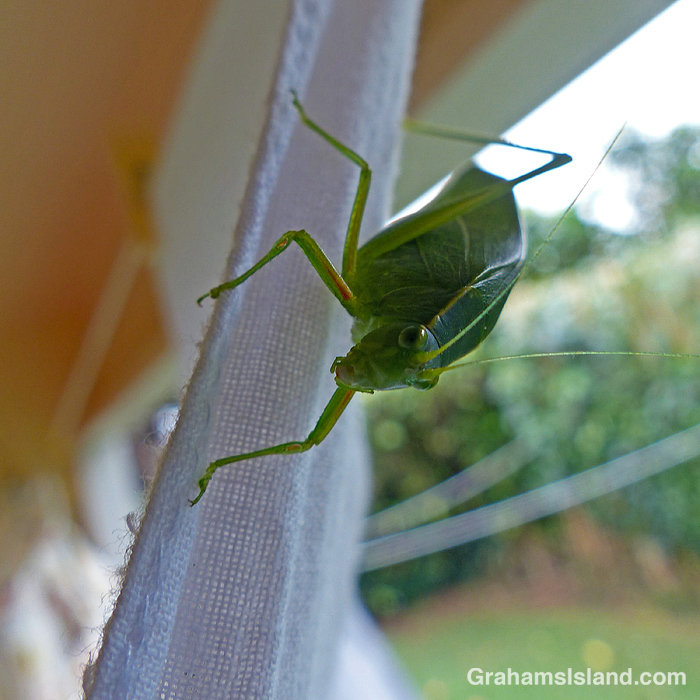
Next up, clockwise from top left: Getting down to eye level with a juvenile praying mantis. A painted lady butterfly on a kiawe tree. A katydid wondering what it’s done to deserve this much attention. A seven-spotted lady beetle being watched.
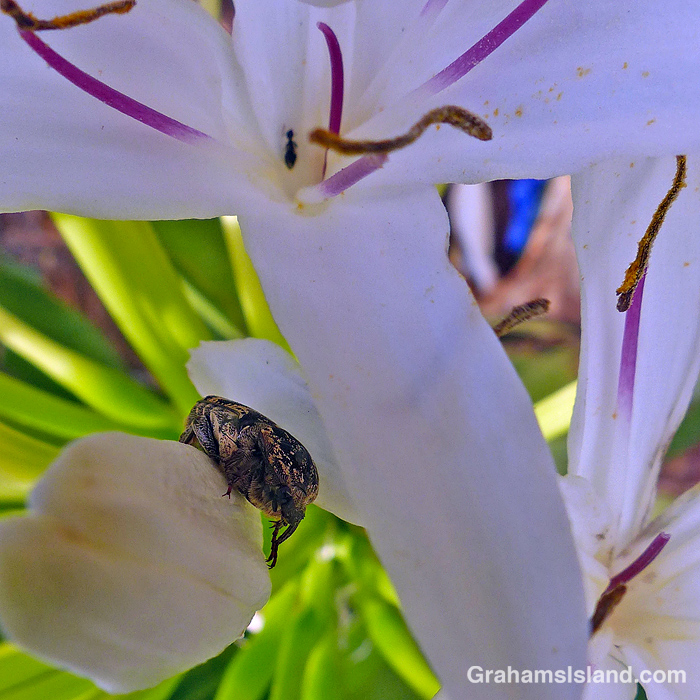
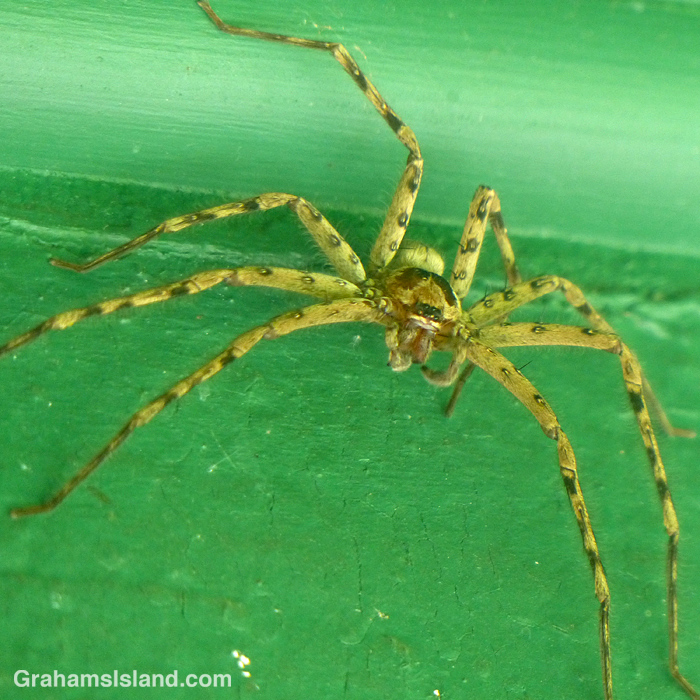
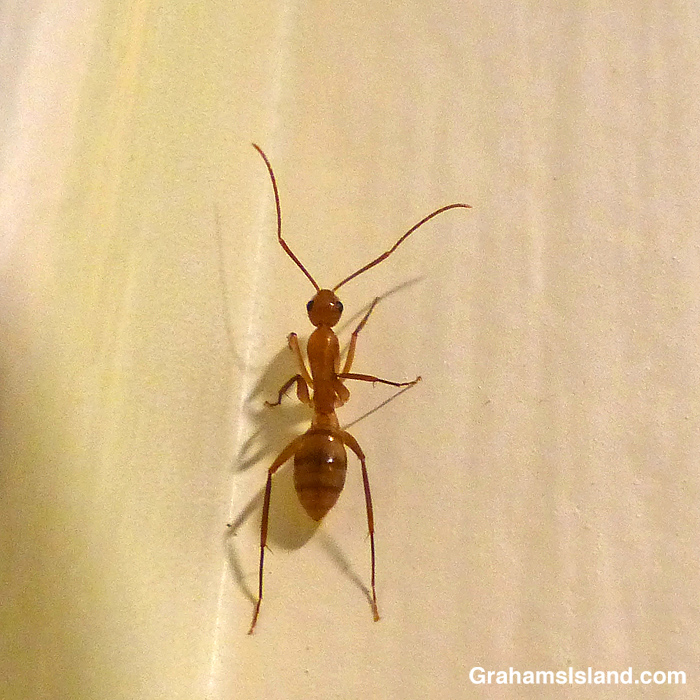
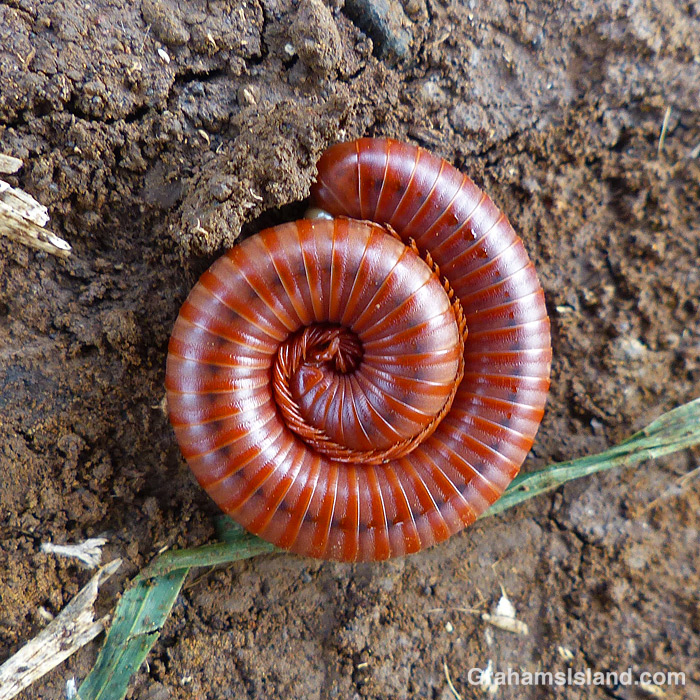
The final gallery: Top left: A mango flower beetle explores a spider lily. Top right: A watchful cane spider wondering if it should run, very fast, away. Bottom left: A Hawaiian carpenter ant (Camponotus variegatus), one of too many that have taken up residence in the house. Bottom right: A rusty millipede deciding that it’s all too much!
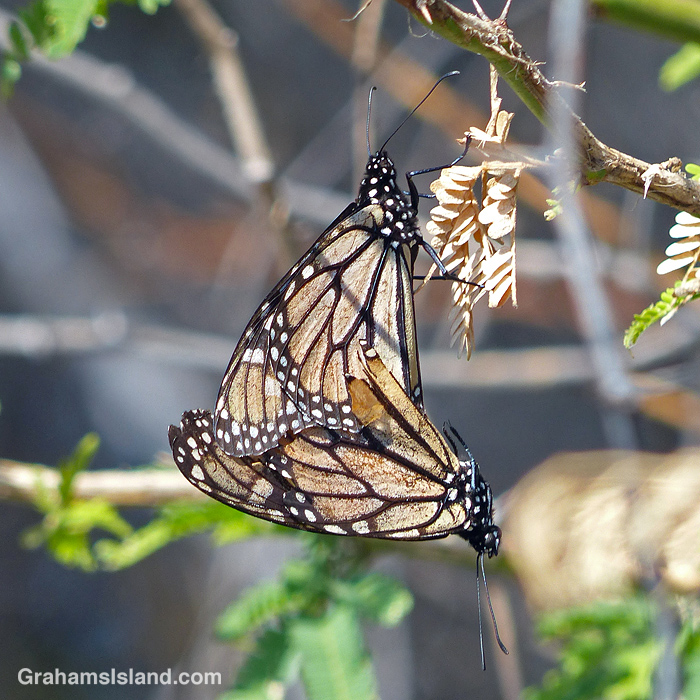
A pair of monarch butterflies mating on a kiawe tree.
Posted in response to Becky’s July Squares challenge theme of ‘Trees.’ See more responses here.

A bee forages on the bright yellow flowers of a mamane tree.
Posted in response to Becky’s July Squares challenge theme of ‘Trees.’ See more responses here.

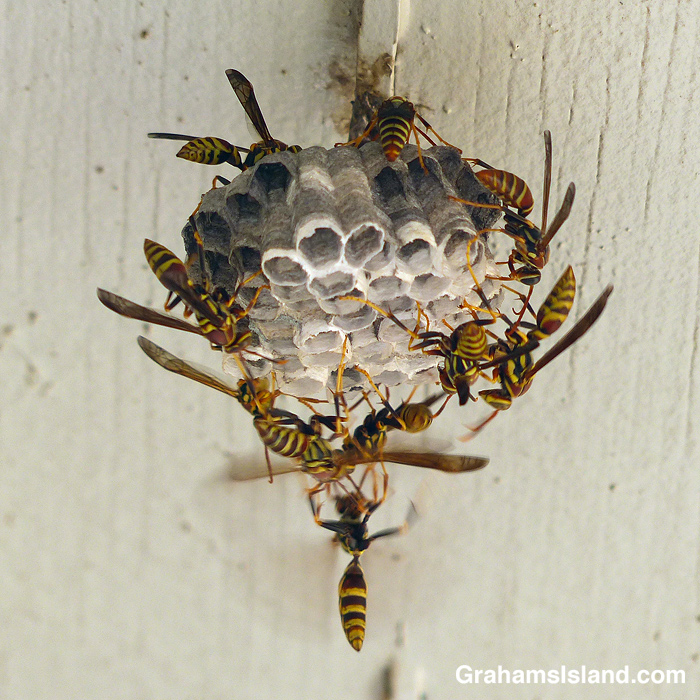
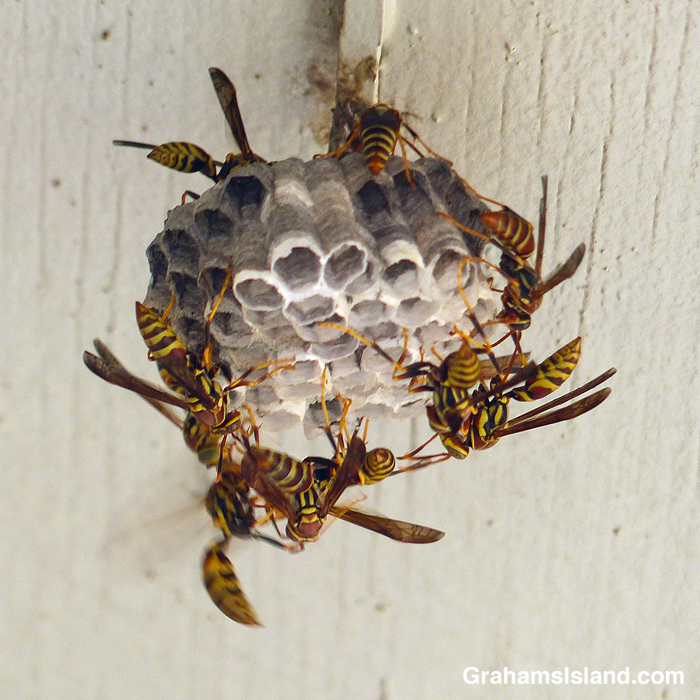
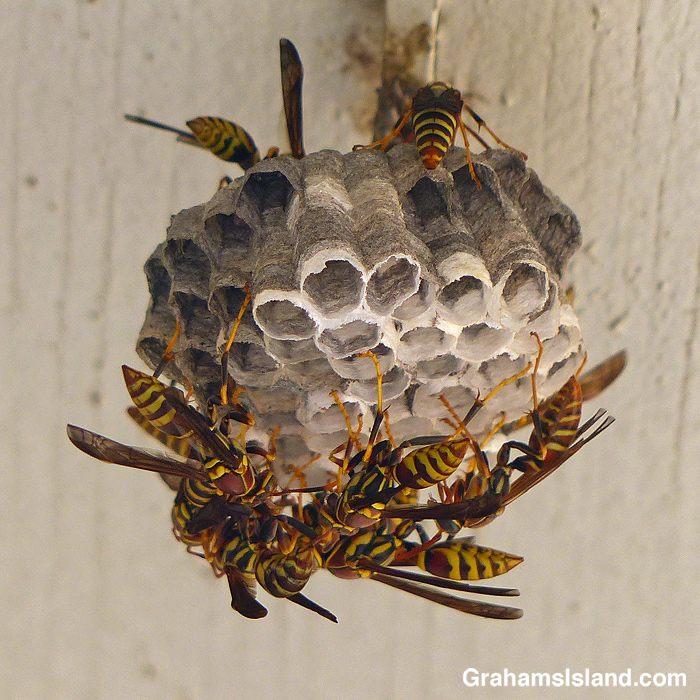
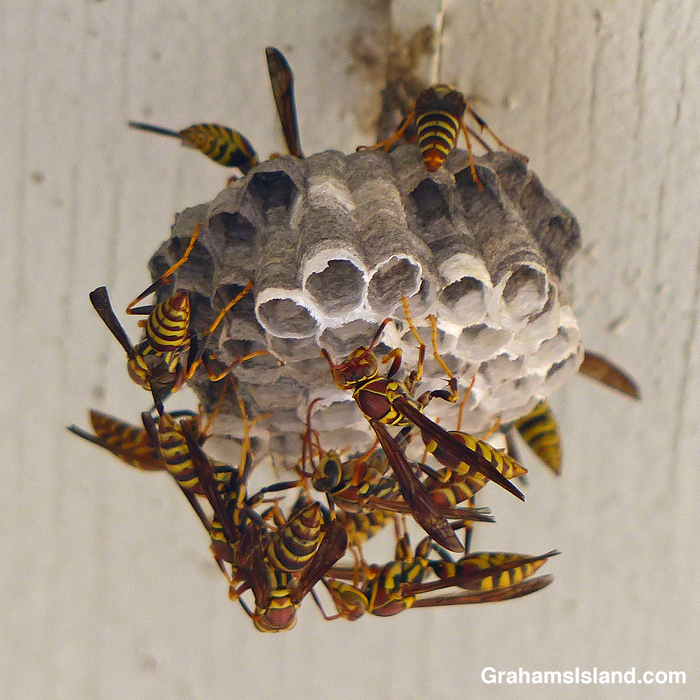
Last week, I saw these wasps working on a nest under the eaves of a building. I was curious because the wasps were mostly stationary, almost like a still life painting (top photo). Then another wasp flew in and the ones on the nest burst into life, swarming the newcomer, and bustling about their business.
I went outside with my camera and watched the activity. A couple of wasps flew away while the others continued with their work. Within a minute or two they slowed down until they were again mostly stationary. It occurred to me that this was all part of the process. Wasps flew in with building materials or water. Other wasps received this and used it to add to the nest. When they were done, they waited, conserving energy, until another delivery occurred and the cycle kicked off again.
I waited with my camera and, sure enough, a wasp flew in (at the bottom of the second photo). The others responded, crowding around for supplies, before dispersing to their work sites on the nest. I’ve watched wasps building nests before, and seen a nest grow to the size of a football, but I’d never registered this work and rest cycle before.
 Graham's Island