
A dragonfly skims over a pool of muddy water.

A dragonfly skims over a pool of muddy water.
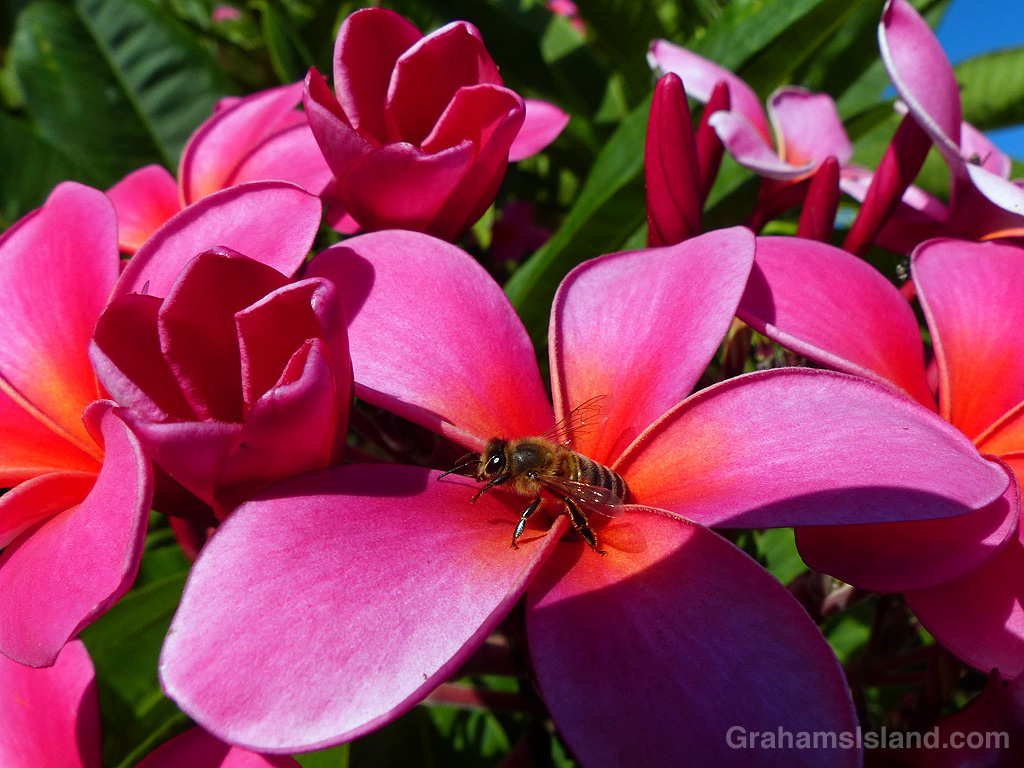
A bee forages on a red plumeria flower.
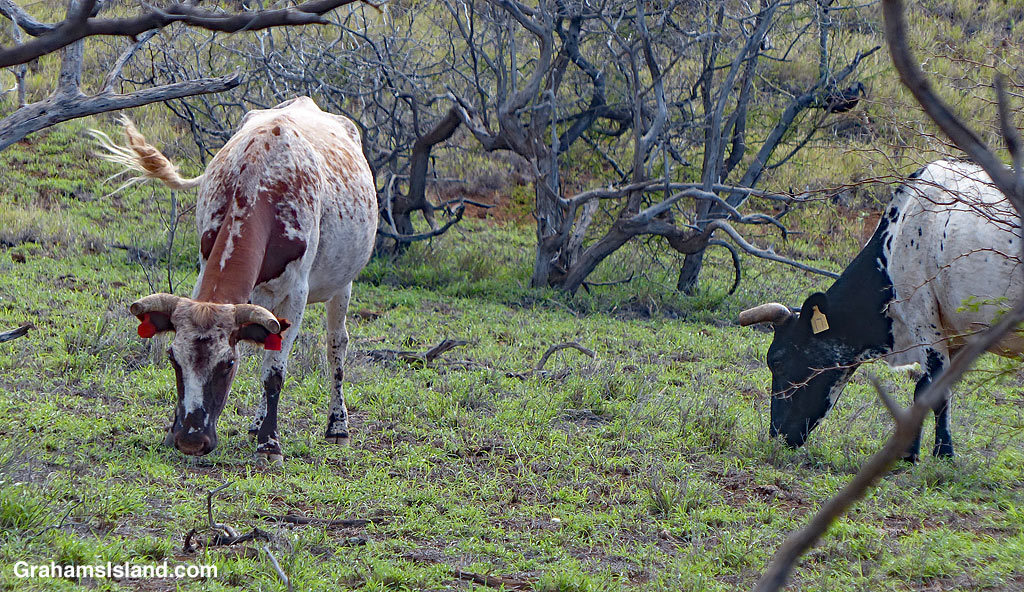
These are a couple of short-horned cattle, not shorthorn cattle which is an established breed of cattle. These two have had the ends of their horns removed. Unlike dehorning, when the entire horn is removed, removing only the tip is not supposed to be painful because that part of the horn is just keratin.
This kind of procedure is probably to reduce the risk to people handling the cattle, but I have seen these cattle in the company of others with a full set of horns, so I guess it’s a case of let the handlers beware.

I’ve posted about agave attenuata before, in January of last year (here). The plants are blooming again and, once again, the bees are all over them. This year I wanted to focus on the bees in flight, just before they settled on the flowers to forage. This resulted in a fair number of bees buzzing around my head, but I worry less about that than I used to. I took a lot of photos, most of which were free of bees, or featured bee blurs.
These were a couple of my favorites, each capturing a bee just before plunging into the bounty within.


This is a guava moth (Ophiusa disjungens), which hails from south-east Asia and the south Pacific, but has also found a home in Hawaii. This one is a darker variant of the moth which is more often mostly yellow or orange.

This is easily the smallest stick insect I’ve seen here. I noticed it on a window screen and it was no wider than a single square of the screen and not very long either.

A pair of boldly marked Asian swallowtail butterflies flying in the blue Hawaiian skies.
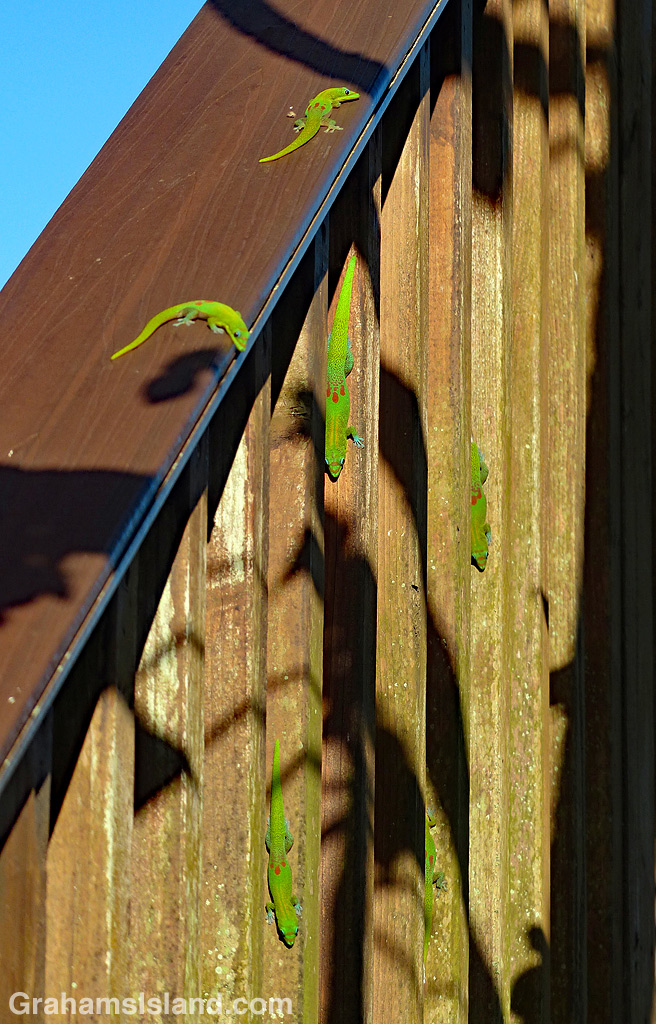
When the morning sun hits, gold dust day geckos can often be seen soaking up the early rays to warm themselves for the day’s activities. Half a dozen of them were doing just that on this railing.
 Graham's Island