Category Archives: Birds

I’m a rooster

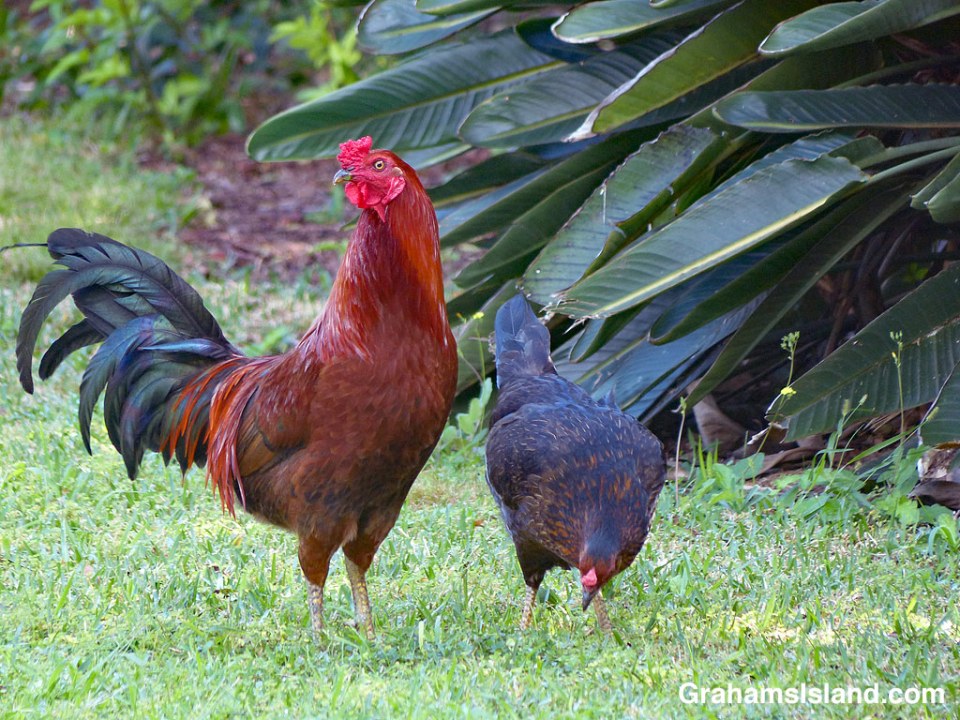
Rooster

Since this week’s WordPress Photo Challenge theme is ‘Awakening,’ it seemed an appropriate time to feature a rooster. After all, they’re widely associated with heralding in the day by loudly announcing the new dawn.

As it happens, I know a few things about roosters, mostly because, for six months, I lived across a narrow street from a rooster farm with 40 or 50 birds. Here in Hawaii, roosters and chickens are everywhere. While many are farmed in some form or other, others wander free. They can be seen milling about both town and country, crossing streets, wandering across lawns, scratching up flowerbeds.

I can confirm that roosters do indeed crow at daybreak, but this is along the lines of saying a broken clock gives the right time twice a day. That’s because roosters are quite happy crowing at daybreak, during the day, in the evening, in the dead of night, and all of the above. In theory, it’s quiet for a few hours at night when roosters sleep. In practice, all it takes is for one bird to wake suddenly — possibly from a bad dream, possibly barbecue-related — and cry out, and any other rooster within earshot is likely to join in. So that dawn chorus could go off at midnight, at 2 a.m., at 4 a.m., or all of the above.

But what is it these roosters are making such a noise about? Well, after exhaustive research, using my Dr. Dolittle translator kit, I have figured it out. What they’re saying, each and every time they open their little beaks is, “I’m a rooster.”

Forget ‘cock-a doodle-do,’ forget whatever the version of this is in different countries, “I’m a rooster” is what it boils down to. And when one announces this, it prompts other birds to announce that, they too are roosters, just in case anyone had forgotten.

Many’s the night I was jarred awake by this call, first one rooster, then a couple of others, the noise swelling, and then gradually ebbing as each bird forgot why it woke. At these times, I’d lie in bed hoping this would be the cue for another hour or two of blissful quiet. And then, somewhere out there in the dark, one of the slower roosters in the neighborhood would stir. Deep in that little bird brain a cog would clunk into life. ‘Did I hear a rooster? Well, shoot, I’m a rooster too. I’d better let him know.’ Out would come the cry and all those birds that had just settled down would pop awake again. ‘Hey, he’s a rooster. What d’ya know. Me too. “I’m a rooster.”’

So, yes, I think a rooster is an appropriate post for ‘awakening,’ assuming, that is, one can fall asleep in the first place.

These two birds appeared in the neighborhood a few weeks ago from who knows where. When I see them, I shoo them off, not wanting them to get too comfortable here. The alternative is making their dreams come true, assuming they’re barbecue-related that is.

Cheerful Emu

Emu

This cheerful looking emu is a resident of Pana‘ewa Rainforest Zoo & Gardens, near Hilo. What strikes me most though is how this photo is just like looking in a mirror. I mean, the hair, the beak …

Posted in response to this week’s WordPress Photo Challenge ‘Smiles.’

For more information about Pana‘ewa Rainforest Zoo & Gardens, go to hilozoo.org.

Palila Forest Discovery Trail

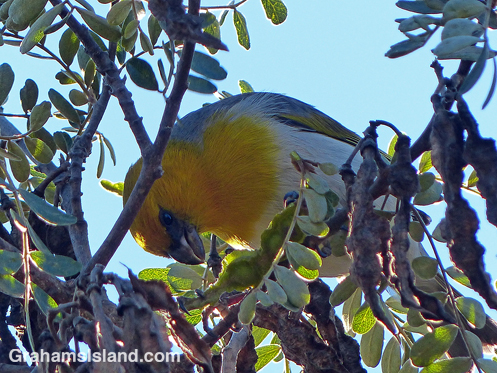
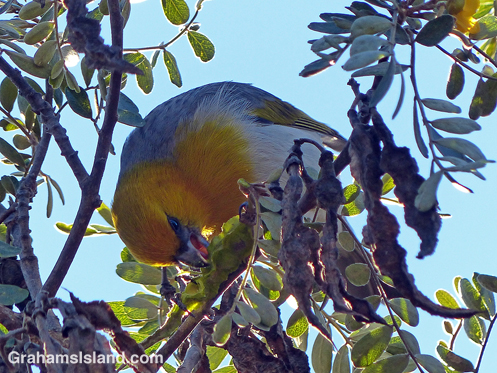
Palila on a branch

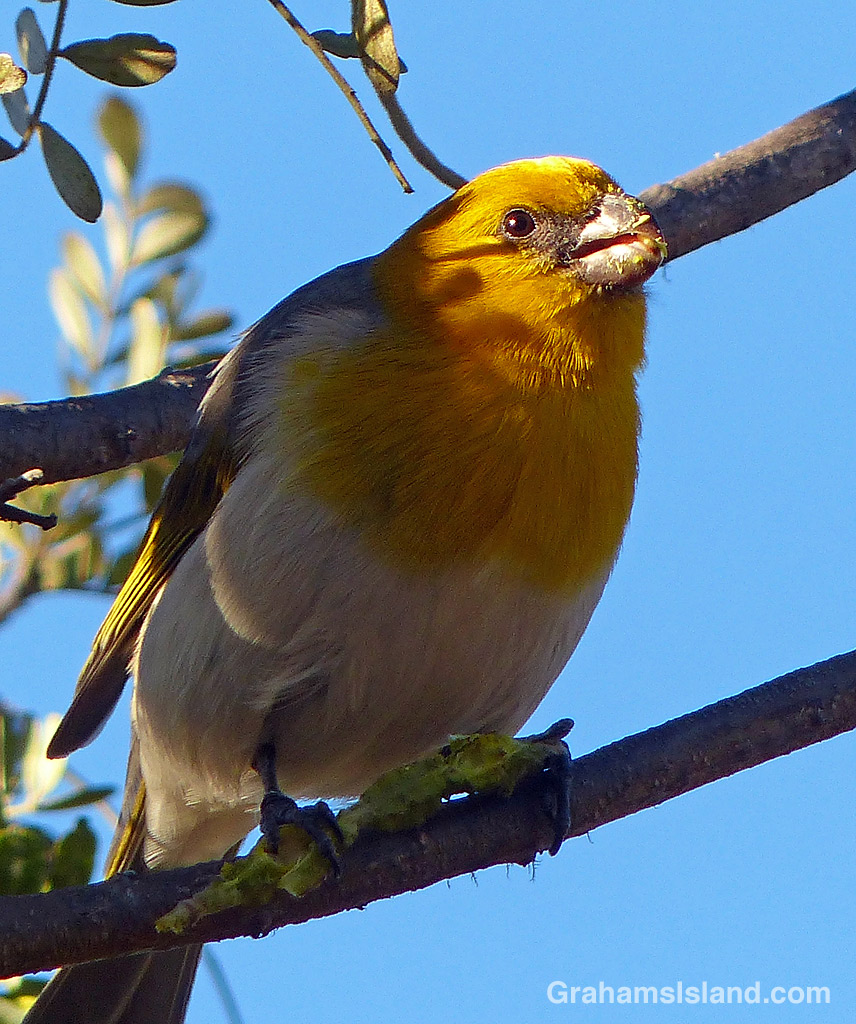
Palila with mamane seedI haven’t ever been a real birder, but since moving to Hawaii I’ve been more drawn to them. Because of this interest, one of my favorite places to visit on the Big Island is the Palila Forest Discovery Trail. Opened in July, 2016, this one mile loop trail passes through Mauna Kea’s unique, high-elevation dry forest.
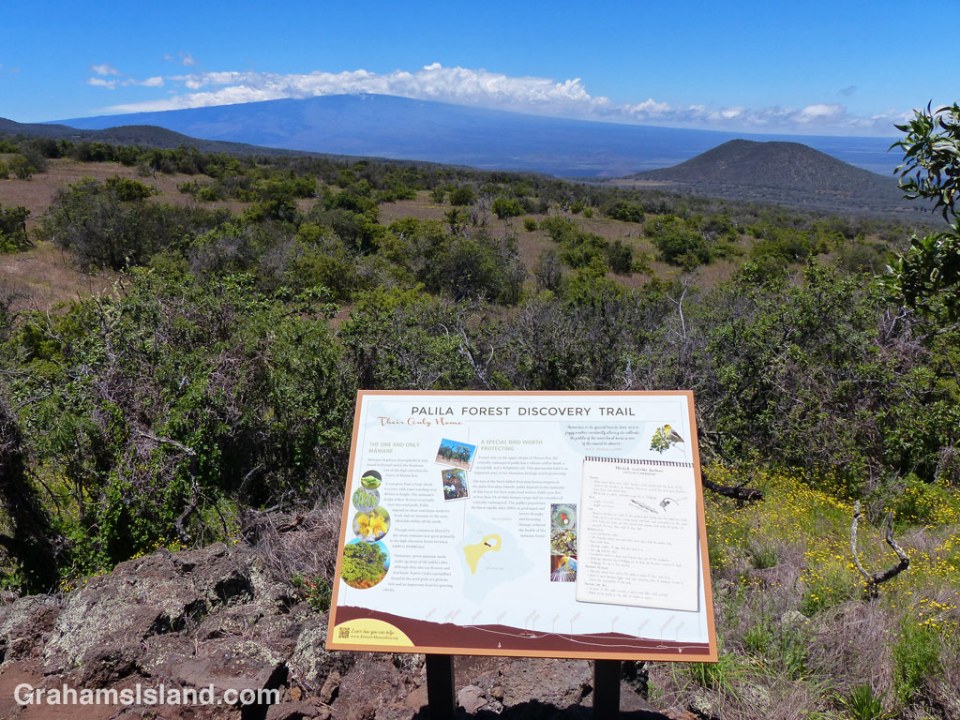
The endangered palila (top two photos, eating a mamane seed), which I posted about previously here, is the signature bird to be seen there, but there are many other kinds of birds, both native and introduced, in the area. In addition, the trail has a good variety of other wildlife from bugs to wild pigs. To top it off, the views towards Mauna Loa (below) and Maui are wonderful.

Finally, the drive to the trail goes along Old Saddle Road, which is a fun drive and a place where I often see pueos, the native Hawaiian owl, as well as wild turkeys and other birds and wildlife. All in all, a trip I never tire of making.

The Palila Forest Discovery Trail is featured on the Hawaii Island Coast to Coast Trail, a selection of sites that offer birding opportunities on the Big Island. For more information about Hawaii Island Coast to Coast Trail, go to hawaiibirdingtrails.hawaii.gov/.

For more information about Palila Forest Discovery Trail, go to dlnr.hawaii.gov/restoremaunakea/palila-forest-discovery-trail/.

Posted in response to the WordPress photo challenge, ‘Favorite place’.

View of Mauna Loa from Palila trail

Abstracts: Birdman

Abstracts-Birdman

I’d rather be out exploring, which is how I found conclusive evidence of the existence of this previously unknown creature – half man, half bird. I bet it spends a good deal of its time going around in circles.

Posted in response to this week’s WordPress Photo Challenge, ‘I’d rather be…

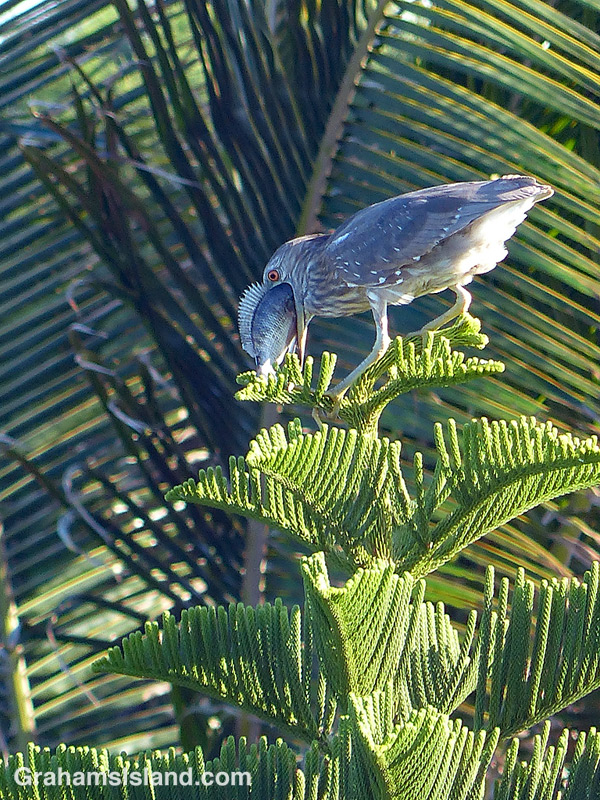
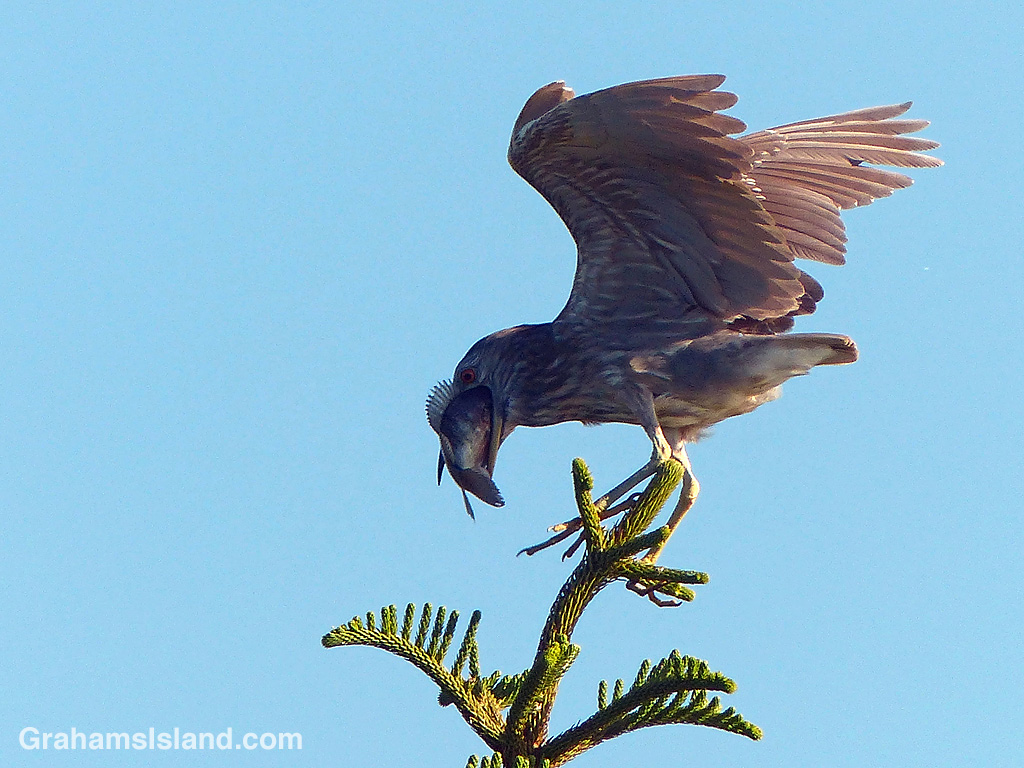
A black-crowned night heron snaffles a tilapia

This juvenile black-crowned night heron swooped down and snatched a large tilapia out of a pond in front of a house by the coast. Trouble is, the fish was a bit big and the heron struggled to swallow it. After working on it by the pond, the bird flew to the top of a tree where a strong wind added to its difficulties. It hopped over to a taller tree, which only made things worse, before setting down on the rocky shore nearby.

I saw the bird a few minutes later without the fish, but don’t know whether it finally managed to swallow it or gave up and ejected it. Either way it wasn’t a good day for the fish.

Posted in response to this week’s WordPress Photo Challenge, ‘Out of This World.’

Stampede

When I’m out walking I often pass fields of cattle. In general they either stare dolefully or run off when I look at them. Recently though, I was walking alongside one field and, at my appearance, the cattle ran to one side of the field, formed a group and then thundered down the hill toward me. When they got close, they did a U-turn and shot back up the hill.

Next day they did the same thing, but this time instead of the U-turn they stopped just across the hedge from me and stared. All the running about had stirred up the cattle egrets that invariably accompany them and that’s when I took this photo. I particularly like the devilish horns of the one animal peering out from the crowd.

I moved on and the cattle followed. We repeated this a couple of times before they decided they’d had enough.

On the third day, my appearance provoked only dull stares. Obviously the thrill of my presence had gone.

Palila


This week’s posts are on the theme of the WordPress photo challenge, ‘Tour Guide.’

A myriad of unique species evolved on these isolated islands. Many have disappeared, victims of other species introduced willfully or accidentally, decimated by new-to-them diseases, or simply displaced by the relentless encroachment of humans.

Of those that still survive, many are under great threat. However, there are success stories. Nēnē, the state bird, have come back from almost nothing and are doing well. Some ‘amakihi appear to have developed resistance to avian malaria, and ‘alalā, the Hawaiian crow, have recently been reintroduced into the wild in small numbers in an attempt to reestablish a wild population.

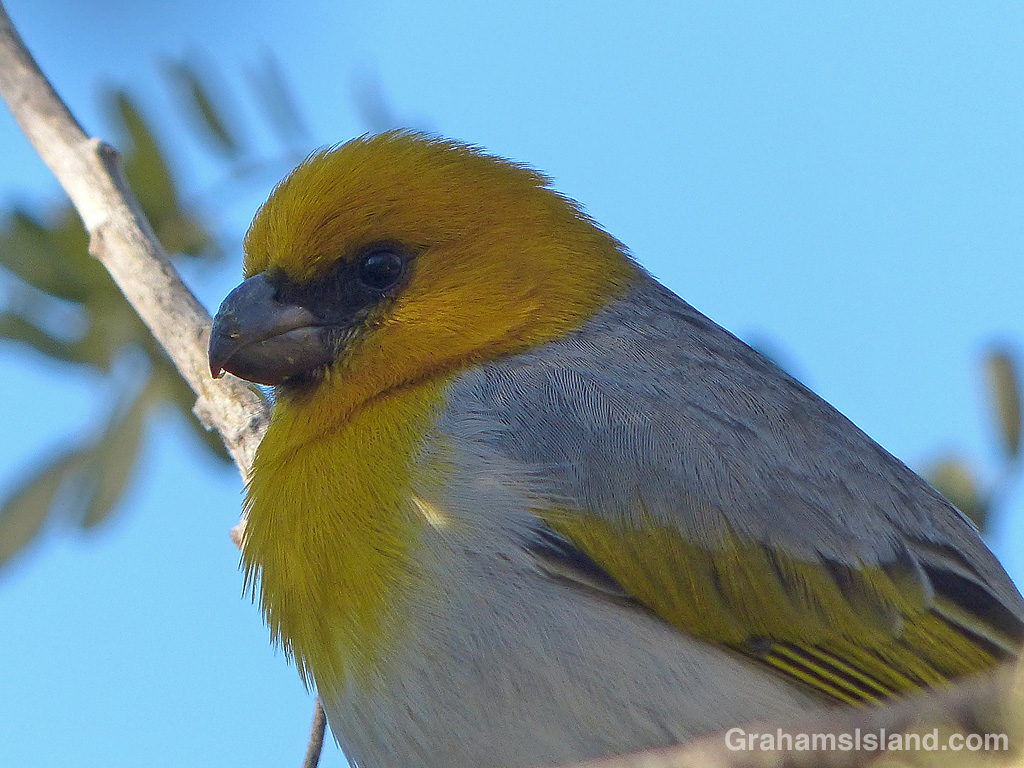
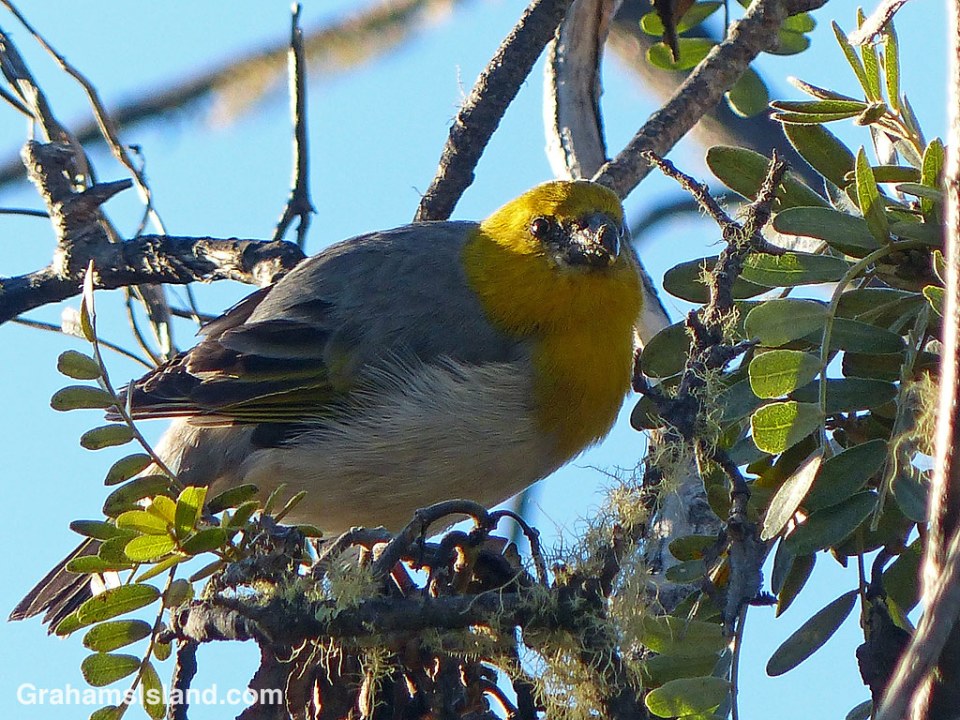
The palila is another endemic species that is rebounding with a little help. It is the only one of 16 finch-billed honeycreepers still in existence. It used to live on the islands of O’ahu, Kaua’i and Hawai’i. Today it exists only on Hawai’i, the Big Island. Even here, it’s habitat, which once covered the māmane forests of Mauna Kea, Hualali and Mauna Loa, has been reduced to a small area on the southwestern slopes of Mauna Kea.

The palila is a specialist feeder and this is one of the reasons it’s in trouble. It feeds mostly on immature seeds of the māmane, but māmanes have been badly affected by agricultural expansion and by grazing by wild sheep and goats.

The Palila Forest Discovery Trail is an area that has been fenced off and is protected from these threats. I’d been up there several times (four-wheel drive required) but had never caught so much as a glimpse of a palila. One of the reasons for their elusiveness is that palilas follow their food. Māmane flowers at different times depending on the elevation, so palila move up and down the hillside as the flowers bloom and the seeds reach the state they prefer.

Last time I was up there, however, my luck changed. I was taking photos of a moth when something flashed by just above me. I looked round and sitting on a nearby branch was a palila (I’m not a birder, but they’re quite distinctive.).

I quickly snapped a few photos, desperate to get some kind of record of this elusive bird before it disappeared. I needn’t have worried. It seemed unconcerned by my presence and was soon joined by several others. What was most striking was their feeding habit. A palila would pluck a green seed pod and take it to another branch. Once it was settled, the reason for its it stocky bill became apparent. It absolutely hammered at the pod, pinning it to the branch and banging away with its beak to access the seeds. The image of a workman smashing concrete with a pneumatic drill popped into my mind.

For half an hour or so I got to watch them at work. They seemed much like other birds I see — lively, healthy, a thriving group. But looking around, it was a sobering thought to realize I could see all their habitat, containing all that is left of an entire species.

For more information about palila and the Palila Forest Discovery Trail, go to dlnr.hawaii.gov/restoremaunakea/palila-forest-discovery-trail/.

For more information about birding on the Big Island, go to http://hawaiibirdingtrails.hawaii.gov/.