
 Last week’s Sunday Stills challenge theme was ‘Flight’ and I posted photos of a pueo flying here. This week’s Sunday Stills challenge theme is ‘Wildlife’ (see more offerings here) and, in an audacious move, I’m posting photos of the same bird.
The photos were taken along Old Saddle Road. It’s a prime area to see pueo (Hawaiian short-eared owls) and when I drive this road, I’m something of a menace to other cars since I spend a good deal of time looking at the sky rather than the road. When I do spot a pueo I tend to veer suddenly onto the grassy verge. This is OK assuming there’s a grassy verge and not a deep channel caused by water runoff.
The day I saw this bird had been a good day indeed. Many pueo had been spotted, several photographed, and no accidents caused. Nearing the end of the prime spotting area, I noticed a bird flying over a pasture. I bumped onto the grass and stopped just in time to see the pueo disappear over a ridge. As I waited to see if it might reappear, I looked across the road and saw this pueo perched on a fence post directly across from where I parked. Sometimes it’s better to be lucky than smart.
I grabbed my camera, eased the window down, trying to make as little noise as possible, and took a few shots. I needn’t have worried. This pueo seemed quite attached to its spot, perched on a metal fence post. It wasn’t about to move just because someone across the road kept making clicking noises. As cars passed, the bird’s head swiveled to follow their progress, then returned to its surrounds. It kept looking down, sometimes leaning forward with a more intense stare.
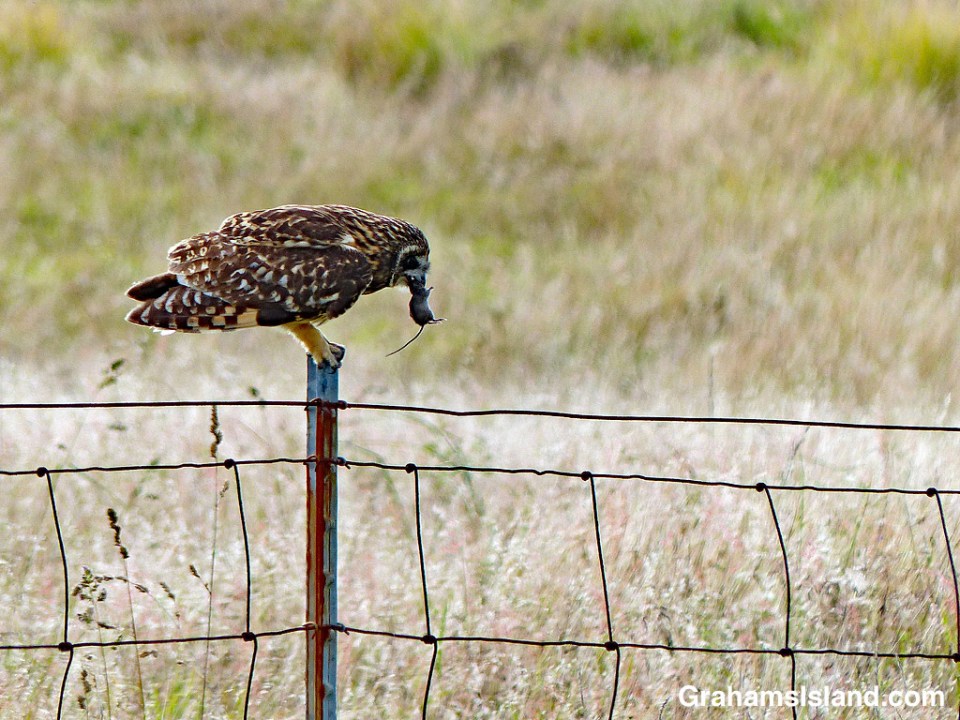
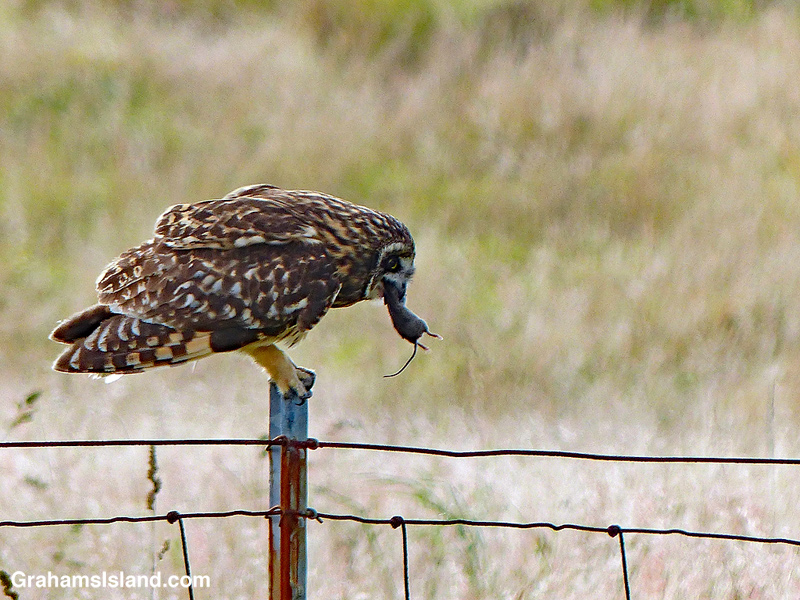
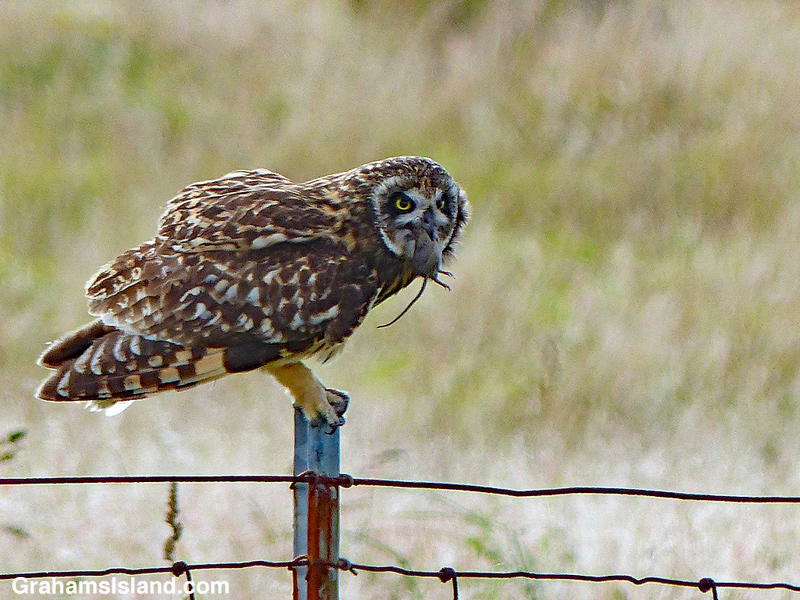
Suddenly, the pueo plunged into the grass and disappeared from view. Moments later, it flew up again and landed back on the post. This time it wasn’t alone. Hanging from its beak was a mouse. It wasn’t dead, but its future looked bleak. The pueo juggled it briefly, working it into the right position. Then, in a couple of quick gulps, the mouse disappeared, only the tip of its tail hanging out of the pueo’s mouth. Moments later, that too was gone. The pueo hung around for a while longer before taking off to try its luck hunting from the air.
I was struck by the poise of this large bird, perched on a small metal post, while it scanned its surroundings and ate its meal. Look at those talons gripping the post. Not something I’d want around my head. The same goes for its beak.
I’m easily charmed by cute geckos and awed by giant humpbacks, but there’s a reason for the ‘wild’ in wildlife. It’s a critter eat critter world out there and sometimes it can be almost as dangerous as civilization.
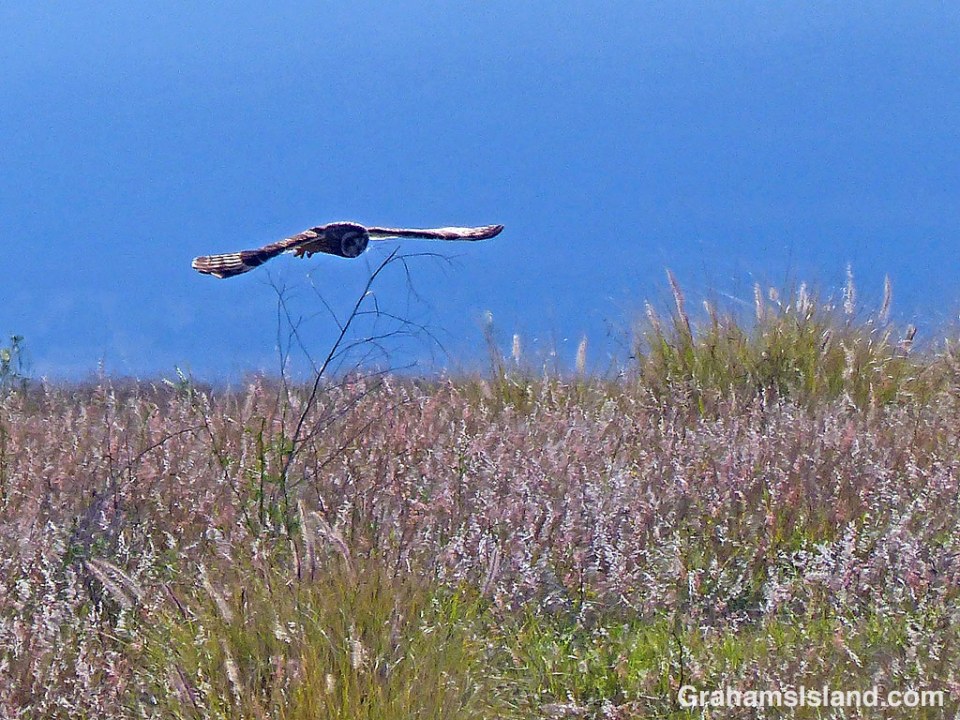
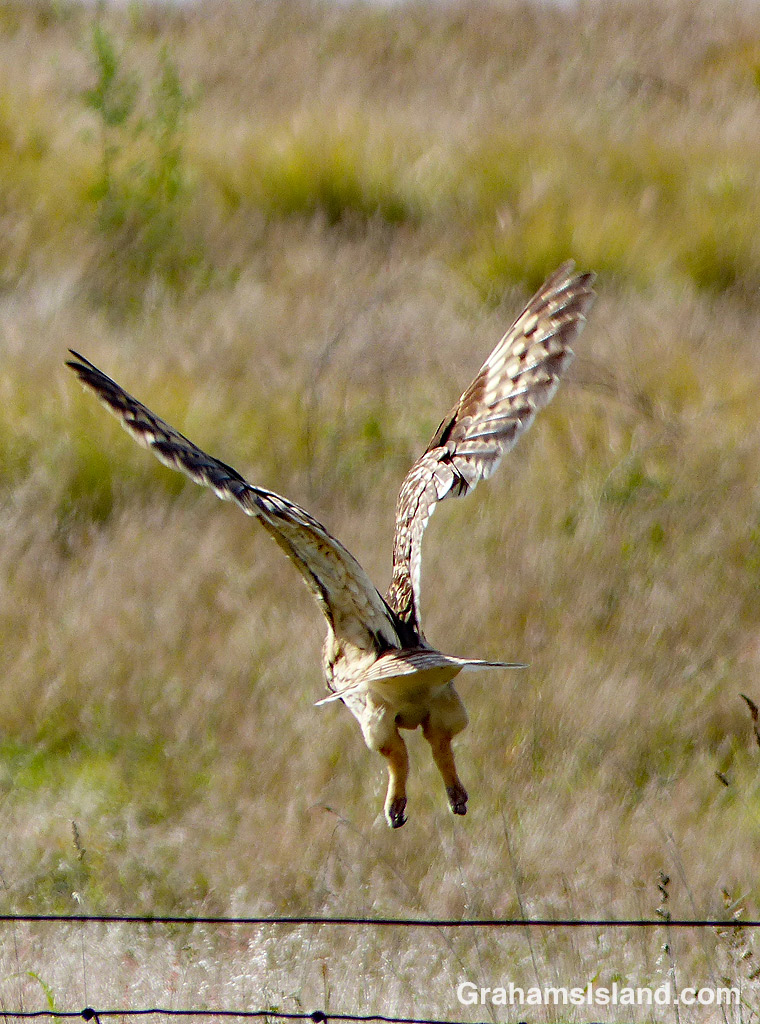
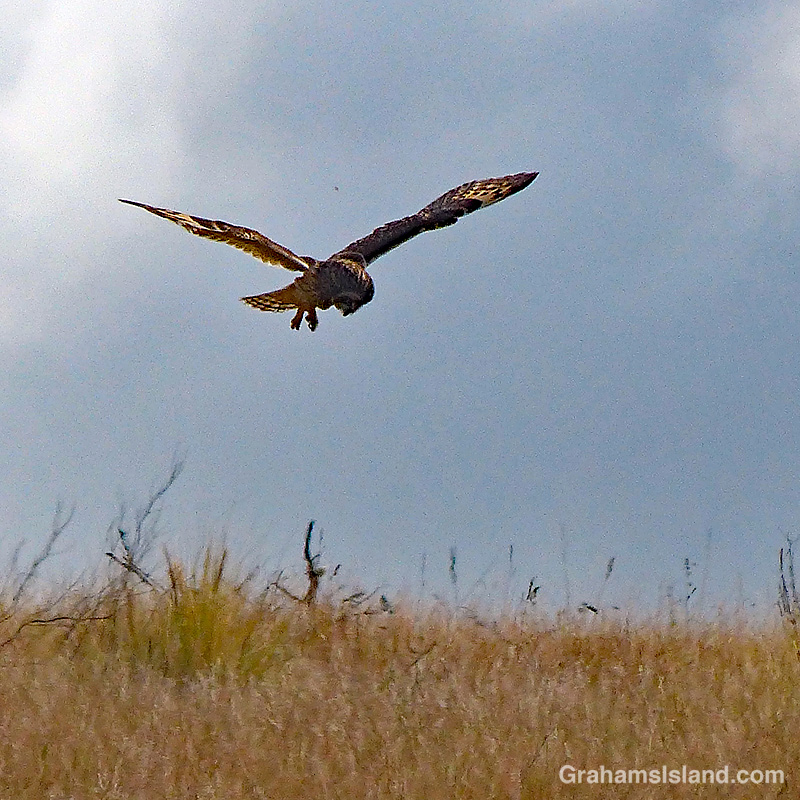 This post is in response to two photo challenges, which I could say is killing two birds with one stone, but given the subject matter, that would be most inappropriate. This week’s Sunday Stills challenge theme is ‘Flight’ (see more responses
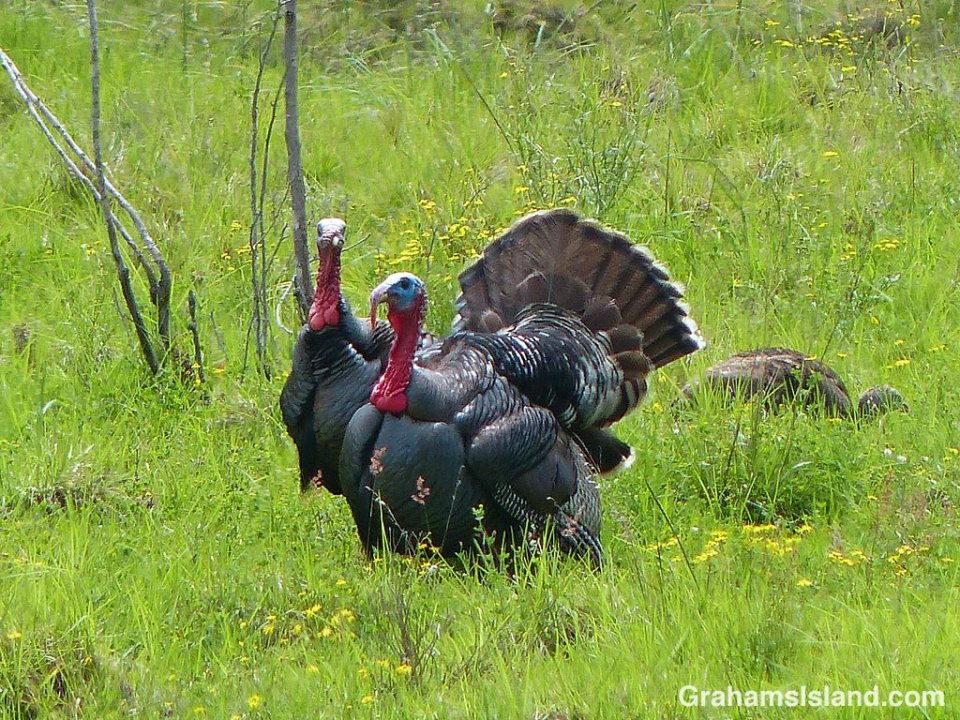
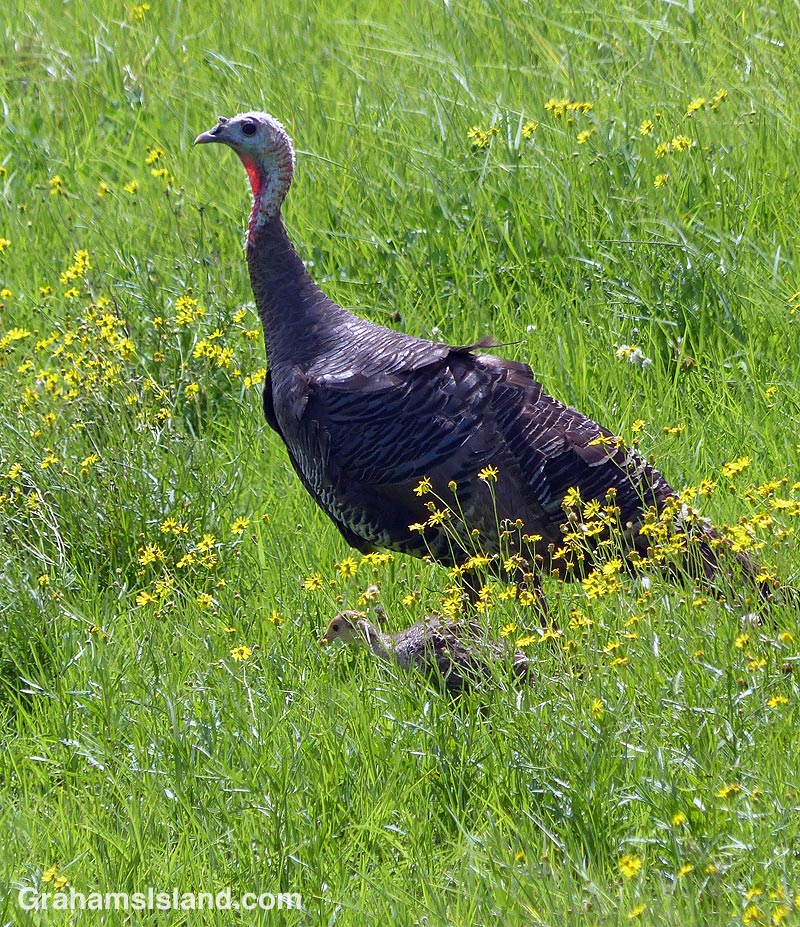 Wild turkeys are often seen wandering through pasture land in small groups. In the photo above, a large male shows a female what a fine specimen he is. In the second photo, a mother guides her chick through the long grass.

 This week’s Sunday Stills challenge theme is ‘Something Red.’ (See more offerings
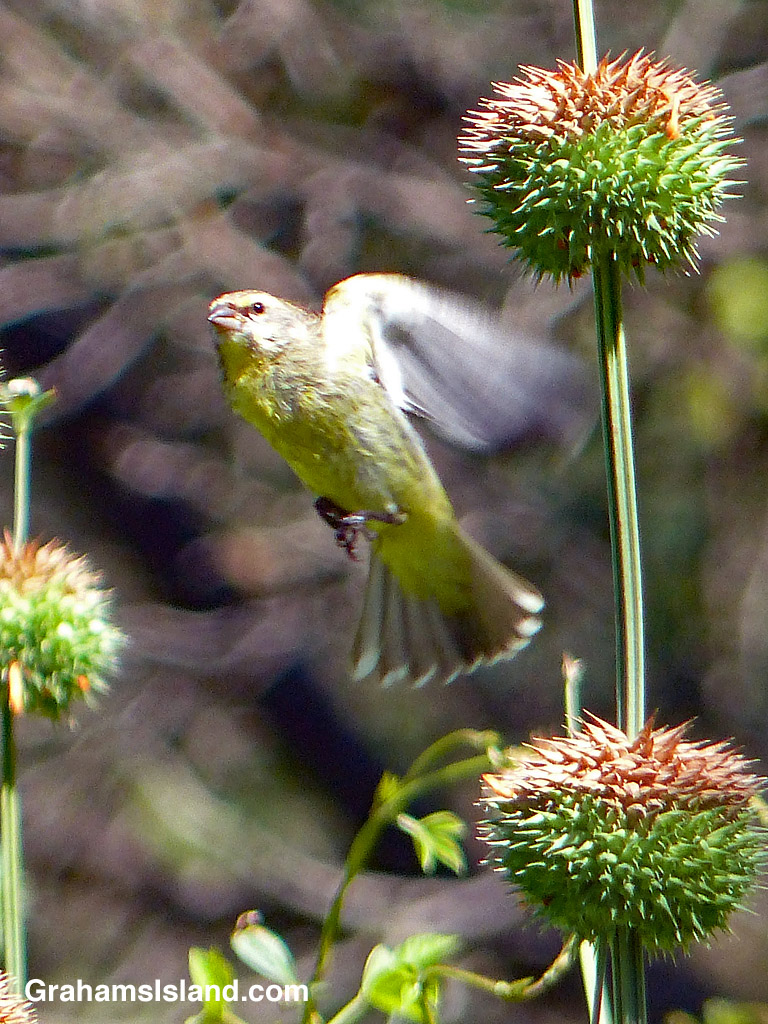 A yellow-fronted canary perches on a Leonotis leonurus plant before taking off again. Leonotis leonurus is also known as lion’s tail, lion’s ear or wild dagga. it’s native to South Africa.
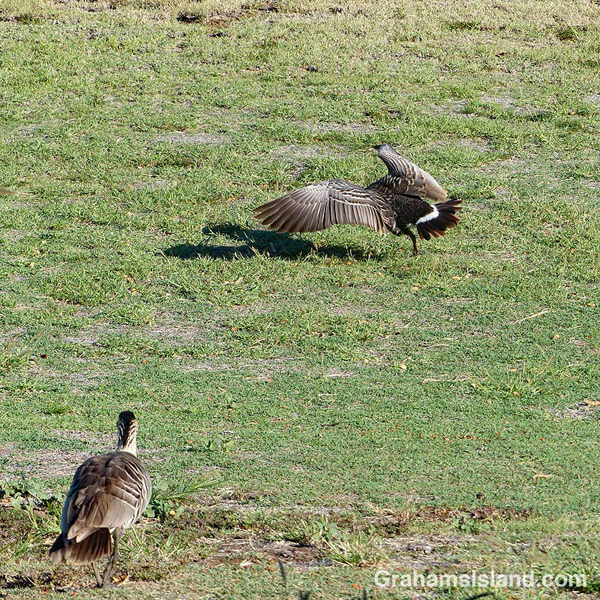 This pair of nene (Hawaiian goose) were grazing when they noticed the mongoose (above). A mongoose isn’t a real threat to an adult nene, but it’s a real menace to a nene’s eggs and chicks. Though these birds weren’t nesting in this area and didn’t have chicks with them, Their protective instincts kicked in and one of the birds chased the mongoose away (second photo).
 This scenario was repeated a few times before the mongoose lost interest and wandered off. Mongooses are very quick and will use this tactic of feints and retreats to wear out their intended victim. In this case, like the nene, it appeared to be more going through the motions in preparation for the next time it encounters a nene nest or chicks.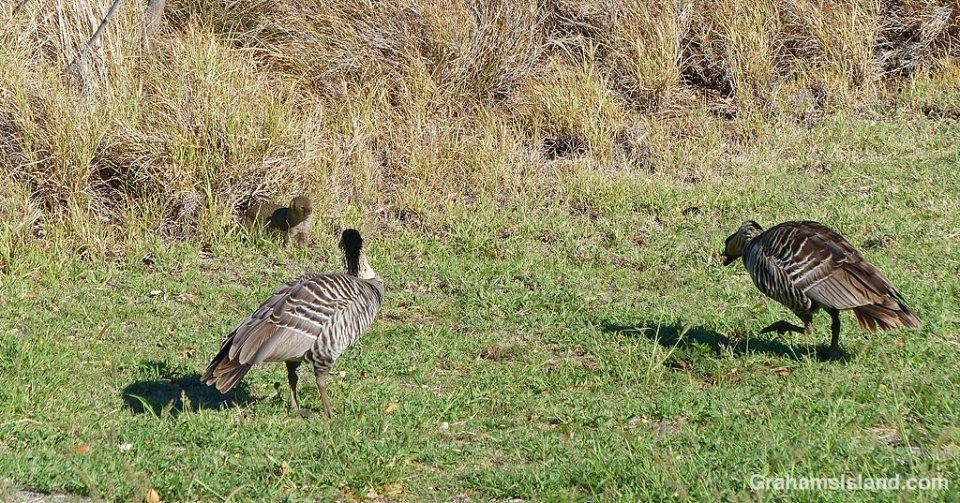
 Graham's Island