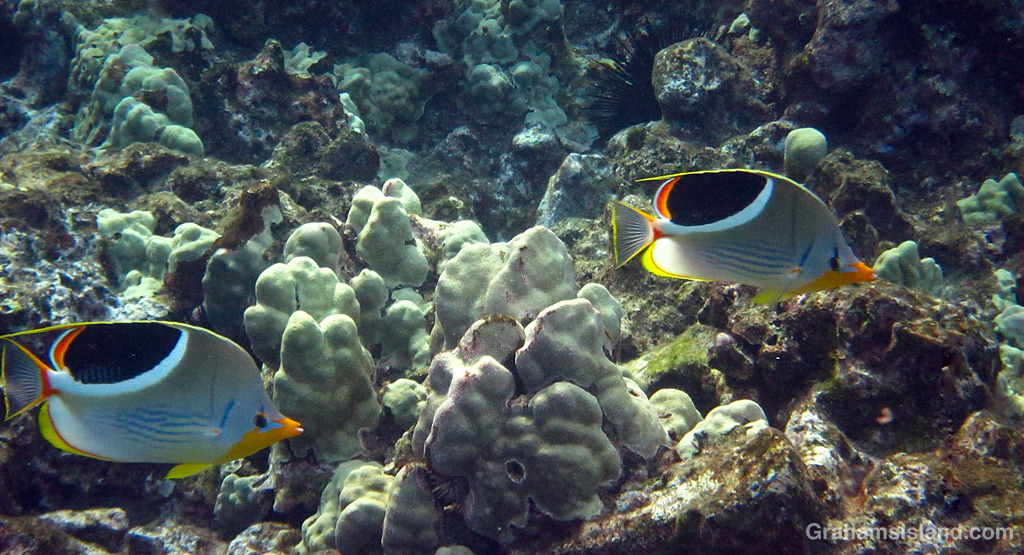
Saddleback Butterflyfish are easily identified with their bold and colorful markings. They’re almost always seen in pairs, and have a fairly wide range when it comes to the depths of water they inhabit. They feed mostly on coral polyps and, like Yellow Tangs, don’t do well in captivity.
First time I’ve noticed this in downtown Hawi. That means it’s either new, or my powers of observation are continuing their steady decline! The fish doesn’t seem to be associated with any kind of business. It’s just there for decoration. Maybe that’s why it looks so angry.
Posted for Bushboy’s Last on the Card photo challenge. See more responses here.
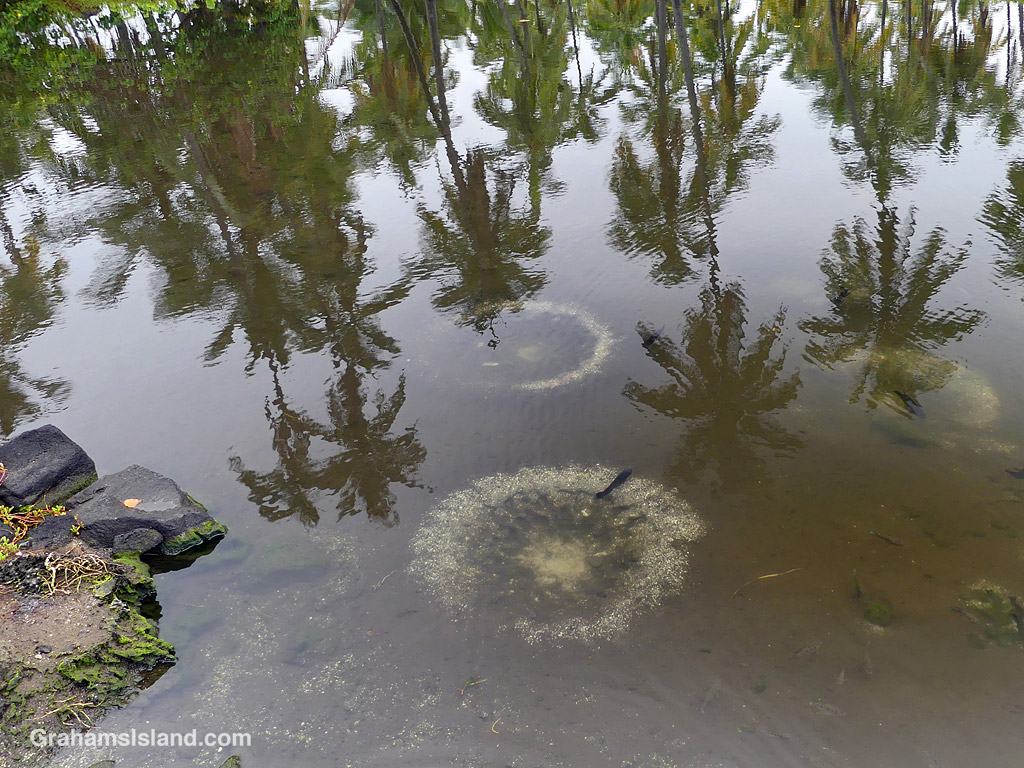
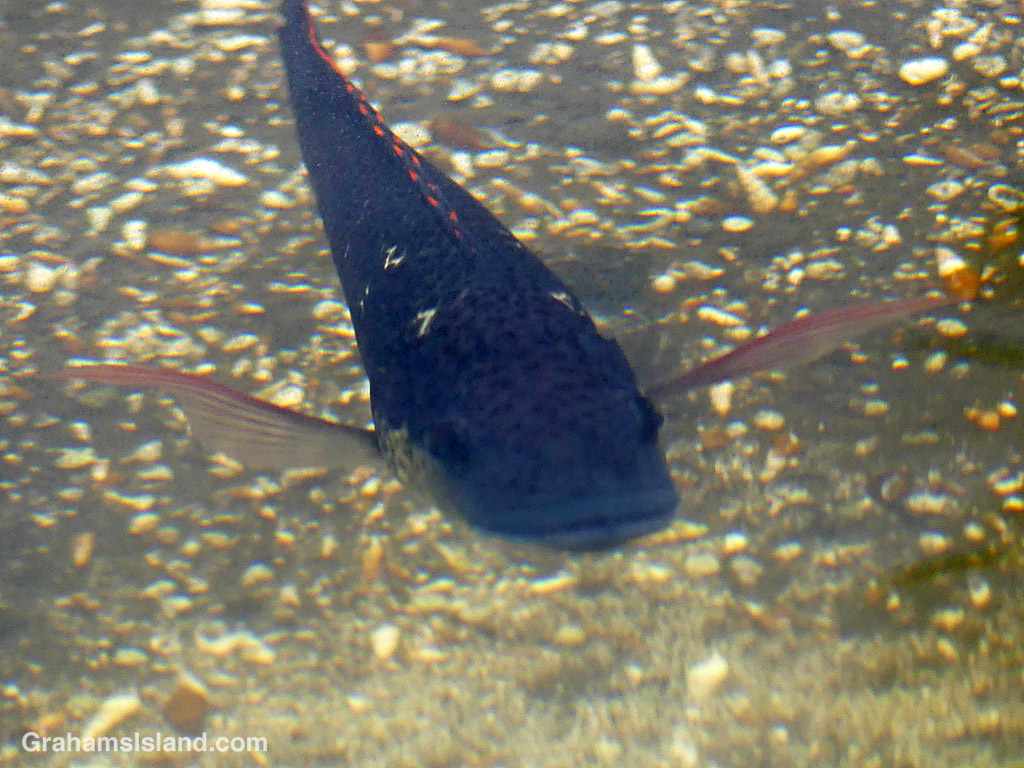
When I was down at Pu’uhonua o Hōnaunau National Historical Park recently, I noticed, possibly for the first time, these circles in some of the fishponds. They are the nests of male Mozambique tilapia (Oreochromis mossambicus). The males hope to entice a female into laying her eggs in their nest, after which the male will fertilize them.
Tilapia were introduced to the fishponds to control mosquitoes, but like many such ideas, they have proved detrimental to the well-being of native species. Currently, efforts are underway to remove them from the ponds.
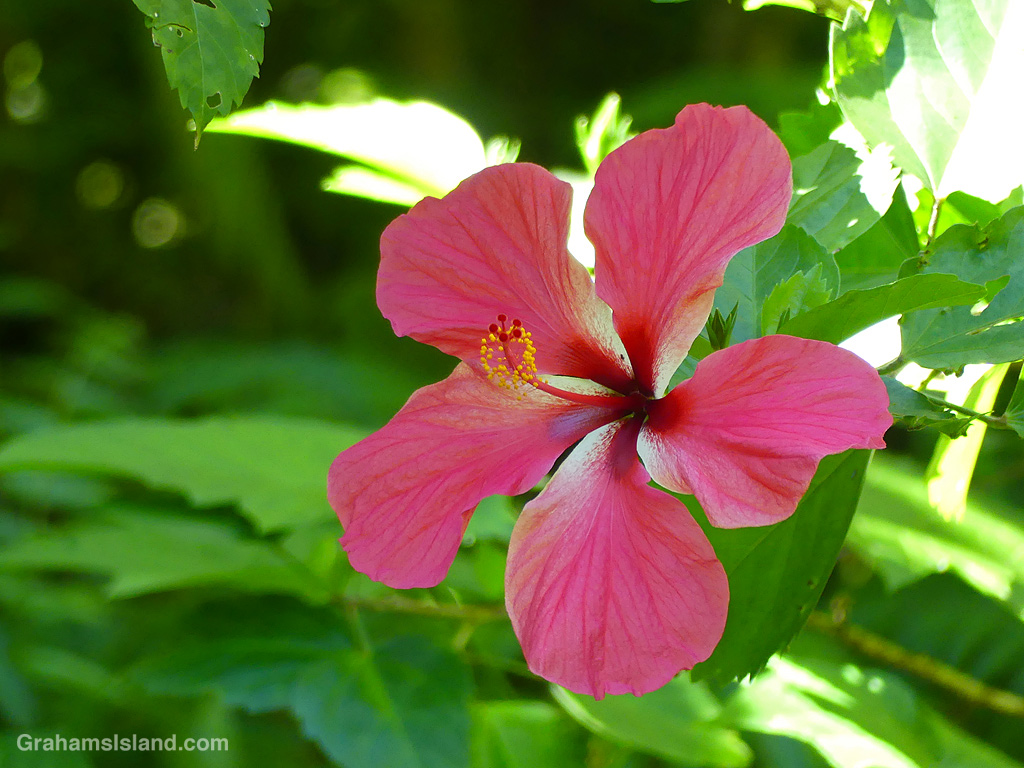
This week’s Sunday Stills Color Challenge theme is ‘Pink and/or red.’ See more responses here.
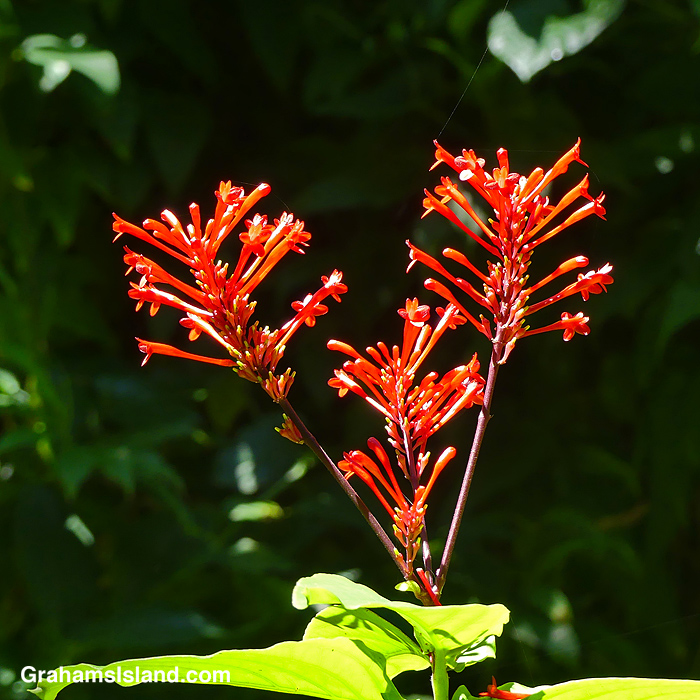
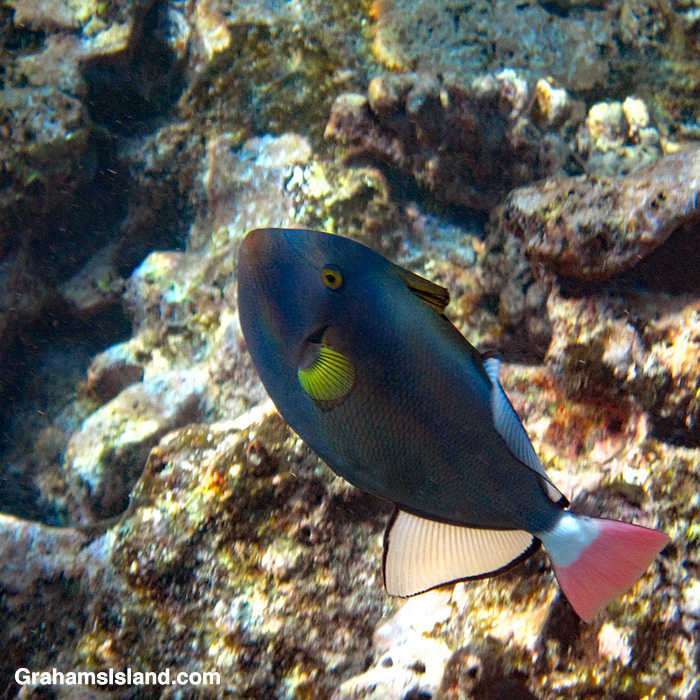
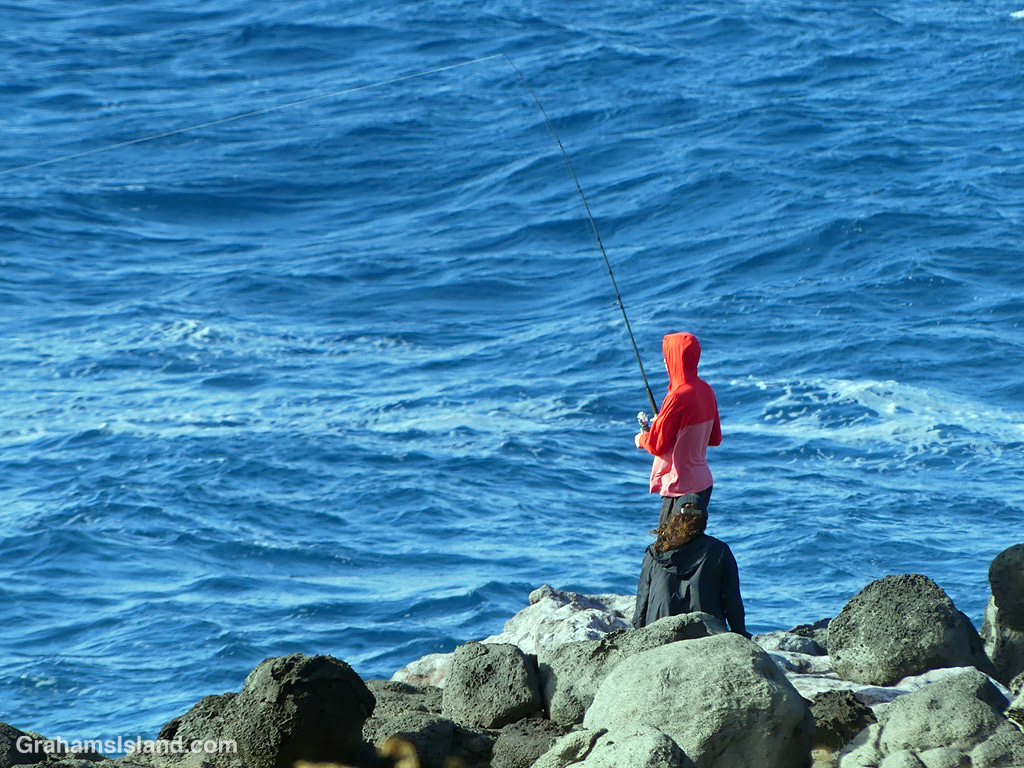
I thought this was a firecracker plant, but I’m not sure now. Either way, it’s red!Kamehameha Day parade in Kapaau.I bet the guy in the photo is thinking, ‘I’d look good in that hat.’A Pinktail Triggerfish. How do they come up with these names?Fishing on the North Kohala Coast.
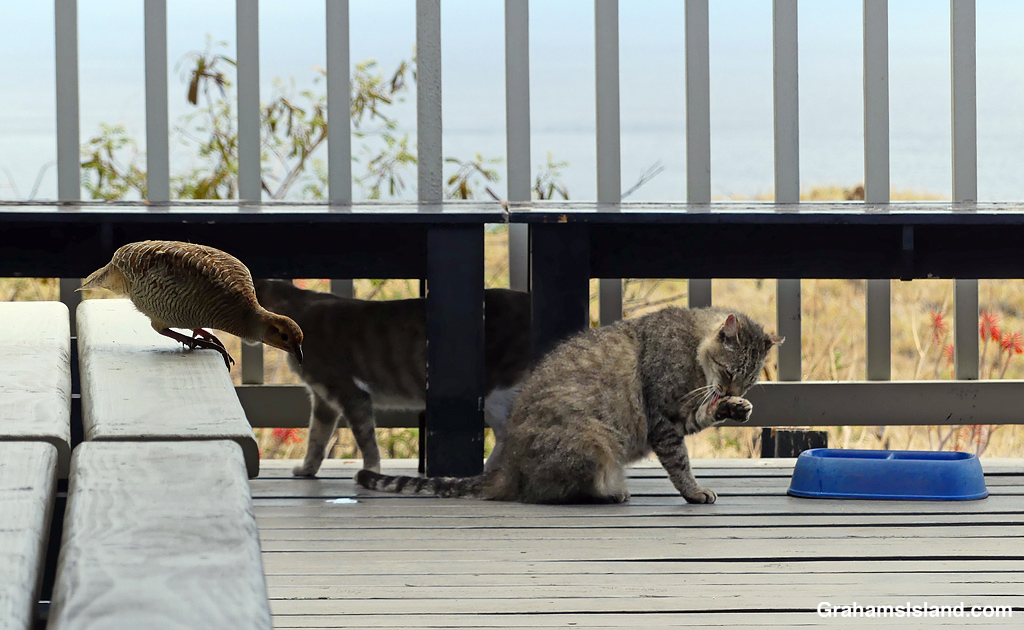
A Gray Francolin ventures into the territory of some cats.
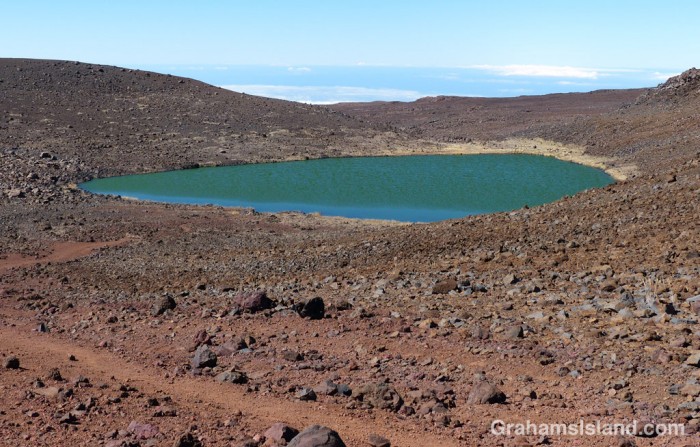
The idea of The Numbers Game is to enter a number into the search bar of your computer and then post a selection of the photos that turn up. This week’s number is 128. You can see more responses here.
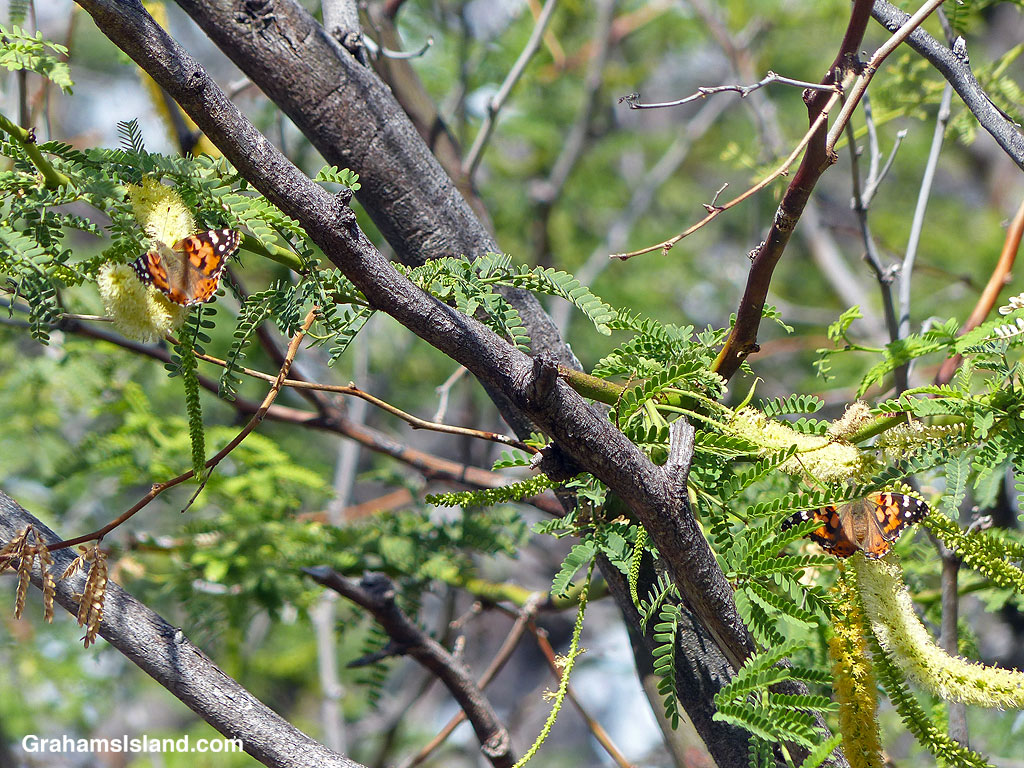
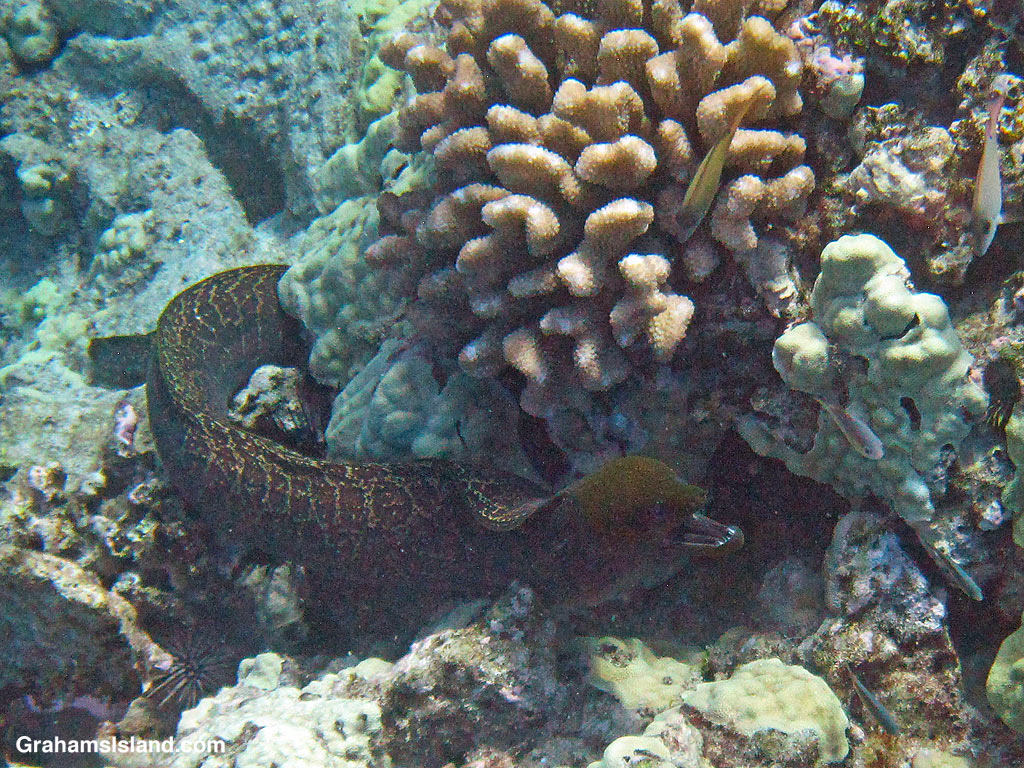
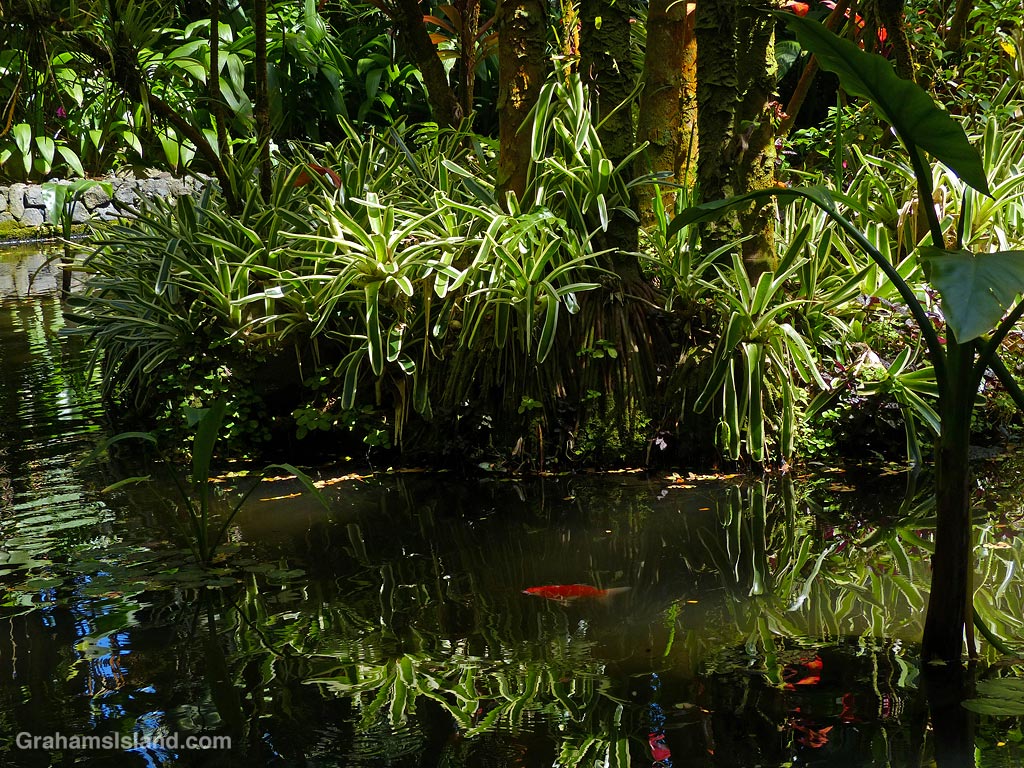
Two Painted Lady Butterflies in a Kiawe tree.An Undulated Moray Eel looking grouchy, as per usual.Koi swim in Lily Lake at Hawaii Tropical Bioreserve and Garden.
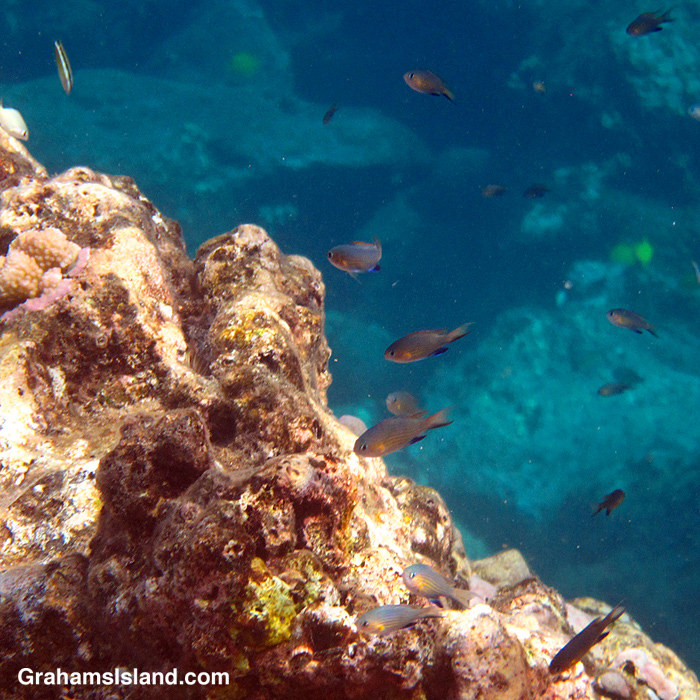
Blackfin Chromis are small damselfishes that gather around coral heads in fairly shallow water. They disappear into the coral and crevices if approached. The black anal fin and black lower edge of the tail are an easy way to identify this fish.





 Graham's Island