Category Archives: Photo Challenges

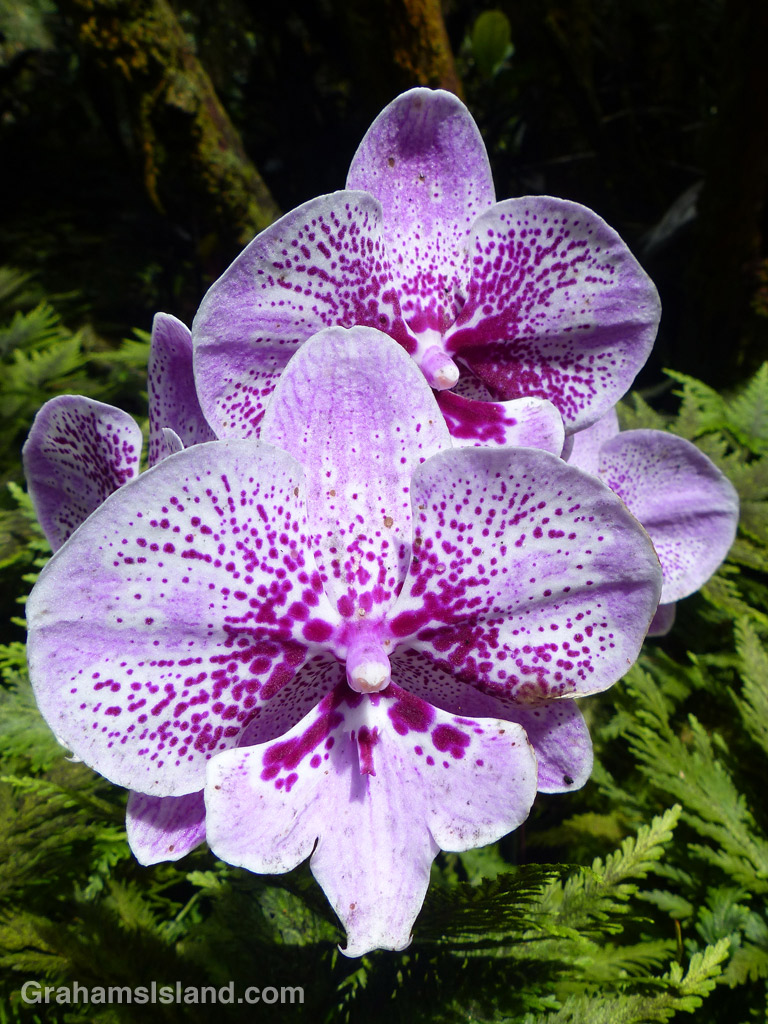
Phalaenopsis Yu Pin Star Dancer Orchid

This Phalaenopsis Yu Pin Star Dancer Orchid shows the unique structure of orchid flowers.This Phalaenopsis Yu Pin Star Dancer Orchid shows the unique structure of orchid flowers.

Orchids have a unique flower structure, which this Phalaenopsis orchid shows off.

They’re bilaterally symmetrical, the left and right halves being mirror images. The column in the center of the flower is a fusion of the male and female parts. They have three petals in an inner whorl and three sepals, usually as big as the petals, in an outer whorl.

The lower petal is the lip on which pollinators land. When the flower is in the budding stage, this lip starts out at the top. In most orchids, as the flower opens, it rotates until the lip is at the bottom, a process called resupination. Not all orchids do this. Some remain in the original upside down position and some rotate a full circle until they’re back where they started.

Abstracts: James Clerk Maxwell Telescope mirror framework

Framing supports the mirror on the James Clerk Maxwell Telescope.

Last year, when I went on the Kama‘āina Observatory Experience, I visited a couple of telescopes. One of them was the James Clerk Maxwell Telescope, a single-dish telescope dedicated to detecting submillimetre radiation.

One of the things I liked about that telescope was the structure of the supporting framework. It reminded me of something found at Ikea, but on a giant scale. If I’d been involved in putting it together, at the end of the day, when congratulations were being bandied about, I’d have been the one saying, “Er, I’ve got a rod and three little hexagonal nuts left over. Where do they go?”

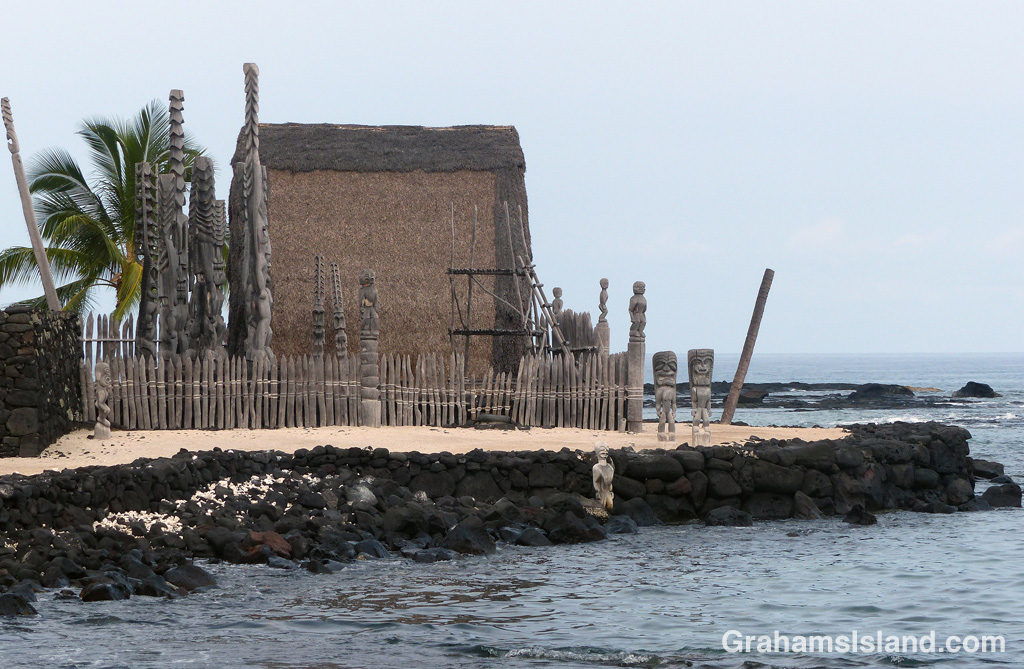
Hale o Keawe at Pu’uhonua o Hōnaunau

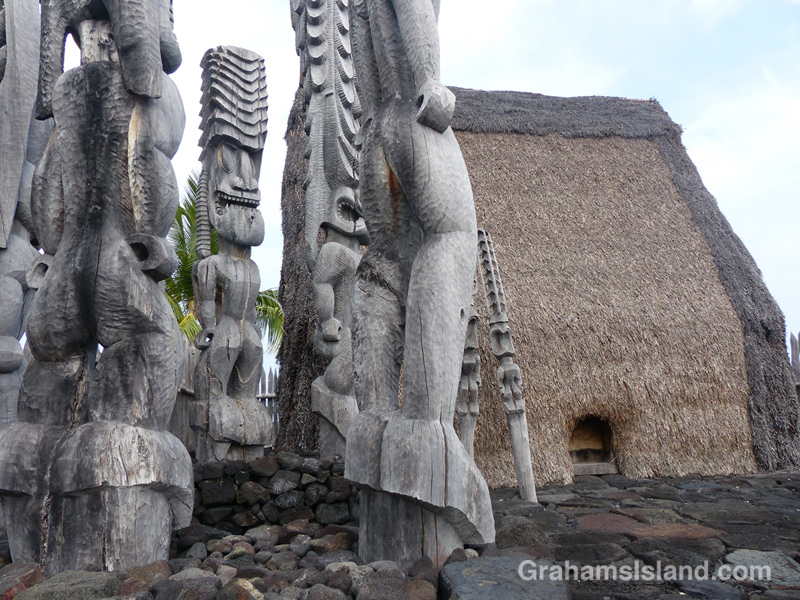
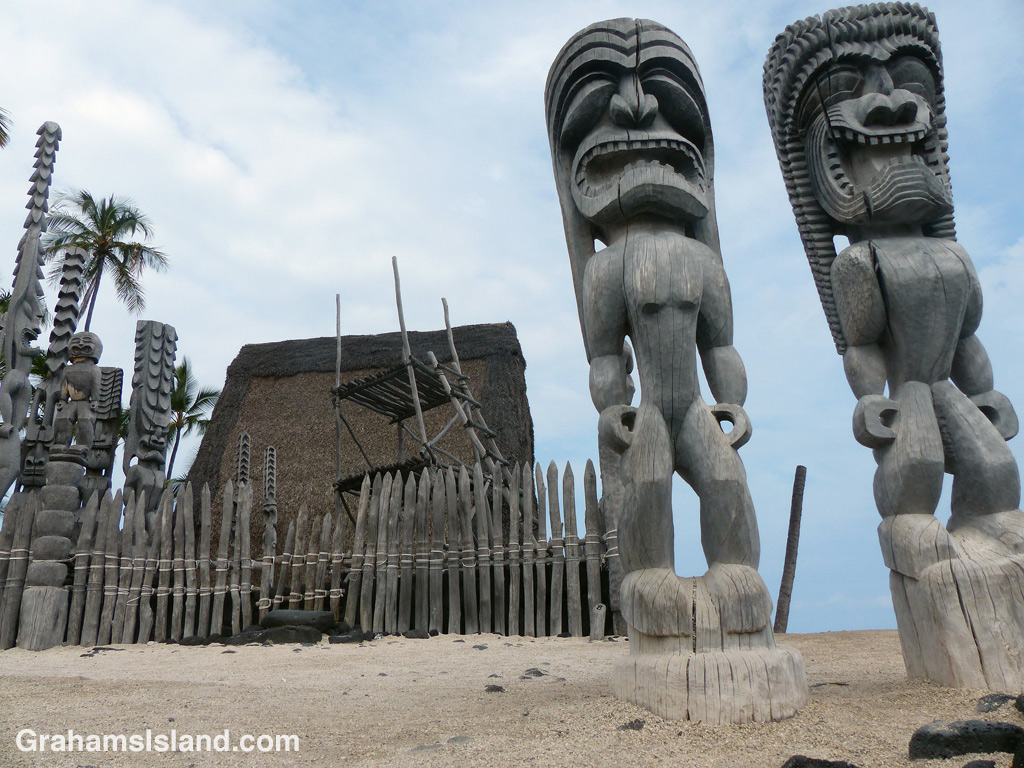
Hale o Keawe at Pu'uhonua o Hōnaunau National Historical Park.Ki'i seen at Hale o Keawe at Pu'uhonua o Hōnaunau National Historical Park.

Pu’uhonua o Hōnaunau National Historical Park sits on the coast south of Kealakekua. It features a huge masonry wall that encloses the pu’uhonua or place of refuge. As the name indicates, this was a place that offered sanctuary to those who had broken sacred laws (kapu) or been defeated in battle. If they reached this place, they would be spared, absolved by a priest, and allowed to return home.

A large portion of the remainder of the park is known as the Royal Grounds where Hawaiian royalty (ali’i) lived. Hale o Keawe sits on the edge of the pu’uhonua and is a heiau that housed the bones of 23 of those ali’i. This gave the heiau tremendous mana, or spiritual energy. The wooden statues are ki’i representing Hawaiian gods. It’s an important structure, both culturally and historically.

For more information about Pu’uhonua o Hōnaunau National Historical Park, visit https://www.nps.gov/puho/index.htm.

Ki'i seen at Hale o Keawe at Pu'uhonua o Hōnaunau National Historical Park.

Mauna Kea shadow

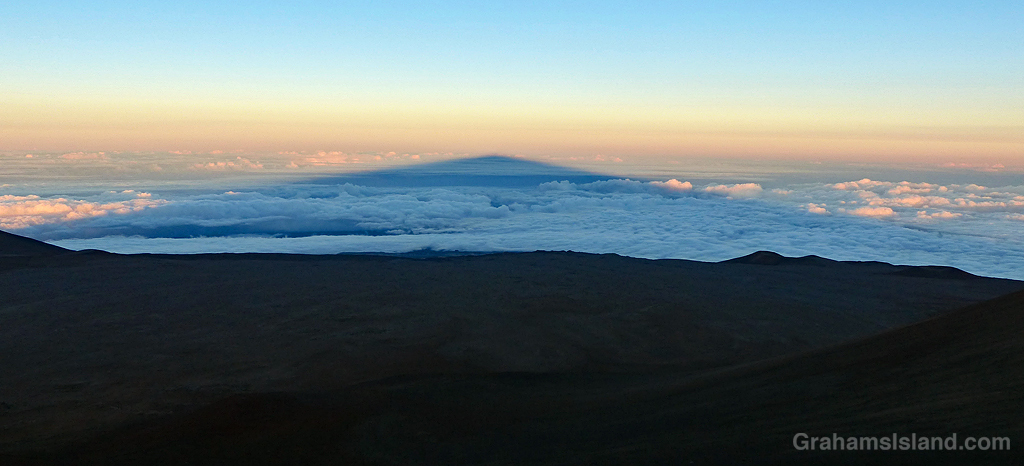
The shadow of Mauna Kea stretches out above the clouds.

Seen from the top of Mauna Kea, what is this shape we’re looking at, stretched out over the clouds, with that crisp corner at the top? It is, of course, the shadow of the volcano itself.

I like this image a lot, I think because it’s something I never thought about until I saw it. Then, I was immediately struck by how it illustrates the size of Mauna Kea and what a classic volcano it is.

Gecko on a window

A gecko on a window showing its foot pads.

I’m constantly running in and out of the house because I’ve been distracted by something going on in the world of nature. I noticed this gecko on the outside of a window one night and rushed to get my camera. I particularly like the details of the underside of its feet, those miraculous pads that enable it to scoot around on any surface – up, down, or upside down.

I think this is a house gecko, but it could be a mourning gecko.

Mauna Kea telescopes

Mauna Kea telescopes as sunset nears.

Waiting for sunset at the top of Mauna Kea, there are many distractions – shiny telescopes, other sunset watchers, pillowed clouds, and plummeting temperatures. By the time I returned to the car I was ready to turn up the heat, a rare opportunity in Hawaii.

The telescopes are from left: Suburu Telescope, The two telescopes of the W. M. Keck Observatory, and NASA Infrared Telescope Facility.

Pallid ghost crab

A Pallid Ghost Crab blends in with the sand.A Pallid Ghost Crab waits by the entrance ot its burrow.

This week’s WordPress photo challenge seeks distractions and for me, one thing that gets my attention is movement. I see something out of the corner of my eye and I wonder what it was, then try to find out.

In this instance, I was crossing a beach when I noticed bits of it get up and scurry away. Closer inspection revealed several of these pallid ghost crabs. They’re beautifully camouflaged, but if that cover is blown, they zip away, and I do mean zip. They take off like Usain Bolt, then stop and disappear again.

If that doesn’t work, say because some annoying individual with a camera stays hot on the trail, the crab will head for its burrow, perch on the edge, and at the slightest unwelcome movement, disappear from view.