
A recent sunset, seen from the comfort of the front lanai.

A recent sunset, seen from the comfort of the front lanai.

This week’s Sunday Stills challenge theme is ‘Weathered.’ See more responses here.
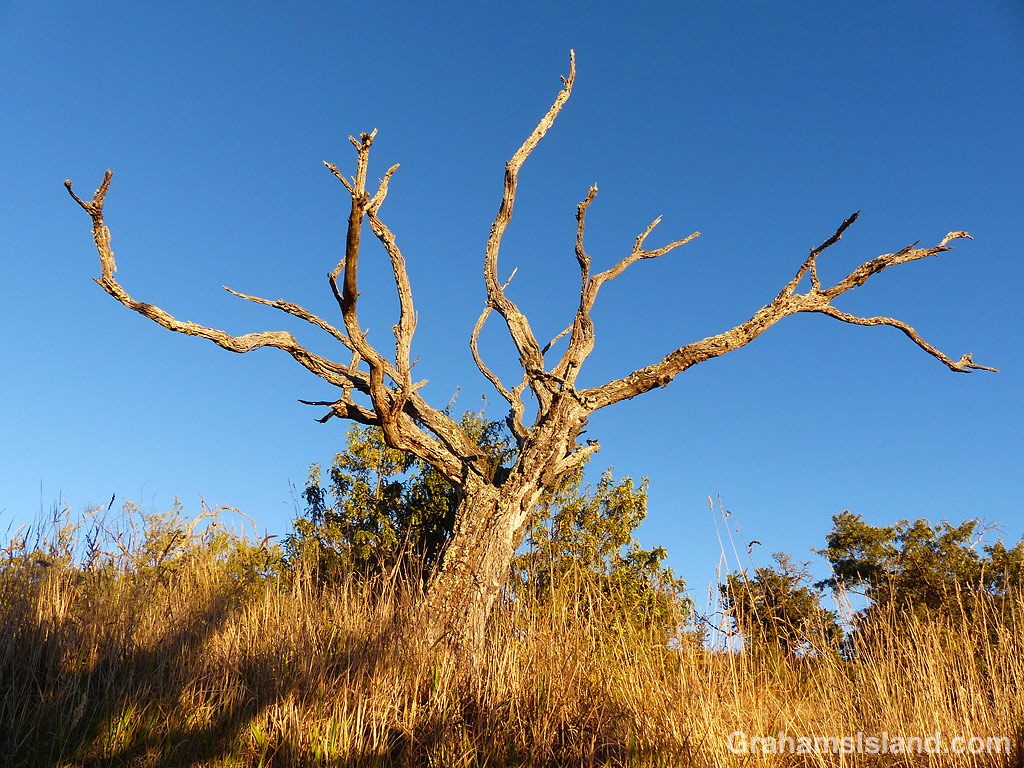
In the top photo, a dead tree on the lower slopes on Mauna Kea, stretches weathered branches toward the sky.
Second photo: Petroglyphs in Hawaii Volcanoes National Park have been weathered by years of sun and rain, but are still clearly visible.
Third photo: A cattle ranch alongside old Saddle Road includes this old structure bordering a stockyard.
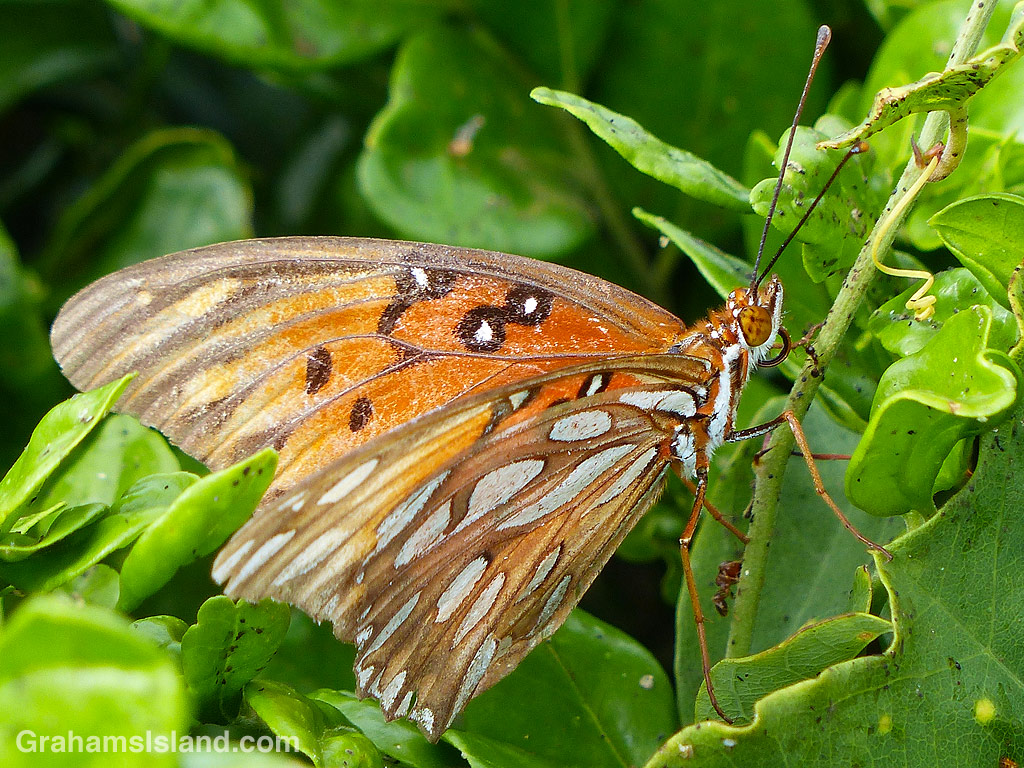
Bottom photo: Butterflies have a short lifespan, but in that time they can go from looking boldly marked and colored to very faded, with some looking like it’s a miracle they can fly at all.
For more information about Hawaii Volcanoes National Park, go to nps.gov/havo/.

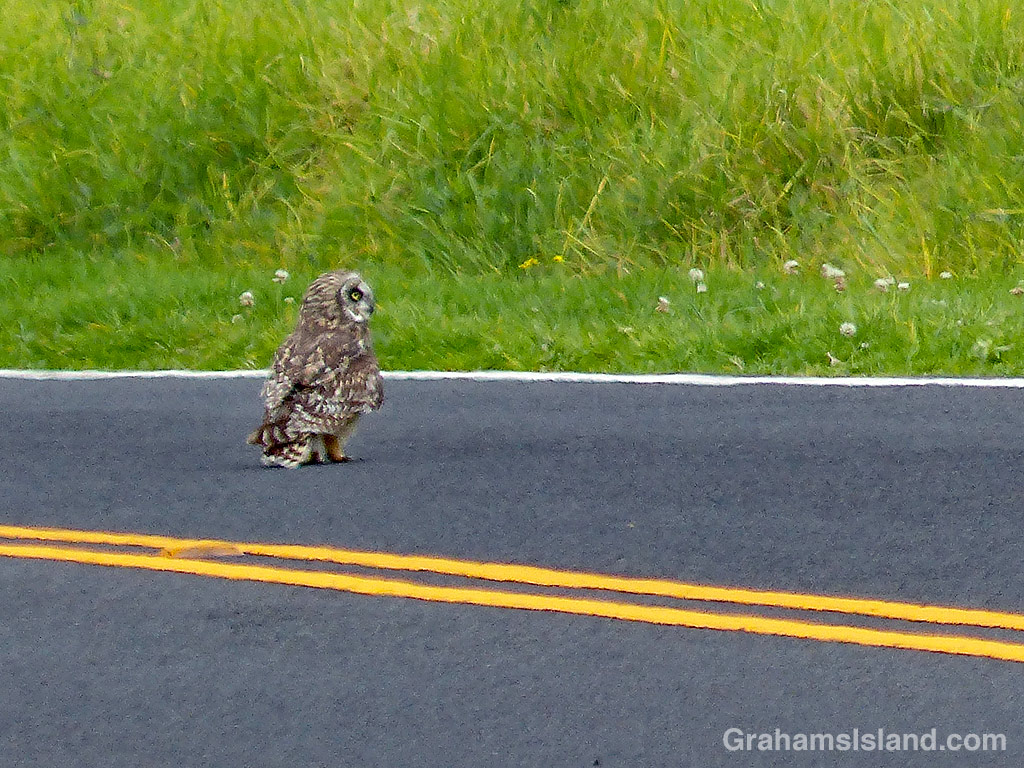
When I took this photo, I was thinking of the James Thurber short story, “The Owl Who Was God,” which can be read here. The main differences between that story and this photo are that pueos have very good eyesight during daylight hours, which is when they’re active, and no animals were harmed in the taking of this photo. The bird flew away shortly after I took it. He does have that look though.

Bushboy’s Last on the Card photo challenge for October 2020 (see more responses here) reminded me that I didn’t take any photos on the 31st, but this was the last one taken the day before.
I sometimes see odd things on my daily walks. One time, I saw a TV in the grass. It was there a couple of days, then gone. On this occasion, this lawnmower was sitting by the dirt road. It’s an older machine so it might have been dumped there, but why? If someone wanted to get rid of it, they could take it to the transfer station and leave it there, without having to pay anything. It’s possible it fell out of someone’s truck bouncing along the dirt track. It could be that fishermen unloaded it while organizing their gear and then forgot to pick it up again.
One thing’s for sure – it wasn’t being used to mow anything. Where it sits, a weed wacker would be more useful, or one of those industrial machines the county uses to trim trees alongside the road.
The top photo is the last one I took in October, where I knew my shadow was in the photo. But I had in mind the crop in the bottom photo, emphasizing the lawnmower, the swathe of rough grass, and the bit of ocean in the background.


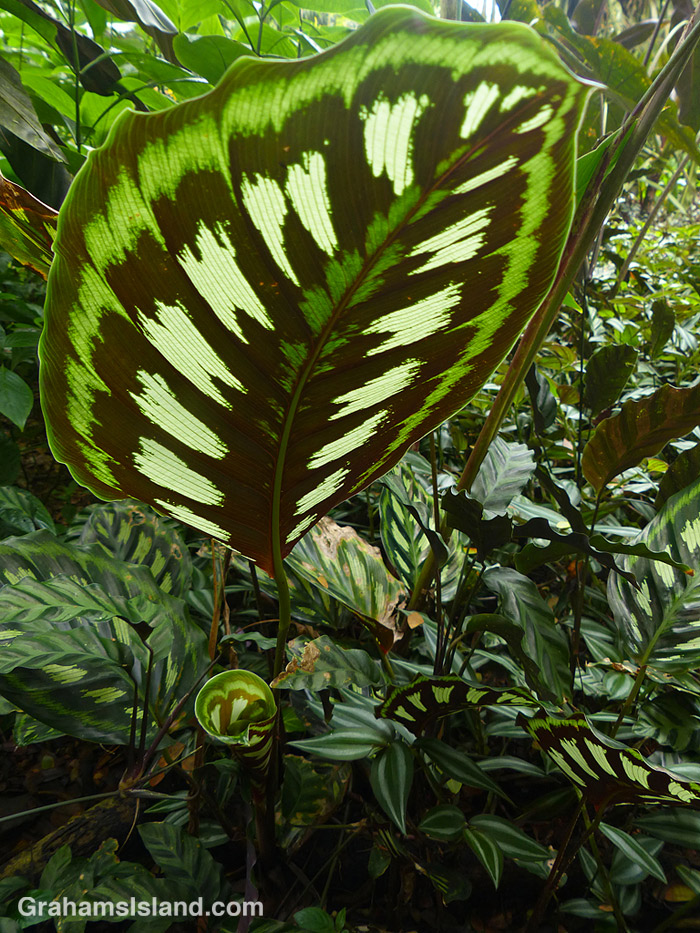
This week’s Sunday Stills challenge theme is ‘Leaves.’ See more responses here.
This gave me an excuse to post more photos from Hawai’i Tropical Bioreserve & Garden, which is still closed at this time. For more information about Hawai’i Tropical Bioreserve & Garden, go to htbg.com.



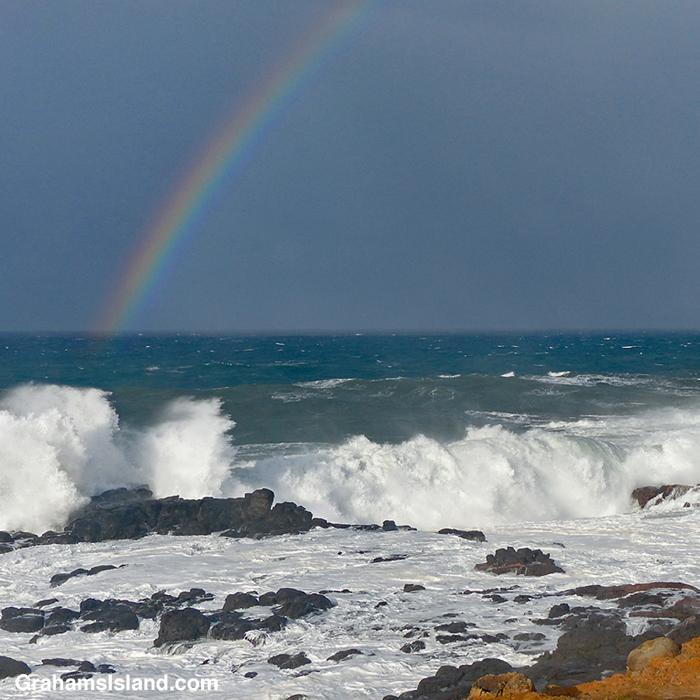
Surf pounds the North Kohala shore while a rainbow forms farther out over the water.
Posted in response to Becky’s October Squares challenge theme of ‘Kind.’ See more responses here.

It’s a hard life being a tree on the coast here, but this one has done what it takes to survive, getting creative with its roots.
Posted in response to Becky’s October Squares challenge theme of ‘Kind.’ See more responses here.

These are the same kind of trees surrounded by the same kind of ground cover and occupied by two of the same kind of horses. But, taken together, they make a one of a kind image that many people on the island would very quickly recognize as Waipi’o Valley.
Posted in response to Becky’s October Squares challenge theme of ‘Kind.’ See more responses here.

